Preferred Bad Guys

From yesterday’s review of The Lost City: “One earmark of a sucky movie is that the bad guys have no personalities — no wit or flavor or stand-out attitude of any kind. The Lost City bad guys are the same exact stooges you’ve seen in a hundred other action films. Remember Richard Masur, Ray Sharkey and Anthony Zerbe‘s bad guys in Who’ll Stop The Rain (’78)? It never got any better than that. They were darkly funny, eccentric, deranged, vulnerable, and they never once winked.”

Read more

Blue-Eyed Soul

With all the appearances and promotions for Ameca over the last couple of months, why hasn’t she done Jimmy Kimmel or Real Time with Bill Maher? She can obviously handle herself socially, at least under controlled conditions. Maybe her vocabulary isn’t large enough.

Seven years ago Alicia Vikander played a very similar type of robot in Alex Garland‘s Ex Machina.

Read more

What Is This? What’s Going On?

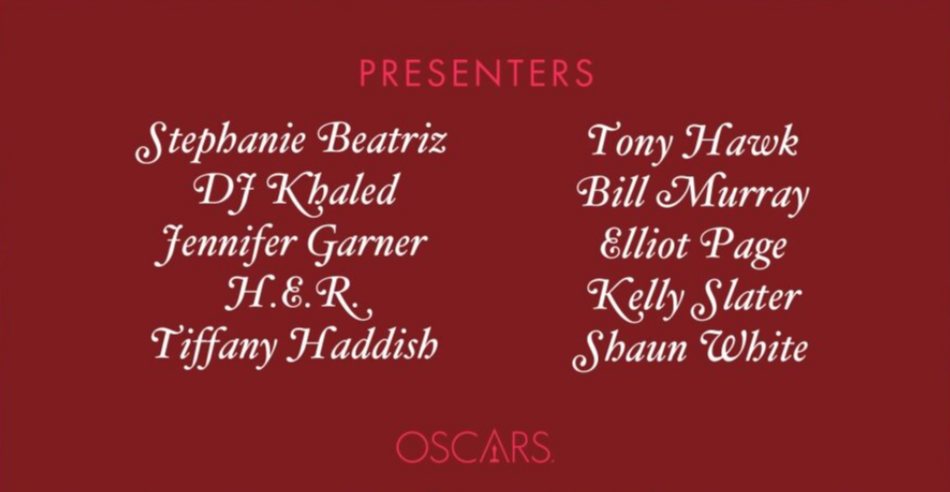
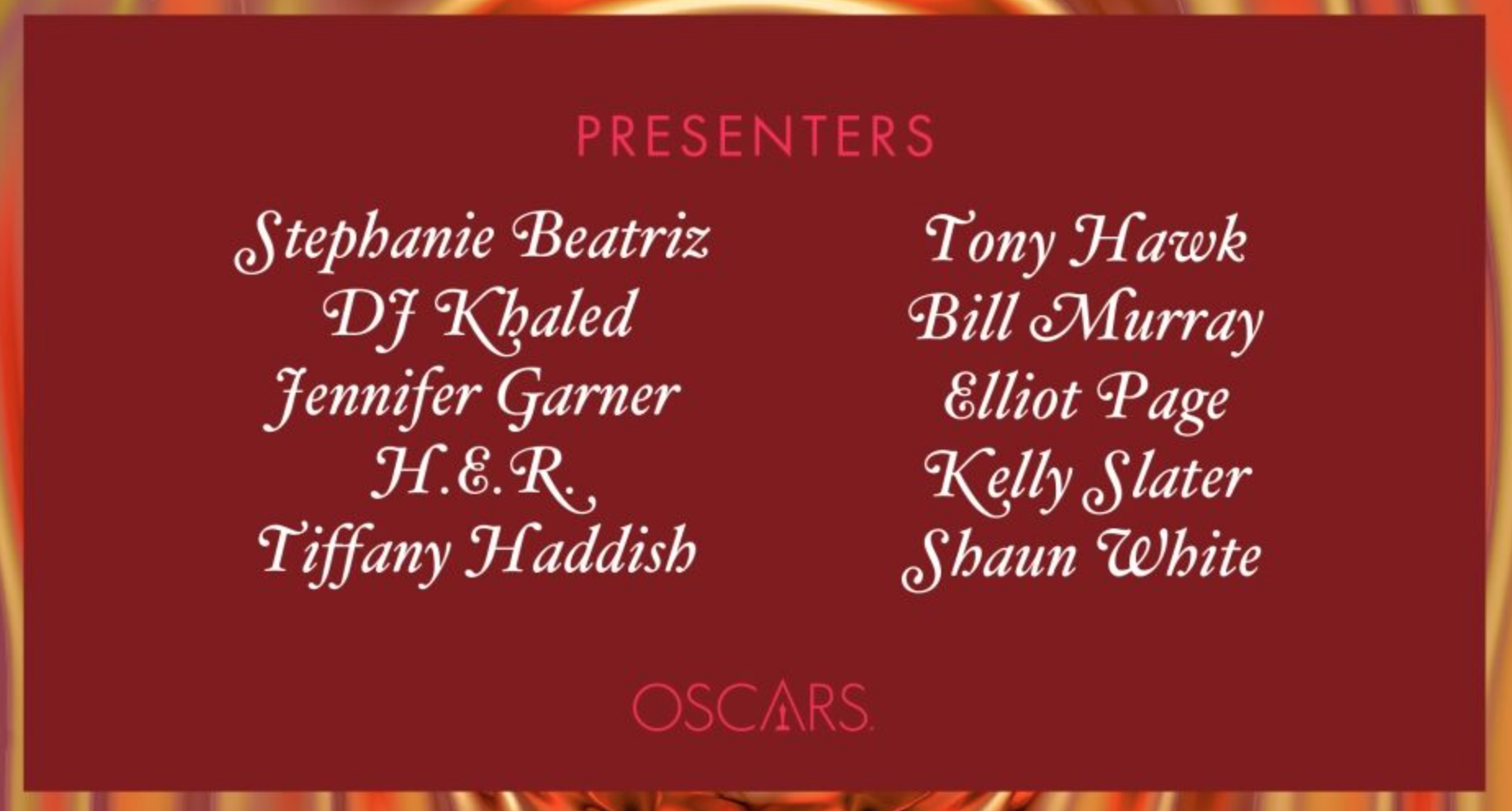
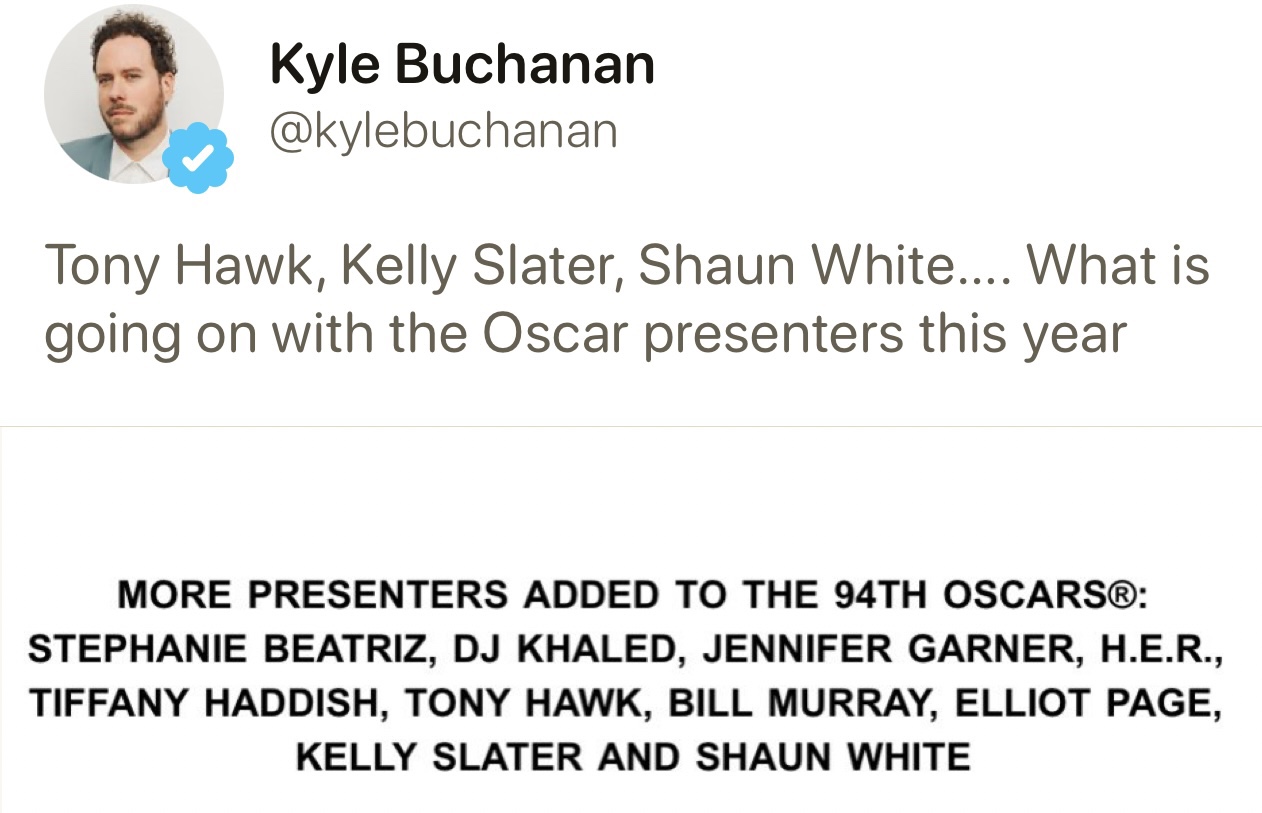
It’s just been announced that the “next wave” of presenters at the 94th Oscars will include actress Stephanie Beatriz (who?), DJ & record executive DJ Khaled, singer-songwriter H.E.R., skateboarder Tony Hawk and Olympic gold-medal snowboarder Shaun White.

Paul Newman in Butch Cassidy and the Sundance Kid: “Who are those guys?”

HE to Oscar producers Will Packer and Shayla Cowan: “Whadjoo guys do, invite some of your friends? I’m sorry but people who present Oscars have always been famous or at least accomplished within the motion picture industry. Is this is a mistake, these names? Is it a put-on?”

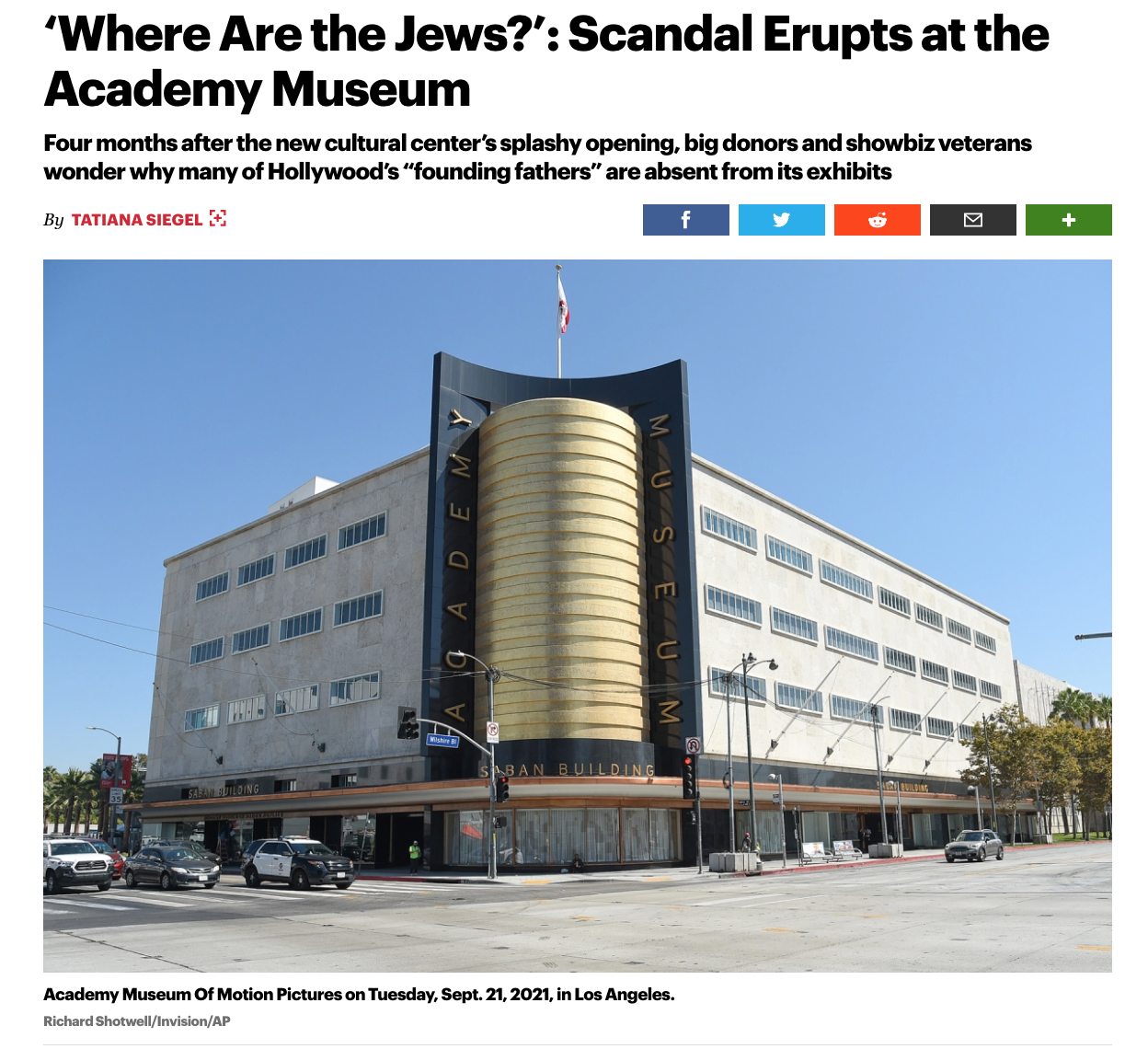
Woke House Recognizes Industry Jews!

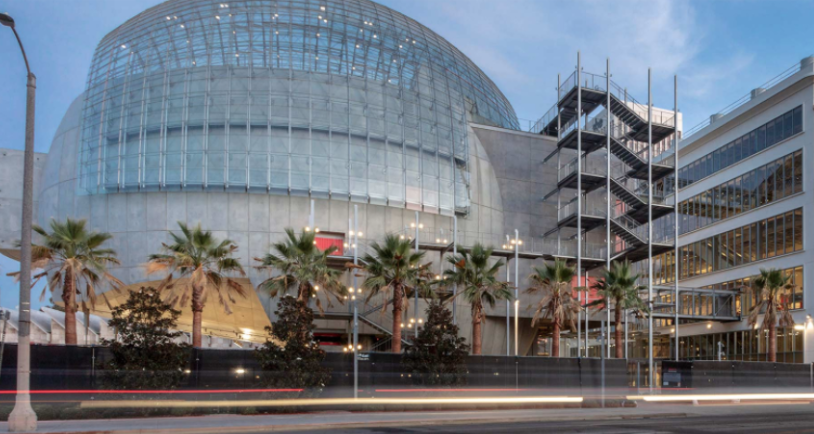
It’s been six months since the almost comically myopic Academy Museum (i.e., “Woke House“) opened. We all remember that the main priority of the curators out of the gate was to apologize for the industry’s many decades of pernicious racism and to celebrate women and POCs as well as current efforts in the service of equity and inclusion.

But it wasn’t long before people started saying “yes, yes…we all acknowledge that Hollywood has always been an evil racist cauldron that needs to be corrected and cleansed by visionary wokesters, and that the worst perpetrators of this fundamental evil (not to mention innumerable forms of sexism) were the white men who founded and built the film industry back in the early to mid 20th Century. But what about the fact that these guys — all of the big-studio owners were Jews — actually created this industry? Shouldn’t the fact that they built this industry from the ground up…shouldn’t that warrant some acknowledgement?”
As far as I could discern the response from Woke House curators was something along the lines of “yes, of course…the men who created this business deserve some credit and I’m sure we’ll get around to paying tribute to their pioneering spirit and industriousness, but the main thing to keep in mind is that they perpetrated a system of fiendish exploitation, making life miserable for people of color and God knows how many struggling actresses and would-be female filmmakers, and that generations of successive white men came along and strengthened this evil system, and it’s now up to us and other forward-thinking progressives to finally put a stop to this and lead the industry out of the darkness.”

This morning Woke House finally relented and announced that a year from now they’ll be debuting a section of the the Museum that pays tribute to the founding Jews. It’ll be called HOLLYWOODLAND. Here’s the official announcement:

“Opening in late Spring 2023, HOLLYWOODLAND will trace the history of filmmaking in Los Angeles back to its roots at the beginning of the 20th century, illustrating how and why the city became the world capital of cinema that it still is today. This immersive gallery will convey the evolving topography of Los Angeles along the timeline of the developing movie industry, allowing visitors to feel a tangible proximity to this rich history and encouraging further exploration of the city’s landmarks upon departing the Academy Museum.

The exhibition will focus on the predominantly Jewish founders of the early Hollywood studio system, delving into how their personal narratives shaped the distinct characteristics of the movies their respective studios produced. It will foreground the ways in which the birth of the American film industry — and therefore the projected depiction of the American Dream — is truly an immigrant story.

“The exhibition is organized by Associate Curator Dara Jaffe in collaboration with Associate Curator of Digital Presentations Gary Dauphin.”

Scene and Felt

After living in this town since ’83, I decided yesterday that I would finally visit Julie Christie‘s Shampoo bungalow — the one owned or rented by Jack Warden‘s “Lester” for his mistress “Jackie” (Christie) to live in. I don’t need to familiarize anyone with the Act II scene that happens indoors (more specifically in the bathroom) or how the film ends on a since-built-upon plateau above it. The home is located at 2700 Bowmont Drive — up Coldwater, take a right on Cherokee. Shampoo was shot 47 years ago but the place looks more or less the same. Well, pretty much.

Dishonest Assessment

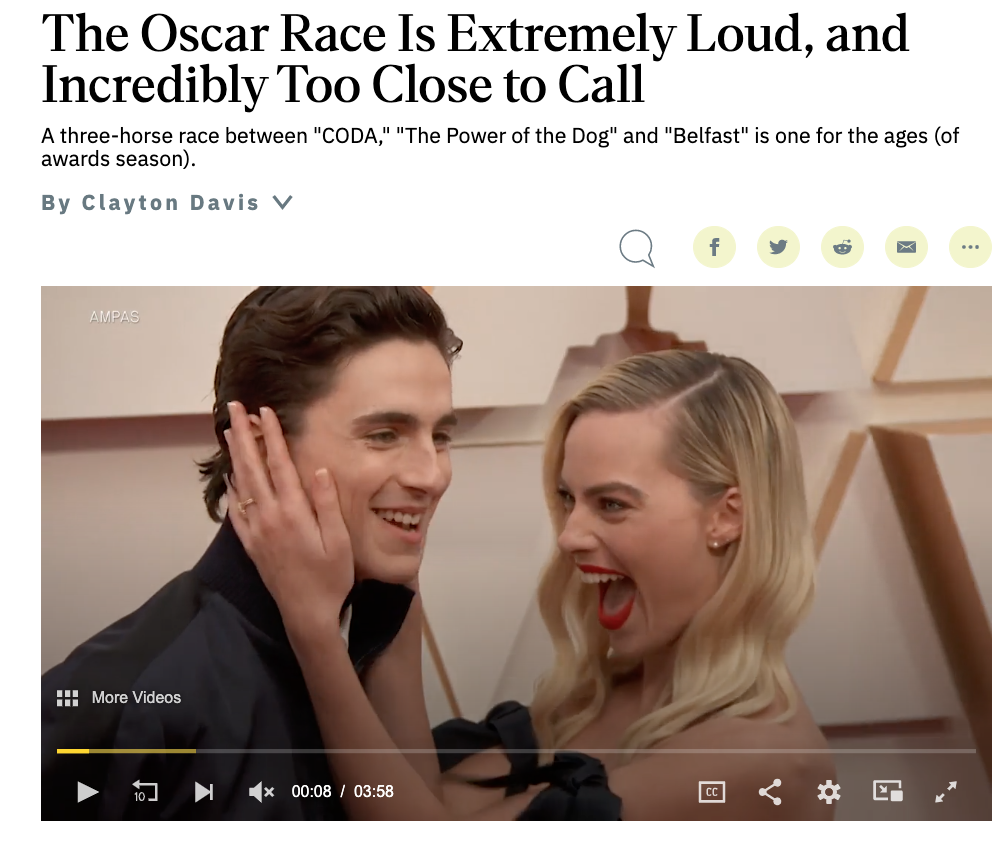
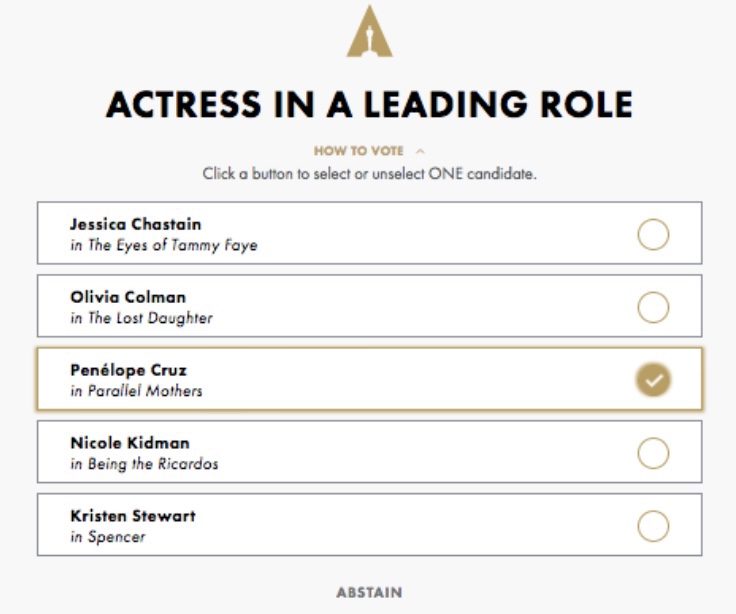
Last night Variety‘s Clayton Davis posted a piece titled “The Oscar Race Is Extremely Loud, and Incredibly Too Close to Call.” The subhead claimed that it’s “a three-horse race between CODA, The Power of the Dog and Belfast.”

Is there anyone reading this who concurs? Anyone at all? I sure as hell don’t. CODA just won the WGA’s Best Adapted Screenplay — couple that with the PGA and SAG wins, and Davis surely understands that CODA has the Best Picture Oscar more or less in the bag, and yet he’s trying to sell the idea of a horse race. Odd.

Shoo-In

Ketanji Brown Jackson is obviously brilliant, principled, impeccably credentialed and abundantly qualified to sit on the Supreme Court.

Today was just about opening statements. The rough stuff happens tomorrow and Wednesday. She should be queried about the ethnic hot-button issues. One of these is the fairness of implemented equity policies in education institutions, which many parents are outraged about. It’s fair to get into all this.

Certain Republican awful-awfuls will try to rough her up as best they can within the bounds of propriety, and she’ll get through it, and then she’ll be confirmed.

Emotional Tribute

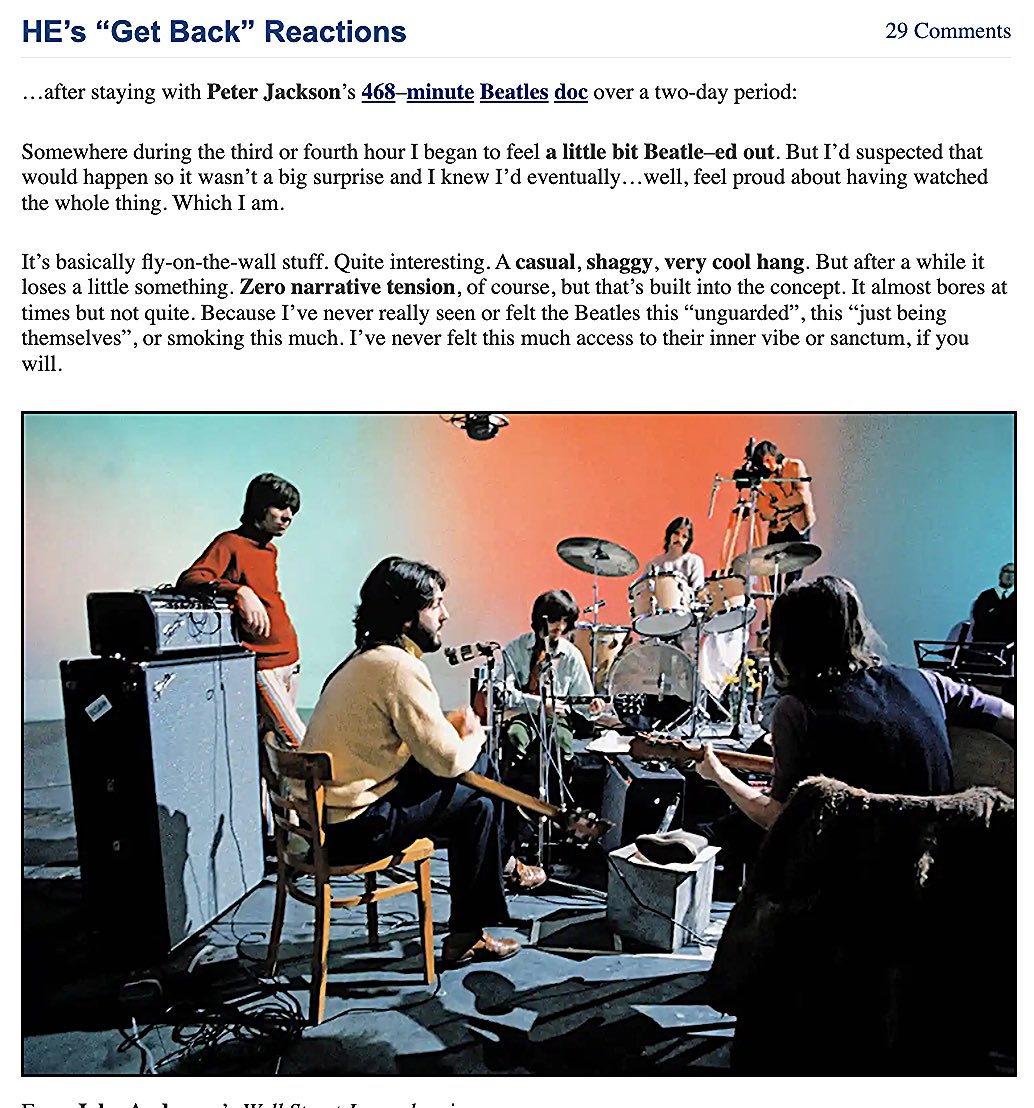
I didn’t mention the other night that The Beatles: Get Back (Disney +), Peter Jackson‘s three-part, 468-minute “documentary about a documentary”, won the PGA Award for Outstanding Producer of Non-Fiction Television. I know I did the right thing in slogging through this nearly eight-hour epic, and I’m glad it’s there for re-sampling any time I want. How about a 90-minute or two-hour summary reel with all the best stuff? Has anyone taken a crack at that?

HE’s Get Back Reactions,” posted on 11.24.21.

Read more

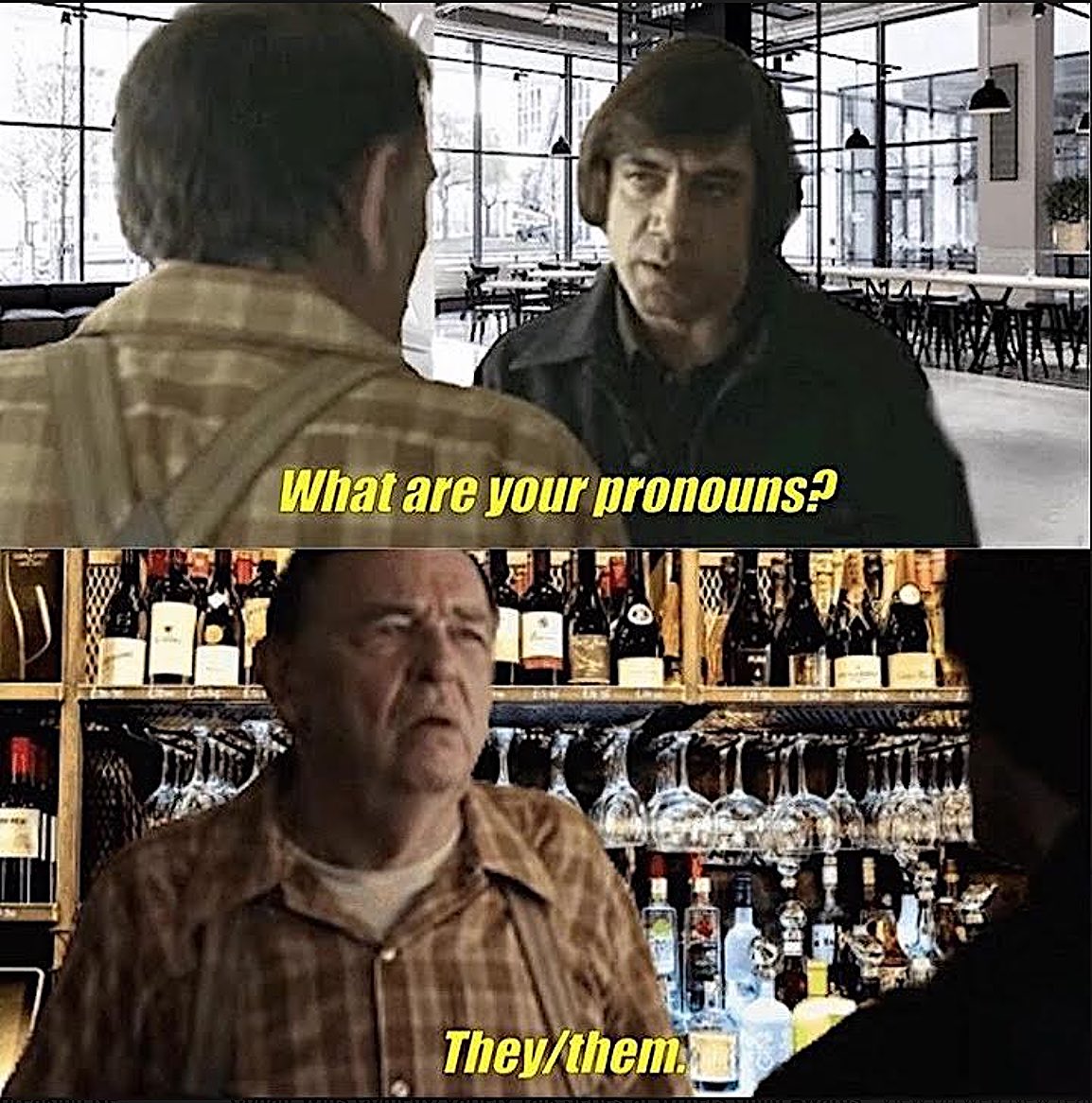
[Pronoun] Stoops to Twitter

A friend who never “does” Twitter decided last night to put on waders and step waist-deep into the cesspool.

Observation #1: “It’s like trying to have a conversation in The Land Of The Brain-Dead…but somehow these idiots all think like lawyers, so they’re nitpicking every point. It’s an impossible landscape. The very form of it is anti-truth. You can feel your soul being leached away.

Observation #2: “[Twitter is] poisoning our species, and yet everyone’s addicted to it! No wonder what’s happening is happening. Because it’s like trying to talk about something through a string and two paper cups, and the people who are disagreeing with you are, to a large extent, cultists.”

“Around The World” Oscar Puzzle Explained

I myself have denied or dismissed the reality of what led to the bizarre Best Picture win of Around The World in 80 Days (‘56). And I think it’s time to come clean.

It wasn’t the meager cinematic merits of that Mike Todd film — a ten-ton, elephantine, all-star travelogue spectacle with Shirley MacLaine as an Indian princess — as much as the impact it had & the money it made — its success as an enormous, eye-filling, big-scale, reserved-seat Todd-AO event film that TV couldn’t hope to compete with — that’s what Academy members voted for.

The realization that TV had to be fought tooth and nail had only sunk in five or six years earlier — This Is Cinerama (‘52) was the first costly attempt to win back audiences along these lines, followed by the CinemaScope (‘53) and VistaVision (‘54) processes, not to mention the flim-flam attempt to impose fake widescreen images with 1.85 aperture plates (April ‘53).

The massive competition of TV, and the possibly permanent diminishment of Hollywood’s share of the entertainment dollar —that’s what the industry had been facing since TV began to catch on in ‘48 or ‘49 and what it was still was facing in ‘56.