25 Years Later, Same “Edge” Problem

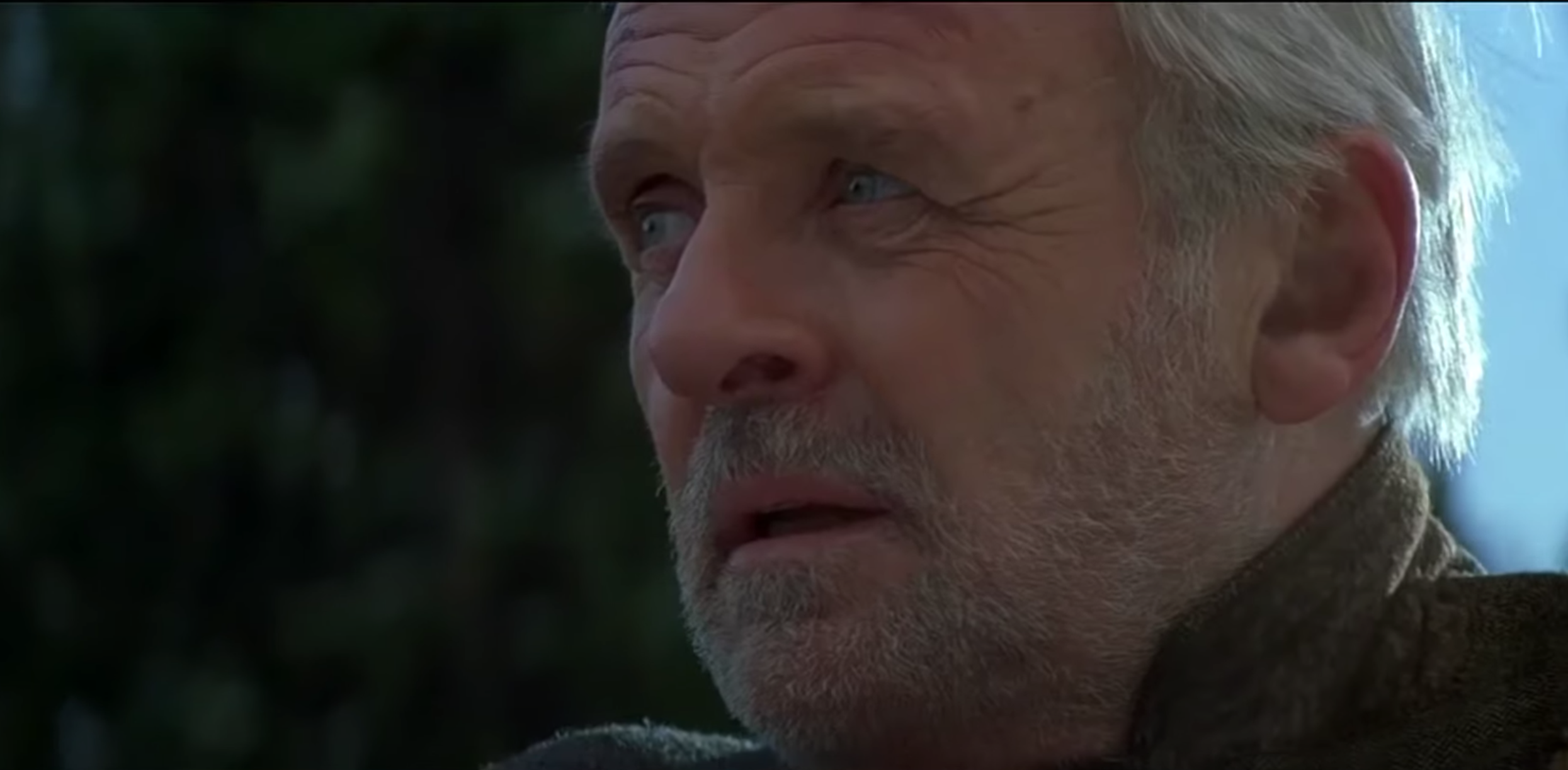
The Edge (’97) is a rugged Alaskan wilderness survival drama, and more precisely about three two men vs. one badass Kodiak bear who wants to maul and eat them.

Initially it’s about three guys who’ve crash-landed in a remote Alaskan lake — aloof billionaire Charles (Anthony Hopkins), smart-ass photographer Bob (Alec Baldwin) who’s been secretly schtupping Charles’ wife Mickey (Elle MacPherson), and Bob’s assistant Steve (Harold Perrineau).

But Steve gets killed by the bear early on (25 years ago non-white supporting players always died first in action films), and then it’s down to Hopkins vs. Baldwin and the jealousy-cuckold-greed dynamic.

The film is therefore propelled by two major conflicts — (a) the bear vs. Charles and Bob, and (b) Charles vs. Bob over Mickey, and more particularly Bob in Act Three wanting to kill Charles so he can marry Mickey and live like a rich guy.

But here’s the thing: Charles and Bob may dislike or even hate each other during a good part of the film, but they also go through a series of what you might call “survivalist epiphanies.”

What transpires between them in terms of trust, selflessness and fighting the bear together is far more profound, they realize at the end, than Baldwin wanting to continue fucking MacPherson and perhaps living off Charles’ money if and when he dies.

The Edge, in short, should have been about Baldwin’s abrasive, greedy asshole photographer learning that there are greater and more transformative things than great MacPherson sex and loads of dough. Bob and Charles should have ended the film as brothers who are much closer to each other than either one has ever been to MacPherson.

There should have been a scene in which Baldwin admits to Hopkins that he’s boning MacPherson, but adding “are you gonna stay with her after all this? I wouldn’t. I mean, I didn’t betray you, Charles…she did. You and I are fine. She’s the problem.”

The Edge premiered at the 1997 Toronto Film Festival. Director Lee Tamahori, screenwriter David Mamet and producer Art Linson all gave interviews. I can’t recall if I interviewed Mamet then or at some later point, but I definitely recall explaining my alternate Edge ending.

The best part in the whole film is when Hopkins mentions how some people who’ve become accidentally stranded in the wilderness wind up “dying of shame.”

If The Edge was made today, Perrineau’s character would be the strapping boyfriend of MacPherson as well as the one who survives to threaten Hopkins life at the end. Baldwin, a disposable white guy with an alcohol problem, would be killed by the bear early on.

IMDB: “In his memoirs, Alec Baldwin put much of the blame of the movie underwhelming performance at the feet of director Lee Tamahori, who he believes watered down David Mamet’s script and was more interested in action than character.”

Smart Woman Producer Submits to “Northman”

Received this morning: “Last night I saw a totally booked screening of The Northman. The room was filled with young filmmakers, largely men, and there was a crackling sense of anticipation. But when the credits rolled at the end, there was a discernible sense of deflation.

“It’s a beautiful looking film — one haunting vista after another. Stunning cinematography. An authentic universe — sweaty, muddy, bloody guts, chaos. Very believably true to life.

“But unfortunately [there’s] no emotional context. For all the [ravishing compositions], it’s submerged in ice-cold story telling. No human connection to the drama and tragedy. All that electricity and no plug.

“You keep waiting for that connection. For the satisfaction and conflict that comes with a visceral story of righteous revenge.

“But there’s no there, there.”

Dying of Shame

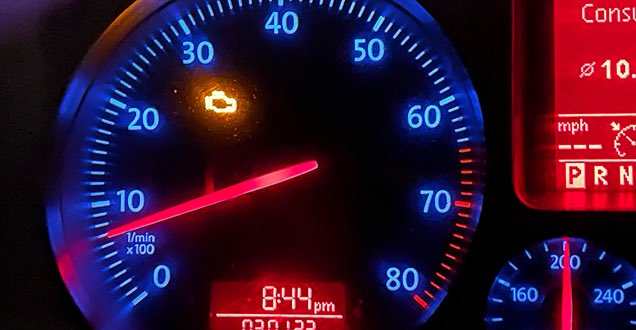
Since buying the 2009 VW Passat in late February, it’s been in the shop six times — Blutooth radio installation, cracked-windshield replacement, a noisy wheel-strut problem, repairing the coolant circulation system, sealing up a serious oil leak, replacing a faulty radiator — and right now it’s in the shop for a seventh time. This time it might be some kind of oil pump malfunction. The night before last an oil-can icon appeared — the online manual said this indicated a low oil level. I’ve since been told this actually indicates low oil pressure, but that’s not what the icon indicated.

The idea was to drive back east and then use the Passat as a train-station and grocery-shopping car — very sparingly, no regular commuting. That’ll never happen. I should have bought a Toyota or a Honda, I realize, but I couldn’t find one that was (a) less than eight years old, (b) had less than 150K miles and (c) didn’t cost an arm and a leg. So I opted for a $4K purchase of the Passat, knowing there would be issues down the road but expecting that I could at least drive it across the country with my suitcases, some boxes, my grandmother’s oriental rug, my red bicycle and the cats.

God to HE: You have wounded your life with a foolish purchase, but now I’m going to double-down and make it even worse than you feared. Did you say seven visits to your mechanic’s garage? That’s chicken feed. Let’s see if we can’t push that number up to ten.

Driving across the country is officially out. I can’t drive this car more than ten blocks without something new going wrong with it. At least in its present condition.

Now I have to fly back east before flying to Nice. Then I’ll have to return to LA and try to re-sell the car for the original $4K I shelled out, especially with my ability to show recent receipts for $4K worth of serious repairs. It’s a handsome black car with good tires and a lot of creature comforts, and with all the pricey parts replacements I’m sure it’ll be fine to just drive around as a neighborhood car.

Last night I was so profoundly upset by my catastrophic decision to buy this shithole lemon that I was unable to sleep. A fresh ambien script is waiting at my local CVS, but I had none at home. I finally crashed about 5 am. This has easily been the most financially calamitous purchase of my adult life. It’s on the same level as spending thousands of dollars on cocaine in the ‘80s. A monumental disaster.

Around 3 am I started watching Lee Tamahori‘s The Edge, the 1997 psychological action drama about Anthony Hopkins and Alec Baldwin crash-landing in the Alaskan wilderness and being stalked by a killer Kodiak bear. There’s a line that Hopkins’ character, a cuckold billionaire, says at least three times — that many people who get lost in the wild and are suddenly struggling to survive wind up “dying of shame,” as in “how did I let this happen?…how could I be so stupid and short-sighted?”

Hence the title of this post.

Read more

Lynch-at-Cannes Rumor Wasn’t Ruimy’s Doing

World of Reel‘s Jordan Ruimy, having read the same tweet and the same Variety story that everyone else had, did actively speculate about a new David Lynch film going to Cannes, and he did exhibit a certain enthusiasm for same. But he was never more than a go-between.

The guy who actually started the rumor with a single tweet (way back on April 6th) was Kaleen Aftab.

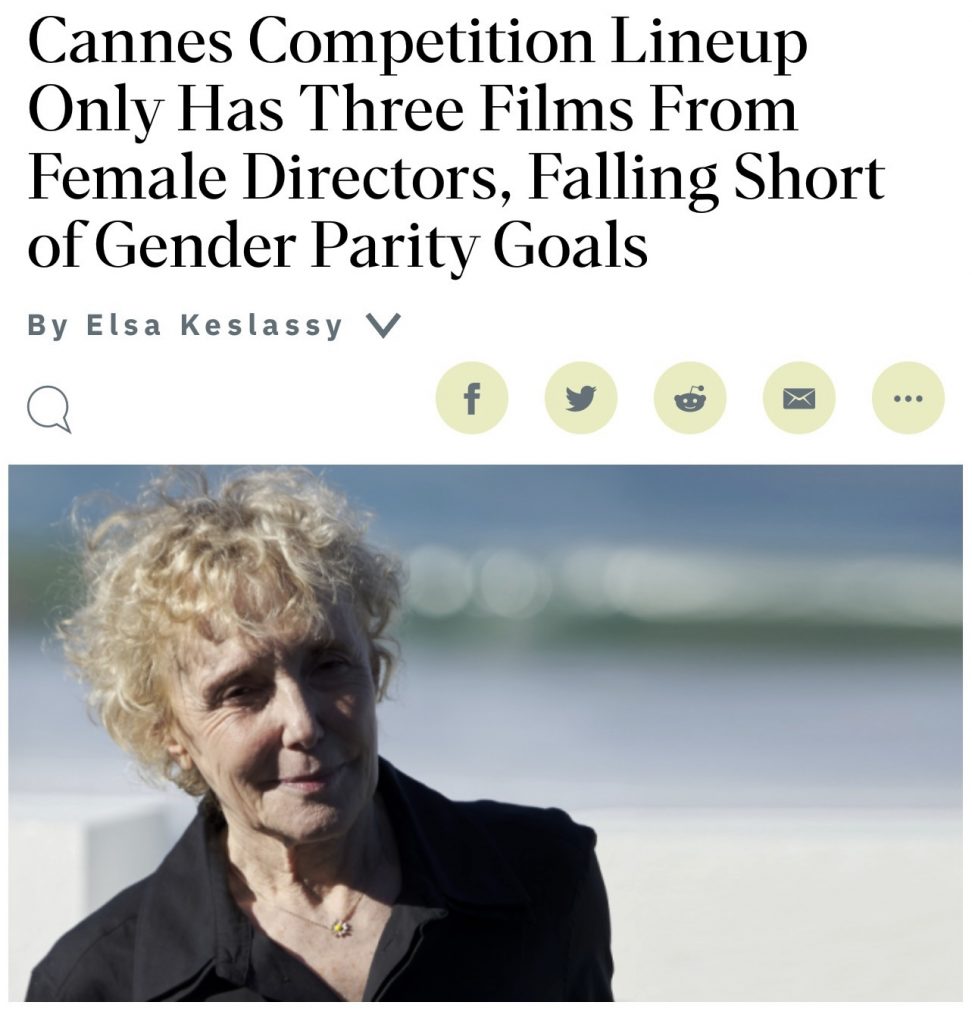
But things really took off on 4.11 (three days ago) when Variety‘s Elsa Keslassy reported the following: “Most surprisingly, according to two well-informed sources, there will even be a David Lynch feature film which has been completely off the radar and stars Laura Dern — either as a cameo or a supporting role — along with some other Lynch regulars.”

So if you want to punish someone for running dicey info, punish Aftab and Keslassy. Ruimy did nothing.

Whiteside Plague

Hollywood Elsewhere is down with Al Pacino, 81, having some kind of intimate relationship with Noor Alfallah, 28. Pacino, Mick Jagger, Nicolas Berggruen — she likes “being” with older rich guys, and so what? HE does have an issue, however, with Pacino wearing whitesides. I’ve been voicing objections to those horrid-looking shoes for two or three years now. (Longer?)

“The Handyman Hector Galindo…”

Kate James, Amber Heard‘s personal assistant between 2012 and 2015, testified today (Thursday, 4.14). We’re all capable of fuming rage, I suppose. It’s also fair to say that some of us are better at fuming rage than others. More committed, I mean.

Whotta Bummer

The following nine boldfaced Cannes Competition titles have my interest, but generally speaking I’m feeling a bit underwhelmed this morning. Okay, a little bummed out.

The absence of Ari Aster‘s Disappointment Blvd. is, for me, a painful wound. If this allegedly four-hour epic had been included, Cannes ’22 would have taken on an extra dimension. Without it, it feels diminished.

I look at this rundown and I experience an imperceptible slump in my soul.

And I have to ask myself, “What will Clayton Davis say about these films?” He can wet himself over the non-competitive titles — Baz Luhrman‘s Elvis, Joseph Kosinski‘s Top Gun: Maverick, George Miller‘s Three Thousand Years of Longing — but then what? HE will be waiting with bated breath to see what Davis thinks of Cristian Mungiu‘s RMN.

HOLY SPIDER by Ali ABBASI
LES AMANDIERS by Valeria BRUNI TEDESCHI
CRIMES OF THE FUTURE (Les crimes du futur) by David CRONENBERG
TORI ET LOKITA (Tori and Lokita) by Jean-Pierre et Luc DARDENNE
STARS AT NOON by Claire Denis
CLOSE by Lukas DHONT
FRÈRE ET SŒUR by Arnaud DESPLECHIN
ARMAGEDDON TIME by James Gray
BROKER by KORE-EDA Hirokazu
NOSTALGIA by Mario MARTONE
RMN by Cristian MUNGIU
TRIANGLE OF SADNESS by Ruben ÖSTLUND
HAEOJIL GYEOLSIM (Decision to leave) by PARK Chan-Wook
SHOWING UP by Kelly REICHARDT
LEILA’S BROTHERS by Saeed ROUSTAEE
BOY FROM HEAVEN by Tarik SALEH
ZHENA CHAIKOVSKOGO (Tchaïkovski’s wife) by Kirill SEREBRENNIKOV
HI-HAN (Eo) by Jerzy SKOLIMOWSKI

Word around the campfire was that Armageddon Time wouldn’t be showing in Cannes, but a last-minute switcheroo happened, or so it appears. Okay, fine. The “James Gray cabal” has been a powerful force for years so I’m not totally surprised. But I’ve spoken to a guy who saw it recently and…okay, I won’t say anything.

If Musk Buys Twitter…

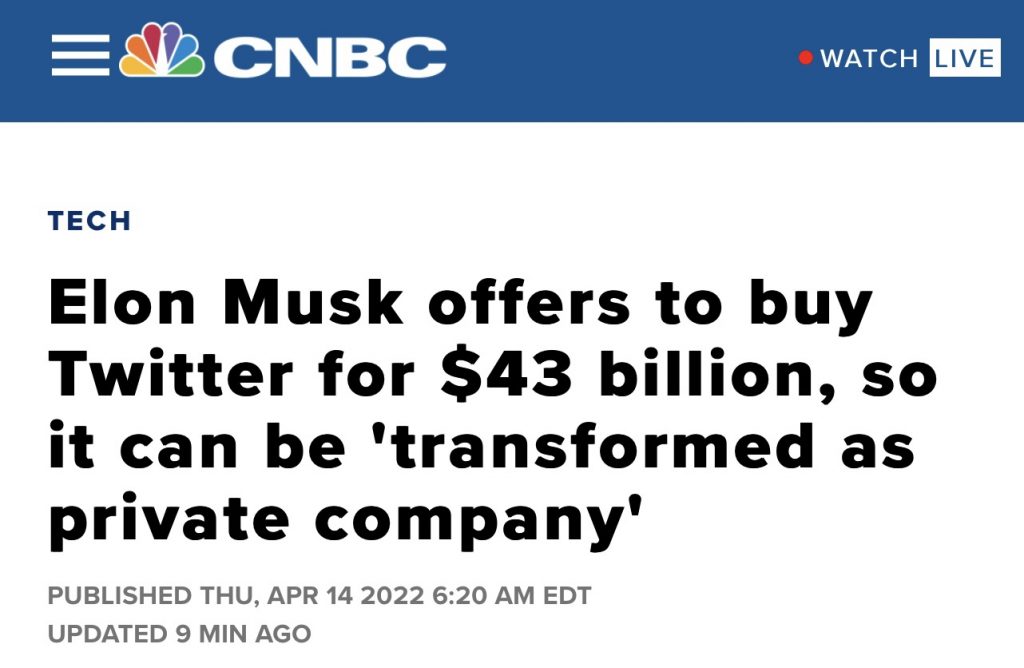
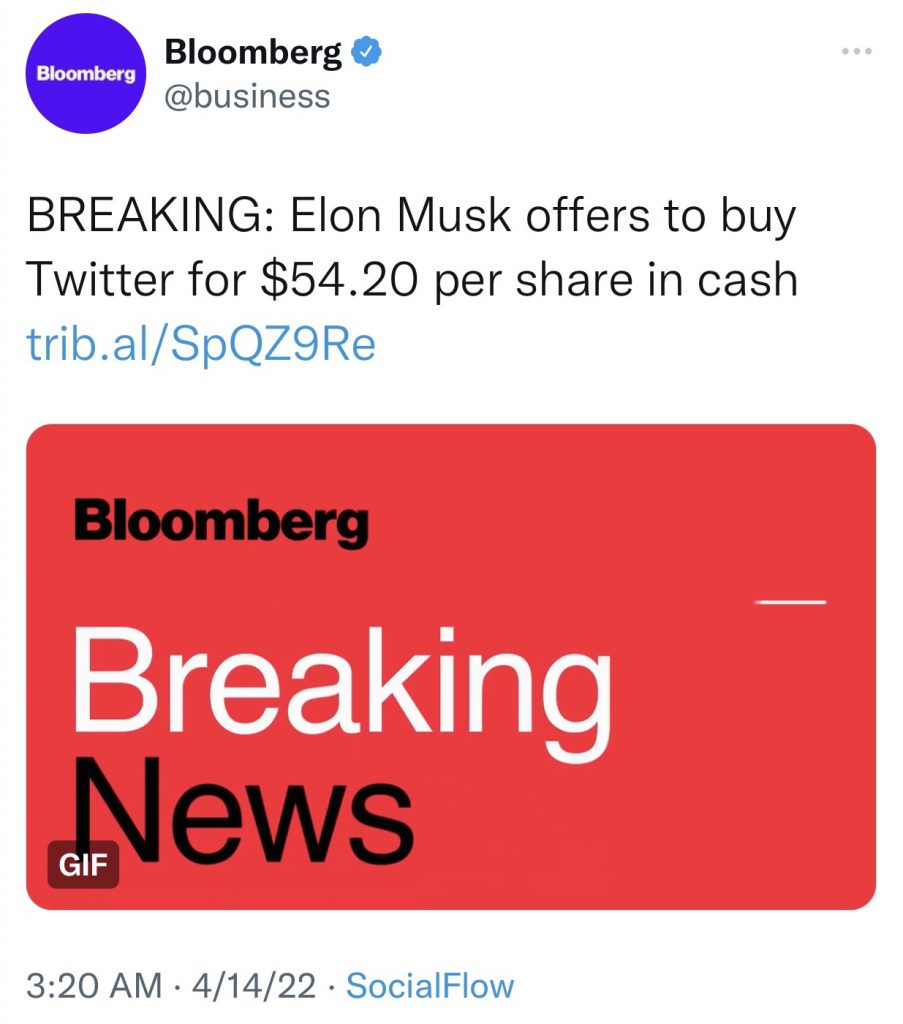
Friendo: “Is it your Trump pathology that is preventing you from covering the Elon Musk Twitter story (an offer if $43 billion to buy the whole thing —lock, stock and barrel)?”

HE: “No — but if Musk buys the company and (God forbid) lets Donald Trump back on Twitter he’ll be doing the devil’s work. Trump is a sociopath and, within the limits of human frailty, flat-out EVIL. There’s really no ambiguity about that. Trump is STILL prattling on about the stolen election. He’s INSANE, and he has bred insanity in the bumblefuck ranks.”

“I Want This All To End’

Today’s emotional testimony from Isaac Baruch, Johnny Depp’s friend and neighbor, was quite something. Persuasive, I mean. Not conclusively but Baruch’s words got to me. It made me think of Jordan Ruimy’s article about the Depp-Heard libel trial (“Johnny Depp: Innocent #MeToo Victim?“).

Speaking as one who had a vodka-and-lemonade problem in the ‘90s and then an off-and-on wine dependency in the aughts, I think people change when booze gets hold of them during stressful times. Dark stuff comes out. And if you’re in conflict with the wrong kind of person under the influence of alcohol, it can trigger you. With some people alcohol can be a terrible influencer.

Read more

Adventurous Vietnam Episodic

A few days ago I heard about a 3.31 Orange County research screening for Peter Farrelly‘s The Greatest Beer Run Ever (Apple +). I heard nothing about how it played. The screening indicates, of course, that the film will open later this year, probably in the fall.

The Apple TV + release is a true-life Vietnam War drama (layered with a little dramedy here and there?), based on the same-titled 2020 book by John “Chickie” Donohue and Joanna Molloy.

I’ve read Donohue and Molloy’s book, and it’s quite the episodic journey — an apolitical adventure about the Vietnam War and being in harm’s way with Donohue, the lead protagonist (Zac Efron), somehow making his way through all the dangers and red tape and whatnot.

The book reads like a kind of working-class love story — a saga about 20something guys who were serving (or had served) in the Vietnam War during the mid to late ’60s…a time when many in the antiwar left were professing hate or contempt for soldiers for bringing all kinds of horror to the lives of Vietnamese citizens (i.e., My Lai).

If Farrelly’s film follows the tone and attitude of the book, The Greatest Beer Run Ever will not — repeat, not — bear much resemblance to Platoon, Full Metal Jacket, Apocalypse Now, Coming Home, Da 5 Bloods or any other high-profile Vietnam flick that comes to mind.

When I think of the Vietnam War, I think of the furies swirling around and howling in the ears of those bigwigs who sent 58,000 men to their deaths. The book certainly isn’t channelling any kind of guilt-trip narrative. It stays with Donohue’s perspective start to finish, and doesn’t really deal with the war in any kind of Oliver Stone sense. It’s about the perspective of soldiers who were just trying to survive, and who probably felt little if any allegiance for U.S military objectives at the time.

Set in 1967 and early ’68, the book is Donohue’s first-hand account (he was 26 at the time) of having decided to use his ex-Marine and merchant seaman credentials to get over to Vietnam and somehow track down his buddies and tell them they’re loved by the gang back home and bring them a case of two of beer as tokens of same.

Donohue’s message in a nutshell: “Don’t let the antiwar left get you down, bruhs. We know you’re living through hell but we want you to know that we care about you, and here’s a brewski to prove it.”

Read more