“Don’t Be A Grain Perv, Man”

Earlier today HE commenter Patrick Juvet wrote the following: “Robert Harris knows the difference between genuine film grain and video noise, which you don’t. All of your rants against ‘digital mosquitos’ were often aimed at Sony transfers done by Grover Crisp‘s people — transfers that allowed all of the natural film grain to shine through (more than it would have in a film print ) and were praised to the skies by Mr. Harris in his reviews.”

HE reply: “Did you just say the Sony transfers ‘allowed all of the natural film grain to shine through’ and even ‘more than it would have in a film print’? Did you just say that?

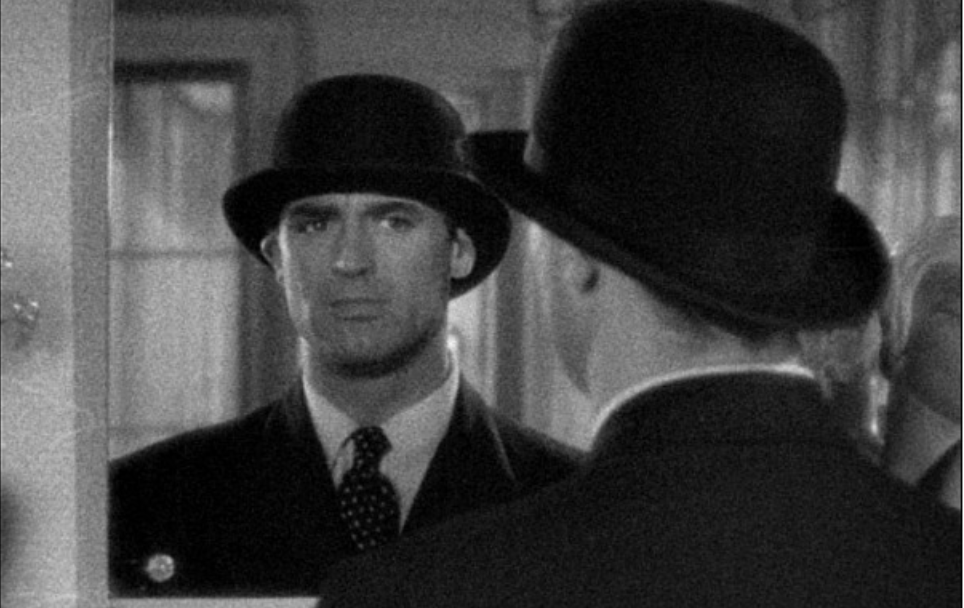
“FILM GRAIN HAS NEVER SHINED THROUGH…EVER. Film grain is a visual affliction that classic-era dps were forced to finesse as best they could. It was a pestilence. If Gregg Toland could have made grain disappear by clapping his hands three times, he would have clapped his hands three times…TRUST ME!

“There has never been anything the least bit glorious or edifying or transcendent about film grain. It’s cinematic fog. (Not that there’s anything wrong with fog if you’re Fritz Lang and you’re shooting Manhunt with Walter Pidgeon. The London scenes, I mean.)

“Film grain is built into the image so it’s wrong to try and erase the stuff, but anyone who advocates for more film grain to show up on a Bluray of a classic film than the amount that was naturally visible to theatrical audiences is a grain perv…they have something psychologically wrong with them, I mean.

“And theatrical audiences of the ’30s, 40s and ’50s, by the way, weren’t clobbered with the stuff. The idea of film grain ‘shining through’ on home video more than it did in theatres is repugnant. It’s sick. You and people like you are like FOOT FETISHISTS, only it’s grain that turns you on, not the shape of women’s toes and the shade of their nail polish.”

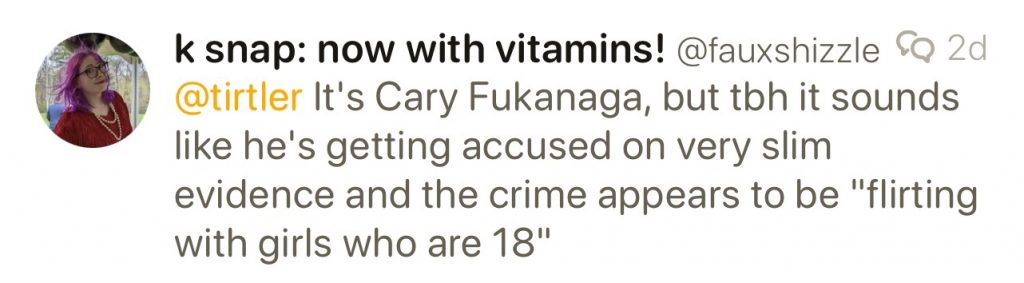
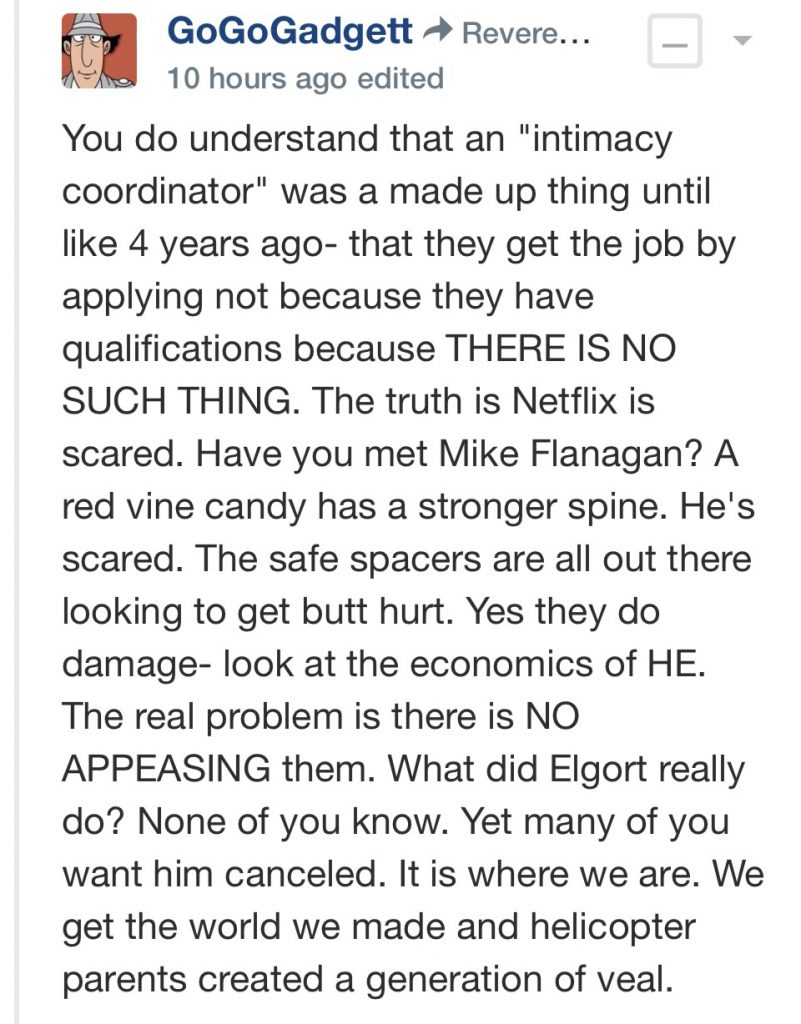
Is Carey Fukanaga Being Ansel Elgort-ed?

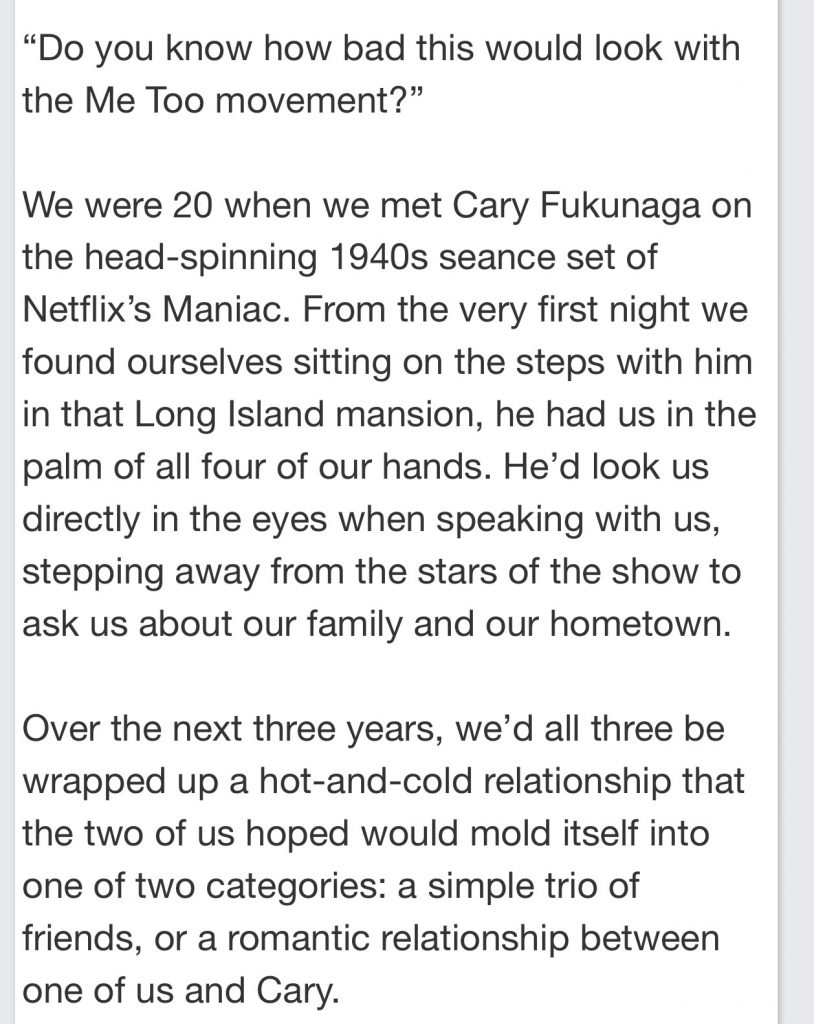
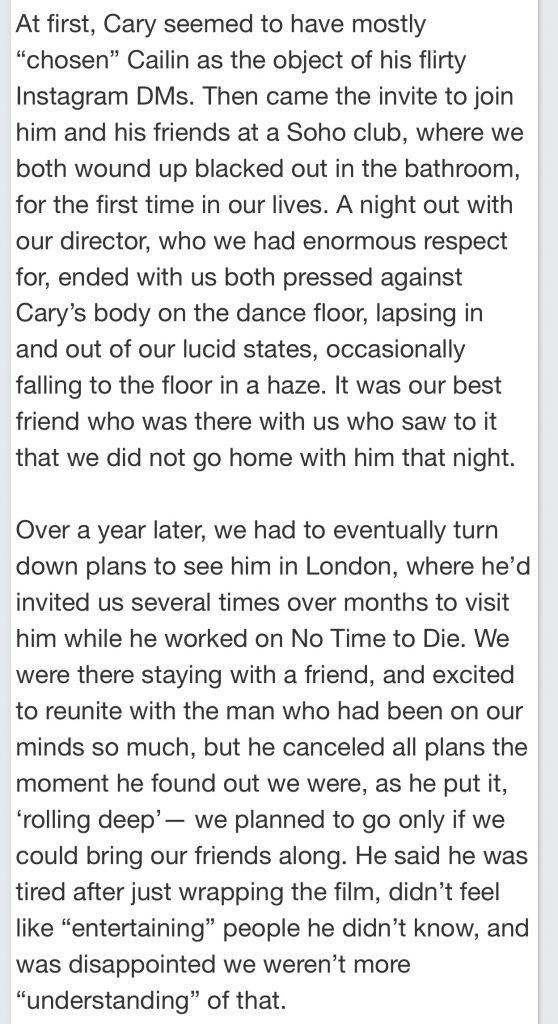
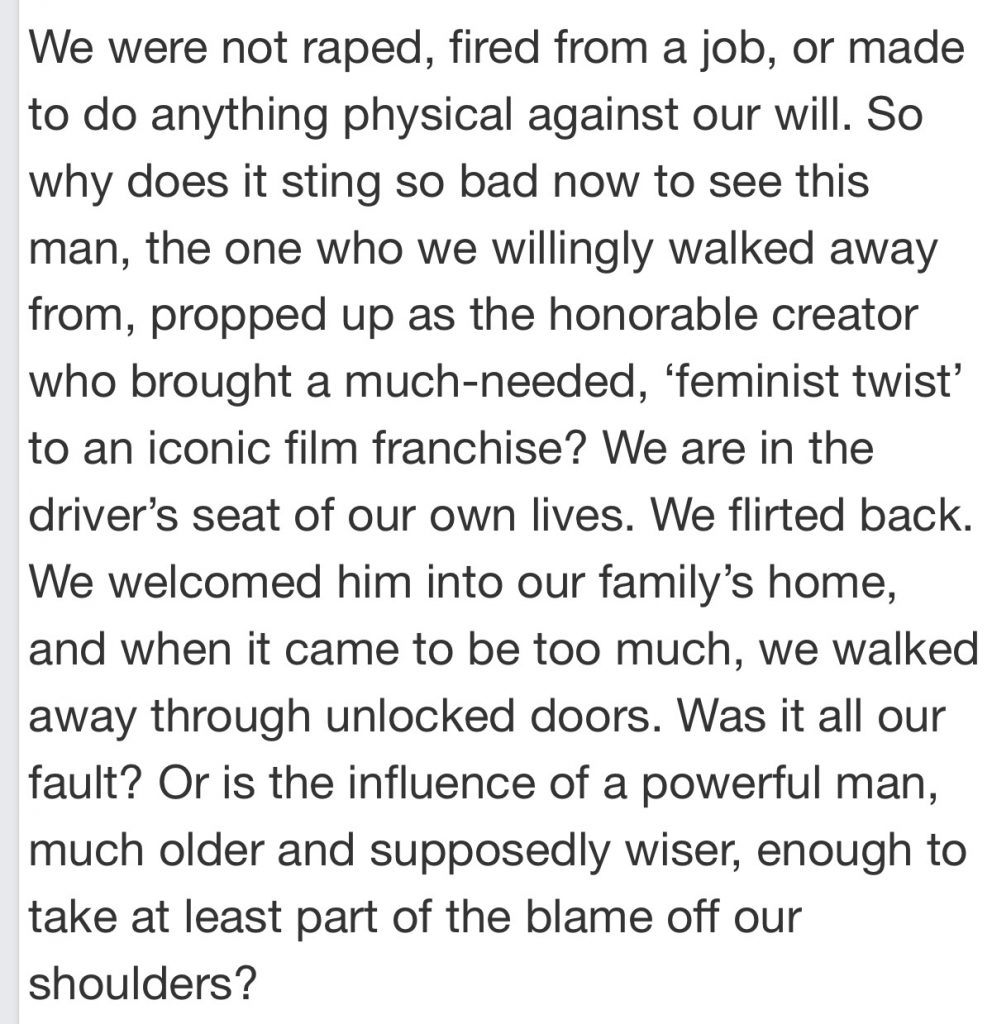
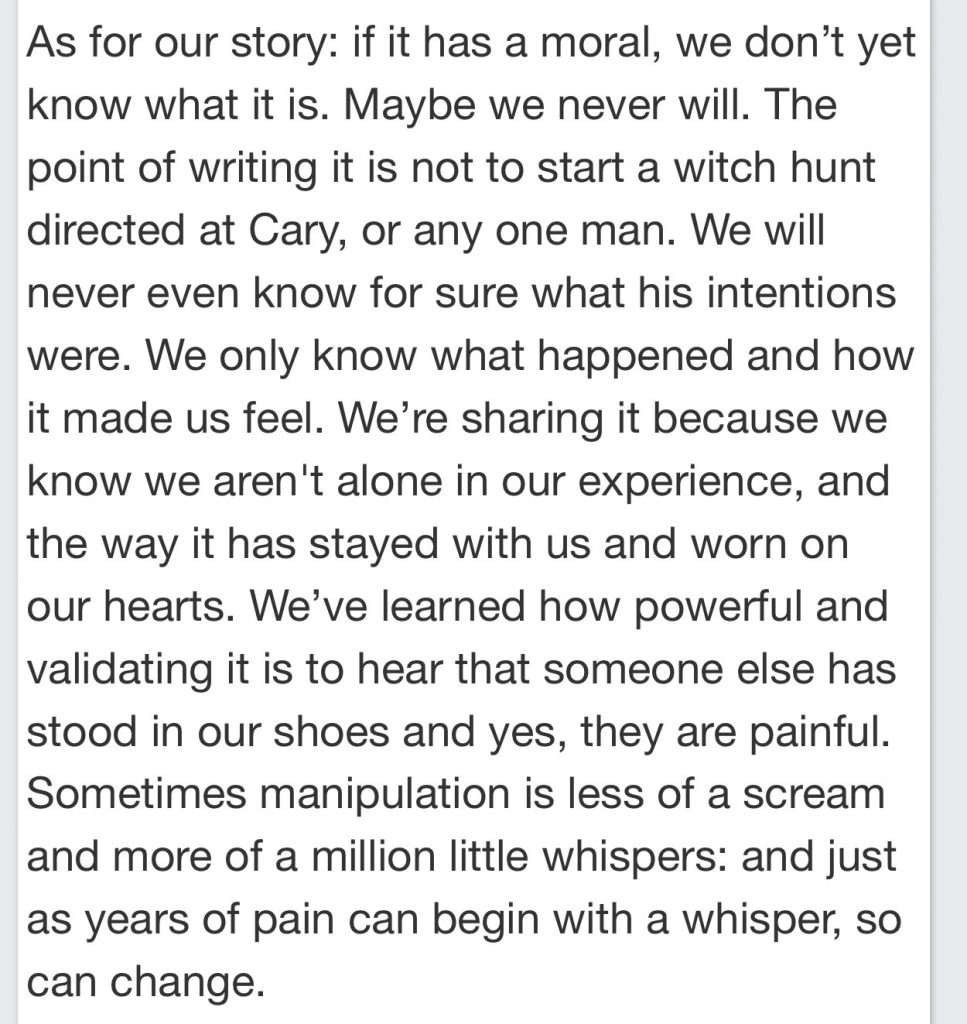
Read this story (dated May 5th) about a somewhat “close”, flirtatious but mostly hands-off relationship between director Cary Fukunaga (No Time To Die) and Hannah and Cailin Loesch, hosts of #Double Talk (aka @loeschtwins).

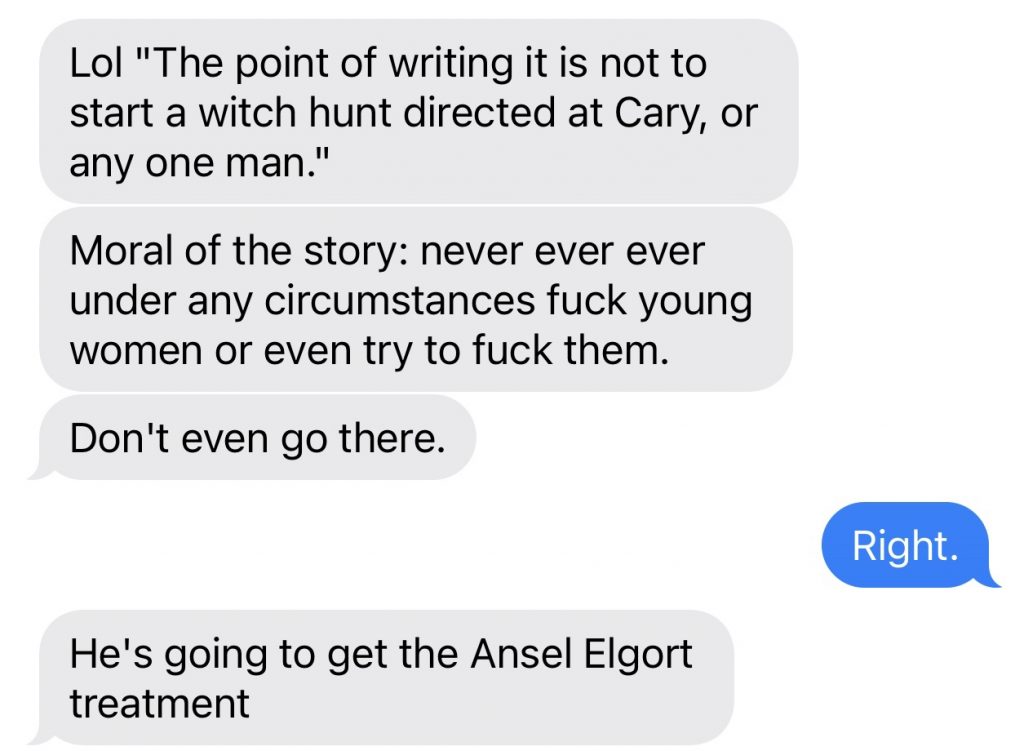
Over the last day or two there have been twitter conversations about whether or not Fukunaga should be punished for…well, it’s a little vague. For possibly attempting to groom the Loesch sisters into something or other…maybe a casual ménage a trois relationship….you tell me. Except nothing actually happened.

What does it mean to be Ansel Elgort-ed? It means being targeted by Twitter assassins as a sexual bad guy of some sort without any sort of hard evidence to back up the half-assed allegations. All I can say is that there seem to be some real monsters out there.

Marvin’s Room

Posted seven years ago (4.20.15) by “Kano’s Razor”: “Not to belabor the point, but it’s not really a big-name actor’s responsibility to ‘make good films’ (cue the old William Goldman line), but to (a) consistently project a unique vibe or aura, and to (b) select interesting scripts that will blend with or benefit from this aura.

“You could argue that Lee Marvin was better at the former than the latter, although one could easily counter that performers will always be at the mercy of the material that’s offered them. Marvin was in pretty good company in terms of possessing a certain brand of cool — a brand that the films he starred in rarely lived up to or sagely exploited to maximum mutual benefit.”

Love This Guy,” posted same date: “Lee Marvin finally graduated out of playing bad guys with his double role in Cat Ballou, and after that he had three years in which he appeared in really good films — Ship of Fools (’65), The Professionals (’66), The Dirty Dozen (’67) and Point Blank (’67). And that was nearly it. Three years.

“From ’68 on Marvin started turning good stuff down (William Holden‘s role in The Wild Bunch, Robert Shaw‘s role in Jaws) or starred in not-so-hot films like Pocket Money or Hell in the Pacific or Paint Your Wagon. He appeared in one final decent film, The Big Red One, in ’80. He died in ’87 at age 63.

“You spend the first forty years of your life trying to get into this business,” Marvin once said, “and the next forty years trying to get out. And then when you’re making the bread, who needs it?”

His bad-guy period was arguably more interestingThe Big Heat (’53), The Wild One (’54), Bad Day at Black Rock (’55), The Comancheros (’61), The Man Who Shot Liberty Valance , (’62), Donovan’s Reef (’63) and The Killers (’64).

Read more