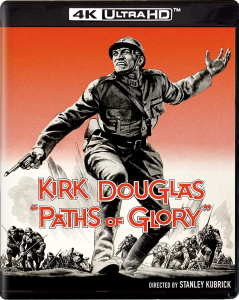
The Criterion Bluray of Paths of Glory looks absolutely perfect. I’ve seen a clean, grade-A print of this 1957 film projected in a first-rate screening room under optimum conditions, and the Criterion exceeds even that standard. It’s fine that Kino is releasing a 4K Bluray on 8.23, but how much better can it look? I’m trying to imagine this as we speak.
Tony Sirico‘s career peaked with his delicious Paulie Walnuts character in The Sopranos. Paulie’s feet were always firmly planted and he always came from a real place (there was no trouble believing that he could be malicious and predatory), but a good portion of the time he was funny.
Especially during the two calico cat scenes inside Satriale’s upstairs meeting room. And the entire brilliant Pine Barrens episode. And the scene when James Gandolfini‘s Tony discovered that Paulie had restored the painting of himself (dressed as an 18th Century general) and Pie-Oh-My, and hung it in his living room.
Sirico was a solid, reliable New York character actor (I enjoyed his banter in James Toback‘s TheBigBang) and a good guy off-screen, but Paulie made him a legend and vice versa.
Eight days ago Award Watch‘s Erik Andersonposted a spitball list of 20 Best Picture nominees, listed in order of hunches or likelihood. Boldfaced HE indicates strong agreement on my part; non-boldfaced WHUT indicates uncertainty, skepticism, halfhearted agreement and/or no comment; no reaction at all means no fucking reaction at all.
I will post my own roster of preferential likelies sometime tomorrow morning. Right now I’m figuring the four hottest contenders are Killers of the Flower Moon, Bardo, Babylon and Avatar: The Way of Water. Please respond in some way, shape or form to the current whatever-this-is.
1. The Fabelmans (Universal Pictures) / HE
2. Killers of the Flower Moon (Apple Original Films) / HE
3. Babylon (Paramount Pictures) / HE
4. Bardo, A False Chronicle of a Handful of Truths (Netflix) / HE
5. Everything Everywhere All at Once (A24) / WHUT
6. Avatar: The Way of Water (20th Century Studios) / HE
7. Women Talking (MGM/UAR) / WHUT
8. The Son (Sony Pictures Classics) / HE
9. The Whale (A24) / WHUT
10. Empire of Light (Searchlight Pictures) / WHUT
11. TÁR (Focus Features) / HE
12. Thirteen Lives (Amazon Studios/MGM/UAR)
13. Broker (NEON)
14. The Banshees of Inisherin (Searchlight Pictures)
15. Elvis (Warner Bros)
16. She Said (Universal Pictures) / HE
17. White Noise (Netflix) / HE
18. Napoleon (Apple Original Films) / HE
19. Triangle of Sadness (NEON)
20. Shirley (Netflix)
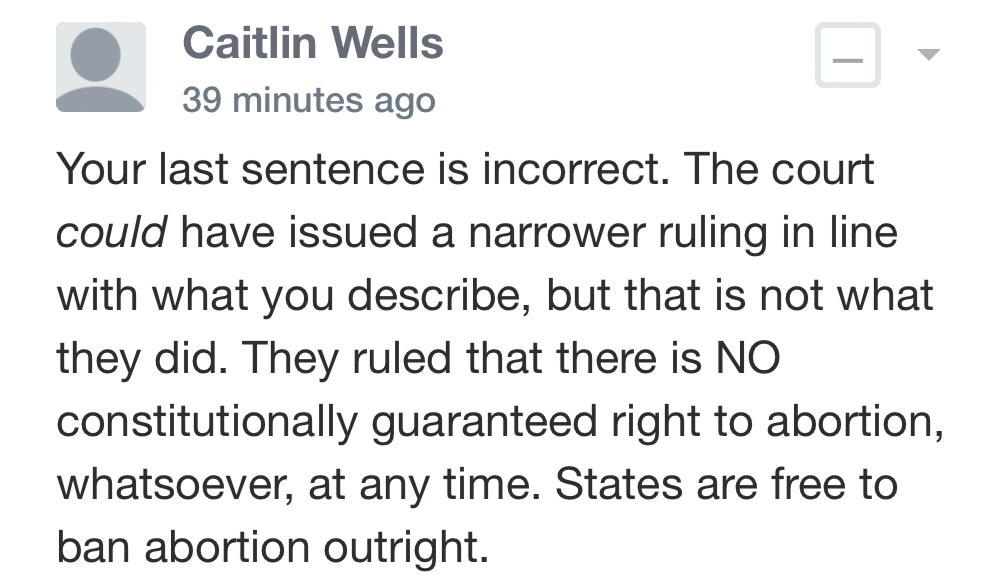
The legal dispute that led to the overturning of Roe v. Wade, which held that women have a constitutional right to abort their fetuses up until viability (or the 23rd or 24th week), was called Dobbs v. Jackson Women’s Health Organization. It was/is a Mississippi law that prohibits nearly all abortions after 15 weeks of pregnancy. The recent Supreme Court abortion ruling stated that a women’s right to choose an abortion up until viability was not constitutionally guaranteed, but in holding with Mississippi seemed to state that 15 weeks, not 23 or 24 weeks, was the cutoff, which fell in line with most liberal European nations.
Would it kill Japanese journalists to indulge in a little thoughtful speculation about the possible motive of Shinzo Abe’s assassin?
All I’ve read so far is that the shooter is in his early 40s, and that “local Japanese police said the handmade gun used in the shooting was more than a foot long and eight inches in height. They also said they seized several handmade guns in a search of the suspect’s home.” The handmade gun angle alone suggests a deranged killer, I realize, but is that all?
Critical Drinker to actor-podcaster Clifton Duncan (6.26.22): “The original Star Trek series, from back in the ’60s…a lot of the writers had served in the military in WWII or Vietnam…giving them all kinds of experience…how chain of command works and how [soldiers] relate to each other in high-pressure situations, and also [they were different] in terms of general maturity about life. But when you look at it now, the people who are writin’ it, the worst hardship they ever had is that someone got their Starbucks order wrong or someone misgendered them on Twitter. That’s not comparable…they don’t have that same well of experience to draw on, and it shows.”
I’m not familiar with Duncan’s acting history (The Good Fight, Scrooge: A Christmas Carol with a Twist, Bluff City Law, NCIS: New Orleans) but he’s a smart, smooth-spoken interviewer, and his discussion with the Scottish CD (aka Will Jordan) definitely gets into the myopic, identity-driven, woke-terrorized nature of screenwriting these days…the climate is too nice, too safe, too sanitized.
YouTube commenter Konstantin Dahlin: “The people in the industry only virtue signal to the people around them. The people they fear. They do not dare step out of line because that can mean losing their jobs. This is a self-sustained ideology where you can have a room with 10 people and none of them is woke, and yet everyone will behave and talk as if they’re woke because they are afraid that some of them, or all, might be. Its a radical ideology that is self-sustained and based on fear. No one except authoritarian types and people with head issues [are cool with] this. Most people are normal, and normal people don’t like radical wokeness.”
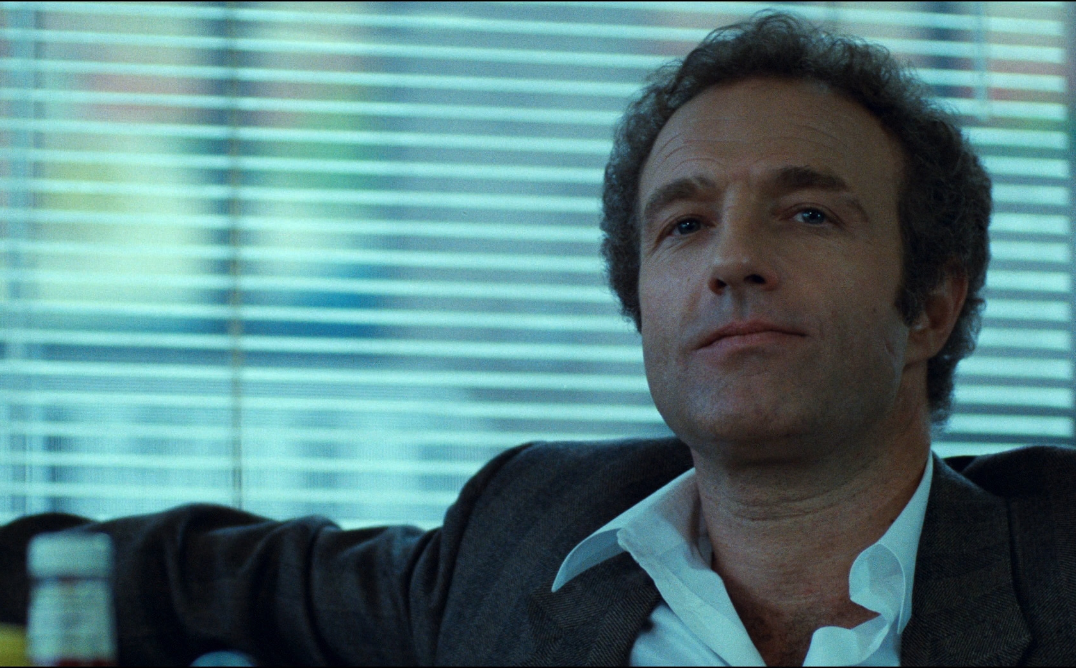
The diner scene in Thief is one of James Caan‘s best acting moments ever (obviously), but also the most emotionally wide open and vulnerable in a given screen moment. And the scene doesn’t work, of course, without Tuesday Weld‘s defensiveness, defiance and hostility gradually downshifting into moderation and then listening, and then opening up herself. And finally accepting what’s being offered.
Hat tip and condolences to director-writer Michael Mann.
Sidenote: Any sensible woman would realize, of course, that a professional diamond thief whose survival motto is “nothin’ means ‘nothin'” is not a good bet for a domestic relationship with an adopted kid. Sooner or later the shit will come down and he’ll get out the lead pipe and clobber the aggressor and then the nihilism will kick in. Almost everyone who watches Thief can see this, but the film is so mesmerizing and so well acted that they let it go.
Sting is the big star, loose and cool and playing at a private party in Figline Valdarno, a leafy Tuscan hamlet about 25 km south of Firenze. And having a good old time with “An Englishman in New York,” a 1987 tune that everyone knows and loves. So he has the ears and hearts of the crowd, but alas, not their visual attention. Sting may not be aware of what’s going on, but the woman behind him, trust me, is revelling in the moment. [Performance recorded sometime in the summer of ’20.]
This is my part of Tuscany — Greve, Panzano, Volpaia, San Donato. I’ve driven and scootered all over this region.
Karel Reisz, James Toback and James Caan‘s The Gambler (’74) is at least ten or fifteen times better than Rupert Wyatt and William Monahan‘s 2014 remake. But at least the latter allowed costar John Goodman to deliver a magnificent riff about “fuck you” stability.
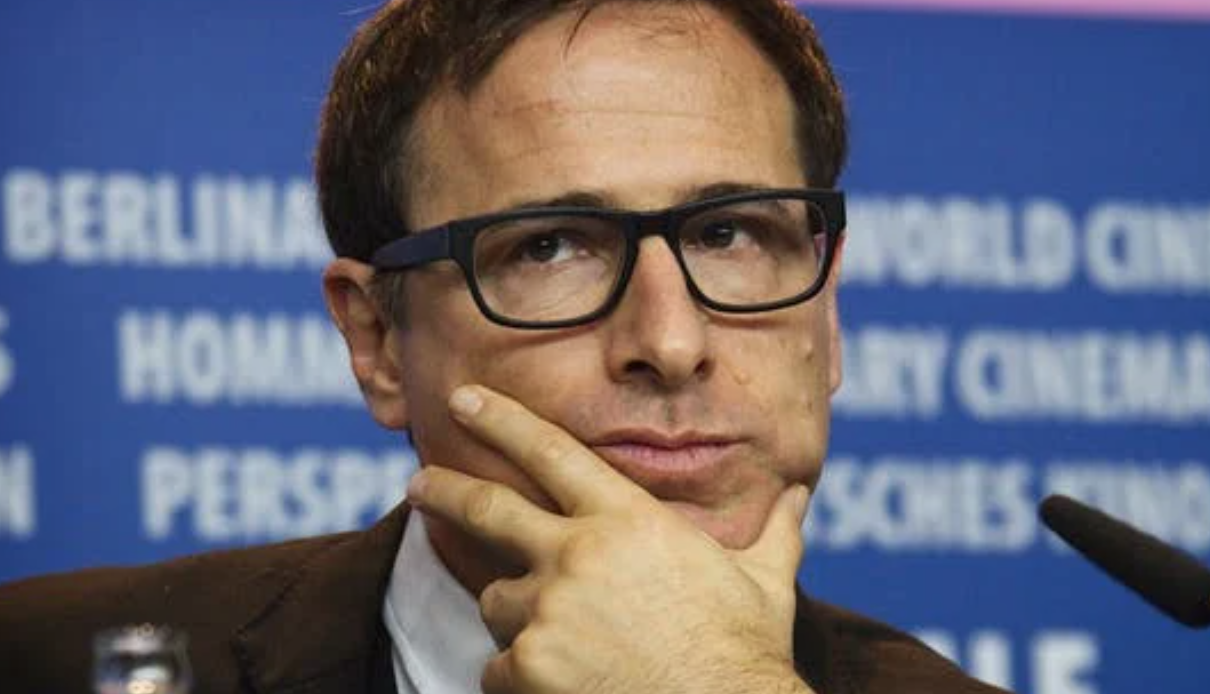
We’re all familiar with David O. Russell‘s reputation for being high-strung and occasionally abusive on film sets, and I wish it were otherwise. And I can’t for the life of me understand how or why the 2011 feel-up incident with his transgender niece Nicole Peloquin occured, or why it resulted in Peloquin filing a police report. (A fair-minded person would at least consider Russell’s statement to the police that Peloquin was “acting very provocative toward him” and invited him to feel her breasts.)
The other side of the consideration coin is that Russell is a genius-level filmmaker — the director of five and arguably six classics of the ’90s and aughts — Flirting with Disaster (’96), Three Kings (’99), I Heart Huckabees (’04), The Fighter (’10), the masterful Silver Linings Playbook (’12) and American Hustle (’13).
We all understand that mentioning artistic accomplishment (i.e., the “some geniuses behave like assholes” argument) doesn’t matter to Twitter jackals and woke accusers. Right now they’re firing their opening salvos at Russell for being, they’re claiming, an all-around abuser and deserving of career death and industry expulsion a la Woody Allen and Roman Polanski. (Here’s a Twitter thread from yesterday, and a Reddit one.)
The feel-up incident was revealed by the 2014 Sony hack, so why wasn’t Russell raked over the coals for this when Joy, a biographical comedy-drama that he directed and wrote, was being promoted seven years ago? Because reputational takedowns and cancel culture weren’t a thing in ’15 — they didn’t manifest until the #MeToo ignition in late ’17.
This is the world in which we now live — if a famous film-industry person had been accused of sexual misconduct and especially if he/she has an unfortunate, years-long pattern of having been abusive to coworkers (which Russell definitely was on the sets of Three Kings, I Heart Huckabees and American Hustle), that person must be sent to the gallows.
And that’s what the jackals are going to try to make happen, apparently, when Russell’s Amsterdam opens on 11.4.22, or during the promotional build-up, I should say.
Abusive film-set behavior will never be excused away by this column. It’s highly unfortunate and, if you ask me, adolescent and inexplicable. Making a film come out right is hard enough without explosive tempers screwing things up.
Down-on-my-knees respect for the legendary James Caan, who has sadly moved on to greener pastures at age 82.
Born in 1940 (three years younger than Warren Beatty and Robert Redford), Caan delivered fine performances in the ’60s and very early ’70s (especially in El Dorado, The Rain People, Brian’s Song and RabbitRun) but didn’t hit the jackpot until he played Sonny Corleone in The Godfather (’72).
For the rest of the ’70s and into the early ’80s it was smooth sailing and mostly glory glory glory for this Bronx-born son of German-Jewish immigrants.
Caan made 15 films during an eight-year hot streak — Slither, Cinderella Liberty, The Gambler, Freebie and the Bean, The Godfather Part II, Funny Lady, Rollerball, The Killer Elite, Harry and Walter Go to New York, A Bridge Too Far, Another Man, Another Chance, Comes a Horseman, Chapter Two, Hide in Plain Sight and Thief.
All but four or five were either grade-A or B-plus, and fully respectable.
Caan’s greatest performances, hands down and in this order: Axel Freed in The Gambler (’74), Frank in Thief (’81) and Sonny in The Godfather I & II (’72 and ’74).
He rebounded in Rob Reiner‘s Misery (’90), of course, and did commendable work in Honeymoon in Vegas (’92), as a senior-aged wise guy in Wes Anderson‘s Bottle Rocket (’95), in James Gray‘s The Yards (’00) and in Lars von Trier‘s Dogville (’03).
“Good times create weak people. Weak people create bad times. Bad times create strong people. Strong people create good times. That’s the history of the world, over and over and over again.” — from a piano-scored Tony Robbins interview, posted four or five months ago.”
The lack of opportunities afforded to minorities aside, American good times, largely created and fortified by strong or at least morally decent people, happened between the late ’40s and the mid ’60s.
Astounding, convulsive, turbulent times — “bad” times if you insist, but quite the rollercoaster ride and highly adventurous in some respects — happened between the mid ’60s and mid ’70s.
And then came the Carter years, largely defined by undermining currents and bacchanalian distractions — economic lethargy, cocaine, Studio 54, “Some Girls”, etc.
Then came the Reagan and Bush ’80s — good times for the greedheads, “go for it, guys…take advantage of our laissez-faire attitudes, get as rich as you can because the lights are green”, etc. Charge as you go and worry about it later created fewer savings accounts and a weakening of the traditional American fibre.
The weak people of the aughts elected Dubya, and then, traumatized by 9/11, brought in bad times in the Middle East.
The Obama years were somewhat progressive (Affordable Care Act, gay marriage) but also saw the growth of the lunatic bumblefuck right, which eventually gave rise to Trumpism, which gave rise to wokester terror and the all-but-certain electoral ruin of the left come November.
We are now in very, very bad times with a significant portion of American citizens having supported the Jan. 6th insurrection and ready to take up arms against the government.