Home Is Where The Heart Is

I became a “bad kid” when I entered my early teens. Defying authority, shitty grades. I had all kinds of low-self-esteem issues, but that’s standard for any child of an alcoholic. I was certainly lippy and insolent with my dad, Jim Wells — a Mad Man exec who worked for J. Walter Thompson. I regarded him as a gruff, flinty, foul-tempered dick because — make no mistake — he was that.

One summer evening Jim and I came to blows, or rather he lost his temper and beat the shit out of me. I was 16. I suffered a head gash, bleeding all over my white shirt. I was seeing a therapist at the time, and as it happened I had a 7 pm appointment that evening. I told the therapist (who was also a serious dick) what had happened, and he took my dad’s side. He basically said, “Bruises and bloody shirt aside, kids like you are bad news and frankly you deserved it.”

In short, during a single summer evening I became 100% convinced that domestic parental violence was something to be avoided in the future, and that family therapists were not necessarily bringers of profound perception and wisdom.

Why hadn’t I grabbed a drinking glass and smashed it across my dad’s head during our kitchen fist fight? You know, like Joe Pesci does in that Copacabana fight in Raging Bull? I’ll tell you why. Because I was more of a lover (i.e., a movie lover) than a scrapper, plus I was basically too chicken to get seriously violent with my taller, heavier and stronger dad. When the kitchen fracas began I was mainly rope-a-doping — focused on protecting myself. But God, if I could relive that moment right now and if I had a hammer…

A year or two later I happened to watch Clarence Brown‘s Human Hearts, a family drama about a rebellious, independent-minded son (James Stewart) and his stern preacher father (Walter Huston). Huston has slapped Stewart around a few times, but prior to a fresh altercation Stewart tells him, “If you hit me, pop, I’m going to defend myself.” They tussle and Huston winds up giving Stewart another beating.

That was not the outcome I was hoping for.

Until last night I had somehow never read about James Garner‘s violent fight with his stepmother, Wilma. His alcoholic father married Wilma when the future movie star was five, in 1933. From the get-go Wilma was a “nasty bitch,” Garner recalled. His brother Jack later called her “a damn no-good woman.” Wilma would scold and beat Garner, and whenever he crossed the line Wilma would make him wear a dress and call him Louise. James finally had it out with Wilma in ’42, when he was 14. She came at him and he pushed back, finally “choking her to keep her from killing him in retaliation.”

Give her what for, Jimbo!

One way or another parents often manage to fuck their kids up. They brutalize and leave scars.

My son Dylan is currently back to regarding me as a dick in somewhat the same way that I regarded my dad long ago. (The difference is that I was 16 and Dylan is 32.) But in my late 20s as I sucked all that in and said “okay, that happened” and decided to cut my father a break, especially after he entered AA and apologized for his poor parenting skills and whatnot, explaining as honestly as he could that he just wasn’t cut out for being a good dad.

N.Y. Post article, posted today [8.10]: “Canadian rock guitarist Gord Lewis was found dead in his Hamilton, Ontario home on Sunday after he was allegedly murdered by his own son. Jonathan Lewis, 41, was arrested and charged with second-degree murder as the Hamilton Police Department continues to investigate the case, according to local reports.”

I would love to see a short film about Garner and Wilma’s relationship, ending with the strangle slapdown.

Telluride Slate Feels Thin

I’m feeling blue about Jordan Ruimy‘s firm declaration that White Noise, The Son, The Fabelmans, Blonde, The Whale, Master Gardener, She Said, Till, The Eternal Daughter and The Banshees of Inisherin are not going to Telluride.

We all knew The Fabelmans was a Toronto exclusive but that still leaves nine (9) high-interest films not playing in dear, beloved Telluride. How can I not feel dismayed about that? Then again maybe this means they’re all problematic.

Ruimy adds that White Noise, Master Gardener, Bardo, She Said, Bones & All and Blonde will also be absent at Toronto/TIFF. How can Toronto lay claim to being any kind of big-deal, world-class festival and not show Bardo, She Said, White Noise and the others? Then again roughly 100 Toronto films aren’t yet announced.

There are eight films expected to play Telluride that HE is particularly interested in seeing, and in this order: Bardo (Alejandro G. Inarritu), Tar (Todd Field), The Wonder (Sebastian Leilo), Bones and All (Luca Guadagnino), Empire of Light (Sam Mendes), Women Talking (Sarah Polley), All the Beauty and the Bloodshed (Laura Poitras) and The Pale Blue Eye (Scott Cooper).

They’re All Jerks

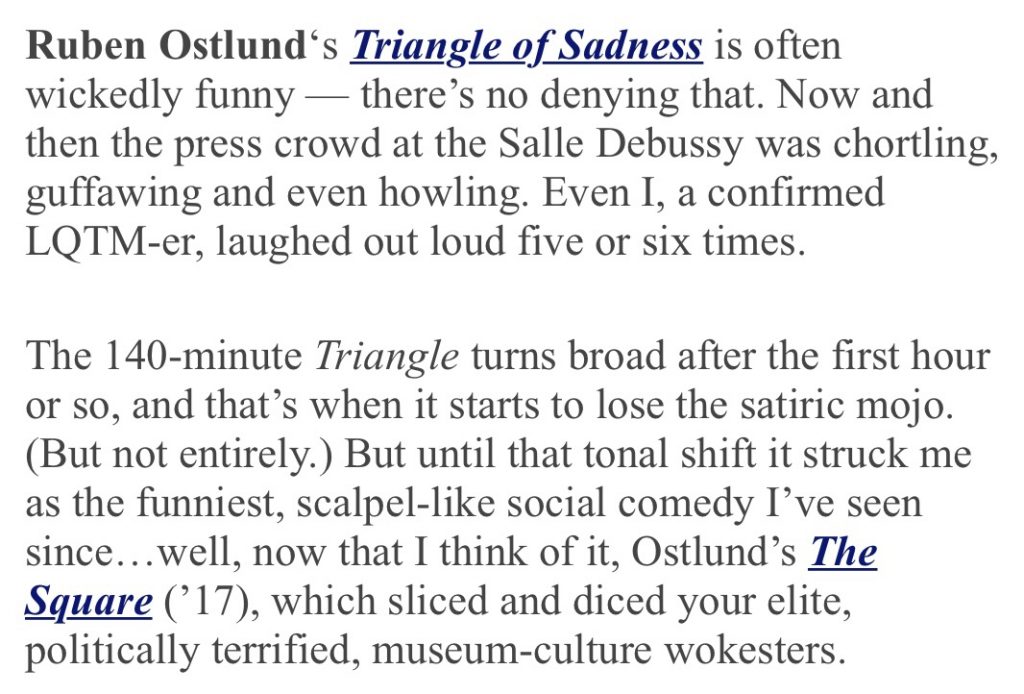
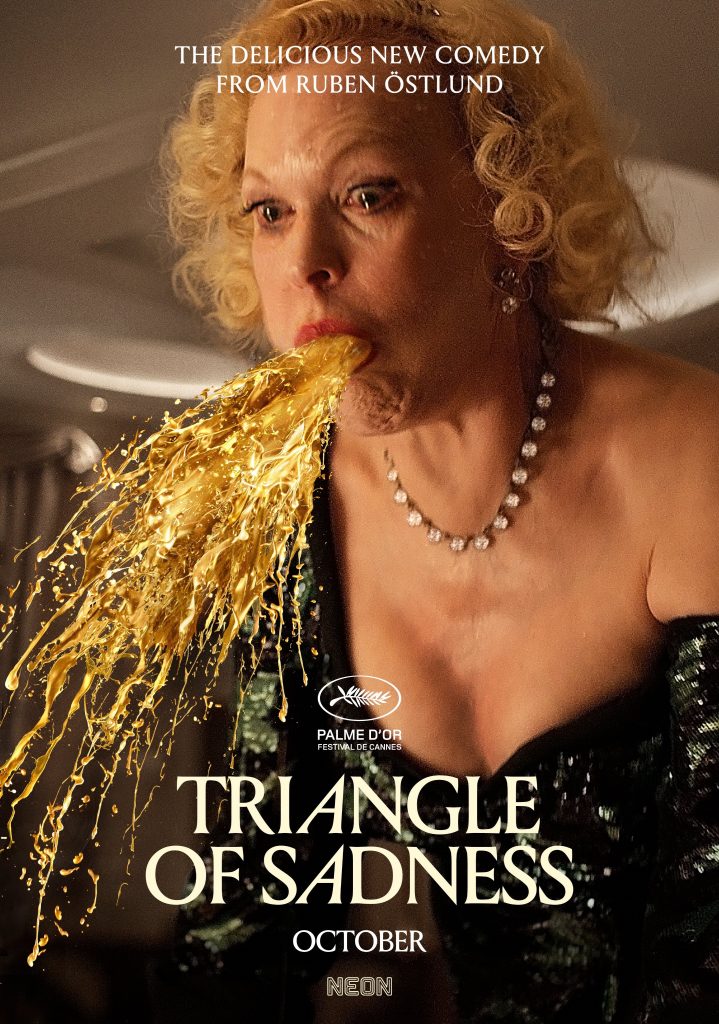
Ruben Ostlund, director-writer of The Square (’17) and the forthcoming Triangle of Sadness (Neon, 10.7), isn’t into building audience identification with any of his characters a la Preston Sturges or Billy Wilder. His kind of detached, absurdist, scalpel-like social satire precludes this. During the first act of Sadness you’re thinking that Harris Dickinson‘s “Carl” and Charlbi Dean‘s “Yaya” are the ones we might root for, but bit by bit Ostlund divests us of that notion. Same deal with Claes Bang‘s museum director character in The Square — initially sympathetic and intriguing as far as he goes, but gradually smaller, less in command and more overwhelmed as the film goes on.

Read more

The Benefit of Discipline

Biloxi Blues opened 34 years ago, and I haven’t given a moment’s thought to re-watching it. And yet it’s fine. Well written by Neil Simon, nicely acted by everyone. Set in the 1940s, and dealing with the then-taboo subject of homosexuality in the ranks. Directed by Mike Nichols, shot by Bill Butler, edited by Sam O’Steen. Good film, character-driven, nothing especially wrong with it, better than decent. Okay, maybe I will re-watch it.

Poor Richard Egan

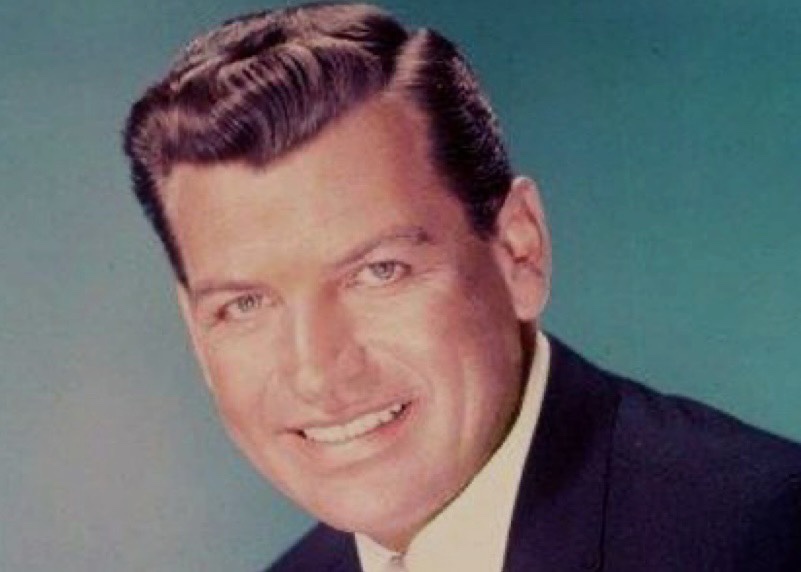
From the mid ’50s to the early ’60s, Richard Egan was a quiet, low-key, Clark Gable-ish movie star. Gable without the barking voice or judgmental eyebrow or rogue manner, I mean. But with a deeper voice. One of those steady guys with nothing to prove. Plant your feet, look the other guy in the eye and tell the truth…that was Egan’s basic thing. An aura of maturity, thoughtfulness, confidence.

And his characters never once behaved in a socially obnoxious manner. Egan had his center, understood himself, could actually act within his realm.

Best Egan performances: A brief but noteworthy swordfight scene with Victor Mature in Demetrius and the Gladiators (’54). Gog (also ’54). Underwater! (’55) with Jane Russell. The View from Pompey’s Head (’55). The Revolt of Mamie Stover (’56), again with Russell. Love Me Tender (’56). Slaughter on Tenth Avenue (’57). A Summer Place (’59). Disney’s Pollyanna (’60). Esther and the King (’60). King Leonidas in The 300 Spartans (’62).

But after a streak of seven or eight years, Egan was more or less gone from features like a puff of smoke. He had turned 40 in July 1961, and was already on the way down. For a decade or so he worked in TV, and then he moved into regional theatre.

Egan died in ’78 at age 65 — prostate cancer. It just seems a shame.

I was moved to say something after watching Egan in Love Me Tender. Elvis Presley is why that modest 1956 release made money, of course, but Egan was the brick and mortar — all the action spun around his plain-spoken character, Vance Reno, and he just said his lines straight and true with that great deep voice. And he never wept or lost his temper or his cool. And the whole time you can feel how much he wants to ravage Debra Paget and much she wants him to, and how blind Presley’s “Clint” character is in this regard.

Love Me Tender is just a low-budget programmer, really, but Egan gives it a certain gravitas and conviction.

Egan can be briefly glimpsed in a crowded bar in Michael Ritchie and Robert Redford‘s Downhill Racer (’69)…humiliating. A major star in the late ’50s, a no-dialogue guy in a bar scene a decade later.

The timing wasn’t right, of course, but if Quentin Tarantino had somehow emerged as a hotshot director in the early to mid ’70s he could’ve written a great role for Egan and then cast him…maybe.

Wiki excerpt: “In 1966, when asked about his lack of film roles, Egan said, ‘They want anti-heroes now, and it’s just not for me. I’m just not right for that. It’s much easier to be cynical than to make a positive statement, to set up a man only to knock him down, than to show convincingly a man who successfully sticks by his beliefs. We desperately need something to give strength and fortitude to the lost. I want to be a part of that. Part of the solution. And if I can’t…well…I’m sure not interested in becoming part of the problem instead.”

Nothing Endings

Or, if you will, inorganic, tacked-on bullshit endings…written and shot at the last minute in hopes of making the audience feel better or less dispirited. Endings that might convey a friendlier, more even-toned feeling, but which lack integrity.

Last night I somehow slid into a viewing of Love Me Tender, and yep, the re-shot ending lacks integrity. With Elvis Presley‘s “Clint” dead and buried, the five remaining members of the Reno family — played by Richard Egan, Debra Paget, Mildred Dunnock, William CampbellJames Drury — leave the graveyard and return to their home. Grim and flat. So 20th Century Fox went with a Gunga Din finale — they blended a short clip of the dead Presley singing the title tune, and double-exposed it over the end credits.

It’s not as effective as the actual Gunga Din ending (Sam Jaffe‘s heroic titular character wearing the uniform of a British solder, smiling and saluting) but it’s better than just “Clint is dead and its back to work but at least Egan gets to marry Paget.”

A friend recently re-watched Sydney Pollack‘s Absence of Malice. The final scene between Paul Newman and Sally Field on his boat a tacked-on bullshit quality, he feels. It reeks of studio meddling. Wikipedia agrees: “It is unclear whether [Field’s] Carter keeps her job, or whether Carter’s relationship with Gallagher [Newman] will continue, but the final scene shows them having a cordial conversation on the wharf where Gallagher’s boat is docked before he sails away and leaves the city.”

Friendo: “Maybe you should do a column about tacked-on happy endings like this one.  It feels so different from the rest of the film.  Of course, the big one is Fatal Attraction but there are others.”

American Is My Co-Pilot

The cheapest fare from the NYC area to the Telluride-adjacent town of Montrose, Colorado requires a three-leg journey of 13.5 hours — American all the way.

Leaving Laguardia on Wednesday, 8.31 at 10 pm. Arrive at D.C.’s Reagan National at 11.:17 pm. Six-hour layover. D.C. to Dallas, departs 5:25 am, arrives 7:40 am. Dallas to Montrose, departs 8:25 am (only 45 minutes between flights!), arrives at 9:30 am. And then a shuttle of some kind. I’ll probably hit town by noon or thereabouts.

In hopes of catching a few zees during the Reagan National layover, I’ll be carrying (a) a self-inflating Powerlix Sleeping Mat (3 inches thick, built-in pillow, carry-on bag) and (b) a sleeping mask.

Wine Mom or Vodka Mom?

Maya Forbes, Wally Wolodarsky and Thomas Bezucha‘s The Good House, a boomer-booze-recovery relationship film set in suburban Massachusetts, premiered at the 2021 Toronto Film Festival.

Universal had the domestic distrib rights, but then they bailed; Lionsgate/Roadside stepped up to the plate last June. The smartly-written film, which seems to feature a strong Sigourney Weaver performance, opens on 9.30.22.

“Hildy Good (Weaver) is a real-estate agent with an alcohol problem. She is half-heartedly in recovery, having been forced into rehab by her adult daughters, a couple of castoffs from a Nancy Meyers movie about spoiled children.

“There’s a provocative imaginary line to be drawn between being accused of witchcraft and being accused of drinking too much, both of which are so damning that the trial is over before it’s begun.

“The Good House rejects anything like ambivalence. It’s the same old song of hitting rock bottom — here tied to an autistic child in a way that feels exploitative — and getting a second chance and stating your name and disease before God and literally sailing off into the sunset. That may be what some folks need to hear, though it isn’t profound.

The Good House repeatedly finds Hildy breaking the fourth wall and addressing us directly, High Fidelity-style, and Weaver can’t quite sell the wine-mom Ferris Bueller monologues she’s asked to deliver in these moments. Online excerpts from Ann Leary‘s source novel suggest the first-person narration was much more searching on the page, which may have proved a better match for Weaver’s vaguely patrician air. I don’t know.

“What I do know is that nothing that includes blackout drinking, suicide and the tragedy of gentrification should go down so smoothly, even if the filmmakers’ sensibility is fundamentally comic. (Co-writers/co-directors Maya Forbes and Wally Wolodarsky previously made The Polka King, and Forbes wrote for The Larry Sanders Show.)

“After Hildy reveals that she’s descended from witches, Donovan‘s ‘Season of the Witch’ cues up on the soundtrack; I felt like a little old lady being helped across the street.

“For what it’s worth, Weaver’s frequent onscreen love interest Kevin Kline is in this, too, as a handyman who hauls garbage and fixes up boats. I guess you can only be in so many fake John Sayles movies before they finally cast you as David Strathairn.” — from Bill Chambers’ 9.20.21 TIFF review.

I’m No Filmmaker

…but I did some stage acting in the mid ‘70s, and I somehow picked up the idea that the most persuasive kind of acting involves craft and discipline, of course, but is often sired within an atmosphere of spontaneity. You have to surrender to the behavior and more importantly the emotion. Technique only gets you so far.

In a Westport Country Playhouse production of “Dark of the Moon,” my role as backwoods yokel Marvin Hudgens required performing a bizarre ritualized rape scene. I had to forget about the cast (and the audience) watching this assault and just go with it — within the limits of decency and proper consideration for the actress playing Hudgens’ victim I had to become a hormonal animal, so to speak. I had to “be there.”

Three or four years later I was struck by a semi-aggressive sex scene between Roy Scheider and Janet Margolin in Jonathan Demme’s Last Embrace (‘79). Instead of the usual clutching and heavy breathing, Scheider dropped to his knees and buried his face in Margolin’s exposed lower belly. Definitely something Last Tango-ish about this — untamed, primal, committed. All these years later the scene is still an HE favorite.

The only other spontaneous belly smooching I can recall happened in a 1968 comedy called How Sweet It Is!, shot in Europe and costarring James Garner and Debbie Reynolds. Reynolds was the recipient; the smoocher was a colorful Italian chef or concierge.

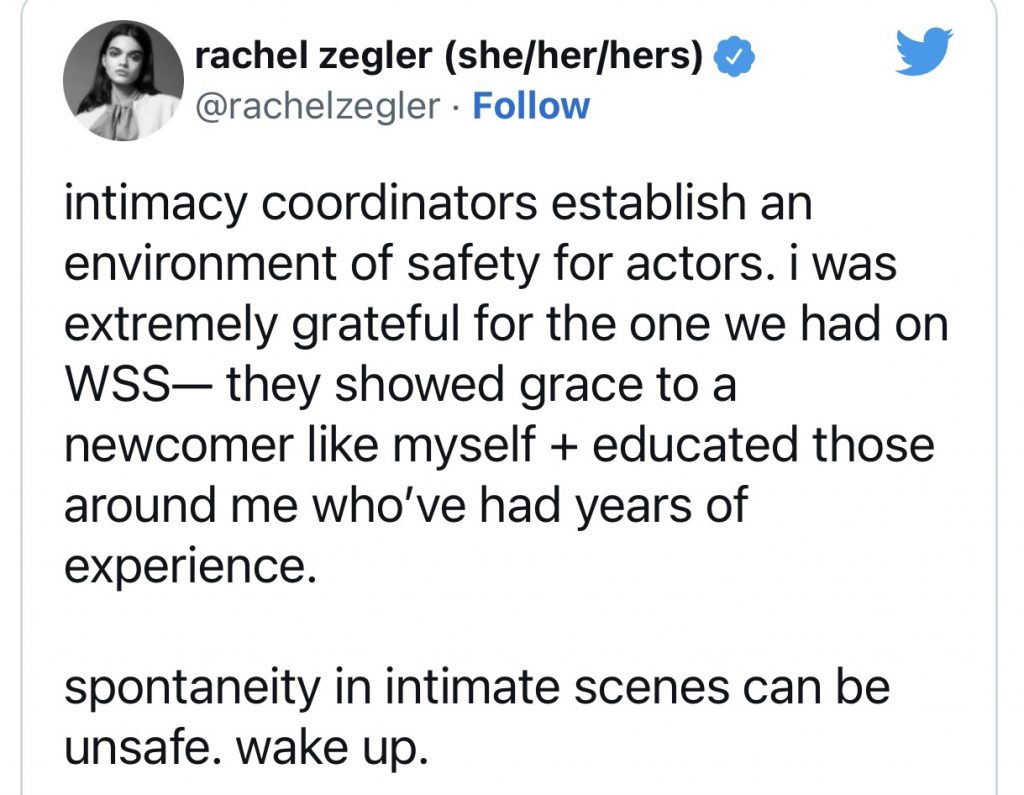
What if woke-mandated “intimacy coordinators”, who’ve only been around the last couple of years…what if intimacy coordinators had somehow been monitoring these belly-smooching scenes way back when? Would they have helped or hindered the intended effect?

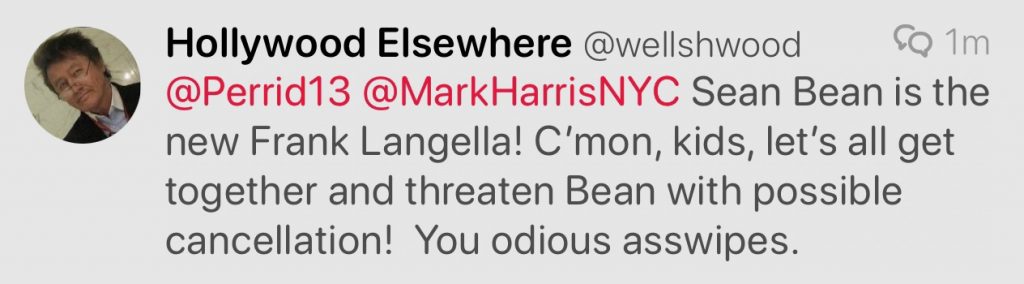
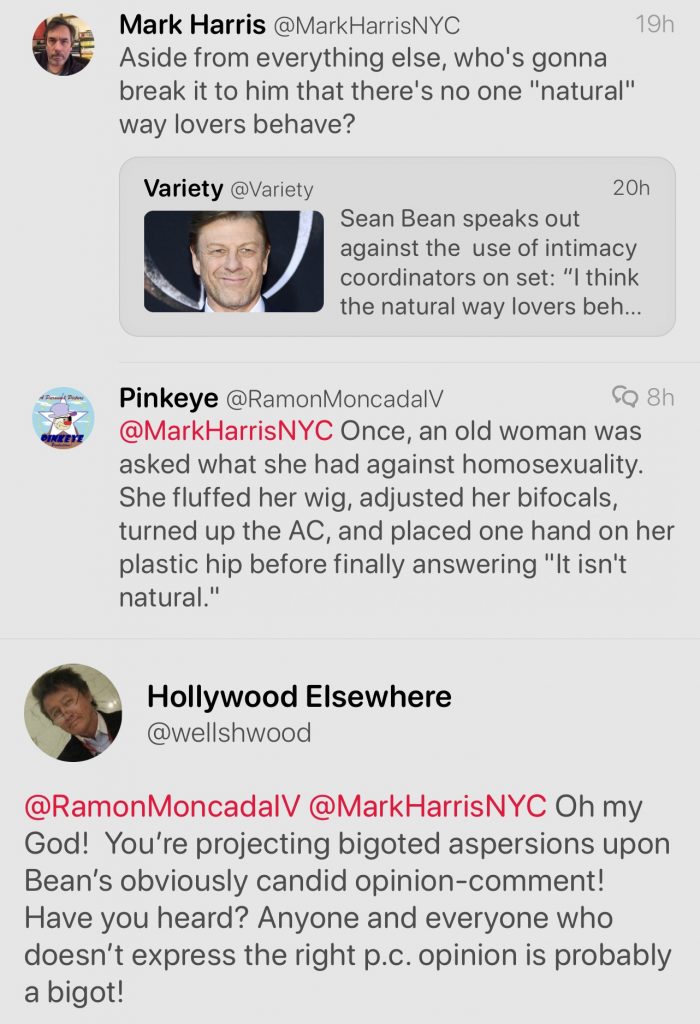
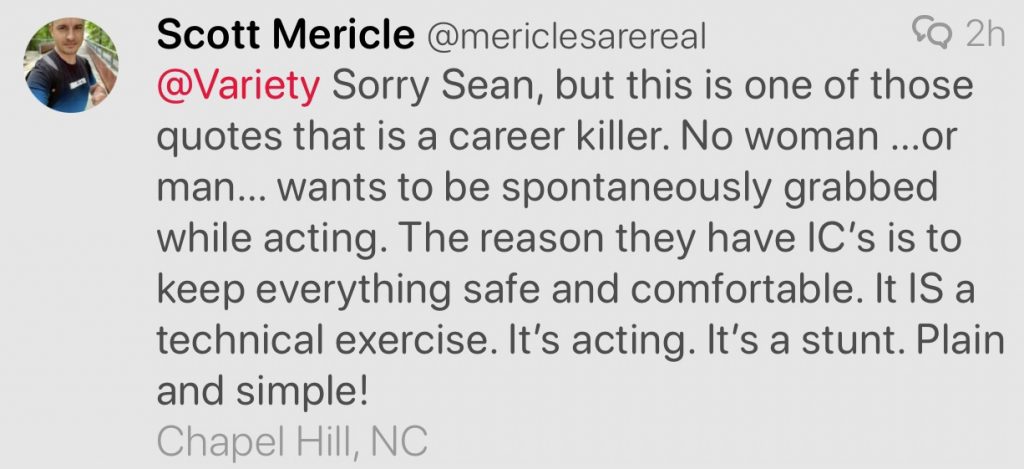
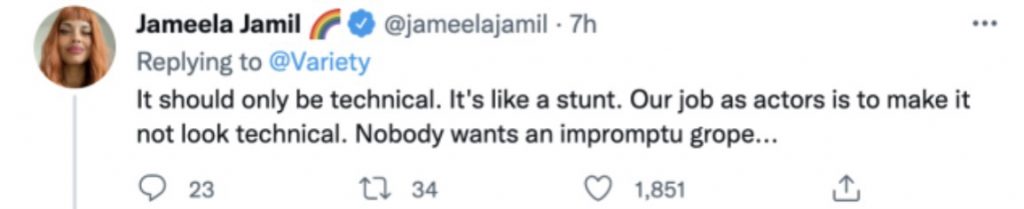
All to say that poor Sean Bean got roughed up by woke Twitter fascists yesterday for asserting that “intimacy coordinators” kill the mood or interfere with the natural vibe of a heated romantic scene, or words to that effect.

HE to director friendo: “Have you ever felt that actors in a romantic scene that you were directing weren’t ‘feeling it’ and needed to somehow give themselves more freely to the moment?”

Zegler translation: If it hadn’t been for the WSS intimacy coordinator, Ansel Elgort might have taken liberties and perhaps worse. But I was protected, thank God. How did Natalie Wood ever survive the coarse gropings of Richard Beymer during filming of the original West Side Story (‘61)?

Critical Scottish “Batgirl” Riff

“Yeah, another female-centric superhero flick from a company with a spotty track record for this kind of thing, featuring a race-swap protagonist and some weird multi-versal plot device that felt like a cheap excuse to get Michael Keaton back as Bruce Wayne, and I imagine the poor test screening[s] didn’t exactly help convince the studio that they had a major hit on their hands.

“But if the rumors that I’ve heard are true, [Batgirl] actually scored higher than Black Adam and Shazam 2. But you’ve got to ask yourself ‘how bad does a film really need to be that the studio would rather pull the plug on the whole thing and lose tens of millions of dollars rather than just re-cut and try to salvage something halfway decent…this is the same studio, remember, that reckoned Birds of Prey, Justice League and Wonder Woman 1984 were fit for human consumption.

“And Batgirl, by the way, isn’t the only [Warner Bros. movie] to get shitcanned [as] the tumor is that Supergirl is also on the chopping block…hmmm, two female-centric superhero movies featuring race-swap protagonists that happened to get unceremoniously cancelled at the same time…

“Film division honcho Walter Amada‘s genius strategy was to basically do whatever was popular at the time, and what was popular the time was diversity, female empowerment and representation. Rather than try to work these things into his movies with skill, intelligence and patience, Warner Bros. instead decided to just straight-up replace popular characters played by problematic white men for more diverse alternatives.

“I think it’s fair to say that after nearly a decade of having ‘the message’ shoved down our throats, audiences are getting a little bit tired of this shit.”