…but there’s no way in hell or on God’s good green earth that it comes even close to winning unless…unless!…a subtle intimidation campaign takes hold.
If you weren’t dazzled by Everything Everywhere All At Once, if you don’t worship it with all your heart and soul, and if you don’t understand the cultural importance of Daniel Kwan and Daniel Scheinert‘s mostly infuriating film achieving the honors that its fans believe it absolutely deserves…if you’re anywhere close to the negative side of the ledger, as I am, you might be a closet racist.
Do you want to absolve yourself of any such notions, even while staring at yourself in the bathroom mirror? You know what to do.
From “Frequent Agonies of ‘Everything Everywhere’” (8.2.22):
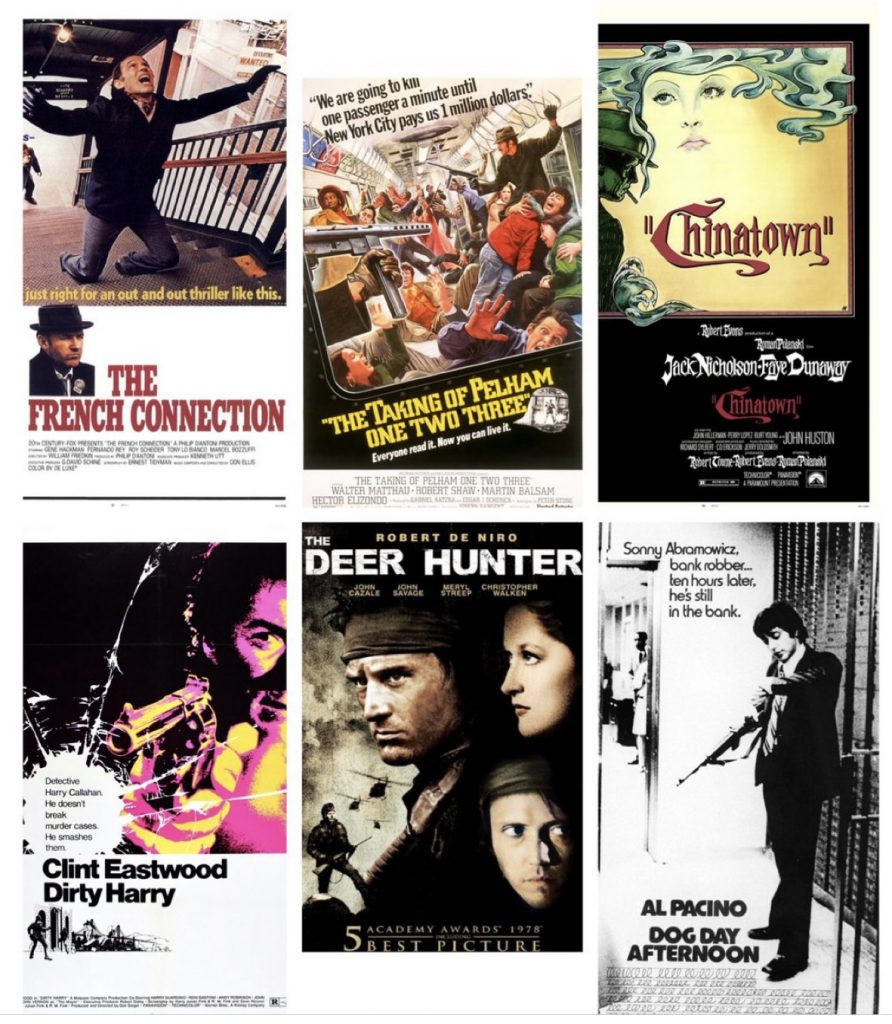
“Most good scenes are rarely about what the subject matter is,” screenwriter Robert Towne (Chinatown, Shampoo, The Last Detail) once said. “You soon see the power of dealing obliquely or elliptically with situations, because most people [in real life] rarely confront things head-on.”
The finest, most realistic and effective screenplays, in other words, are mostly about the things that are not said. And when all the things that are not said and that finally need to be said are finally said…that’s the great catharsis of the movie.
The absence of this, to me, is what’s terribly, agonizingly wrong with Daniel Kwan and Daniel Scheinert‘s Everything Everywhere All At Once, which I’ve been avoiding for months but which I finally sat through last night.
It took me three and a half hours to get through this curiously successful A24 release. Because I needed breathers and time-outs. I needed air. I needed to talk things out with a friend who also had difficulty sitting through it but finally got there after three attempts. But I finally made it to the end, and I have to say that despite my anguish I absolutely loved the ending, or more precisely the last two lines. (I’ll explain in a minute.)
But my head had been aching from all that hammering, on-the-nose exposition, and enduring this gave me great pain. I don’t want to imagine Robert Towne’s response.
All those parallel universes and all that verse-jumping. The constant milking of the Matrix-like idea that there are multi-dimensional hallucinatory realms above, beyond and within our day-to-day regimens and banalities, and how the multiverse is being annoyingly threatened (here we go) by Stephanie Hsu‘s Jobu Tupaki, who “experiences all universes at once and can verse-jump and manipulate matter at will”, etc. And whose “godlike power has created a black hole-like ‘everything bagel’ that can potentially destroy the multiverse”…my head was splitting.
The pornographic overuse of martial-arts battles. Jamie Lee Curtis‘s over-acting as the IRS agent, and the more-more-more of it all, which made it feel all the more synthetic and gimmicky.
Read more