

So Robert Richardson‘s lensing of Emancipation (Apple, 12.2) is basically black-and-white with very soft hints of watercolor green. Was Antoine Fuqua‘s period drama shot in full digital color and then desaturated down to near monochrome?
The almost-no-color scheme seems to be about visually blending with the famous black-and-white “scourged back” photo of Gordon, an escaped slave from Louisiana. Will Smith plays Peter, a character based upon Gordon.
It’s been patently obvious for several years (i.e., early ’17) that President Donald Trump was a criminal, anti-Democratic sociopath and bully boss grifter. The Biden administration has been in power for nearly two years, and Attorney General Merrick Garland has only just announced that potential prosecutions of Trump and his criminal colleagues will henceforth be seriously examined by Jack Smith, a special prosecutor.
People have been calling Garland a wimp and a foot dragger for many months now, and if you ask me for more than sufficient cause. Bring on the new Archibald Cox slash Leon Jaworski!
N.Y. Times‘ Michael Schmidt: “Special counsels were created to put distance between the politics of the moment and the investigative work of the Justice Department. Under the regulations for special counsels, the Justice Department will have to tell Congress about any major investigative moves that the special counsel wanted to take that were overruled by senior department officials. Also, the special counsel can be fired only for cause — essentially, for not doing their job.”
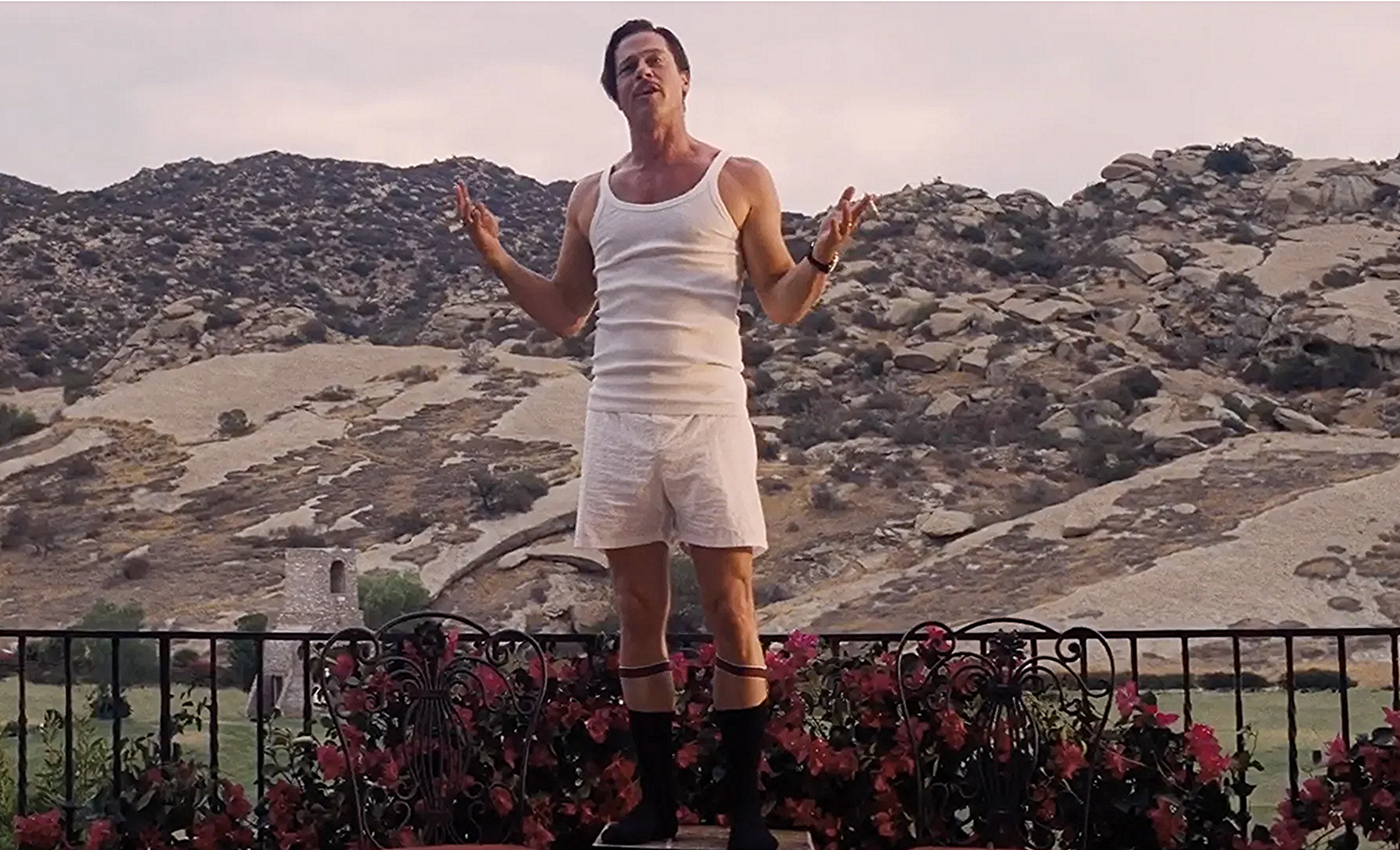
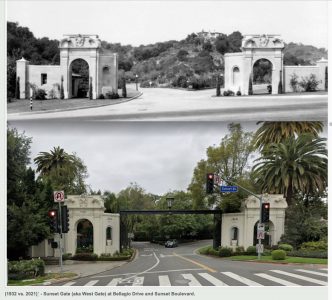
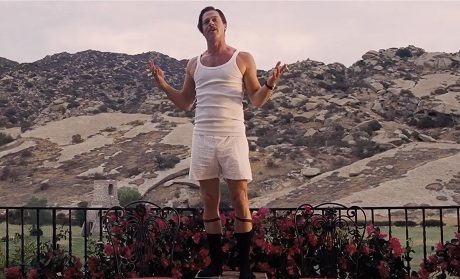
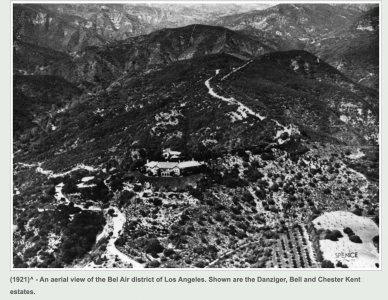
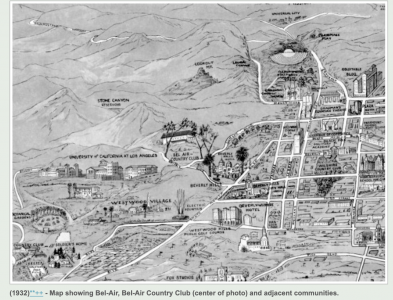
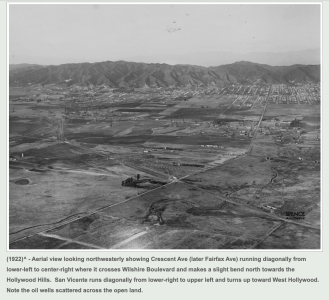
The opening scene of Damien Chazelle‘s Babylon (Paramount, 12.23) is set in a hilly section of Bel Air circa 1926. Except it doesn’t look right. For 80 or 90 years Bel Air has been a flush and fragrant oasis for the super-wealthy, but in the mid ’20s, according to Babylon, it was fairly dry and barren and desert-like — no trees, no bushes, no grass and definitely no golf course. Almost Lawrence of Bel Air.
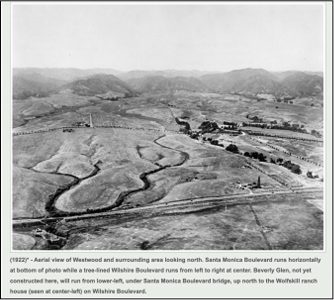
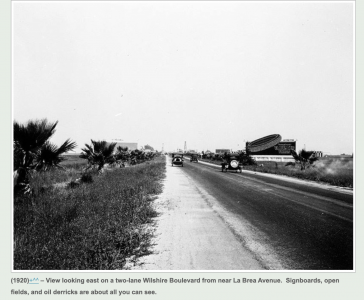
I’m no historian but this Palm Desert version of Bel Air struck me as slightly untrustworthy. So I did a little researching last night and found a slightly greener atmosphere. In fact Bel Air of the mid ’20s was starting to come into itself. Photos from that era show the beginnings of paved roads, smallish trees and shrubbery, yucca plants, a few mansions, a reservoir, the east and west gates and a little shade here and there.
Steve McQueen: The Man & Le Mans, Gabriel Clarke & John McKenna’s 2015 doc, states very plainly that Le Mans (‘71), the semi-legendary race-track pic, was the film that broke McQueen’s spirit as well as his legend to a significant extent, and that things were never quite the same after it.
In my mind McQueen had a great 14-year run from ‘60/‘62 (The Magnificent Seven, Hell Is For Heroes) to his last quality spurt (Junior Bonner, The Getaway and The Towering Inferno) that ended in ‘74. Call it 14 years. Okay, 15 or 16 if you count Wanted Dead or Alive.
But his Godly McQueen aura, that quietly measured and invincible thing that peaked with Bullitt, that Zen-like, supercool man-of-few-words + awesome motorcycle and Mustang-driving era was shorter — The Great Escape (’63) to Le Mans (‘17) or roughly an eight-year stretch. That’s all it was — eight years.

[Originally posted on 10.15.04] Three of us — myself, a friend and an acquaintance i didn’t like — came close to dying in a drunken car crash — a wipe-out that almost happened but didn’t thanks to Chevy engineering.
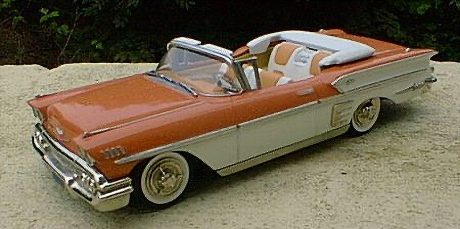
It happened around 1 am in rural Wisconsin, and I’ll never forget that godawful horrifying feeling as I waited for the car we were in — a 1958 Chevrolet Impala convertible — to either flip over or slam into a tree or hit another car like a torpedo, since we were sliding sideways down the road at 70 or 80 mph.
It happened just outside Fond du Lac, Wisconsin. Bill Butler was driving, Mike Dwyer was riding shotgun, and I was in the back seat. We were coming from a beer joint called the Brat Hut (or possibly the Beer Hut). We’d jointly consumed several pitchers and were fairly stinko. We were five or six miles out of town and heading south towards Markesan, where we had jobs (plus room and board) at the Del Monte Bean and Pea plant. To either side of us were flat, wide-open fields and country darkness.
Butler, a serious asshole back then, was going faster and faster. I looked at the speedometer and saw he was doing 90, 95, 100. I was about to say something when the road started to curve to the right, and then a lot more. Butler was driving way too fast to handle it and I was sure we were fucked, especially with nobody wearing seat belts and the top down and all.
But thanks to those magnificent Chevrolet engineers, Butler’s Impala didn’t roll over two or three times or slam into a tree or whatever. It just spun out from the rear and slid sideways about 200 feet or so. Sideways! I remember hitting the back seat in panic and looking up at the stars and hearing the sound of screeching tires and saying to myself, “You’re dead.”
The three of us just sat there after the car came to a halt. There was a huge cloud of burnt-rubber smoke hanging above and behind us. I remember somebody finally saying “wow.” (Dwyer, I think.) My heart began beating again after a few seconds.
I realize I’m a little late getting in touch with my emotions, but if Butler is reading this, I want him to know I’m really furious about this. Butler almost took away my becoming a journalist and loving my kids and going to Europe and everything else, and all because he had some idiotic anger issues and tended to dare-devil it after the ninth or tenth beer.
Maybe some 17 year-old kid with issues similar to Butler’s will read this and think twice the next time he’s out with friends and starting to tromp on the gas.
Tough words from author, NYU business school professor and podcaster Scott Galloway on Elon Musk, speaking to CNN’s Christiane Amanpour and starting at the 4:55 mark:
“I don’t think we’re seeing the unwinding of a company (Twitter), but the unwinding of a person (Elon Musk). Which I believe is part of a larger trend. As our society has become wealthier and better educated, the reliance on a super-being along with church attendance goes down. but people still look for idols. Into that void has stepped technology leaders, because technology is the closest thing we have to magic. [For a while] our new Jesus Christ was Steve Jobs, and Elon Musk has taken on that mantle. And every ridiculously mean, nonsensical, irrational move he makes is somehow seen as chess, not checkers. We’re just not privvy to his genius yet.
“I think [Musk[] is an individual who has demonstrated a total lack of grace, has no guardrails around him, and is going to see his wealth probably cut in half. Just a week or two after the close, this is already the second worst acquisition in history. This is someone who in my opinion shows a bit of a God complex. Someone who vastly overpaid in a fit of mania or seeing something we don’t see. Twitter is a company probably worth 10 billion, [and] Musk paid 45 billion for it. He thinks he can lay off half the staff and treat them poorly and disparage them and not [suffer] any ramifications. I think he’s a terrible role model for young business people. You can’t deny his incredible accompishments, but now he’s running three different companies.
“So this notion that we need superbeings…I have found that this notion never proves out. The Roman warriors who returned after a triumphant battle, and they would have a huge parade for them, and they would hire a slave to follow and whisper in the conqueror’s ear ‘all glory is fleeting, and you are only a man.’ I have never met a person who is infallible, Christiane. They all eventually screw up, and a universal pillar of truth is that the universe doesn’t want a consolidation of power among any country or any society or any individual.”