


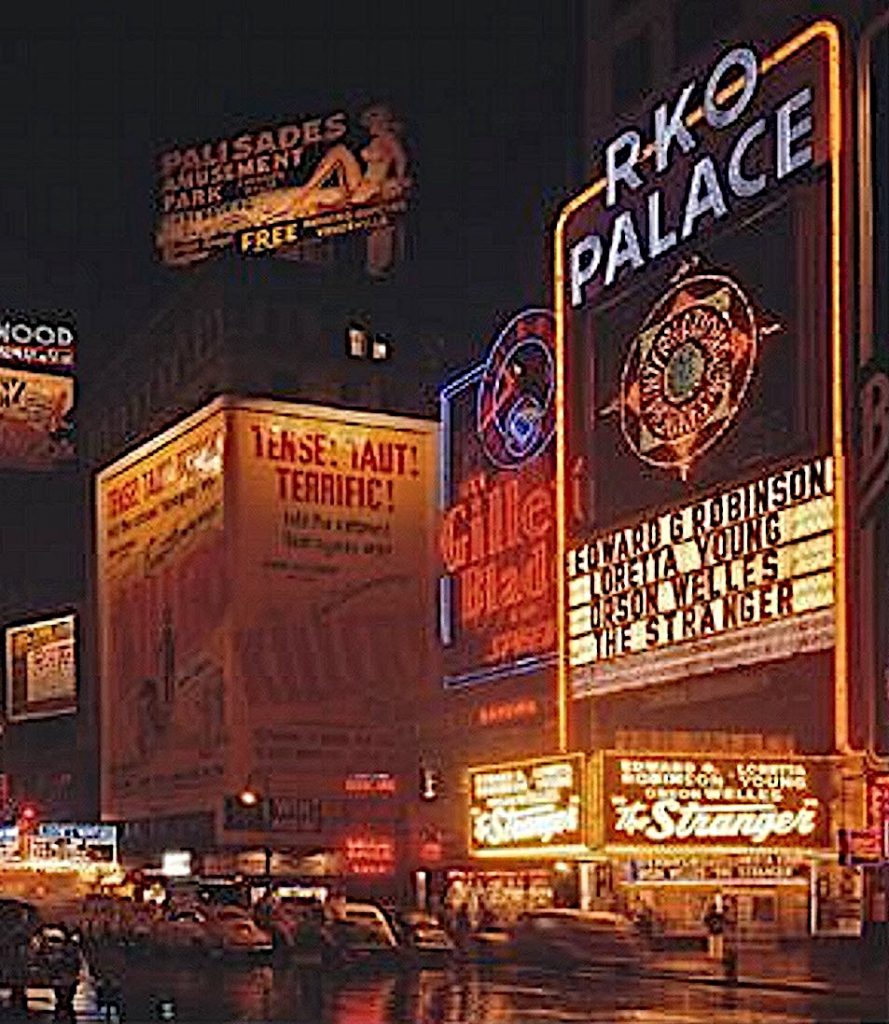


Manhattan was affordable back then, not just for moderate income types but hand-to-mouthers. It was partially affordable in the ‘60s, ‘70s and ‘80s. Things started to get tough in the ‘90s, and rents have become more and more ridiculous over the last 20-plus years. Now when you read about the rents that 20somethings are paying, you can’t help but think “they’re kidding, right?” I’ll never live there again. Too many one-percenters, not enough soul.
This Prague Philharmonic recording of Miklos Rosza‘s Ben-Hur overture happened five and a half years ago at Smecky Music Studios, Ve Smeckách 592/22, 110 00 Nové Mesto, Prague, Czech Republic.
“Musical Score As Strong Supporting Character,” posted on 6.17.19: “I’ve always enjoyed big movie symphonies of the ’50s and ’60s because their composers — most of them classically trained and European-born — didn’t just write scores but created non-verbal, highly charged musical characters.
“They didn’t watch the film in the seat beside you or guide you along as most scores tend to do — they acted as a combination of a Greek musical chorus and a highly willful and assertive supporting character.
“These ‘characters’ had as much to say about the story and underlying themes as the director, producers, writers or actors. And sometimes more so. They didn’t musically fortify or underline the action — they were the action.
“If the composers of these scores — in this instance Rosza — were allowed to share their true feelings they would confide the following before the film begins: “Not to take anything away from what the director, writers and actors are conveying but I, the composer, have my own passionate convictions about what this film is about, and you might want to give my input as much weight and consideration as anyone else’s. In fact, fuck those guys…half the time they don’t know what they’re doing but I always know…I’m always in command, always waist-deep and carried away by the current.”
A decade ago I wrote the following about Rosza in a piece called “Hungarian Genius“: “Rosza sometimes let his costume-epic scores become slightly over-heated, but when orgiastic, big-screen, reach-for-the-heavens emotion was called for, no one did it better. He may have been first and foremost a craftsman, but Rosza really had soul.
“Listen to the overture and main title music of King of Kings, and all kinds of haunting associations and recollections about the life of Yeshua and his New Testament teachings (or at the least, grandiose Hollywood movies about same) start swirling around in your head. And then watch Nicholas Ray’s stiff, strangely constipated film (which Rosza described in his autobiography as ‘nonsensical Biblical ghoulash’) and it’s obvious that Rosza came closer to capturing the spiritual essence of Christ’s story better than anyone else on the team (Ray, screenwriter Phillip Yordan, producer Samuel Bronston).”
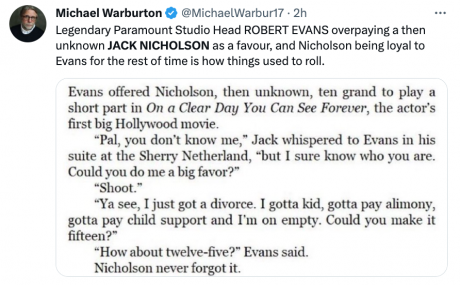
Until five minutes ago I had never watched a single frame of Vincente Minnelli‘s On A Clear Day You Can See Forever (’70). I always kinda wanted to see it because of Jack Nicholson‘s smallish part, but I never went there. The 32-year-old Nicholson plays “Tad Pringle”, the ex-brother in law of Barbara Streisand‘s “Daisy Gamble”, a chain-smoking clairvoyant. If only the film had somehow managed to let the audience savor some of Tad’s sitar-playing. Alas…
I was pleasantly surprised last night by Stephen Frears‘ The Lost King (IFC Films). Surprised because experience has taught me that a film with a combined aggregate rating of just under 70% (75% Rotten Tomatoes, 64% Metacritic) has problems.
Well, The Lost King has exactly one issue, but nothing that should give pause to any semi-reverent filmgoer. Otherwise it’s completely fine, which means that the critics who trashed it are petty and pissy.
I’m not kidding. You can quibble with this film but you can’t trash it, and if you do you’re a prick. If anyone wants to make anything out of this they know how to get in touch.
Entirely fact-based, it’s about Philippa Langley and Michael K. Jones‘ “The King’s Grave,” and more particularly Langley’s now-famous three-year quest (2010 to August 2012) to research, discover and exhume the bones of King Richard III in Leicester.
To a somewhat lesser extent, the film is also about the rescue of Richard’s reputation from the clutches of Tudor legend…from the centuries-old myth about what an allegedly conniving and murderous bastard he was…saving Richard, in a manner of speaking, from the perverse (if enjoyable) imaginings of William Shakespeare, Laurence Olivier, Ian McKellen, Richard Dreyfuss and Al Pacino, among many others.
So I went in expecting some kind of problematic sit, but within four or five minutes I knew The Lost King was a keeper. It has a smooth, confident, almost jaunty vibe, courtesy of the usual Frears touch and the just-right screenplay (Steve Coogan and Jeff Pope) and Sally Hawkins‘ exquisite lead performance plus the other sturdy players (Coogan, Harry Lloyd, Mark Addy, Lee Ingleby). Plus it’s wonderfully scored by Alexandre Desplat.
It’s basically about one woman pushing a rock uphill and struggling against several skeptics and naysayers, and…well, it’s comforting and reassuring to watch a flawed and vulnerable person get hold of an idea and carry it into the end zone…to stand up against dull-witted functionaries and achieve something noble and historic and resonant. Philippa goes through the usual ups and downs, fits and starts, dead-ends and false flares. She is frequently ignored, belittled and fought against, but she persists.
So what’s wrong with it? The decision to make Richard III into a friendly ghost or apparition– a phantom who initially doesn’t speak, and then finally speaks and then gets huffy and hurt when Philippa asks if he murdered anyone in order to take the throne, etc. (The dead king is played by Harry Lloyd.) I didn’t hate the device but I wasn’t that fond of it either. So I ignored it, and I didn’t find this difficult.
At times I was bothered by Hawkins overplaying the fragility — she seems barely able to hold it together in social and business situations. Constantly quaking, gasping, shivering. But I got used to it.
The Lost King is a good, personable, middle-class British film. Amusing here and there but not a comedy. I completely enjoyed its company, and let me just say one more time that the people who trashed it are really and truly rancid.
Imagine if someone was dumb and impolitic enough to launch a site that highlights and occasionally even celebrates the writing (books and short stories but especially screenplays) by members of a certain ethnic group that is arguably (a) the most actively despised online and (b) in some instances and sectors is constantly discriminated against across the board — straight white older males. Imagine if someone was stupid enough to do this.

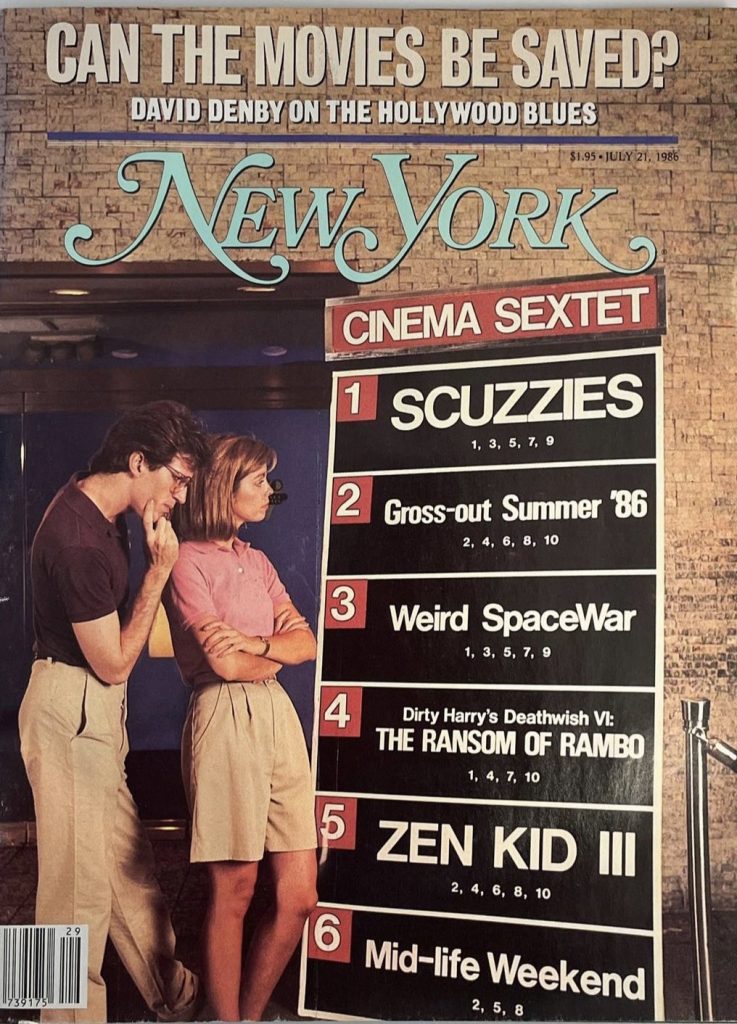
If you calculate that the glory days of the ‘70s actually began with Bonnie and Clyde (fall of ‘67) and ended with Star Wars (May ‘77), it followed that the fallow, high-concept period of the early to mid ‘80s which included the tits & zits films (and which produced one unchallengeable classic — Risky Business) and the Simpson-Bruckheimer formula films (Flashdance, Top Gun), you can understand and sympathize with the July ‘86 cover-story freak-out by New York critic David Denby.
The indie-driven ‘90s provided what felt like an exciting reprieve, and there were certainly many distinguished films that came out in the early aughts before the superhero death virus that began to permeate in the early 2010s. This led to Denby’s “Do Movies Have A Future?”, which was published in 2012. But it wasn’t quite as bad as all that…okay, maybe it was.
The later Obama years nonetheless allowed for cinematic highlights (The Wolf of Wall Street, A Separation, 12 Years A Slave, Zero Dark Thirty, The Social Network, Call Me By Your Name, Moneyball, Son of Saul), but then the scolding, pearl-clutching wokesters muscled their way into the remaining nooks and crannies of Hollywood consciousness in 2017-18, and a huge wave of fear, intimidation and conservatism flooded in, and right now many of us are still gasping for breath.
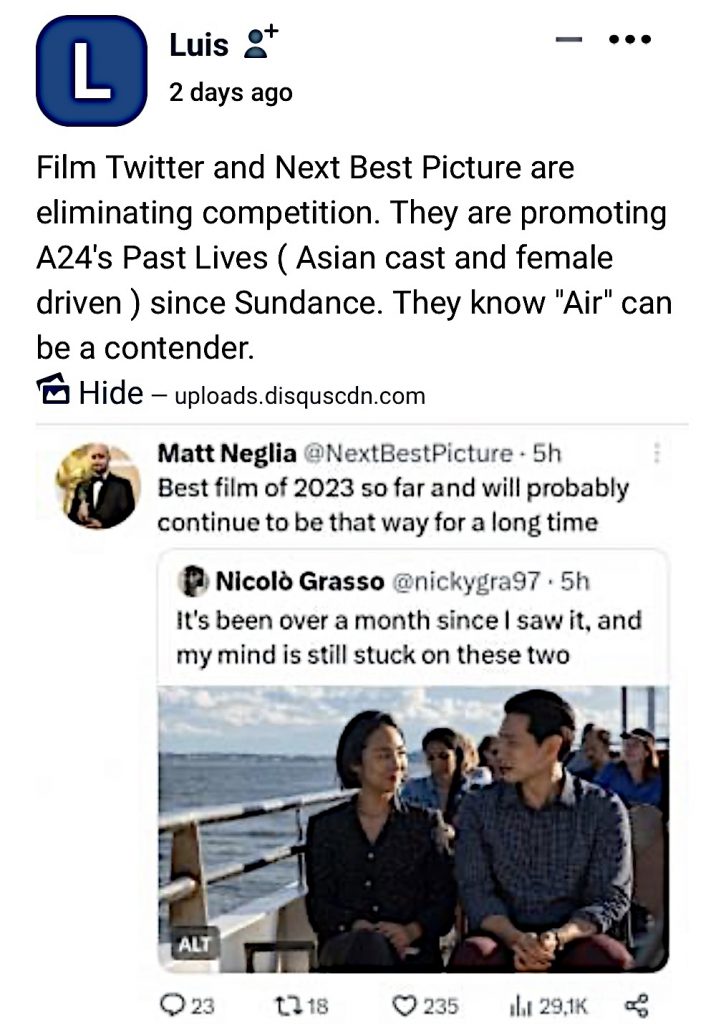
Hollywood Elsewhere hasn’t seen Celine Song’s Past Lives, but many who caught it at Sundance ‘23 are claiming it will be a formidable contender in the forthcoming 2023 Best Picture slug-out. That may be the case (I might love it!) but they’re forgetting one tiny thing. They’re forgetting that A24 has to pay the price for EEAAO — it has to pay for sweeping the table and permanently lowering Oscar property values. It may not be fair or compassionate, but given what’s happened there’s no way Past Lives will take the cake. The name of the game is revenge.