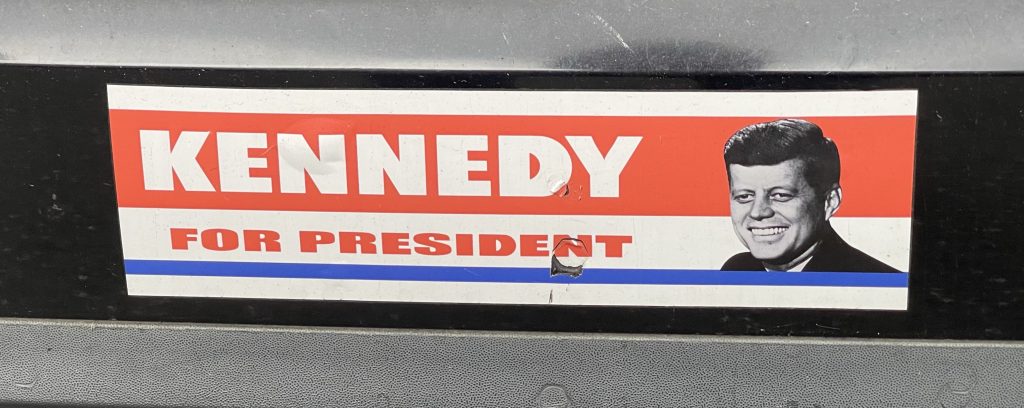
Am I the only driver in the tristate area who has this rear bumper sticker on his vehicle? I’ve been studying rear bumpers in New Jersey, Connecticut and New York State for over a year now, and I’m pretty sure it’s just me. I never saw a JFK bumper sticker in Los Angeles either.
It’s possible, I suppose, that Danbury prosecutors could have refused to accept this situation and persisted in seeking appropriate punishment (i.e., stiff prison sentence, sizable fine) for the perpetrator in question, but at the end of the day he’d still be dead.
Here are 12 bullet points about the recently discovered removal of a brief, first-act passage in William Friedkin‘s The French Connection (’71), or more precisely in the CriterionChannel’sstreaming of same.
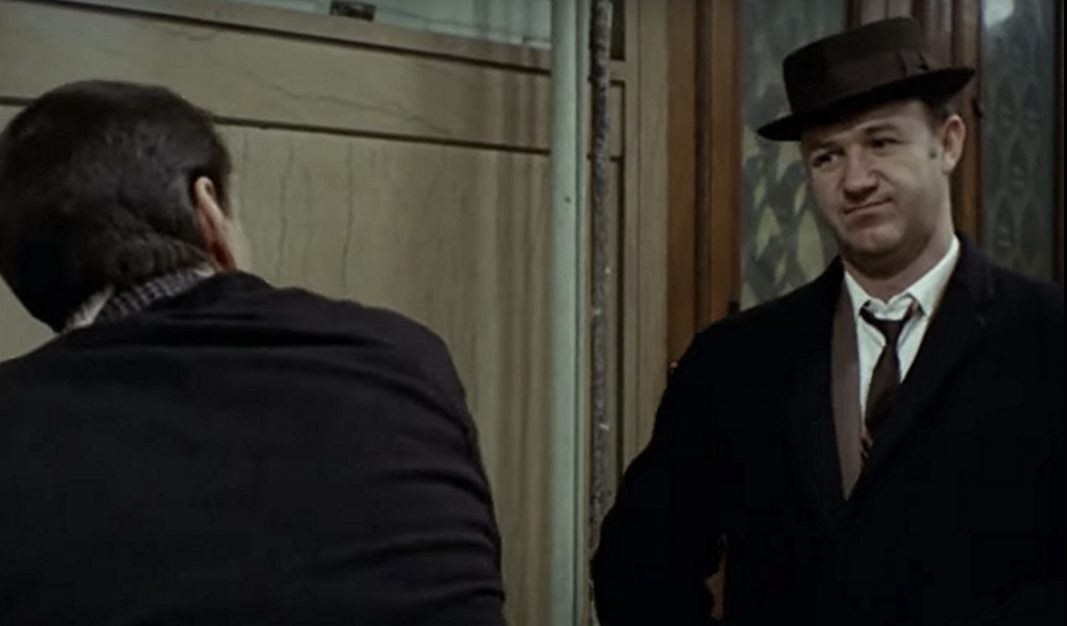
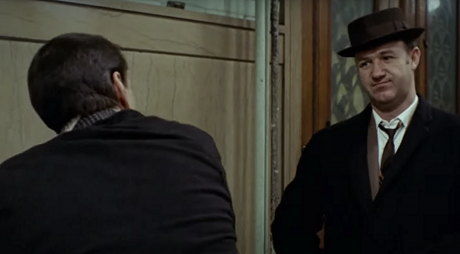
1. The absence of this sequence can be confirmed by anyone who streams the Criterion Channel’s version of the Oscar-winning feature. The messed-with sequence begins at the 9:42 mark, during the film’s first act. Gene Hackman‘s Popeye Doyle enters the brightly-lighted main lobby of the police station. He drops off paperwork, puts on his overcoat, walks over to the main door and flexes his hand. Roy Scheider‘s Cloudy follows but at exactly 10:05 a passage that used to be part of the film is no longer there.
2. It’s a bit between Doyle and Cloudy, who’s nursing a wounded arm after being stabbed by a drug dealer. Doyle: “You dumb guinea.” Cloudy: “How the hell did I know he had a knife?” Doyle: “Never trust a [ethnic slur].” Cloudy: “He coulda been white.” Doyle: “Never trust anyone.”
3a. The nine-second sequence (:52 to :59 in the below video) was obviously censored over Doyle’s racially offensive dialogue, specifically the N-word.
3b. It is presumed that the sequence was removed by Disney, which bought the film’s original owner, 20th Century Fox, on 3.20.19, and not The Criterion Channel.
4. The absence of said passage was also reportedly evident when The French Connection was screened at the American Cinematheque’s Aero theatre on Friday, 5.12.23. HE commenter identified as “The Connection”: “I don’t know if anyone else complained. I should have said something to the manager as I was leaving, but I sent them an email the next day asking who changed it (themselves? the studio? the filmmaker?) and [that] in the future they [should] at least advertise that they’re showing an altered version. Since Criterion is now showing the same version, I’m assuming it was the studio, and I wonder if the Aero was even aware of the change.”
5. HE commenter “Gus Petch” (posted Sunday night): “I have multiple recordings of the movie on my DVR. The versions recorded off TCM 4 and 2 months ago are both the censored versions, but the versions recorded off FXM (Fox Movies) 8 months ago are uncensored. Also FWIW, the TCM versions did not have the title screen in front that you often see that the film has been modified for presentation on TV.”
6. HE commenter “Ken Koc” (posted Sunday night): “That [nine-second sequence] is also gone from my purchased copy of The French Connection on iTunes.”
7. It is nonetheless astonishing that the Criterion Channel is running this version of Friedkin’s Oscar-winning film (Best Picture, Hackman for Best Actor, Friedkin for Best Director, Best Film Editing, Best Adapted Screenplay) without an explanation of some sort. This deletion seriously harms the Criterion brand, which has always been about honoring and representing the original artistic intentions of filmmakers. They need to address this issue ASAP.
8. If in fact Disney is responsible for deleting the nine seconds of footage, they owe an explanation to the film’s fans as well as the industry at large why this was done, and whether or not they consulted Friedkin before doing so, and if they intend to delete other portions of other films that feature the N-word.
9. Over the last couple of days I’ve sent emails to various directors and producers, asking them to please forward yesterday’s HE story about the French Connection censorship to Friedkin. I’m presuming that Friedkin would hit the ceiling when he learns of this, and will post some kind of protest statement or perhaps even a video.
I never know how to react to showbiz hagiography docs, which always seem to explore and celebrate the life of a famous person in the same way. They all say “this person didn’t lead an easy life and endured his/her share of challenges, sorrows and setbacks, but he/she was nonetheless fascinating and lovable and certainly admirable, hence this tribute doc about what an vivid and nourishing life he/she led…nourishing for all of us, really.”
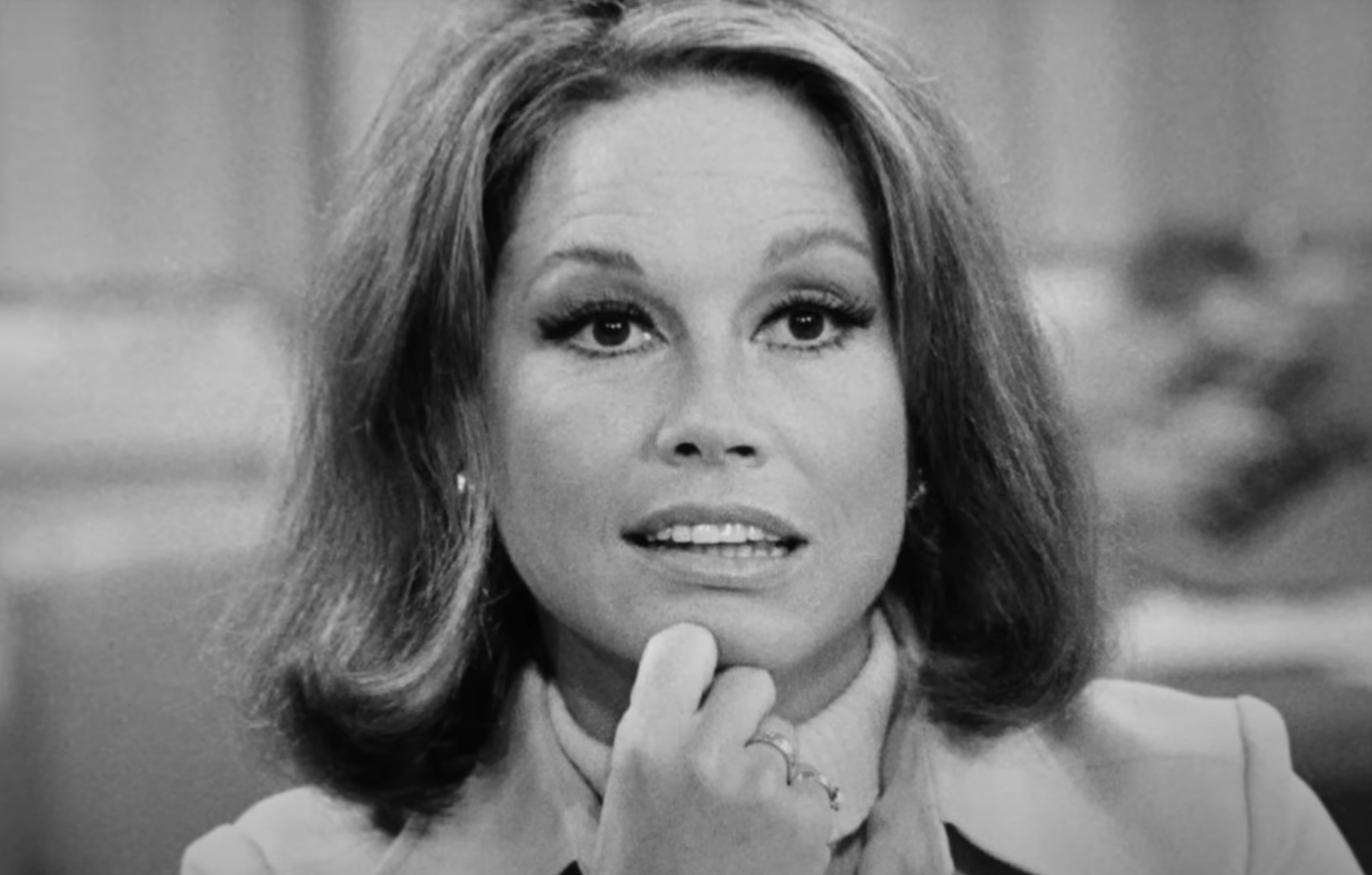
I’m not saying that Being Mary Tyler Moore (Max, 5.26), a two-hour doc about the beloved star of The Mary Tyler Moore Show in the early to mid ’70s and costar of The Dick Van Dyke Show in the early to mid ’60s, is dishonest or banal or sugar-coated — it’s a somewhat open-hearted, reasonably honest piece of polished portraiture as far as it goes. But it sure plays and feels like dozens of other such docs that I’ve seen over the years.
The intention is to make the longtime fan feel good about Moore’s life, and to reassure them that the person she seemed to be (or that she had been reported to be) all those years was more or less genuine, and confirm that the typical fan’s emotional investment in Moore was sensible and sound.
It succeeds in this effort, and I was more or less fine with the final import. I didn’t believe some of it. I knew it was downplaying the dark and thorny and emphasizing the sunny side-up, but that’s what docs like this do. But I believed a fair amount of it, and that was enough.
From my 1.25.17 obit: Poor Mary Tyler Moore has passed at age 80. Nine people out of ten will fondly recall her 16-year run (with a three-year gm my 1.25ap) in two hugely popular TV sitcoms, first as Laura Petrie on The Dick Van Dyke Show (’61 through ’66) and then Mary Richards in The Mary Tyler Moore Show (’70 through ’77). She was especially perfect in the latter series, doing that sunny, wholesome and vulnerable thing to full perfection and winning three Lead Actress Emmy awards in the bargain.
But to me Moore will always be Beth Jarrett, the emotionally frigid mom of Timothy Hutton and wife of Donald Sutherland in Robert Redford‘s Ordinary People (’80) — one of the greatest screen villains in history and surely Moore’s finest role. If she had never done anything before or since, her portrayal of Beth the bitch (which resulted in a Best Actress nomination) would entitle her to a place of eternal honor in the annals of American cinema.
Feature-wise, Ordinary People was pretty much Moore’s career peak. She costarred in the not-so-hot Six Weeks (’82) and then Just Between Friends (’86). But then she rebounded as another high-strung bitchy type in David O. Russell‘s Flirting With Disaster (’96). Moore also costarred in Elvis Presley‘s last scripted film, Change of Habit, in which she played a work-clothes-wearing nun who allowed herself to develop romantic stirrings for The King.
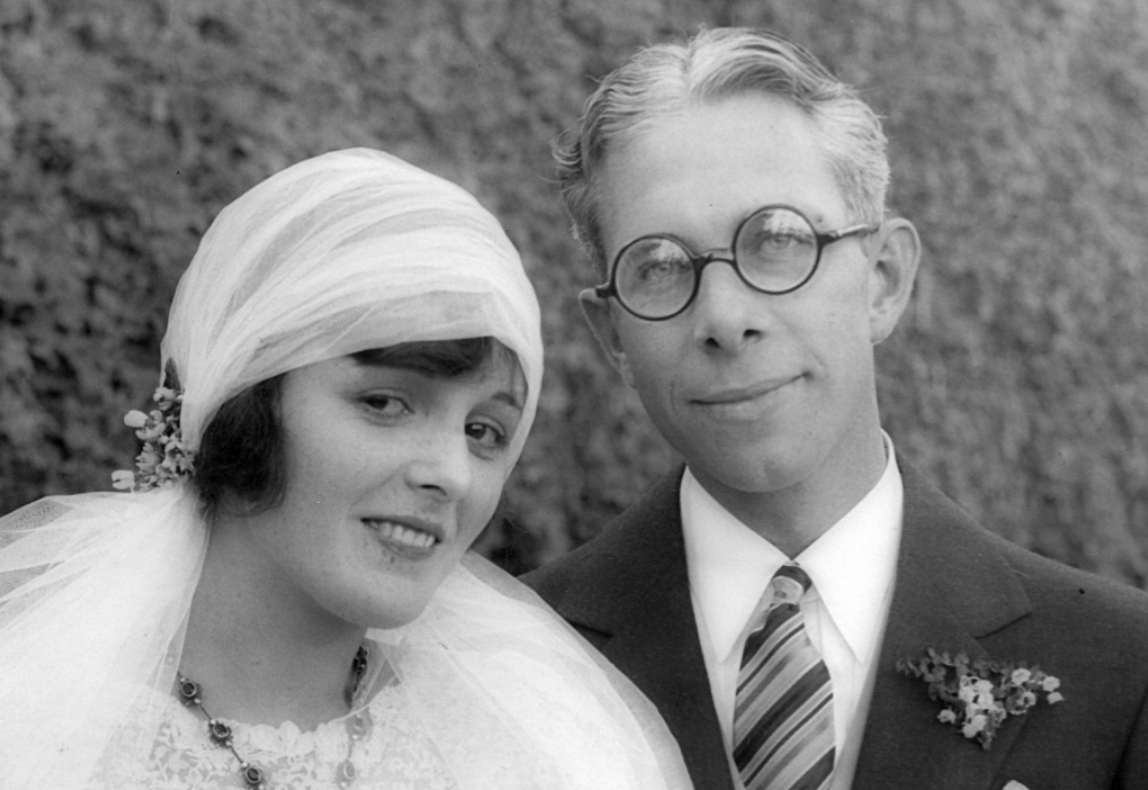
Kenneth was born on 8.12.98, and was therefore, believe it or not, 29 when this photo was taken.
Kenneth reportedly gave Astor a new Packard as a wedding gift. They soon moved to a home on Lookout Mountain in Laurel Canyon. Less than two years later he was dead.
Initially a writer, editor and supervisor at Fox Films Corporation, Kenneth began directing films for Fox in ’29 — a year or so after his marriage. On 1.2.30, the 31-year-old was traumatically killed while directing aerial scenes for Such Men Are Dangerous. He and nine others were instantly destroyed following a mid-air plane crash over the Pacific Ocean. The planes that smashed into each other were identical Stinson SM-1F Detroiters. Sun glare was listed as probable cause.
For our latest podcast, Jeff and Sasha discuss what the Best Picture horse race of 2024 might look like. It’s a long one but what the hell.
Sasha has been on an Oppenheimer research kick so that commanded much of the time, but we also flitted around with Killers of the Flower Moon, The Killer, Barbie, Maestro, The Holdovers, The Pot au Feu, Napoleon, Ferarri, The Zone of Interest, Past Lives, The Color Purple.
We recorded too early to discuss the outrageous French Connection censorship matter — that’ll be for next time. We also re-explained why Best Picture-wise, identity is pretty much all that matters today. There’s no accounting for taste among the low-rent, under-45 SAG-AFTRA crowd.
Here I am on a Sunday morning, sipping coffee and feeling glum as hell about the films of Joel and Ethan Coen no longer being part of our world. They haven’t been, really, since Inside Llewyn Davis, the last bona fide Coen Bros. flick (low key, early ’60s folkie vibes, slurping cereal milk, Schrodinger’s cat). It opened almost exactly a decade ago (May ’13) in Cannes.
As we speak the only Coen flick on the horizon is Ethan’s Drive-Away Dolls (Focus, 9.23), a lesbian road comedy with Margaret Qualley, Geraldine Viswanathan, Beanie Feldstein, Pedro Pascal (again!), Colman Domingo, Bill Camp and Matt Damon. Even irreverent Ethan is following orders from the wokester commandants.
The Coens’ last joint effort was The Ballad of Buster Scruggs (’18), an anthology film for Netflix. My view is that Scruggs didn’t count because it wasn’t really a single-narrative “Coen Bros. film” that opened in theatres. Within that realm, Joel and Ethan have actually been M.I.A. since Hail, Caesar!, which came out in 2016 and was a bit of a disappointment. It was fine (Josh Brolin was excellent) but it also felt incomplete, plus Jen Yamato thought it was too white.
The Coens have always conveyed a sly, darkly humorous contempt for American culture, and one way or another they’ve always served that shit on a plate. Whenever they delivered a dark-funny-perverse scene, which The Big Lebowski and No Country For Old Men are chock the fuck full of, it was heaven. I miss those scenes. My life feels incomplete without them.
I “liked” but didn’t love True Grit (’10) all that much. It was basically about Jeff Burly Bridges going “shnawwhhhhr-rawwwhhrr-rawwrrluurrllllh.” It certainly wasn’t an elegant, blue-ribbon, balls-to-the-wall, ars gratia artis Coen pic — it was a well-written, slow-moving western with serious authenticity, noteworthy camerawork, tip-top production design and, okay, a few noteworthy scenes.
So let’s just call the last decade or so a difficult, in-and-out, up-and-down saga for the boys, but at the same time acknowledge that the Coens at least enjoyed two golden periods.
The first golden period was a four-film run…actually make that a three film run — Blood Simple (’84), Raising Arizona (’87), Miller’s Crossing (’90) and Barton Fink (’91). The Hudsucker Proxy (’94) was an outlier…a weird, half-successful, half-sputtering in-betweener that didn’t quite work and nobody really liked. Truth be told I never liked Raising Arizona either so let’s call it a two-film run.
The second golden period (’96 to ’09) was what earned them a place in film history — a 13-year, nine-film run that included Fargo (’96), The Big Lebowski (’98), O Brother, Where Art Thou? (’00), The Man Who Wasn’t There (’01), Intolerable Cruelty (’03), The Ladykillers (’04), No Country for Old Men (’07), Burn After Reading (’08) and A Serious Man (’09).
Earlier today HE commenter Benjamin Wayne reported that a racially offensive passage in William Friedkin‘s The French Connection (one that contains two ethnic slurs, both spoken by Gene Hackman‘s “Popeye Doyle”) has been stricken from the Criterion Channel’s version of this 1971 classic.
I went on the Criterion Channel to verify and Wayne is correct — the passage is missing.
Click here or watch below. The excerpt starts at the 52-second mark.
It’s a bit between Doyle and Roy Scheider‘s “Cloudy”, who’s nursing a wounded arm after being slashed by a drug dealer. Doyle: “You dumb guinea.” Cloudy: “How the hell did I know he had a knife?” Doyle: “Never trust a [ethnic slur].” Cloudy: “He coulda been white.” Doyle: “Never trust anyone.”
I’m sorry but cutting out scenes that are racially insensitive is a slippery slope. Once you start editing to spare sensitive ears where do you stop?
If and when The Criterion Channel ever shows Mel Brooks‘ Blazing Saddles (’74), will they edit out all the N-words? (I think the N-word is heard at least five or six times in the hilarious “the sheriff is near” scene.) If you watch Blazing Saddles on Max you’ll be treated to Jacqueline Stewart‘s introductory remarks, which acknowledge Brooks’ satirical intent while attempting to give context to the N-word usage. Why doesn’t the Criterion Channel do the same for The French Connection?
Excepting the scenes with Fernando Rey‘s elegant “Charnier” character, The French Connection has always been a coarse and crude film when focusing upon Doyle and Cloudy, which is at least 80% or 85% of the time. Doyle is a pushy and obstinate lead character who not only uses the N-word (once) but racially harasses the drug dealer who stabbed Cloudy by asking him if he’s ever picked his feet in Poughkeepsie. (Why not cut that scene out also?) Doyle’s barking, pugnacious personality represents the essence of Friedkin’s film, which hits hard in scene after scene and fairly flaunts its lack of sensitivity.
It’s one thing to warn viewers in advance about offensive or insensitive racial content, but eliminating entire passages is crude and uncool, especially in the case of a Best Picture Oscar winner.
I was recently urged by two friends to see Tina Satter’s Reality (HBO, 5.29), an 82-minute transcription drama about the June 2017 interrogation and arrest of RealityWinner, a contractor who bravely leaked classified info about Russianinterferenceinthe2026Presidentialelection.
Based solely on FBI transcripts, Reality is about an interaction between Ms. Winner (SydneySweeney) and a pair of kindly, soft-spoken FBI agents (Josh Hamilton, Marchant Davis). It’s mildly compelling in the sense that it’s certainly watchable and not boring, but at the the same time I wouldn’t call it earth-shattering. It’s engrossing as far as it goes. The first half-hour is completely banal, but it finally gets going…sort of.
I believed every minute of Reality (naturally) but Sweeney could be playing any 20something woman responding to any interrogation about anything of grave concern. She speaks to the FBI guys in what could be called “limited candid”…truths, half-truths, sidestepping, etc. Sweeney also speaks in a typical half-slurry vocal-fry manner, as many 20something women have been doing for the last 15-plus years. Her performance is perfectly fine but I didn’t believe she was fluent in three languages, as the actual Reality is. She seems too banal so I don’t honestly get the breathless praise.
I emerged from Reality, however, with a profound respect for what Ms. Winner did, which was to funnel classified proof to The Intercept about Russian interference, etc.
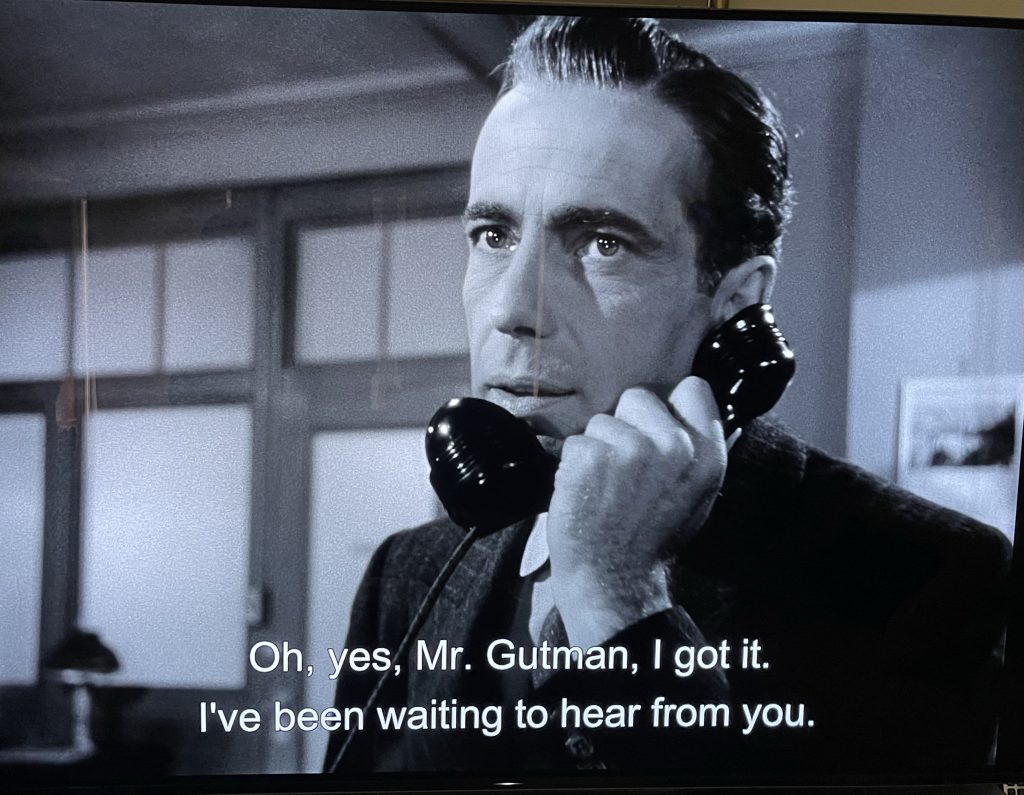
I finally watched WHE’s MalteseFalcon4KBluray, which popped on 4.4.23. I’ve seen John Huston’s 1941adaptation of Dashiell Hammett’s 1930detectiveyarn at least a dozen times (probably more), but the new 4K easily rules above all…darker than the Bluray but smooth and fine and wonderfully detailed with the most glorious mineshaft blacks your eyes have ever beheld.
It’s like monochromedessert, this disc…pure wowser.
In damn near every close-up of Humphrey Bogart’s face you can easily see the glued-down foundational cheesecloth that secures his hairpiece. I really love this stuff — spotting any traces of cheesecloth, make-up, facial base or eyeliner that 1941 audiences never saw.
I also love the unmistakable reflection of studio lights in Bogart’s left eye…four, to be exact. There may be more than four reflected in his right eye; hard to be precise.
HEtoPoland: You bypassed Delbert Mann and Paddy Chayefsky’s Marty (‘55)…why? And David Lean’s 1957Oscar–winner is titled TheBridgeontheRiver Kwai. (Pierre Boulle’s originalFrench–languagenovel (‘52) was titled “The Bridge Over The River Kwai.”)