Old Times’ Sake

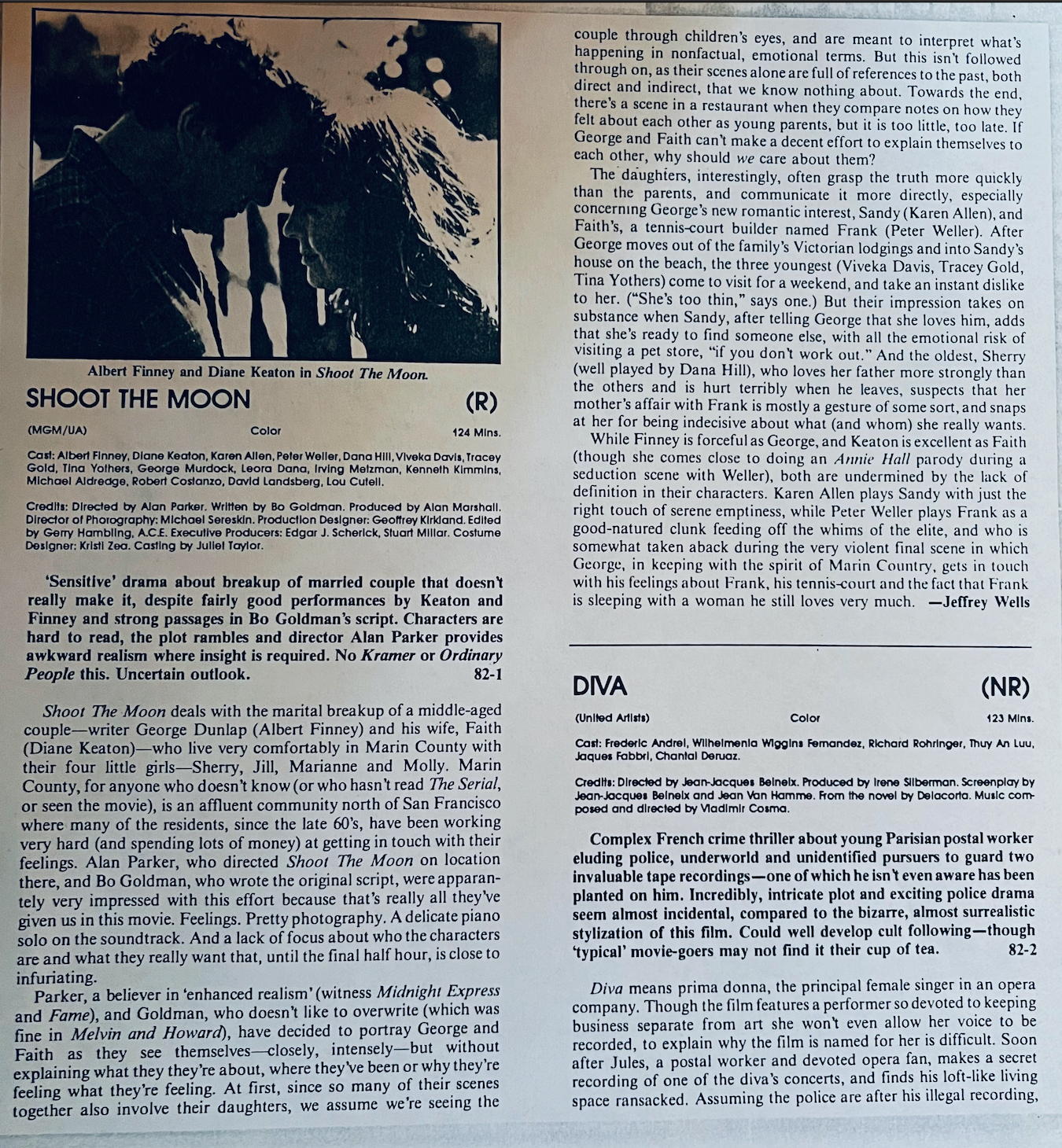
It was apparent earlier today that some are still clinging to the idea that Alan Parker and Bo Goldman‘s Shoot The Moon (’82) is a formidable, first-rate family melodrama. I thought it was a gloomy drag when I first saw it 41 years ago, and I feel the same today. Here’s how I put it on 10.2.21, in the wake of Albert Finney‘s passing:

A few weeks after Finney’s death I re-watched Alan Parker and Bo Goldman‘s’s Shoot The Moon (’82). Not on Amazon, but on the big screen at Hollywood’s American Cinematheque.

It didn’t work out. The film drove me nuts from the get-go, mainly because of the use of solitary weeping scenes (three or four within the first half-hour) and the relentless chaotic energy from the four impish daughters of Finney and Diane Keaton. It was getting late and I just couldn’t take it. I bailed at the 45-minute mark.

The “obnoxious argument in a nice restaurant” scene indicates what’s wrong with the film. It has a striking, abrasive vibe, but it doesn’t work because there’s no sense of social or directorial restraint. If only Parker had told Finney and Keaton to try and keep their voices down in the early stages, and then gradually lose control. Nobody is this gauche, this oblivious to fellow diners.

The balding, red-haired guy with his back to the camera (James Cranna) played “Gerald” in the Beverly Hills heroin-dealing scene in Karel Reisz‘s Who’ll Stop The Rain?.

Which other films aspire to be as relentlessly gloomy as Shoot The Moon? I’m talking about films that give you no mirth, no oxygen. A steady drip-drip-drip of depression, foul moods, anger, downishness.
That’s It For Grief Recovery

After much thought and consternation I’ve decided that grief recovery dramas are a bad thing to wade into, and that they’re actually a sub-genre of sorts…a shamelessly whorish one.

And that’s not a putdown of Manchester From The Sea because Casey Affleck doesn’t recover from grief at the end — he’s stuck in the swamp and will never climb out.

The only grief recovery drama I’ve truly admired is Robert Redford‘s Ordinary People (’80) — the sadness in that film gets me each and every time.

Otherwise I’ve had it with this genre. HE to grieving characters: I’m not saying “snap out of it!” like Cher in Moonstruck, but I am saying i’ve no interest in holding your clammy hand as you moan and writhe and quake with sorrow.

Note: I’m not referring to real life and actual grief, of course, but to the exploitation of same by the wrong people.

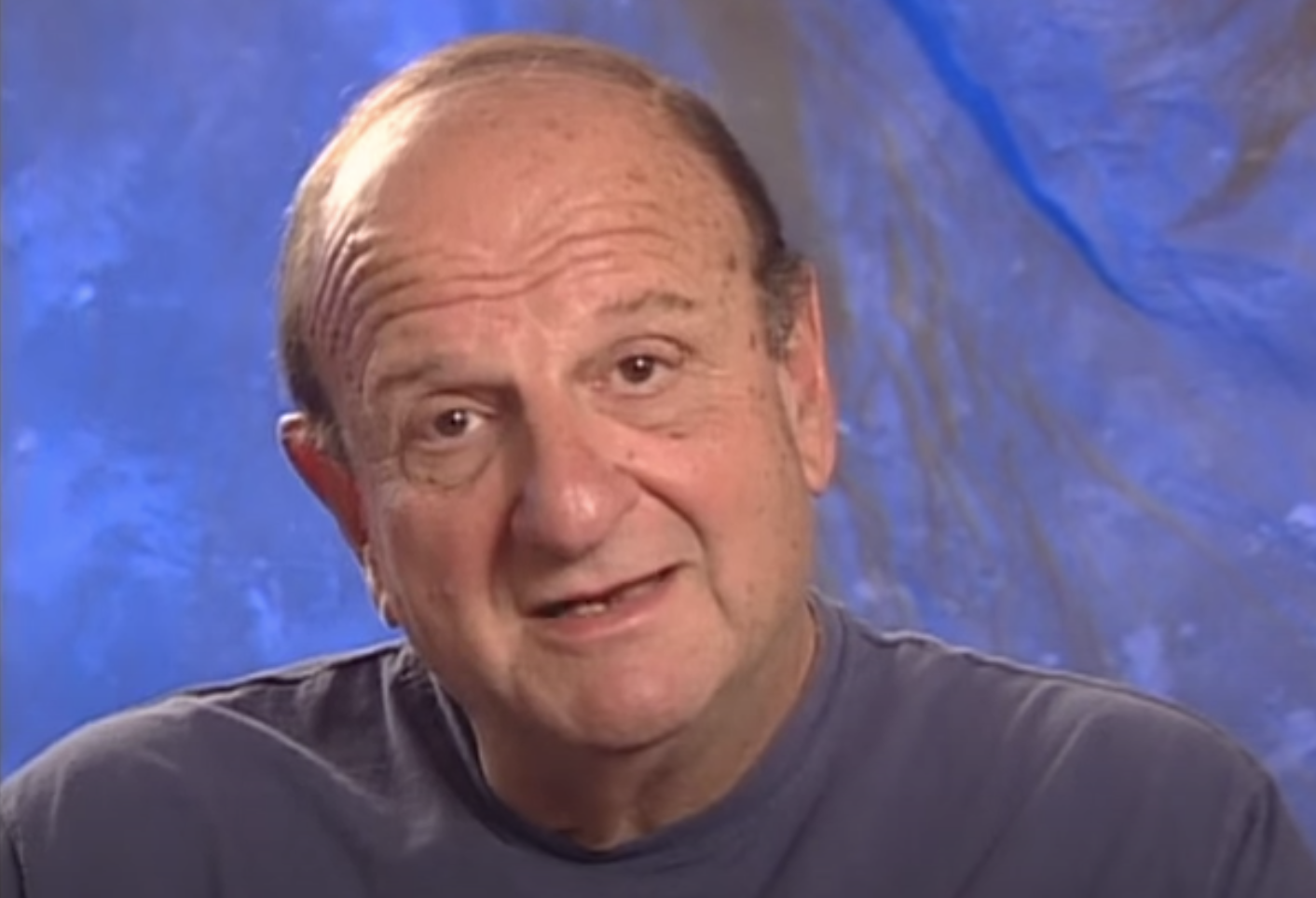
Respect for Bo Goldman

In the wake of Bo Goldman‘s passing I’m fully aware of what I’m supposed to say, which is that his screenplays were wonderful.

Well, I’m sorry but over the decades I never regarded Goldman as much more than a good, respected, dependable craftsman.

That’s not a putdown as very few screenwriters have made their way into that kind of pantheon, but I never thought of Goldman as one of the pip-pip-pips. I’ve understood for decades that everyone thought he was great, and I never offered an argument.

I’ve never mentioned that 34 or 35 years ago I was assigned to write coverage of Goldman’s screen adaptation of Susan Minot‘s “Monkeys“, and I honestly didn’t think it was all that rich or profound or even, to be perfectly frank, good.

Tonally Goldman’s Monkeys reminded me of the fractured and despairing family weltschmerz that Goldman’s Shoot The Moon was consumed by.

The best line in that 1982 Alan Parker film, which I never liked all that much, was when Albert Finney said that “San Francisco could die of quaint.” I also got a huge kick out of Finney destroying Peter Weller‘s backyard landscaping with his station wagon…crazy nuts.

But I loved Goldman’s script of Melvin and Howard, for the most part. And I admire his screenplays for Scent of a Woman and The Flamingo Kid (uncredited).

I never loved anything about Milos Forman‘s One Flew over The Cuckoo’s Nest (’75), Goldman’s adapted screenplay included, and I’m saying this as a guy who once played Dr. Spivey in a Stamford, Connecticut stage production of the 1962 play, written by Dale Wasserman and based on Ken Kesey’s 1962 novel.