Necessity of Fact Checking

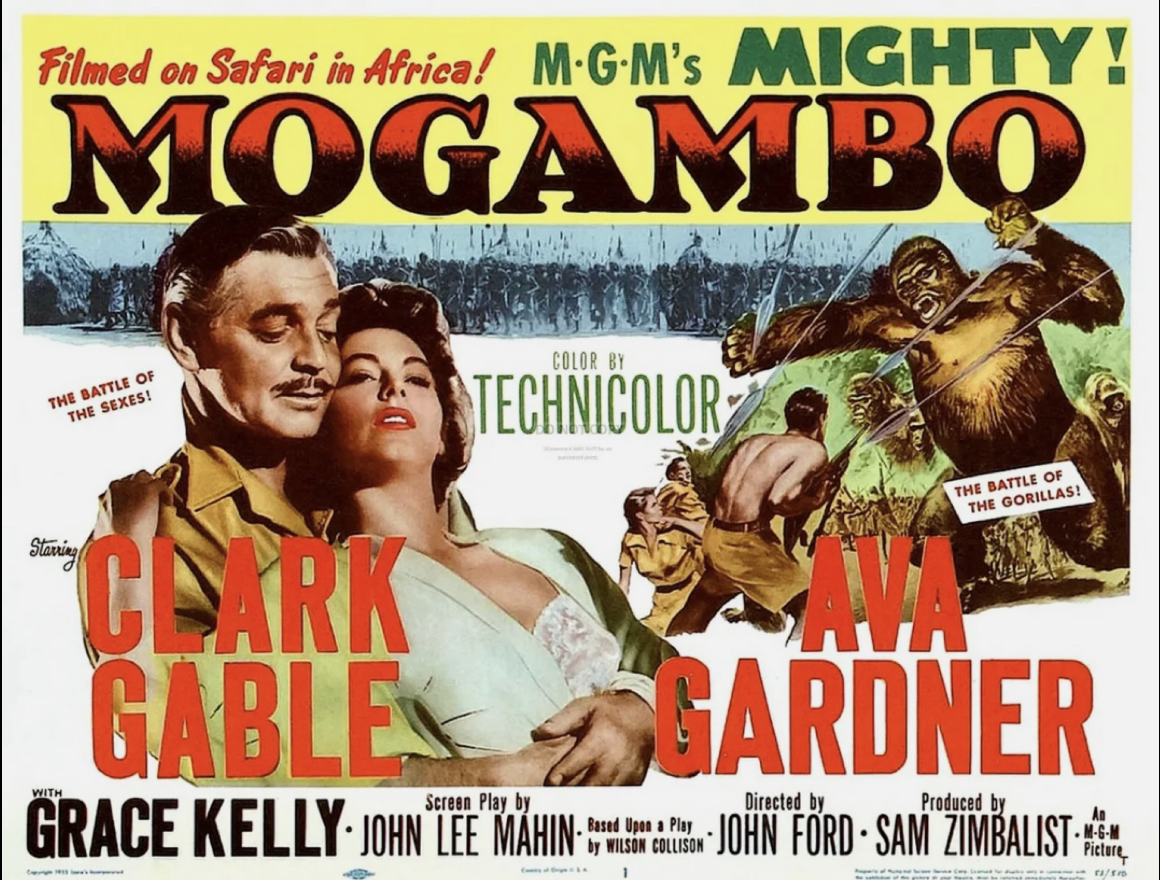
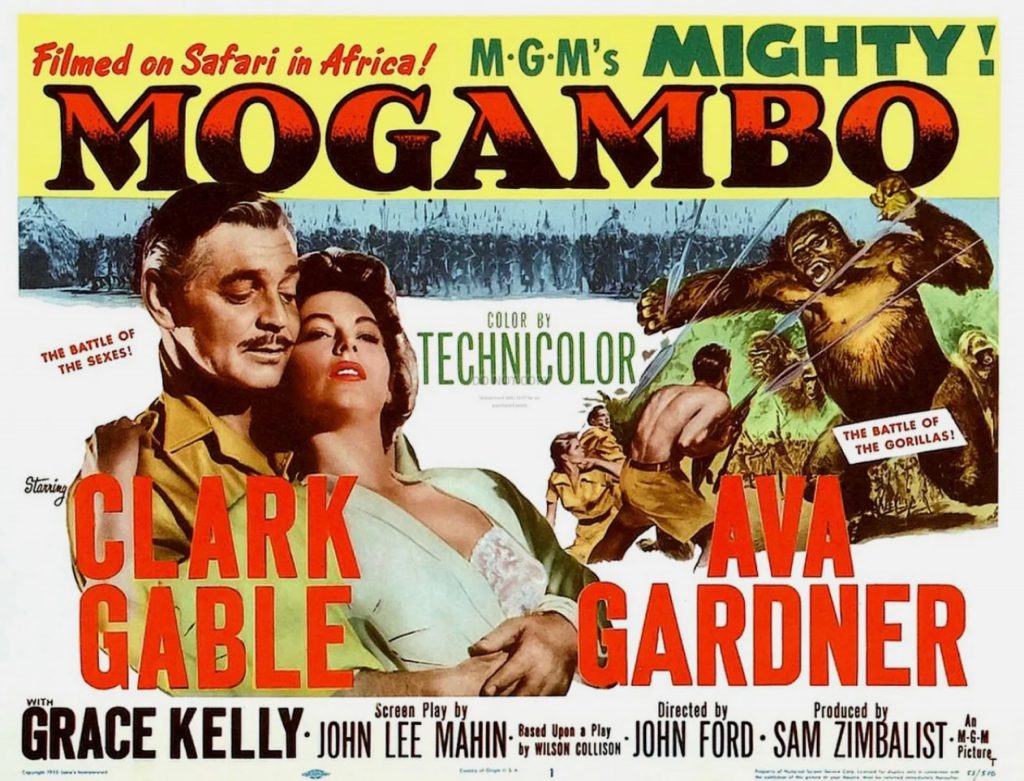
I’ve never liked Victor Fleming’s Red Dust (‘32) or the remake, John Ford’s Mogambo (‘53). They’re both tepid eye-rollers about a pair of anxious, somewhat hungry women wanting to seduce and maybe bunker down with the randy, rugged-ass Clark Gable (Jean Harlow and Mary Astor in the black-and-white ‘32 version, Ava Gardner and Grace Kelly in the Technicolor retread).

Ford’s version, shot by Robert Surtees and Freddie Young, is the more visually captivating — I’ll give it that much.

I’m mentioning all this because of a 7.1.23 AirMail article about the late 1952 location shoot (mostly Africa, some Londön) of Mogambo. Nicely written by Richard Cohen, it’s titled “Sinatra in the Jungle” but is really about the whole shooting magilla…all the various political and logistical intrigues.

Maybe the title was chosen because Gardner’s husband, the fallen-upon-hard-times but “good in the feathers” Frank Sinatra, was in a weakened psychological condition while visiting the shoot and doing next to nothing except attending to the usual conjugal passions with Ava, who reportedly paid for the poor guy’s long-distance air fare to Kenya. Tough times.

So yes, Sinatra’s career was in a ditch during filming in November and December of ‘52, but early the following year he landed the energizing, perfect-groove role of Pvt. Maggio in Fred Zinnemann’s From Here to Eternity (‘53), and won a totally back-in-the-pink, career-rejuvenating Best Supporting Actor Oscar in March54.

And yet Cohen’s article claims Sinatra’s career was still flatlining in ‘54…wrong.
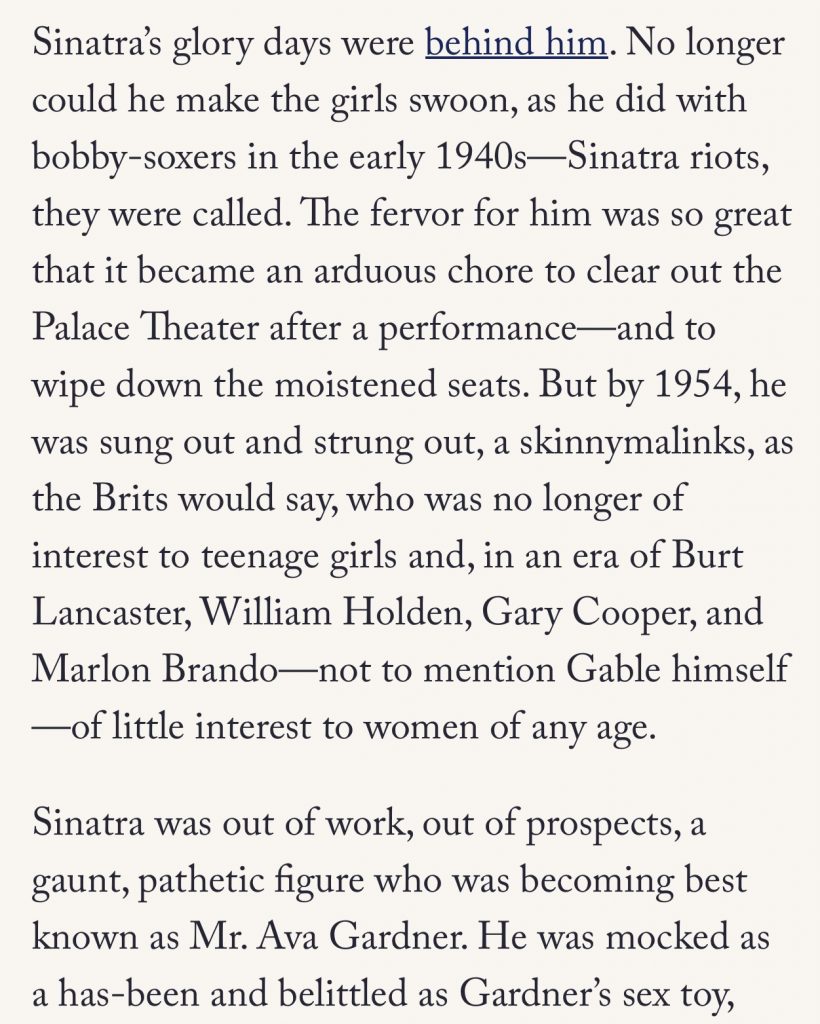
Repeating: Down & despairing in late ‘52, lucky pocket-drop casting in a strong film in early ’53, Oscar champ in March ‘54. Sinatra’s actual career skid years were ‘49, ‘50, ‘51, ‘52 and early ‘53, give or take.
Dumb As A Pile of Rocks

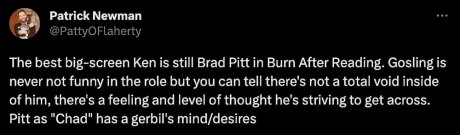
Brilliant Burn,” posted on 9.5.08: Either you get, agree with and derive enormous delight from dry misanthropic humor…or you don’t.

Either way, you certainly can’t argue with the fact that while Joel and Ethan Coen have a lot more up their sleeves than just this, for when they’re in the mood to dispense their extremely low opinion of human behavior, they are masters of the form. Nobody knows from dry, diseased and delectably deadpan like these guys. It’s in their bones and their blood.

And it’s the genius of Burn After Reading, their latest, to offer another serving in a way that may seem slight or irksome to some, but it is in fact — I mean this — a major satirical meditation about everything that is empty, wanting, sad and hilariously absurd in these united and delusional states of America.

I didn’t laugh all that much, but I loved every minute of this thing. Relished it. I sat there with a slight smark on my face, chortling every now and then but with all kinds of “yeah, right, exactly, perfect, hah!” stuff happening in my head.

The plot shenanigans are for the popcorn eaters to chew on and the disgruntled critics to bitch about; the meat and marrow of Burn After Reading is contained in the ample and delicious margins. The atmosphere, the asshole-ish line deliveries, the mocking tone, the wacked particulars, and those looks of fear, loneliness, concrete stupidity and desperation.

If you look at it this way, the movie is a feast.

If you’re on the misanthrope boat, this half-espionaged, half-comedic take on modern fools and manners is about as good as this sort of thing gets. But you have to forget about “laughing.” (Which is overrated anyway, despite what Joel McCrea‘s John L. Sullivan might have thought.)

You can sit there and eat your popcorn and take it as a sardonic goofball spy movie crossed with a comedy of errors that doesn’t add up to much, and that’s fine. But the meanest and cruelest jokes aren’t just the funniest, as Mort Sahl once said — they’re also the most thoughtful.

Burn After Reading is not a movie for the ages, but a modest and dead-perfect geiger-counter reading of what ails those desperate, constantly itchy and perturbed Americans in the comfortable urban areas who can’t help but shoot themselves, attack others, make mad lunges at quick money and temporal erotic satisfaction. Prisoners of their swollen egos and limited intelligence.

Strivers who must (they feel) have more, who can’t be satisfied or serene, who eat the right foods, belong to health clubs, drink too much, scheme and claw too much and are natural-born comedians in the eyes of God.

Which is how Burn After Reading starts and ends, by the way — from the point of view of a sad, bemused and occasionally chuckling cosmic super-being.

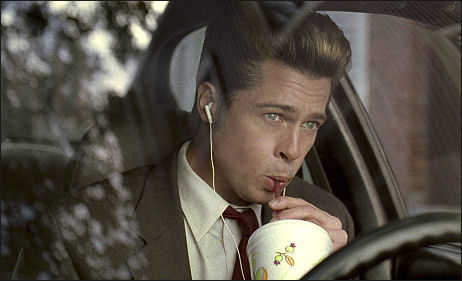
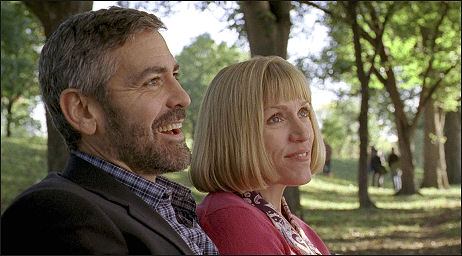
I haven’t even mentioned the cast — George Clooney, John Malkovich, Brad Pitt, Frances McDomand, Richard Jenkins, J.K. Simmons, David Rasche — or the beautiful note-perfect ending. But them’s the breaks when you’re doing four movies a day plus filing and parties and random chit-chats on the street.

My Favorite Mutiny

With the Venice Film Festival debut of William Friedkin‘s The Caine Mutiny Court-Martial only a month away, it’s necessary to state here and now that the absolute best shipboard mutiny scene ever filmed can be found in Carol Reed and Lewis Milestone‘s Mutiny on the Bounty (’62).

Yes, better than the mutinies in Roger Donaldson‘s The Bounty (’84), Lewis Gilbert‘s Damn The Defiant! (‘62), Tony Scott‘s Crimson Tide (‘95) and Edward Dmytryk‘s typhoon takeover in The Caine Mutiny (’54).

In its entirety the ’62 Bounty is problematic but the 10-minute mutiny scene, especially between the 1:40 and 3:30 mark, is absolute aces. I especially adore Marlon Brando‘s dashing and authoritative saber-brandishing during the brief, side-to-side tracking shot between 1:55 and 2:05 — the first and only such shot in the entire film.

My second favorite mutiny scene occurs in Howard HawksRed River (’48).

Friedkin’s film is apparently set during the Gulf War of the early ’90s. The costars include Kiefer Sutherland as Humphrey Bogart, Jason Clarke as Jose Ferrer, Jake Lacy as Van Johnson and Lewis Pullman as Fred MacMurray.

When I was 10 or thereabouts my father played a psychiatrist in a small-town stage production of The Caine Mutiny Court Martial so don’t tell me.

Read more

Helen Mirren vs. Ingrid Bergman

From Fionnuala Halligan‘s Screen Daily review of Golda (2.20.23):

“When an iconic actor portrays an iconic figure, the success or failure of the project tends to depend on the power of the performance blasting away the wigs and prosthetics. Helen Mirren achieves all that while playing Israeli politician Golda Meir. But, in Golda, director Guy Nattiv and writer Nicholas Martin haven’t quite kept up their end of the bargain.

“Dropping the audience into the start of the 1973 Yom Kippur war with the chain-smoking caretaker premier, the film is a tense story of a woman and her generals around a cabinet table over the course of the conflict. Endless cigarette smoke, overflowing ashtrays, maps, a fat suit, a wiry wig, hairy eyebrows, orthopaedic shoes — but who was Golda Meir? The film prefers to avoid her as a human being, swerving into her politics and replaying the war from the perspective of her military cabinet over 10 charged days.”

Back Door Passion of Oliver Barret, Jr.

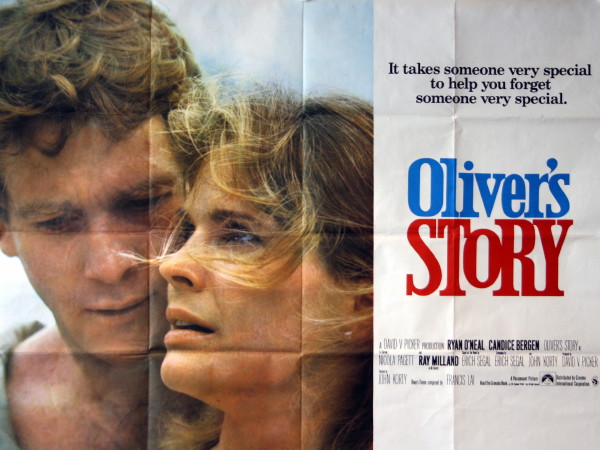
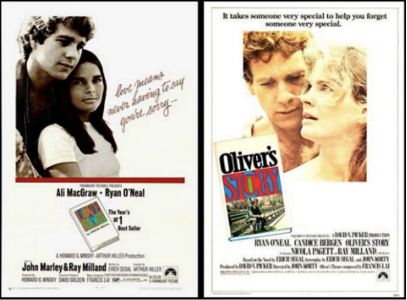
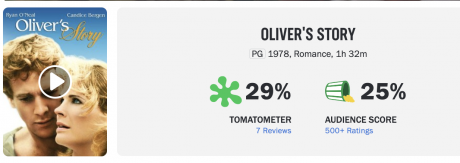
Posted on 2.29.16: “In a few days Quentin Tarantino‘s New Beverly Cinema will be screening a beware-of-Ryan O’Neal double bill — Love Story (’70) and Oliver’s Story (’78).

“A little more than 37 years ago I laughed at a defaced version of an Oliver’s Story one-sheet on a New York subway station wall. It won’t be very funny if I use the original graffiti so I’m going to use polite terminology. The dialogue balloons had O’Neal saying to costar Candice Bergen, “I’m sorry but may I have sex with you in a way that can’t get you pregnant?” Bergen answered, “If missionary is really and truly out I’d prefer oral.”

“I was poor and struggling and mostly miserable, but the graffiti made me laugh. It still makes me laugh today. I guess you had to be there.”

Read more

Oppenheimer’s Cyanide Apple

I was thrown pretty hard by that early Oppenheimer scene with the poisoned green apple. Actually a lethal apple, injected by Cillian Murphy‘s titular character with liquid cyanide. The intended victim is Patrick Blackett (James Darcy), a Cambridge University instructor and physicist whom Oppie despises.

At the very last minute Oppie comes to his senses, realizes that murdering a professor may impact his life adversely, runs back to the classroom and prevents the apple from being consumed. Except the guy who almost bites into it isn’t Blackett but Danish physicist Niels Bohr (Kenneth Branagh).

Post-injection my immediate thoughts were (a) “the fuck?”, (b) “What kind of loose-cannon psycho twerp is this asshole? Who does this kind of thing?”; (c) “Oppie almost killed once so who’s the next possible victim? Will he strangle Florence Pugh‘s Jean Tatlock after having sex with her? Will he stab Robert Downey, Jr.‘s Lewis Strauss in the back of the neck with an icepick?

Once you’ve opened the Pandora’s Box of premeditated murder, character-wise you can’t close it. And so the cyanide apple half-hovers over the entire film. Or it did for me, at least.

Read more