Rationale For Orr’s “French Connection” Pussyfooting

Unfriendly friendo: “I figured I’d clarify the situation on that recent French Connection piece that you’re so riled about. The one written by the N.Y. Times Magazine‘s Neila Orr, I mean.

“First off, the New York Times Magazine operates from a completely different staff than the daily paper does. One hand is never informed as to what the other is doing. Given the writer is a story editor on the magazine, it’s likely that she just decided to write it up herself.

“Second, the front-of-the-book rubric under which the piece appears, “Screenland,” is strictly an opinion (or wankery) column. It’s not reported as such. It’s just a given writer going off. So the author can’t be faulted for not doing reporting; it’s not a reported column — it’s a thumbsucker. You’re asking something of it that it doesn’t have to be. It’s an op-ed and it’s written as such. I didn’t find Orr’s piece particularly satisfactory, but that’s the way it is.”

HE replies: “Nonetheless Orr, cautiously assigned to write about the the French Connection censorship for an obvious reason, was writing a piece about a still-unsolved and mystifying situation, and she didn’t even attempt the boilerplate option of asking for explanations from Friedkin and Disney. I’m sorry but that’s stunning. How long does it take to make a couple of calls or bang out a couple of emails? What, she couldn’t be bothered?

“Imagine a Times staffer writing a thoughtful essay about the recent disappearance of Amelia Earhart in, say, early August 1937, or only a few weeks after Earhart’s plane was reported missing on 7.2.37. Imagine a Times staffer not even inquiring about the latest findings while putting the piece together.

“As a representative of The N.Y. Times, Orr would have obviously been able to request statements or perhaps even land an interview or two — a request that may have actually elicited a response, given the Paper of Record’s lordly history and cultural standing.

“And yet Orr chose not to go there because…what’s the explanation again? Because she and her editors live inside an elite, cloistered, administrative membrane (i.e., the Times‘ weekly magazine) that apparently derives satisfaction and solace from, among other things, turning off the curiosity switch.

“But hey, at least she was able to exercise her authority (by way of identity and birthright) by typing out the actual N-word. Impressive! I’m sure this got the attention of Donald G. McNeil Jr., who was almost certainly amused.”

“Sound of Freedom” is Solid, Subdued

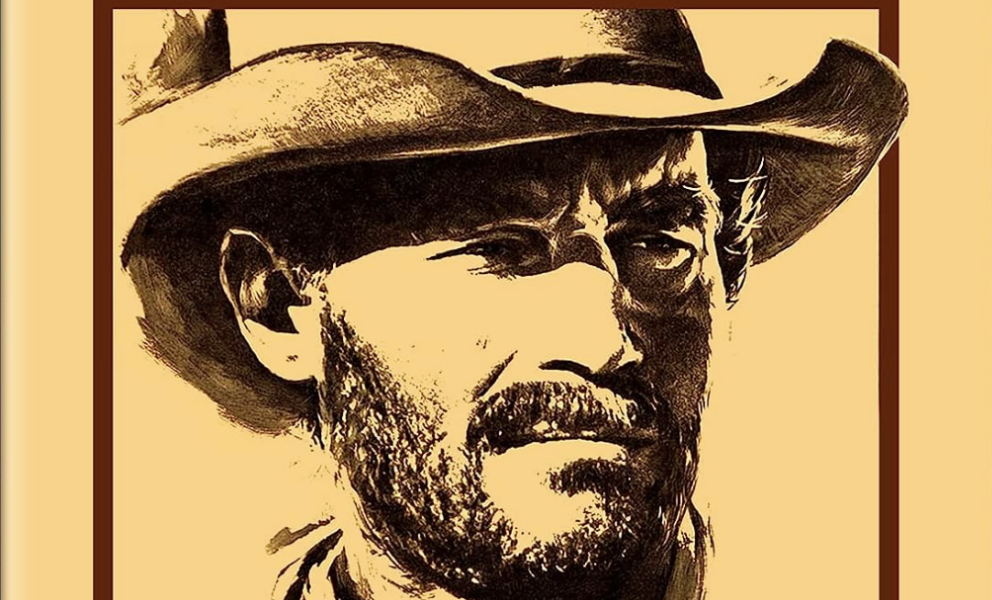
I’m sorry to disagree with the five or six sniping naysayers out there, but HE agrees with Variety‘s Owen Gleiberman and the Critical Drinker about Alejandro Monteverde‘s Sound of Freedom, which I saw last night at the AMC Sono8.

This is an entirely decent, well-honed, approvable, maturely-judged, non-exploitive genre film about a solemn, real-life good guy (Tim Ballard, played by Jim Caviezel) struggling to save kids from south-of-the-border sex traffickers, and two kids in particular.

The mere thought of young tykes being used as sex slaves is obviously enough to make anyone’s skin crawl or stomach turn, but the film doesn’t subject you to anything even semi-explicit, thank God — it’s all implied. (Not that this implication makes Sound an easy sit — it’s not.)

Nonetheless child trafficking is real and widespread and the film (which was shot five years ago) is reflecting statistical reality as far as I’m able to discern.

You don’t have to be a rightwinger to accept or recognize that Sound of Freedom is dealing straight cards, but there’s a tendency, I’ve noticed, among lefty critics to put it down because of the bizarre QAnon associations. I too have a problem with wacko righties and their “Pizzagate” conspiracy theories. But the lean and mean Sound of Freedom feels steady and subdued and un-fraught with cliche. No shoot-outs, only one ultra-violent confrontation, no feeling of any sort of Mel Gibson-like fetish for blood and bruises.

Ballard is easily Caviezel’s best role since The Passion of the Christ (’04), and the basis of his finest performance in 19 years. And Bill Camp has a juicy supporting role as Vampiro, a former bad guy who’s looking to atone for past sins. He’s always smoking cigars and constantly slurping liquor, but his heart is in the right place.

I catch films at the Sono8 from time to time, and one of things I like about going there is that there are almost always acres of open seats. I’ve rarely attended a showing that was even half-full. Except for last night, that is. I attended a 6:50 pm show (the actual film starting at 7:15), and every last seat was filled except for the front-row seat that I’d reserved. This means something.

HE Was Just As Derelict As The Others

In the matter of the besieged Jonathan Majors, I decided between late March and late April that the actor was in serious career trouble and probably toast. On 3.25 Majors was arrested in Manhattan on charges of strangulation, assault and harassment of longtime girlfriend Grace Jabbari.

I noted that two statements seemed to mitigate — one by Majors’ attorney Priya Chaudhry that claimed Majors is “innocent and has not abused anyone,” and that “irrefutable evidence [shows] that the charges are false”, and another by the 30-year-old Jabbari that the incident had been overblown and that she didn’t mean to create all this trouble.

But then Majors was dropped as a client by both his management company, Entertainment 360, and the public relations firm, the Lede Company. And then on 4.19 Variety‘s Tatiana Siegel reported that “sources” are saying Majors “is now a suspect in multiple cases of assault and abuse” and that “several alleged victims have reportedly come forward and are cooperating with the D.A.’s office.”

Figuring he was probably done for, I didn’t even pay attention to a 6.29 N.Y. Times story, reported by Jonah E. Bromwich and Chelsia Rose Marcius, stating that the N.Y.P.D. has evidence to arrest Jabbari.

Chaudhry is saying that the charges are “a complete lie“, and that in fact “it was Ms. Jabbari who assaulted her client.” [Chaudhry] has also said that Ms. Jabbari, a dancer who had worked as a movement coach on one of Mr. Majors’s movies, stole personal belongings from his home. Chaudhry is stating that Jabbari “physically confronted Majors, hitting and scratching him, and that she went out clubbing and later passed out in a closet at his home, waking up with injuries to her finger and ear.”

Excerpt: “Late last week, the police issued what is known as an I-card for Ms. Jabbari. The I-card, which appears in a department database, is different from an arrest warrant, which is typically signed by a judge, but alerts officers that there is probable cause to arrest Ms. Jabbari.”

World of Reel‘s Jordan Ruimy brought the 6.29 Times story to my attention. I apologize for having blown it off.

First Reactions to “Oppenheimer” on Tuesday (7.11)

The French-speaking Jordan Ruimy has reminded everyone that Chris Nolan‘s Oppenheimer (Universal, 7.21) will screen for Paris journos tomorrow morning (Tuesday, 7.11) at two locations — Le Grand Rex (1 Blvd. Poissonnière, 75002 Paris) and Le Cinematheque francaise (51 Rue de Bercy, 75012 Paris).

The review embargo will lift at 11:30 pm Paris time, or 5:30 pm in New York City.

Read more

Magnificent Strategist

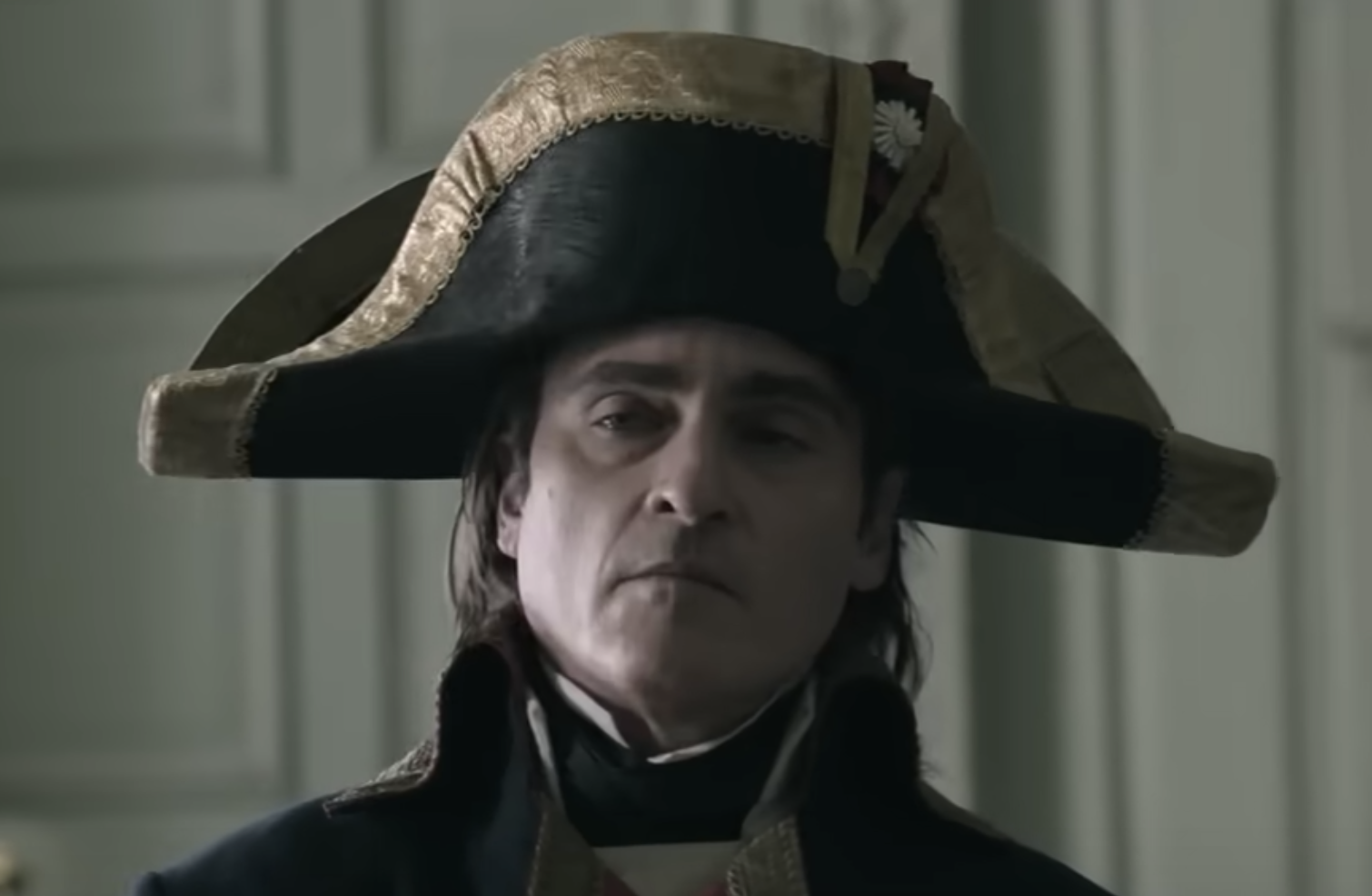
With this morning’s debut of the grand and stirring trailer for Ridley Scott‘s Napoleon (Apple/Sony, 11.22), there can be no doubt that Dariusz Wolski‘s cinematography (Barry Lyndon-ish, exquisitely lighted, immaculately framed) will be Oscar nominated…no question about it. An absolute visual knockout.

Let’s go for the gusto and predict that Napoleon will almost certainly be nominated for a Best Picture Oscar…look at it! And given this, how could Scott not land a Best Director nomination?

I’m almost disappointed that this trailer has popped online, as I’d understood it would be exclusive to theatres (attached to Mission: Impossible — Dead Reckoning Part One) for a few days. I bought a ticket to see MI:7 tomorrow evening specifically to catch the Napoleon trailer on a big screen.

As expected, Joaquin Phoenix‘s Napoleon Bonaparte doesn’t speak with a Pepe Le Pew French accent. Nobody in the entire cast does, it seems.

Phoenix will deliver a fascinating performance, I’m sure, but his obviously un-youthful, unmistakably creased, late-40ish features argue that he’s too old for the part.

Phoenix was roughly 48 during filming, and (let’s be honest) looked it. Napoleon Bonaparte’s rise-to-power heyday was between ages 20 and 40, or between 1789 (the launch of the French revolution) and the Battle of Wagram (1809). He met the 32 year-old Josephine (Vanessa Kirby) when he was 26, which was also Phoenix’s age, more or less, when he played the rancid Commodus in Scott’s Gladiator (’00).

Marlon Brando‘s performance as Napoleon in Henry Koster‘s Desiree (’54) was more age-appropriate. Born in 1924, Brando was 29 and 30 during filming.

Oh, and by the way? Catherine Walker‘s presumably brief performance as Marie Antoinette seems perfect. That impudent, fuck-the-peasants expression is just right.

Oscar Poker Examines Boundaries, Uncertainties, Box-Office Sadness

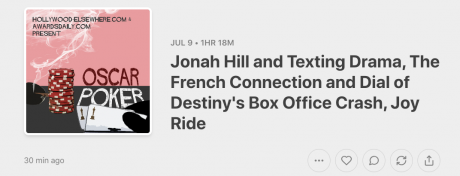
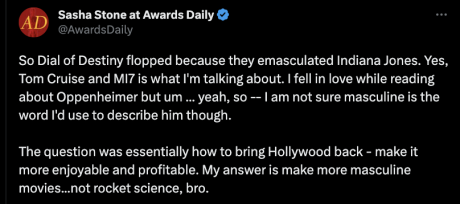
Jeff and Sasha barely touched upon the wonderful world of cinema, save for reminding each other that Mission Impossible 7 opens on Tuesday, and that a full-blast trailer for Ridley Scott’s Napoleon will be attached to the feature. Topics were mostly of social-cultural nature, and that’s fine. The Jonah Hill texting drama, the continuing box-office collapse of Indiana Jones and the Dial of Destiny, the N.Y. Times addresses the French Connection censorship saga, the failure of Joy Ride to connect with a decent-sized audience. Again, the link.

Paper of Record Finally Dips Toe Into “French Connection” Censorship Saga

Five weeks after the Great French Connection Censorship Intrigue was first reported by yours truly (and which resulted in many articles worldwide along with no fewer than six HE articles between 6.3 and 6.20), The New York Times Magazine has boldly jumped into the fray with an article titled “What’s Lost When Censors Tamper With Classic Films.”

Three aspects are worth noting.

(a) The Times almost certainly dodged this story for several weeks out of squeamishness over the use of the N-word, which is what the censoring of a certain Act One scene in William Friedkin‘s 1971 Oscar-winner (i.e., Gene Hackman‘s Popeye Doyle using the epithet in a discussion with Roy Scheider‘s Cloudy in a police station foyer) was all about.

So when they finally posted a story about it, they had story editor Niela Orr, a youngish woman of color, write it. That gives them a certain political protection.

(b) In describing the scene, Orr uses the actual six-letter N-word — something that no one else writing about this story would ever do. Because she can.

(c) The one mystifying and unfulfilled element in this story is the absence of statements from either director William Friedkin or copyright owner Disney about who ordered the cut.

Was the scene edited at Friedkin’s request, as all available evidence clearly indicates? Orr shrugs her shoulders and wonders like the rest of us. If she reached out to Friedkin and Disney, she isn’t saying.

“We can only guess at the precise reasoning behind this particular change to The French Connection,” Orr writes. “Is it Disney, treating adult audiences like the children it’s used to serving? Or did Friedkin, who once modified the color of the film, approve the change?”

For whatever reason Orr doesn’t mention a couple of pertinent facts. A visually confirmed, easily verifiable report that “in Disney’s DCP asset list it says that the currently-streaming version of The French Connection is identified as ‘2021 William Friedkin v2.’” Plus a statement from The Criterion Channel, passed along in “a 6.9.23 HE story,” that “according to our licensor [Disney], this is a ‘Director’s Edit‘ of the film.”

Every Relationship Has Boundaries

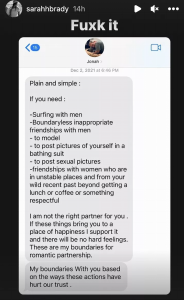
I’ve been told by various girlfriends over the decades that certain boundaries are not cool to cross, and that if I cross them there will be hell to pay. We all understand that women want these boundaries to be respected and observed, and that men who ignore said boundaries will almost certainly be on their own before long.

I’ve understood these boundaries all my life. I know how committed relationships are played and maintained so don’t tell me.

Some of the boundaries that I’ve been warned about over the years are (a) no romping around with groups of women or flirting with various women by way of athletic group activities (hiking, jogging, volleyball on the beach, swimming and boogie-boarding), (b) no posing for photos with various women in my Speedo (this was when I was younger and slimmer) and posting them on social media, and (c) no drinking friendships with guys who are in unstable or neurotic places (loutish party boys, anti-social types, cads).

My ex-girlfriends, in short, have always wanted me to behave in a generally loyal and prudent fashion — like a calm, centered adult and not like some 16-year-old spray shorts. Any guy who says serious girlfriends don’t lay down the law along these lines is a fucking liar.

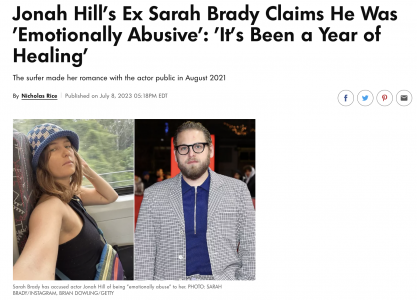
In late 2021 Jonah Hill laid down the same general boundaries with his longtime surfer girlfriend Sarah Brady, and over the last couple of days she’s gone public with their private texts. She’s called Hill’s general manner with her emotionally abusive and repressive.

They’ve since broken up but What Sarah meant is that she wanted to be free to do whatever and whenever, including socializing and flirting with male surfers and behaving like an attractive and dynamic social-media presence. As the girlfriend of a famous movie guy she wanted her social due — she wanted to be Kim Kardashian on a surfboard or something in that realm. Famous, flashy, livin’ the life.

She now says she felt that Jonah was being a controlling wet blanket and cramping her style and that his attitude wasn’t feminist enough. Maybe, maybe not. Maybe he is too controlling, and maybe he was just insisting that Sarah follow the same rules that 98% of women insist upon.

But Brady posting private texts definitely isn’t cool. It’s gauche, in fact.