Points of View Are Usually Necessary

Martin Scorsese‘s films have always been clear about who the lead character is, and why we should care about him or her or at least feel a certain kinship, even if they were criminals or morally compromised in some way. We always absorbed the stories that unfolded from this lead character’s point of view.

Goodfellas had a point of view — i.e., Ray Liotta’s or Henry Hill‘s.

The Wolf of Wall Street had a point of view — Leonardo DiCaprio’s or Jordan Belfort‘s.

Mean Streets had a point of view — Harvey Keitel’s.

The King of Comedy has a point of view — Robert DeNiro‘s or Rupert Pupkin‘s.

Casino had a point of view — Ace Rothstein‘s or Robert De Niro‘s.

The Departed had a point of view — Leo’s for the most part although Matt Damon and Jack Nicholson muscle their way in from time to time.

Taxi Driver had a clear point of view — Robert De Niro‘s or Travis Bickle‘s.

In The Age of Innocence, the point of view was owned by Daniel Day Lewis or Newland Archer.

Raging Bull certainly had a point of view — Robert De Niro‘s or Jake LaMotta‘s.

The Last Temptation of Christ had a point of view — i.e., Willem Dafoe’s or Jesus of Nazareth‘s.

After Hours had a point of view — Griffin Dunne‘s or Paul Hackett‘s.

Alice Doesn’t Live Here Anymore had a clear point of view — Ellen Burstyn‘s.

None of these points of view (including Jesus’s) were necessarily imbued with moral instruction, and so goodness and morality weren’t preached.

We didn’t go to these films to receive moral messaging about the right moral path that the lead character should take. We were informed about how these characters felt about what was happening, and what they did in response to these forces of nature to further or clarify their game. They may have felt conflicted or guilty, but their stories were strictly about how they saw things and what they needed to do to fulfill their fate or at least stay out of trouble.

I’m sorry but Killers of the Flower Moon has no real clear point of view. It starts with the point of view of Leo’s Ernest Burkhart character but it kinda switches over to Lily Gladstone‘s Mollie Burkhart, and then it spreads out and diffuses.

Even the 19-minute chapter on the Osage murder saga in Mervyn LeRoy‘s The FBI Story (’59) has a clear point of view — James Stewart‘s or Chip Hardesty‘s.

In David Grann‘s non-fiction “Killers of the Flower Moon: The Osage Murders and the Birth of the FBI,” the point of view is more or less owned by the top FBI guy, former Texas Ranger Tom White.

The whole point of the book — it’s right there in the title — is that the Osage murder case launched the FBI. But that’s not in the film. Because Scorsese didn’t want to make a film about white guys.

Rock Music Critics Are Untrustworthy As A Rule

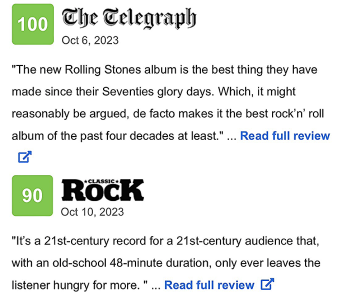
I’m therefore suspicious of the praise for the Rolling StonesHackney Diamonds, which pops on 10.20.23.

I’ve been too lazy to even listen to some of it, partly because those ticket prices for that SoFi stadium show hat I attended in late ’21 kinda pissed me off and it almost had me thinking “fuck those greedy-ass guys.” Plus I’ve never liked songs that are sung too hard and and which seem to strain a singer’s vocal range (i.e., all that lung power wears me down), but I have to admit that “Sweet Sounds of Heaven” is starting to grow on me.

Best Matte Compositions Mixed With Moving Humans

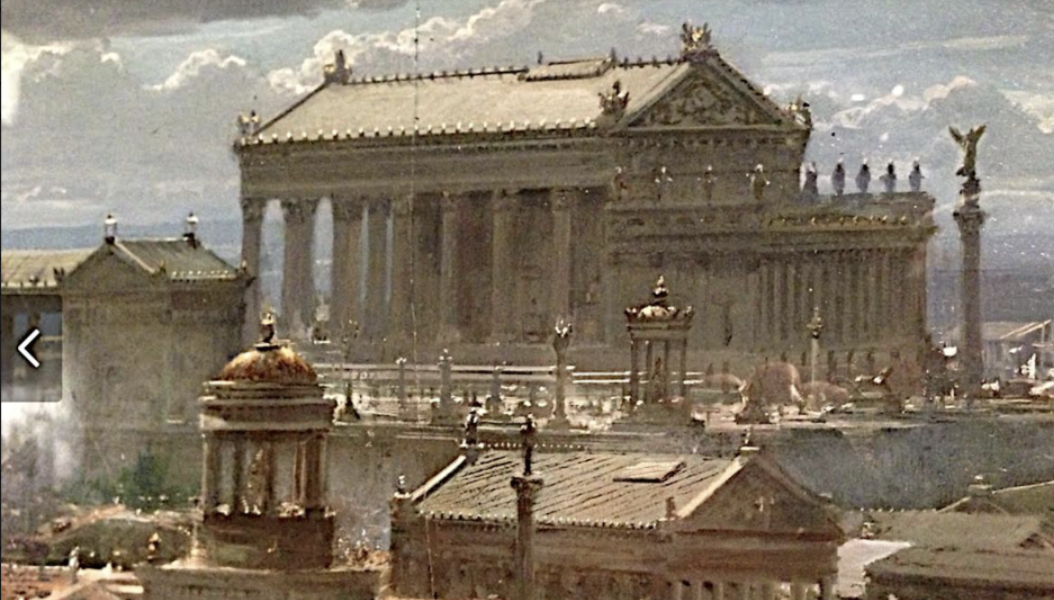
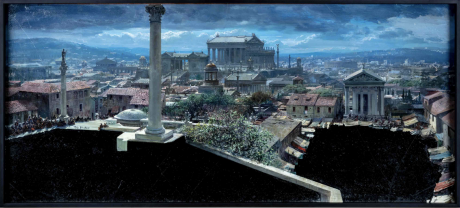
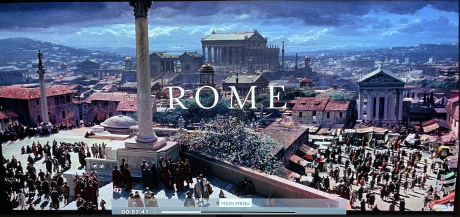
Around the 57-minute mark of Stanley Kubrick‘s Spartacus, there’s a magnificent matte painting shot of Rome. What makes it special isn’t just the painting of the ancient city by Peter Ellenshaw, but the filmed inserts of gesturing extras dressed in Roman garb.

According to IndexFX, “All but one of the Spartacus matte paintings were done at Universal’s matte painting department under the supervision of Russell Lawson.

“But for the establishing shot showing a view of Rome, Kubrick requested that the painting be done by Ellenshaw, who at that time was the head of matte painting at Disney Studios.”

Here’s an Academy Museum site focused oh the Ellenshaw painting.

Question: What are some other old-school matte paintings blended with live action…ones that really stand out, I mean?

Hollywood Books To Savor Before Dying

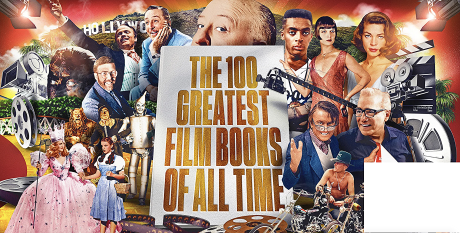
Among many others I recently participated in Scott Feinberg’s “The 100 Greatest Film Books of All Time” survey, the results of which popped in The Hollywood Reporter today (10.12).

What’s the next great topic for a Hollywood expose or tell-all? Six years ago I suggested a book called “Super-Vomit: How Hollywood Infantiles (i.e., Devotees of Comic Books and Video Games) Degraded Theatrical and All But Ruined The Greatest Modern Art Form“?

Here’s another idea — a recent-history book one about how censorious, ultra-sensitive wokesters all but suffocated the film business during the woke terror era (2016 to present)?

Here are the books I put on my top-25 Feinberg list:

(1) Sam Wasson’s “The Big Goodbye” (making of Chinatown book)

(2) Stephen Bach‘s “Final Cut: Dreams and Disasters in the Making of Heaven’s Gate”

(4) Mark Harris‘s “Pictures at a Revolution”

(5) John Gregory Dunne‘s “The Studio”

(6) Leo Braudy‘s “The World in a Frame”

(7) Thomas Schatz‘s “The Genius of the System”

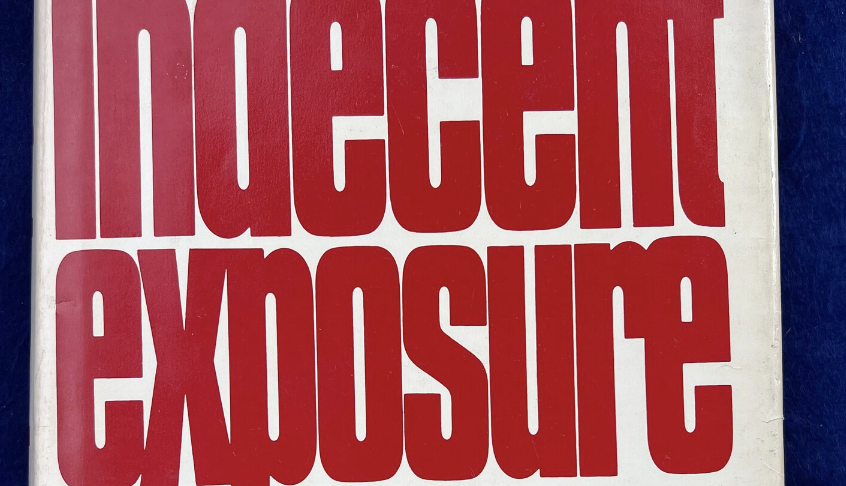
(8) David McClintick‘s “Indecent Exposure”

(9) Otto Freidrich‘s “City of Nets: A Portrait of Hollywood in the 1940s“,

(10) Julie Salamon‘s “The Devil’s Candy,”

(11) Jack Brodsky and Nathan Weiss‘s “The Cleopatra Papers”

(12) David Thomson‘s “Suspects“ + “The Whole Equation

(13) William Goldman‘s “Which Lie Did I Tell?”

(14) Peter Biskind‘s “Easy Riders, Raging Bulls” and “Down and Dirty Pictures.”

(15) Charles Fleming‘s “High Concept: Don Simpson and the Hollywood Culture of Excess,”

(16) William Goldman‘s “Adventures in the Screen Trade”,

(17) the audio version of Robert Evans‘ “The Kid Stays in the Picture”,

(18) James B. Stewart‘s “Disney War“

(19) Peter Biskind‘s “Seeing is Believing”

(20) Thomas Doherty‘s “Hollywood’s Censor” (the book about Joe Breen)

(21) Jake Ebert and Terry Illiot‘s “My Indecision Is Final”

(22) Nancy Griffin and Kim Masters‘ “Hit and Run: How Jon Peters and Peter Guber Took Sony for a Ride in Hollywood“,

(23) Bruce Wagner‘s “Force Majeure“,

(24) David Thomson‘s “Warren Beatty and Desert Eyes: A Life and a Story“

(25) Nathaniel West‘s “The Day of the Locust”

Read more

One Is A Lonely Number

Posted from Telluride ’23: “Aki Kaurismäki‘s Fallen Leaves, a Chaplinesque, slightly glum relationship comedy-drama. Costars Alma Pöysti and Jussi Vatanen deliver quietly touching performances. Several weeks ago a somewhat dismissive Cannes review of Kaurismaki‘s film lowered my want-to-see. But at the urging of SBIFF kingpin Roger Durling I caught it yesterday afternoon, and was glad that I did. It’s a simple but pleasing romantic fable — bare bones, wholly believable, well acted and genuinely touching.”

“Every Hamas Terrorist Is A Dead Man”

The most devastating part of the second video (i.e, Irish father shares the details of his daughter’s death) are those reaction shots of Clarissa Ward. She’s frozen her expression in order to keep it all in.

We’re all feeling the horror and revulsion from the murders of Israeli adults and children in Israel and Gaza, but I’m imagining it’s hitting parents of young children harder. It’s hitting me very hard.

Israel’s Defense Minister Yoav Gallant on Wednesday evening: “We will wipe out this thing called Hamas. Hamas — the Islamic State of Gaza — will be wiped from the face of the earth. It will not continue to exist. There will be no situation in which Israeli children are murdered and we all go about our business.”

Read more

Strange Submission

Friendo: “I’m confused.”

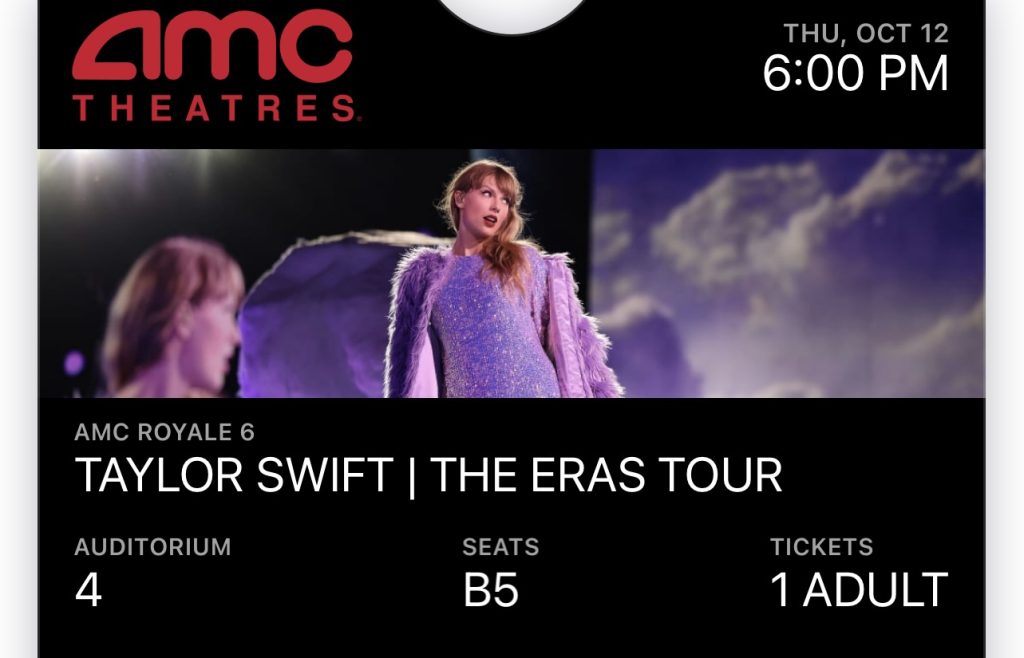
HE: “I’m catching it this evening at 6 pm. If Paul Schrader can find it in his heart, maybe I can too.”

Friendo: “Why on earth would you bother?”

HE: “It’s a cultural event. Like Barbie. I can’t ignore it. I can’t live in a cocoon. I have to open myself up to it.”

Friendo: “Do U like Taylor Swift? Ur gonna be crazy bored watching a concert movie in a theater.”