Kamikaze Guy

I’ve seen Takashi Yamazaki‘s Godzilla Minus One, and I mostly agree with the praise from director Joe Dante and all the critics who’ve been swooning over this recently-released, Toho-produced, English-subtitled, Japanese import that Yamazaki made for only $15 million…amazing!

It is indeed the most emotionally resonant, well-grounded, human-scale kaiju flick I’ve seen in decades, except I mostly hate Japanese monster movies and avoid them like the plague so my perspective doesn’t count for much. But others (genre fans) feel this way.

I “liked” (i.e. enjoyed goofing-on or hate-watching) the two Warner Bros. fatzilla films — Gareth Edwards’ 2014 Godzilla reboot and Adam Wingard’s 2021 Godzilla vs. Kong. Both were about totally obese monsters destroying cities and whatnot.

I haven’t seen the Kurt Russell Godzilla TV series, (Apple’s Legacy of Monsters) but that monster also appears to be a treadmill-avoider, judging by trailers.

But those were huge wallop monster spectacles while Yamazaki’s film is primarily an intimate, mid-1940s period piece that invests in a human saga about post-WWII struggle and reconstruction, family love and community, honor and devotion to country, etc.

Godzilla is a major “character”, of course — a metaphor for the mass murder of tens of thousands in Hiroshima and Nagasaki in August ‘45 and therefore a reptilian manifestation of J. Robert Oppenheimer and Gen. Leslie Groves. But the humans are just as important and actually a bit more so. It’s an ensemble piece.

The lead is a Japanese kamikaze (i.e., suicide) pilot named Kōichi Shikishima (Ryunosuke Kamiki). Despairing over Japan having lost the war, we meet Koichi as he is abandoning his kamikaze mission. Two years later in a bombed-out Tokyo, Koichi has sexlessly teamed with a young substitute mother named Noriko Ōishi (Minami Hamabe) while coping with intense survivor’s guilt (i.e., why didn’t I pointlessly sacrifice my life at the tail end of the war?).

Then the Godzilla threat manifests big-time (the monster, trust me, is not the star but a huge-big-noise supporting character). Before you know it almost total Tokyo destruction is happening all over again, and then Noriko is apparently killed by Godzilla’s wrath.

Down the road it’s eventually up to Koichi and a team of spirited pals who’ve been tasked with destroying war mines off the coast of Japan…one of these fine fellows (forget who) eventually brainstorms a special atyical bomb device that will kill Godzilla.

And you know that the climax will focus on Koichi being the guy who needs to fly a plane right into Godzilla, kamikaze-style, and thereby erase his survivor’s guilt.

I’m not going to spoil the last 20 minutes but boy oh boy, does this movie cop out! Not just regarding Koichi but another significant character. Total happy endings-ville. No balls, no hardball commitment, no accepting the occasionally brutal terms when the chips are down…we just want everyone to live and be happy!

I should report that Yamazaki’s monster is a somewhat leaner fellow than the WB fatzillas — he’s not as lean and “in shape” as Ishirō Honda‘s original monster in 1954’s Godzilla, but at the same time Yamazaki’s newbie looks like a sumo wrester who’s gone on a crash diet and consequently still has rolls of lingering belly and boob fat clinging to his upper body.

Most weirdly the newbie has breasts — I know the designer intended the chest mounds to look like male pectorals but they look like breasts for nursing, I swear.

Like Dante I too felt moved when we hear passages from Akira Ifukube‘s original 1954 Godzilla score.

Godzilla Minus One is probably the best written and most humanistic Godzilla film since the original. It’s about characters you actually come to know and care about, and about Godzilla secondarily.

It has no balls in terms of who dies and whatnot, but genre filmmakers like Yamazaki (he’s 59 as we speak) don’t respect death’s honesty — none of them do.
Correct Assessment

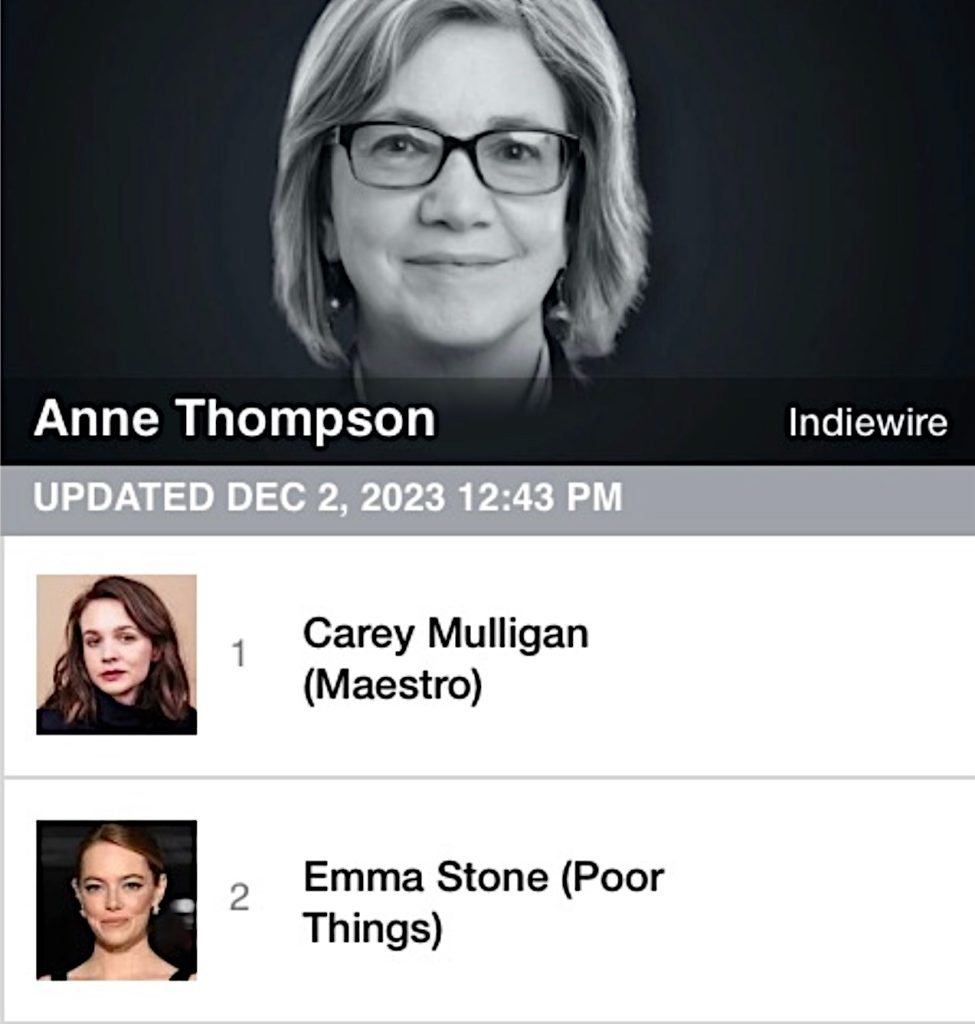
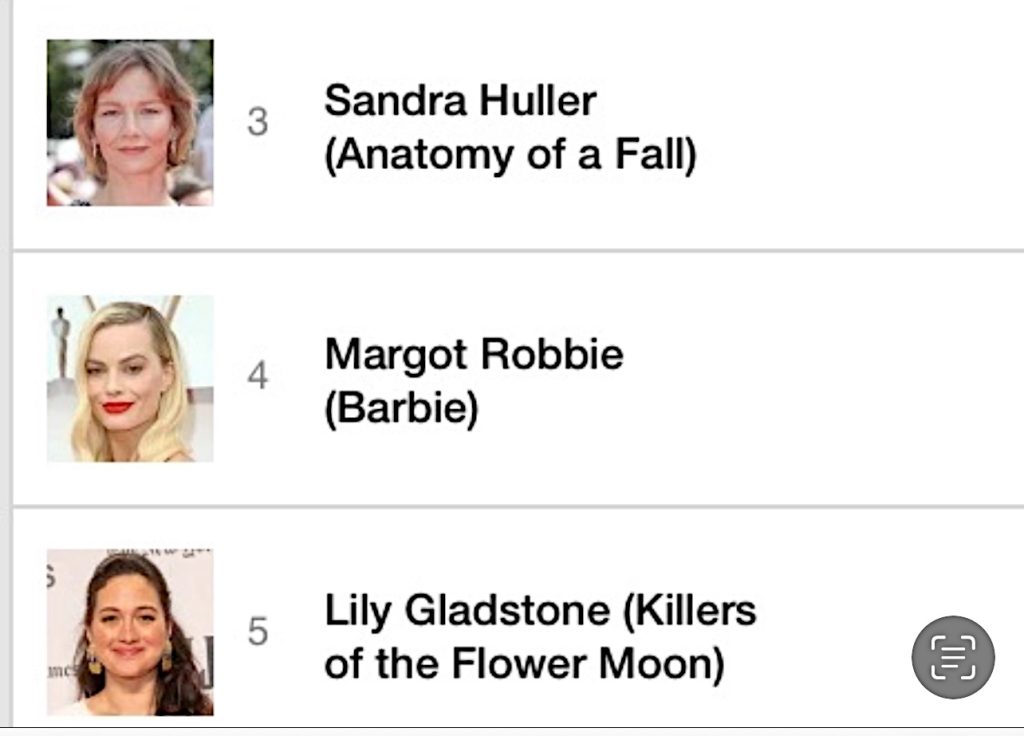
Anne Thompson’s cautious and temperate instincts have led her to rank Lily Gladstone as a fifth-place contender in the Best Actress race despite Lily’s recent Gotham and NYFCC wins. This means something. Thompson is no provocateur in the HE mode, no radical firebrand. She never walks upon unsafe ground.

Less Than Five Minutes

That’s how long I need to determine whether a film is any good or not. Actually closer to two or three minutes. Same thing when reading a script — the first five to ten pages tell the tale.

Many people (some from the HE commentariat) say “no!…ignore your intuitions and instincts and tough it out…you owe this to the filmmaker.” Well, that’s one way to respond but it’s a terrible thing to sit through a film that you know is doomed from the start.

Many times I’ll perceive early on that a film is iffy or unsure of itself but is nonetheless up to something interesting or thoughtful or even a bit strange. These are the movies I’ll stay with despite the speed-bumps.

Shrieking Dessert Queen

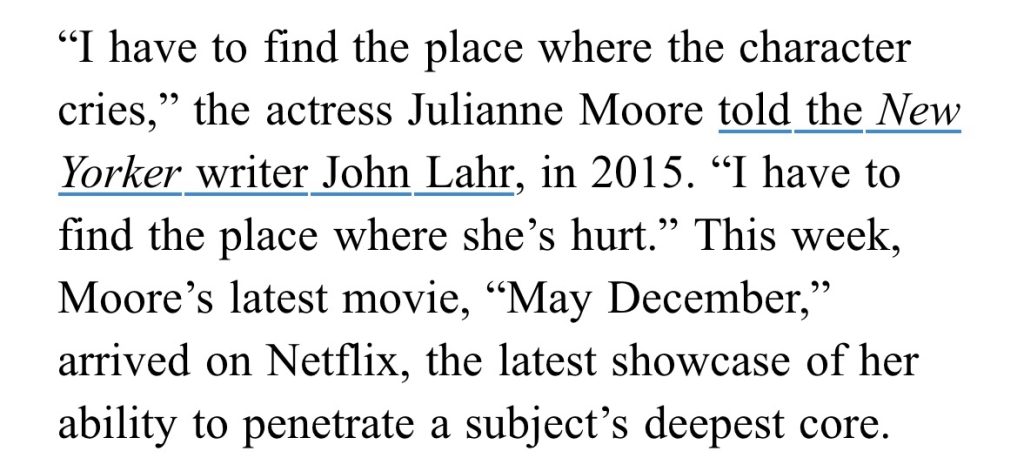
In a 2015 New Yorker interview with John Lahr, May December star Julianne Moore explained her acting strategy: “I always have to find the place where a character cries,” she said.

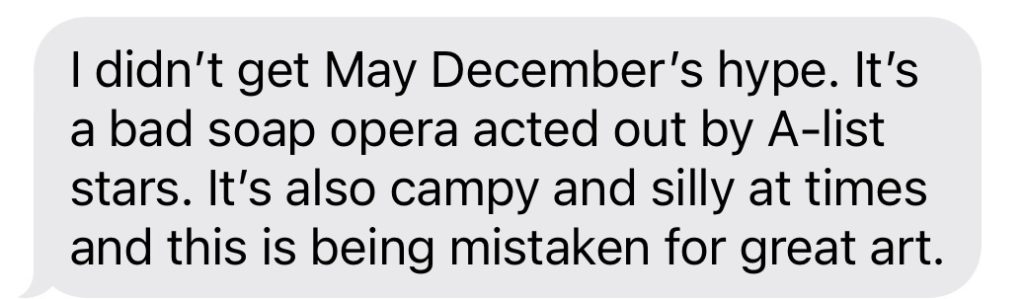
I became so annoyed by Todd Haynes’ half-campy, Savannah-based domestic drama that I quickly stopped caring why Moore’s character, Grace, who is somehow able to afford a fairly flush lifestyle in a beautiful seaside home on the modest earnings of a dessert-baking business, was upset about anything.

But Moore’s first crying scene is definitely weird because she’s weeping hysterically over one of her clients canceling a cake order. My first thought was “a cancellation hiccup causes a major meltdown? God, she’s a borderline psycho.”

Regional friendo (received last night):

Joe Dante’s “Godzilla Minus One” Rave

I received this email from the great Joe Dante a few hours ago:

“I’ve just seen Godzilla Minus One, a 2023 Japanese kaiju film directed, written and visual effects by Takashi Yamazaki.

“Produced by Toho Studios and Robot Communications and distributed by Toho, this is the 37th film in the Godzilla franchise.

“See it in IMAX!” Note: HE will see it tomorrow afernoon.

“Set in immediate postwar Japan, this is arguably the best Godzilla movie since the 1954 original. Seriously, it’s pretty great! And a fitting run-up to the Big G’s 70th birthday!

“Dramatic and spectacular, with memorably rounded characters and pitched on a more emotional adult level than almost any kaiju movie.

“Even so, the verdict of the preteen kids in the Grauman’s Chinese restroom afterward was wild enthusiasm, and for a subtitled Japanese movie with grownup themes of guilt, loss and redemption.

“When the classic Godzilla theme music (composed by the late Akira Ifukube) kicked in during the exciting climax I was nearly moved to tears.

“Technically it’s amazing…the director was also in charge of the visual effects.

“If you’re a Monster Kid you won’t see a more satisfying movie this season.”

Read more

Crossed Swords: HE vs. Smallwood, Peru, DeGregorio

Killers of the Flower Moon‘s Lily Gladstone, whose performance as Mollie Burkhart is basically a supporting role (i.e., a victim who does nothing to defend or save herself from predatory Oklahoma beasties), recently won Best Actress trophies from the Gotham Awards and the New York Film Critics Circle.

Her performance is admired in some corners, yes, but Mollie Burkhart was written by Eric Roth and Martin Scorsese in a very minimalist fashion, and there is very little risked or revealed on Lily’s part as an actress. There isn’t a single scene in which she goes hard or raises the room temperature or pours out her soul.

People seethe when I say this, but somebody has to cut through the crap: Gladstone won this week because of her ethnic identity (having been raised within Montana’s Blackfeet community and playing an Osage native) and because the woke mob has decided that it would be a fitting paleface apology gesture for a Native American actor to win a major Oscar. No amount of denial and tap-dancing will change what everyone knows and relatively few will admit.

If Lily was running a Best Supporting Actress campaign, she’d have it totally in the bag and I wouldn’t say boo. Because that’s the category that suits her performance, and the scope of her role.

The year’s finest Best Actress-level performances have been given by Maestro’s Carey Mulligan and Poor ThingsEmma Stone. These are serious knock-out performances…obviously…c’mon.

Non-white identity has been a pervasive award-season motivator (i.e., the support for this is commonly known as virtue signalling) since the woke mentality began to spread and take hold on a checklist basis in the mid teens. Non-white directors and actors have enjoyed elevated status for six or seven years.

This is the wave that Gladstone’s campaign is surfing upon, and why many under-45 SAG-AFTRA members and New Academy Kidz are planning on voting for her, despite her low-key, “good enough but no great shakes” performance as a wealthy Osage native whose family members are murdered by greedy white guys (oil money), and who is herself nearly killed.

The key element is that a Native American winning a Best Actress Oscar would be a first-time-ever thing and a kind of holy milestone in many voters’ eyes.

New Academy Kidz Aren’t Concerned With ‘Whole Equation‘”, posted on 1.24.18:

Vulture‘s Kyle Buchanan, Stacey Wilson Hunt and Chris Lee have posted a piece about the views and attitudes of the Academy’s new voters, all of whom were invited to join the Academy over the last two years and who constitute roughly 17% or 18% of the present membership. Of the 14 members interviewed, more than half were women and more than a third were people of color.

“I for one found it surprising if not shocking that the biggest concerns of the New Academy Kidz appear to be representation, representation and….uhhm, oh, yes…representation.

“Consider a quote from HE reader “filmklassik:

“’In this particular cultural moment it is all about Tribal Identity. And what’s disturbing is, we have a whole generation now for whom Tribal representation is, to use one critic’s word, numinous. The under-40 crowd has invested Race, Gender and Sexuality with a kind of cosmic significance.

“It doesn’t mean a lot to them — it means everything to them. Indeed, much of their conversation and writing seems to always come back to it.”

Read more

Carville Was On Fire

James Carville at 5:27 mark: “Republican Speaker of the House] Mike Johnson and what he believes is one of the greatest threats you have today to the United States. [Christian nationalism] is a bigger threat than Al-Queda. They’re funded, and they’re relentless, and they probably won’t win for a while, but they might. They don’t believe in the Constitution. They’ll tell you that. Mike Johnson himself says, what is democracy but two wolves and a lamb deciding what to have for dinner That’s what they really, really believe.”

Faint Smell of Bullshit

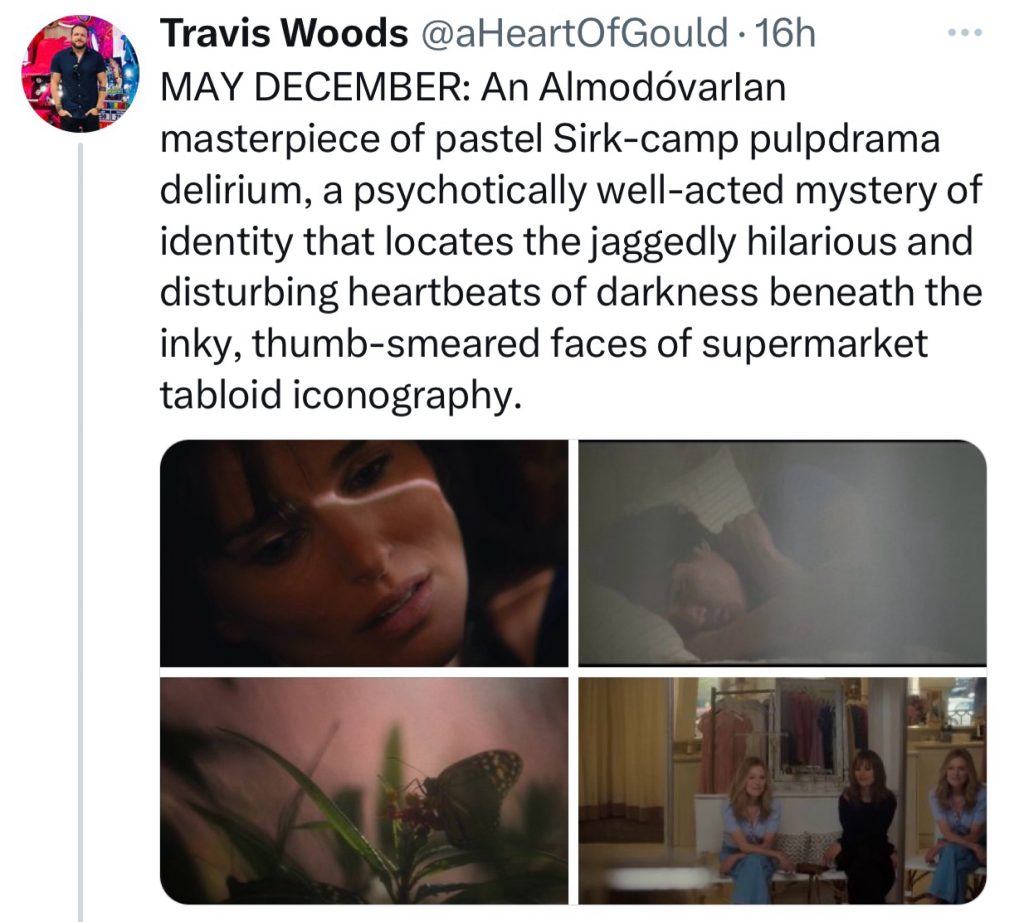
Because of this turgid, drooling, over-baked capsule review of May December (and I’m saying this as someone who’s struggled manfully to restrain my own turgid tendencies), I’ve decided to regard askance anything written by Travis Woods. He’s one of those writers who just jumps off the high-dive board and goes kersplash!! And I’ve suffered through May December so don’t tell me.

I’m not dumping on Woods out of malice, but to explain why I’m not buying this Brian DePalma story…no way.

Disney Is Throwing In Woke Towel

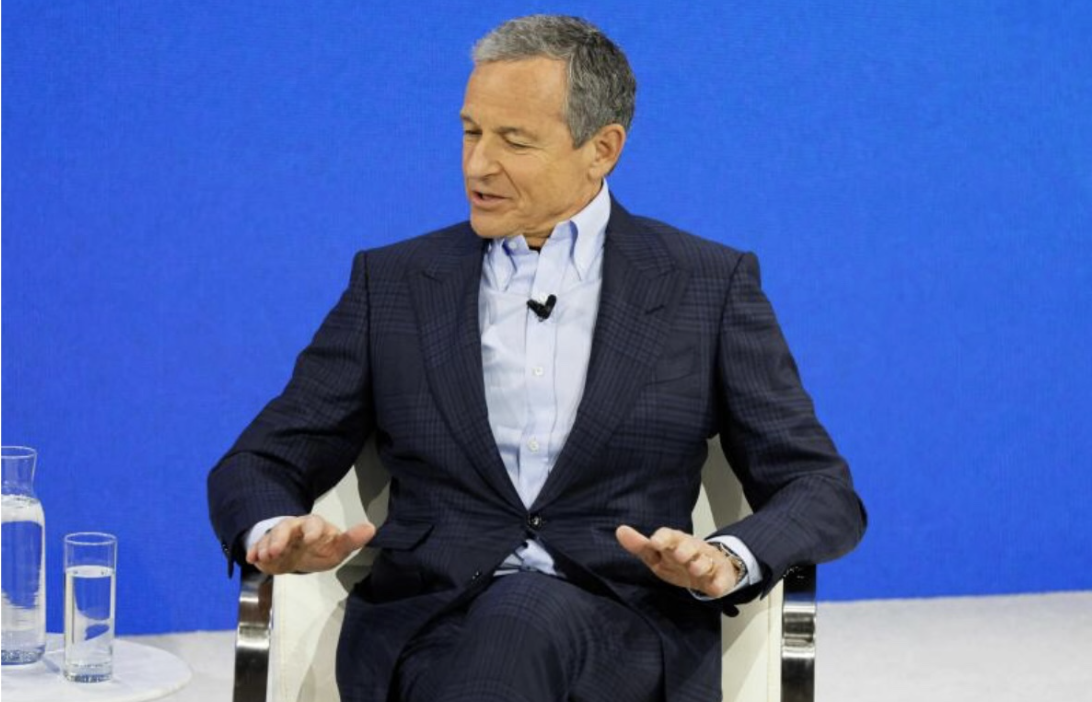
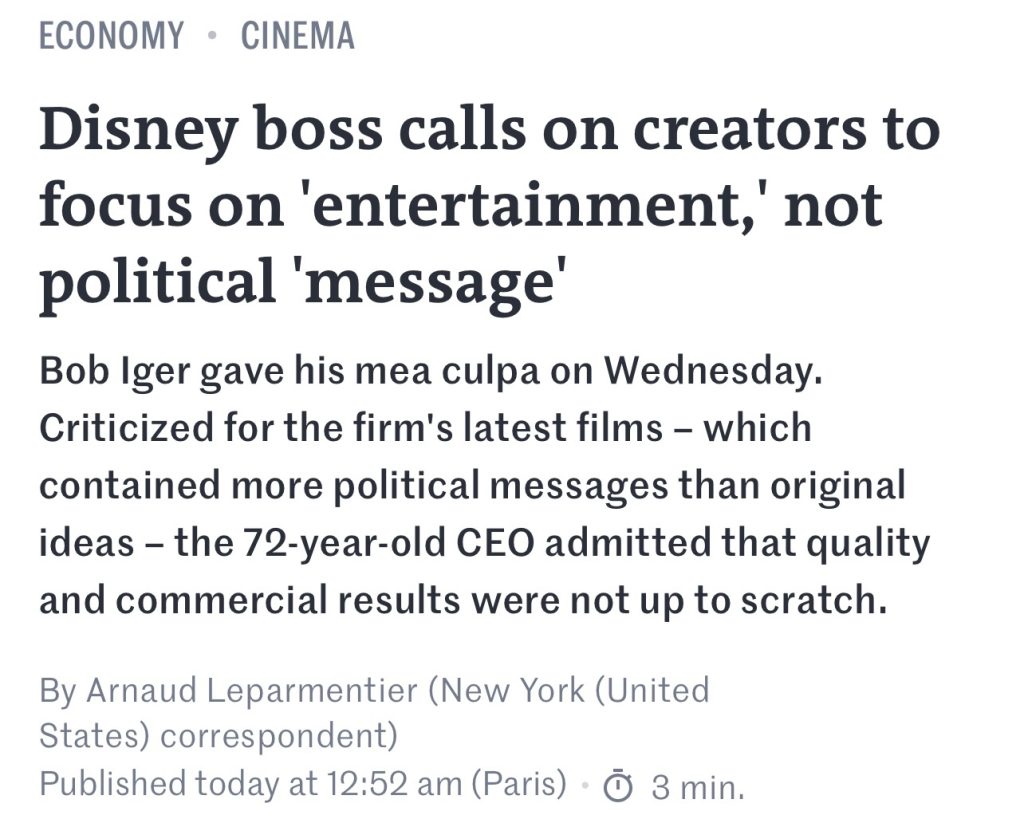
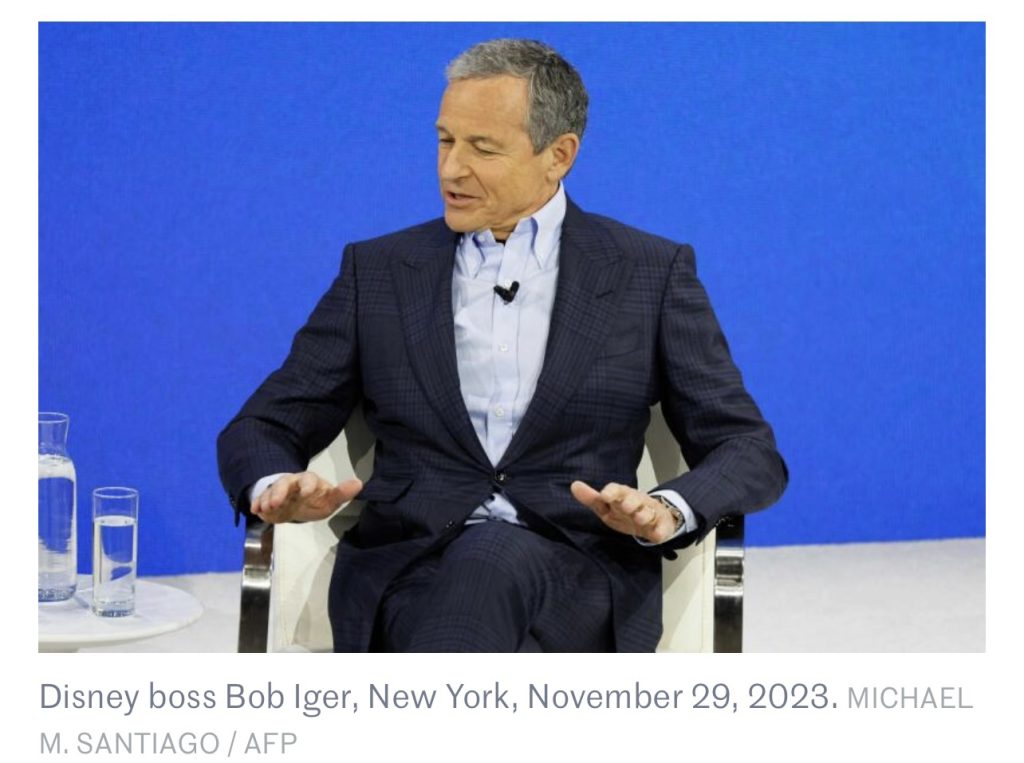
Two days ago Disney CEO Bob Iger admitted to having read the proverbial writing on the wall and more or less bullhorned the following “whoa, Nellie!” message to Disney wokesters, which I’ve conveyed here in HE-styled rhetoric:

“All right, enough, dammit…we have to face facts…the Critical Drinker has been right all along and we have to acknowledge the state of things, or at least I do…the new Disney law is “no more woke propaganda in our movies

“We’ve clearly alienated Joe and Jane Popcorn in the parenting community and we really have to get back to being good old familyfriendly Disney, and in case you’re not reading me, we’ll henceforth be re-assessing the advisability of using LGBTQIA and maybe even progressive femme-bot material in our animated features. We’ll be taking it one step at a time.”

Sidenote: All hail Le Monde’s Arnaud Leparmentier, whose 11.29 article laid the situation on the line in a way that Variety or The Hollywood Reporter would never do.