“Thelma” Isn’t Half Bad

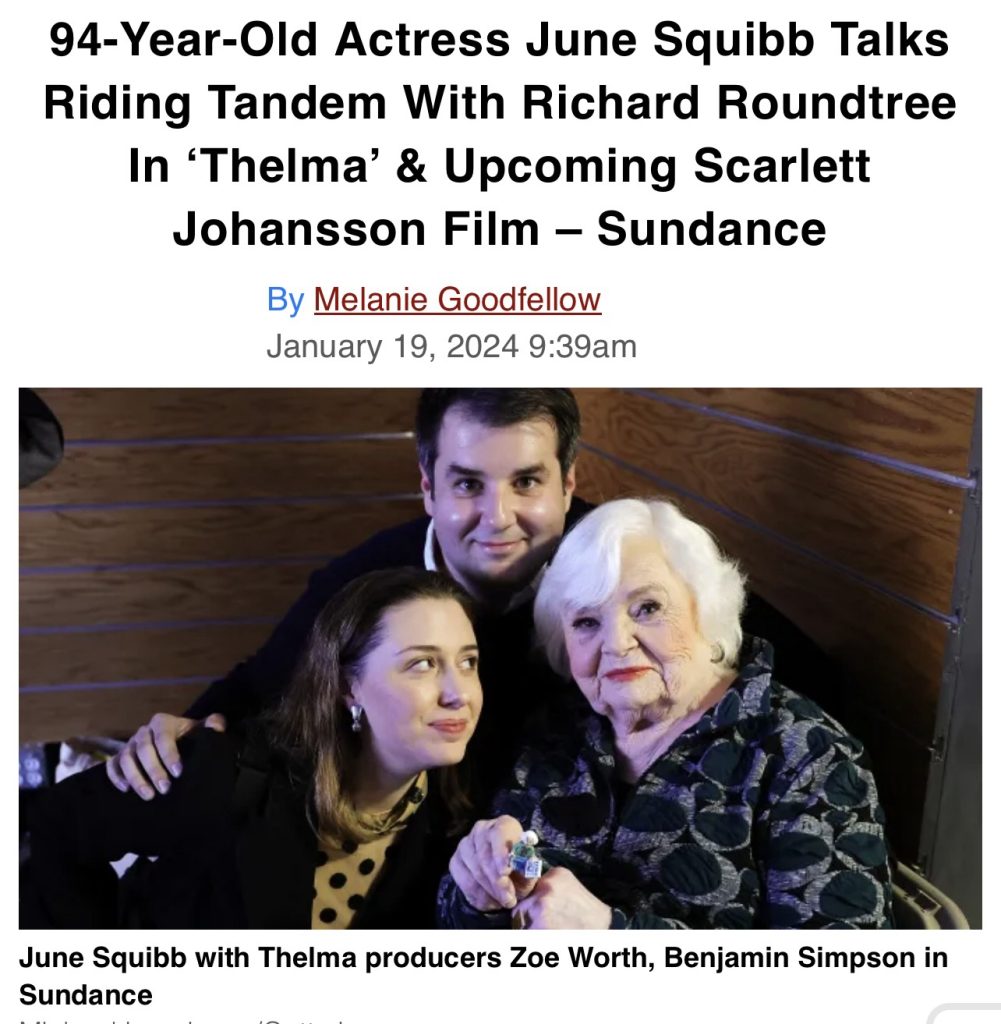
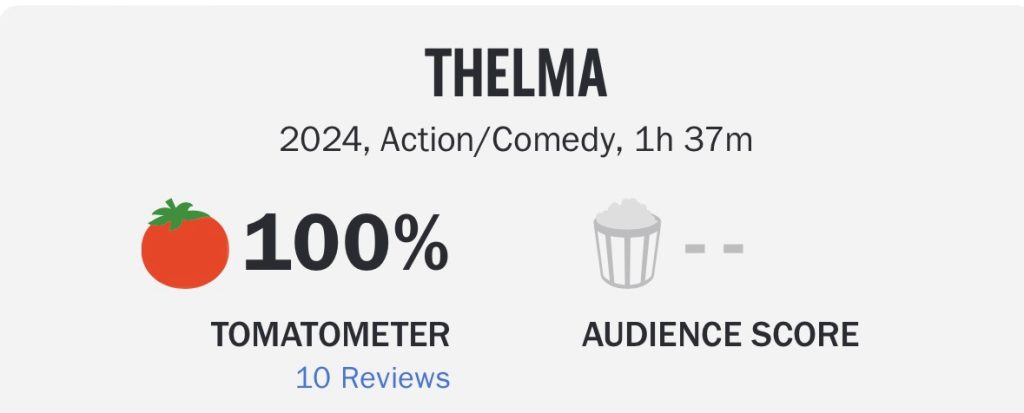
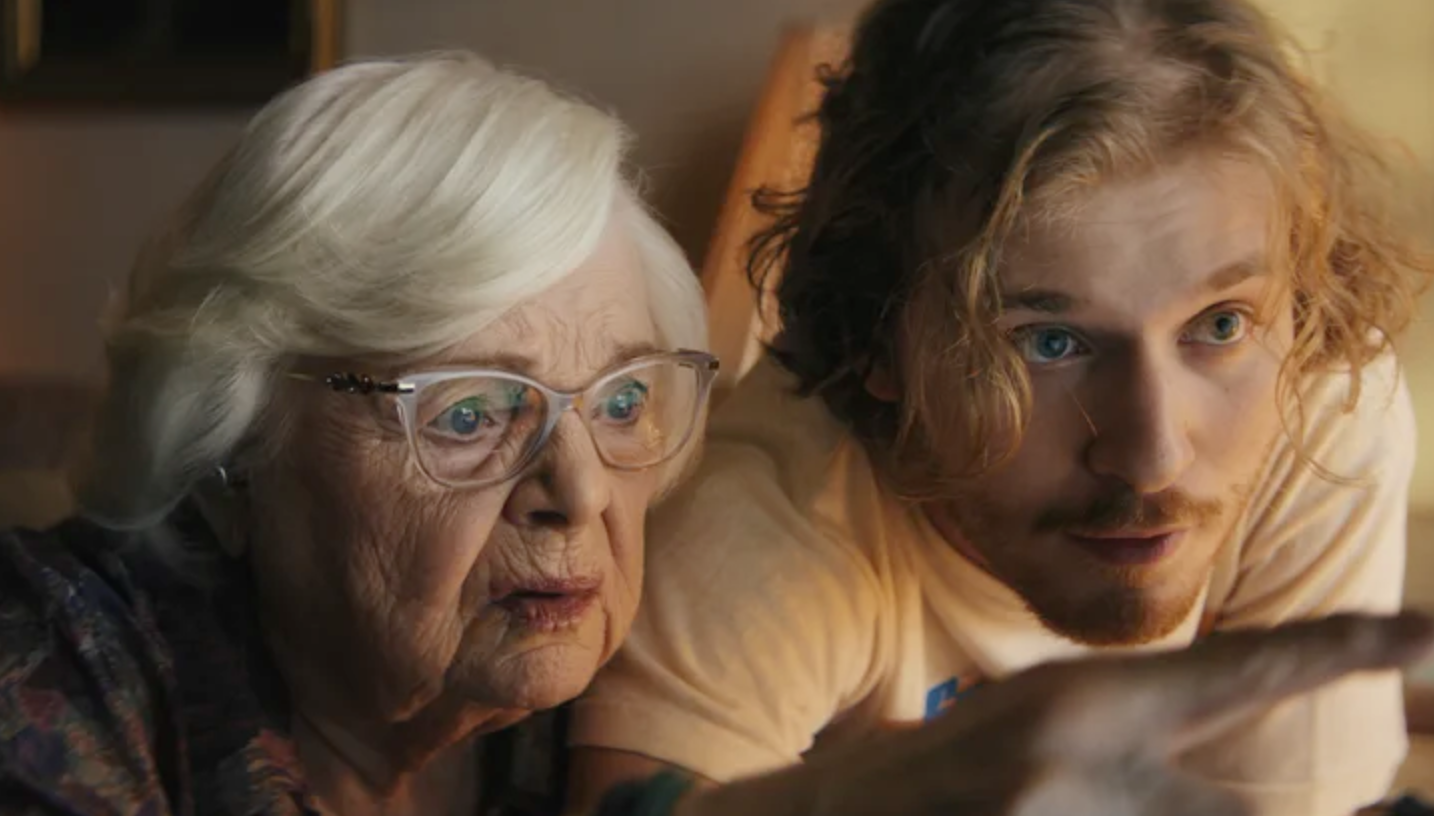
Josh Margolin‘s Thelma, a Sundance headliner that I saw last night, is a mostly mild situation dramedy about the pitfalls, sadnesses and surprising turn-arounds of a chubby old biddy (the 94 year-old June Squibb, in her first starring role) when the going gets tough.

It makes for a reasonably decent sit, although I didn’t like it at first because of the hugely annoying Fred Hechinger (The White Lotus), who plays Squibb’s flaky-loser grandson.

Squibbs’ titular character is also 90something and, as you might presume, suffering from the usual intellectual and physical diminishments. Sissies need not apply.

Thelma is about the white-haired Squibb getting scammed out of $10K (which actually happened to Margolin’s real-life grandmother), and how she refuses to take this humiliation lying down and soon after becomes a dogged investigator and push-backer on her own steam and tenacity.

The reason I didn’t like Hechinger, whose dipshit Zoomer character has been told by his mom and dad (Parker Posey and Clark Gregg) to look after Squibb and keep her out of trouble, is because his performance had me half-convinced that he was in on the scam. (I hate guys like Hechinger…I really do.)

After going to the cops and getting no help, Squibb locates the post office box address that she sent the $10K to by envelope. (A voice on the phone told her to do so or Hechinger would be in deep shit, and she bought it.)

She makes her way to a nearby assisted living facility to seek the assistance of old buddy Ben (Richard Roundtree), which boils down to Thelma borrowing his mobility scooter, except Ben won’t let her drive alone.

They visit the home of an old out-to-lunch friend, and during this stopover Thelma discovers and pockets a loaded pistol. (Not worth explaining.) They get back on the scooter and wind up at a gas station, but then Thelma forgets to engage the parking brake…

With Posey, Gregg and Hechinger in hot pursuit…Jesus, I can’t do this. What am I gonna do, spill the whole story?

Eventually Thelma and Ben get to the bottom of things, and I was quite amused to discover that the principal scammer is none other than the white-haired 70something Alexander DeLarge.

The situation is resolved a little too easily but by that time I had decided that Thelma is an above-average thing, not quite on the level of Little Miss Sunshine but occasionally so.

Thelma is not a comedy — it’s a half-and-halfer. It certainly declines to go goofy or silly. There are elements of real pain and stress and sadness woven in. Now and then it’s actually touching, which surprised me. I’m giving it a B-plus.
Should Ryan Murphy Adapt Grant-Scott Love Story?

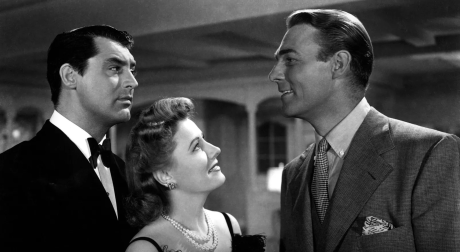
Vanity Fair has published a longish article about the presumably romantic cohabitation between Cary Grant and Randolph Scott, which began in the early ’30s and ended sometime…I forget but somewhere around ’38 or ’39. Written by David Canfield, it’s titled “Cary Grant and Randolph Scott’s Hollywood Story: ‘Our Souls Did Touch’“.

The subhead reads, “Hedda Hopper once asked of Grant, ‘Whom does he think he’s fooling?’ The star’s bond with Scott has been the subject of nearly a century of speculation, but the truth about their impact on each other’s lives has been hiding in plain sight.”

It’s basically another speculation piece — nothing freshly authoritative or rock-solid — but Canfield is apparently persuaded that their sexual activity was fleeting or discreet or something in that realm (i.e., no pitching or catching, no Crisco), and that the emotionally anxious or unstable Grant was more head-over-heels about Scott, who came from a wealthy Virginia family, than Scott was about him.

In any event a friend has suggested that the Grant-Scott saga could be an intriguing Ryan Murphy miniseries of some kind. I’m not so sure. They lived together and then they didn’t because there was too much loose talk around town. Somehow they got away with pretending to be mere roommates for several years, but finally Grant was told by this or that studio head that enough was enough. That’s one version of the story, at least.

All Hail Tom White, Taciturn Hero of “Killers of the Flower Moon”

Roughly two months ago a very early draft of Eric Roth‘s screenplay for Killers of the Flower Moon (dated 2.20.17, or eight weeks before David Grann’s source book was published) turned up on a Reddit screenwriting forum.

Roth’s 153-page screenplay, which arrived in my inbox around 6 am this morning, was posted late last year by “Sheshat the Scribe.”

Anyway I finally read it this morning and holy moley…if Martin Scorcese had manned up and shot this version of the tale Killers would have been a much more engrossing kettle of fish.

No exaggeration — Roth’s early-bird script is approximately 17 or 18 times better than the film Marty finally made. Because Killers suddenly has a central character you can easily roll with (i.e., FBI guy Tom White, who Leonardo DiCaprio was originally intending to portray) as well as an actual point of view.

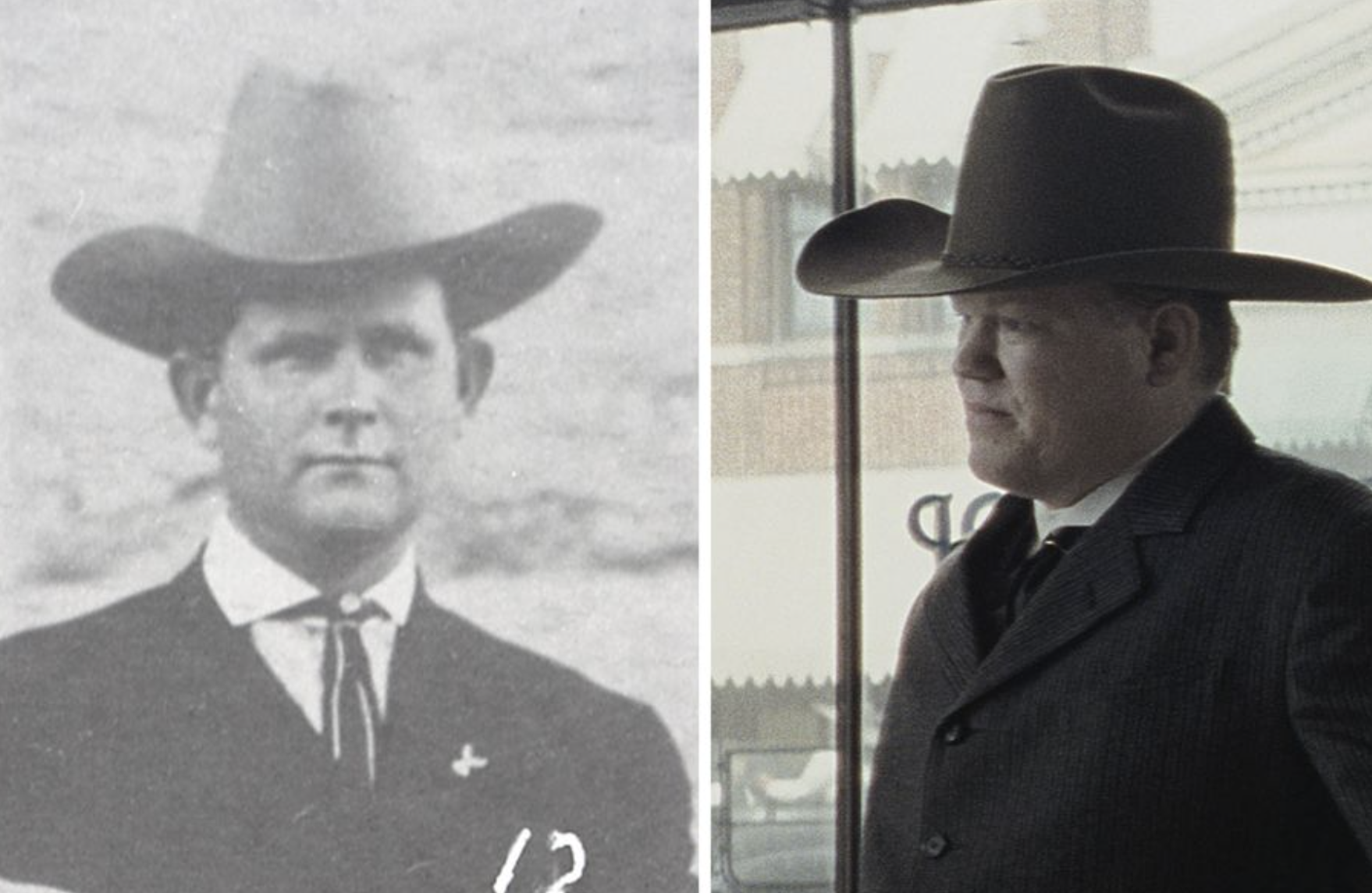
White isn’t just the resolute, soft-spoken, voice-of-the-prairie hero of the piece but a decent, honorable lawman with occasional moments of doubt and uncertainty, but finally a dude who stays the course, toughs it out and brings at least a semblance of partial justice to a sprawling and horrific murder saga.

In Marty’s film version White (played by Jesse Plemons) is reduced to a supporting character who appears at the two-hour mark.

Here’s how I put it to a screenwriter pally a couple of hours ago: “My God, what a truly compelling and fascinating film Killers of thge Flower Moon could have been. Hats off to Roth for some wonderful writing, sublime tension, terrific structure. It really lives and breathes!

“And what a great, soft-spoken, drillbit character Tom White is! His laconic, man-of-the-prairie dialogue is so spare and true and eloquent.

“If only John Sturges had directed this screenplay in his prime! Or Oliver Stone in the ’80s or Michael Mann, Chris Nolan, Paul Thomas AndersonSam Peckinpah even.

“If only Marty and Leo hadn’t lost their nerve…if only they hadn’t been so scared of provoking the wokesters and suffering their ferocious wrath, i.e., “We’re done with white heroes! Only racists-at-heart would tell such a tale! And fuck David Grann!”

“My head was completely turned around by reading this, and Roth wasn’t even afraid of including racist cracker dialogue from time to time. (Brave.) And Mollie Burkhart actually conveys a certain gratitude (i.e., a slight smile) to White at the very end. I don’t know if Lily Gladstone even read this version of the script, but if so she almost certainly would’ve hated it.

“I wish I had read this six or seven years ago. It would have clarified a lot of things. Roth and Scorsese went with a woke version of Grann’s tale, of course, but in the early stages Roth truly did himself proud.”

If you weren’t much of a fan of Killers of the Flower Moon or even if you were, please read this early Roth draft — it’s a revelation.

Read more

Farting Sasquatch Orifice Leakage

Posted by Variety‘s Rebecca Rubin after a Friday night (1.19) screening of Sasquatch Sunset at the Sundance Film Festival:

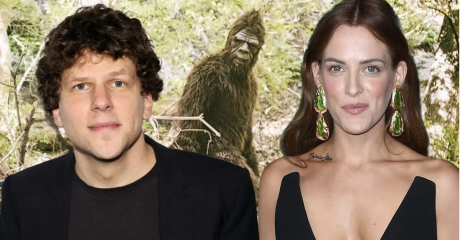
Jesse Eisenberg and Riley Keough star in Sasquatach Sunset, an absurdist comedy [that] follows a family of Yetis over the course of a year.

“With zero dialogue or narration but plenty of grunts, the film captures an immersive, ‘true’ depiction of the daily life of the Sasquatch. That apparently involves sex, masturbation, vomiting, flatulence and plenty of other gorey acts that aren’t fit to print.

“A smattering of audience members appeared to be too squeamish about these quotidian experiences, shielding their eyes during bloody moments and stomping for the exit at the Eccles Theater well before the credits began to roll.

“Others delighted in the gastrointestinally graphic sequences. One scene, involving liquids spouting out of every — and we mean every — orifice of the female Bigfoot, played to raucous applause in the room. Less than 15 minutes into the film, one moviegoer announced to nobody in particular, ‘This is the weirdest movie ever.’

Sasquatch Sunset is the kind of movie you need to see to believe.”

Criminal Protagonists

A friend suggested a list of the Ten Best American Crime Flicks of the ‘70s.

By which he meant films that spend more time on criminals than people trying to catch them, or no time with the catchers at all.

No cop movies, he said, which eliminates Dirty Harry, The French Connection, The Seven-Ups, etc. Also no period caper or con movies (The Sting, The Great Train Robbery), no historical gangster flicks (The Godfather I and II). Strictly contemporary crime pictures in which the protagonists are engaged in criminal activity. Hence Friedkin’s Sorcerer (desperate struggle over rough terrain) and Don Siegel’s Escape From Alcatraz don’t qualify. And no Juggernaut because it’s told almost entirely (98%) from the point of view of the catchers.

Three of his picks I immediately scratched off — Richard Brooks$ (aka Dollars), Michael Cimino‘s Thunderbolt and Lightfoot (fuck Cimino) and Walter Hill‘s The Driver (too loud, brutalist, mechanical). Which left seven.

I then added seven more for a total of 14 films, all released between 1.1.70 and 1.1.80.

Three of my top ten opened in ’77 and ’78, but the other seven were released between ’71 and ’73. In order of preference…

1. The Day of the Jackal (’73)
2. The Friends of Eddie Coyle (’73)
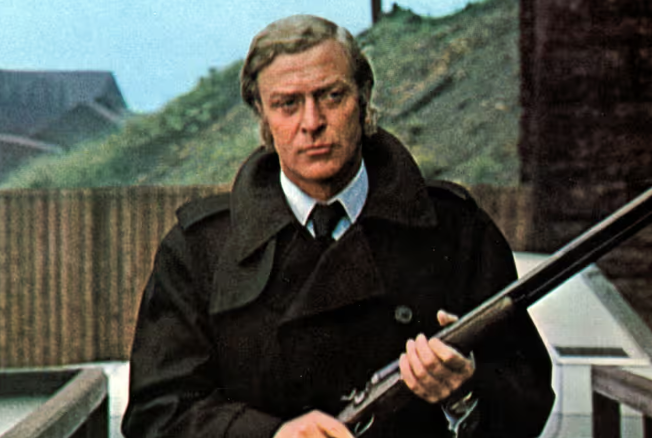
3. Get Carter (’71)
4. Badlands (’73)
5. The Outfit (’73)
6. The American Friend (’77)
7. Who’ll Stop the Rain? (’78)
8. Charley Varrick (’73)
9. The Hot Rock (’72)
10. Straight Time (’78)

Slightly second tier but at the same time smart and engaging:

11. The Taking of Pelham 123 (’74)
12. The Getaway (’72)
13. The Silent Partner (’78)
14. Going in Style (’79)

Read more

Proud Owner

I’m going to stick my neck out by saying I’m probably the only tristate area guy with a Red River belt buckle and a “Kennedy for President” sticker on my car’s rear bumper.

“‘Moby-Dick’ on Horseback”

I’ve never been able to give myself over to Sam Peckinpah’s Major Dundee, a 1965 Civil Warera western, and I’ve frankly stopped trying.

Was the 156-minute version ever seen by anyone except R.G. Armstrong? The 136-minute version is longer but is it necessarily, positively better? I’ve only seen the shortest version (126 minutes) with the Mitch Miller singalongers on the soundtrack.

I know two things — during the ‘60s, ‘70s and early ‘80s Peckinpah allowed his career to be stained and diminished by raging alcoholism, and that with the exception of three films (Ride The High Country, The Wild Bunch and Straw Dogs) everything he was involved in was to varying degrees colored by rage and snarls and waste.

Over the years his persistent asshole-ishness overwhelmed his creative visions, and people just got sick of him.

I own a Bluray of Bring Me The Head of Alfredo Garcia (‘74) and I’ve watched it exactly once. There’s a reason for that. The nihilistic finale leaves you with nothing. Maybe I should give it another go.

I’ve seen Cross of Iron (1977) once, and while I have a favorable recollection of James Coburn and Maximilian Schell’s lead performances, I mostly recall Gene Shalit calling it “a movie of bad.”

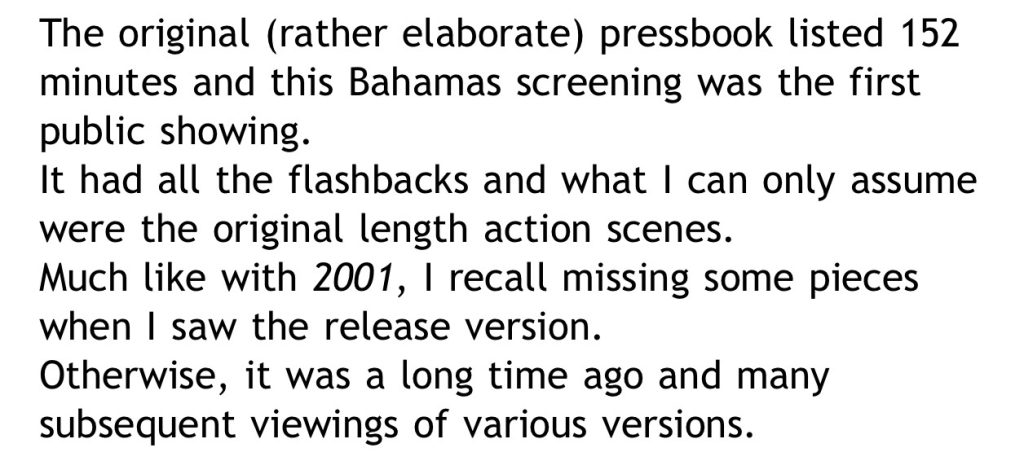
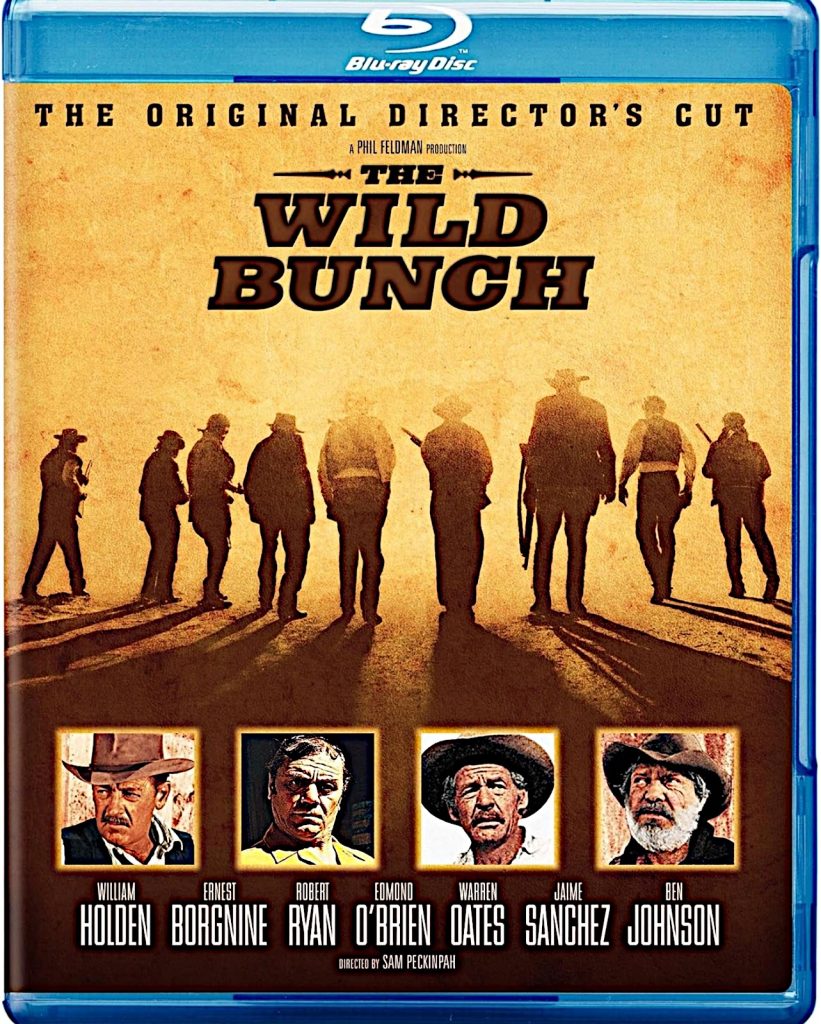
All this aside, I sure do envy Joe Dante for having seen the 152-minute version of The Wild Bunch (7 minutes longer than the official, definitive 145-minute Bluray) during the 1969 Bahamas press junket.

Dante recalls as follows:

Dead-End Insanity of “Nomadland”

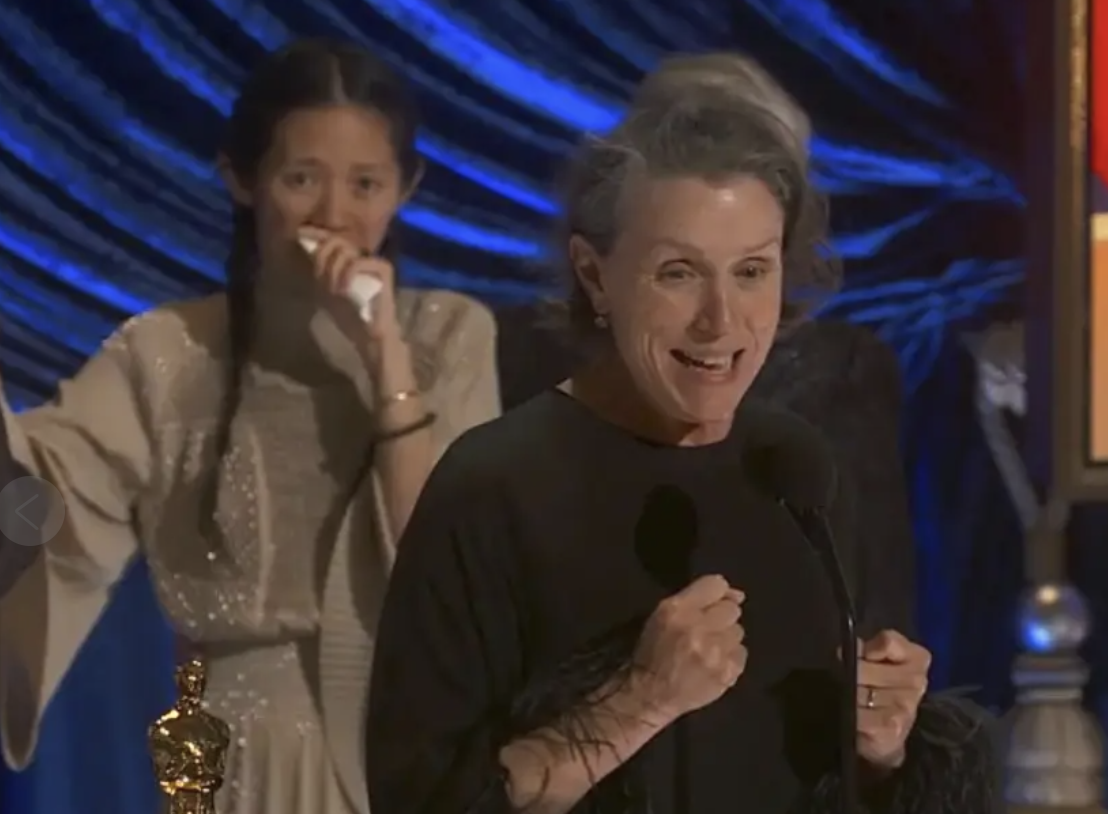
Frances McDormand‘s Fern was strong but mule-stubborn and at the end of the day self-destructive, and this stunted psychology led to an idiotic ending.

Her old white van was indisputably on its last legs, and 60ish David Straitharn, lonely but harmless, clearly would’ve settled for simple, no-big-deal companionship.

I’m sorry but there’s this notion out there that choosing a healthy or constructive path in life requires (a) not being a stubborn egoistic purist and (b) understanding that opting for common-sense security isn’t necessarily a death sentence or a prison term.

The curious ending of Nomadland refuses to acknowledge this. It basically says “better to die destitute and alone on a two-lane blacktop while shitting in a bucket in the middle of the night than to accept kindness and sensible adult friendship.”

Read more