Coppola’s “Megalopolis” Made My Eyes Moisten

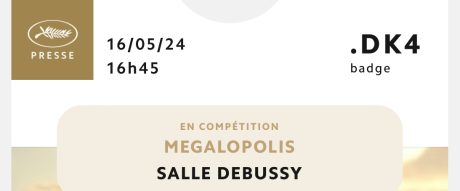
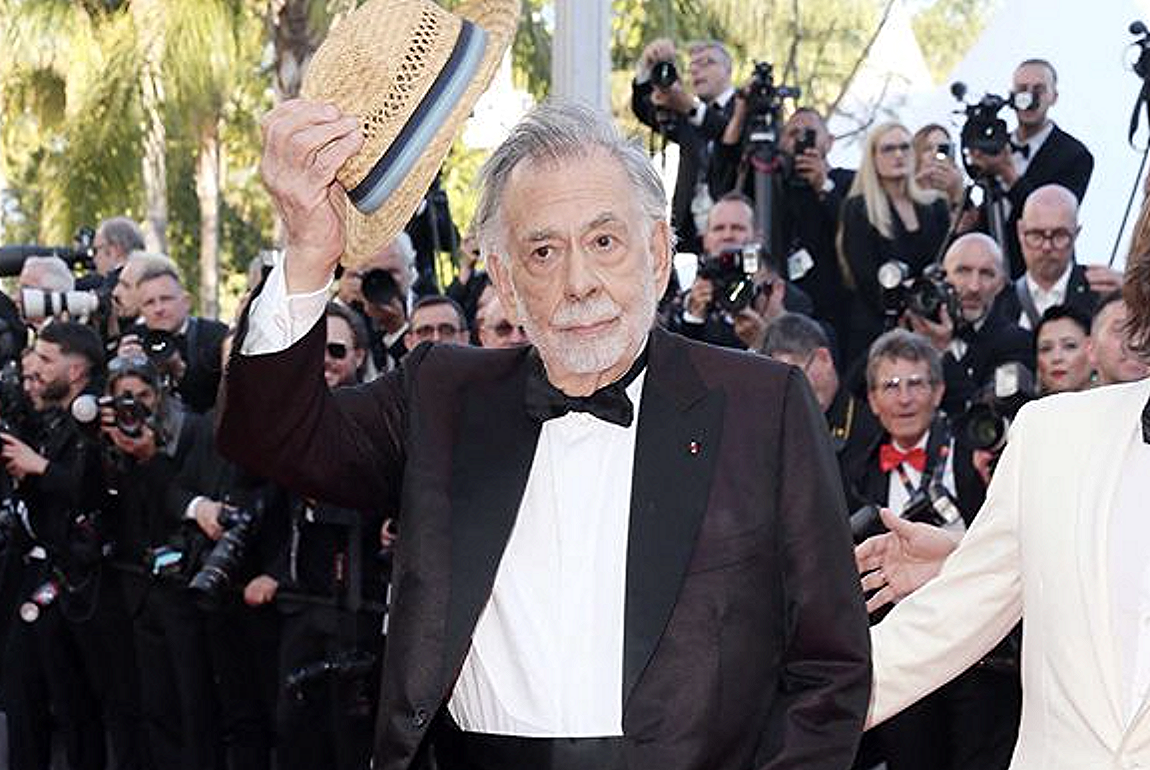
So far the Cannes reviews of Francis Coppola‘s Megalopolis, which screened this morning for elite crickets and late this afternoon for schlubs like myself, have been a mass exercise in “c’mon, give Coppola a break…he’s a visionary who spent $120 million of his own dough…be creative and find ways to offer charitable impressions…this film may be a surreal exercise in whatever, but you do not want to pan it…c’mon, it’s Francis.”

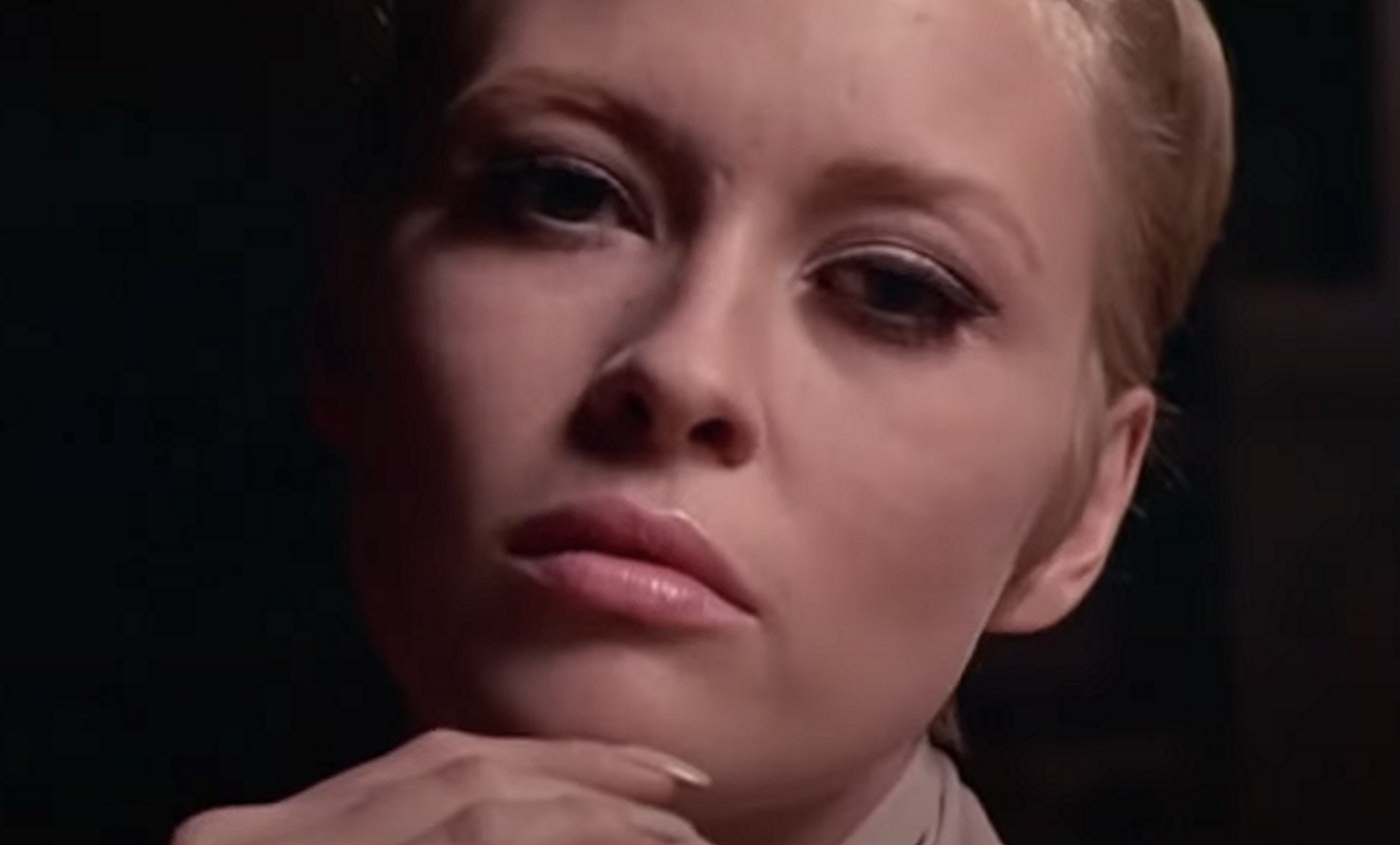
I mean, IndieWire‘s David Ehrlich has given Megalopolis a B-plus grade, for Chrissake. Talk about the delusion of too much compassion. Remember A Clockwork Orange‘s “Cat Lady” sneering at Malcolm McDowell and saying “cut the shit, sonny“?

It’s 12:10 am and I’m really too whipped to tap out a review — I intend to expand and polish tomorrow morning but for the time being allow me to share a few post-screening notes and texts, written in a rather crude fashion.

(a) “Coppola has seemingly lost his mind. Watching Megalopolis just now and listening to random moo-cow boos as the closing credits began to roll was a very sad and sobering experience. It’s not just an embarassment and a calamity — I almost feel like weeping for the poor guy — but a film that hasn’t a prayer of attracting any Average Joes or Janes whatsoever, and you can totally forget any sort of fall awards campaign or any distributor even flirting with paying for same…no way, man!”
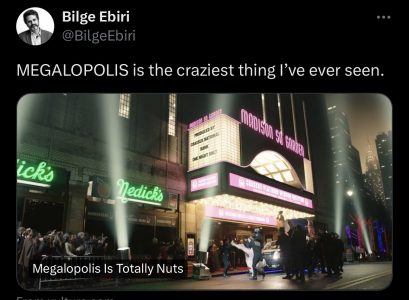
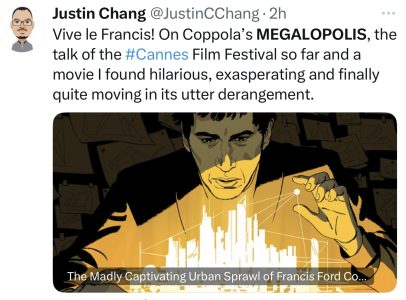
(b) “On the other hand…Jesus, I don’t know what to say or think as I don’t want to dump on a film that is so nervy and creatively ludicrous and out-there bonkers. I’m not surprised by how Megalopolis played with the Salle Debussy crowd, and I’m certainly not angry about having sat through it, but holy fucking moley.”

(c) “It’s such a head-in-the-clouds goofball thing with such an overload of pompous-sounding, smarty-pants dialogue that it’s almost like a 1965 philosophical psychedelic fantasy flick by the Merry Pranksters, shot in 16mm and edited by a guy who’d been chewing peyote buttons.”

(d) A friend has compared portions of the dialogue as well as the narration (voiced by Larry Fishburne) to Ed Emshwiller‘s “Unveiling The Mystery Planet.” HE is hereby advising the readership to see Megalopolis while tripping. (Not acid necessarily but maybe some soft mescaline?)

(e) Jon Voight‘s Crassus character, adorned in black silk pajamas, during a third-act comic-detour scene: ““Whadaya think of this boner I’ve got here?”

(f) “All this said, I feel MUCH better about having seen Megalopolis than having seen Fast X or any of the shitty, soul-draining, post-Iron Man franchise movies because at least it’s about something other than the usual corporate bullshit and is at least alive with quirky indivduality, and that ain’t hay.”

(g) Journalist friend to HE five minutes after Megalopolis ended: “What the fuck was that?”

Miller’s “Furiosa” Is No “Road Warrior”

I’m sorry but I found George Miller‘s relentlessly eye-filling Furiosa: A Mad Max Saga (Warner Bros., 5.24) a chore to sit through, which is to say lacking in wit, dark humor and irony (which Miller’s The Road Warrior had in abundance) and therefore frankly boring because it’s all on the surface.

Nothing is happening thematically or subtextually or quirk-wise — I didn’t chuckle once.

Every shot is a dazzler, but superficial wows are all you get — knockout action, glorious desert colors, killer CG, cinematography to die for, great costumes and set design.

And Lordy, it goes on for 148 minutes. For a relatively superficial action extravaganza like this a two-hour length would have been much preferred . Hell, 110 minutes.

When you have nothing to say except (a) “here comes another expensive chapter in a popular popcorn franchise” and (b) “boy, did we spend a lot of money making this or what?”, don’t drag it out. Bing, bam, boom and out.

Story-wise it’s basically just a drawn-out revenge saga — i.e., Anya Taylor-Joy‘s Furiosa determined to ice Chris Hemsworth‘s Dementus, warlord chief of the Biker Hordes, for killing her young mom, played by Charlee Fraser, when Furiosa was a young child.

All I can say is that I started to die inside around the one-hour mark.

The cast members (Taylor-Joy, Alyla Browne, Hemsworth, Tom Burke, Lachy Hulme, Nathan Jones. Josh Helman, John Howard) do a great job of behaving in various extreme ways, and, as indicated, Simon Duggan‘s cinematography is wall-to-wall splendor.

If you’re a fool for this franchise you’ll be in Ape Heaven. 40-plus years ago I was a fool for The Road Warrior, but those days are gone.

But the film is punishing. My soul felt starved and my leg muscles (especially the left leg) were truly weeping with discomfort.

How tall is Taylor-Joy? 5’2″ or something? Big-boned Charlize Theron (5′ 10″ or thereabouts) felt like a better fit in Fury Road (’15).

Bouzereau’s “Faye”

Before last night’s 10:30 pm screening of The Girl With The Needle I slipped into an 8:15 showing of Laurent Bouzereau‘s Faye, an engagingly straightforward life-and-career retrospective about the great Faye Dunaway.

It supplies everything about her career that you’d want to see, everything you’d expect. All the biographical anecdotes, all the required clips, full of respect and appreciation plus healthy servings of Dunaway letting it all hang out (or at least as much as she’s able to do within this format).

It reminded me first and foremost what a great majesterial actress she’s always been. Charisma, timing, energy, just the right amount of push and hesitancy…the whole package.

It barely gets into the strident Faye stories that we’ve all been hearing for decades, but Dunaway’s confession that she was bipolar and occasionally alcoholic helps to explain at least some of her extreme behavior.

The doc offers an amusing retelling of the Roman Polanski-hair-yanking-episode-during-the-shooting-of-Chinatown story, mostly courtesy of producer Hawk Koch.

Dunaway honestly recounts her mad two-year affair with a married Marcello Mastroianni (’68 to ’70). There’s often something reckless and illogical about heated extra-marital romances, and the Dunaway-Mastroianni thing was no exception.

Plus it includes a brief interview with Mommie Dearest director Frank Perry saying that 1981 audiences responding with hoot and howls was fine with him. (Hollywood Elsewhere has always loved this film.)

The doc shows many snaps of young Faye during her youth (she was born in January ’41), and I was surprised to discover that when Dunaway was a teenaged brunette she closely resembled young Barry Gibb of the BeeGees. This resemblance was out the widow, of course, once she turned blonde and glammy in the mid ’60s.

I had to duck out at 9:50 pm so I wound up missing the home stretch and wrap-up, but it’ll be on Max before long.