Just Desserts: The Necessity of Morally Fair Endings

There’s one thing that elite film critics like Bilge Ebiri never touch with a ten-foot pole, and that’s how a given film feels at the very end. And the way a film feels at the finale is, of course, always a measure of whether or not the ultimate fate of the characters seems fair or reasonable.

Did a character fuck up badly and maybe hurt someone as a result? Then he or she deserves to feel some degree of pain at the finale. Has a character been falsely accused of something he/she didn’t do? Then his/her lack of guilt should be revealed at the end. He/she doesn’t have to end up rich or married to a movie star or elected President of the United States, but the record needs to be set straight to some extent.

If a more or less decent, fair-minded character is hit by lightning or a falling tree limb at the very end of a film and dies, that’s a completely shitty ending. “What did that happen for?”, the audience will say. No good reason, says the director or screenwriter. We just felt like killing him/her off because, you know, life can be randomly cruel at times. Audience: “Yeah? Well, fuck you then!”

A film doesn’t have to end happily or sadly or humorously or tragically, but you have to feel on some level that the characters have met with a fair and even-handed fate — that what happened or didn’t happen to them seems justified.

When George Kennedy‘s psychopathic asshole character was killed and eaten by guard dogs at the end of Michael Cimino‘s Thunderbolt and Lightfoot, there was no disputing that he’d gotten what he deserved.

Ditto when Elliot Gould‘s Phillip Marlowe shot Jim Bouton‘s Terry Lennox at the end of The Long Goodbye.

I’ve noted a couple of times that the ending of The Godfather, Part II wan’t an upper but it felt justified. Michael Corleone has grown into a monster, and at the end he’s left all alone with his recollections of the idealistic youth he used to be and a realization that this younger version of himself has more or less died. Not a happy ending but a fair one. Corleone has accrued all the power but lost his soul.

Same thing with Paul Newman at the end of Hud. He takes a swing of beer and says “fuck it” but he’s no happy camper. He will have very little love or serenity in his life, and he knows it and so do we.

The ending of Million Dollar Baby totally works. Clint’s character is devastated for what he felt he had to do, and he’s alone at the end in that diner. But he did what he felt was right. A sad but even-handed ending.

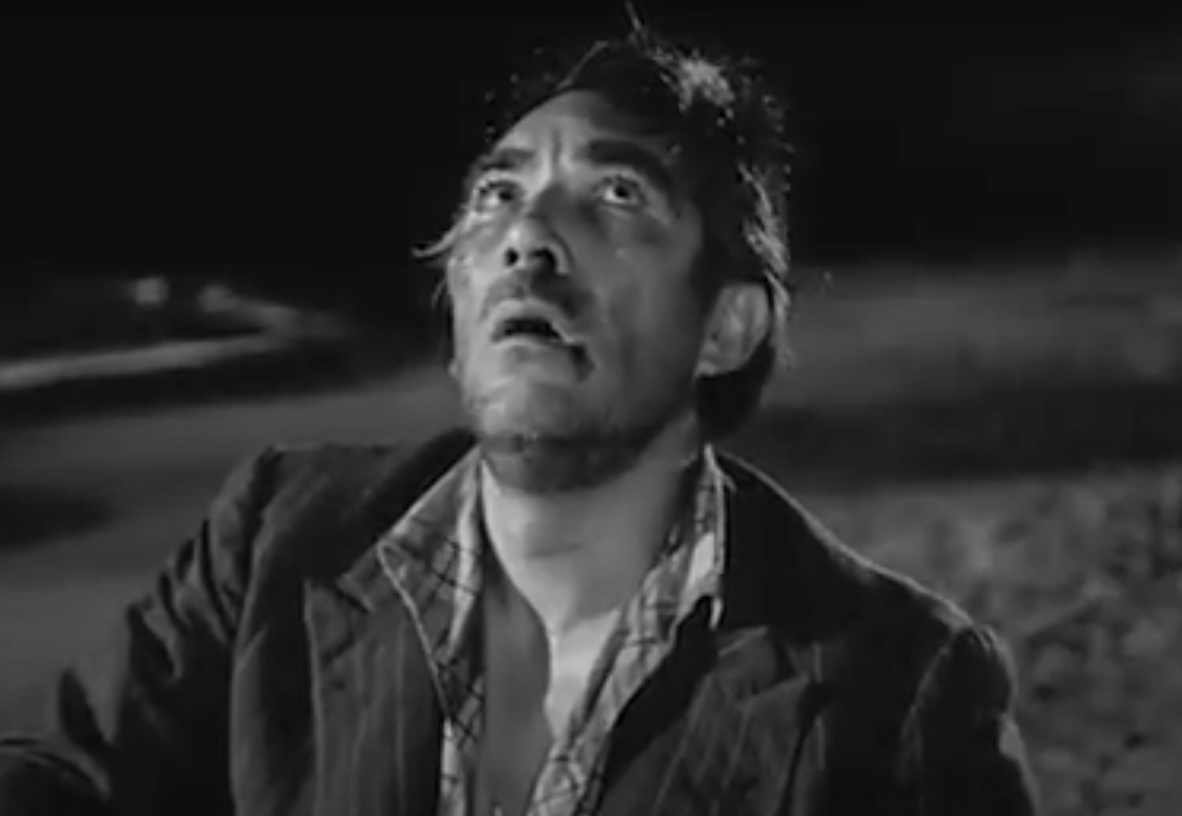
They Shoot Horses, Don’t They? is a tragedy that ends with Jane Fonda‘s character getting what she wants, in a sense. Obviously an unhappy fate but she gets what she wants. The ending works. It feels fair, I mean, given who she was and the dark forces weighing upon her (including her own fatalistic attitude) and the options she no longer has.

I know that life can be horribly unfair at times and that the worst things can happen to the nicest people, but we’re not talking about life here but the scheme of good drama. If the characters in a film don’t meet with a fair fate, something feels wrong and audiences get angry.

The ending of The Deer Hunter is one of the oddest, least morally satisfying finales of all time. I sat there seething and hissed through my teeth, “You stupid rural fuckheads…singing ‘God Bless America’…God, not a clue!”

So fuck the critical elite for having given films like The Brutalist, Maria and (from what I’ve been told by trusted viewers) I Saw The TV Glow a pass without noting how it makes you feel at the end, which is fucking awful.

This is why people don’t trust elite film critics. They don’t lay it on the line about how movies feel and more particularly about whether the payoff feels “right.” I do this all the time because that’s how I roll, but they don’t. Just saying.
Really Hate This Guy’s Voice

And I’ve heard his voice on hundreds of YouTube quickies. Something about the flatness of tone, the way he pronounces “the hand of God” and “out of fear“…he just sounds like a carnival huckster or some commercial announcer from some remote radio station. And I’m wondering if anyone knows his name because he deflates my soul like no other video narrator.

Gaetz For Florida U.S. Senator! Or Governor!

Older dudes should stay the hell away from young women under the age of 20. Once she hits 20 (i.e., the age of a typical college junior), all bets are off. But when it comes to men who are more than ten years older than the woman in question, the age of consent shouldn’t really apply. If they’re under 20, keep your damn distance.

It is therefore fair and appropriate to condemn Matt Gaetz for having had sex with a 17 year-old on two different occasions at a party.

The $400 Gaetz gave her is, I believe, neither here nor there.

Step back for a second and ask if a man giving money to a woman he’s sexually interested in….well, isn’t that the way it usually works? An expensive dinner date, help on the rent, a weekend at a pricey resort, a trip to Europe for a week or two, diamond necklaces and bracelettes…sex without love or charm or serious passion can be a barren thing, but guys have always paid for primal pleasures. Way of the world.

Keep in mind also that there are seven states in which the legal age of consent is 17: Colorado, Illinois, Louisiana, Missouri, New York, Texas, Wyoming.

There are quite a few more states in which the legal age of consent is, believe it or not, 16: Alabama, Alaska, Arkansas, Connecticut, Georgia, Hawaii, Indiana, Iowa, Kansas, Maine, Maryland, Massachusetts, Michigan, Minnesota, Mississippi, Montana, Nebraska, Nevada, New Hampshire, New Jersey, New Mexico, North Carolina, Ohio, Oklahoma, Pennsylvania, Rhode Island, etc.

In short, there are roughly 35 states (more?) in which an adult male having sex with a 16- or 17-year-old, however distasteful or odious this might be if the male is significantly (more than ten years) older, is not illegal.

Still Lamenting Sex Positive

I wrote the following a couple of years ago: “Sex positive’ sounds a little too nice…a little too much like a Good Housekeeping Seal of Approval. Tame and tidy, not skanky enough.

“Because the best heteronormative sex is usually untidy and semi-objectionable in some way — rude, hungry, raw, animalistic, runting, howling, a tad pervy.”

There’s an old Woody Allen line (probably from Annie Hall or Manhattan) that answers a question about whether sex is dirty or not. Reply: “It is if you’re doing it right.”

In the mid ’80s I was “seeing” a pretty British woman in her early 30s. She had apparently come from a conservative family, or had gotten the idea from her mother that when it came to sexual congress and the “yes or no” moment…Christian momma told her that behaving in a cautious or conservative or even prudish manner was the only way to go.

But I’m telling you that one of the hottest things I’ve ever heard a woman say at the moment of peak surrender came out of this lovely lady — “oh, God, I love it!”

It wasn’t so much the “I love it” (which was fine) as the “oh, God” part that got me. What this meant, I determined, was that deep down she was apologizing to God the Father for enjoying being harpooned. “Oh, God” meant “dear Lord, I’ve tried so hard to be a more virtuous woman and here I am failing again…I can’t help myself…send me to a convent for I have no self-control!”

Putting Out “Fires” Is Default Response to Any Workplace Dispute or Complaint

And the key strategy after dousing any workplace fire is to make certain that the complaints in question do not re-occur. That means tone it down and leave it there.

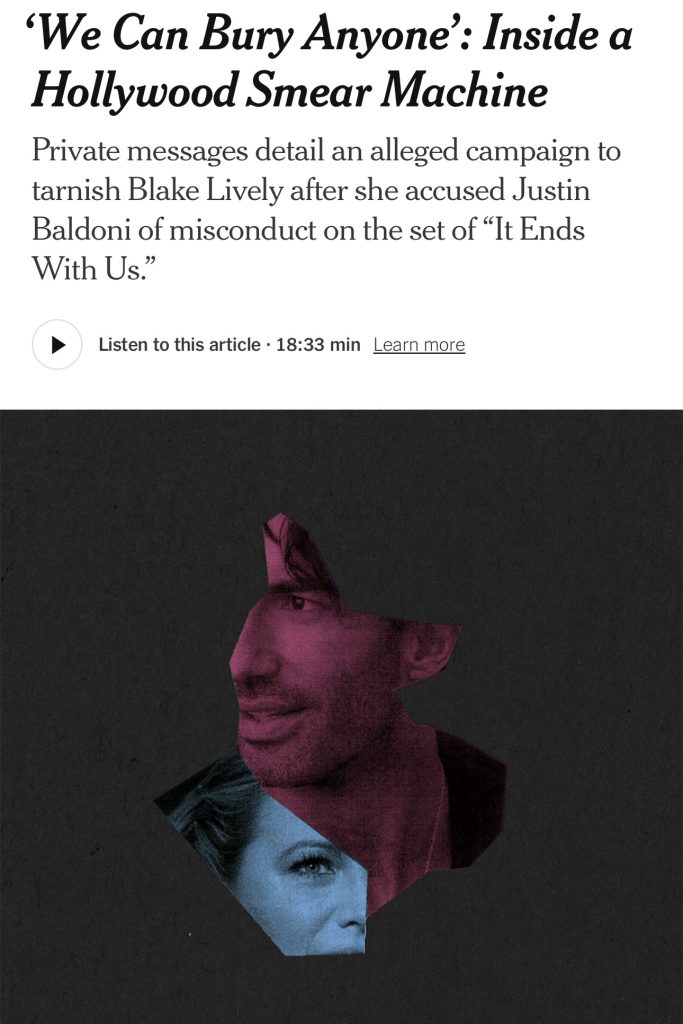
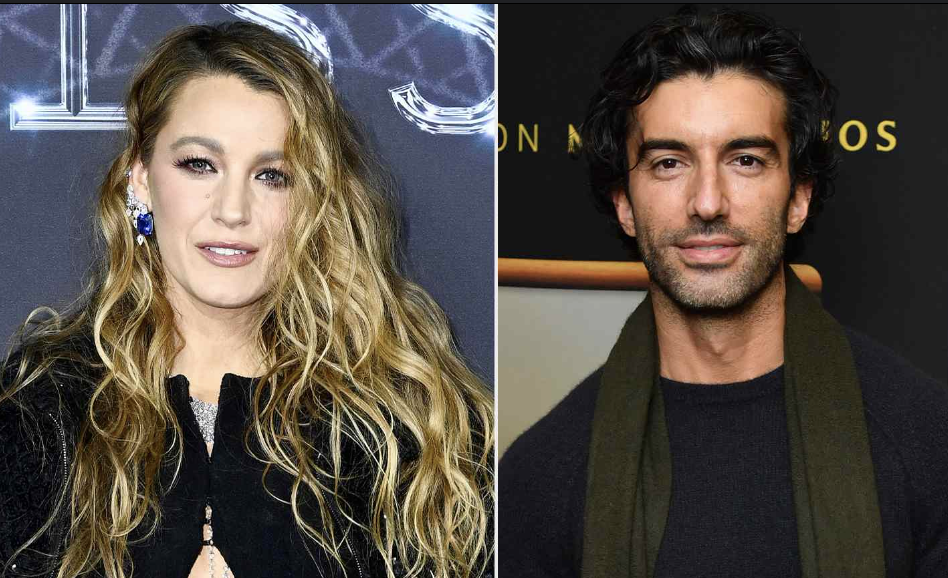
During the 2023 and early ‘24 filming of It Ends With Us, Blake Lively voiced complaints about director and costar Justin Baldoni, who had optioned Colleen Hoover’s source novel for adaptation in 2019, and producer Jamey Heath.

They had behaved in a leering, overly familiar manner, Lively said, which she found sexually intimidating.

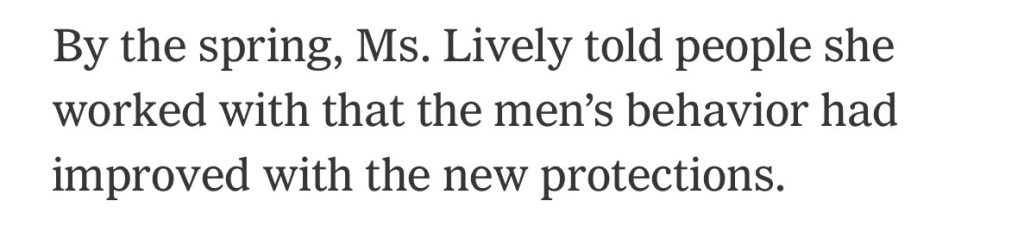
But things cooled down after the issues were aired mid-stream and protections were enacted. A 12.21.24 N.Y. Times story about a legal complaint filed by Lively last Friday reports the following:

The current question is therefore obvious as well as perplexing.

Instead of chilling or at least turning down the gas, Baldoni began acting aggressively last summer as It Ends With Us neared its 8.6.24 release.

Perhaps because Lively had challenged his directorial authority by creating an alternate cut that was approved for release, Baldoni decided to go feral by hiring a p.r. crisis firm in order to diminish her reputation.

Why start another fire? Why not just leave well enough alone and move on to the next project? What a mystifying call. Now Baldoni is re-facing the same bad-behavior complaints, and possibly a Lively lawsuit to come.

What is the lesson here? Sexually icky or insinuating behavior during filming is never cool? Or never fuck with the willful Blake Lively and her aggressively protective husband Ryan Reynolds? Or a combination of the two?

Read more