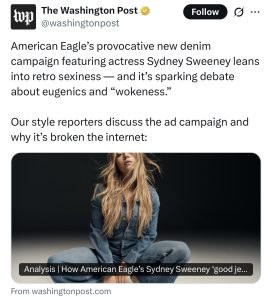
American Eagle’s official slogan — “Sydney Sweeney has great jeans” is code for “Sydney Sweeney has great tits” or “Sydney Sweeney has a great ass.” Obviously.
And all the sexless, Stalinist wokesters are howling about this….(a) “Eugenics!”, (b) “They’re weird…like Nazi weird…like fascist weird…dog-whistle shit.”
We do, however, have an ongoing interest in the future-tense lives of Andy Byron and Kristin Cabot. The latter, by the way, has resigned from Astronomer…no choice, c’est la vie, etc.
Bottom line: Andy and Kristin need to embrace their notoriety, not run from it.
2nd by-the-way: The Paltrow Astronomer video was created by Ryan Reynolds‘ Maximum Effort.
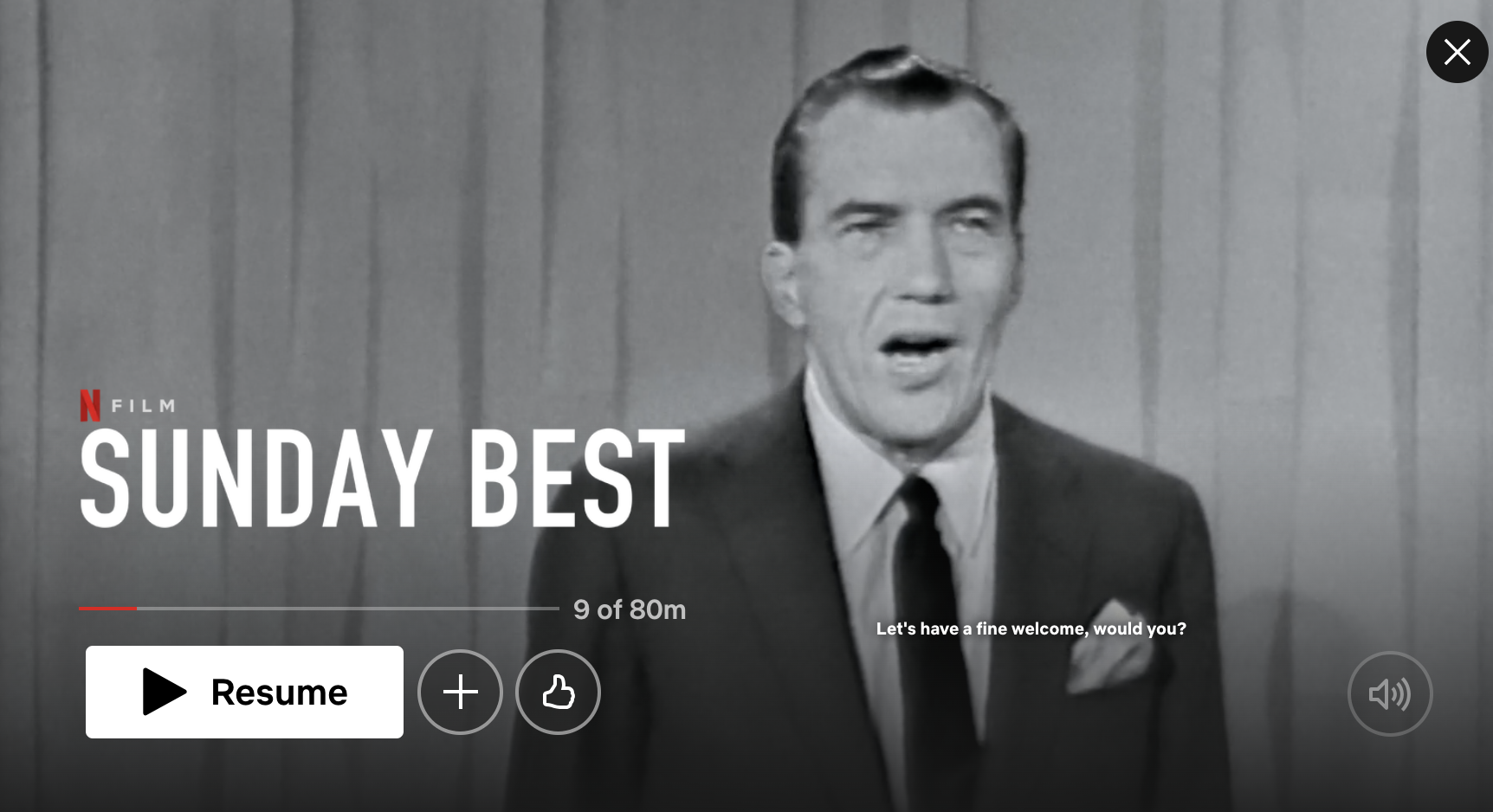
Sacha Jenkins‘ Sunday Best (Netflix, now streaming) is a heartfelt, somewhat simplistic tribute to the late variety show host Ed Sullivan and particularly a celebration of Sullivan’s defiance of racist norms in this country back in the ’50s and early ’60s by booking top black performers on The Ed Sullivan Show (1948 to 1971)
If you’d asked me for a capsule description of Sullivan before viewing this 87-minute doc, I would have said something like “famously stiff-necked TV host with a sharp eye for emerging stand-out performing talent…particularly Elvis Presley in 1956 and The Beatles in ’64 and ’65…whatever and whomever was beginning to attract big attention, Sullivan booked them on his one-hour Sunday night show (CBS, 8 pm), always leaving them bigger names than before they’d appeared.”
But to hear it from Jenkins (who passed last May at age 53), Sullivan’s proudest historical achievement was his support of black entertainers. In this respect Sullivan was damn near revolutionary or at the very least bold as brass, Jenkins is saying.
Within this country’s generally racist whitebread culture during the eras of Harry Truman, Dwight D. Eisenhower, JFK and even Lyndon Johnson, Sullivan was way ahead of the social curve — impassioned, color-blind, conservative but adamant.
Sullivan biographer Gerald Nachman: “Most TV variety shows welcomed ‘acceptable’ black performers like Louis Armstrong, Pearl Bailey and Sammy Davis Jr….but in the early 1950s, long before it was fashionable, Sullivan was presenting more obscure black entertainers…Bo Diddley, Jackie Wilson, Fats Domino, the Platters, Brook Benton, the Supremes, Nina Simone.”
TV critic John Leonard: “There wasn’t an important black artist who didn’t appear on Ed’s show. [The Irish, Harlem-born Sullivan] defied pressure to exclude black entertainers or to avoid interacting with them on screen. Sullivan had to fend off his hard-won sponsor, Ford’s Lincoln dealers, after kissing Pearl Bailey on the cheek and daring to shake Nat King Cole‘s hand.”
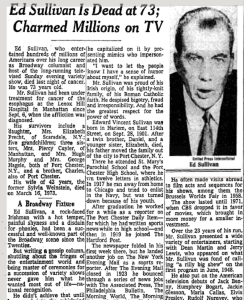
If you search around there are several anecdotes that suggest Jenkins’ portrait of the straightlaced, somewhat prudish Sullivan is less than fully candid, if not sugar-coated. (Read his N.Y. Times obit, which is much tonally dryer and more circumspect than Jenkins’ cheerleader approach.)
Of course it’s partisan! Jenkins’ film is sharing a cultural-political viewpoint that many boomers (kids during the show’s heyday) probably haven’t considered, which is that in terms of encouraging liberal thought and condemning racism, Sullivan, by ushering scores of black performers into America’s living rooms, was as much as a positive social influencer, in a certain sense. as Martin Luther King.
Over the last 60 or 70 years Sullivan’s default associations have been Presley and the Beatles, slam dunk. Ask anyone. Jenkins doc, which debuted at the Tribeca Film Festival in ’23, pushes the “ballsy racial reformer” portrait much more than any colorful side sagas or anecdotes about white performers.
How good is Sunday Best on a craft or audience-absorption level? Passable, not great.
Last night I watched the second half of Billy Joel: And So It Goes, and honestly? I didn’t like it as much as Part One, which is like the first half of Lawrence of Arabia — troubled beginnings, difficult development, Joel’s relationship with wife #1 (Elizabeth Weber), the gradual finding of success in the ’70s and then up, up, up into the early ’80s…pow!
The second part is about basically about the pressures and difficulties of life at the top — 1982’s Nylon Curtain album, trying to connect with his emotionally remote father, the initially very happy Christie Brinkley years and the arrival of his first daughter Alexa, getting financially ripped off by his manager Frank Weber, “We Didn’t Start The Fire“, the Katie Lee Biegel marriage, serious alcohol abuse (Joel dried out at Silver Hill in ’02 or thereabouts), the marriage to Alexis Roderick and their two daughters, but gradually running out of gas and losing the drive to write new songs, etc.
Hell, the documentary runs out of gas. The general narrative drift is “things are harder, more complicated, boozier as the creative fire gradually dims,” etc.
Being married to a driven creative type with a turbulent emotional past is never a day at the beach…guaranteed.
It’s a bummer to think that the most recently composed Joel song that I’ve really liked is The River of Dreams (“In the middle of the niiiight”), which came out in July ’93. There hasn’t been an album of original songs since. 32 fucking years ago, man. Joel explains that songwriting-wise he’d become a burnt-out case, “tired of the tyranny of the rhyme,” etc.
Back in the old days the Coen brothers would sadistically fiddle with their flawed characters…hapless or misguided fellows who struggle against a world that is often indifferent or actively hostile to their aspirations and plans. But the Coens didn’t just make things tough for these characters — they would stick little needles into them.
In a certain light A Serious Man is almost a kind of companion piece to Todd Browning‘s Freaks, except that Browning’s film is compassionate and caring while A Serious Man is anything but.
You know what A Serious Man is deep down? In a philosophical nutshell, I mean? That old joke about two anthropologists captured by cannibals in New Guinea. Chief to anthropologist #1: “You have two choices — death or kiki.” Anthropologist #1 chooses kiki and is promptly beaten, stabbed, tortured, whipped, flayed and finally thrown off a cliff and eaten by crocodiles. The chief offers Anthropologist #2 the same choice, and the guy replies, “Good God…well, I’m not a brave man so I’ll choose death.” And the chief goes, “Very well, death…but first, kiki!”
fferent or actively hostile to their aspirations and plans.
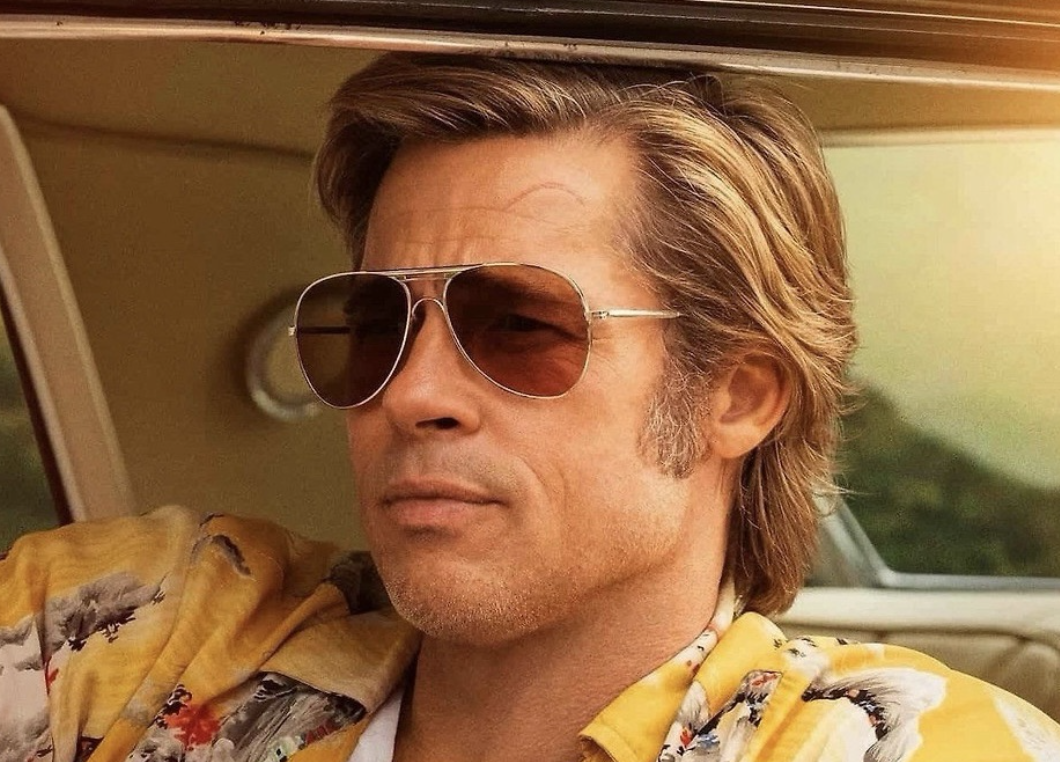
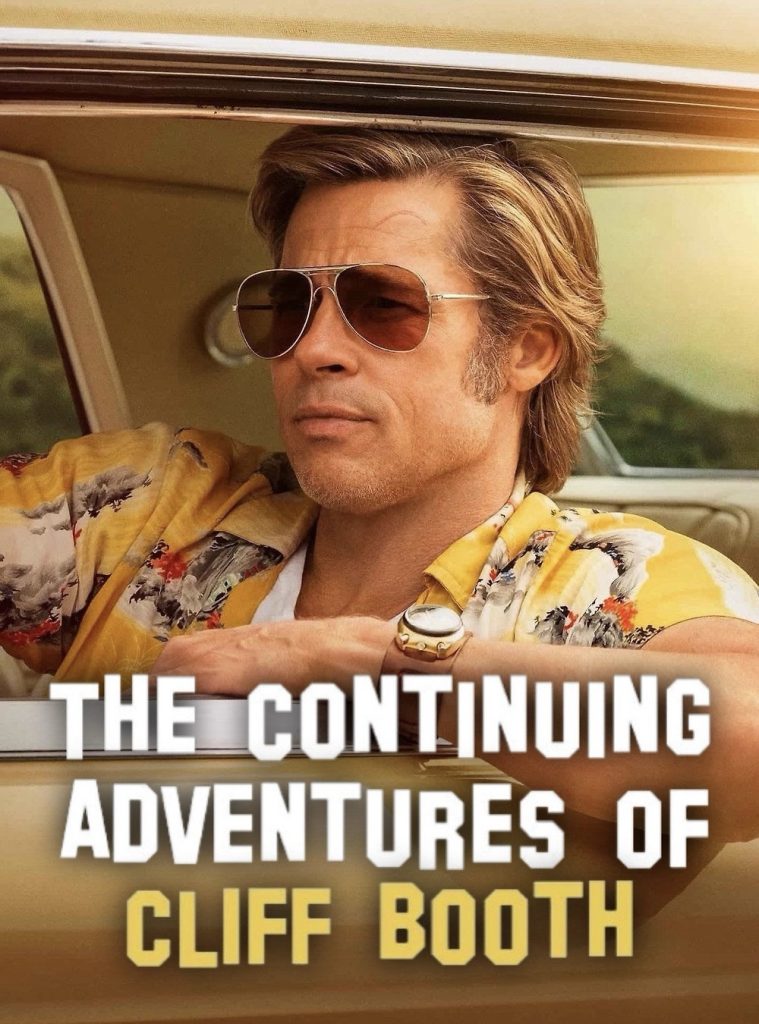
Except it’s just TheAdventuresofCliffBooth. Forget the “Continuing.”
One problem: When F1 opened a few weeks ago, Brad Pitt’s hair was tennis-ball length. Which is way too short for 1977. Nobody who swaggered around in the disco era had tennis-ball hair….nobody. Not even gay guys.
Marlene was 83 when she passed on 4.6.25 from lung cancer in Los Angeles. Born in ’41, she was 34 or 35 when she played Lauren Hobbs in Sidney Lumet‘s Network (’76).
“You can blow the seminal infrastructure out your ass!”
I found the films of Yorgos Lanthimos weirdly engaging at first. Well, not “engaging” as much as oddly diverting with an emphasis on the weirdly doleful. Then came The Favourite and I — everybody — was fully on board. I was pretty much delighted by Poor Things except for the last 10 or 15 minutes. And then I slammed on the brakes after seeing Kinds of Kindness….fuck was that? Now I’m kinda down on the guy. This morning I told a friend that “I don’t like Lanthimos anymore,” but that’s not really it. I just don’t want to sit through another Kinds of Kindness experience again…ever!
Released within industry circles in mid-July of 1995, Windows95 was open for Average Joe purchase on 8.24.95. It sold for $209.95, or roughly $440 in 2025 dollars. InternetExplorer, NetscapeNavigator (which initially surfaced in ‘94)…I can already feel a headache coming on from the memories alone.
An operating system from hell, Windows 95 was a steep, craggy mountain that I struggled daily to climb. Ropes, pick-axes…a real motherfucker.
I recall hanging out at a computer retail place on Pico Blvd. back then and asking advice from guys who worked there about some of the gnarlier tech issues. Quote: “Windows 95, man! Better men than I have been beaten down by it. Do not take that operating system lightly!”
I’ve been a Mac guy since ‘09 or thereabouts…what a comparative breeze. Because I grappled and fumbled and sweated within the Microsoft realm for the better part of 15 years or more. I don’t want to think back on those times, but it was rough going. The viruses alone.
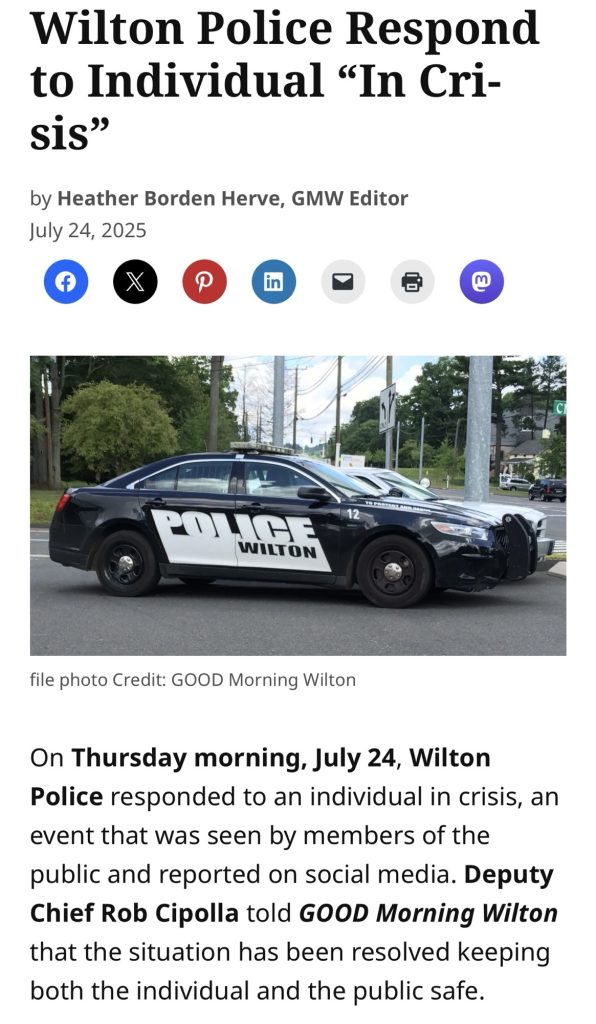
Late last week a local man with “issues” — some temperamentally distracted, possibly mentally unbalanced fellow — attracted the attention of the citizenry in HE’s very own Wilton, Connecticut.
And then the cops got wind and eventually this poor soul was led away and driven to a nearby hospital.
Alas, the readers of GoodMorningWilton, which is written and edited by the socially obedient Heather Borden Herve, were told a somewhat different story.
The disturbed guy with issues was given an upgraded description, for one thing — he became “an individual in crisis.” And the episode was sanitized to a fare-thee-well. Herve decided to forego any physical descriptions — not even the approximate age of the poor guy.
What Herve wrote and posted was bad reporting, plain and simple. Regimented police-blotter stuff. And an insult to the art and the challenge of good writing.