
The rhythm guitar is catchy as fuck. Joe Walsh is the meastro, I presume.
Month: August 2025
Intriguing But Not Fetching
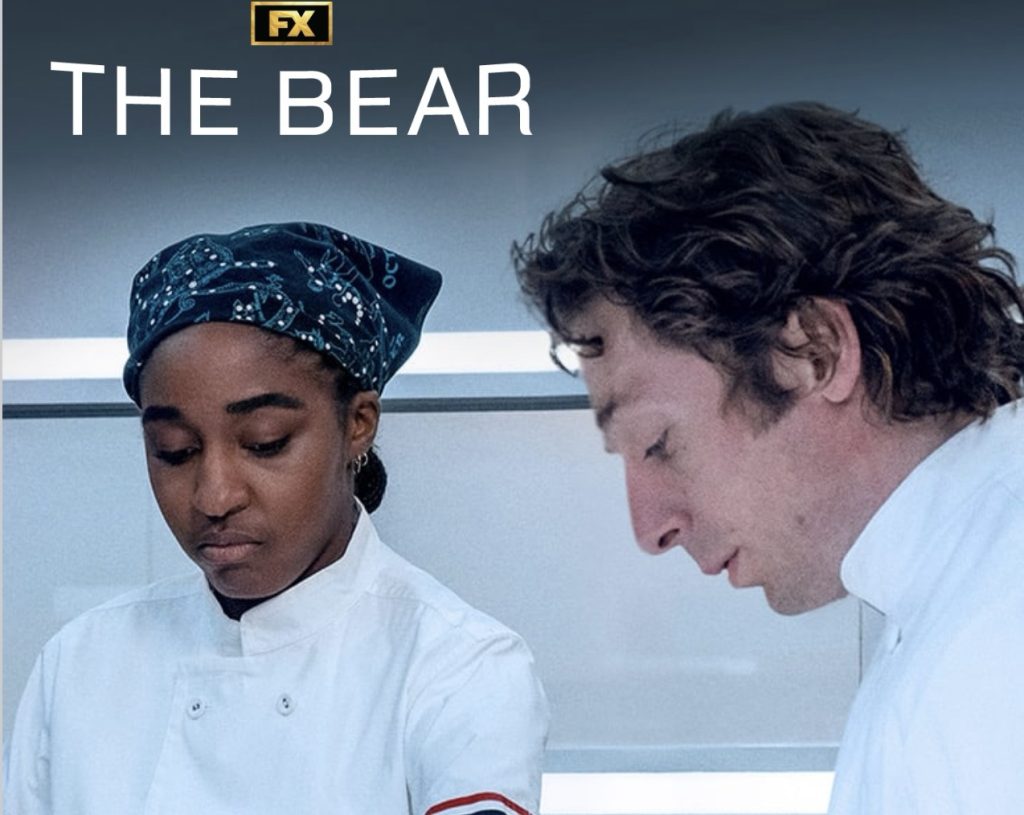
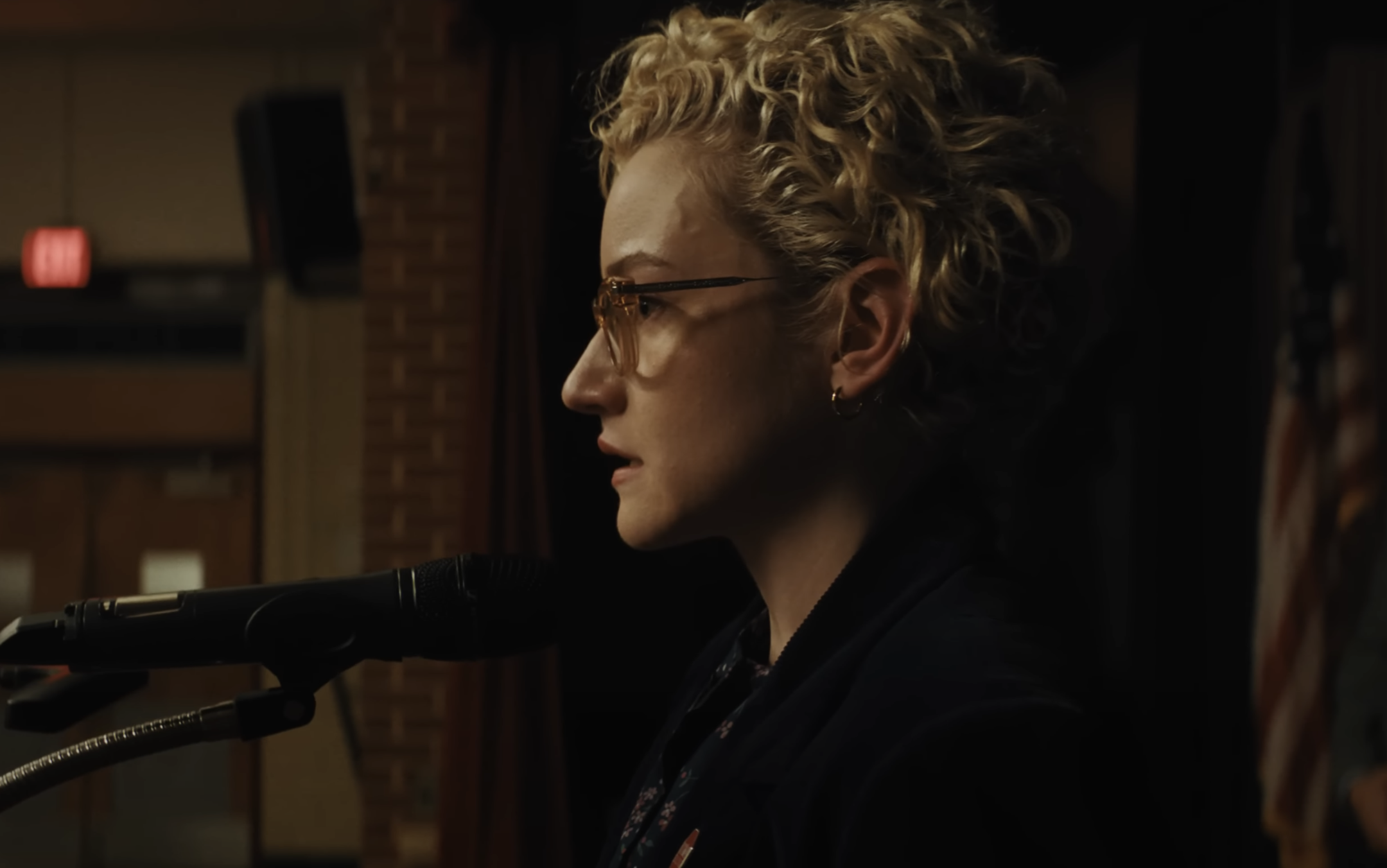
The Bear’s Ayo Edibiri is obviously surging career-wise. She’s a first-rate actress as far as the Emmy voters are concerned, and her performance as an ambitious academic type in Luca Guadagnino’s After The Hunt, premiering later this month in Venice, will certainly intensify her brand.
And I’m talking about internals here. All the Lido critics and hotshots, trust me, will be fixating on her character’s personality, character, integrity. This is key.
There is nonetheless a sexual aspect to consider (her character alleges that she was assaulted), and even with a general understanding that sexual assault has relatively little to do with an alleged victim’s basic allure, it still has something to do with it…c’mon.
There has to be a non-inflammatory way of saying that whatever Edibiri is thought to possess or radiate as a respected actress, hetero hottie vibes are not part of the package.
Am I allowed to state the obvious, which is that Ayo is no Gugu Mbatha-Raw, no Lena Horne, no Lupita Nyongo, no Whitney Houston, no Diahann Carroll, no Iman, no Rihanna, no Janelle Monae, no Beyoncé, no Zendaya, no Cassie Ventura? Or is this a verboten thing to mention?
Friendo: “Because she’s black and queer and a good actress, she’s the perfect virtue signal.”
Bad Teacher?
Sharp-minded friendo to HE: “Go see Weapons.”
HE to sharp-minded friendo: “Out Friday.”
Sharp-minded friendo: “Don’t read anything about it. The less you know, the better.”
HE: “Horror.”
Sharp-minded friendo: “It’s a film.”
HE: “Missing kids, all from a single classroom, outraged parents.”
Sharp-minded friendo: “Just see it.”
HE: “It’s…what is it, a metaphor for middle-class hostility…anger vented at woke women? Something like that?”
Sharp-minded friendo: “Don’t go in with baggage and preconceived expectations.”
HE: “Is it okay if I watch the trailer?”
Jessie Buckley’s Heaving Seas

Yesterday Alice Newell-Hanson’s N.Y. Times Style Magazine profile of Jessie Buckley, an endlessly flattering exercise in kiss-ass portraiture, appeared online.
It’s a longish, elegant, very well-written article, but given Newell-Hanson’s commitment to flattery, it totally ignores what in-the-know types are allegedly thinking and saying about Buckley’s next two envelope-pushing films.
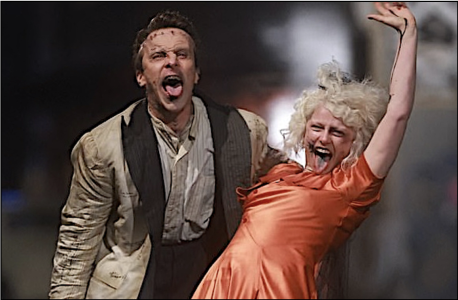
These would be (a) Chloe Zhao‘s Hamnet (Focus Features, 11.27), an allegedly glum historical fiction about Agnes Shakespeare (Buckley) and her errant, responsibility-shirking playwright husband, William (Paul Mescal), and (b) Maggie Gyllenhaal‘s The Bride! (Warner Bros., 3.6.26), apparently some kind of feminist, toxic-male-hating take on James Whale‘s The Bride of Frankenstein (’35).
Key Newell-Hanson passage: “Buckley has earned a reputation for playing complicated roles with devastating power. Zhao, the director of Hamnet, says that as soon as she read Maggie O’Farrell‘s book, she knew the role had to be Buckley’s. Few other actresses of her generation can gain access to such a wide spectrum of emotions, or seem as willing to risk being disliked for exploring the tougher ones.
“‘She has no fear in terms of how she’s perceived,’ says Mescal. ‘She’s never trying to hide or draw lines.'”
Buckley’s choppy scarecrow haircut, posted below and featured in the Times article, lends a certain credence to Mescal’s observation.
Straight Hamnet dope, as reported two weeks ago (7./25.25) by World of Reel‘s Jordan Ruimy:
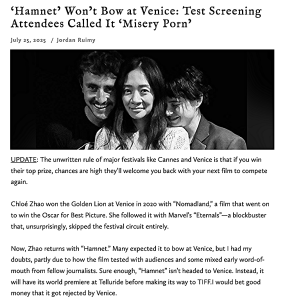
Excerpt: “While Buckley and Mescal’s performances are said to be solid, Zhao’s direction — and especially her screenwriting — are being called flat, with a tone that feels completely off. One viewer summed it up as ‘two hours of Buckley looking miserable,’ without much emotional depth or nuance to her grief.”
Straight Bride! reporting, dated 3.19.25:
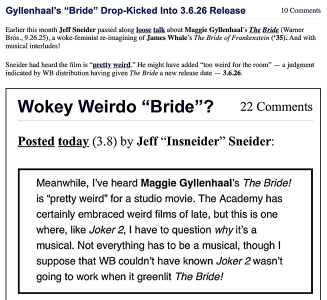
Obviously The Bride! was bumped into ’26 because…well, WB distribution certainly didn’t do this because it’s some kind of glorious knockout.

The Night The ’70s Died
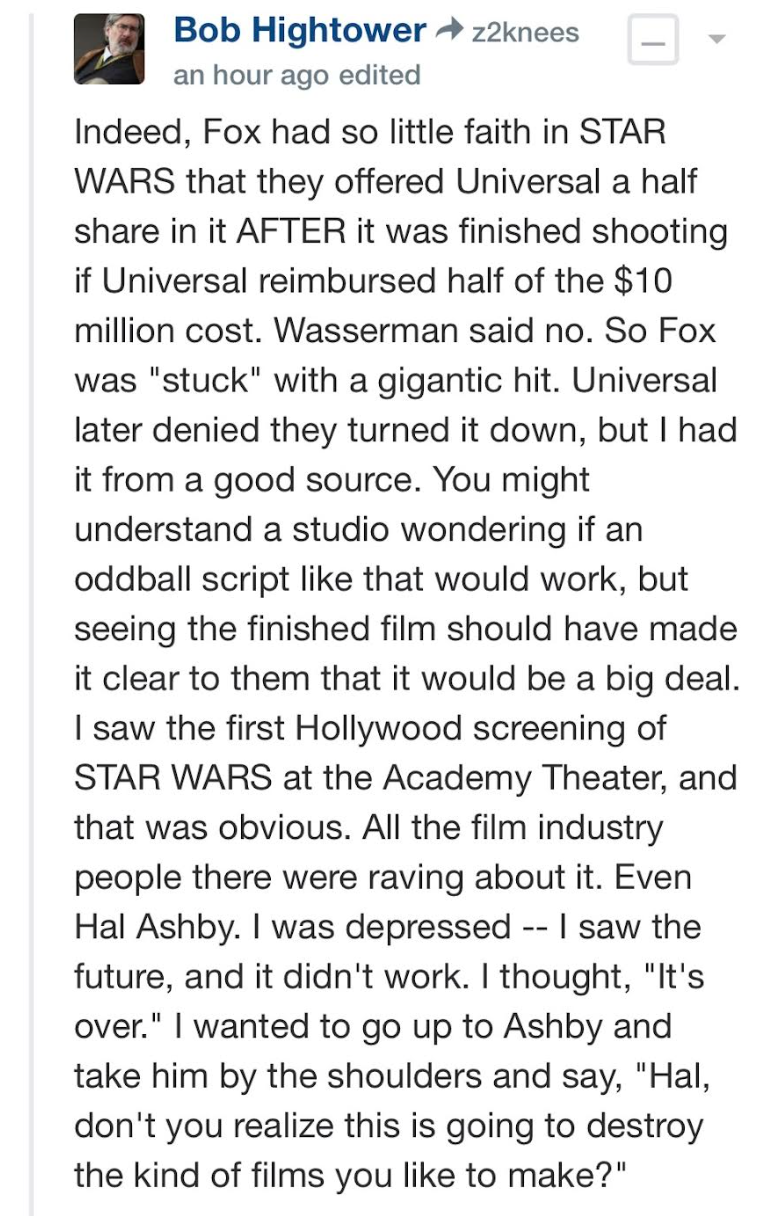
Joseph McBride to Hal Ashby after early Star Wars screening: “Your kinda days are over, Hal.”
Ashby to McBride: “What about yours, film critic?”
McBride to Ashby: “The difference is I know it.”
Ashby to McBride: “All right, so we’ll all turn in our Arriflxes and Avid editing machines to the Academy, and we’ll all go to work at Pink’s. Is that it?”
McBride to Ashby: “Not quite yet. [turns to George Lucas, standing nearby] We haven’t heard from your friend here.”
Lucas: “I wouldn’t push too far if I were you. Our fight ain’t with you.”
McBride: “It ain’t with me, Lucas?”
Lucas: “No, it ain’t, Joe.”
Ashby: “I wouldn’t pull on Lucas, Joe. [to Will Atkey] Will, you’re a witness to this.”
McBride: “So you’re George Lucas.”
Lucas: “What’s that mean to you, Joe?”
McBride: “I’ve heard about you.”
Lucas: “And what’ve you heard, Joe?”
McBride: “I’ve heard that your movies are injecting an infantile serum into American commercial cinema, and in so doing are helping to destroy a cinematic golden age. You and Steven Spielberg, I mean.”
Lucas: “Prove it.”
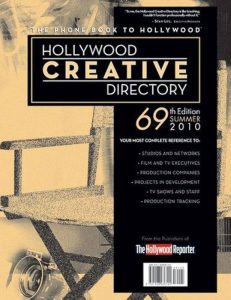
Fond Recollections of Hollywood Creative Directory
…which launched in ‘93 and then went belly-up sometime around 2010 or thereabouts. I loved this showbiz bible…bought each new edition as quickly as I could, wanted the online edition to succeed. But it didn’t.

Artist/Creative Types Going Through A Spiritual Crisis
In yesterday’s Jay Kelly thread, HE commenter “We’re Totally Fine” said the premise of this upcoming Noah Baumbach film seems to belong to a favored sub-genre — films about Hollywood guys who’ve run out of gas, are going through a bad patch or have otherwise lost their way.
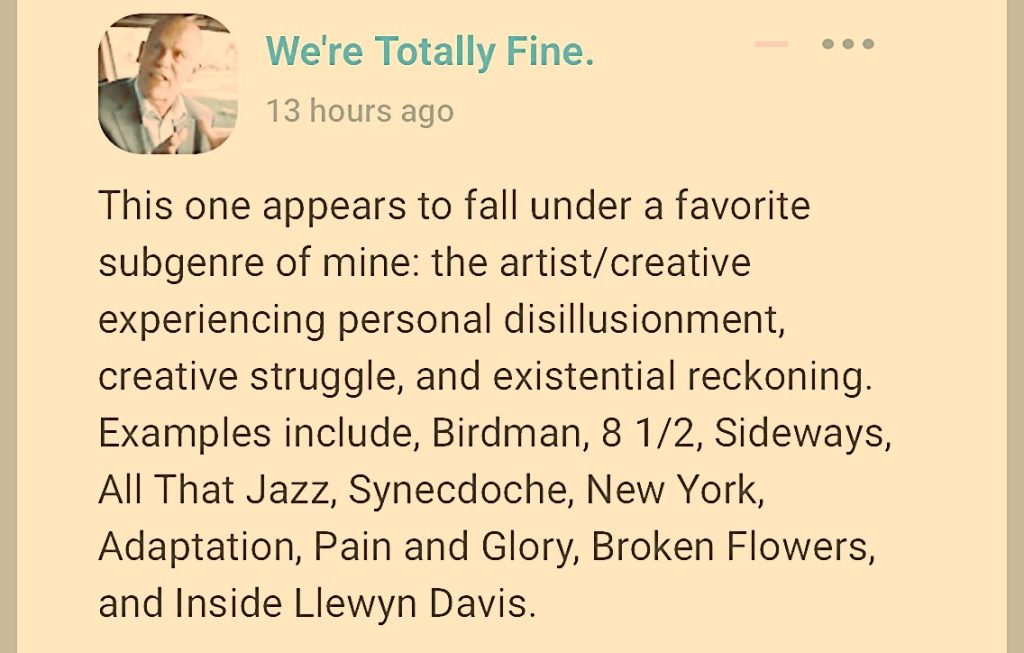
HE additions to this list:
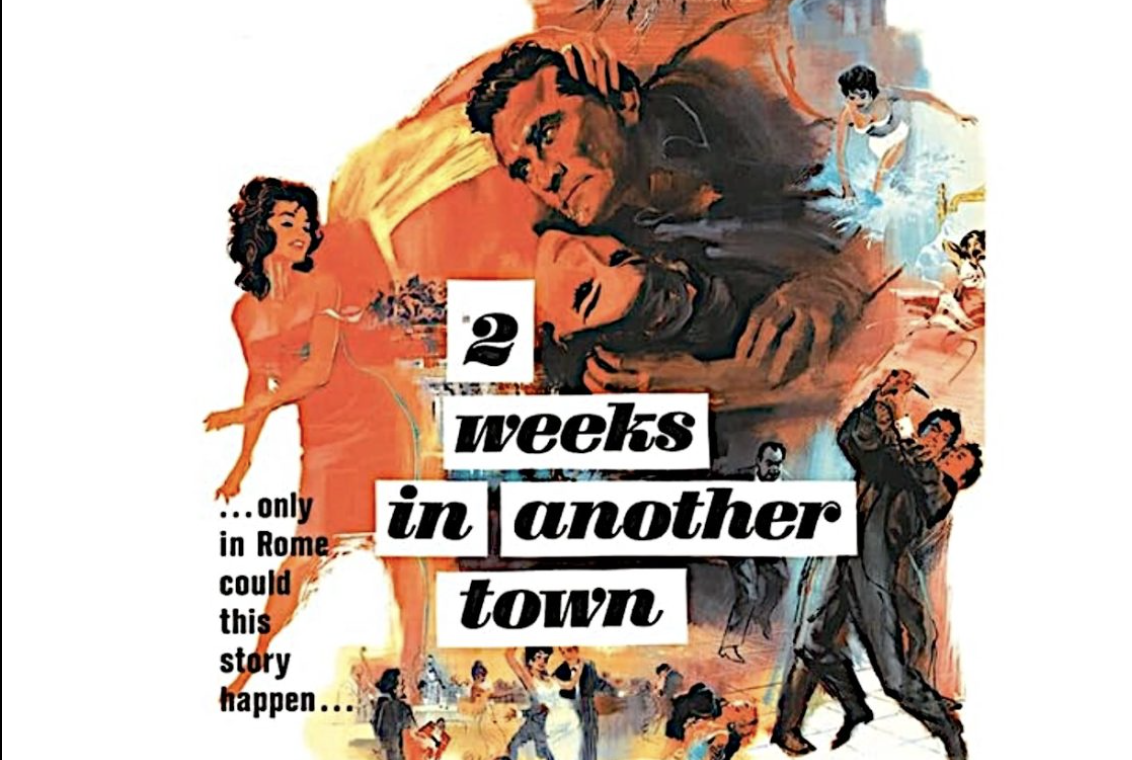
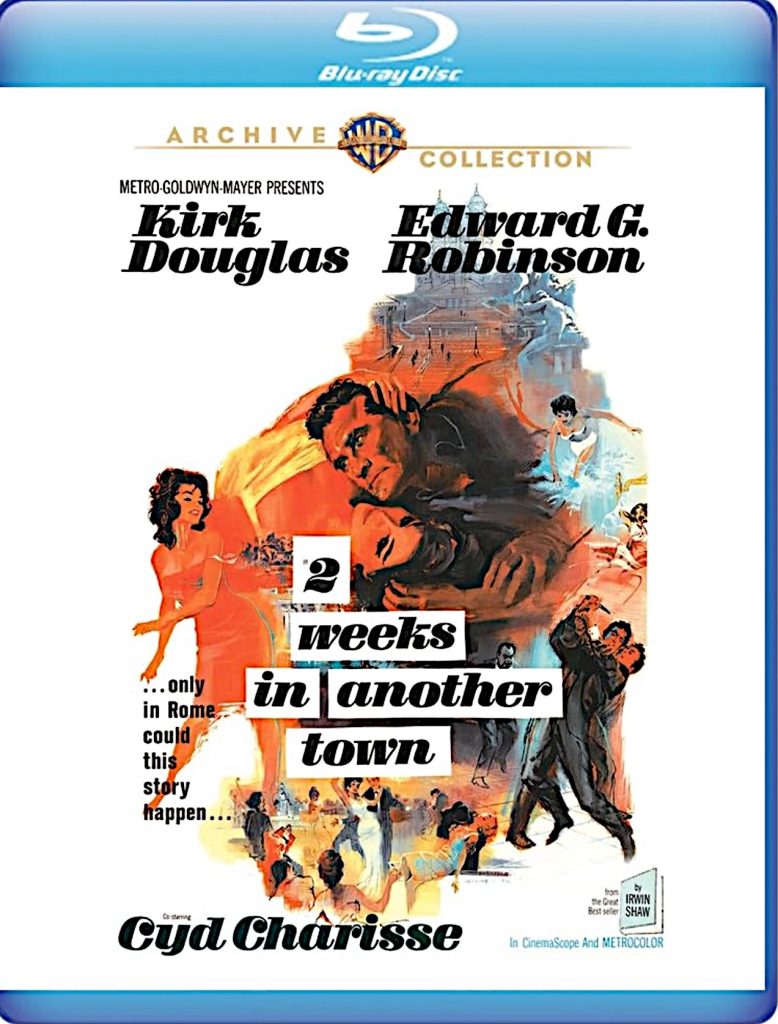
(a) Vincente Minnelli’s Two Weeks in Another Town (‘62), which is about an alcoholic, burnt-out actor (Kirk Douglas) trying to get back into the swing of things while assisting an old director friend (Edward G. Robinson) in Rome.
(b) Federico Fellini’s 8 1/2 (‘63)…obviously. I don’t want to even glancingly mention Rob Marshall’s Nine (‘09), but it’s closely wedded to the Fellini so I haven’t much choice.
(c) Paul Mazursky’s Àlex in Wonderland (‘70) — another 8 1/2 descendant.
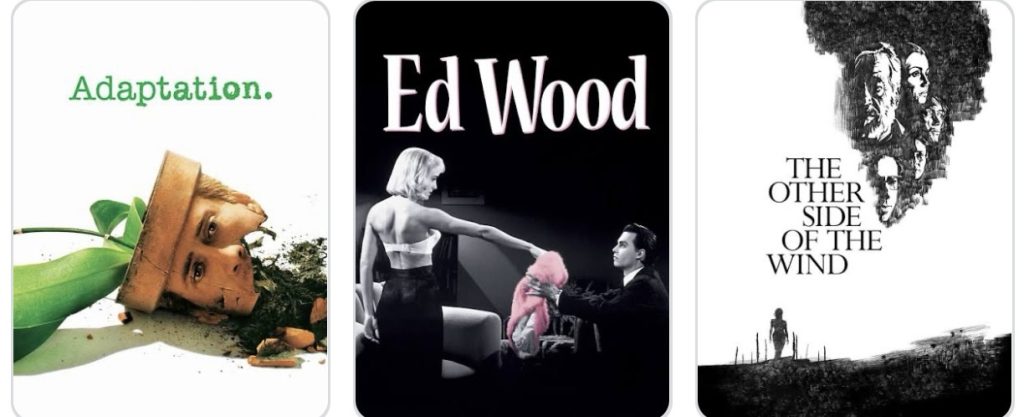
I’m not including Tim Burton’s Ed Wood (‘93) because except for that one gloomhead scene with Orson Welles in Musso and Frank’s, Johnny Depp’s titular protagonist doesn’t behave like a filmmaker who’s lost his way — he’s actually a relentless optimist.
Totally Wrong Actor Will Portray James Stewart
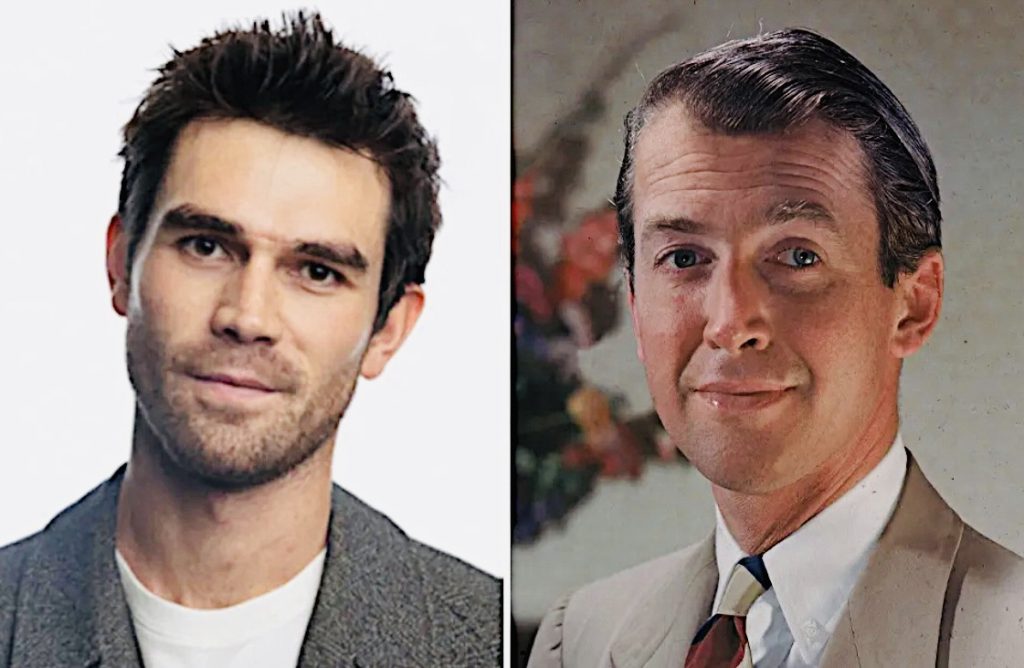
In Otto Preminger’s Anatomy of a Murder (‘59) James Stewart and Ben Gazzara were about as opposed and disparate as they come.
Gazzara was an urban, method-y, dark-eyed “ethnic” type with a sassy, laid-back personality, and Stewart was an American heartland beanpole type (i.e., tall, corn-fed, blue-eyed, non-ethnic) with an upfront manner and an improvisational, half-gawky manner of speaking.
And yet the curiously named KJ Apa, a half-Samoan Gazzara look–alike from New Zealand, has been cast to portray Stewart in a forthcoming feature.
Stewart in heaven after reading Marc Malkin’s Variety story: “All right, now wait a minute, just hold on…this swarthy Apa guy just isn’t my type…hell, I grew up in Pennsylvania and never even visited Samoa…he doesn’t even look like a cousin of mine…plus I was 6’ 3” and he’s 5’11” so there goes the beanpole resemblance. Plus he has a heavy beard-stubble thing going on.”
More Acceptance Speeches Should Be In This Vein
David Fincher, Brad Pitt, and Edward Norton roasting all the critics who trashed Fight Club.
pic.twitter.com/zI13uSrlcu— cinesthetic. (@TheCinesthetic) August 4, 2025
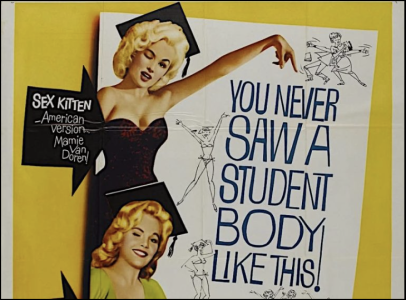
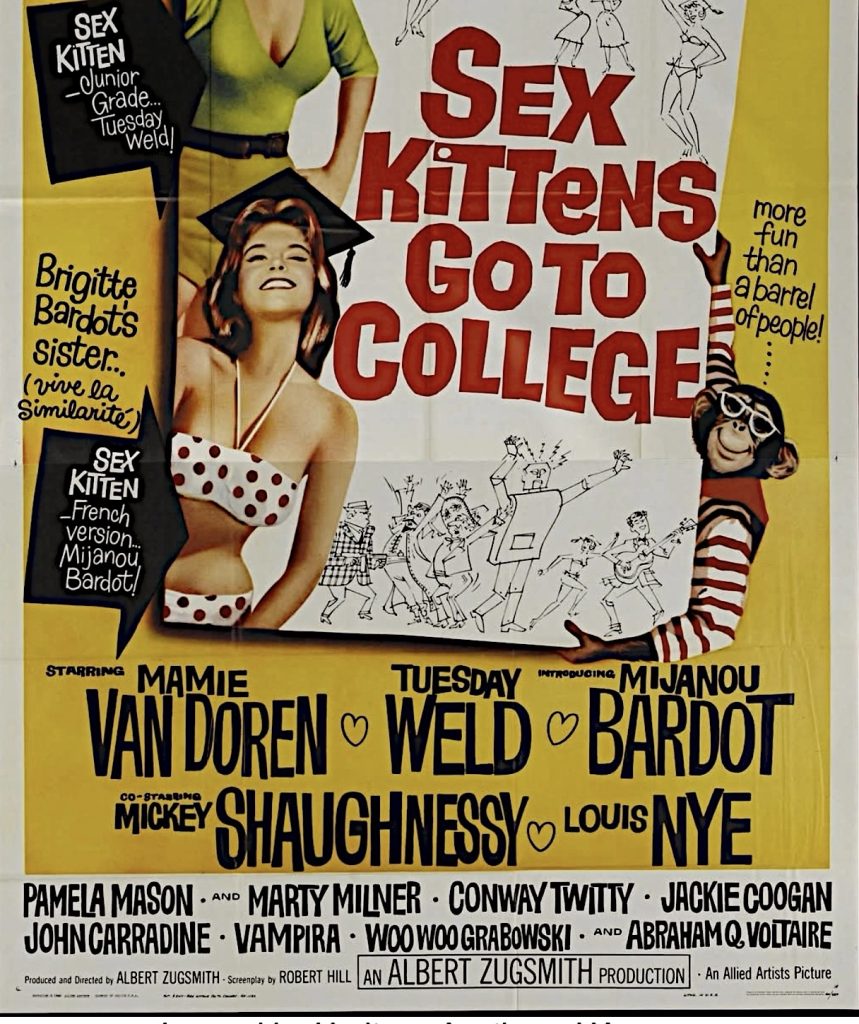
Idea: What If Collegiate Sex Kittens Were Transies?
Galloway Vision: “Reverse Engineering”
“If our young people aren’t doing well, we have failed as a nation”…100% true.