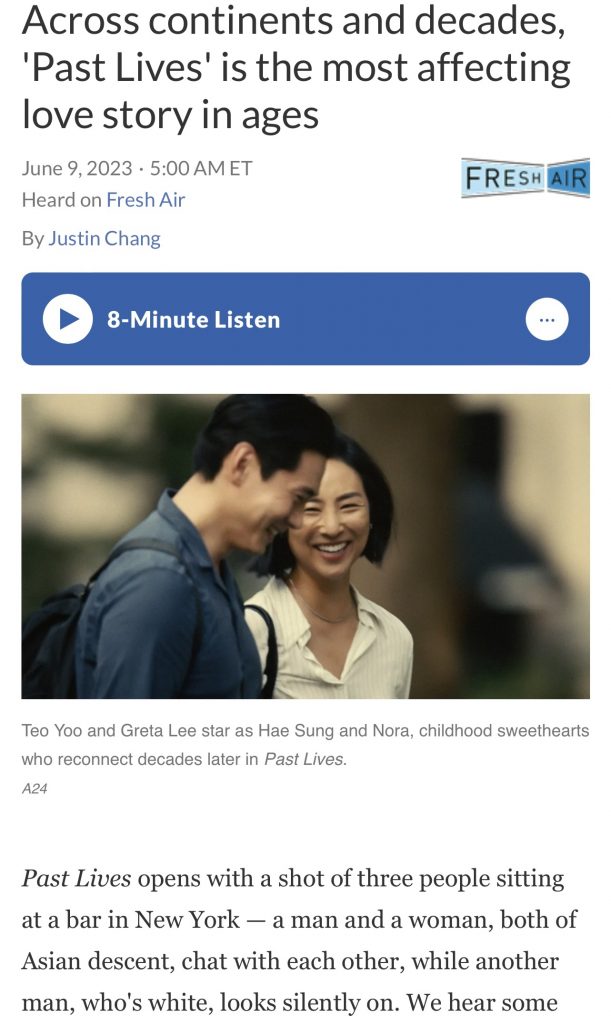
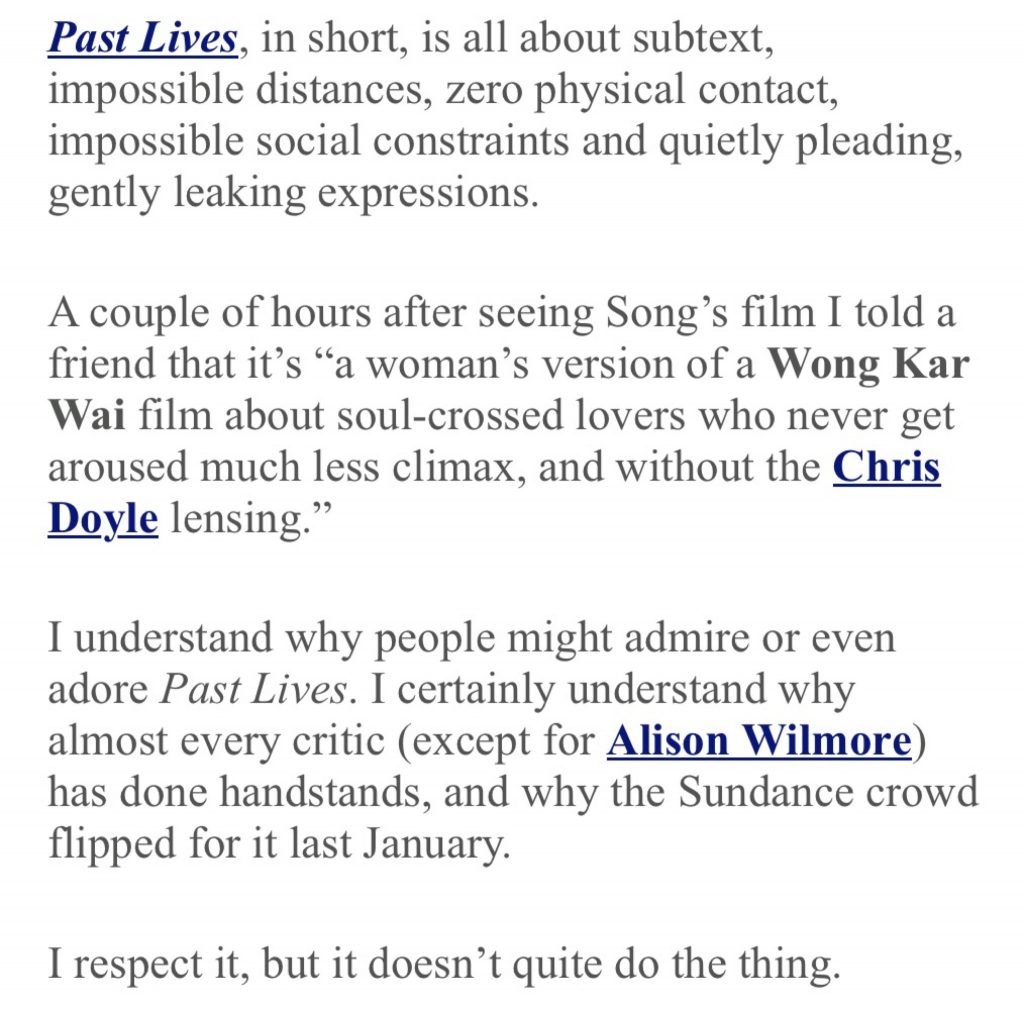
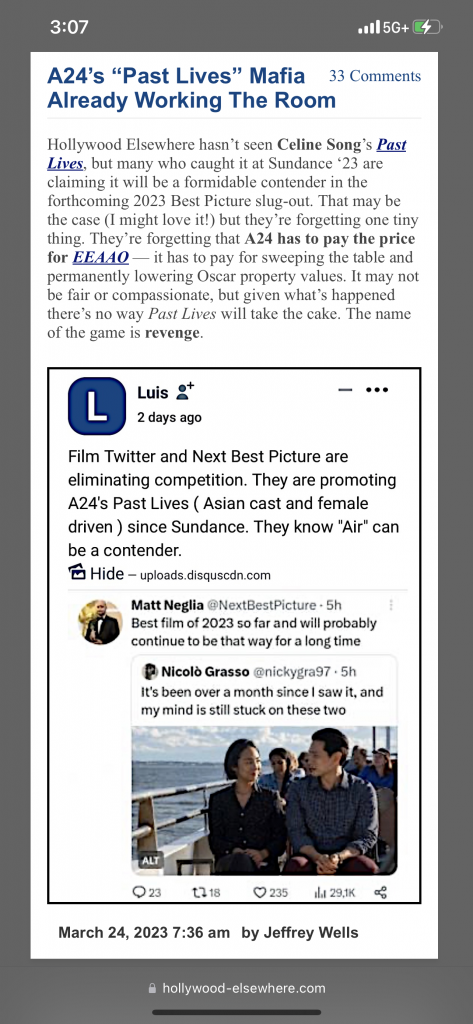
Song tries to finesse this gently agreeable but wispy, faint-pulse love story into a kind of continent–traversing Brief Encounter, but she doesn’t quite have the chops or…whatever, the somersaulting, pole-vaulting panache.
A recently premiered film that actually deserves this effusive praise is Tran Unh Hung’s ThePotauFeu.
I’m trying to understand why Chang and several other elite critics are so over the moon over this thing. They’re just undercutting their cred by over-praising it…doing themselves no favors.
Having recently been given a legit email address for FrenchConnection director William Friedkin, I’ve just sent him the following:
“Greetings & salutations from Jeffrey Wells of Hollywood Elsewhere. I hope you’re feeling hale and hearty and doing well.
“Cutting to the chase, herewith are two very important questions about the recentlydiscoveredremovalofferabriefActOnesequence in streaming versions of TheFrenchConnection (Criterion Channel, iTunes, etc) as well as in a DCP shown at Santa Monica’s Aero theatre on 5.12.23.
“The deletion of this sequence was apparently the doing of The Walt Disney Company, although it may not have been. It was apparently motivated by the speaking of a racially ugly and vulgar term by Gene Hackman’s Popeye Doyle character
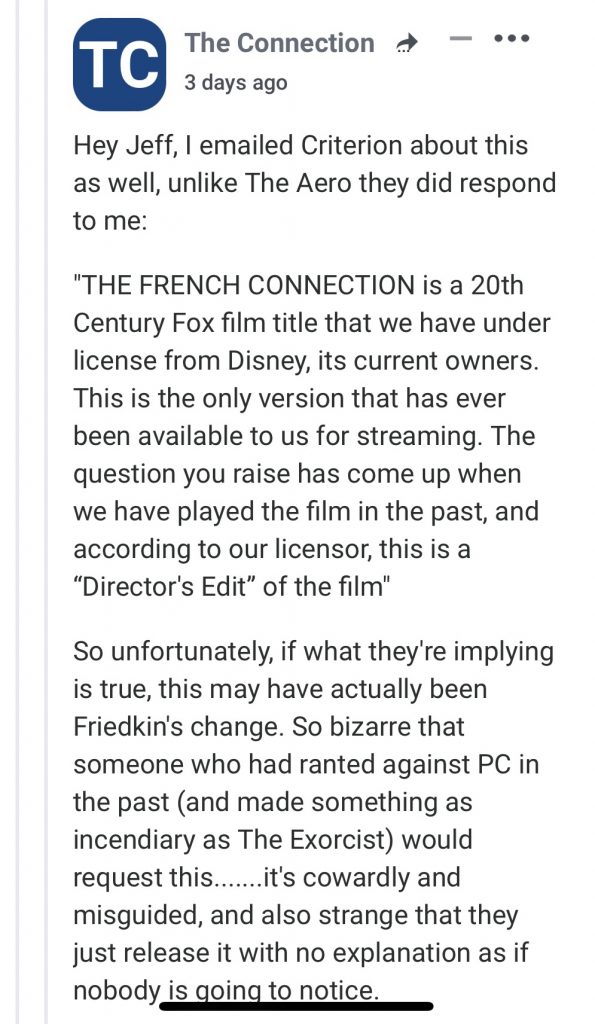
“One, did you sign off on this deletion? According to an HE comment-threader, Criterion has issued a statement that the currently censored cut of your 1971 film, provided to them by Disney, represents a “Director’s Edit” and was therefore apparently (or at least may have been) approved by you, the auteur behind this Oscar-winning film.
“Is this true? Did you, William Freidkin, request and/or convey approval of this deletion to Disney, the rights holder? Was this your call?
“Or was this censoring decided upon by Disney with your approval or disapproval being a moot point?
“Two, if you DID convey your approval of this edit to the powers-that-be at Disney, could you please explain to me and the tens of millions of fans of this film why you would approve such a thing, nearly 52 years after TFC’s theatrical release?
“And if you DID NOT approve of the censoring of TheFrenchConnection, could you please convey your reaction to Disney’s apparent decision to remove the sequence in question?
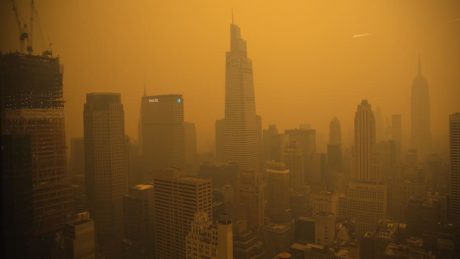
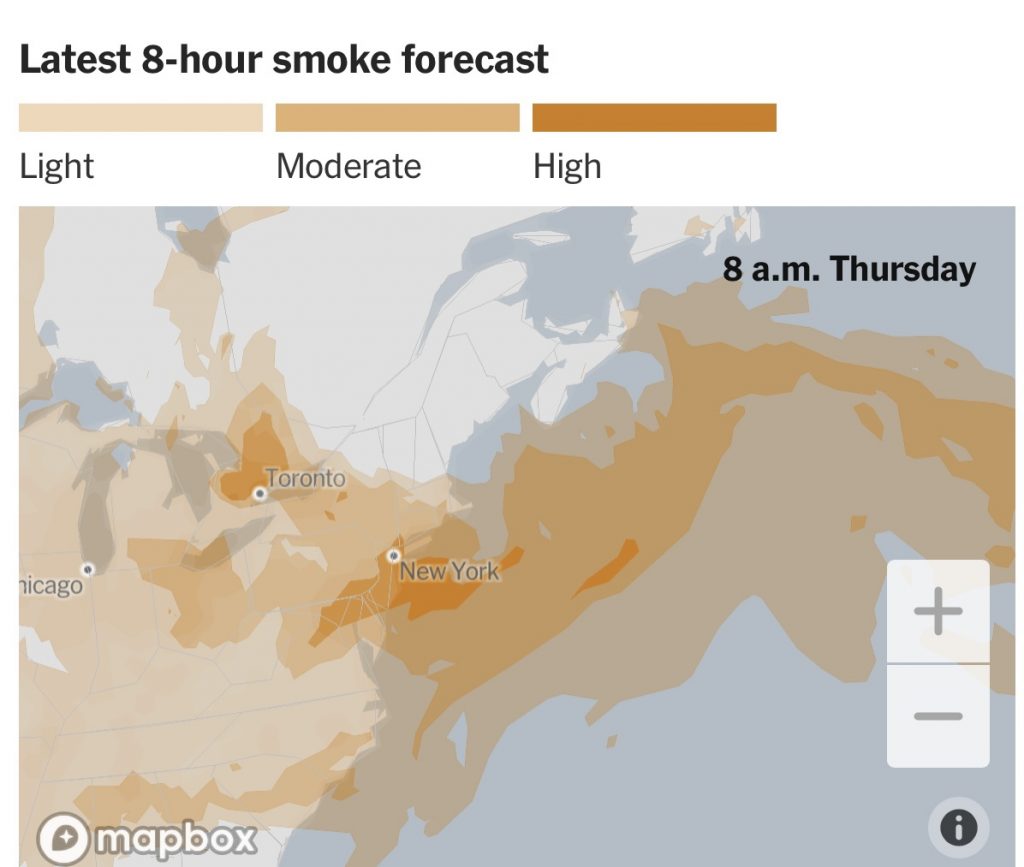
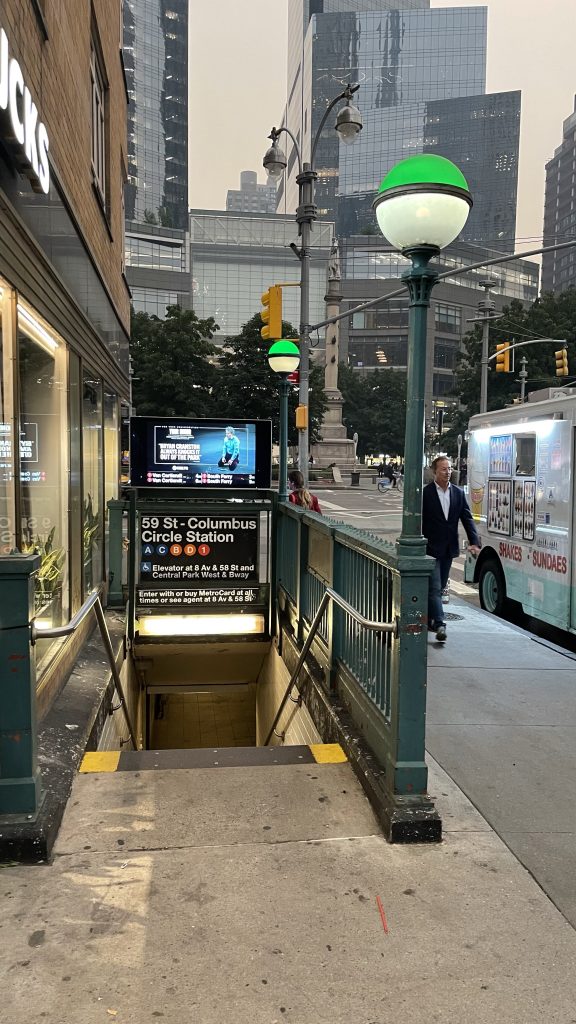
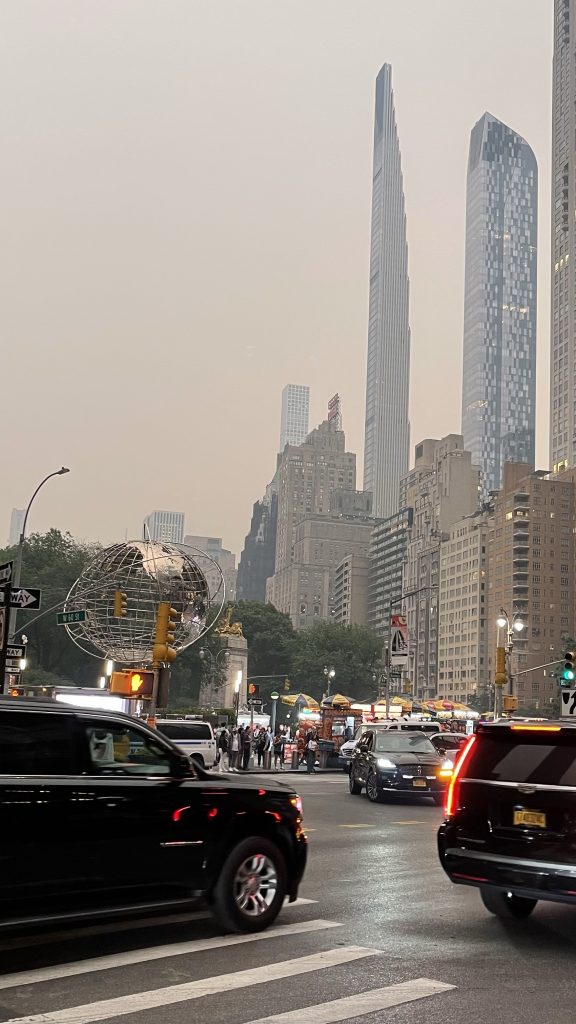
Reports about the Canadian forest fire smoke turning the air in the tristate area (New York City Connecticut, New Jersey) into a region that vaguely resembles BladeRunner2 and is blanketed with air quality that’s worse than the mostpollutedIndiancities…okay, they haven’t been inaccurate.
But if you’re from Los Angeles, which has long grappled with occasionally dense smog (especially in the ‘70s and ‘80s) and infrequent forest fire smoke, it didn’t seem like that big of a deal.
That’s what I was telling a friend…”this is just a typical bad-smog day in Los Angeles with a little Malibu fire overlay…no one’s idea of healthy, but ya gotta roll with it…flush it out…man up.”
The sun is smaller with a muddy-orange hue and yes, there’s an eerie atmospheric visual thing going on, and no, I wouldn’t recommend jogging or long hikes until it all starts to blow away on Sunday.
But overall HE has been much more fascinated than spooked. “I don’t trust air that I can’t see” is too blustery, too Lee Marvin or Robert Conrad but I have, as a rule, eaten this shit up and shrugged it off for decades. You should try breathing Hanoi air on a shitty day. Tough guys only.
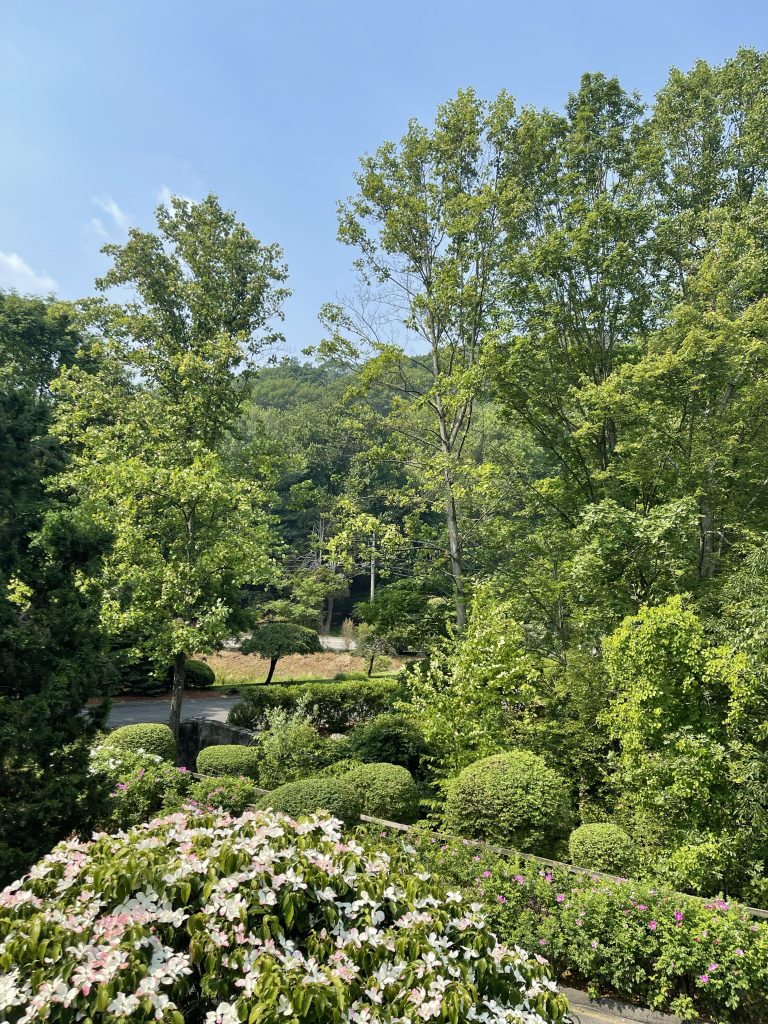
40 years of living in Los Angeles has taught me that truly sparkling, blue-sky days are relatively rare. Having hiked in Switzerland and Colorado and Vermont and Mill Valley, I know what radiantly clear air feels and smells like. And I will breathe it again.
I ordered a soft vanilla swirl cone with chocolate sprinkles from a dessert truck guy. Me: “How much is that?” Dessertguy: “Ten.” Me: “Ten fucking dollars for a cone and it’s not even real ice cream? Fuck, man!” I turned and walked away.
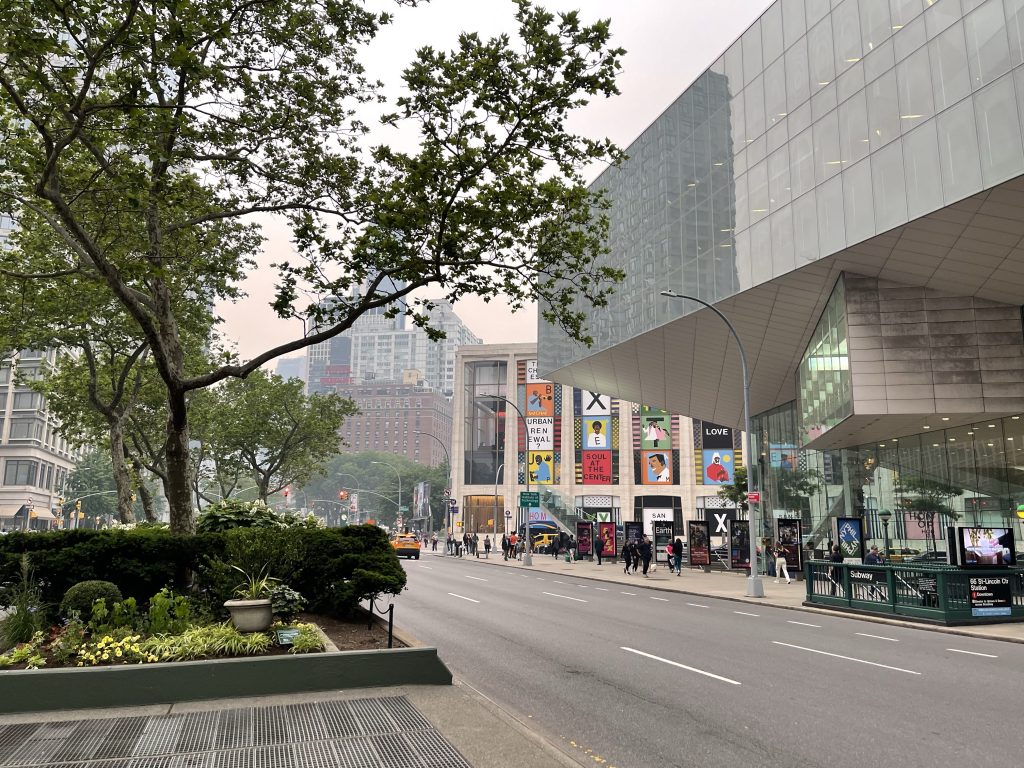
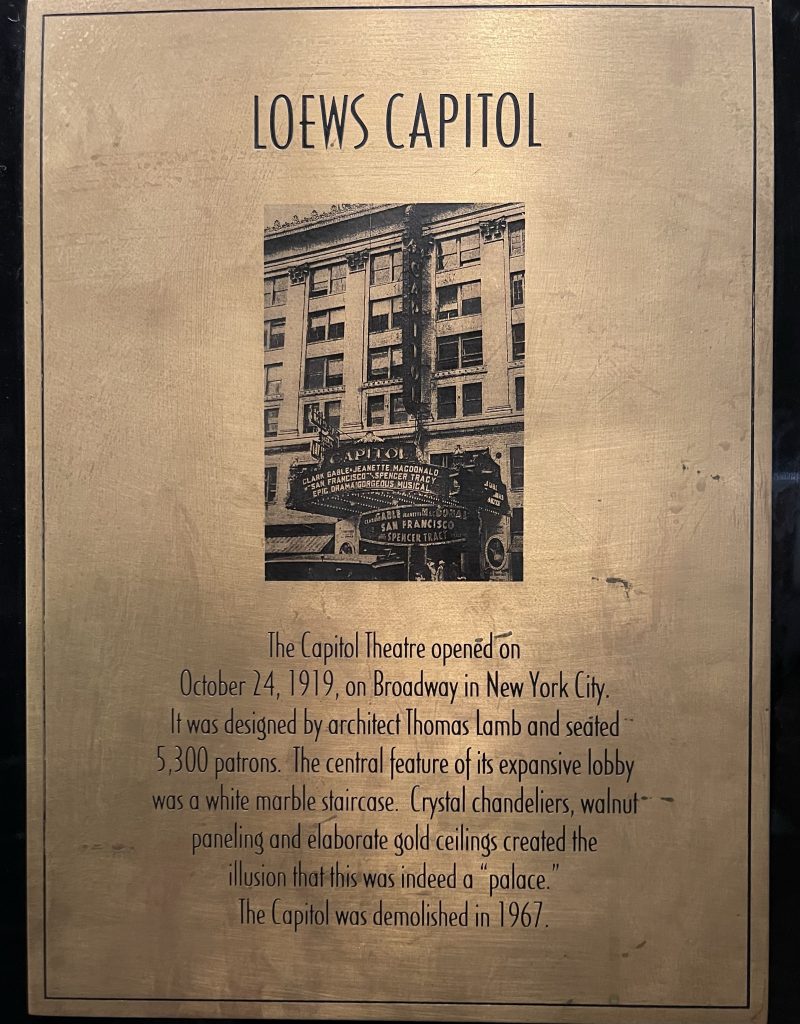
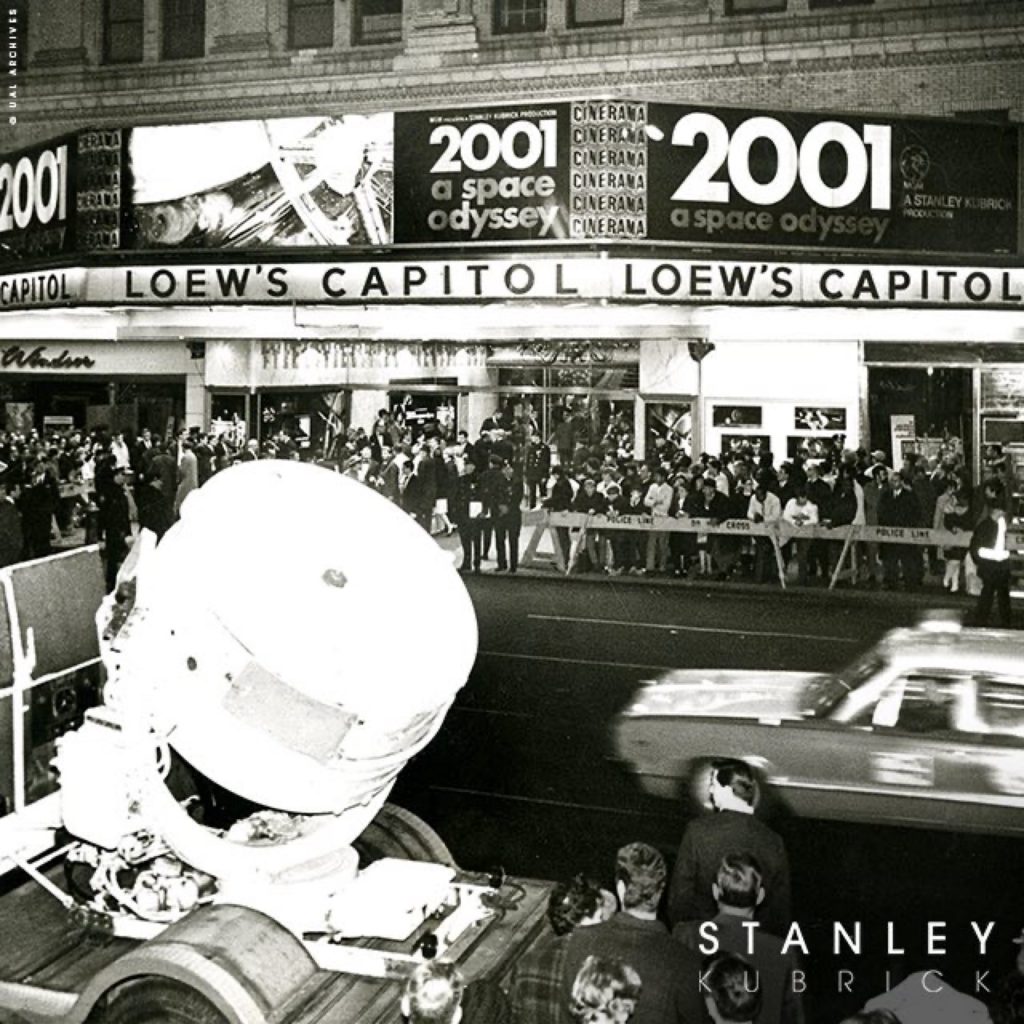
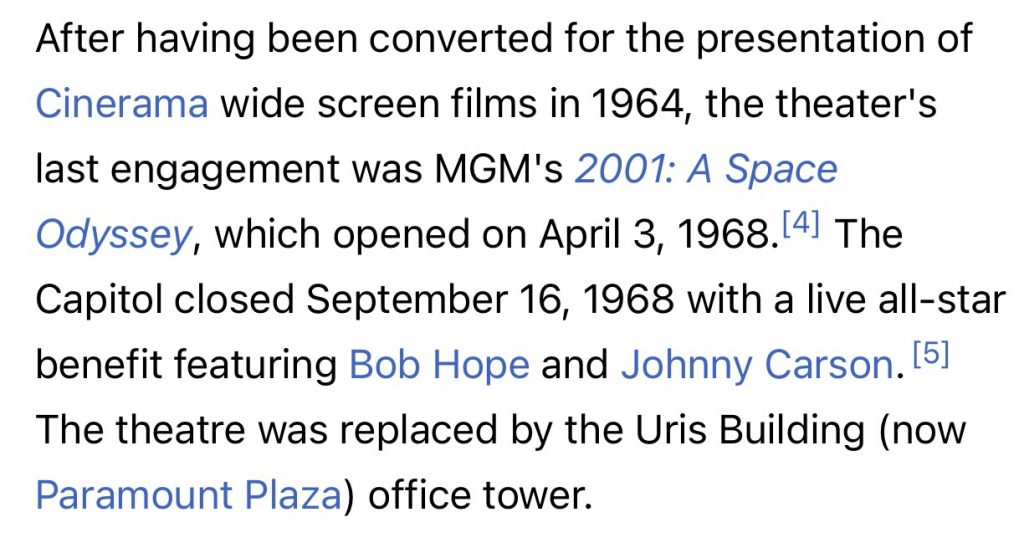
A bronze wall plaque inside Loews’ Lincoln Square (where I saw Celine Song’s PastLives in the late afternoon) commemorates the late Loews’ Capitol theatre (B’way at 50th or 51st). Built in 1919, the 5000-seater gave up the ghost in September 1968. For some reason the plaque says it was torn down in ‘67. 2001: A SpaceOdyssey opened at the Capitol on 4.3.68.
Harrison Ford is profiled in the current Esquire. Written by Ryan D’Agostino, the longish article is titled “Harrison Ford Has Stories to Tell.” About halfway through Ford articulates a feeling about the emotional, spiritual and even psychological nourishment that the best films provide.
It is this very nourishment factor, of course, that 95% of big-screen attractions don’t provide. Movie theatres used to be regarded by certain devotees (i.e., “film Catholics”) as churches, but over the last 15 or 20 years they’ve become gladiator arenas. They cater to animals.
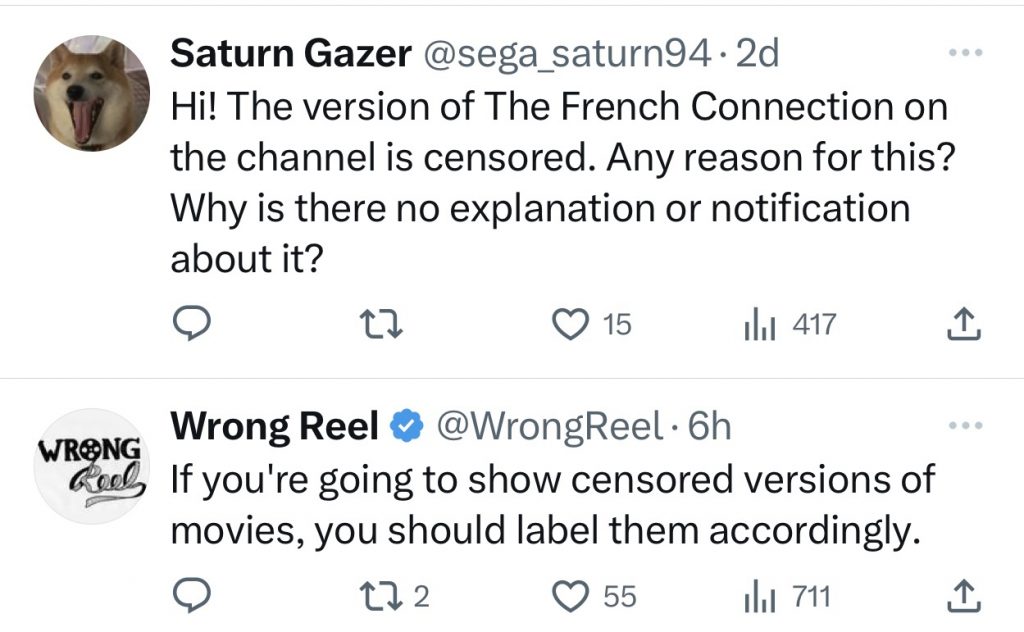
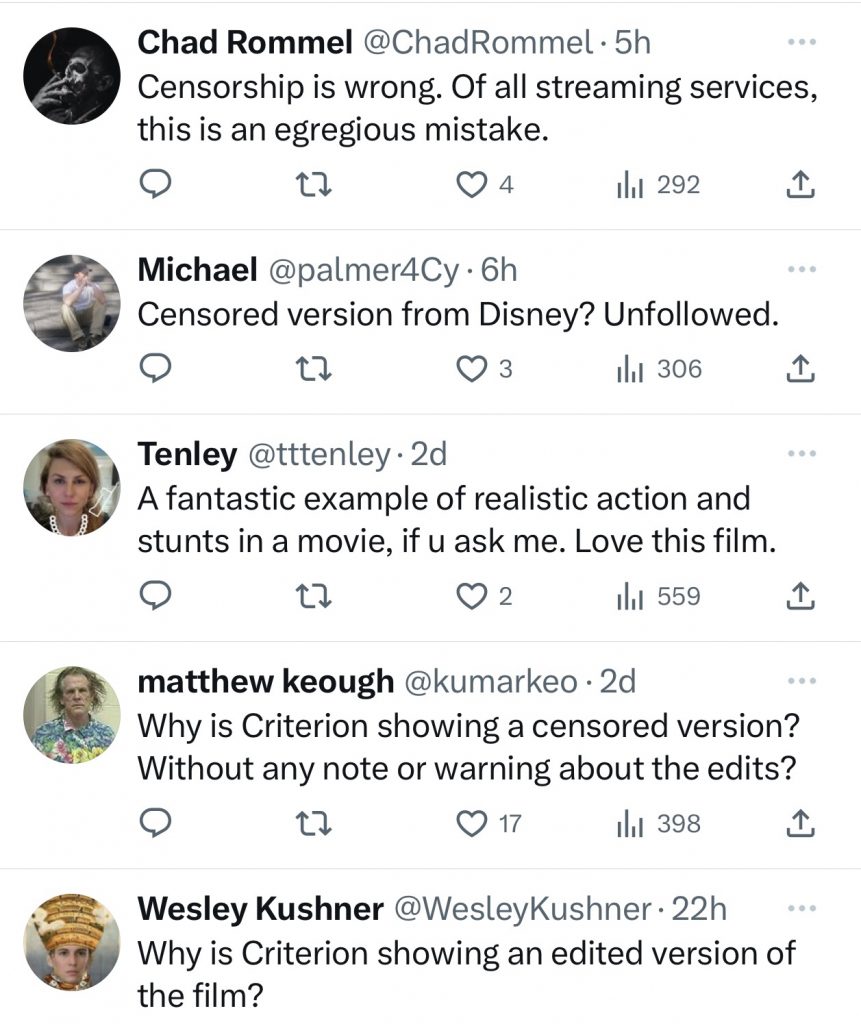
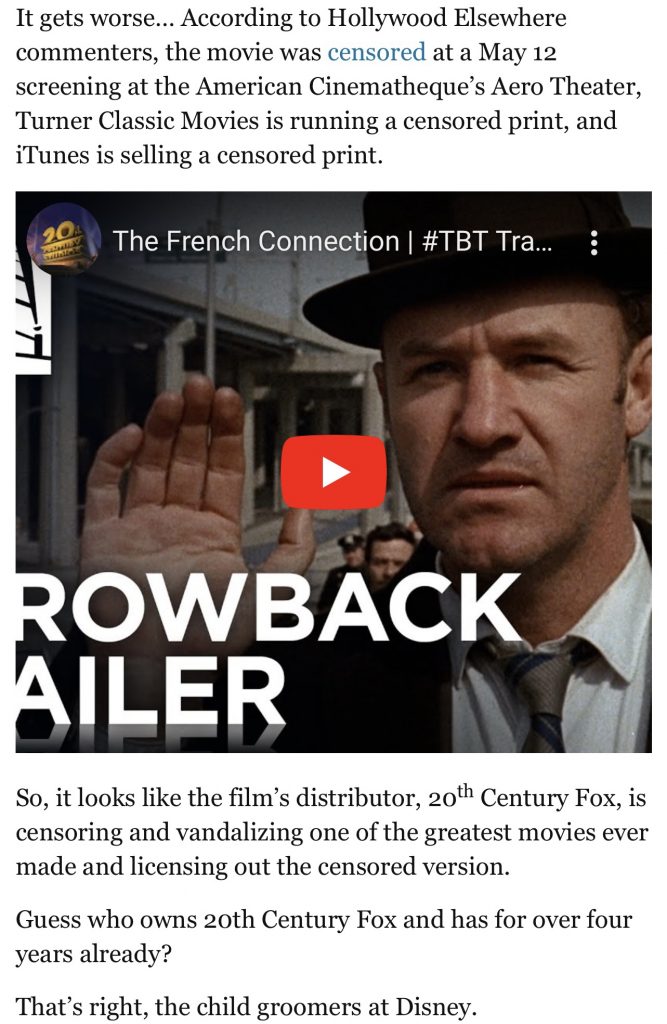
The censored version of the 1971 Oscar-winner is currently streaming all over (Criterion Channel, TCM, iTunes) and was shown at Santa Monica’s Aero theatre on 5.12.23.
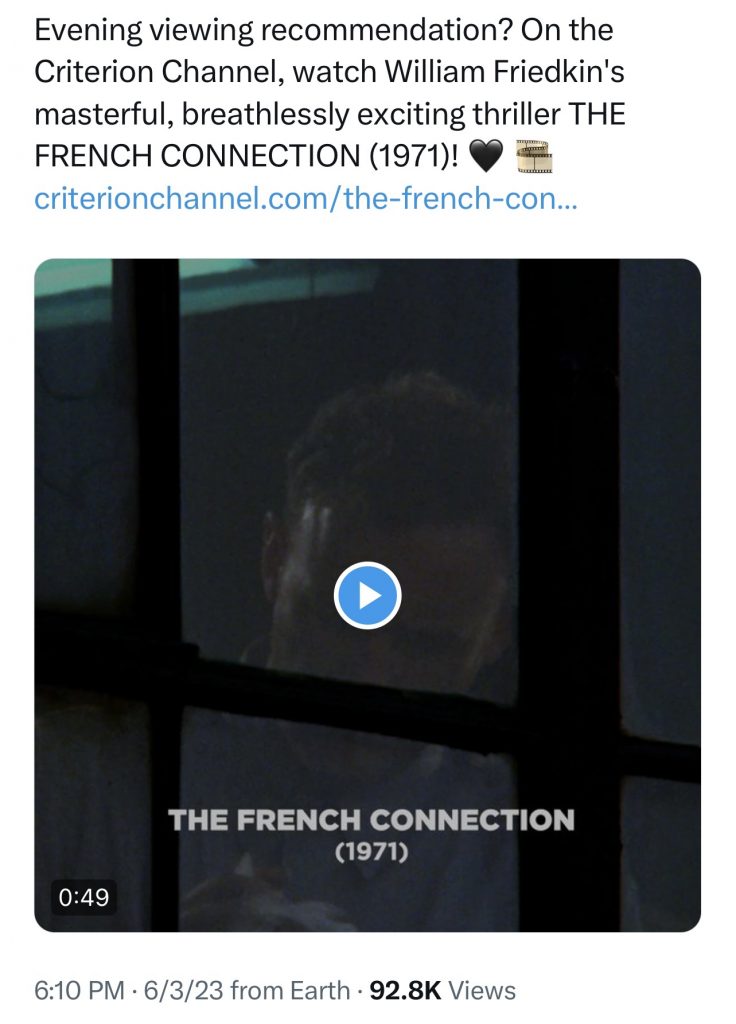
Three days ago (Saturday, 6.3) I posted about the censoring of a six-second sequence in William Freidkin’s TheFrenchConnection, apparently by rights holder Disney over concerns about Gene Hackman’s ruthless cop character, Popeye Doyle, using the N-word. The next day I refreshed and summarized same (6.4).
This is obviously a hugedeal, and yet no columnist or critic has said a DAMN THING since last Saturday. Are they afraid of complaining about the deleting of an ugly word in a classic film? Most likely, yeah. Are they holding themselves in check because they feel obliged to be “goodGermans” inthewokesenseofthatterm? You betcha.
There’s also the possibility that they don’t want to give me any credit for raising a stink, and that personal animus means more to them than calling out woke censorship as it affects what is arguably the finest urban-cop thriller ever made.
Until this morning (6.6), that is, when Breitbart’s John Nolte postedapieceaboutsame. Draw your own conclusions. Mine, as noted, is that others (including certain filmmakers) are too chicken to say anything. That or their pettiness knows no bounds.
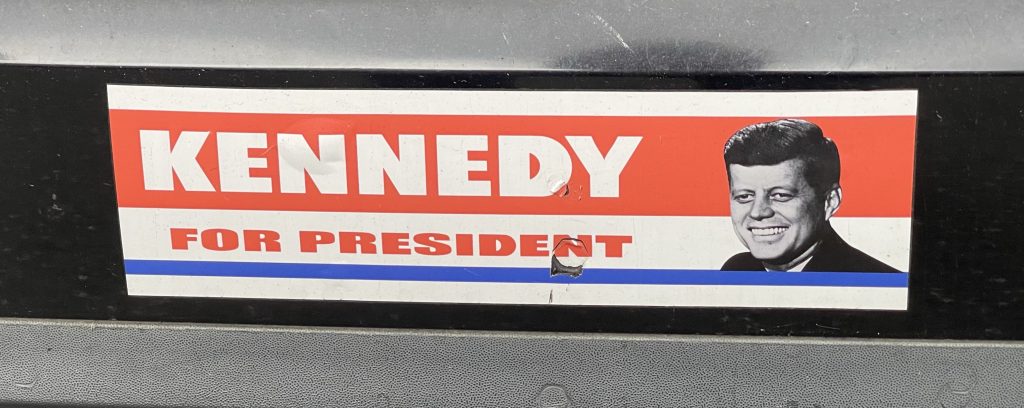
Am I the only driver in the tristate area who has this rear bumper sticker on his vehicle? I’ve been studying rear bumpers in New Jersey, Connecticut and New York State for over a year now, and I’m pretty sure it’s just me. I never saw a JFK bumper sticker in Los Angeles either.
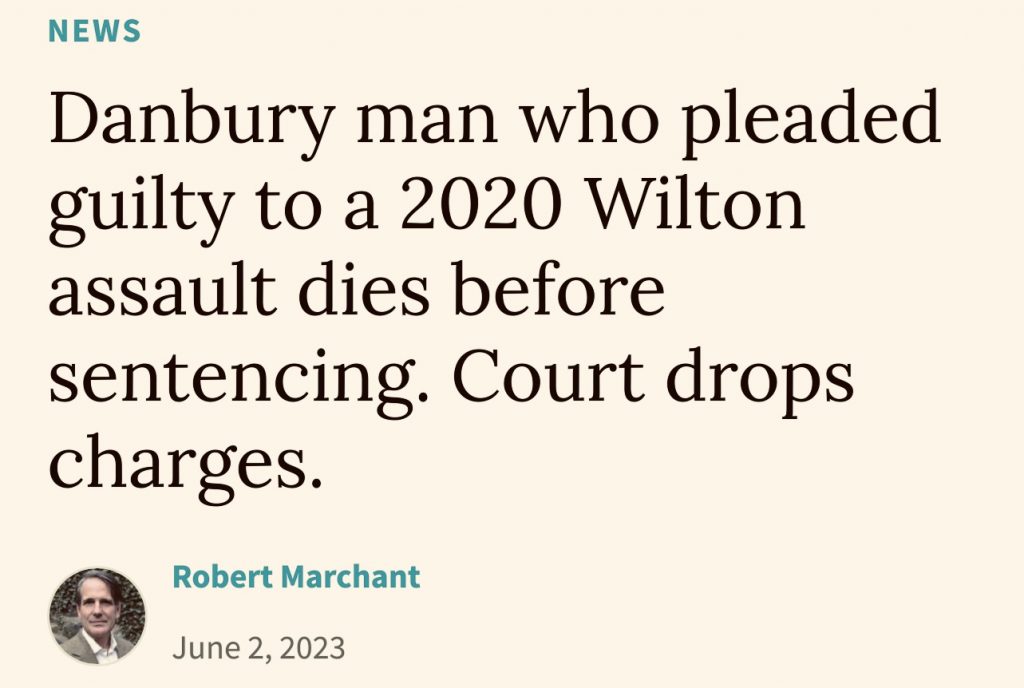
It’s possible, I suppose, that Danbury prosecutors could have refused to accept this situation and persisted in seeking appropriate punishment (i.e., stiff prison sentence, sizable fine) for the perpetrator in question, but at the end of the day he’d still be dead.