4.12, 8:55 pm, Genghis Cohen

4.12, 10:05 pm, Jones
4.12, 10:35 pm, Jones

 Jeffrey Wells
 “Saw Iron Man. Iron Man very good. Had nice phoner with Jeff Bridges (we talked a lot about Lloyd Bridges). Iron Man gonna be huge. Please don’t quote me.” — Top-drawer film critic writing from of a region outside New York and Los Angeles.
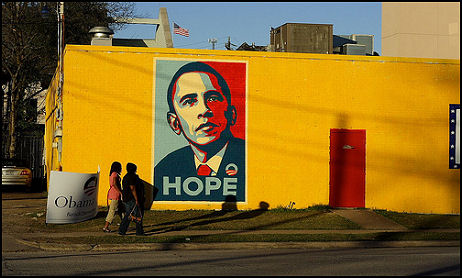
I’ve been listening to the media chattering class kvetch all day about Obama’s “working-class people are bitter” remarks. Half the time I love this country, half the time the way people think makes me ashamed and want to live elsewhere. The denial and stupidity levels in this country are staggering, breathtaking. The Clintoners are hounds from hell. If anything, Obama was putting it mildly, gently. And what he was doing was essentially saying the bitter are justified.
Obama is not only definitely going to win the Democratic nomination, but McCain is going to lose the November election. The reasons are simple, clear-cut, unavoidable and unsellable: (a) Bush III, (b) doesn’t know from economics, and (c) senior moments.
Thank God the winter doldrums are over. April has less than three weeks to go and then wham…May 1st, the acceleration into the Cannes Film Festival (which starts on May 14th), the beginning of the summer season and a new cavalcade of idiot movies that will drive everyone nuts by July. When are we going to hear something definitive about the Cannes lineup? By 4.25 or thereabouts?
I love Robert Downey, Jr. when he’s in his glib, smart-ass mode. Which is what…90%, 95% of the time? I’ve been hearing that Jon Favreau’s Iron Man (Paramount/Marvel, 5.2) will be huge, but now I’m convinced. If it plays on this level (admonishing the robot, etc.), I’m down with it on a trust basis. Sometimes I’m on things earlier than most; sometimes I’m late to the party. No word from Paramount about screenings yet. Why, I wonder?
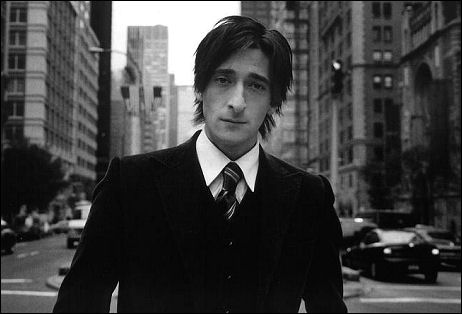
How have things gone for Adrien Brody since he won the Best Actor Oscar for his work in The Pianist in March ’03? He was the gifted 30ish actor with the striking honker who’d rebounded from career problems and had the macho swagger to soul-kiss Halle Berry on the Oscar stage, but since then…I dunno, you tell me. I greatly admire Brody and have no case against him, but I think it’s fair to use the term “treading water” to describe the last five years. If that.
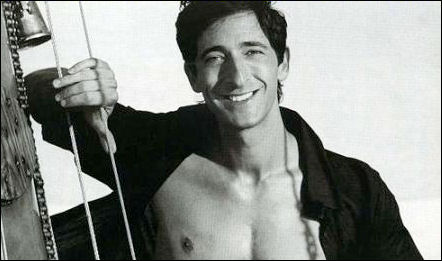
In ’04 he costarred in M. Night Shyamalan‘s The Village, and then he costarred in Peter Jackson‘s bloated, half-effective King Kong in ’05 — neither film did anything for him. Then came Hollywoodland in ’06 — a mild problem performance for Brody (playing a low-rent, not-brilliant shamus with family relationship issues) in a film that quickly deflated with the public. Then along came The Darjeeling Limited, which was aceptable in some people’s eyes but pretty much a “meh” as far as Brody’s Standard & Poors rating was concerned.
He’s got Sundance-y movies — Rian Johnson‘s The Brothers Bloom, Vincenzo Natali‘s Splice and Darnell Martin‘s Cadillac Records — set to appear over the next several months, and now he’s about to make a Dario Argento thriller called Giallo (an Italian term that refers to a genre of film and literature that is rooted in pulp, horror and erotica) with Emmanuelle Seigner and Elsa Pataky costarring.
Argento is highly regarded in dweeby, hipper-than-thou, Dave Kehr-like circles, but Average Joes regard him as an exploitation hound with style, if they regard him at all. What does it say about Brody that he’s now in bed with Argento? I think Argento is probably benefitting more than Brody from this association, or has Brody been downshifted to a level that makes it an even-steven thing? Put it this way — would the Adrien Brody who’d just won an Oscar five years ago agree to make Giallo?
Open letter to Barack Obama campaign manager David Plouffe: In 2004 Oscar-winning documentarian Errol Morris (Standard Operating Procedure, The Fog of War), working with MoveOn.org, created a brilliant series of TV ads about “real people” (mostly Republicans) who’d voted for George Bush in 2000, but had decided to vote for John Kerry in 2004. This year, there are many more Republicans talking about voting for Obama than were persuaded about Kerry four years ago. See where I’m going with this?
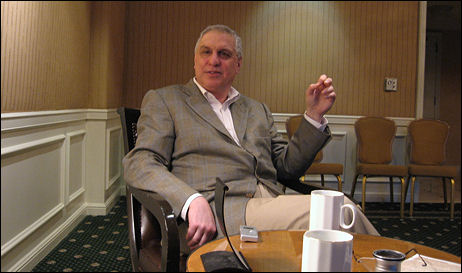
I’m frankly surprised that you guys, being as savvy as you are at political ads, haven’t yourselves contacted Morris about doing a series of spots about Obamacans, and this time actually put them on the air. Oh, you didn’t know? Morris’s ’04 spots never went on TV — they were viewable only at moveon.org, and later, of course, at errolmorris.com. Democrats!
Morris told me Thursday he’s definitely open to coming up with a series of Obama spots. Perhaps he’ll even devise something better than the Republican switch idea. (Or not.) You should make this happen either way. You’ve obviously flush enough to hire the Frank Lloyd Wright of documentarians, and getting a bunch of Obama-favoring non-liberal Average Joes to speak to Republicans, independents and Reagan Democrats could seriously influence things, especially with about half the independents leaning toward McCain right now.
“I’m not sure that’s it’s really a dramatic medium. I think it’s closer to poetry.” — from Errol Morris‘ 2002 short film about the wonder and mysticism of movies, and how they affect various people from different walks of life.
Prom Night is the weekend’s #1 film with an expected $25.1 million tally by Sunday night. David Ayer‘s Street Kings will be a distant second with $12.4 million. Roberty Luketic’s 21, hanging in there, will be third with a projected $9,973,000. Nim’s Island will be fourth with $8,568,000, and poor Leatherheads, down over 50% from last weekend’s opening haul, will earn about $5,819,000 for a fifth-place showing.
Dr. Seuss’s Horton Hears a Who will be sixth with $5,792,000. Smart People will be seventh with $4,816,000 and $3700 a print …not good. The Ruins will be eighth with $3,139,000. Superhero Movie! will come in ninth with $3,069,000 and Drillbit Taylor — people are still actually saying to each other, “Hey, let’s go see Drillbit Taylor” — wil do about $2,095,000.
I didn’t get any numbers for The Visitor but Young @ Heart, which opened in four theatres, will do about $46,000 at roughly $11.500 a print…not bad.
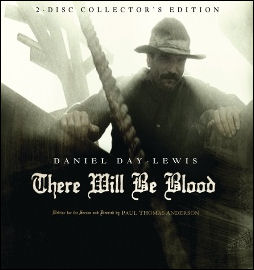
DVD Talk’s Randy Miller implied it, Defamer‘s Stu VanAirsdale said it bluntly and I’m seconding the motion — director Paul Thomas Anderson needs to come out of his effete rabbit hole and deliver a much more fan-friendly DVD of There Will Be Blood. Because the one that came out last Tuesday is niggardly and flat-out disdainful of the faithful.
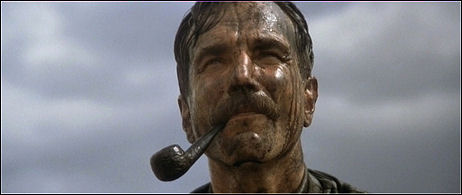
In his 4.8 review of the two-disc TWBB release, Miller wrote that Anderson “has gone on record stating that he no longer records audio commentaries, [which is] especially disappointing after the terrific tracks included with Boogie Nights and the like. With no direct participation from the cast and crew, these extras can’t help but feel a bit detached.”
In a rant piece that went up yesterday afternoon, VanAirsdale didn’t pussyfoot around.
“If you’re going to charge us for two discs, you’d better make the second one worth our dime,” he said in an open letter to Anderson. “Which gets us to this new two-disc ‘collector’s edition’ of There Will Be Blood, which Paramount Vantage released April 8th. Pardon us, but what the fuck is this?
“We’re sitting here with our favorite film of 2007, looking for your commentary. Nothing. We bust out the second disc. Photo clippings from your research? Three deleted scenes — only one of which features, you know, editing? And, finally, an exhumed silent short about the history of oil drilling? Really? $30 for two discs and all we get is a public-domain two-reeler from 1923?
“Look, PTA, we know it’s probably not your fault. There’s probably a commentary sitting on some hard drive in Vantage boss John Lesher‘s office waiting for the precise moment when ‘collectors’ will be ready to part ways with another $30 to hear it. There’s probably behind-the-scenes footage with Scott Rudin arriving on location in Marfa, Texas, overdressed and throwing a BlackBerry at the assistant whose weather forecast turned out 15 degrees cooler than the actual temperature.
“We know there are interviews with you, Day-Lewis, Paul Dano and Ciaran Hinds floating around. We know because it’s you, and we expect great things. Not…this.
“So get with the fucking program already, PTA, and stop jerking us around with the most stingy, shabby, half-assed miscarriage of DVD justice since Mulholland Drive.”
“I live in rural Pennsylvania and am surrounded by the people Obama just described. Shit, some of them are even my family members. What Obama said is 100% true. These people have nothing going for them so they hang on to religion and guns for dear life. Now should Obama have made that comment? Probably not. But the people he just alienated weren’t voting for him anyway. Or Hillary.” — HE reader “Redmond,” posted this morning.