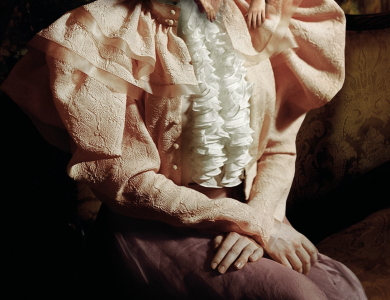
Kenneth was born on 8.12.98, and was therefore, believe it or not, 29 when this photo was taken.
Kenneth reportedly gave Astor a new Packard as a wedding gift. They soon moved to a home on Lookout Mountain in Laurel Canyon. Less than two years later he was dead.
Initially a writer, editor and supervisor at Fox Films Corporation, Kenneth began directing films for Fox in ’29 — a year or so after his marriage. On 1.2.30, the 31-year-old was traumatically killed while directing aerial scenes for Such Men Are Dangerous. He and nine others were instantly destroyed following a mid-air plane crash over the Pacific Ocean. The planes that smashed into each other were identical Stinson SM-1F Detroiters. Sun glare was listed as probable cause.
For our latest podcast, Jeff and Sasha discuss what the Best Picture horse race of 2024 might look like. It’s a long one but what the hell.
Sasha has been on an Oppenheimer research kick so that commanded much of the time, but we also flitted around with Killers of the Flower Moon, The Killer, Barbie, Maestro, The Holdovers, The Pot au Feu, Napoleon, Ferarri, The Zone of Interest, Past Lives, The Color Purple.
We recorded too early to discuss the outrageous French Connection censorship matter — that’ll be for next time. We also re-explained why Best Picture-wise, identity is pretty much all that matters today. There’s no accounting for taste among the low-rent, under-45 SAG-AFTRA crowd.
Here I am on a Sunday morning, sipping coffee and feeling glum as hell about the films of Joel and Ethan Coen no longer being part of our world. They haven’t been, really, since Inside Llewyn Davis, the last bona fide Coen Bros. flick (low key, early ’60s folkie vibes, slurping cereal milk, Schrodinger’s cat). It opened almost exactly a decade ago (May ’13) in Cannes.
As we speak the only Coen flick on the horizon is Ethan’s Drive-Away Dolls (Focus, 9.23), a lesbian road comedy with Margaret Qualley, Geraldine Viswanathan, Beanie Feldstein, Pedro Pascal (again!), Colman Domingo, Bill Camp and Matt Damon. Even irreverent Ethan is following orders from the wokester commandants.
The Coens’ last joint effort was The Ballad of Buster Scruggs (’18), an anthology film for Netflix. My view is that Scruggs didn’t count because it wasn’t really a single-narrative “Coen Bros. film” that opened in theatres. Within that realm, Joel and Ethan have actually been M.I.A. since Hail, Caesar!, which came out in 2016 and was a bit of a disappointment. It was fine (Josh Brolin was excellent) but it also felt incomplete, plus Jen Yamato thought it was too white.
The Coens have always conveyed a sly, darkly humorous contempt for American culture, and one way or another they’ve always served that shit on a plate. Whenever they delivered a dark-funny-perverse scene, which The Big Lebowski and No Country For Old Men are chock the fuck full of, it was heaven. I miss those scenes. My life feels incomplete without them.
I “liked” but didn’t love True Grit (’10) all that much. It was basically about Jeff Burly Bridges going “shnawwhhhhr-rawwwhhrr-rawwrrluurrllllh.” It certainly wasn’t an elegant, blue-ribbon, balls-to-the-wall, ars gratia artis Coen pic — it was a well-written, slow-moving western with serious authenticity, noteworthy camerawork, tip-top production design and, okay, a few noteworthy scenes.
So let’s just call the last decade or so a difficult, in-and-out, up-and-down saga for the boys, but at the same time acknowledge that the Coens at least enjoyed two golden periods.
The first golden period was a four-film run…actually make that a three film run — Blood Simple (’84), Raising Arizona (’87), Miller’s Crossing (’90) and Barton Fink (’91). The Hudsucker Proxy (’94) was an outlier…a weird, half-successful, half-sputtering in-betweener that didn’t quite work and nobody really liked. Truth be told I never liked Raising Arizona either so let’s call it a two-film run.
The second golden period (’96 to ’09) was what earned them a place in film history — a 13-year, nine-film run that included Fargo (’96), The Big Lebowski (’98), O Brother, Where Art Thou? (’00), The Man Who Wasn’t There (’01), Intolerable Cruelty (’03), The Ladykillers (’04), No Country for Old Men (’07), Burn After Reading (’08) and A Serious Man (’09).
Earlier today HE commenter Benjamin Wayne reported that a racially offensive passage in William Friedkin‘s The French Connection (one that contains two ethnic slurs, both spoken by Gene Hackman‘s “Popeye Doyle”) has been stricken from the Criterion Channel’s version of this 1971 classic.
I went on the Criterion Channel to verify and Wayne is correct — the passage is missing.
Click here or watch below. The excerpt starts at the 52-second mark.
It’s a bit between Doyle and Roy Scheider‘s “Cloudy”, who’s nursing a wounded arm after being slashed by a drug dealer. Doyle: “You dumb guinea.” Cloudy: “How the hell did I know he had a knife?” Doyle: “Never trust a [ethnic slur].” Cloudy: “He coulda been white.” Doyle: “Never trust anyone.”
I’m sorry but cutting out scenes that are racially insensitive is a slippery slope. Once you start editing to spare sensitive ears where do you stop?
If and when The Criterion Channel ever shows Mel Brooks‘ Blazing Saddles (’74), will they edit out all the N-words? (I think the N-word is heard at least five or six times in the hilarious “the sheriff is near” scene.) If you watch Blazing Saddles on Max you’ll be treated to Jacqueline Stewart‘s introductory remarks, which acknowledge Brooks’ satirical intent while attempting to give context to the N-word usage. Why doesn’t the Criterion Channel do the same for The French Connection?
Excepting the scenes with Fernando Rey‘s elegant “Charnier” character, The French Connection has always been a coarse and crude film when focusing upon Doyle and Cloudy, which is at least 80% or 85% of the time. Doyle is a pushy and obstinate lead character who not only uses the N-word (once) but racially harasses the drug dealer who stabbed Cloudy by asking him if he’s ever picked his feet in Poughkeepsie. (Why not cut that scene out also?) Doyle’s barking, pugnacious personality represents the essence of Friedkin’s film, which hits hard in scene after scene and fairly flaunts its lack of sensitivity.
It’s one thing to warn viewers in advance about offensive or insensitive racial content, but eliminating entire passages is crude and uncool, especially in the case of a Best Picture Oscar winner.
“Since the Academy opened the gates and invited many younger or international members in, things have changed dramatically in terms of what they consider ‘important’ [qualifiers for the Best Picture Oscar].
“It’s hard to argue against the idea that identity matters more than anything else, and identity vis a vis the new reversed hierarchy of the internet. What does that mean? Well, the old hierarchy, driven by the free market, good reviews and the ticket-buying majority, was mostly controlled by THE PATRIARCHY. Specifically, the WHITE MALE PATRIARCHY. Even more specifically, the WHITE, MALE, HETERONORMATIVE, CIS-GENDERED PATRIARCHY.
“The internet mostly reversed that hierarchy as GenZ, birthed from the loins of Tumblr circa 2012 and helicopter parents like me, came of age. What that means is that they feel good when anyone but the WHITE, MALE, HETERONORMATIVE, CIS-GENDERED PATRIARCHY wins. A woman, a woman of color, a transgender person, someone who is disabled. And the list keeps getting longer.
“Any film or filmmaker representing any view of life that doesn’t represent the view of the American white majority — that’s what they want.
“I know this bothers people when I talk about it, but for them it’s really all about inclusivity and progress. It isn’t just virtue signaling but something deeply felt, a religion of sorts, as we saw when Everything Everywhere All At Once won everything everywhere all at once. It was a kind of religious rapture. So when people are deciding what movie they think should win, they are judging it from inside that utopian bubble, as opposed to how it used to be decided: box office, quality, alpha male prowess and who was King for a Day.” — posted by Sasha Stone on Friday, 6.2.
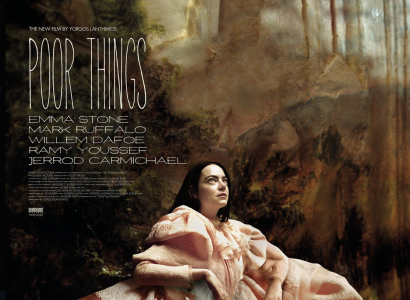
Maybe But I Kinda Doubt it: Barbie — d: Greta Gerwig; Saltburn — d: Emerald Fennell; The Killer, d: David Fincher; Poor Things — Yorgos Lanthimos; Next Goal Wins — d: Taika Waititi; Pain Hustlers — d: David Yates; White Bird — d: Marc Forster; Leave the World Behind — d: Sam Esmail; Dune: Part Two — d: Denis Villeneuve.
A three-minute informercial about Chris Nolan‘s Oppenheimer (Universal, 7.21) and especially about the technical grandeur of 70mm IMAX, addressing the technical immersives and whatnot, and they can’t specifically state which aspect ratio Oppenheimer will be shown in — the preferred 1.43:1 or the less preferred 1.78:1 or 1.90:1?
Hardcore 70mm IMAX has to be projected at 1.43:1…period. 1.43 is taller than fuck, and not that far away from classic “HE boxy” (i.e., 1.37 or 1.33). Trust me — it’s the only way to go.
1.78:1 or 1.90:1, which is how a significant portion of Nolan’s Dunkirk was presented, doesn’t get it.
How much of Dunkirk was presented within 1.43? Wikipage: “The film [used] both IMAX 65 mm and 65 mm large format film stock in Panavision System 65, with more IMAX footage than in any of Nolan’s previous films — an estimated 75%. The sparsity of dialogue made it possible for IMAX cameras, which are notoriously noisy, to be used as the primary format.”
I know that Dunkirk switches back and forth a lot between 1.90 and 1.43, and that my basic reaction was “why wasn’t it an all-IMAX thing?” I don’t want any of that shit when I see Oppenheimer — I want a pure 1.43 experience, start to finish.
The 1.90:1 aspect ratio, of course, is right next to 2:1, which Vittorio Storaro was a big supporter of (he called it Univisium). Fine, but 1.90 is not IMAX — not really.
Casting-wise, blackwashing has been a thing since the woke dambreak of ’16 or ’17. For decades Hollywood adhered to whitewash casting, and now that European paleface culture has been identified and discredited as the root of all social evils, the tables have turned — simple enough.
It’s a deal, okay, but a relatively small one. Not worth anyone getting into a twist.
True, Cressida Crowell‘s original children’s books were set in a Scandinavian Viking world, which for centuries has been a white-ass culture. (Just ask Kirk Douglas.) Ditto the 2010 Dreamworks animated version — white-ass Viking men and women from top to bottom. But the new social rules (including the doctrine of presentism) require that white-culture-based stories be reassessed and updated.
Casting directors understand that it’s politically safer to roll with diverse or multicultural mindsets, even if casting an actress of color as the heroine of a centuries-old Scandinavian saga defies any common understanding of Viking history.
Diminishing the visual presence of whiteness by going multicultural has been happening for six or seven years now (ratification of the Academy’s inclusion standards made it official in 2020). Politically speaking it boils down to this: if you don’t want industry people to give the side-eye, you need to play along.
Plus one other thing: Nico Parker was very good as the daughter of Pedro Pascal‘s Joel in HBO’s The Last Of Us.
Peter Yates The Friends of Eddie Coyle (’73), the Boston crime noir which HE has been praising for many years, will screen at Santa Monica’s Aero theatre on Sunday, June 4th. Pic opened a little less than 50 years ago — 6.26.73.
My introductory remark is that the jacket art for Dave Grusin’s soundtrack album is misleading. A guy hanging one-handed from a gun barrel obviously alludes to a cliffhanger thriller of some sort. Eddie Coyle is emphatically not that. It’s a sullen, downbeat drama about cops, bad guys, wise guys, unlucky guys and all kinds of betrayal and mistrust.
Based on the George V. Higgins novel, it’s about Eddie Coyle (Robert Mitchum), an aging, bone-weary, lower-level weapons dealer who’s trying to make ends meet. Alas, Coyle is also looking at a long prison stretch for driving a truck with stolen goods. His only way out, he gradually realizes, is to rat out some of his “friends.”
One of the guys he’s selling to is Jimmy Scalise (Alex Rocco), the head of a gang that’s pulling off a series of bank robberies on the North Shore.
“To the graduating class of 2023, I have 59 words to share: Every new generation is appropriately and admirably intolerant of ugly currents in the human condition and concurrently determined to enhance, elevate or otherwise improve the quality of life or die trying, but are you guys aware right now of how deeply despised most of you are?…generationally speaking, at so young an age? By the vast majority of Americans, I mean, and not just your red-state types but damn near everyone.
“Your image is basically that of a bunch of entitled, judgmental, overly sensitive, whiny-ass little shits on social media, and this is why many of us hate your guts.
“Given, I mean, the apparent determination of a decent-sized portion of your graduating class to subject this once reasonably half-liberal, half-center-right country to a furthering of woke Stalinist terror….to keep the revival of China’s Great Cultural Revolution chugging along like a great 19th Century steam engine.
“You guys really need to stand up and take a bow…seriously.
“You are the first generation that has really and fully embraced a commitment to gulagism…to social isolation, humiliation and career suffocation for the wrong people.
“A 100% commitment to (a) “Are you now or have you ever been a person who doesn’t get it and therefore needs to have the shit beaten out of him/her on Twitter?”, (b) “Are you now or have you ever been disturbingly non-progressive, in some way out-of-step or guilty of insufficient understanding of a pressing social issue or agenda?”, (c) “Are you now or have you ever been some kind of closet discriminator…a person whose views are (or once were) politically retrograde, politically insensitive or in any way dismissive of any socially marginalized or discriminated-upon group?”
“I mean, you guys have a really steep hill in front of you. Democracy’s crumbling, truth is up for grabs, the planet’s trying to kill us and loneliness is driving everyone insane.
“You’re about to enter a hellscape where you will have to fight for every scrap of your humanity and dignity, and you do not have a choice to be anything but tyrannical and punitive to an extreme. Just ask Nikolai Lenin — he knew how to play tough cards. These are the times you’re living in right now, and many of us hope they’re bringing serious pain into your lives right now.
“It’s been truly amazing to see how your generation has rebelled against every bad habit of every generation that came before, reaching all the way back to the WWII ‘greatest generation’. Everything that the old farts have let calcify, you have kicked against and demolished. You’ve rejected that whole 24/7, no-days-off grind. You’ve rejected apathy. You’ve rejected ignoring your mental health because ‘you’ve gotta muscle through it no matter what’. You’ve rejected alienation and cruelty. You’ve rejected not trying to include everyone. And you’ve rejected not looking out for each other.
“Which is why millions really and truly depise you as we speak. Hell, I hate you from a certain perspective. Because your radical purity is truly awful and oppressive and unhinged.
“I can’t wait for you guys to get older and gradually put aside your specious bullshit. I can’t wait for your rigid ethical standards to gradually slacken and become compromised. I can’t wait for you to develop health issues.”
I identify as cisgender, fine, but I don’t think I want to identify as “cis” any more. The cisgender community (those who are not LGBTQ, trans, fluid, gender-nonconforming, whatever) represents around 95% of the populace, right? A few years ago the five-percenters decided that the 95-percenters have to identify as “cis”, which sounds like a blister or a boil. Who gave them this authority?
No offense but instead of “cis” I’d rather be known as an AUSG — an average, unassuming, straight grumpy guy who pops Cialis from time to time. What’s wrong with that?