They’re Remaking It Six Years Later?

Deadline‘s Mike Fleming reported earlier today that Catherine Hardwicke may direct a Sony-financed remake of Gerardo Naranjo‘s Miss Bala, which I went nuts over when I saw it at the 2011 Cannes Film Festival. Gina Rodriguez (the CW’s Jane The Virgin) will play the beauty contestant (Stephanie Sigman in Naranjo’s version) who gets dragged into the grotesque intrigues of a Mexican drug gang.

One, why did Hardwicke and Hollywood wait for six years to remake this thing? If a foreign film is adaptable for the U.S. market, producers knows this within days of its first festival screening and are usually all over it, and Miss Bala was highly praised, nominated for Best Foreign Language Feature. Two, Hardwicke is probably going to make it into something fairly different from Naranjo’s drug-dealer melodrama, which basically played like an early ’60s Michelangelo Antonioni film. And three, the Antonioni treatment is why Miss Bala felt like such a knockout. Remove the arthouse element and you just have a kidnapping action drama.

HE tweet from September 2011: “Naranjo has totally ignored the chaotic action aesthetic of Michael Bay and his acolytes, and delivered an action thriller with a truly elegant visual style. Long shots and almost no cut-cut-cut-cutting.”
Aero’s 2001 70mm Scam

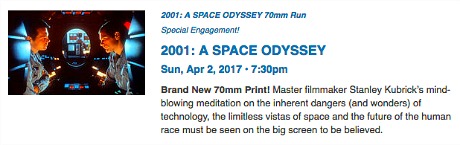
Last evening the SRO and I were heading east on Montana Avenue when I noticed that a new 70mm print of 2001: A Space Odyssey was playing at the Aero. It was 7:10 pm, or 20 minutes before the show would begin. I excitedly talked her into catching this 1968 classic, as she’d never seen it. So we bought our tickets, got our refreshments, sat down in the third row…and the film looked like dogshit.

Dark, muddy, no focus or sharpness to speak of, all of those exquisite values covered in shadow — a complete rip-off of the patrons who paid $15 a pop.

They were presumably showing the same freshly created 70mm print that’s been playing at the American Cinematheque Egyptian in Hollywood, which means that it probably looked like shit there also. It’s an absolute scandal that that no one’s said anything. All of these 2001 fans, paying crowd after paying crowd, watching one of the inkiest, most under-lighted prints I’ve ever seen, and they’ve all just sat there like sheep.

I went into the lobby and told the staff that the print, or at the very least the projection, was bullshit. “My 2001 Bluray looks glorious on my 65″ Sony 4K, but what you’re showing doesn’t look anywhere near as good,” I said. They reacted like cigar-store Indians. Shocked, fearful.

The manager appeared. “Have you ever seen the 2001 Bluray on a decent high-def screen?” I asked him. “Yeah,” he said. “Well, the Bluray is how it should look — what you’re showing looks like shit.” Manager: “You can’t expect a 70mm print to look like a Bluray…it’s a different thing. It’s celluloid.” Me: “Oh, yeah? I saw a clean 70mm 2001 print at the old Plitt twinplex in Century City back in the mid ’80s, and it looked beautiful. Your print looks like crap.” Manager: “You’re the first person to say anything like this.” Me: “Oh, well, that changes everything! Nobody else complained, you say? That must mean I’m full of shit then!”

Read more

God’s Lonely Man

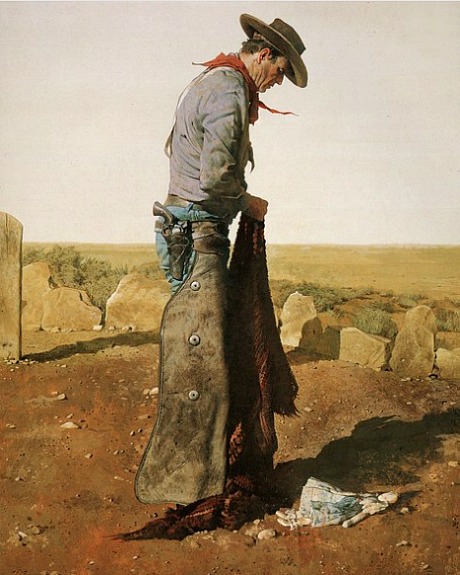
I’m reading Michael Callahan‘s Vanity Fair profile of illustrator Robert McGinnis, “The Man Behind History’s Most Iconic Movie Posters, From Breakfast at Tiffany’s to James Bond.” I know the realm — all those ’50s and ’60s-era illustrations of glammy, cartoonishly rail-thin women, often posed with leading men in tuxedos and suede pumps. But the illustration that got me was “Ethan,” which McGinnis painted 37 years ago. McGinnis’s subjects, curiously, are always slimmer and taller. That’s his trademark unreality. The Duke, 48 and bulky when he made The Searchers, is down to his Big Trail weight.

Greatest Female Villains

What female villains have you completely believed in, and why? I could go on and on about my faves, but the key element is that you believed they weren’t just “playing” villainy but living in caves of their own choosing or creation.

In no particular order: Barbara Stanwyck‘s Phyllis Dietrichson in Double Indemnity, Meryl Streep‘s Miranda Priestly in The Devil Wears Prada, Jane Greer‘s Kathy Moffet in Out of the Past, Margaret Hamilton‘s Wicked Witch of the West in The Wizard of Oz, Kathy Bates‘ Annie Wilkes in Misery, Louise Fletcher‘s Nurse Ratched in One Flew Over The Cuckoo’s Nest, Sharon Stone‘s Catherine Trammell in Basic Instinct, Bette Davis‘s Baby Jane Hudson in Whatever Happened To Baby Jane?, etc.

I didn’t believe in Margot Robbie‘s Harley Quinn (Suicide Squad) at all. Her performance was all about extreme-playdough mannerisms, posturing, makeup and wardrobe. All I believed was that Robbie had been hired because she’s hot.

I’ll tell you who I believed in 110% — Glenn Close in Fatal Attraction. The capsule definition of Alex Forrest was that of a manic, lion-haired feminist banshee who tried to leverage a single night of mad, passionate sex with Michael Douglas into a knife or a bomb that would detonate his marriage. But I didn’t really believe in that — that’s what the research-screening audiences saw. What I believed in was Alex’s instability and emotional desperation, and that made her scary. The scariest thing she said was “I won’t be ignored, Dan!”

Read more

Strelnikov

I watched Dr. Zhivago last night for the sake of the SRO, who had only vague memories of it. It had been a few years since my last viewing. Released in late ’65 but seen by most audiences the following year, it will never be more than an eye-filling, handsomely composed soap opera, but it works because of Maurice Jarre‘s haunting score along with David Lean‘s incisive editing style.

My favorite character is Klaus Kinski‘s anarchist on the train, but the most interesting developed character is Tom Courtenay‘s Pasha Antipov (aka “Strelnikov”) and he has…what, five or six scenes? This chat with Yuri Zhivago (Omar Sharif) is his best moment:

In the film Rod Steiger‘s Komarovsky tells Yuri that Strelnikov, on the run from the Bolsheviks, was captured five miles from Yuriatin while apparently trying to find Lara, his abandoned wife. He refused to answer to any name but Pasha, and then committed suicide en route to his own execution.

In Boris Pasternak’s 1957 book, Pasha finds only Yuri when he arrives in Yuriatin. From a Wikidot summary: “Yuri and Pasha are both walking dead men, having lost what was most vital to them somewhere along the way. They are Russians though, so they drink and talk hours into the night. Then Yuri goes to bed. Pasha takes a walk, and shoots himself in the head. Yuri finds his corpse in the morning.”

Read more

Hungarian Genius

We’re two weeks away from the 100th anniversary of the birth of Hungarian-born composer Miklos Rosza, who is currently my favorite classical-styled movie-score composer. I change my allegiance all the time — Bernard Herrmann, Maurice Jarre, Max Steiner, Franz Waxman — but I always come back to Rosza.

A short list of Rozsa’s classic scores — Double Indemnity, Spellbound, The Killers (one of the best noir scores ever), Brute Force, The Naked City, Madame Bovary, Quo Vadis, Ivanhoe, Knights of the Round Table, Lust for Life, Ben-Hur, King of Kings, El Cid. Rosza’s scores performed the required duties (augmenting the moods and themes, intensifying the emotion) but they work on their own terms.

I posted the following about Rosza’s King of Kings score on 12.21.10: “Rosza sometimes let his costume-epic scores become slightly over-heated, but when orgiastic, big-screen, reach-for-the-heavens emotion was called for, no one did it better. He may have been first and foremost a craftsman, but Rosza really had soul.

“Listen to the overture and main title music of King of Kings, and all kinds of haunting associations and recollections about the life of Yeshua and his New Testament teachings (or at the least, grandiose Hollywood movies about same) start swirling around in your head. And then watch that Nicholas Ray’s stiff, strangely constipated film (which Rosza described in his autobiography as ‘nonsensical Biblical ghoulash’) and it’s obvious that Rosza came closer to capturing the spiritual essence of Christ’s story better than anyone else on the team (Ray, screenwriter Phillip Yordan, producer Samuel Bronston).”

Read more

Vanished

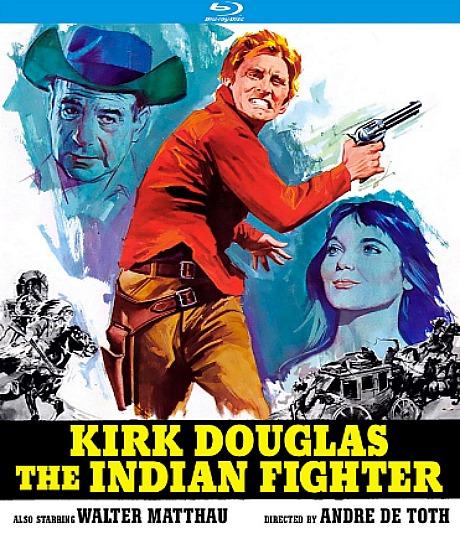
Kino Lorber is releasing a Bluray of Andre de Toth‘s The Indian Fighter on 5.9.17. Excerpt from from “Dust to Dust,” posted on 5.30.14. “Have you ever seen The Indian Fighter? I didn’t think so. Have you ever heard of it? There’s no reason you should have. A 1955 Kirk Douglas mediocrity, co-written by Ben Hecht, opened at the Mayfair (later the DeMille) on 12.21.55. Not awful but generic. Why should succeeding generations pay the slightest attention to a film made on auto-pilot? By people who wanted only a commercial success and not much else? Don’t kid yourself — the fate of The Indian Fighter awaits 80% to 90% of the films that have opened in the 21st Century. Deep down producers and directors know it’s not just a matter of dollars and cents, which is why some occasionally try to make films that sink into people’s souls on some level. Because they want future generations (including their own descendants) to speak about them with affection or at least respect. It’s about legacy.”

One More Time: Harris vs. McBride re John Ford’s Five Came Back Depiction

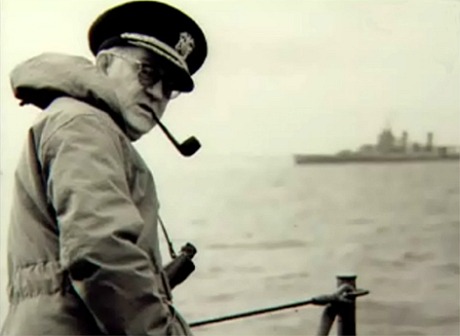
Laurent Bouzereau and Mark Harris‘s Five Came Back, a brilliant three-hour doc about the transformative experiences of five name-brand Hollywood directors (John Ford, Frank Capra, William Wyler, George Stevens and John Huston) during World War II, premiered last night on Netflix. Please see it, and if at all possible in a single sitting. Here’s my 3.22 review.

That said, I’m obliged to re-irrigate a dispute between Harris, author of the same-titled 2014 book, and Ford biographer Joseph McBride about the doc’s claim that Ford’s service as a WWII documentarian-propagandist basically ended after he went on a three-day bender following the D-Day invasion.

In a 3.23 HE piece called “Ford’s Bravery, Drinking, Sentimentality,” McBride articulated his dispute with Harris based on Harris’ book vs. what McBride had reported in “Searching for John Ford,” a respected 2001 biography.

But yesterday McBride doubled down and then some after seeing the Netflix series [see below] and taking it all in. I naturally passed his complaint along to Harris. Harris came back this morning with a stern and specific reply [also below].

Read more

Best 9/11 Whoop-Ass Movie Ever Made

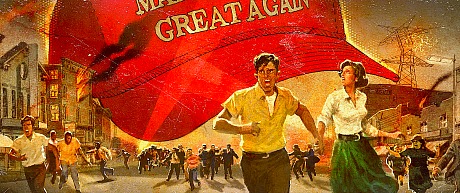
The first five paragraphs of “The Perverse Thrill of Chaotic Times“, a 3.25 N.Y. Times piece by Teddy Wayne, offer an uncannily accurate capturing of how Type-A specimens have been feeling deep down since Donald Trump‘s election. I fell into it like a guy on a bungee cord. Yes, exactly…we’re in a monster movie, The Beast From 20,000 Fathoms, and while I’m 70% freaked, I’m also 30% jazzed.

But the thing that really turned my head arrived about 14 paragraphs in. After noting that “political journalism — itself under attack by the president — hasn’t been this ardent since Sept. 11,” Wayne reminds that the World Trade Center attacks “ushered in the era of the superhero, with desire for American might to overcome evil projected onto a single figure.”

This reminded me of something I said almost exactly 13 years ago about Tony Scott‘s Man on Fire, in my mind the best rightwing superhero whoop-ass movie ever. Denzel Washington‘s Creasy made the bad guys (i.e., Mexican cartel kidnappers) howl and sweat and scream before killing them like a meter maid hands out a parking ticket, water off a duck’s ass.

In my mind (and in Scott’s, I’m thinking) the cartel guys were stand-ins for the terrorist “other.” Everyone understood that, I think, and millions relished the feeling of payback. No mercy, no quarter. No CG superhero movie has ever made me feel this way. I was in the men’s room adjacent to the Zanuck theatre after my first Man on Fire viewing, and guys at the urinals were going “whoa, fucking Denzel…he doesn’t fuck around…Jesus!”

Man on Fire opened on 4.23.04 — two and a half years after 9.11. I don’t think I’ve ever succumbed quite as fully to a film espousing this kind of rightwing, scorched-earth vengeance. No, I don’t feel good about the likelihood that Steve Bannon and the Breitbart guys probably like Man on Fire as much as I do, but I can’t deny that I feel and endorse what it’s putting out. Yes, still.

Read more

Minor Hitchcock

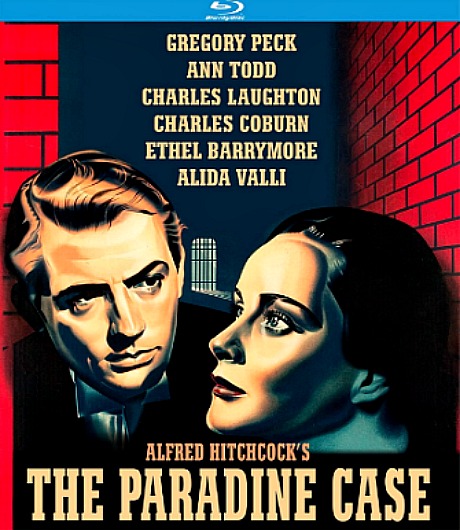
Kino Lorber’s Bluray of Alfred Hitchcock’s The Paradine Case (’47) pops on 5.30. Please understand this is a sub-par Hitchcock from his post-Notorious, pre-Strangers on a Train phase, which was largely about treading water. He finally got the old pizazz back with Strangers. Stage Fright and Under Capricorn were also made during this fallow period, which lasted four and 1/2 years, give or take.

I’m tempted anyway, of course. I’ve never seen Paradine in 1080p — only once or twice via standard-def cable. I’ll sit through just about any flush big-studio ’40s film if it looks good enough. Hitchcock’s dp this time was Lee GarmesDetective Story (’51), The Lusty Men (’52), The Desperate Hours (’55), and Howard HawksLand of the Pharaohs (’55).

The Paradine Case is a straightforward portrait of obsession and downfall,” I wrote on 12.16.15. “It’s a carefully measured, decorous, stiff-necked drama about a married, middle-aged attorney (a too-young Gregory Peck) who all but destroys himself when he falls in love with a femme fatale client (Alida Valli) accused of murdering her husband.

“A foolish love affair is one thing, but Peck’s exists entirely in his head as Valli isn’t the least bit interested and in fact is in love with Louis Jordan, whom she was seeing before her husband’s death. Not much of an entry point for a typical moviegoer, and not a lot to savor.

“It’s essentially a romantic triangle piece (Peck, Valli, Jordan) but you can’t identify or even sympathize with Peck as Valli is playing an ice-cold monster. But I’ve always respected the tragic scheme of it. By the second-to-last scene Peck’s humiliation is complete and absolute.”

Read more

To Those Who Wait

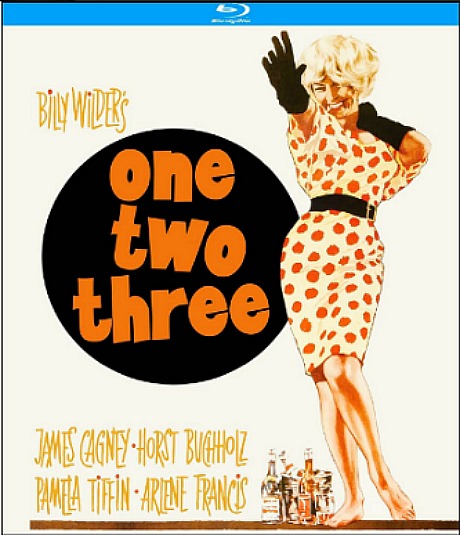
Last fall a decent-looking high-def version of Billy Wilder‘s One, Two, Three — one of my all-time favorite comfort movies — disappeared from Amazon streaming. After noting this on 11.4.16 I wrote that a Bluray version will probably hit the market before long. A day or two ago Kino Lorber Classics announced the release of a One, Two, Three Bluray on 5.30.17, which of course I immediately bought.

Read more

Ford Again

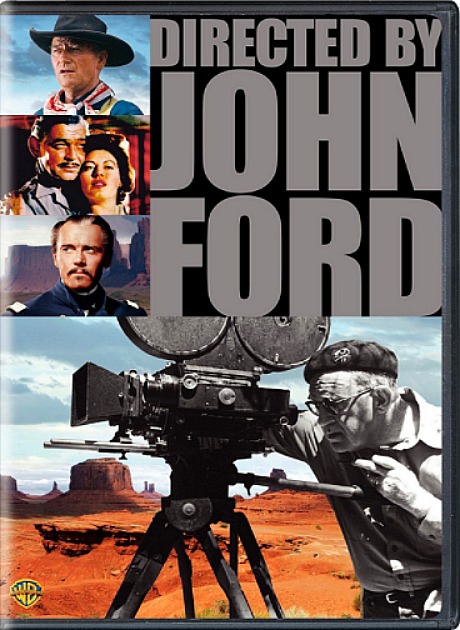
Why isn’t a high-def version of Peter Bogdanovich‘s revised, expanded version of Directed by John Ford, which came out on DVD seven and a half years ago, streaming on Amazon or Netflix or wherever? One of the finest docs about a legendary director ever made and it’s still on DVD?

On 11.6.06 I posted an HE piece about Ford, called “Snarly Softie.” It was triggered by a viewing of Bogdanovich’s doc, which had its big debut on Turner Classic Movies in the spring of that year. The DVD popped two and a half years later, on 9.15.09.

That Ford piece I posted yesterday about his World War II service and more specifically his post-D-Day bender (which is mentioned in Netflix’s Five Came Back) led me back to the ’06 article:

“I’ve tried and it’s impossible — there’s no feeling just one way about John Ford. His movies have been wowing and infuriating me all my life, and after seeing Peter Bogdanovich‘s Directed by John Ford, the muddle is still there.

“But Bogdanovich’s film gives you a feeling — one that seems clear and genuine — that you’ve gotten to know the old coot better than ever before, that you’ve really and truly seen past the bluster and the scowl and the cigar, beyond the scrappy Irish machismo and into some intimate realm. After many years of saying “Ford sure made some great films but what a snappy old prick he was,” I’ve finally come to like the guy. And I feel I owe Bogdanovich a debt for that.

“I tried to say this during my Monday afternoon phone chat with Bogdanovich. We spoke for 25 or 30 minutes. And I never quite said what I felt the film had taught me about Ford, which is that he was a shameless softie who used a snarly exterior manner to keep people from getting inside and discovering who he really was. But of course, his films made that pretty clear on their own.

Read more