Okay, what’s done is done. I punched my refrigerator three or four times after Michael B. Jordan stole the Best Actor Oscar from the much more deserving Timothee Chalamet, but I’ve let it all go. The man won and that’s that. Move on.
Who was the last major award-winner to drop by a fast-food joint after the Oscar ceremony?
After winning Best Actress for her Million Dollar Baby performance, Hillary Swank famously visited Astro Burger (which I’ve always called Mojo Burger in my head) at 7475 Santa Monica Blvd.
How many times have I visited In-N-Out Burger at 7009 Sunset Blvd. (corner of Orange, three or four blocks east of La Brea). Maybe not even twice. It’s too brightly lit, too many commoners.
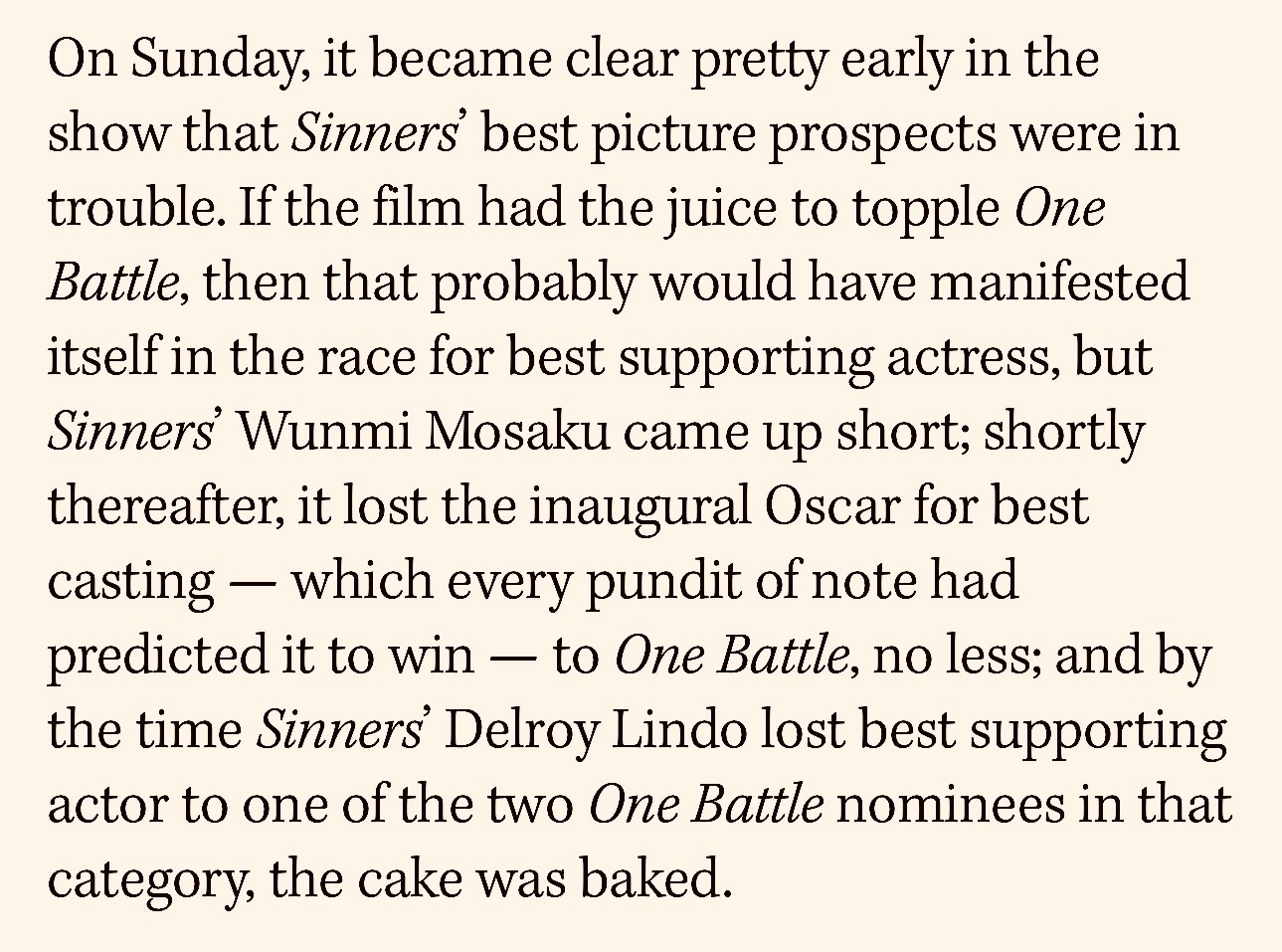
HE-posted at 8:20 pm eastern: “Anyway, it’s over. One Battle After Another taking the inaugural Best Casting Oscar plus Sean Penn beating Lindo and Sarsgard in supporting means Sinners isn’t winning Best Picture. Yes! Yes! It’ll be OBAA.”
Bill McCuddy says the Oscar producers will never again make the mistake of announcing the winner of the Best Casting Oscar at a little past the one-hour mark. Because it’s a bellwether award…a likely forecast of things to come. Henceforth no one will know which film has won the casting Oscar until at least the two-hour mark, or perhaps even at two-and-a-half.
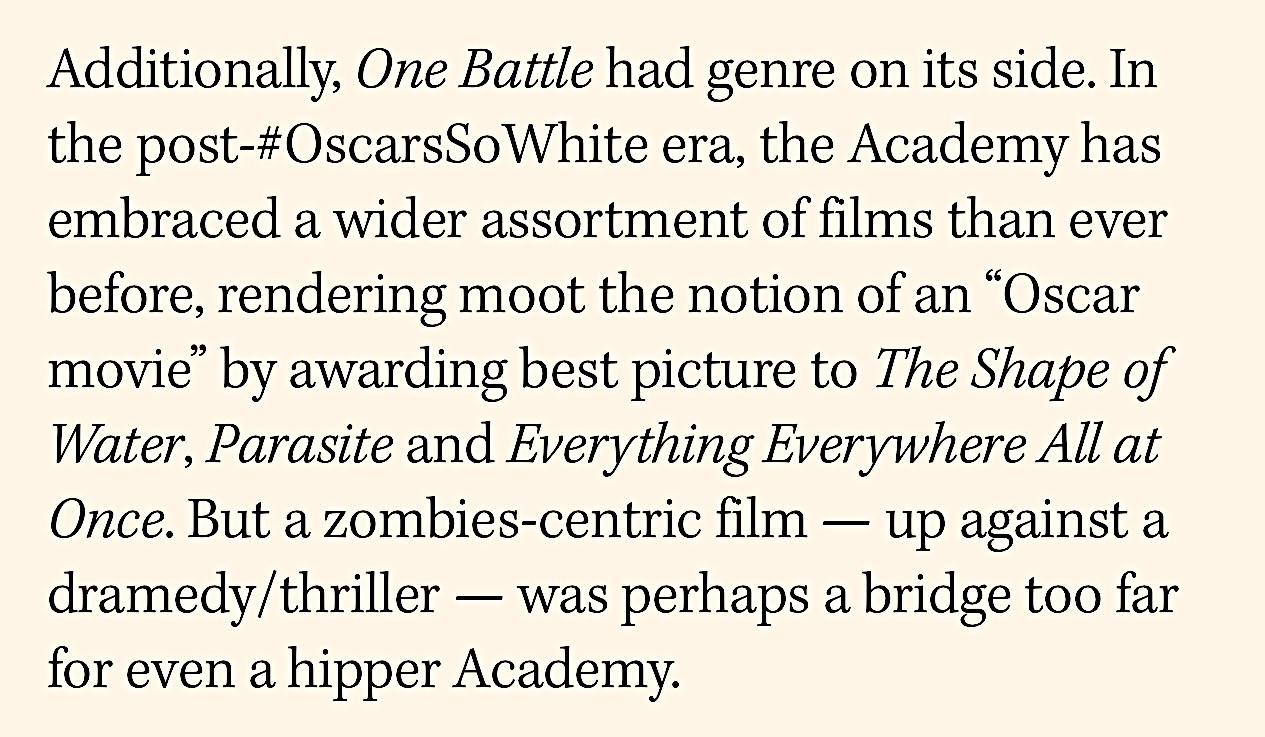
Feinberg, in short, agrees with HE’s long-running condemnation or degradation of Sinners as a schlocky Samuel Z Arkoff vampire film. That’s what he’s saying by using the term “zombies-centric.” No one with any kind of faith or passing belief in transcendent cinema would or should have voted for a blood-soaked, cunnilingus-friendly drive-in film…’nuff said.
10:50 pm: Sinners got the most nominations ever (16) and suffered the most losses ever (12).
Friendo: “I also have to ask what genius thought it was a good idea to have Bill Pullman and his nepo baby kid to present an Oscar? They weren’t funny and had no chemistry. People are still pushing Lewis Pullman like he’s some great actor. He’s bland.”
10:35 pm: One Battle After Another defeats Sinners for the Best Picture Oscar. Jordan’s win aside, the so-called Sinners surge didn’t amount to much, did it? The Oscar telecast ran for three hours and 38 minutes.
10:32 pm: Jessie Buckley deservedly wins Best Actress for her Hamnet performance. What more is there to say at this stage? Buckley seemed surprised…shocked…taken aback. Why I can’t imagine. Good for her. The Oscar was hers because of the last seven minutes of Hamnet…plain and simple.
10:20 pm: Don’t stab me in the heart by giving the Best Actor Oscar to Michael B. Jordan for playing Smoke and Stack! Don’t do it…aaaarrrgghhh! This is sooo effing painful. My personal anguish aside, this is a totally laughable, bone-headed call. The fucking SAG members are to blame, and particularly the female contingent. Timothee Chalamet and Ethan Hawke delivered the real goods…you know this. But women didn’t approve of the sociopathic Marty Supreme character and so Jordan won. I’m very upset about this. It’s just fucking wrong. A bullshit call.
10:16 pm: Paul Thomas Anderson wins Best Director Oscar for One Battle After Another….no surprise, good job. HE approves on a craft level.
10:10 pm: “Golden”, the KPop Demon Hunters song, has won Best Original Song Oscar. Sinners loses. The “Golden” team is played off.
10:03 pm: HE is hoping that Sentimental Value will win Best International Feature, and it’s won! Hallelujah! Director/co-writer Joachim Trier, paraphrasing James Baldwin: “All adults are responsible for all children, and let’s not vote for anyone who doesn’t take this principle seriously.”
10 pm: Sinners will probably win the Best Original Song Oscar…no? The show is now three hours old. But first Javier Bardem says “no to war, and free Palestine.”
9:47 pm: One Battle After Another wins for Best Editing. And here comes the Oscar for Best Cinematography…good God, the winner is Sinners, the one film that you couldn’t even see half of! Basically a woo-woo gender-identity award won by Autumn Durald Arkapaw. Rod Lurie and Kyra are undoubtedly cheering and hopping around. This is a bit like The Hurt Locker‘s Kathryn Bigelow winning the Best Director Oscar back in 2011. I strongly disgaree, but fine. Friendo: “Sinners winning Best Cinematography over Train Dreams is a fucking joke.”
9:31 pm: As expected, Ludwig Goransson and Sinners win for Best Score. The Oscar for Best Achievement in Sound goes to…hey, give an Oscar to F1! They got it! F1 takes one home!
9:17 pm: The Best Documentary Short Film Oscar goes to All The Empty Rooms. The Best Documentary Feature goes to Mr. Nobody Against Putin…yes! Very moving acceptance speeches.
9:05 pm: Best Production Design Oscar goes to GDT’s Frankenstein, and the Best Visual Effects Oscar goes to Avatar: Fire and Water. Sinners loses in both categories, although it will probably win for Best Score and Best Song.
9:02 pm: Confirmed….Delroy Lindo didn’t clap for Sean Penn.
8:46 pm: Death meditations, recollections. Billy Crystal‘s solo tribute to poor Rob and Michelle Reiner is very, very moving. Ditto Rachel McAdams‘ for Catherine O’Hara and Diane Keaton. Plus Robert Duvall, Val Kilmer, Robert Redford. All of them.
8:31 pm: Best Adapted Screenplay Oscar goes to Paul Thomas Anderson and One Battle After Another. Expected. Then again he did advance the idea of Penn’s Colonel Lockjaw being willing to murder his biological daughter in order to qualify for membership in the Christmas Adventurers Club…a ridiculous narrative conceit. Ryan Coogler’s Sinners is expected to win for Best Original Screenplay. Yup…he’s got that. Coogler is a likable dude. He speaks from the heart, and right off the top of his head.
8:20 pm: Kieran Culkin announcing Best Supporting Actor winner. Rooting against likely reality for Stellan Skarsgard to win. But Sean Penn wins, of course. And Penn isn’t there to accept! Anyway, it’s over…casting plus Penn means Sinners isn’t winning Best Picture. Yes! Yes! It’ll be OBAA. A friend says Delroy Lindo didn’t clap for Penn. True?
8:15 pm: A tie for Best Live Action Short. One is for “The Singers. The other is for “Two People Exchanging Saliva.” Kumail Najiani: “Ironic that the longest segment of the show is about the winners of Best Live Action Short.”
8:05 pm: Two first-rate Burger King commercials….”wefiredtheking.” The first one was easily the better/best.
8:02 pm: The first-ever Oscar for Best Casting goes to Kassandra Kulukundis (sp?) for One Battle After Another. Sinners loses again!
7:51 pm: Frankenstein winning for Best Costume Design = no win for Sinners in this category! I’m sorry but this is encouraging! And Frankenstein wins for Best Makeup!
7:48 pm: Ventura Crossroads parody commercial (making all aspect ratios tall and thin) made me laugh out loud. Loved it!
7:43 pm: The big Sinners musical dance number was a total knockout wowser….wonderfully sung, beautifully lighted, excellent choreography….grade-A top to bottom.
7:38 pm: Jett and Cait are both predicting that Michael B. Jordan will take the Best Actor Oscar. HE response: Jordan defeating Timothee Chalamet or Ethan Hawke is a ludicrous notion.
7:31 pm: Sutton’s favorite film, KPop Demon Hunters, wins Best Animated Feature. I feel nothing personally, but good for Sutton and all her KPOP friendos. I don’t care about the animated short subject winner. Nobody does. Okay, that’s mean.
7:18 pm: Amy Madigan has to win the Best Supporting Actress Oscar…right? Yes!! Weapons! Love the expression on hubby Ed Harris‘s face….”what have I been tellin’ ya, girl?”
7:06 pm: Conan O’Brien‘s Weapons opener (chased by angry kids through the sets of all the Best Picture nominees)….fantastic! Great Ted Sarandos joke…”it’s his first time in a theatre!” Great Timothee Chalamet dig at the ballet & opera thing. “Too real for ya, hah?” Leonardo DiCaprio‘s moustache is his look for a new, currently rolling Martin Scorsese film (costarring Jennifer Lawrence).
6:40 pm: I’m sorry but Timothee Chalamet‘s all-white, peak-lapel tux is atrocious. I will defend TC’s right to speak hard truths about opera and ballet all he wants, but he deserves serious pushback for the tux.
6:40 pm: Too many actress nominees (Rose Byrne, etc.) are wearing their hair in tight buns. HE is especially disappointed that Sentimental Value‘s Renate Reinsve is bunning it. Kate Hudson and Nicole Kidman‘s hair is not bunned, and they look really great.
6:25 pm: Probably the most inspiring halftime speech ever given by any actor in any sports film, bar none…a speech that makes my eyes dampen each and every time: “We can stay here and get the shit kicked out of us, or we can fight our way back….into the light…we can climb outta hell.”
Red carpet [6:10 pm]: I love how the tech crew supporting the ABC red carpet interviewers can’t manage to post the names of not-famous-enough celebs being spoken to. (Pick it up, fellas!) The gown worn by Hamnet‘s Jessie Buckley (deep red sash, pink-beige dress) doesn’t make it…not really. Plus she’s cut her hair too short — should have let it grow out a bit.
Sinners‘ Wunmi Mosaku, whose supporting performance I had totally forgotten before she was nominated, is hugely pregnant and dressed in an intense green gown. She’s not winning so forget it. Melissa McCarthy looks great…transformed by Ozempic! Spike Lee‘s white-beige cuffed pants look awful…way too much ankle-sock.
[Initially posted on 9.25.15] This, ladies and germs, is one of the most satisfying punch-out scenes ever captured in the history of motion pictures. It works because it arrives after nearly an hour of hiding out, milking cows, raising barns, fixing car engines and making goo-goo eyes at Kelly McGillis.
It feels so good when those redneck bullies start giving grief to Alexander Godunov because they don’t know what’s coming…but we do. You’re about to get thrashed, assholes.
Please list any other wonderfully satisfying dominance scenes…a good guy about to clobber the baddies, and the sheer comfort of knowing nothing will get in his way.
HE’s basic Oscar Night activity is to sit in a soft chair and file reactions to the various winners, losers, clips, tributes, witty commentaries and unexpected occurences. I just need to be plugged in…period. Socializing doesn’t really work in this context.
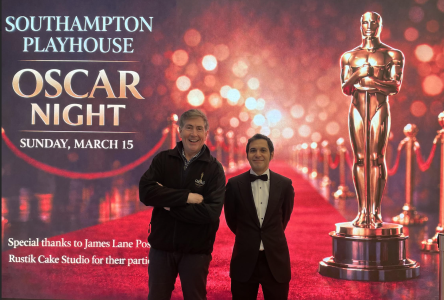
I was nonetheless tempted to accept Bill McCuddy and Eric Kohn‘s gracious invite to attend the Southampton Playhouse Oscar Viewing & Schmoozing event. I’ve never been there (said to be quite the jewel), and it would feel liberating to savor those wealthy, laid-back vibes.
But getting there from Wilton would take 3 1/2 hours and maybe longer — a 70-minute Metro North train to Grand Central, subway to Penn Station, two-hour Long Island Rail Road (LIRR) journey to Southampton. The other way is a New London-to-Hamptons car ferry + driving out to Southhampton Playhouse (43 Hill St, Southampton, NY 11968).
But it’s a bear either way. Driving to Boston would take less time.
Thanks again, fellas, but it doesn’t feel like a fit.
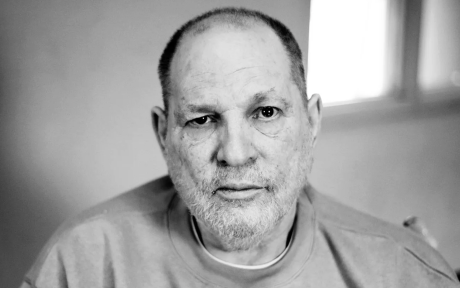
And that he’ll most likely expire in jail. But he doesn’t want to perish on godforsaken Riker’s Island. He’d like to live in some kind of decent facility, maybe savor some fraternal comfort with other inmates, be offered a better selection of films, etc.
“Finally, I called Craig Rothfeld and begged him, ‘Please help me…I’m sick…I don’t know what to do.’ He got on the phone and they shipped me to Bellevue. I had a heart operation the next day. A day later and I would have been gone. I have bone marrow cancer. I’m dying here. And the DA’s idea is probably to have me die in prison. But I am dying.”
Roshan: “Do you worry about the possibility that you may die here?”
Weinstein: “It scares the shit out of me. Cold and heartless. It’s incredible to have the life that I had and the things that I did for society and not have the leniency to deal with me in a kinder way. Whatever they think I did bad in my life, I didn’t get the death penalty. I’m going to be 74 in March. I don’t want to die in here.”
Elliott Gould‘s Philip Marlowe to the encarcerated David Carrdine in The Long Goodbye (’73): “Listen Dave, remember…you’re not in here, it’s just your body.”
The 2026 Oscars will kick off Sunday evening. Finally. But there’s a whole world out there that doesn’t know or care about them. Zero. Donut.
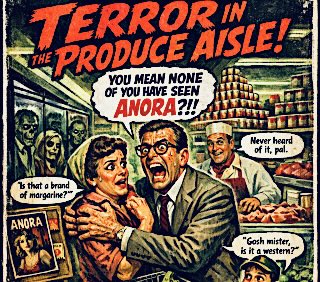
On Saturday afternoon I spoke with two employees of Wilton’s Village Market — Linda, a friendly, somewhat older checkout person with big glasses and long brown hair, and Andrew, a blond-haired trainee who seemed about 19 or 20.
As of 3:20 pm, Linda didn’t know the Oscar telecast was a day away. Nor had she seen or even heard about any of the Best Picture nominees. Linda: “You’re talking to the wrong people.”
HE: “How about last year’s Best Picture winner, Anora?” Linda: “No, but thanks for telling me. Maybe I’ll stream it.”
I asked Andrew if he’s seen Anora. He looked at me with a flat, emotion-less expression. Eyes as dead as a shark’s.
I asked Linda if she’s ever watched the Oscars, and if they’ve ever made any kind of impression if she has. Yes, she said, but she mainly likes watching the red-carpet fashion parade. “Cool”, I said. “Nothing wrong with that.” And that was it.
This isn’t Linda and Andrew’s fault — it’s the film industry’s. I blame wokeism. We all know the alleged causes and the drainage factors, but for the last nine or ten years Hollywood has been camped out inside its own social-political rectum. All I know is that 15 years ago there was a monoculture out there, and supermarket checkout folks were at least passively aware of the Oscars and had maybe seen one or two Best Picture contenders, or at least had heard about them.
Things have changed…something’s missing. Linda and Andrew don’t care for a reason.
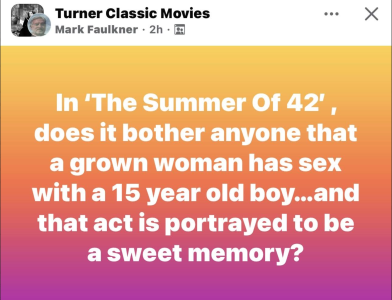
Only girly-men take offense or say “uh-oh” to themselves when contemplating the idea of a teenage male getting lucky with a pretty adult woman.
In Robert Mulligan‘s Summer of ’42 (’71), 15 year-old Hermie (Gary Grimes) lucks into a one-off with the beautiful but heartbroken Dorothy (Jennifer O’Neill) after she’s received news that her husband has been killed in combat.
For my money Summer of ’42 was too sensitive and restrained. Not even a little bit raunchy…booo!
I was 15 once. I used to dream of some 25 or 30-year-old hottie doing me a huge favor. All healthy 15 year-old lads desire this.
I’m personally appalled that guys like Mark Faulkner find the notion of a teenaged boy receiving an intimate gift from an older woman distasteful or even felonious. I replied to Faulkner’s Facebook post by asking, “Is there something wrong with you?”
Followup message to Faulkner: “There’s no ‘The’ in the title.”
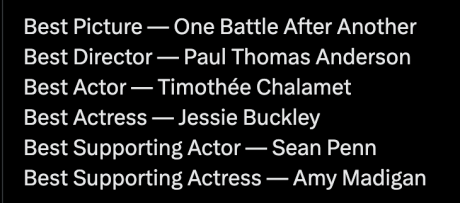
HE’s final calls have just changed as far as the Best Supporting Actor category is concerned. I don’t care if Sean Penn is likely to win because his performance as Colonel Lockjaw is overly rigid and ass-plugged, and the character’s motives are basically nonsensical and anti-human.
I have to go with Sentimental Value‘s Stellan Skarsgard because he tells the truth — his performance conveys the real, close-to-burnt-out, looking-to-rejuvenate reality of things for old guys trying to hold on to their creative juju.
Given how much Scott Mantz and Perri Nemiroff are emotionally rooting for Sinners to win the Best Picture Oscar, I will be absolutely shrieking with joy if OBAA wins. Obviously out of spite. The Sinners bullshit (a Best Picture Oscar going to a schlocky Samuel Z. Arkoff musical vampire movie?) has to come to a full and final end. The Movie Godz demand this.
No industry backup, no narrative push, no oligarchs backing her, no career build up, no propagnda push, no narratve awards from globes, cc and sag, no gay journlists support
just 100% masterpiece of independent filmmaking and a generational performancepic.twitter.com/u2cXLrUELN
HE-posted on 2.11.25: For the sixth or seventh time, Demi Moore’s narrative is dishonest. She was not forced into a popcorn box by mean old Hollywood executives. She walked right into that box of her own volition, and she totally reaped the spoils (mainstream fame, huge paychecks, flush lifestyle) until she aged out.
And then she pivoted into a body horror flick just like Bette Davis and Joan Crawford pivoted into hag horror in the early ’60s.
In the ’80s and ’90s Moore went for big, attention-getting, high-paying roles in mainstream films, and she became rich and famous from this. She chose this path while the choosing was good.
I’ve never read or heard that Moore tried to prove her arthouse mettle by appearing in edgy Sundance films, and she never tried to be in a critically-approved, Cannes-worthy, outside-the-box feminist statement film, and certainly not in a body-horror film.
She only took the lead in The Substance when she calculated that she’d aged out (duhhh) and a role like this was her only likely shot at revitalizing her career.
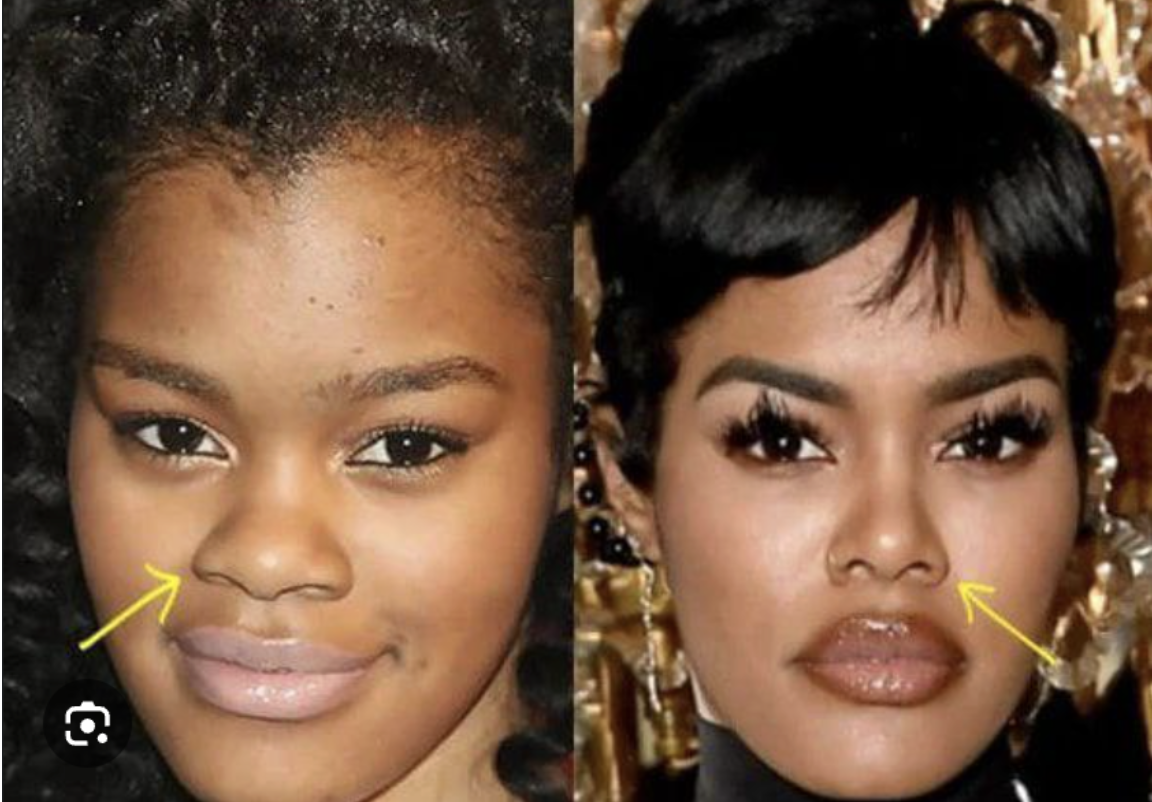
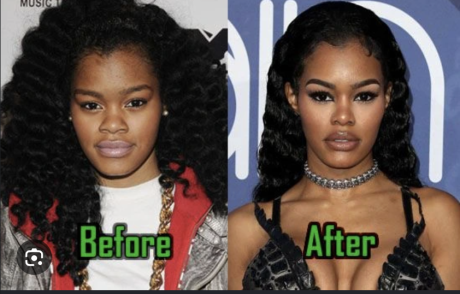
During my initial viewing of One Battle After Another I had an immediate problem with Teyana Taylor‘s obviously worked-on facial features, which look unnaturally inflated and scrunched and super-sculpted. But I chickened out. I was afraid I’d be accused of racist pigeonholing or something, so I kept my arrows in the quiver.
Who am I to talk with my Prague eyelid and neck-wattle surgery plus my two hair-plug treatments, which happened in ’12, ’14 and ’15? Obviously I’m not one to talk. But I’m agreeing with James that Taylor’s injections and knife-styles get in the way of the reality of her Perfidia Beverly Hills character.
“James From Corporate’ to Maureen Callahan, 9:40 mark: “So my whole take with One Battle After Another starts with the miscasting of Teyana Taylor. I think a lot of people have an issue with this movie because the prologue doesn’t work [but] just her casting alone…
“I’m trying to find a better way to say this, but [my problem is that] her plastic surgery is very distracting. She has sort of like a cat face that resembles Lauren Sanchez. And it just doesn’t read to me at all as being authentic of a hand-to-mouth revolutionary as someone like of that world.
Callahan: “That’s a great point. She’s partnered in the film with her lover, Leonardo DiCaprio, and they are aggressively depicted as having no money.”
“James From Corporate”: “So yeah, where is she getting the money for this to look plastic surgery-ized, almost Kardashianized? So casting-wise Taylor is sort of anointed as someone new and important. I’m not sure who is behind this and who’s backing her, but Taylor really took me out of the movie. It took like another full hour for me to sort of settle into it. Although I really like the young actress, the daughter…Chase Infiniti.”