Name some noteworthy films that started out as one thing, and ended up as another.
All serious-minded films are designed and executed with a certain moralistic or thematic or sensationalist intention. They’re made to stir emotions. Or merely excite or amuse. Or cast light upon certain aspects of the culture. Or make some kind of political point…whatever. But every so often the intended doesn’t happen when the film plays before paying audiences and it becomes something that the filmmakers never expected.
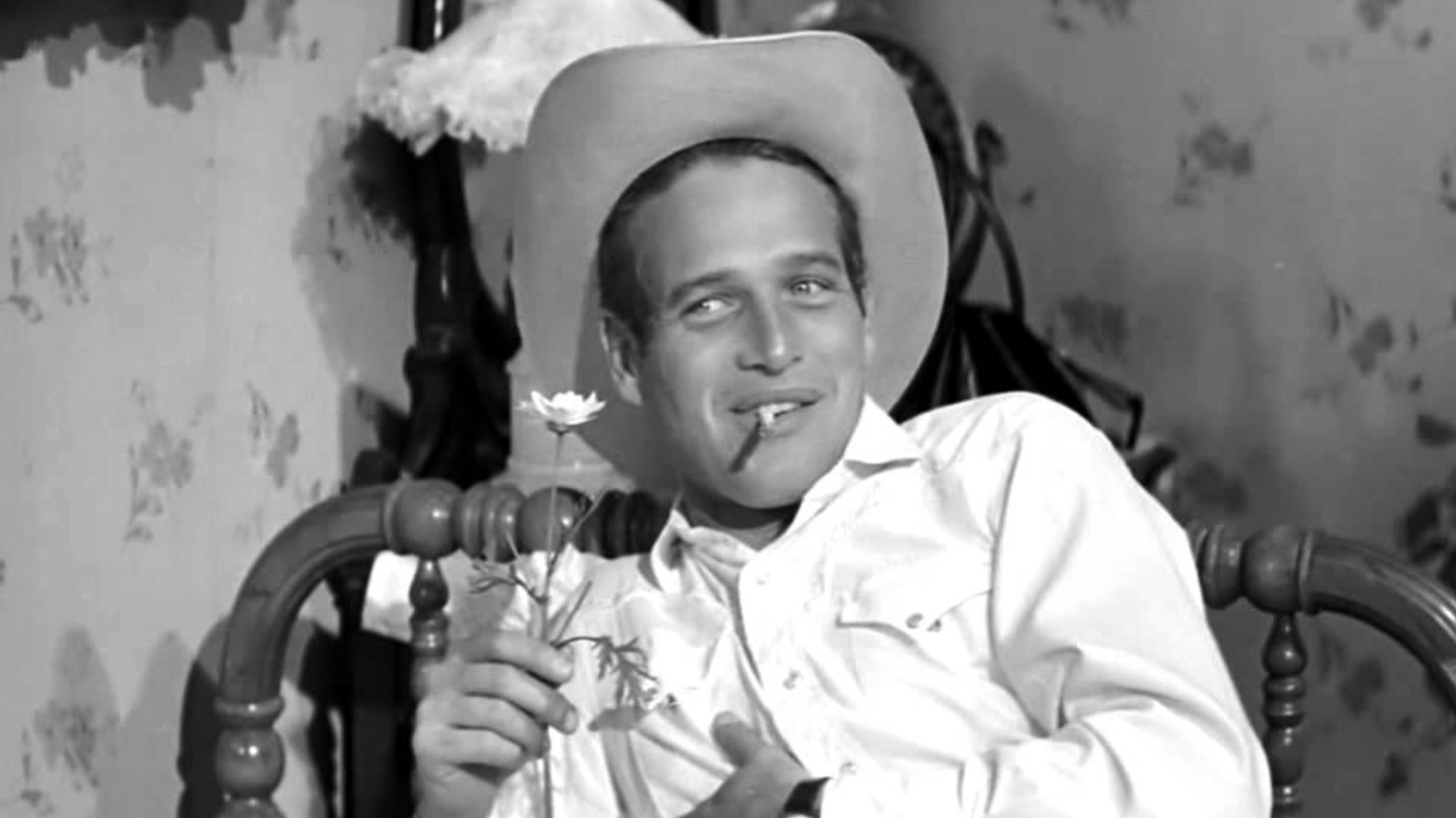
This is what happened to Martin Ritt‘s Hud (’63). The below excerpt from a 2003 conversation with Hud screenwriters Irving Ravetch and Harriet Frank, Jr. and Michigan Quarterly Review‘s William Baer explains the basics.
The most obvious kind of “wait, what happened?” is when a film is made as a straightforward drama or melodrama, only to “land’ as an unintentional comedy because of ineptitude or an overload of attitude or something. Another is when a film is ostensibly made as some kind of half-crude exploitation but is nonetheless received as a sophisticated genre commentary in “quotes” (Mark Lester‘s Truck Stop Women), or something along these lines.
BAER: “Well, Hud was certainly a unique picture in many ways, but, most significantly, it dared to portray a central character who was a pure bastard, and who remained totally unredeemed and unrepentant at the end of the picture.”
RAVETCH: “Yes, we sensed a change in American society back then. We felt that the country was gradually moving into a kind of self-absorption, and indulgence, and greed. Which, of course, fully blossomed in the ’80s and ’90s. So we made Hud a greedy, self-absorbed man, who ruthlessly strives for things, and gains a lot materially, but really loses everything that’s important. But he doesn’t care. He’s still unrepentant.
FRANK: “In our society, there’s always been a fascination with the ‘charming’ villain, and we wanted to say that if something’s corrupt, it’s still corrupt, no matter how charming it might seem. Even if it’s Paul Newman with his beautiful blue eyes. But things didn’t work out like we planned.
BAER: “It actually backfired.”
RAVETCH: “Yes, it did, and it was a terrible shock to all of us. Here’s a man who tries to rape his housekeeper, who wants to sell poisoned cattle to his neighbors, and who stops at nothing to take control of his father’s property. And all the time, he’s completely unrepentant. Then, at the first screenings, the preview cards asked the audiences, ‘Which character did you most admire?’ and many of them answered ‘Hud.’ We were completely astonished. Obviously, audiences loved Hud, and it sent us into a tailspin. The whole point of all our work on that picture was apparently undone because Paul was so charismatic.
Read more