One-Way Ticket to Pollution-ville

To augment his portrayal of real-life corporate attorney Robert Bilott, a decent guy who undergoes a change of heart when he learns about rural poisoning by DuPont, Mark Ruffalo packed on a few pounds. The idea was to suggest corporate complacency, a flush lifestyle, perhaps a certain laziness.

I’m wondering because the real-life Bilott is relatively trim for an older guy. Or he was, at least, when he posed for a Nathaniel Rich’s N.Y. Times Magazine story (“The Man Who Became Dupont’s Worst Nightmare”), which appeared on 1.6.16.

No trailer is 100% trustworthy, but I’m sensing above-average skills applied to a standard, fact-based “good eventually prevails over evil” saga. We know how it will unfold, what it will be, how it will end. And that’s fine.

Anne Hathaway is Bilott’s emotionally stressed-out wife. Bill Camp (who played Carey Mulligan‘s small-town lover a couple of years ago) is a justifiably angry Uriah Heep-like farmer. Victor Garber is playing a heartless DuPont guy, and Tim Robbins is playing Bilott’s law partner Tom Terp.

Dark Waters (Focus Features, 11.22) is cut from the same honorable cloth that produced Steve Zallian‘s A Civil Action and Steven Soderbergh‘s Erin Brockovich, which were released 21 and 19 years ago, respectively. I for one am looking forward to this. I’m sensing the right kind of vibes.

All hail Todd Haynes, who needs everyone to forget Wonderstruck and remember Carol, I’m Not There, Far From Heaven, et. al.
Read more

Stylish Buckaroo Harriet

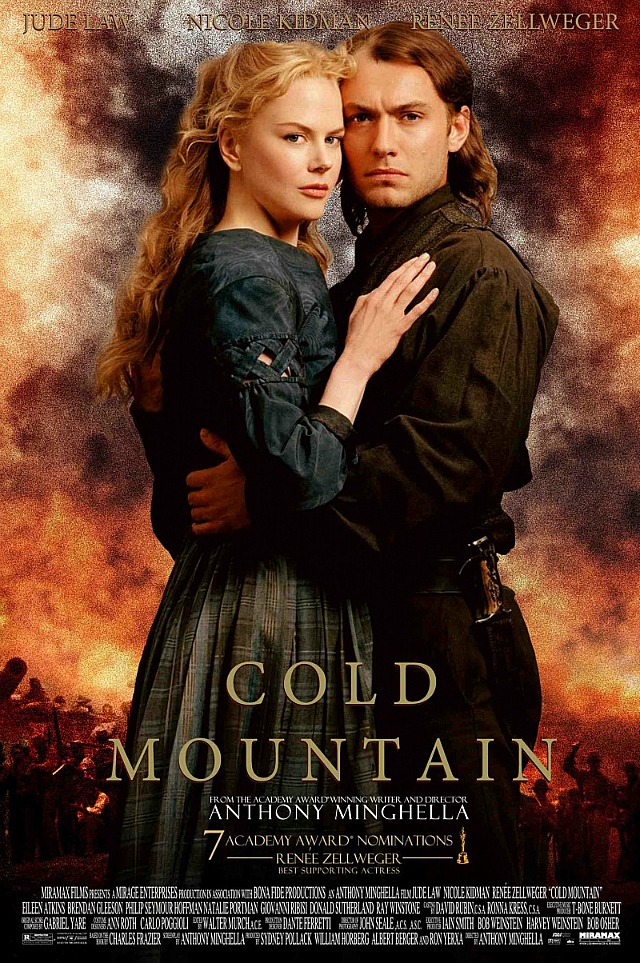
Remember Anthony Minghella‘s Cold Mountain (’03), which came to be regarded as “a movie about a man walking through the woods”? And how some wags referred to it as “J. Crew Mountain” because of the stylish-looking garb (especially the hats) worn by costars Nicole Kidman and Renee Zellweger?

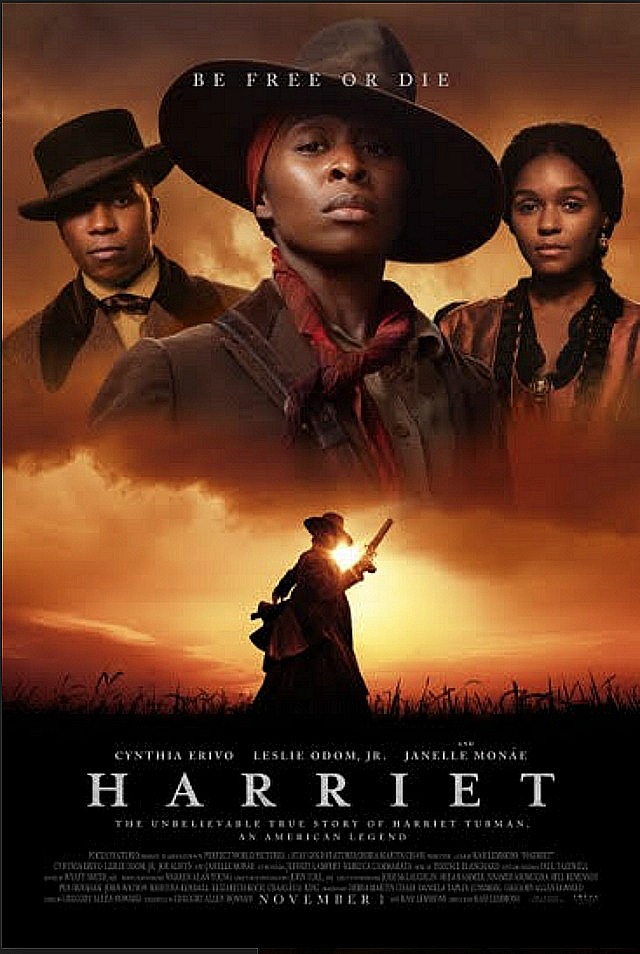
Well, a similar stylish look has been adopted by Cynthia Erivo in her portrayal of the great Harriet Tubman in Kasi Lemmons’ biopic.

Harriet was basically killed by critics (59% on Rotten Tomatoes, 63% on Metacritic) when it premiered last week at the Toronto Film Festival.


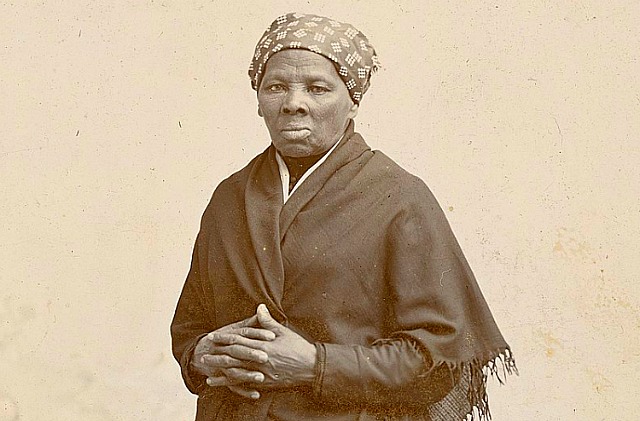
Harriet Tubman sometime in the 1880s or thereabouts.

In the film Erivo’s Harriet mostly wears the tightly-wrapped headgear that Tubman herself wore when photos were taken of her during the late 1800s and early 1900s.

But in the Harriet poster Erivo is decked out like a kind of Annie Oakley figure, wearing a very cool-looking widebrim hat, a red scarf underneath, and a nifty-looking suede jacket with a shoulder strap of some kind. There’s also an insert shot of Harriet holding a musket that she’s either recently fired or is about to fire….blam!

Just as your typical Civil War-era female farm owner was never dressed as fetchingly as Nicole Kidman, Harriet Tubman was never dressed like a rootin’ tootin’ star of a hit western TV series.

Did Harriet actually shoot guys with a musket? Her Wikipedia bio says yes. “Tubman also carried a revolver, and was not afraid to use it,” it says. “The gun afforded some protection from the ever-present slave catchers and their dogs; however, she also purportedly threatened to shoot any escaped slave who tried to turn back on the journey since that would threaten the safety of the remaining group.

Read more

Keep It Fresh

Friend: “The whole ‘wokester’ thing is just beating the world’s deadest horse. It’s become tiresome, pedantic, repetitious, relentless, a drag, a bore, a distraction. Perhaps you’ve got a traffic report that tells you something good, but I hate those traffic reports. I would follow the instinct to serve and protect. Focus on films, filmmaking, awards season, the business, releases, cultural trends…anything but the same daily sledgehammer on this obsession. I say this as a daily reader of your site and a fan of your depth of knowledge and passion for all things film-related. Whatever, moving on…”

HE to friend: “Nobody wants to be an obsessive sledgehammer, but punitive wokeness and cancel culture have become a cancer and a pestilence. On top of which I’m reading a note from a literary agent to a certain screenwriter, written in the spring of 1951: “This whole ‘complaining about the persecution of leftist screenwriters for past Communist ties in the 1930s’ is just beating the world’s deadest horse. It’s become tiresome, pedantic, relentless, a drag. Get past it.’

“But I hear you and intend, as always, to focus on the beauty, the art, the death, the pizazz and the eternal uplift of cinema. As always. But we are living through siege times, through an actual, real-life political nightmare. I don’t see how it benefits anyone to hide their heads in the sand about this.”

“Late Night” Revisiting

The other day a friend mentioned the failure of Late Night, which made a lousy $19 million after Amazon paid $13 million for distrib rights last January. The reason, we both agreed, was that Mindy Kaling‘s character, hired as a comedy writer for Emma Thompson‘s talk show, wasn’t the least bit funny. She wasn’t even interested in funny. All she cared about was being respected in the work environment and not being treated as a token POC hire, which of course she was.

Kaling didn’t care if she was funny, and neither did director Nisha Ganatra. Neither did Emma Thompson or the other writers in the room. Nobody cared about “funny” at all. Because the movie was really about friendship between opposites. Would it have killed Ganatra if Kaling’s character had talked and behaved like a typical comedy writer? Someone with irreverent, smart-ass, “you may not like me but I’m funnier than you are” attitude? Apparently it would have.

From “Late To Late Night Table“, posted on 6.10.19:

I “liked” Nisha Gantra and Mindy Kaling‘s Late Night (Amazon, 6.7) as far as it went. It’s a chuckly, congenial consciousness-raiser for the most part — a feminist relationship story about a bitchy, flinty talk-show host of a certain age (Emma Thompson‘s Katherine Newbury) who’s panicking about being cancelled, and a newly hired comedy writer (Kaling’s Molly Patel) who seems more interested in workplace sensitivity and considerate behavior than in being “funny”, at least as I define the term.

Why is it a struggle to believe that Molly (who has never before written professional-grade comedy and has mostly been hired because she’s a woman as well as a POC) is a comedy writer worth her salt? Because most jokes that “land” and actually make people laugh are always a little cutting and sometimes flirt with cruelty. A certain pointed irreverence is essential.

Read more

Maximum Wankers

The breezy bullshit attitude is rank, stifling, nauseating. I know — how else would you play it if you were an actor hired to be in this stupid thing and everyone else was saying their lines, like, “ironically”? You’d have to go along, right? There’s only one way to perform in a zombie spoof, and that’s to adopt the attitude of an actor performing in a production of Hamlet at the Old Vic.

So Pitt Loses and Hanks Takes It?

Brad Pitt to Entertainment Weekly‘s Leah Greenblatt about campaigning on behalf of his Cliff Booth performance in Once Upon A Time in Hollywood, which is pretty much a lock for a Best Supporting Actor nomination:

“Oh, man. I’m gonna abstain. I mean, you never know, and it’s really nice when your number comes up. But the goal is for the film to land, to speak to someone, whether it’s now or a decade from now. I find chasing it actually a disservice to the purity of your telling a story, and a shackling thing to focus on.”

Translation: “If I campaign I’m gonna have to spend three to four months answering cloying questions about my contentious divorce from Angie and my relationship with Maddox and who I’m going out with and stuff like that, and life is short, you know? I don’t want to become a talking sock puppet, repeating the same answers to the same pain-in-the-ass, Access Hollywood questions.

Roman Polanski didn’t compaign for The Pianist, but he won anyway, right? I’m gonna follow his lead. If I win, great. And if Tom Hanks takes it for playing Fred Rogers, fine.”

Unsettling “Joker” Vibes

I wasn’t going to mention this, but The Hollywood Reporter‘s Stephen Galloway did this morning so the cat is out the bag.

Galloway drew an analogy between Todd Phillips and Joaquin Phoenix‘s forthcoming Joker (Warner Bros., 10.4) and Stanley Kubrick‘s A Clockwork Orange. And in so doing hinted that just as Kubrick’s film was withdrawn from British theaters because of a spate of disturbing copycat crimes, it’s at least conceivable, given the violent tinderbox current in American culture, that something similar could occur here.

[Click through to full story on HE-plus]

Legend of Plastic Bag Man

From a producer friend: “Sam Mendes did not direct the plastic bag sequence in American Beauty. After the film had been nominated for Best Picture, we got a call from an Australian agent asking if we’d like to meet the young director of the plastic bag sequence. He was coming into town for meetings about representation.

“That afternoon I got a call from a prominent manager who had, like a lot of other people, also been called. He went on and on asking how do you represent someone who shot footage of a plastic bag? I said we’re meeting with him too. He was surprised. ‘Really?,’ he said. ‘”Yup,’ I said.’He’s meeting all over town.’ The manager hung up quickly.

[Click through to full story on HE-plus]

“Hustlers” Was Fast, But Others Were Faster

I only just got around to a 9.4 Vulture oral history piece about how Hustlers was assembled and shot in a relatively short time frame. Written by Rachel Handler, it’s titled “The Hustle Behind Hustlers.” The piece is cool, clean and well ordered, but a certain quote from producer Jessica Elbaum, founder of Gloria Sanchez Productions, stood out.

Elbaum: “We were prepping by February, we [began shooting] the movie in March, we wrapped it in May, and the movie’s coming out in September, which is insane.” By which Elbaum presumably meant “this is way faster than the usual.” She’s not wrong.

Wikipedia says Hustlers began principal photography on 3.22.19 in New York City, with the shoot lasting 29 days. Final production wrapped on May 3. Hustlers premiered at the Toronto Film Festival almost exactly four months later — 9.7.19. It opened last Friday (9.13.19).

A four-month turnaround from the conclusion of lensing to a film festival opening is very fast work, but — I almost hate to point this out — it wasn’t totally insane. At least three films did it faster.

Oliver Stone‘s W. opened only three months and one week after the finish of principal photography, but of course it was shown to press at least a couple of weeks prior (I know because I attended the junket at the Four Seasons) so it was actually finished and screenable less than three months after shooting stopped. Filming began on 5.12.08, and completed on 7.11.08. It opened in theatres on 10.17.08.

I can’t remember or even discover the exact details, but Floyd Mutrux‘s American Hot Wax (’78), a biopic of rock ‘n’ roll disk jockey and promoter Alan Freed, managed an extremely quick turnaround. I interviewed Mutrux at a Manhattan junket a couple of weeks prior to the 3.17 opening, and as I recall the Paramount-produced film had wrapped as recently as the previous December or possibly even January. I wrote director Cameron Crowe, who performed a brief cameo, to see if he could recall any details — he hasn’t responded. I’m pretty sure the film wrapped less than 12 weeks before opening day, and possibly less than ten.

But the Big Daddy of fast Hollywood turnarounds is still Otto Preminger‘s Anatomy of a Murder (’59). Liner notes for a Columbia/TriStar DVD of the film claim that principal photography in Michigan began on 3.23.59 and ended on 5.15.59. The Anatomy Wiki page says it previewed on 6.18.59, or 33 days after wrapping. The first public screening happened at the Butler Theater in Ishpeming and the Nordic Theater in Marquette on 6.29.59. The world premiere for the 160-minute film was either held on 7.1.59 (according to Wikipedia) or 7.2.59 (according to the DVD), at the United Artists Theater in Detroit.