“Joker”, Polanski’s “Spy” Take Top Venice Prizes

The Venice Film Festival’s Golden Lion trophy has been won by Todd PhillipsJoker, and the Grand Jury Prize has been handed to Roman Polanski‘s An Officer and a Spy.

Joker star Joaquin Phoenix was already considered a likely contender (if not an apparent lock) for a Best Actor Oscar nomination, but now he’s entering award season with an even stronger brief.

The Polanski win is a fairly serious shocker considering that (a) An Officer and a Spy has managed only a 56% positive rating from Rotten Tomatoes and Metacritic, and (b) the fact that Venice Film Festival jury president Lucretia Martel expressed reservations about Polanski’s history just before the festival began, adding that she didn’t want to attend an opening-night event in his film’s honor.
Martel’s remarks prompted a demand for an apology from one of Polanski’s producers, which Martel subsequently offered.

During the opening press conference Martel said, ”I do not divide the artists from their works of art. I think that important aspects about the work of art emerge from the man. I also think that, for all of you, the presence of Polanski with what we know about him in the past is somehow difficult to face.”

Besides Martel the Venice jurors included ex-TIFF honcho Piers Handling (Canada), director Mary Harron, actress Stacy Martin, dp Rodrigo Prieto, and directors Tsukamoto Shinya and Paolo Virzì.

The other Venice awards won’t have much international reverberation: Silver Lion for Best Director: Roy Andersson, About Endlessness; Volpi Cup for Best Actress: Ariane Ascaride, Gloria Mundi; Volpi Cup for Best Actor: Luca Marinelli, Martin Eden; Best Screenplay: No. 7 Cherry Lane, Yonfan; Special Jury Prize: The Mafia Is No Longer What It Used to Be, Franco Maresco; Marcello Mastroianni Award for Young Actor: Toby Wallace, Babyteeth.

Excepts from Glenn Kenny’s review of the Polanski film:

“The film itself is fantastic.

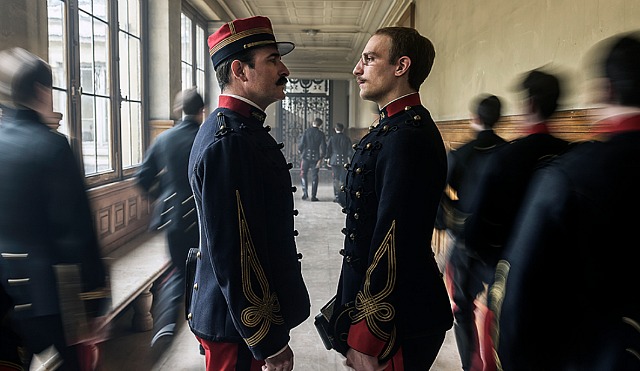
An Officer and a Spy takes the perspective of officer Georges Picquart (Jean Dujardin), who looked on while Dreyfus was condemned and then, after taking over a section of the Army’s intelligence division, learned how egregiously Dreyfus had been framed.

“The twist here is that Picquart was personally anti-Semitic, and personally disliked Dreyfus for that reason. In the movie’s opening scenes, when Picquart reports to his superiors about watching Dreyfus stripped of the buttons on his uniform as part of his sentences’ ‘degradation,’ he says it was like the Army was being stripped of ‘a pestilence.’

“But Picquart is, outside of [this] grotesque prejudice, a man of honor, a believer in the truth. Once he discovers it he won’t back down. It will mean ruin to him in many respects.
Read more

“Some Amount of Shame…”

According to the National Institute of Health, obesity is the second leading cause of preventable death in the United States, right behind tobacco use. An estimated 300,000 deaths per year are due to the obesity epidemic. In some circles this information is a problem, and in fact necessitates the general prohibition against fat-shaming. Last year Weight Watchers changed its name to WW because “merely the idea of watching your weight is now bullying” or fat-shaming. Maher: “Health care is not just about you and the government — it’s also about you and the waitress.”

Posted on 7.24.08:

Read more

Man Up, Do The Time

Felicity Huffman will face sentencing next week for her complicity in the college admission scandal, specifically for paying $15K to arrange for her daughter’s college SAT scores to be enhanced. Prosecutors are recommending 30 days in jail along with a $20K fine and a year-long supervised release.

Huffman’s attorneys have asked for probation and “significant community service”. On top of which 27 friends and supporters (including Huffman’s husband William H. Macy and her former Desperate Houswives costar Eva Longoria) have spoken on her behalf in an attempt to spare Huffman from the horror of incarceration.

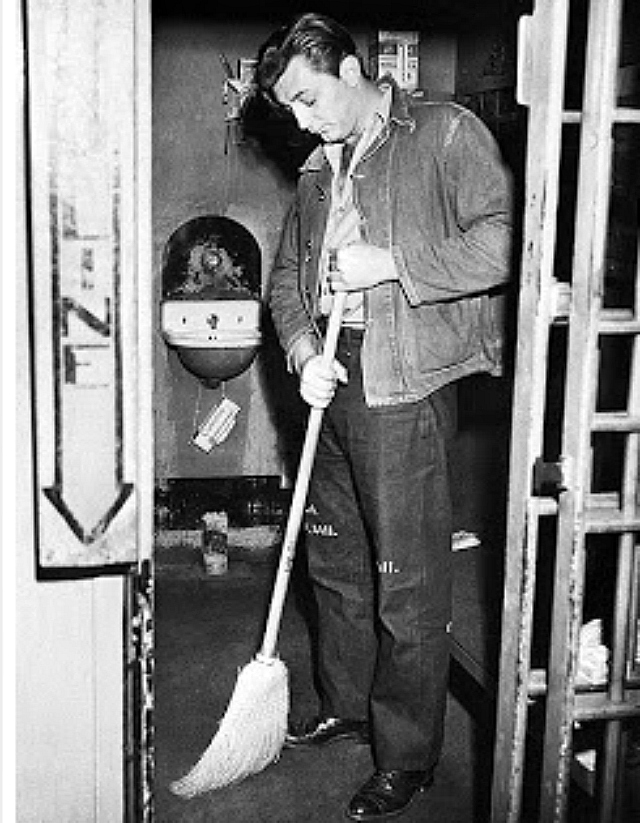
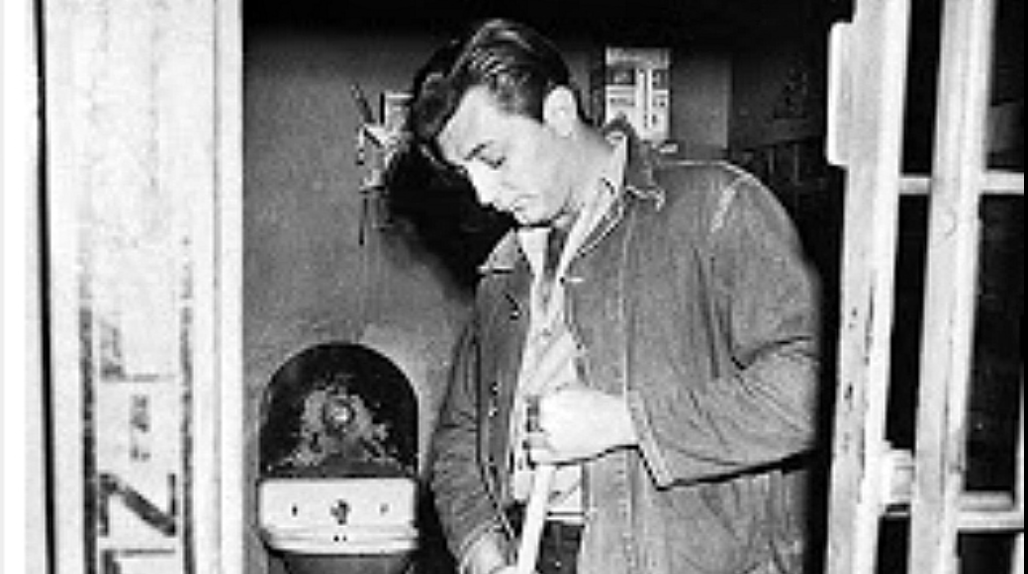
In late 1948 Robert Mitchum and a friend were popped for smoking a joint in the Laurel Canyon home of a couple of women they knew. Ridiculous by today’s measure but it happened. Mitchum was slapped with a 60-day prison sentence. Did Mitchum drop to his knees and plead with the judge to let him walk? No — he stood up and did the time.

And he came out of this potentially devastating episode with his reputation unharmed and maybe even a bit enhanced. The system told him to swallow a spoonful of castor oil, and Mitchum said “sure” and took a swig.

Read more

Here’s Blood in Your Eye

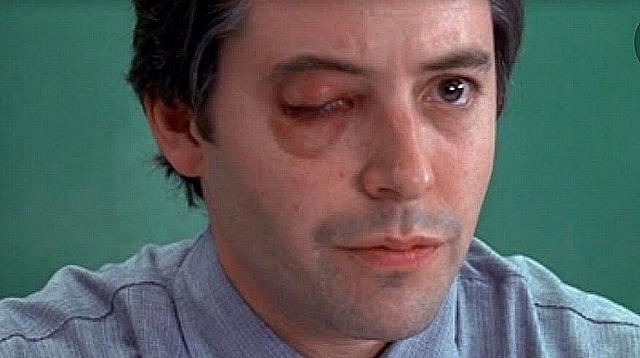
In Alexander Payne‘s Election, Matthew Broderick‘s high-school teacher was bee-stung in the eye for a reason. It was a visual metaphor for a character flaw, a weakness — a sign that his story would not end well. I realize that a subconjunctival hemorrhage “often occurs without any obvious harm to your eye”, and is “usually a harmless condition that disappears within a week or two.” But it’s not a good look.

Jordan and Foxx? Apparently.

“As Johnny, Jamie Foxx reminds us why he’s a great actor. He plays this man with a Southern music in his voice, and with a cynical intelligence about how the society is structured: as a wall put up in the face of anyone black, especially if they’re poor. But even if they’re not. Early on, Johnny tells Stevenson that he’s already been through this with other lawyers, so why bother again? The poison they’re fighting is too entrenched.

“But Stevenson has come to slay the dragon of the impossible. That’s what the Civil Rights impulse was — is — about. Michael B. Jordan’s performance is quietly amazing. His Bryan doesn’t get angry, at least not on the surface. If you observed him from a distance, you’d say that he’s strictly business, keeping his eye on the ball (and on the prize).

“But, in fact, Jordan’s acting simmers with the force of someone who’s absorbed a thousand slights, a thousand insults, a thousand rages, and will reverse that karma by keeping his cool. Jordan delivers his lines with a quickening calm, acting with a lawyer’s mind, but his eyes tell a different story. They give off glints of fury and tears.” — from Owen Gleiberman‘s Variety review of Destin Daniel Cretton‘s Just Mercy, “a supple and humane version of a true-life Hollywood liberal drama.”

Hollywood Elsewhere will get around to Just Mercy in good time.

Mayor Pete Rewrite

Copy: “As a veteran and as a mayor I’ve seen what we can achieve when we have each other’s back.”

HE Rewrite: “As a veteran, a mayor and someone who’s been doing lots of watching and listening all over this country, we have to do everything we can to support and nurture the ideals of dignity, approximations of honesty, civility and neighborliness…we have to stand up for decency and fairness and, perhaps most of all, facts…for we are far better than what the atmosphere in this country has become over the last two and two-thirds years. We have to. For ourselves, for our planet, for our descendants and for our future.”

Copy: “But in today’s divided America, we’re at each other’s throats.”

HE Rewrite: “And yet, sadly, roughly a third of U.S. voters appears to actually approve of what President Trump has said and done and tried to obscure since January 20, 2017. They seem to actually believe that he’s done some good things for this country, and that the path we’re taking is more or less the right one. Mother nature would like a word about that, to say the least.”

Copy: “To meet these challenges, we need real solutions…not more polarization.”

HE Rewrite: “Which is why, if elected President, I will fully commit to building and staffing a vast nationwide network of compassionate green re-education camps, with a special focus on rural red-state voters. We can build our nation’s economy into a tide that will lift all boats, but we can’t hope to really and truly change things for the better with so much ignorance and racism and so many lies standing in the way. A semi-educated populace, at the very least, is essential for any democracy to succeed. And the hiding of tens of millions of heads in the sand is obviously not the way to go.”

Rough Stuff

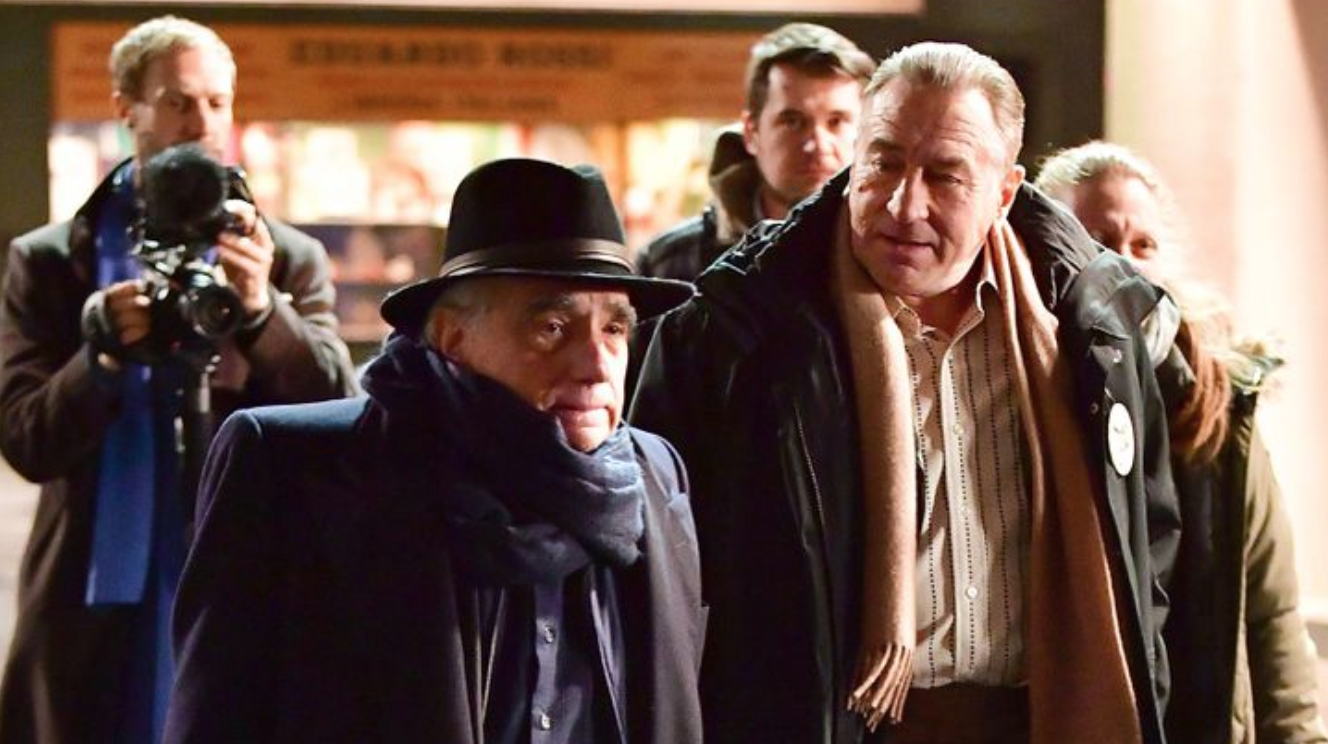
For some shadowy reason The Ankler‘s Richard Rushfield is flirting with a cynical, pissy mood about Martin Scorsese‘s The Irishman. Or, you know, trying it on for size. What follows are portions of the riff (“Luck of The Irishman“) intercut with HE commentary:

Rushfield #1: “This fall, The App That Ate Hollywood will release what in any other company could be either its greatest triumph or the catastrophe that pushes them off the edge. In the storied history of the Netflix’s Drunken Sailor Era (NDSE), the company hasn’t stepped to the table with a bet like this before, the most expensive production in its history. For all we know, it could be the most expensive production in Hollywood history.”

HE response #1: The Irishman is believed to have cost in the vicinity of $159 million. Other films have cost more, but The Irishman‘s tab is arguably the highest ever for a moralistic, character-driven, dialogue-heavy film aimed at the 35-plus, inside-the-beltway “subset of a subset,” as Rushfield puts it.

And yet if there’s any seasoned director in the film realm who has repeatedly proved beyond a whisper of a shadow of a doubt that he’s craftily, creatively, spiritually and physiologically incapable of making a “catastrophe”, it’s Martin Scorsese. Has Rushfield heard something or what? If he had wouldn’t he be obliged to post a (blind) item to that effect?

Rushfield #2: “After the near-miss of the Roma Oscar campaign, the Scorsese bet represents a go-for-broke, everything-for-the-gold, desperate lunge for the trophy hunters…perhaps its last chance in the NDSE. So you would think with [all this] on the line, it would be some sort of major cliffhanger to see how this turns out? But we know exactly how this will go.”

HE response #2: I realize that many people believe that the Best Picture Oscar is Once Upon A Time in Hollywood‘s to lose, but all kinds of tectonic opinion-shiftings are about to kick in. The next three months will be quite the show.

Rushfield #3: “The Irishman will be released on its handful of screens in two cities, where the crowds will flock and sitting through three-plus hours will become a momentary happening for a certain subset of a subset. We’ll have no clue of box office or what that adds up to. The critics will give Marty his de rigueur 98% RT score. Two weeks later, it will play on The App and the following Monday, the App will duly announce it has smashed every record in existence. The parade will march on down to nightly q & a’s at the Egyptian, while neither shareholders nor the Academy nor the entertainment community will have any clue whether this is a ‘success’ by anything recognizable in the catalog of earthbound benchmarks.”

HE response #3 (and originally posted on 8.25.19): “The Irishman will be processed as some kind of ultimate statement about the criminal ethos or community by the undisputed king of gangster flicks…a world-renowned maestro who’s made four great ones (Mean Streets, Goodfellas, The Departed, The Wolf of Wall Street) and will soon deliver what I have reason to suspect** could be (and perhaps will be…who knows?) his crowning, crashing, balls-to-the-wall crescendo, albeit in a somewhat sadder or more forlorn emotional key.”

** having read an early draft of Steve Zallian‘s screenplay.

Magic Plastic

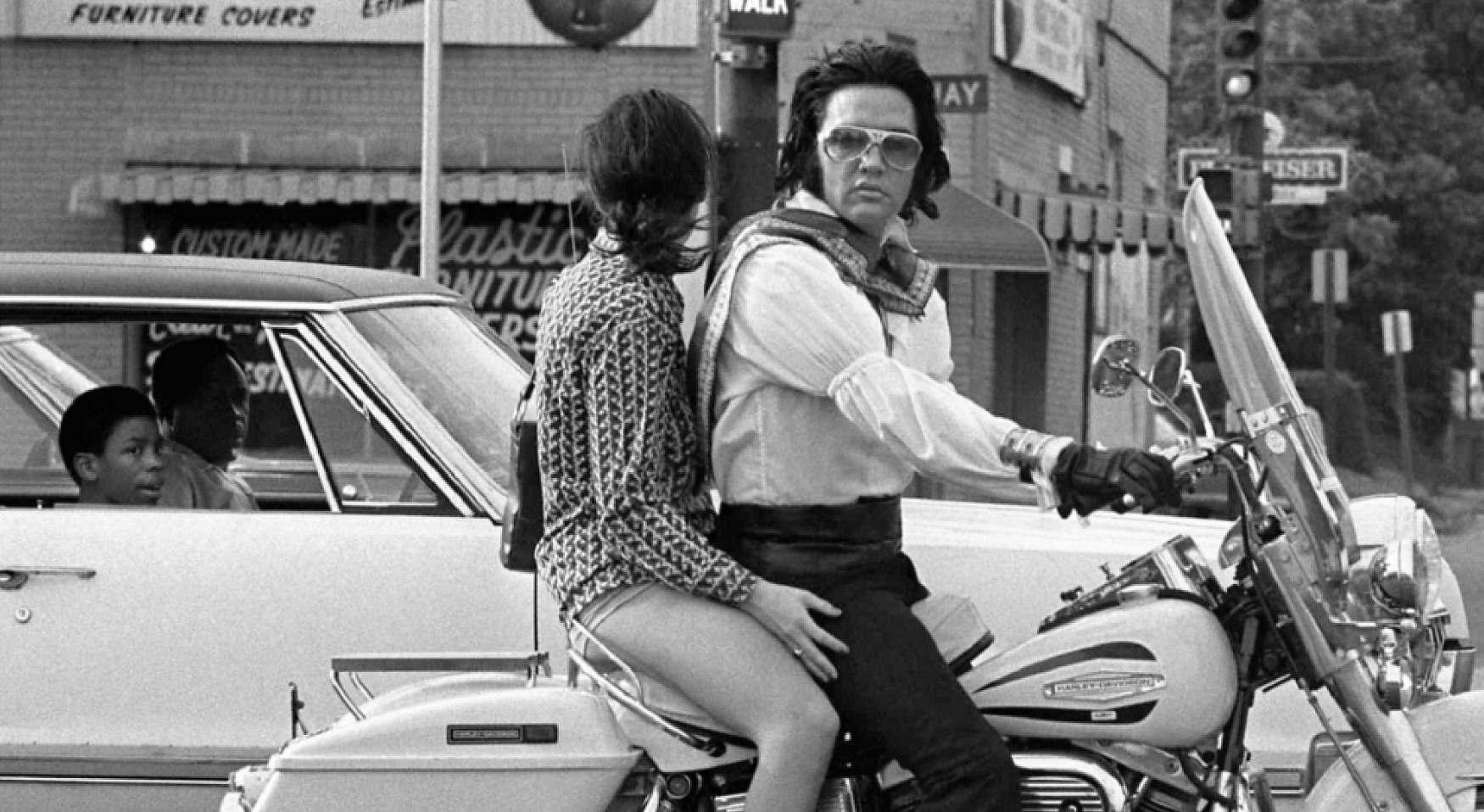
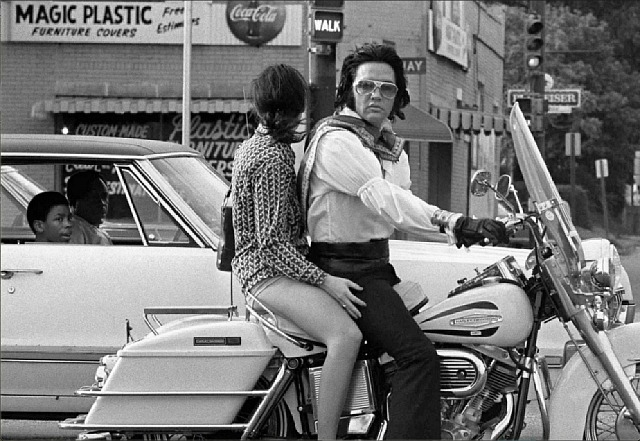
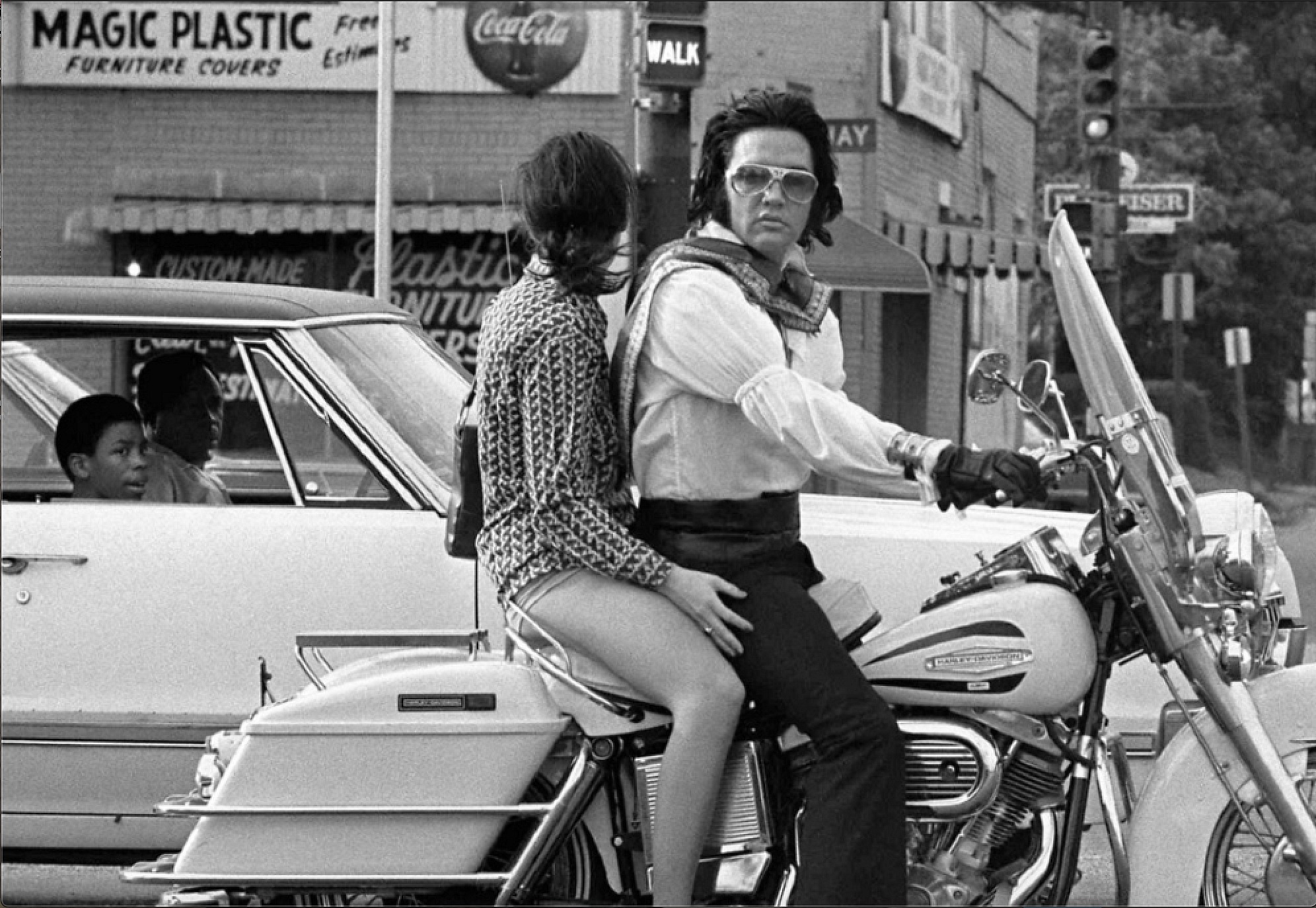
I forget when I posted this photo last (maybe three or four years ago), but a fast-acting photographer for The Commercial Appeal took it on 6.30.72 while standing at the corner of South Parkway and the recently re-christened Elvis Presley Blvd.

It’s not Presley-on-the-white-Harley as much as the young black kid (maybe nine or ten years old, and presumably in his mid to late 50s today) and his dad in the car, eyeballing Presley and Peggy Selph Cannon like hawks. A Memphis Mafia pally allegedly spotted Selph at the Whirlaway Club, where she was working as a dancer, and facilitated an introduction. The guy correctly presumed Elvis would be interested because of her resemblance to Priscilla Presley, from whom Presley had become estranged.

Throw all this together with that modest billboard ad for Magic Plastic sheet covers…perfect.

Three weeks after this shot was taken, or on 7.18.72, the 20-year-old Selph was killed in a traffic accident — horrible.

Presley was 37 and seemingly cool and settled this day. He might have even been happy. He had recorded the last half-decent single of his career (“Burning Love“) almost exactly three months earlier (3.28.72), although it wouldn’t be released until 8.1.72. It must have seemed to him like a good in-between moment. Happiness is about believing in good things to come, about trusting in the likelihood of fair weather.

I know exactly what Presley was feeling at that moment…exactly. Chugging along some urban, vaguely ratty boulevard on a well-tuned hog can do wonderful things for the human spirit. Life is so short, and fortunes can turn so quickly on a dime. Three or four years later Presley began to look flabby and dessicated; five years and two months later he was dead.

Once again, a recollection of a brief Memphis visit in February ’09, about ten and a half years ago:

“Yesterday I rented a fairly inexpensive car from National/Alamo around 1:45 pm after landing at Memphis Airport, and soon after began my quickie tour of the four tourist attractions. I loathed Graceland, felt awed and saddened by the Lorraine Motel, didn’t much care for the Disneyland/Universal City Walk vibe of Beale Street, and loved the little shrine that is Sun Records, the small-scale, modest-vibe recording studio that was begun by the great Sam Phillips in 1950, and is now a down-homey, old-time funky studio and and souvenir shop.

Graceland, the former home of Elvis Presley and an ongoing shrine to the money that his music and movies continue to earn, is just southwest of Memphis airport and located on an ugly straightaway called Elvis Presley Blvd., littered with tacky blue-collar chain stores and fast-food franchises and unsightly warehouses and car washeries. The area is flat and character-less with amber-brown grass and very few trees, except for a relatively small forested area near Graceland.

Read more

Deep Drill

Gut reactions to this Waves trailer would be greatly appreciated. It gets you or…?

Posted three days ago: “Trey Edward Shults directed and wrote Waves, and without his emotional and stylistic imprints it could have been just another tragic teen drama. Bad stuff suddenly happens, we have to collect ourselves and try to heal and forgive, etc. But there’s a certain honed-down clarity and skillful applications of emotional frankness that elevate it, and the acting is right there on the plate and vibrating in every scene.

Waves is definitely the second-best film of the Telluride Film Festival, right after Marriage Story. It will gather more steam when it plays Toronto. Is it an Oscar player? It is as far as Taylor Russell is concerned, yeah. A solid Best Supporting Actress contender. Otherwise Waves might be a Spirit Awards thing. Too early to tell.

“There’s something a teeny bit underwhelming about the softer and gentler second half, but it’s certainly worth catching regardless. I would go so far as to call Waves an essential watch.”

A24 will open Waves on 11.1.

“Whole Wounded Madhouse Of Our Times”

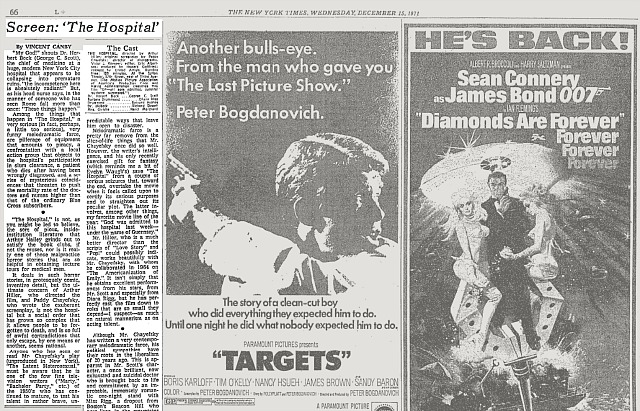
Roughly 20 months after the initial street date, I’ve finally bought Twilight Time’s Bluray of The Hospital. I don’t know why as I own an HDX** version on Vudu, and the disc is damn near identical.

Posted on 3.22.06: “I came across two dialogue files by accident this morning — two clips from Paddy Chayefsky‘s The Hospital (1971), and it hit me all over again how wonderfully particular and penetrating and needle-sharp these soliloquies are.

George C. Scott‘s confession to a colleague about what a wreck his middle-aged life has become is about as masterful and genuine-sounding as this sort of thing gets, and I love the the cadence he brings to some of the lines. (The almost imperceptible pause he inserts between the words “pushing” and “drugs” is sheer genius.) And the “murder by irony” confession by wacko doctor-patient Barnard Hughes is a wow, particularly at the end when he recites a litany of medical ailments (one after another after another…no end to it) that comprise, metaphorically or otherwise, “the whole wounded madhouse of our times.”

“There’s always a fair amount of good dialogue at any given time, but the super-pungent, intellectually flamboyant stuff that Chayefsky used to write — a little show-offy at times but pleasurable as hell — has…well, maybe it’s out there and I’m just not running into it. Or maybe it’s just gone.”

Spoke Too Soon

In yesterday’s post about Dustin Hoffman‘s 15 finest films I failed to mention that he’s costarring in Into The Labyrinth, a forthcoming Italian-made crime thriller that will open in Italy on 10.30.

Directed and written by Donata Carrisi, it costars Toni Servillo (whom I presume is playing the lead), Valentina Bellem, Stefano Rossi Giordani and Katsiaryna Shulha.

Boilerplate #1: “A private investigator on the verge of death revisits a cold case after the victim turns up alive. A terrifyingly dark chase, where no one knows who is the hunter and who is the prey.” Boilerplate #2: “With the help of a special investigator and a doctor and special investigator, a woman tries to recall the circumstances of her abduction and imprisonment.”

I’ve corrected the opening line in yesterday’s post as follows: “Although the legendary Dustin Hoffman is costarring in Into The Labyrinth, a forthcoming Italian-made film, he hasn’t been in any U.S.-produced films since The Meyerowitz Stories (’17).”