Man Alive

“This is the first year that I think my productivity has dropped because [of my media consumption]. I’m looking at the coming year and thinking, what am I going to give up? Am I going to give up following the NFL? Am I going to give up listening to music and going out and seeing it? Am I going to give up riding my bike? Or am I going to cut back on some of these digital habits I have that are eating me alive?” — from a 10.27.11 NPR “Fresh Air” interview with N.Y. Times reporter David Carr(i.e., “A Media Omnivore Discusses His Diet“).

I can certainly relate to the being eaten alive part. Doing a daily column sucks you in, hour after hour. I think about doing this or that, and before I know it it’s 4:30 pm and then it’s 6:25 or 6:30 pm and I have a screening to get to and I haven’t showered. I did a fair amount of walking around when I lived in Manhattan but that has stopped in Los Angeles. The only exercise I do now is lifting weights for five or ten minutes a day. It’s not good. I have to change the routine. But first I have to believe in my heart, as Michael Corleone once said, that “I have the strength to change.”

When Scorsese Was Really Scorsese

The guy who made The King of Comedy, After Hours, The Color of Money, The Last Temptation of Christ, Goodfellas, Casino and even The Age of Innocence would’ve never even toyed with the idea of making something as theme-parky and kid-friendly as Hugo. His decision to “go guerilla” with After Hours is what saved him 27 years ago, and it’s what he needs to do again, right now.

Early ’80s to early ’90s Scorsese — doesn’t get much better than that. Better than his ’70s period and way, way better than the aughts.

Profane Swag

When Daniel Craig first visits Rooney Mara at her apartment in The Girl With The Dragon Tattoo, she turns around and we see she’s wearing this T-shirt. Sony has been sending this shirt to certain journalists. They don’t think highly enough of me to send it my way, but I wish they would.

Film Literacy Levels

“There is always a new generation of kids who don’t know and who are interested in movies but who have no idea who Lubitsch or Hawks or Satyajit Ray are. And each new generation is a little more distant from the beginnings of cinema, from the heyday of the Hollywood studios, from Italian neorealism and the French new wave, and now from the ’90s, when the consciousness of film preservation had really taken hold.” — Martin Scorsese speaking to Variety‘s Christy Grosz in a 1.1.12 posting.

At this stage of the game a very small slice of humanity is aware of Lubitsch, Hawks and Ray, and a small fraction of even that crowd is engaged enough to buy Blurays or DVDs of their films or catch their films at places like MOMA or LACMA. Compared to the many millions who pay to see commercial movies and buy video games, I’d be surprised if more than a very tiny fraction has even heard of those guys. We’re talking about a relatively small fraternity of people in the filmmaking, marketing and publicity realms on top of film journalists and archivists and film festival organizers — a group that might amount to 8,000 or 10,000 people, and quite possibly less — on top of your mostly urban film geeks who number…what,15,000 or 20,000 or 25,000?

Maybe these percentages were more or less the same back in the ’60s and ’70s. Or maybe film literacy is greater now that at any time in the past due to the easy availability of just about any half-decent film ever made. I only know that I knew a little something about who Hawks, Lubitsch and Ray were when I was 21, and I would be very surprised if my two sons, who are probably more film literate than most due to the fact that I’ve been force-feeding them great movies all their lives, have any knowledge of them at all.

I Married An Ape

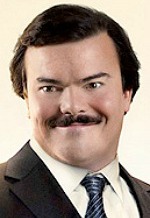
What kind of dimwit would be thoughtless enough to marry this stooge in the first place? How many 20something guys out there think like Humphries? He really is that guy who slams an ice cream cone into his forehead.

Exactly

“I strongly prefer films that observe stories as opposed to telling stories. The cinematography, the score…they need to conspire to create a perspective through which you experience the unfolding of a story, as opposed to a more oppressive, pedantic way of doing things.” — Moneyball director Bennett Miller to Hollywoodnews.com’s Sean O’Connell in a 1.2.12 post.

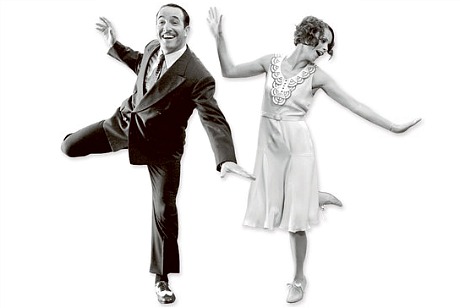
For the first thinking-cap exercise of 2012, perhaps HE readers could share views about which highly-touted Best Picture finalists have used “oppressive” and “pedantic” story-telling strategies? Does anything come to mind? All right, I’ll say it. I was thinking of War Horse and The Artist, but I’ve been saying that all along. Others?

O’Connell’s piece starts with a statement that Moneyball “was the best movie I saw in 2011.

“Granted, it didn’t register as my favorite movie immediately after a pre-Toronto screening,” he writes. “But I found myself thinking about Miller’s adaptation for weeks. I went out of my way to see it again. Then one more time. By year’s end, no other film stuck to the ribs in quite the same way.”

O’Connell then asks Miller if Moneyball‘s financial and critical success will make it easier to get his next film green-lighted. “Absolutely,” he answers. “That’s where these outcomes are most meaningful. And I’m not condemning them. I just think it’s important to temper yourself when it comes to those things.

“If you are operating from a place of speculation about how the market and the critical masses are going to respond, I think you’re playing a different game. You surrender something. You lose something. You become obedient to something other than…it will sound too harsh to say it, but I think it’s better to generate your vision from within and follow that than it is to approach it from a market-research perspective. Signals from the outside world are not a terrible way to gauge reaction, to get a sense that you’re still dealing with some form of reality. But I think 95% of it should be inconsiderate of any kind of projections of box office or critical response.”

The best relationships with the best women, I feel, start with the man being…okay, perhaps not 95% indifferent about whether he’ll get laid if he says this or does that, but mostly unconcerned about “results” and more focused on the romantic current as it unfolds, step by step, petal by petal. The fluttery feeling is the fluttery feeling. To paraphrase Miller, “If you are operating from a place of speculation about whether certain lures or strategies will lead the lady in question to shed her clothing, I think you’re playing a different game.”

Rethink It

In a piece called “Narratives and Precedents,” Hollywood Reporter columnist Scott Feinberg explains how various thematic narratives have sold a nominated performance to Academy voters. It’s a sharply observed piece, but he errs in describing George C. Scott‘s swaggering titular character in Patton as “a man who gains great power but loses his sense of perspective.”

Scott’s war-loving general goes through a bad career stretch after he slaps that soldier in Italy, but his perspective is firm and rooted from start to finish. He gets disciplined by Gen. Eisenhower in Act Two and he has to cool his act for political purposes, but his understanding of his identity and destiny never changes.

Before and After

If you’re going to post a shot of a 2011 Oscar ballot (as Gold Derby did earlier today), you need to have an image in focus. And if you’re going to re-post this shot, you need to sharpen and clarify it, which Awards Daily failed to do (left). Notice the improvement in HE’s version (right). It’s not rocket science.

The Oscar-ballot instructions read as follows:

“When you have reviewed the Reminder List, please write the title of your first choice on the first line of this ballot and list your alternate choices on the succeeding lines in order of your preference. Do not list the same title more than once; multiple votes for the same picture do not enhance its chances.

“The pictures receiving the highest number of votes shall become the nominees for final voting for the Best Picture award. There may not be more than ten nor fewer than five nominations; however, no picture shall be nominated that receives less than five percent of the total votes cast.

“The preferential system of tabulation is used in nominations voting. You are voting essentially for one achievement, and the preferential system insures that your vote will be cast — in order of your listed preferences — for the candidate for whom it can do the most good. (If, for example, the achievement on the top line of your ballot receives almost no support from other votes, you have not ‘wasted’ your vote. The system moves on and casts your vote for your second listed achievement, and so on.)

“You need not fill in all five lines. The more preferences you indicate, however, the greater the certainty that your ballot will influence the Best Picture nominees list.

“When you have marked this ballot, please return it to PricewaterhouseCoopers LLP in the enclosed, self-addressed GREEN envelope early enough to be received by them before the deadline, 5:00 pm [on] Friday, January 13, 2012.”

Barkin vs. Cops, Bloomberg

Last night’s angry tweets from Ellen Barkin and Sam Levinson about the New York police arresting several OWS people in midtown Manhattan were written for the right reasons and entirely understandable. I’ve been in the vicinity of coordinated police violence during political demonstrations, and it’s not a pretty thing to witness or feel. It’s upsetting and makes you want to retreat, but that’s how the cops want you to feel, of course.

“Get your motherfucking hands offa me!” are words to live and stand by when it comes to any law-abiding person’s clash with New York’s finest in this context. It appears to me as if Mayor Bloomberg and the police are trying to suppress and intimidate OWS protestors by using indiscriminate force and arresting people willy nilly. Ms. Barkin has my respect. More celebrities should be standing up and barking back. (The above video was apparently shot by Levinson.)

Kick-Ass Actioner For People Who Aren’t Big On Kick-Ass Actioners

Haywire is lovingly lighted and filmed, its action as sparingly edited as old Hollywood musicals, so that the painstaking fight choreography can be appreciated,” writes N.Y. Times contributor Margy Rochlin in a Gina Carano interview piece. “As the double-crossed freelance agent Mallory Kane, Ms. Carano gives Haywire jolts of energy with her arsenal of explosive moves: pushing off walls, slinging sheet pans, twisting arms until they break.


Haywire star Gina Carano. (N.Y. Times photo by Misha Erwitt.)

Rochlin quotes Haywire director Steven Soderbergh as follows: “Why are action films so ugly? Why can’t there be action, and why can’t they be beautiful to look at?”

From my 11.7 review: “There’s something almost stunning about the straight-up realism in Haywire‘s fight scenes. Or nostalgic, I should say. For as I mentioned last night, and as Soderbergh himself noted during last night’s post-screening q & a, the fight-scene realism is a kind of tribute to the train-compartment battle between Sean Connery and Robert Shaw in From Russia With Love (’63).

“With their phony, fetishy, high-flying action-ballet bullshit, most Asian martial-arts films (efforts like Crouching Tiger, Hidden Dragon excepted) get it so completely wrong, for whatever reason not understanding or unable to deliver Haywire‘s simple aesthetic.

“Soderbergh’s shooting and editing of the Haywire fight scenes is exquisite. Haywire is faster and more furious than Drive, but Soderbergh is clearly coming from the same ‘tone it down, think it through and make it real‘ school of action cinema. At no time do Haywire’s action scenes give you that awful feeling of being artificially adrenalized and jacked-up for the sake of coherence-defying Michael Bay-o sensation.”

Action geeks who’ve talked down Haywire so far are pitiful. Their preference for the heightened anti-realism and cartoon CG-bullshit school of action movies needs to be deplored. They are the carriers of the corporate, ComicCon-tinged virus than has all but ruined the action genre.

Ten Likeliest 2012 Best Picture Nominees

The following are the official HE guesstimates of the Ten Likeliest 2012 Best Picture Nominees, favored in front and less favored in the rear. Along with some very loosely-spitballed reasons why:


Bill Murray as Franklin D. Roosevelt in Roger Michell’s Hyde Park on Hudson

Lincoln (mid to late December), d: Steven Spielberg, cast: Daniel Day Lewis, Sally Field, Joseph Gordon-Levitt, Tommy Lee Jones. Why: The usual Spielberg-kowtow instinct (i.e., to show obeisance before power) plus the impact of Daniel Day Lewis‘s lead performance plus the instinct to show respect and allegiance for the legend of Abraham Lincoln. Classic historical chops. Will Spielberg try to hold back on his usual instincts? He may, I think, because of the Lewis influence.

The Master, d: Paul Thomas Anderson; cast: Phillip Seymour Hoffman, Joaquin Phoenix, Amy Adams, Laura Dern. Why: This project has felt chilly from the get-go, but if it’s halfway focused and well-shaped it’ll offer a chance for Hollywood to deliver a big “eff you” to Scientology, which, we’ve all been told, The Master is absolutely not about. Plus it’s hard to imagine Hoffman’s L. Ron…sorry, charismatic leader performance not emerging as a Best Actor standout.

The Great Gatsby (12.25), d: Baz Luhrman, cast: Leonardo DiCaprio, Tobey Maguire, Joel Edgerton, Carey Mulligan, Isla Fisher. Why: The usual instinct to honor an adaptation of a classic novel. As long as Luhrman doesn’t screw it up, that is, by going all crazy and wackjobby like he did on Australia.

The Silver Linings Playbook (11.21), d: David O. Russell, cast: Jennifer Lawrence, Bradley Cooper, Robert De Niro, Jacki Weaver, Chris Tucker, Julia Stiles. Why: No clue, but Russell always delivers so I’m guessing/presuming here.

Gravity (11.21), d: Alfonso Cuaron; cast: Sandra Bullock, George Clooney. Why: The technical audacity of this film, described by Clooney as sort of 2001-ish, will attract respect and huzzahs.

Cloud Atlas, d: Wachowski Bros., Tom Tykwer; cast: Tom Hanks, Hugo Weaving, Jim Sturgess, Hugh Grant, Halle Berry, Susan Sarandon, Ben Whishaw. Why: You have to figure that anything the Wachowskis have their hands on (especially with Tykwer co-directing) will not be seen as “an Academy film”, but Cloud‘s narrative scheme is so dense and ambitious hat it might push through as a Best Picture favorite.

Les Miserables (12.7), d: Tom Hooper, cast: Russell Crowe, Hugh Jackman, Anne Hathaway. Why: Classic musical in grand sweeping historical tradition plus direction by Hooper (The King’s Speech) plus Crowe, Jackman, etc. And Hathaway finally sings.

Untitled David Chase ’60s “Music-Driven” Film (11.19), d: David Chase, cast: James Gandolfini, Brad Garrett, Bella Heathcote, Christopher McDonald. Why: Because every Best Picture tally needs a smaller, more granular film that reflects or honors some cherished period of the past. In this instance it’s the ’60s — an easy boomer pocket-drop.

Untitled Kathryn Bigelow Osama bin Laden Film (12.14). Why: This may just be a good, solid action film without any Oscar play, but respect will initially be paid to the director of the Oscar-winning The Hurt Locker. To some pic may provide or represent a form of 9/11 closure.

Hyde Park on Hudson, d: Roger Michell, cast: Bill Murray, Laura Linney, Olivia Williams. Why: Michell is a classy, proficient director of midsize dramas and light comedies, and the plot — centered around the weekend in 1939 when the King and Queen of the United Kingdom visited upstate New York, and focusing in particular on love affair between FDR and his distant cousin Margaret Stuckley — suggests a King Speech-y vibe. But how will Murray fare with FDR?