Conservative Instinct

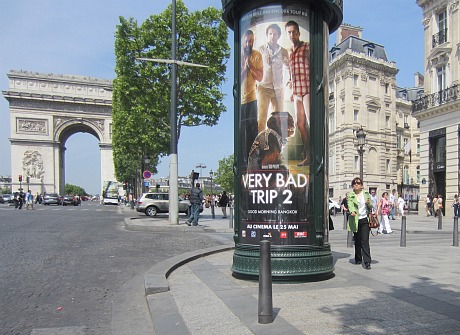
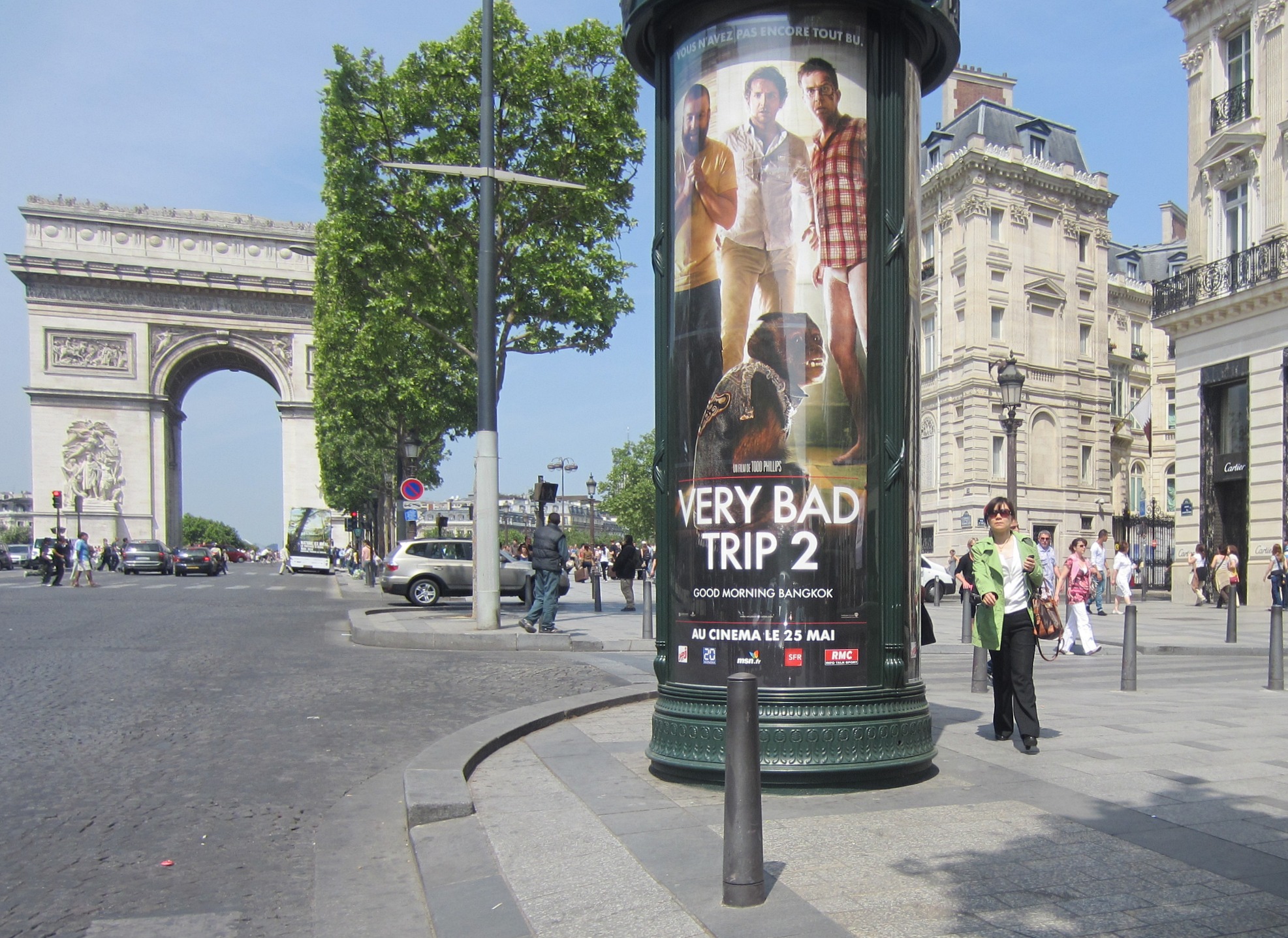
“The stock dismissal ‘more of the same’ has rarely been more accurately applied to a sequel than to The Hangover Part II,” writes Variety‘s Andrew Barker. Todd Phillips‘ sequel to the 2009 original “ranks as little more than a faded copy superimposed on a more brightly colored background…[it’s] rote professionalism verging on cynicism, and, despite some occasional sparks, a considerable disappointment.

“It should have been possible to revive the basic plot structure without slavishly reprising its every beat. This Hangover is longer than the first by two minutes, but at times it feels as though the two could be projected side-by-side in perfect synchronicity, with the only changes to many scenes being the location, the wardrobe and the addition of the word ‘again’ to the dialogue.”

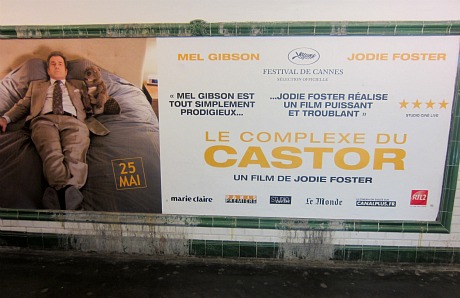
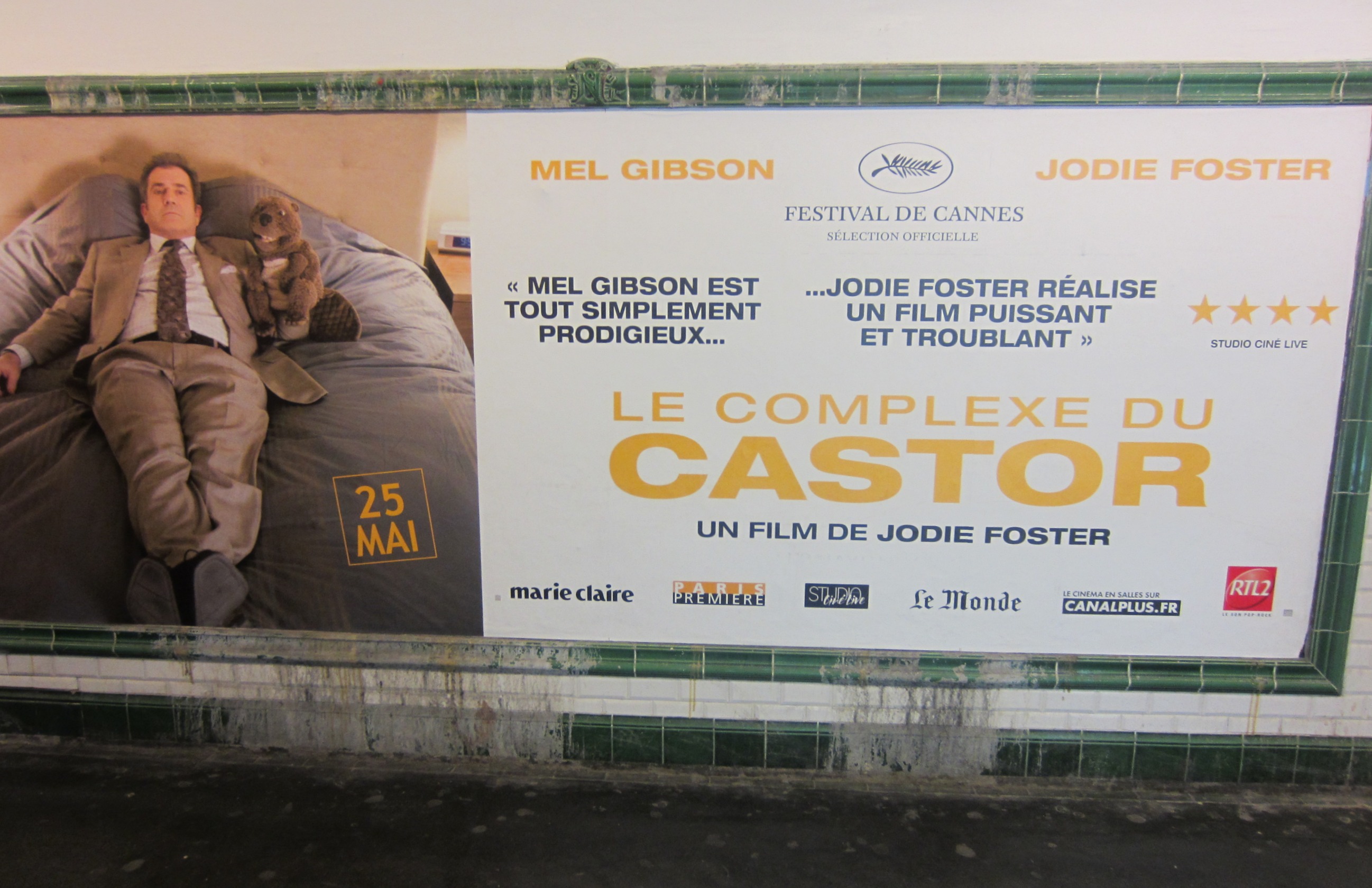
In other words, it might have been a little less predictable if, say, a Mel Gibson cameo had been thrown in?

The Hollywood Reporter‘s Michael Rechtshaffen has more or less the same opinion.
No-No Hotel

A friend coming into Paris says he’ll be staying at the Park Hyatt Vendome and suggested that we meet there. I asked if we could rendezvous instead at a place with a little Parisian antiquity. Because for me the Paris Hyatt, obviously a flush, first-rate establishment, is at heart a Club Med experience for people with ample funds.

I get that many American travellers prefer the corporate-style comforts that Hyatt hotels provide but why fly thousands of miles to Paris only to stay in more or less the exact same kind of place that you can find in Seattle or Denver or Atlanta? Hyatt clients like their meat and potatoes and green beans…I get that. They want exactly the same and no surprises, etc. But the heart of this attitude is a presumption that three- or four-star hotels that aren’t part of a big corporate chain are somehow unaware of what a quality-level hotel is, or are uninterested in providing comfort to their customers. Does that make any sense?

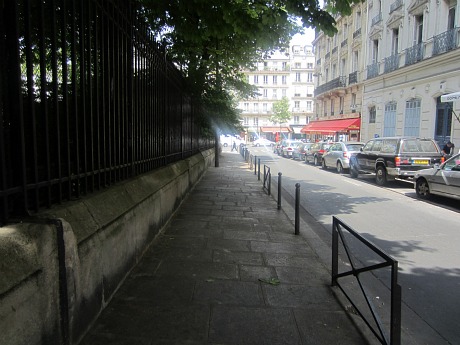
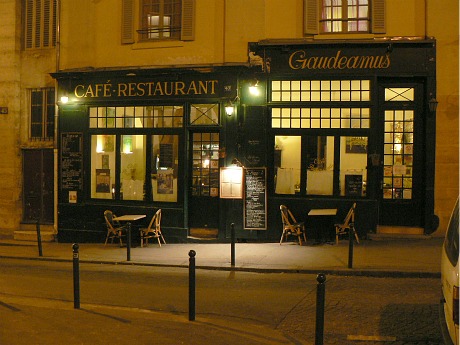
I suggested meeting at a little inexpensive place called restaurant Gaudeamus at 47 rue de la Montagne Sainte Genevieve,. It’s just south of the Pantheon.

Or perhaps La Coude Fou in the Marais district at 12 rue du Bourg-Tibourg.

Screamers

When it comes to animating Ralph Fiennes‘ Lord Voldemort character in the last two Potter films, director David Yates, a mid-range journeyman if there ever was one, is a huge fan of that madman howl. Which asounds awfully generic to me, and is, by the way, extremely similar to that leopard howl that Charles Ruggles shared with his dinner companions in Bringing Up Baby.

My point, I suppose, is this: if you’re going to imitate somebody else’s howl, imitate a really creepy one. Like Alan Batesdemonic banshee scream in Jerzy Skolimowski‘s The Shout.

Ignoring Harry Potter and the Deathly Hallows 2 is an ongoing pleasure, but I’m wondering what kind of maoschistic moron do you have to be to see this trailer and go “yeah, looks good, can’t wait,” etc.?

Dull, White, Soporific

The thought of listening to Tim Pawlenty, the most likely Republican presidential nominee, give dreary speeches between now and the fall of 2012 is draining. He’ll put everyone to sleep. (“One, I’m a white Polish-German and two, I’m Bob Dole without the snappish personality.”) What this country really needs is a leftie iconoclast (somebody who thinks like Michael Moore or Bill Maher) running against Obama. Then we’d have some real excitement.

Cannes Winners

Congratulations to Terrence Malick and the Fox Searchlight team on the occasion of The Tree of Life winning the Palme d’Or this evening at the conclusion of the 64th Cannes Film Festival. Fine, okay. No quibbles from this corner.

The jury wiggled out of the Melancholia problem (i.e., would they wimp out over the fallout from Lars von Trier‘s Nazi comments?) by giving Melancholia star Kirsten Dunst the Best Actress award. In so doing they showed they weren’t ignoring Von Trier’s film but blew him off personally as well as the film, and thereby avoided pissing off the Cannes Film Festival organizers…a perfect compromise. Very skillful diplomacy.

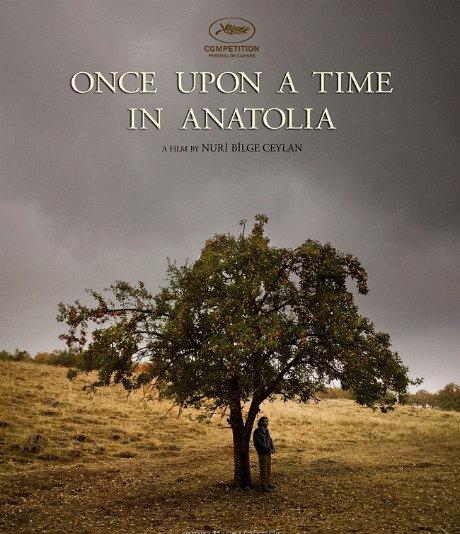
The Grand Prix went to Nuri Bilge Ceylan‘s ‘Once Upon a Time in Anatolia and Jean-Pierre and Luc Dardenne‘s very minor The Kid With a Bike.

Nicolas Winding Refn won the Best Director award for Drive…richly deserved, very cool.

The jury prize went to Polisse; Israeli writer-director Joseph Cedar took the screenplay honors for Footnote and thereby disappointed or angered many Cannes journalists. Not me — I didn’t get around to seeing Footnote or Polisse..sorry.

Here’s a sharp, well-written analysis with quotes from winners and jurors from Deadline‘s Pete Hammond.

Monsieur Kubrick

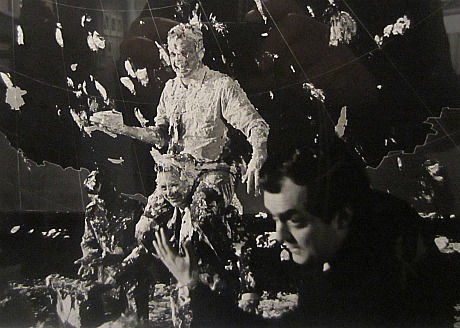
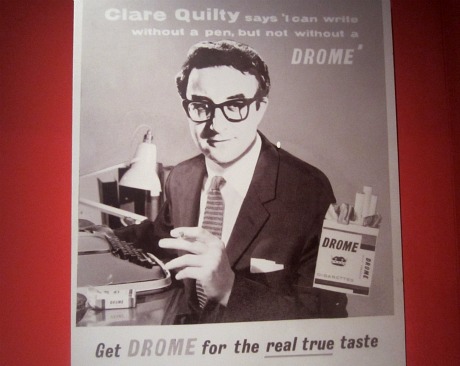
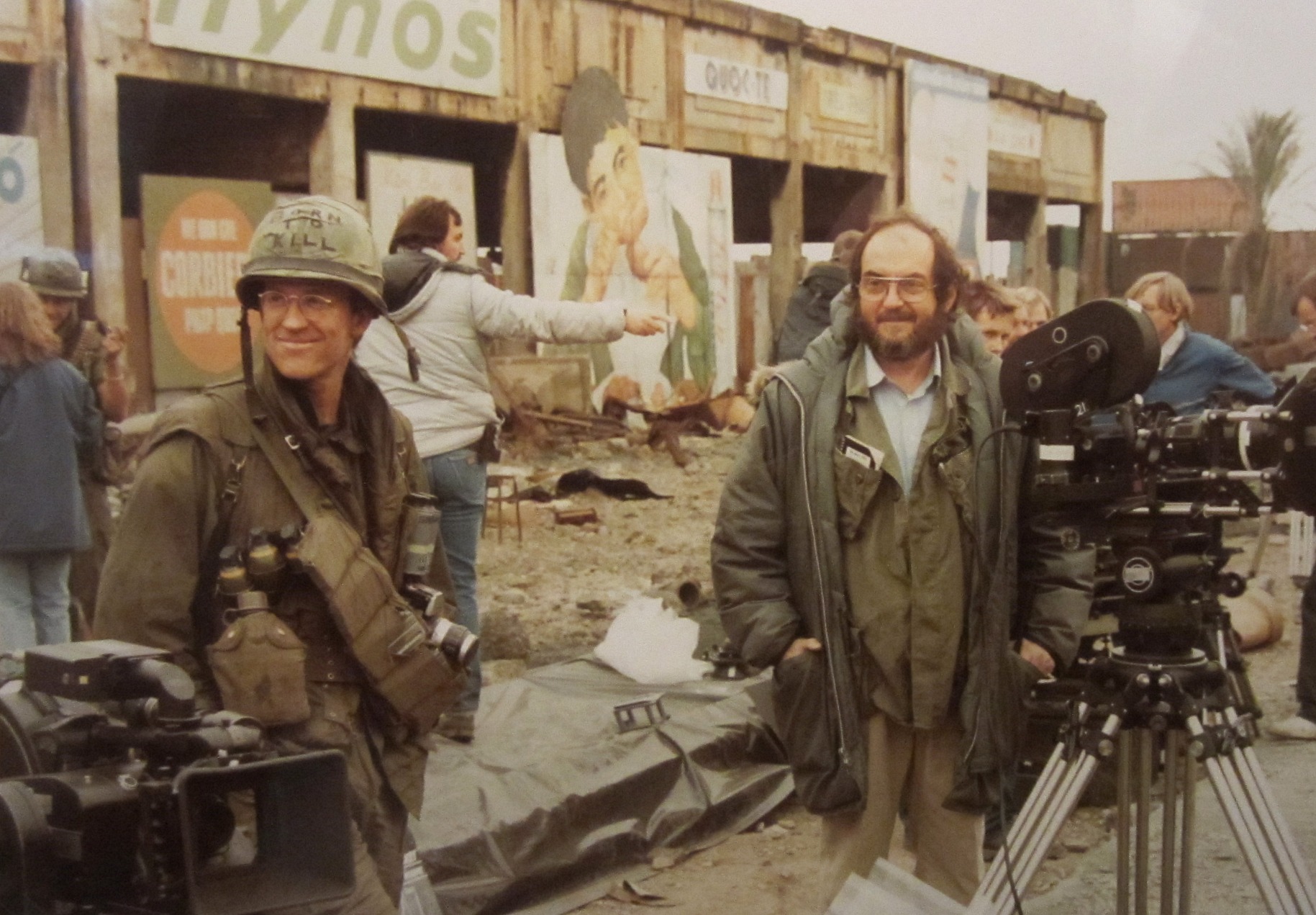
The Stanley Kubrick exposition at the Cinematheque Francais is a very thorough, abundantly detailed and absorbing presentation of Kubrick’s 54-year career, beginning with his photographer period (which began in 1945 when he took a shot of a newsstand proprietor looking forlorn the day that FDR’s death was headlined) all the way through his last film, Eyes Wide Shut, and including exhibits from the three movies he worked like hell on but never made — Napoleon, A.I. and The Aryan Papers (which was killed by Schindler’s List).

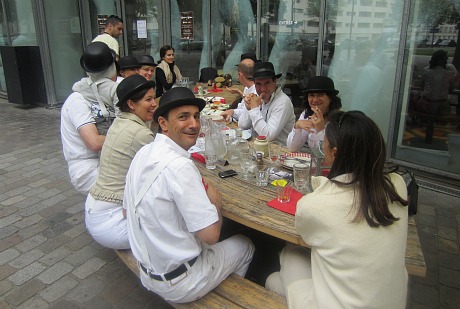
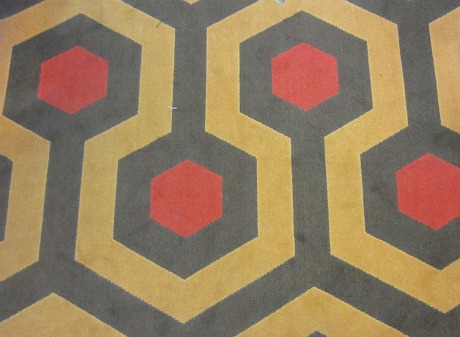
The icing on the cake is that the Cinematheque has gone the extra mile to put you in the mood — calling its restaurant the Korova Milkbar, laying a replica of the Overlook Hotel carpet on its floors, selling little red Lolita glasses in the gift shop, etc. A Clockwork Orange is screening this evening (i.e., right now) and there were six or seven fans dressed like Alex’s droogs (bowler hats, white shirts and pants, black boots) sitting outside at a table a couple of hours before.


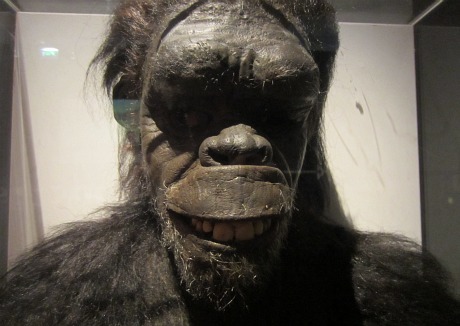
Head mask for “Moonwatcher” from 2001: A Space Odyssey.

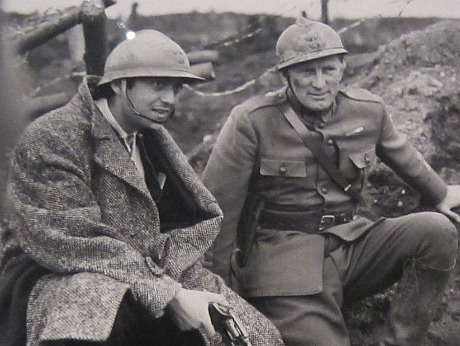
Kubrick, Kirk Douglas during shooting of Paths of Glory.

Hallway carpeting from The Shining‘s Overlook Hotel.

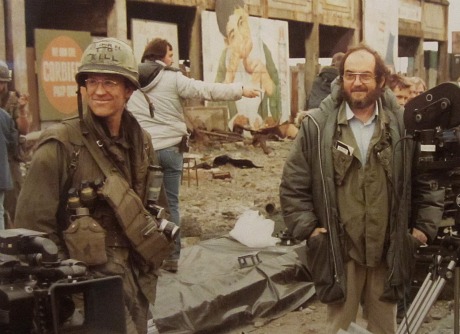
During filming of discarded pie-fight sequence in Dr. Strangelove.

Spoil My Mood

There’s no point in lamenting this weekend’s $346.4 million gross — $90.1 million U.S., $256.3 million abroad — for Pirates of the Caribbean: On Stranger Tides . But I do nonetheless.

It deflates my soul to think that so many millions of people have deplorable, peon-level taste in movies. Not about this one, of course, as the current numbers are all about marketing and brand recognition and the easy appeal of low-rent commonality and big-budget production design. But you’d think that the third Pirates film — either the worst or the second-worst of the four, depending on who you talk to — would have dampened their interest. It did somewhat in this country as some are calling the $90.1 million a slight shortfall, but it sure didn’t hurt things as far as the rest of the world was concerned

It’s the book title that keeps on giving: “When Good Things Happen to Bad People.” Not that I consider Rob Marshall, Jerry Bruckheimer, Johnny Depp and the others to be actually “bad”, of course, but they’ve certainly lowered the bar that much more, and have obviously made things safer for big dumb movies. That’s not what any thoughtful person would call “good,” right?

Flying Wood Shards

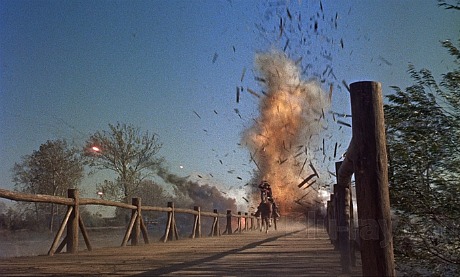
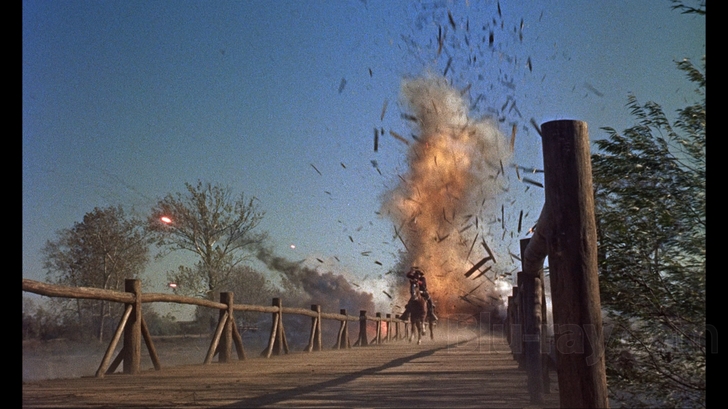
I love this image. I have nothing more interesting or layered or referenced to say than that. It’s better, I think, not to reveal what film it’s from. Not The Wild Bunch — I’ll say that much.


Palme d'Or Dividend

The wisest and most exciting choice to receive the Palme d’Or this evening would be Lars von Trier‘s Melancholia. It would be an artistically respectable decision on its own, but perhaps more importantly the jury would be saying “it’s the work that counts, and not the odd press conference remark.”

Will De Niro, Thurman, Assayas, Law, To and their jury brethren do this? Of course not. They’d be too afraid that such a decision would be seen as a rebuke to the Cannes Film Festival’s decision to excommunicate Von Trier, which of course it wouldn’t be. It would be the ultimate non-political award gesture.

The best guess, apparently, is that Michel HazanaviciusThe Artist will take the prize. If that happens I would respectfully call it a cop-out to conventional popularity rather than going with a more substantial film that will seem worth the prize and then some down the road.

As I noted in my initial review, The Artist “is a “highly diverting, sometimes stirring thing…and a job well done.” But it’s not prize-winning good, if there is such a quality. As likable and well-done as it is, it’s not entirely its own unique-DNA, self-realized creation, and the story doesn’t really resolve itself in a way that”means” anything particularly, other than its sunshine reversal of the Star Is Born third-act scheme.

Nothing Settled

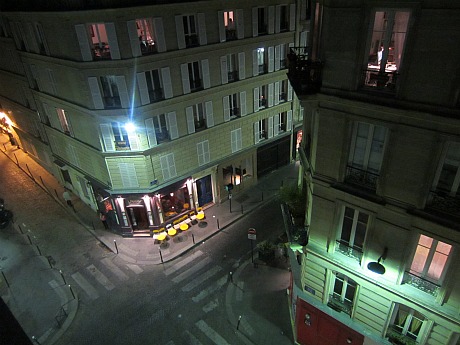
I’m trying to get past having lost 90 minutes of worth of work due to a sudden wifi reboot by the hotel’s server. Otherwise around 1 pm I’ll be moving into a sixth-floor place on rue Gassendi in Montparnasse, where I stayed with Jett in ’08. Followed by the much-awaited visit to the Stanley Kubrick exhibit at the Cinematheque Francais. And then, sometime this evening, a get-together with friends, including Santa Barbara Film Festival chief Roger Durling.


The larger glass is an ice-tea concoction, believe it or not. I don’t know how they gave it a foamy head (probably just by hitting a switch on the blender) but it’s very cool.

Driven

Like me and almost everyone else, Indiewire’s Anne Thompson is a big Drive fan, and has posted a very nicely framed YouTube chat with star Ryan Gosling. She’s also included links to various thumbs-up reviews.

My favorite review excerpt is from Movieline‘s Stephanie Zacharek: “Drive [is] an unapologetically commercial picture that defies all the current trends in mainstream action filmmaking. The driving sequences are shot and edited with a surgeon’s clarity and precision, [and] [director Nicholas Winding] Refn doesn’t chop up the action to fool us into thinking it’s more exciting than it is. This is such a simple thing.

“Is it really reason enough to fall in love with a movie? Considering how sick I am of railing against the visual clutter in so many contemporary action movies — even some that are very enjoyable are not particularly well-made — I think it is.”

Oil-Paint Noir

Every Cannes Film Festival I’ve attended has been front-loaded and all but over after six or seven days. But this year’s fest defied that pattern. One of my resultant regrets due to leaving after a mere nine days (ten and 1/2 including arrival and departure days) was missing Once Upon a Time in Anatolia, the latest from one of my favorite directors, Nuri Bilge Ceylan.

And I mean especially after reading Eric Kohn‘s Indiewire observation it “plays like Zodiac meets Police, Adjective…an analytical brain teaser rendered in patient and sharply philosophical terms.

“At two and a half hours, the Turkish filmmaker’s sixth movie is also his longest and most advanced narrative undertaking. However, outlining the plot takes substantially less effort than the extensive viewing experience, as Once Upon a Time in Anatolia only involves a handful of characters.

“Ceylan opens with the prolonged late-night hunt for a dead body in the countryside. A parade of cop cars drift through the darkness, carrying a group of straight-faced middle-aged men. These include prosecutor Nusret (Taner Birsel), commissar Naci (Yilmax Erdogan) and Dr. Cemal (Muhammet Uzuner). Additionally, they have a prisoner in tow named Kenan (Firat Tanis), the apparent lead to discovering the corpse.

“Ceylan keeps details scant and instead turns up the atmosphere. His capacity for expressive images, often held in lovely, observational long takes, arguably reached its apex with the well-received Climates. However, his skill remains: Most of the story unfolds in heavy shadows punctuated by bright patches of light. The effect is akin to a noir rendered in oil paints.”

Here’s a concurring if slightly more enthusiastic review by N.Y. Times critic Manohla Dargis.