Sharon�s Book The first thing

Sharon’s Book

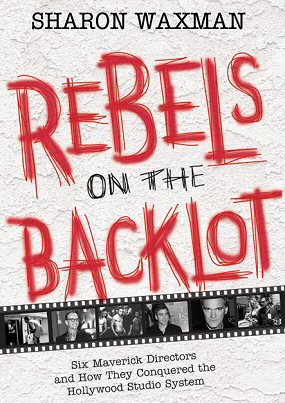
The first thing that got me about Sharon Waxman’s Rebels on the Backlot (Harper Entertainment) was its assurance. It’s a very smooth and soothing read.

Call me a plebeian but I love inside-the-beltway books that deliver that massage-y, cruise-control, we-know-everything feeling (like Peter Biskind’s Down and Dirty Pictures and David Thomson’s The Whole Equation did) along with…you know, the other standard virtues.
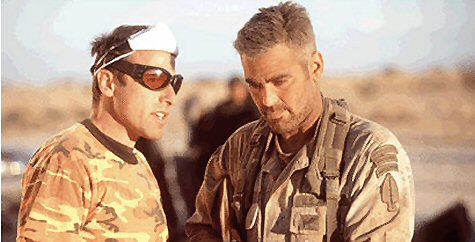

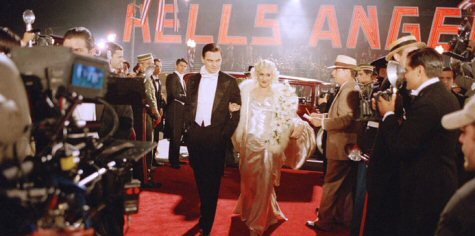
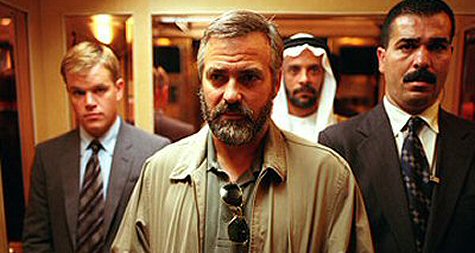
Three Kings director David O. Russell, star George Clooney during the problematic (some would say tumultuous) shooting.

The next thing that got me was a certain compassion for George Clooney and David O. Russell. Those poor guys…fine on their respective turfs, but put them together on the set of a physically difficult, hard-to-get-right movie like Three Kings and sparks of agitation are inevitable.

Waxman delivers a better, more convincing story of their fight during the making of this 1999 film than anything I’ve read or heard anywhere else.

< ?php include ('/home/hollyw9/public_html/wired'); ?>
What was the trouble about? Russell, King’s director, told Clooney before shooting began that he needed to break a lot of bad acting “habits,” and that he wanted Clooney “to be very still” in his role. When Kings began rolling, Russell kept on Clooney to cut down on the Clooney-isms, in response to which the TV-series veteran repeatedly “bristled.”

“Their relationship seemed doomed,” Waxman writes. Clooney “felt undermined by his director and labored under the burden of knowing he was Russell’s last choice…this led to disastrous consequences.”

Out-there guys like Russell are never a day at the beach, but David O. was only trying to bring about the aesthetically right thing. Clooney does have a lot of bad habits. That cool-smug-guy thing that he does all the time…don’t get me started. Russell may have been the provocateur in the breakdown of their working relationship, but Clooney needed — needs — what he was trying to dispense.
It was reported two or three months ago that Russell was upset with Waxman for making him seem slightly looney-tunes in her Times profile of his methods in the making of I Heart Huckabees. Many people agreed with him to some extent, but Waxman’s book has balanced the ledger sheet. To my eyes, she’s portrayed Russell as the most doggedly exacting and perceptive big-gun director in town.

Rebels on the Backlot is essentially a story about the adventures of six Gen-X writer-directors — leaders of the pack who defined a certain accomplished, provocative, well-funded hipness over the least ten years: Russell, Spike Jonze, Quentin Tarantino, David Fincher, Steven Soderbergh and Paul Thomas Anderson.

“I wanted to know about who they were,” Waxman told a New York Observer writer last week. “When you are talking about films that are so personal in their vision, you can’t help but wonder from what mind or personality [those pieces of work] sprang.”

Waxman was in Park City covering the Sundance Film Festival for the New York Times, for which she handles the Hollywood beat. I could have arranged some face-time with her myself (which would have made the piece you’re reading a better one), but the festival kept shoving me around and throwing me off my game.

I’ve run into these directors at one time or another, mostly in the course of doing this or that story, but I’ve never gotten to know them. Not like I know Wes Anderson, say. (I’m wondering why Waxman didn’t include him in the book. Wes pushed to the front of the pack in the mid ’90s, and is as important as any of these other guys…no?)

Another thing I found delightful about Waxman’s book is that it conveys facts that significantly add to my understanding of what these filmmakers are about…what’s driven them, scared them, briefly defeated them, inspired them.
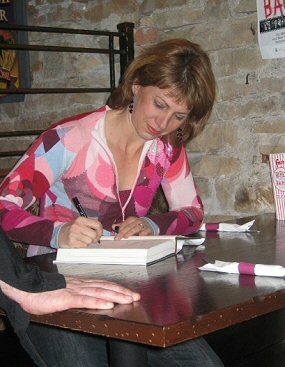

Rebels on the Back Lot author Sharon Waxman signing books at (I think) the party thrown by Harper Entertainment in Park City during the Sundance Film Festival.

I was shocked, shocked to read that Quentin Tarantino’s background was not that of a white-trash, fast-food-eating Tennessee kid from a broken home, but one that was more or less upper middle-class.

There’s a passage about Tarantino and Steven Soderbergh’s personal lives that I find fascinating. Partly because this is exactly the kind of passage that an aggressive and brilliant male writer would never include in a book about Hollywood filmmakers. It’s mildly cool nonetheless that Waxman has shown her colors in this fashion.

Tarantino nor Soderbergh “had trouble with intimacy” and “seemed [unable] to sustain relationships with the opposite sex,” she writes.

There was “a quiet woman” who was part of Tarantino’s life about 12 or 14 years ago named Grace Lovelace “who remains -– according to many who know [Tarantino] — the true love of his life.” She reports that after he became famous Tarantino became “a serial dater of his leading ladies or his producer or the starlet of the moment.”

This is nothing compared to what she does to Soderbergh. She suggests that he may be James Spader in sex,lies and videotape, “the articulate intellectual dealing with emotions in distant, muted ways,” a guy, like Spader’s “Graham” character, “who could enjoy sex with women only through the distance of the camera eye.”

To varying degrees, all the directors in Waxman’s book come off as fickle, egoistic, thin-skinned, prickly, brusque. This is nothing strange, of course. There’s always seemed to be a basic disconnect between submissive, mild-mannered, go-along behavior and being possessed of exceptional talent, smarts and vision. I’ve noticed this time and again, and it’s no big deal.
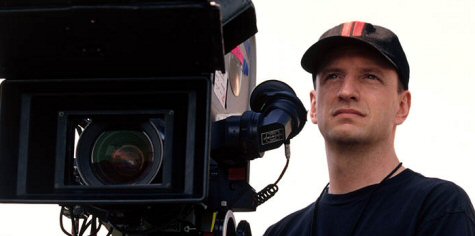

Some day, somehow, someone will discover on what set this shot of Steven Soderbergh was taken. My guess is The Limey.

A strong director can’t be a strong director without being tough and flinty and even unyielding. The game that requires toughness and tough hides. I respect this, and have no problem with anyone who wants to get in my face and give me an argument of some kind about something I’ve written. As long as they’re straight about it, fine.

A week and a half ago Soderbergh lectured me during the Inside Deep Throat Sundance party. It was about my writing a couple of years ago that George Clooney’s Confessions of a Dangerous Mind seemed strongly influenced by Soderbergh-ian visual stylings, which, in his view, diminished Clooney’s rep by suggesting he had no visual chops or chutzpah of his own.

I wish more people in this town would play it like Soderbergh and just walk right up and say it to my face.

It may sound like a vague put-down to call Rebels a great airport lounge or a coast-to-coast read, but this book is friendly. I read it cover to cover, but it’s structured and titled in such a way that you can just drop into any chapter and go to town. I guess what I’m really saying is that people with attention deficit disorder will have no problem with it.

More Later

New stuff, I mean. In the meantime, I’m holding on to some of the stories I ran last weekend at the Santa Barbara film Festival…

Panel Thief

Maybe a story about the intoxicating elements within a certain woman’s personality isn’t exactly page-one material, but Oscar screenwriting nominee Julie Delpy (for her Before Sunset collaboration with Richard Linklater and Ethan Hawke) totally killed at Saturday’s screenwriter’s panel at the Lobero Theatre.

Delpy is — right now, in my humble opinion — the absolute coolest, wittiest and most radiantly attractive actress around. Her Sunset performance had me half-convinced of this, but yesterday’s panel dazzle brought the house down and amounted to a total closer.


Actress-screenwriter Julie Delpy during Saturday afternoon’s panel discussion, “It Starts With the Script,” at the Santa Barbara Film Festival.

She was quick, hilarious and unabashedly confessional. Her mind was here, there and everywhere…but always amusingly and never scattershot. She said at one point that she’d lost the ability to think because she was listening too much to the sound of her own voice, and she had everyone in stitches as she described the disorientation. She unintentionally reduced moderator Frank Pierson to a straight-man stooge during a brief back-and-forth. Her facial expressions alone were inspired.

And she got off a great line about how women will have truly secured their just portion of power in the film industry “when a mediocre woman is given a powerful job.”

Brian Grazer and Ron Howard erred in not hiring Delpy to play Sophie Neveu opposite Tom Hanks in the forthcoming production of The Da Vinci Code. (They’ve gone with 26 year-old Audrey Tatou, who’s too young and small and slender to play Hanks’ pseudo-love interest…he probably outweighs her by at least 100 pounds.)

Garden State director-screenwriter Zach Braff was asked the most questions and drew the heartiest applause during yesterday’s discussion, as a good chunk of the audience was composed of under-35 types, the demographic that has turned Garden State into a formidable nationwide hit.

Eternal Sunshine of the Spotless Mind screenwriter Charlie Kaufman and The Incredibles director and co-writer Brad Bird seemed to be the most popular after Braff, and all three delivered the best cracks.


(l. to r.) Screenwriters John Logan (The Aviator), Jose Rivera (The Motorcycle Diaries), Paul Haggis (Million Dollar Baby), Julie Delpy (Before Sunset), Frank Pierson (Dog Day Afternoon), Brad Bird (The Incredibles), Zach Braff (Garden State), Bill Condon (Kinsey), and Jim Taylor (Sideways) just prior to Saturday afternoon’s panel discussion at the Santa Barbara Film Festival.

That is, if you left Delpy out of the equation.

The other screenwriter panelists were Million Dollar Baby‘s Paul Haggis, Kinsey‘s Bill Condon, The Aviator‘s John Logan, Sideway‘s Jim Taylor,and The Motorcycle Diaries‘s Jose Rivera.

Pierson (Cool Hand Luke, Dog Day Afternoon), the current president of the Academy of Motion Picture Arts and Sciences, got shouted down at one point by an audience member because they thought he was talking too much and not letting the panelists have their say. Pierson’s moderating skills can be on the avuncular and loquacious side, but he’s also a wise and perceptive man.

A very young aspiring screenwriter — a woman — asked Braff at one point whether “this feeling of uncertainty and nervousness and not knowing what’s going to happen in my life…is this going to continue or get worse or what?” Braff said he was sorry but no, it’s not going to stop, but hang in there and don’t let it defeat you.

Pierson had a better answer. He said to the woman, “If you’re lucky, it will never stop…because your writing will be better for it.”
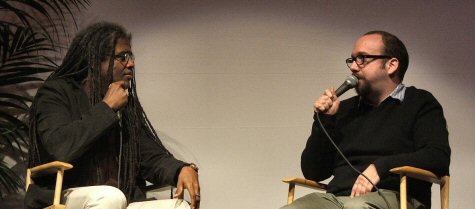

Elvis Mitchell interviewing Sideways star Paul Giamatti at Santa Barbara’s Victoria Threatre late Sunday afternoon — 1.30.05, 5:45 pm.

Leonardo DiCaprio addressing crowd at Santa Barbara’s Arlington Theatre after being presented with the SBIFF’s Platinum Award by Aviator director Martin Scorsese — Sunday, 1.30, 9:20 pm.

Piece of letter-sized paper taped to seventh-row seat at Santa Barbara’s Arlington Theatre — Sunday, 1.30.05, 7:25 pm.

Author, film critic and TV personality Leonard Maltin and Best Supporting Actress nominee Virginia Madsen (for Sideways, as if I had to say that) after a small luncheon at Nu, a restaurant on State Street, which followed a women’s filmmaker panel at the Lobero Theatre — 1.30.05, 2:25 pm.

Santa Barbara Film Festival artistic director Roger Durling just before Saturday evening’s Annette Bening tribute — 1.29.05, 7:25 pm.

Former New York Times critic and current Columbia consultant Elvis Mitchell interviewing Best Actress nominee Annette Bening (Being Julia) at Santa Barbara’s Lobero Theatre — 1.29.05, 8:35 pm.

Woody Time

I drove up to the Santa Barbara Film Festival late Friday afternoon, checked into a Holiday Inn and went straight to the Arlington Theatre on State Street to catch the festival’s opening-night attraction — Woody Allen’s Melinda and Melinda.

Most of the reviews out of Europe (it played last fall at the San Sebastian Film Festival and has since opened commercially in Spain and other territories) called Melinda a return to form for Allen, and I seem to recall someone saying it was his best since Mighty Aphrodite.

That’s close to an accurate statement, or at least not far off the mark. Melinda and Melinda is a very good…make that a slightly-better-than-very-good Woody.
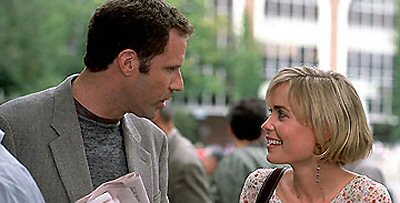

(l. to r.) Will Ferrell and Radha Mitchell in Melinda and Melinda.

It’s a half-downerish, half-amusing piece about the fine line between comedy and tragedy. It basically says that the two opposite poles are made of the same story material, and the difference essentially lies in the attitude we bring to this or that situation or circumstance.

The piece is framed by a couple of playwright/screenwriter pals (Wallace Shawn, Larry Pine) discussing the differences between comedy and tragedy. They expound by talking about a real-life story they’ve heard about an actual New York woman named Melinda (who’s known to a friend of theirs), and riffing on how her story might turn out as a tragedy or comedy.

These writers proceed to entertain each other by telling parallel tales about Melinda (which we see dramatized, of course) that are similar in every respect except for the fundamental slant.

Only Melinda (Radha Mitchell) appears in both versions. The downer piece costars Chloe Sevigny, Johnny Lee Miller and Chiwetel Ejiofor (the doctor from Dirty Pretty Things) while the comedic piece costars Will Ferrell and Amanda Peet.

The two stories explore themes and plot turns that Allen fans will quickly recognize. Anxious and lonely New Yorkers, lovers at cross purposes, spouses cheating on each other, and the constant dodging and lying that goes on between significant others.

“Of course we communicate,” Peet says to Farrell, her live-in partner, at one point. “Now, can we not talk about it?”

I wouldn’t quite place Melinda among Allen’s very best (Manhattan, Crimes and Misdemeanors, Hannah and Her Sisters, Husbands and Wives). I would, however, put it in roughly the same realm as, say, Sweet and Lowdown or Bullets Over Broadway.

It’s not quite a nine-course meal, but is undeniably nutritious. It’s been written with a fairly sharp quill, gets right down to business in short order, and delivers the philosophical goods, gags and witticisms in an agreeably absorbing fashion.

It provides Mitchell, who portrays two versions of the same character of Melinda, with a chance to shift between Bergmanesque edge-of-suicide emoting and Annie Hall-like bubbly-goofy stuff, and she delivers with assurance and buoyancy on both counts.

And Ferrell has fun playing the neurotic, emotionally frustrated, wittily judgmental Woody character. The idea of an actor hired by Woody Allen to deliver a performance that literally channels Allen’s spirit and personality will always be an extremely weird confection, but Kenneth Branagh and John Cusack have obviously done it before and I suppose we’re all getting used to this.

The comic highlight is a would-be seduction scene between Farrell and Vinessa Shaw (the prostitute in Eyes Wide Shut). The gags in this scene aren’t profound, but they’re funny as hell.


Sharon�s Book The first thing

Sharon’s Book

The first thing that got me about Sharon Waxman’s Rebels on the Backlot (Harper Entertainment) was its assurance. It’s a very smooth and soothing read.
Call me a plebeian but I love inside-the-beltway books that deliver that massage-y, cruise-control, we-know-everything feeling (like Peter Biskind√¢‚Ǩ‚Ñ¢s Down and Dirty Pictures and David Thomson√¢‚Ǩ‚Ñ¢s The Whole Equation did) along with…you know, the other standard virtues.


Three Kings director David O. Russell, star George Clooney during the problematic (some would say tumultuous) shooting.

The next thing that got me was a certain compassion for George Clooney and David O. Russell. Those poor guys…fine on their respective turfs, but put them together on the set of a physically difficult, hard-to-get-right movie like Three Kings and sparks of agitation are inevitable.
Waxman delivers a better, more convincing story of their fight during the making of this 1999 film than anything I’ve read or heard anywhere else.
< ?php include ('/home/hollyw9/public_html/wired'); ?>
What was the trouble about? Russell, King√¢‚Ǩ‚Ñ¢s director, told Clooney before shooting began that he needed to break a lot of bad acting “habits,” and that he wanted Clooney “to be very still” in his role. When Kings began rolling, Russell kept on Clooney to cut down on the Clooney-isms, in response to which the TV-series veteran repeatedly “bristled.”
√¢‚Ǩ≈ìTheir relationship seemed doomed,√¢‚Ǩ¬ù Waxman writes. Clooney “felt undermined by his director and labored under the burden of knowing he was Russell√¢‚Ǩ‚Ñ¢s last choice…this led to disastrous consequences.√¢‚Ǩ¬ù
Out-there guys like Russell are never a day at the beach, but David O. was only trying to bring about the aesthetically right thing. Clooney does have a lot of bad habits. That cool-smug-guy thing that he does all the time…don√¢‚Ǩ‚Ñ¢t get me started. Russell may have been the provocateur in the breakdown of their working relationship, but Clooney needed — needs — what he was trying to dispense.

It was reported two or three months ago that Russell was upset with Waxman for making him seem slightly looney-tunes in her Times profile of his methods in the making of I Heart Huckabees. Many people agreed with him to some extent, but Waxman√¢‚Ǩ‚Ñ¢s book has balanced the ledger sheet. To my eyes, she’s portrayed Russell as the most doggedly exacting and perceptive big-gun director in town.
Rebels on the Backlot is essentially a story about the adventures of six Gen-X writer-directors — leaders of the pack who defined a certain accomplished, provocative, well-funded hipness over the least ten years: Russell, Spike Jonze, Quentin Tarantino, David Fincher, Steven Soderbergh and Paul Thomas Anderson.
“I wanted to know about who they were,” Waxman told a New York Observer writer last week. √¢‚Ǩ≈ìWhen you are talking about films that are so personal in their vision, you can√¢‚Ǩ‚Ñ¢t help but wonder from what mind or personality [those pieces of work] sprang.”
Waxman was in Park City covering the Sundance Film Festival for the New York Times, for which she handles the Hollywood beat. I could have arranged some face-time with her myself (which would have made the piece you’re reading a better one), but the festival kept shoving me around and throwing me off my game.
I√¢‚Ǩ‚Ñ¢ve run into these directors at one time or another, mostly in the course of doing this or that story, but I√¢‚Ǩ‚Ñ¢ve never gotten to know them. Not like I know Wes Anderson, say. (I’m wondering why Waxman didn’t include him in the book. Wes pushed to the front of the pack in the mid ’90s, and is as important as any of these other guys…no?)
Another thing I found delightful about Waxman√¢‚Ǩ‚Ñ¢s book is that it conveys facts that significantly add to my understanding of what these filmmakers are about…what√¢‚Ǩ‚Ñ¢s driven them, scared them, briefly defeated them, inspired them.


Rebels on the Back Lot author Sharon Waxman signing books at (I think) the party thrown by Harper Entertainment in Park City during the Sundance Film Festival.

I was shocked, shocked to read that Quentin Tarantino’s background was not that of a white-trash, fast-food-eating Tennessee kid from a broken home, but one that was more or less upper middle-class.
There√¢‚Ǩ‚Ñ¢s a passage about Tarantino and Steven Soderbergh√¢‚Ǩ‚Ñ¢s personal lives that I find fascinating. Partly because this is exactly the kind of passage that an aggressive and brilliant male writer would never include in a book about Hollywood filmmakers. It’s mildly cool nonetheless that Waxman has shown her colors in this fashion.
Tarantino nor Soderbergh “had trouble with intimacy” and “seemed [unable] to sustain relationships with the opposite sex,” she writes.
There was “a quiet woman” who was part of Tarantino√¢‚Ǩ‚Ñ¢s life about 12 or 14 years ago named Grace Lovelace “who remains -√¢‚Ǩ‚Äú according to many who know [Tarantino] — the true love of his life.” She reports that after he became famous Tarantino became “a serial dater of his leading ladies or his producer or the starlet of the moment.”
This is nothing compared to what she does to Soderbergh. She suggests that he may be James Spader in sex,lies and videotape, “the articulate intellectual dealing with emotions in distant, muted ways,” a guy, like Spader√¢‚Ǩ‚Ñ¢s “Graham” character, “who could enjoy sex with women only through the distance of the camera eye.”
To varying degrees, all the directors in Waxman’s book come off as fickle, egoistic, thin-skinned, prickly, brusque. This is nothing strange, of course. There’s always seemed to be a basic disconnect between submissive, mild-mannered, go-along behavior and being possessed of exceptional talent, smarts and vision. I’ve noticed this time and again, and it’s no big deal.


Some day, somehow, someone will discover on what set this shot of Steven Soderbergh was taken. My guess is The Limey.

A strong director can√¢‚Ǩ‚Ñ¢t be a strong director without being tough and flinty and even unyielding. The game that requires toughness and tough hides. I respect this, and have no problem with anyone who wants to get in my face and give me an argument of some kind about something I’ve written. As long as they’re straight about it, fine.
A week and a half ago Soderbergh lectured me during the Inside Deep Throat Sundance party. It was about my writing a couple of years ago that George Clooney’s Confessions of a Dangerous Mind seemed strongly influenced by Soderbergh-ian visual stylings, which, in his view, diminished Clooney’s rep by suggesting he had no visual chops or chutzpah of his own.
I wish more people in this town would play it like Soderbergh and just walk right up and say it to my face.
It may sound like a vague put-down to call Rebels a great airport lounge or a coast-to-coast read, but this book is friendly. I read it cover to cover, but it’s structured and titled in such a way that you can just drop into any chapter and go to town. I guess what I’m really saying is that people with attention deficit disorder will have no problem with it.

More Later

New stuff, I mean. In the meantime, I’m holding on to some of the stories I ran last weekend at the Santa Barbara film Festival…

Panel Thief

Maybe a story about the intoxicating elements within a certain woman’s personality isn’t exactly page-one material, but Oscar screenwriting nominee Julie Delpy (for her Before Sunset collaboration with Richard Linklater and Ethan Hawke) totally killed at Saturday’s screenwriter’s panel at the Lobero Theatre.
Delpy is — right now, in my humble opinion — the absolute coolest, wittiest and most radiantly attractive actress around. Her Sunset performance had me half-convinced of this, but yesterday’s panel dazzle brought the house down and amounted to a total closer.


Actress-screenwriter Julie Delpy during Saturday afternoon’s panel discussion, “It Starts With the Script,” at the Santa Barbara Film Festival.

She was quick, hilarious and unabashedly confessional. Her mind was here, there and everywhere…but always amusingly and never scattershot. She said at one point that she’d lost the ability to think because she was listening too much to the sound of her own voice, and she had everyone in stitches as she described the disorientation. She unintentionally reduced moderator Frank Pierson to a straight-man stooge during a brief back-and-forth. Her facial expressions alone were inspired.
And she got off a great line about how women will have truly secured their just portion of power in the film industry “when a mediocre woman is given a powerful job.”
Brian Grazer and Ron Howard erred in not hiring Delpy to play Sophie Neveu opposite Tom Hanks in the forthcoming production of The Da Vinci Code. (They’ve gone with 26 year-old Audrey Tatou, who’s too young and small and slender to play Hanks’ pseudo-love interest…he probably outweighs her by at least 100 pounds.)
Garden State director-screenwriter Zach Braff was asked the most questions and drew the heartiest applause during yesterday’s discussion, as a good chunk of the audience was composed of under-35 types, the demographic that has turned Garden State into a formidable nationwide hit.
Eternal Sunshine of the Spotless Mind screenwriter Charlie Kaufman and The Incredibles director and co-writer Brad Bird seemed to be the most popular after Braff, and all three delivered the best cracks.


(l. to r.) Screenwriters John Logan (The Aviator), Jose Rivera (The Motorcycle Diaries), Paul Haggis (Million Dollar Baby), Julie Delpy (Before Sunset), Frank Pierson (Dog Day Afternoon), Brad Bird (The Incredibles), Zach Braff (Garden State), Bill Condon (Kinsey), and Jim Taylor (Sideways) just prior to Saturday afternoon’s panel discussion at the Santa Barbara Film Festival.

That is, if you left Delpy out of the equation.
The other screenwriter panelists were Million Dollar Baby‘s Paul Haggis, Kinsey‘s Bill Condon, The Aviator‘s John Logan, Sideway‘s Jim Taylor,and The Motorcycle Diaries‘s Jose Rivera.
Pierson (Cool Hand Luke, Dog Day Afternoon), the current president of the Academy of Motion Picture Arts and Sciences, got shouted down at one point by an audience member because they thought he was talking too much and not letting the panelists have their say. Pierson’s moderating skills can be on the avuncular and loquacious side, but he’s also a wise and perceptive man.
A very young aspiring screenwriter — a woman — asked Braff at one point whether “this feeling of uncertainty and nervousness and not knowing what’s going to happen in my life…is this going to continue or get worse or what?” Braff said he was sorry but no, it’s not going to stop, but hang in there and don’t let it defeat you.
Pierson had a better answer. He said to the woman, “If you’re lucky, it will never stop…because your writing will be better for it.”


Elvis Mitchell interviewing Sideways star Paul Giamatti at Santa Barbara’s Victoria Threatre late Sunday afternoon — 1.30.05, 5:45 pm.

Leonardo DiCaprio addressing crowd at Santa Barbara’s Arlington Theatre after being presented with the SBIFF’s Platinum Award by Aviator director Martin Scorsese — Sunday, 1.30, 9:20 pm.

Piece of letter-sized paper taped to seventh-row seat at Santa Barbara’s Arlington Theatre — Sunday, 1.30.05, 7:25 pm.

Author, film critic and TV personality Leonard Maltin and Best Supporting Actress nominee Virginia Madsen (for Sideways, as if I had to say that) after a small luncheon at Nu, a restaurant on State Street, which followed a women’s filmmaker panel at the Lobero Theatre — 1.30.05, 2:25 pm.

Santa Barbara Film Festival artistic director Roger Durling just before Saturday evening’s Annette Bening tribute — 1.29.05, 7:25 pm.

Former New York Times critic and current Columbia consultant Elvis Mitchell interviewing Best Actress nominee Annette Bening (Being Julia) at Santa Barbara’s Lobero Theatre — 1.29.05, 8:35 pm.

Woody Time

I drove up to the Santa Barbara Film Festival late Friday afternoon, checked into a Holiday Inn and went straight to the Arlington Theatre on State Street to catch the festival’s opening-night attraction — Woody Allen’s Melinda and Melinda.
Most of the reviews out of Europe (it played last fall at the San Sebastian Film Festival and has since opened commercially in Spain and other territories) called Melinda a return to form for Allen, and I seem to recall someone saying it was his best since Mighty Aphrodite.
That’s close to an accurate statement, or at least not far off the mark. Melinda and Melinda is a very good…make that a slightly-better-than-very-good Woody.


(l. to r.) Will Ferrell and Radha Mitchell in Melinda and Melinda.

It’s a half-downerish, half-amusing piece about the fine line between comedy and tragedy. It basically says that the two opposite poles are made of the same story material, and the difference essentially lies in the attitude we bring to this or that situation or circumstance.
The piece is framed by a couple of playwright/screenwriter pals (Wallace Shawn, Larry Pine) discussing the differences between comedy and tragedy. They expound by talking about a real-life story they’ve heard about an actual New York woman named Melinda (who’s known to a friend of theirs), and riffing on how her story might turn out as a tragedy or comedy.
These writers proceed to entertain each other by telling parallel tales about Melinda (which we see dramatized, of course) that are similar in every respect except for the fundamental slant.
Only Melinda (Radha Mitchell) appears in both versions. The downer piece costars Chloe Sevigny, Johnny Lee Miller and Chiwetel Ejiofor (the doctor from Dirty Pretty Things) while the comedic piece costars Will Ferrell and Amanda Peet.
The two stories explore themes and plot turns that Allen fans will quickly recognize. Anxious and lonely New Yorkers, lovers at cross purposes, spouses cheating on each other, and the constant dodging and lying that goes on between significant others.
√¢‚Ǩ≈ìOf course we communicate,” Peet says to Farrell, her live-in partner, at one point. “Now, can we not talk about it?√¢‚Ǩ¬ù
I wouldn’t quite place Melinda among Allen’s very best (Manhattan, Crimes and Misdemeanors, Hannah and Her Sisters, Husbands and Wives). I would, however, put it in roughly the same realm as, say, Sweet and Lowdown or Bullets Over Broadway.
It’s not quite a nine-course meal, but is undeniably nutritious. It’s been written with a fairly sharp quill, gets right down to business in short order, and delivers the philosophical goods, gags and witticisms in an agreeably absorbing fashion.
It provides Mitchell, who portrays two versions of the same character of Melinda, with a chance to shift between Bergmanesque edge-of-suicide emoting and Annie Hall-like bubbly-goofy stuff, and she delivers with assurance and buoyancy on both counts.
And Ferrell has fun playing the neurotic, emotionally frustrated, wittily judgmental Woody character. The idea of an actor hired by Woody Allen to deliver a performance that literally channels Allen’s spirit and personality will always be an extremely weird confection, but Kenneth Branagh and John Cusack have obviously done it before and I suppose we’re all getting used to this.
The comic highlight is a would-be seduction scene between Farrell and Vinessa Shaw (the prostitute in Eyes Wide Shut). The gags in this scene aren’t profound, but they’re funny as hell.

Panel Thief Okay, so maybe

Panel Thief

Okay, so maybe a lead story about the intoxicating elements within a certain woman’s personality isn’t exactly a page-one topic, but I’m covering the Santa Barbara Film Festival this weekend and for what it’s worth and what-the-hell, here is Saturday’s earthshaker:
Oscar screenwriting nominee Julie Delpy (for her Before Sunset collaboration with Richard Linklater and Ethan Hawke) totally killed at Saturday’s screenwriter’s panel at the Lobero Theatre.


Actress-screenwriter Julie Delpy during Saturday afternoon’s panel discussion, “It Starts With the Script,” at the Santa Barbara Film Festival.

Delpy is — right now, in my humble opinion — the absolute coolest, wittiest and most radiantly attractive actress around. Her Sunset performance had me half-convinced of this, but yesterday’s panel dazzle brought the house down and amounted to a total closer.
She was quick, hilarious and unabashedly confessional. Her mind was here, there and everywhere…but always amusingly and never scattershot. She said at one point that she’d lost the ability to think because she was listening too much to the sound of her own voice, and she had everyone in stitches as she described the disorientation. She unintentionally reduced moderator Frank Pierson to a straight-man stooge during a brief back-and-forth. Her facial expressions alone were inspired.
< ?php include ('/home/hollyw9/public_html/wired'); ?>
And she got off a great line about how women will have truly secured their just portion of power in the film industry “when a mediocre woman is given a powerful job.”
Brian Grazer and Ron Howard erred in not hiring Delpy to play Sophie Neveu opposite Tom Hanks in the forthcoming production of The Da Vinci Code. (They’ve gone with 26 year-old Audrey Tatou, who’s too young and small and slender to play Hanks’ pseudo-love interest…he probably outweighs her by at least 100 pounds.)
Garden State director-screenwriter Zach Braff was asked the most questions and drew the heartiest applause during yesterday’s discussion, as a good chunk of the audience was composed of under-35 types, the demographic that has turned Garden State into a formidable nationwide hit.
Eternal Sunshine of the Spotless Mind screenwriter Charlie Kaufman and The Incredibles director and co-writer Brad Bird seemed to be the most popular after Braff, and all three delivered the best cracks.


(l. to r.) Screenwriters John Logan (The Aviator), Jose Rivera (The Motorcycle Diaries), Paul Haggis (Million Dollar Baby), Julie Delpy (Before Sunset), Frank Pierson (Dog Day Afternoon), Brad Bird (The Incredibles), Zach Braff (Garden State), Bill Condon (Kinsey), and Jim Taylor (Sideways) just prior to Saturday afternoon’s panel discussion at the Santa Barbara Film Festival.

That is, if you left Delpy out of the equation.
The other screenwriter panelists were Million Dollar Baby‘s Paul Haggis, Kinsey‘s Bill Condon, The Aviator‘s John Logan, Sideway‘s Jim Taylor,and Teh Motorcycle Diaries‘s Jose Rivera.
Pierson (Cool Hand Luke, Dog Day Afternoon), the current president of the Academy of Motion Picture Arts and Sciences, got shouted down at one point by an audience member because they thought he was talking too much and not letting the panelists have their say. Pierson’s moderating skills can be on the avuncular and loquacious side, but he’s also a wise and perceptive man.
A very young aspiring screenwriter — a woman — asked Braff at one point whether “this feeling of uncertainty and nervousness and not knowing what’s going to happen in my life…is this going to continue or get worse or what?” Braff said he was sorry but no, it’s not going to stop, but hang in there and don’t let it defeat you.
Pierson had a better answer. He said to the woman, “If you’re lucky, it will never stop…because your writing will be better for it.”


Elvis Mitchell interviewing Sideways star Paul Giamatti at Santa Barbara’s Victoria Threatre late Sunday afternoon — 1.30.05, 5:45 pm.

Leonardo DiCaprio addressing crowd at Santa Barbara’s Arlington Theatre after being presented with the SBIFF’s Platinum Award by Aviator director Martin Scorsese — Sunday, 1.30, 9:20 pm.

Piece of letter-sized paper taped to seventh-row seat at Santa Barbara’s Arlington Theatre — Sunday, 1.30.05, 7:25 pm.

Author, film critic and TV personality Leonard Maltin and Best Supporting Actress nominee Virginia Madsen (for Sideways, as if I had to say that) after a small luncheon at Nu, a restaurant on State Street, which followed a women’s filmmaker panel at the Lobero Theatre — 1.30.05, 2:25 pm.

Santa Barbara Film Festival artistic director Roger Durling just before Saturday evening’s Annette Bening tribute — 1.29.05, 7:25 pm.

Former New York Times critic and current Columbia consultant Elvis Mitchell interviewing Best Actress nominee Annette Bening (Being Julia) at Santa Barbara’s Lobero Theatre — 1.29.05, 8:35 pm.

Kickoff

It’s Santa Barbara International Film Festival time again, and I say that on a note of relief as well as excitment.
This smartly constructed, smoothly run, agreeably-vibed event is the perfect Sundance antidote. Well-chosen movies, great parties, beautiful (if slightly air-heady) women and hardly anything to make you grind your teeth. I love it up here in Goyville.
Cheers once again to the exuberant Roger Durling, the festival’s artistic director, for making this festival into a vital happening all around.
Annette Bening, Leonardo DiCaprio and Paul Giamatti are dropping by the festival this weekend for tributes.
I’m especially looking forward to the Giamatti encounter, and it’ll be fun to fence with DiCaprio, whom I interviewed eleven years ago at The Grill in Beverly Hills for Movieline magazine, when he was nineteen. (Clinton had been in the White House for only a few months, and the subjects were This Boy’s Life and What’s Eating Gilbert Grape?.)


(l. to r.) Exterior of Santa Barbara City Hall — Friday, 12.8.05, 9:55 pm.

(l. to r.) One of many ornate areas inside Santa Barbara City Hall deployed for the purposes of shmoozing, drinking, chit-chatting — Friday, 12.8.05, 10:15 pm.

I drove up late Friday afternoon, checked into a Holiday Inn and went straight to the Arlington Theatre on State Street to catch the festival’s opening-night attraction — Woody Allen’s Melinda and Melinda.
Most of the reviews out of Europe (it played last fall at the San Sebastian Film Festival and has since opened commercially in Spain and other territories) called Melinda a return to form for Allen, and I seem to recall someone saying it was his best since Mighty Aphrodite.
That’s close to an accurate statement, or at least not far off the mark. Melinda and Melinda is a very good…make that a slightly-better-than-very-good Woody.
It’s a half-downerish, half-amusing piece about the fine line between comedy and tragedy. It basically says that the two opposite poles are made of the same story material, and the difference essentially lies in the attitude we bring to this or that situation or circumstance.


Revelers at Santa Barbara City Hall during Friday’s (1.28) opening-night soiree.

The piece is framed by a couple of playwright/screenwriter pals (Wallace Shawn, Larry Pine) discussing the differences between comedy and tragedy. They expound by talking about a real-life story they’ve heard about an actual New York woman named Melinda (who’s known to a friend of theirs), and riffing on how her story might turn out as a tragedy or comedy.
These writers proceed to entertain each other by telling parallel tales about Melinda (which we see dramatized, of course) that are similar in every respect except for the fundamental slant.
Only Melinda (Radha Mitchell) appears in both versions. The downer piece costars Chloe Sevigny, Johnny Lee Miller and Chiwetel Ejiofor (the doctor from Dirty Pretty Things) while the comedic piece costars Will Ferrell and Amanda Peet.
The two stories explore themes and plot turns that Allen fans will quickly recognize. Anxious and lonely New Yorkers, lovers at cross purposes, spouses cheating on each other, and the constant dodging and lying that goes on between significant others.
“Of course we communicate,” Peet says to Farrell, her live-in partner, at one point. “Now, can we not talk about it?√ɬØ√Ǭø√ǬΩ


(l. to r.) Will Ferrell and Radha Mitchell in Melinda and Melinda.

I wouldn’t quite place Melinda among Allen’s very best (Manhattan, Crimes and Misdemeanors, Hannah and Her Sisters, Husbands and Wives). I would, however, put it in roughly the same realm as, say, Sweet and Lowdown or Bullets Over Broadway.
It’s not quite a nine-course meal, but is undeniably nutritious. It’s been written with a fairly sharp quill, gets right down to business in short order, and delivers the philosophical goods, gags and witticisms in an agreeably absorbing fashion.
It provides Mitchell, who portrays two versions of the same character of Melinda, with a chance to shift between Bergmanesque edge-of-suicide emoting and Annie Hall-like bubbly-goofy stuff, and she delivers with assurance and buoyancy on both counts.
And Ferrell has fun playing the neurotic, emotionally frustrated, wittily judgmental Woody character. The idea of an actor hired by Woody Allen to deliver a performance that literally channels Allen’s spirit and personality will always be an extremely weird confection, but Kenneth Branagh and John Cusack have obviously done it before and I suppose we’re all getting used to this.
The comic highlight is a would-be seduction scene between Farrell and Vinessa Shaw (the prostitute in Eyes Wide Shut). The gags in this scene aren’t profound, but they’re funny as hell.

Wallow In It

On Wednesday evening, at the end of my last full day at the Sundance Film Festival, I saw what has to be, content-wise (as opposed to form-wise), the most astoundingly disgusting film in human history. And oh, yeah…one of the funniest.
I wasn’t reacting in any particular way at first, but I started to laugh a bit, and then I laughed a bit more, and then I threw my hands up and gave in somewhere around the halfway point and just surrendered to the whole flatulent lower-intestine Elmer’s Glue-All vomit bag vein of it.


(l. to r.) The Aristocrats director Paul Provenza and producer-comedian
Penn Jillette in a shot possibly taken in Park City (but don’t quote me).

And it felt okay. I was in an excellent mood the rest of the night.
Sitting in that theatre at the Yarrow and watching this verbally fecal-smeared objet d’art may have contributed in a tiny way to the ongoing implosion of 21st Century western culture, and I may have felt a little bit closer to the slimy ooze out of which which we originally crawled, but at the same time it made me feel vulnerably human and loose and open to all kinds of good stuff.
I’m speaking of a perverse documentary called The Aristocrats, which just got acquired at the festival by ThinkFilm.
At the risk of sounding like Peter Travers, this is one of those movies you just have to see. Partly just to see how you’ll react to it. It’ll probably reveal something about yourself…something you may or may not want to know.
And partly so you can say to yourself “my life-absorption foundation has now devolved into a state of ca-ca infantilism,” and so you can (try to) tell your friends about it, and so you can tell the joke…a wheezy hairy thing that squats at the center of this movie like a naked and odorous 290 pound woman from East Harlem with pus-filled boils on the back of her neck and multiple hemmorhoids the size of golf balls.
It’s a strangely liberating thing to be sitting with a group of people and accept or acknowledge (by the evidence of constant laughter) our gross animal commonality.
This experience is made extra-palatable by watching all these very Olympian big-name comics with their worldly cool-cat attitudes talking about a family of four sliding around in…you don’t want to know.


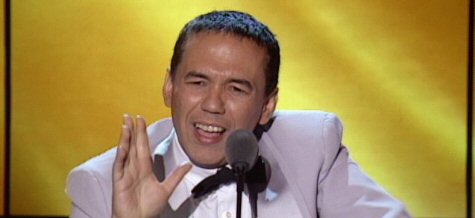
(l. to r.) Comedian Gilbert Gottfried delivering the “Aristrocrats” joke at the Hugh Hefner roast three and a half years ago in New York City, not long after 9/11.

Or do you?
Cooked up by Penn Jillette and Paul Provenza, The Aristocrats is basically about numerous comedians — George Carlin, Paul Reiser, Martin Mull, the great Gilbert Gottfried, Robin Williams, Bob Saget, Whoopi Goldberg, Jason Alexander, Eddie Izzard, Drew Carey, Eric Idle, et. al. — telling the joke and elaborating on their willingness and ability to totally filth out.
The Aristocrats joke isn’t really a hah-hah joke. It’s more like a format that gives the teller an opportunity to free-form his or her ass off.
It’s basically about a family sitting down with a showbiz agent and claiming they have a great act and telling him to sit down and watch them perform it. The act is foul…rancid…in defiance of every tenet of civilized, moralistic behavior.
But the joke isn’t about following a script — it’s about where the teller dares to go. Into, you know, whatever kinds of stool-mashing, anus-invading, semen facials, urine showers…whatever.
(I realize I’ve just offended some readers, and I’d like it understood that I tried to figure ways to describe what The Aristocrats is without using these terms, and none of the polite ways seemed to make it. I’m sure Manohla Dargis’ editors at the New York Times will come up with a vaguely effective diluting, but it won’t be easy.)
Anyway, after the act is over, the agent says, “Wow, that’s a hell of an act. What do you call it?” And the father-of-the-family says it’s called “the Aristocrats.” And that’s it.


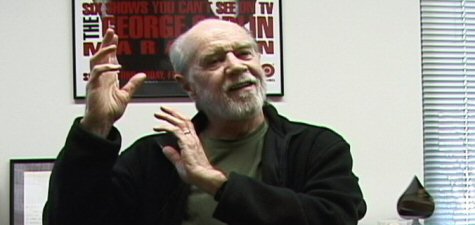
Comedian George Carlin as he appears in The Aristocrats.

It doesn’t sound all that funny, I know…but it gradually gets there, and then it gets better and better, and eventually grows into something else.
The funniest bit of all is a tape of Gilbert Gottfreid telling the joke at a Friars Roast of Hugh Hefner that took place in New York only a few weeks after 9/11. I’ve always thought of Godfrey as howlingly funny, but his “Aristocrats” delivery is flat- out mythic. He’s like Zeus up there on the mike…like Alexander the Great.
The second funniest bit is Kevin Pollak telling the joke like he’s Christopher Walken.
The third funniest bit is Martin Mull telling the “kiki” joke (the one with the two anthropologists captured by loin-clothed natives and being told they can either die or suffer “kiki” and…you know how it goes), but with “aristocrats”-style sexual assault substituted for “kiki.”
I wouldn’t say I’m exactly “proud” of having enjoyed this film but letting it in provides a kind of opening-up experience of a curiously surprising nature.
Sundance honcho Geoff Gilmore expressed part of the film’s weird appeal when he wrote that it “has a seriousness of purpose that places it dead center in any discussion about values and mores and even more specifically the nature of taboo.
The Aristocrats is one of the most shocking and, perhaps for some, offensive films you’ll ever see,” Gilmore concluded. “But its provocativeness is never gratuitous…it creates in its own singular fashion an absolutely arresting portrait of comic art.”
ThinkFilm’s Aristocrat‘s deal was negotiated by company topper Jeff Sackman and senior acquisitions vp Randy Manis, and on behalf of the filmmakers by Ken Weinrib (of Franklin, Weinrib, Rudell and Vassallo) and Peter Golden.


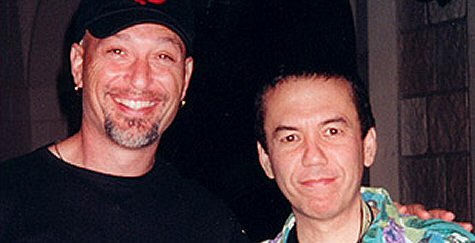
Howie Mandel, Gilbert Gottfreid.

“I have rarely been more excited about a film and its potential,” Sackman said in a press release. “The Aristocrats audience runs the gamut from frat boys to intellectuals, and we’re going to have a great time reaching out to both ends of the spectrum and to everyone in between.”
I don’t usually run with Variety-type trade paper quotes, but I wanted to convey that other semi-credible industry people (besides myself) are behind this film in a deeply sincere (i.e., money on the table) way.
As long as we’re dealing with deeply offensive material, perhaps someone can explain to me — simply, plainly — why the following racist joke is supposed to be funny, and what it friggin’ means, for that matter.
The joke is this: [insert racial slur of your choice] goes into a bakery and asks for a loaf of bread. And the baker says “Brown or white?”. And the [racial slur] says, “It doesn’t matter — I’m on my bike.”
What is that?

Mad About It

Hooray for Paramount Classics’ chutzpah and sharp eyeballs in picking up a Slamdance film I was too bogged down to even hear about until I was in a van heading toward Salt Lake City airport, on my way back to L.A., around 1:30 pm on Thursday.
It’s called Mad Hot Ballroom, a doc about a bunch of New York City public school kids getting into ballroom dancing and revealing aspects of themselves and their world along the way.
The idea of dance being transformative and transcendent is not new, but the journey these kids take from their various stations and attitudes on their way to a big-deal dance competition is said to be extra-special.


(l. to r.) Mad Hot Ballroom kids as depicted in crappy, not-enough-pixels shot copied off the Slamdance website.

Marilyn Agrelo is the director-producer. Amy Sewell is the writer-producer.
Paramount Classics, which also picked up Hustle & Flow wll be using its corporate hookup with MTV and Nickleodeon to promote Mad Hot Ballroom sometime later this year, although I know nothing about when it might come out.
Word is that all the major buyers crammed into the under-ventilated Slamdance theater at the Treasure Mountain Inn to take a look at it. The reactions were (said to be) quite exceptional, even by mountain-air standards.
Paramount’s Ruth Vitale, David Dinerstein, Jeff Freedman and John Sloss of Cinetic Media worked on the deal from late Tuesday into Wednesday’s wee hours. And blah-dee-blah-dee-blah. Great for everyone involved. But, well…can I see it sometime soon?

Rock-Ribbed

“I’ve just seen Million Dollar Baby and want to comment on the supposed ‘rightist, traditionalist’ reaction to the film — the third act, I mean to say — that you spoke of earlier this week.
“First, I would like to thank critics for keeping the lid on the ending of this movie. I hope that I can express my opinion about the film without letting the cat of the bag.
“There are some definite conservative values coming into question in this film. In truth, I think that Clint Eastwood’s character, Frankie Dunn, is quite a conservative man. He has turned to his Catholic faith to help with his past demons and he initially refuses to train a girl boxer.
“The main reason for his not wanting to train her, of course, are old-dog sexist opinions. Just by body language alone you can sense his disgust at Maggie’s family. They are the epitome of why conservatives absolutely despise the welfare system, as Maggie’s mom would rather live in a dumpy trailer and abuse the system then live in a nice house that a family member cared enough to buy them.
“I am a conservative, religious person, and yes, Frankie’s final decision with Maggie is not something that most conservative religious people would do.
“That is the part of the religious right that I cannot agree with. Sometimes the right thing to do is, unfortunately, painfully immoral.
“And by the way, just because the Academy screwed up 20 years ago with Martin
Scorsese not getting a Best Director Oscar for Raging Bull doesn’t mean he should get what amounts to a `pity’ Oscar.
“It’s obvious that Eastwood has become a much better director at this point than Scorsese. Baseball gives the MVP award to the guy with the best year, not the guy who should have won three years ago.” — Derek DiCiccio, Dallas, Texas.

Echoes

“My wife and I recently saw Sideways. We thoroughly enjoyed it, and it hit home as no other film has for a long time.
“In lieu of a bachelor party, last July my best friend Dan and I embarked on a weekend road trip prior to my wedding the following week. While the video chronicle of our trip is, thankfully, far more serene than Sideways, the similarities were hard to miss.
“I’m a freelance automotive journalist and part-time video guy — considerably more successful than the Giamatti character, I might add – and my buddy Dan is and always has been the go-getter lady’s man with the line of shit as long as his arm.
“With many Haden Church lines, Pam whispered, ‘That’s just what Dan would say!’ She’s only known Dan for a few years, but she had him pegged.
“As much as I could relate to the film, I suppose, like a lot of guys, I was also happy to be able to say, `Am I ever glad that’s not me!'” — Jeff Johnston, Eugene, Oregon.


View outside my Park City condo as I waited for the van to pick me up early Thursday afternoon. You can’t tell from the photo but it was snowing and beautiful everywhere at the moment of capture.

Danced Out And so begins

Danced Out

And so begins my eighth and final day in Park City, Utah, and I can’t think of a common thread or theme that fits the experience. The days have burned through like a lit dynamite fuse in a Sam Peckinpah film, only there hasn’t been any kind of explosive finish and I don’t expect there to be. I’m just looking for a clean exit.
All I want to do today is see two or three more films (Hustle & Flow again, just for fun…and then Heights, This Revolution or Ellie Parker), tap out some final thoughts on Thursday morning, and fly home.


(l. to r.) The Ballad of Jack and Rose costars Paul Dano, Camilla Belle and Ryan McDonald at Newmarket’s Chumscrubber party at the Village at the Lift — Tuesday, 1.26.05, 12:05 am.

And then, 18 hours later, around mid-afternoon on Friday, drive up to the Santa Barbara Film Festival and catch the opening-night showing of Melinda and Melinda, the new Woody Allen film.
I’ll guess I’ll be seeing Saturday’s award ceremony on the Sundance Channel like everyone else, and saying to myself, as I do every year, “Darn…I should’ve tried harder to see that one.” Like an atomic clock, like a dependably dull accountant who’s never gone to Italy and never will, I miss several cool films with every new Sundance Film Festival. They’re hot, playing, everyone’s on ’em…I miss ’em.
< ?php include ('/home/hollyw9/public_html/wired'); ?>
Having nothing vital to say, I’ll say this…
* After Monday’s screening of The Squid and the Whale at the Racquet Club, I asked director-writer Noah Baumbach about the similarities between this film and the last three efforts of his colleague Wes Anderson — Rushmore, The Royal Tenenbaums and The Life Aquatic, which Anderson and Baumbach co-wrote.
All four (a) are about a group of extremely bright and precocious types who are gathered together over family ties, school or work, (b) use lots of dry, deadpan dialogue, (c) use a selfish and immature father figure in his 50s at the axis of things, (d) include people at cross-purposes over sexual intrigues, and (e) use selectively-chosen ’60s and ’70s pop tunes on the soundtrack.
I noted these similarities and asked Baumbach in what ways he and Anderson diverge. He seemed uncomfortable with such comparisons, and said he would in fact “dispute” them.
I mentioned to Baumbach after the q & a that while Wes’s films seem to take place in slightly unreal milieus (a place I’ve called “Andersonville”) and are a bit on the oblique, less-than-fully-revealing side when it comes to emotional matters, The Squid and the Whale, which is a partly autobiographical piece based on the strife between Baumbach’s parents when he was a kid in the mid ’80s, is more plain- spoken and even wounding regarding matters of the heart.
* The hot-ticket ensemble flicks that were at least partly about teen angst — The Chumscrubber, Brick, The Ballad of Jack and Rose, Thumbsucker — all seemed to rank as interesting attempts rather than accomplished successes. None exuded the abundant clarity of purpose or confidence or stylistic brio that wakes you up or turns your head around.
The best liked, for what it was worth, appears to be Thumbsucker. And the least successful, to judge by the technical questions asked at Tuesday night’s post-screening q & a session at the Eccles, was The Chumscrubber. (Technical questions always indicate that people are flummoxed about what a film amounts to, or just flat-out don’t like it.)
* John Maybury’s The Jacket (Warner Independent), which was exec produced by Steven Soderbergh, George Clooney and Peter Guber (whose support is supposed to convey the notion that this is a smart, above-average enterprise, which it is) was the second high-grade horror-thriller I saw in connection with Sundance ’05, the initial entry being Wolf Creek.
This is Adrien Brody’s best film (and includes his best performance) since The Pianist.
If it has a spiritual as well as visual cousin, it’s David Croneneberg’s The Dead Zone — another downbeat drama set in a wintry Vermont about a decent, kind-hearted guy tormented by disturbing visions of the future. The fact that Maybury’s film concludes on a note of caring and compassion (the theme is about the relative shortness and instability of life) only adds to its stature.
* I feel especially badly about not trying harder to see Eugene Jarecki’s Why We Fight, which two or three people have recommended to me; Marcos Siega’s Pretty Persuasion, which I wanted to see because it angered or turned off so many; Steve James’ Reel Paradise (although John Pierson has offered to help get me a screener copy); and Kirby Dick’s Twist of Faith, which was just Oscar-nominated for Best Feature Documentary.
* The most satisfying Sundance films I’ve seen over the last seven days, in this order, are Craig Brewer’s Hustle & Flow, Werner Herzog’s Grizzly Man, Greg Mclean’s Wolf Creek, Craig Lucas’ The Dying Gaul, Suzanne Bier’s Brothers and Sebastian Cordero’s Brothers.

Flyer vs. Boxer

Whether or not Million Dollar Baby or The Aviator wins the Best Picture Oscar on February 27th is not, I feel, a vitally important matter.
Nonetheless, Martin Scorsese’s period film was handed 11 Oscar nominations this morning (Tuesday, 1.25), including, naturally, one for Best Picture. This means it will now be the recipient of a psychological bandwagon effect among lazy-minded media types and Academy voters.

Not to be disrespectful, but if that emotionally obtuse, atmospherically un-genuine, overly CG-ed, 1930s dress-up, urine-milk-bottled, Gwen-Stefani-as-Jean-Harlow movie about Howard Hughes wins I will feel very badly.
Not quite as awful as I did when Return of the King and Chicago won, but pretty damn bad.
Any film lover with any kind of fair-minded insight into this competition will most likely feel the same way. An Aviator win will be an occasion for moaning and mourning, except, of course, for interested parties like Gold Derby.com’s Tom O’Neill, a devoted Scorsese ass-muncher since last November.
The Aviator is a “good” film, but nowhere near good enough to be named as the year’s best.
The concept of its alleged superiority is obviously a stretch, but guess what? To a lot of industry watchers who should know better, this doesn’t matter.
“The Oscar’s been going to bigger productions lately, like Chicago, Gladiator and Lord of the Rings,” Entertainment Weekly‘s Dave Karger told a USA Today reporter for a story that went up today. “And no film is bigger than The Aviator.”
Sentiments like these are grotesque…appalling. Karger may be right, but he should be ashamed of himself for airing views of the Oscar race that are short-sighted and wrong and retrograde.

The Aviator has the numbers, a certain admiration and, judging from what I keep hearing, rote Academy support, but Million Dollar Baby has the edge on quality, serious art-film chops, and a straight-to-the-heart component.
Finding Neverland and Ray have never been serious Best Picture contenders, not really, and there are apparently people in the Academy who actually hate Sideways. (I spoke to a former studio bigwig a few weeks ago who used the “h” word, believe it or not, to describe his feelings about it).
The anti-Sideways sentiment is really an anti-Miles sentiment. Some Academy members (i.e., enough to constitute a serious voting block) don’t relate to a lonely pudgy loser who drinks too much wine at the wrong moments, although critics obviously feel differently.
Call it a genetic-aversion factor, but this, in a nutshell, is why Paul Giamatti didn’t get a Best Actor nomination, although he obviously deserves it as much as Jamie Foxx, Clint Eastood or Leonardo DiCaprio…and somewhat more, if you ask me, than Johnny Depp or Don Cheadle.

This, then, is the Best Picture dynamic on the morning of the Oscar nominations, which, obviously, has left me feeling vaguely bummed, cynical and dismissive of mainstream tastes.
We’re looking at a showdown between an eye-filling, reasonably decent film in certain respects vs. a powerful relationship film with a devastating finale that — I’ve been hearing — has prompted some folks of a rightist, traditionalist bent to pull back a bit and look elsewhere.
It’s a choice between an epic-sized, conventionally grandiose period drama about a twitchy oddball Hollywood pioneer…a movie that nobody but nobody feels is any kind of genuinely great film (but which many people in the technical branches feel compelled to vote for because for this or that political reason) vs. a shadowy, relatively quiet father-daughter drama that actually touches the heart and sticks to the ribs.
One of the enduring sentiments out there is that Martin Scorsese deserves his Best Director Oscar because it’s been denied him so long, etc. Scorsese should have won it for Raging Bull 23 years ago, yes, but Oscar handicapper Pete Hammond noted this morning that many great directors (Alfred Hitchcock, et. al.) have been given the Academy cold-shoulder.

“Scorsese is owed an Oscar? Well, get in line,” Hammond said. Using the logic of the Scorsese supporters this year, Hammond asked, “Does this mean that Hitchcock should have won a Best Director Oscar for his work on Family Plot?”
Hammond noted that “if Scorsese loses the DGA Best Director award this Saturday to Eastwood, all bets are off.”
He agreed that “it’s always an uphill climb for a smaller movie like Million Dollar Baby or Sideways to go up against a big juggernaut movie like The Aviator, especially with this morning’s bandwagon effect and all.”
However, he said, there are factors favoring the Eastwood film.
#1: “There has never been a movie about Hollywood that has won the Best Picture Oscar.”
#2: “I was there at the Producers Guild Awards ceremony last weekend when The Aviator won for Best Picture, and the enthusiasm factor was very low…very little applause…the level of enthusiasm isn’t there and yet it’s the kind of movie that people expect should be a Best Picture nominee.

#3: “The fact that Clint got nominated by the actor’s branch for Best Actor this morning is indicative of big support for the film by the actor’s branch, which of course is the largest.
#4: “A lot of The Aviator‘s nominations were technical ones. Baby
doesn’t have costume design, and there’s not much to get into production design-wise when you just have a boxing ring and a gym.”
#5: “People vote for movies they love…that they can get excited about…and the fact is that admiration and enthusiasm levels seem to be much higher for Million Dollar Baby than for The Aviator. People admire The Aviator but they don’t love it.
Hammond says “it’s basically a three-way race between Baby, The Aviator and Sideways. Five nominations for Sideways is a typical slot for that kind of small film…it’s very tough for a dark-horse comedy to pull off a win.”

Special Congrats to…

Catalina Sandino Moreno for nabbing a Best Actress nomination for Maria Full of
Grace
. She won’t win (Hilary Swank is a near-lock) but this is a great score for an actress who’s relatively new to this country, and who deserves to be in more films of Maria‘s calibre. She’s been holding off on committing to the next film — here’s hoping the right one comes along soon.

More Visual Push


The Dying Gaul writer-director Craig Lucas in ground-floor atrium of Sundance Film Festival headqarters at one of three Marriott hotels (don’t ask me to give the exact designation) — Monday, 1.24.05, 2:10 pm.

The backside of Baker-Winokur-Ryder publicist Chris Libby (reddish-orange bag slung over left shoulder) as he decides which journalists to hand out complimentary tickets to in parking lot/congregating area of Park City’s Racquet Club — Sunday, 1.23.05, 3:35 pm.

The Squid and the Whale director-writer Noah Baumbach during post-screening q & a at Park City’s Racquet Club after debut showing of his film — 1.24.05, 7:10 pm.

The Strangers With Candy gang on Main Street (l. to r.): co-writer and director Paul Dinello, co-stars & co-writers Amy Sedaris and Stephen Colbert, and some guy who’s probably had something significant to do with the making or selling of the film but I don’t know his name. (Publicist Jeff Hill informed me and I wrote it down, but it disappeared when the computer crashed without warning on Tuesday afternoon, wiping out over three hours of painstaking work in the blink of an eye) — Monday, 1.24.05, 3:35 pm.

Jeff Feuerzeig, director of The Devil and Daniel Johnston, a documentary that David Poland is calling the “masterpiece” of this year’s festival (whoa…be very careful whenever a critic uses the word “masterpiece”) — Monday, 1.24.05, 8:25 am.

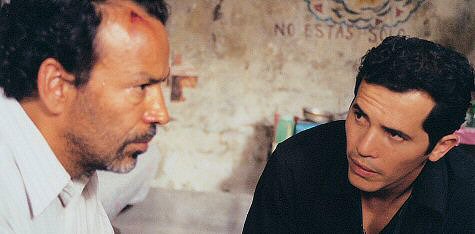
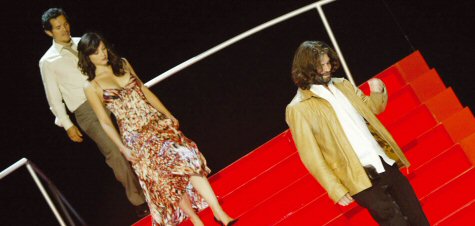
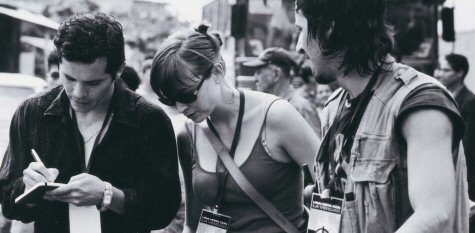
Cronicas director of photography Enrique Chediak, star John Leguizamo, director-writer Sebastian Cordero at Palm Pictures’ party at Riverhorse Cafe — Monday, 1.24.05, 10:25 pm.

Legendary, much-admired German helmer Werner Herzog prior to screening of his latest film, Grizzly Man, at Holiday Village Cinemas — Monday, 1.24.05, 8:25 pm.

The Squid and the Whale costars Jeff Daniels and Owen Kline (son of Kevin Kline and Phoebe Cates), director-writer Noah Baumbach (r.) during post-screening q & a — Monday, 1.24.05, 7:05 pm.

Actress Eddie Daniels (Open House, Ken Park) on the Riverhorse dance floor at Cronicas party — Monday, 1.24,05, 11:05 pm.

Blue Tuesday

“I can understand your feelings about a possible win for The Aviator or Marty Scorsese. But I was wondering about your thoughts on the nomination of Finding Neverland and Depp. I know there seems to be positive critical reactions to this movie, but I found its sentimental manipulation to be off-the-charts.
“I found myself returning, over and over, throughout the overlong third act, to the most compelling question presented by the film: is Johnny Depp’s eyeliner permanent, since it seems to be the same stuff he had on in Pirates?
“Contributing to the oppressive schmaltz factor was Winslet, whom I usually love… but watching her torture her kids for two hours by telling them nothing’s wrong with mommy, then coughing up her lungs made me again return to the central enigma of Depp’s perfectly lined eyes.
“As for Giamatti, I had to laugh when I read your comments that Academy members don’t relate to a lonely pudgy loser who drinks too much wine at the wrong moments, although critics obviously feel differently. My first thought was that you might be implying that critics identify with Giamatti because they often include many pudgy, over-imbibing loser types. I have never met a critic (a respected film-focused one, I mean) and since you have, I was wondering if this is so?” — Zoey.
Wells to Zoey: Some critics have that pudgy, mopey, vaguely boozy thing going, but only a few. Some, like myself, have that perfectly toned, gleaming-white-teeth, Hawaiian tan, square-jawed thing, and yeah, I suppose most critics enjoy the occasional glass of vino, and some of them have morose outlooks on life. So yeah, I guess that accounts for some of them liking Giamatti’s Sideways performance.
“It`s too scary to contemplate to see an average piece like The Aviator win for Best Picture. I may not even see the 2.27 Oscar show just for that very fact, and I haven’t missed it since I was a little toddler. I don`t know if it`s because they`ve lost touch with reality but I just don`t get these guys anymore — every year it gets worse and worse.
The Aviator, a biopic about this man that has neurosis and gets deeper into dementia, was far inferior to the vaguely-similar Nixon or even smaller pictures such as Confessions of a Dangerous Mind and Auto Focus. Scorsese didn’t show us a Howard Hughes we hadn`t seen before in many other flicks — it was all dysfunctional clich√ɬØ√Ǭø√ǬΩs. I still think there`s a great Howard Hughes movie to be done out there, but the once-great Scorsese couldn’t swing it.
“How hard can it be to do a fascinating Howard Hughes film? Everything is there! There’s so much to him that it doesn’t even have to do be cartoonish like Scorsese provided, with a boyish guy with a wimpy voice who seemed to be just getting out of puberty. It’s also ironic that the producer is Mr. Overrated himself, Michael Mann, who did that dreadful other biopic about Muhammad Ali, which was a total bore and didn’t reveal anything new about the man. In both cases there was no joy, which is strange because I’ll bet the real Ali and Hughes had a total blast.
“I haven’t even seen Sideways and Million Dollar Baby since they haven’t come here in this part of the world. And I didn’t feel like going to see Ray. The best I’ve seen this year are Dogville( the first complete Trier film), Fahrenheit 9/11, The Passion of the Christ, A Very Long Engagement and The Bourne Supremacy. These movies made me jump out of my body and realize this is what moviegoing should be.
“And because of that what the Academy has done over the years, promoting frivolous minor movies that may or may not be quality, has been criminal.
“See ya at the red carpet…not!” — S√ɬØ√Ǭø√ǬΩbastien Lecours, Quebec, Ontario.

Rushing It I haven’t got

Rushing It

I haven’t got time to think things through or make what I’m tapping out here sound as good as it ought to, and it pains me to just put stuff up without refinements, but…
The most satisfying Sundance films I’ve seen over the last four days, in this order, are: Craig Brewer’s Hustle & Flow, Greg Mclean’s Wolf Creek (which I wrote about last Friday), and Craig Lucas’ The Dying Gaul (angrier and more bitter than it needs to be, but is nonetheless a fully felt, precisely crafted piece about denial and betrayal, a superb psychological suspense drama and a nicely tuned Hollywood backstabber).


Sculpture of Dying Gaul, created in 230 B.C., residing today in Rome’s Capitoline Museum, and a thematic motif in Craig Lucas’s film of the same name.

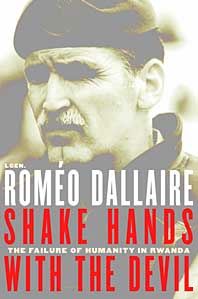
The other A-listers are Sebastian Cordero’s Cronicas, John Maybury’s The Jacket, Suzanne Bier’s Brothers, and Peter Raymont’s Shake Hands with the Devil: The Journey of Romeo Dallaire.
Matthew Vaughan’s Layer Cake is an absorbing, carefully measured, constantly crackling British crime film that deliberately eschews the Guy Ritchie-esque razzle dazzle that we’ve all come to expect from movies about the criminal underworld, and offers yet another riveting, multi-layered performance from Daniel Craig.
< ?php include ('/home/hollyw9/public_html/wired'); ?>
Mike Binder’s The Upside of Anger is perhaps a little too on-the-nose at the finish, but it’s honest and human and builds into something tangible, and it contains one of the most likably relaxed and touching Kevin Costner performances ever.
The next big achiever, I’m guessing, with be Arie Posin’s The Chumscrubber, which is screening tomorrow night (i.e., Tuesday) at the Eccles. As I’m leaving Thursday morning I’m already starting to grapple with the likelihood of not being able to see this and that film, given the workload and all.
Yesterday afternoon I caught Mike Mills’ Thumbsucker, and after it was over I can’t say I was doing cartwheels in the Racquet Club parking lot. A moderately resonant drama about teenage uncertainty and suburban angst, it’s one of those films that works on a scene-by-scene basis, but seems to wander and glide along without having a particular goal in mind. There’s no story tension or a discernible arc, but the human-scale observations about this and that (pic is based on Walter Kirn’s novel of the same name) ring true, for the most part…for what it’s worth.
I’m going to just post what I have now and maybe revisit the Intel room at the Yarrow Hotel this afternoon and add or refine or whatever. This is so friggin’ half-assed, I can’t stand it.

Far and Away

For me, so far, Hustle & Flow is still the shit.
Out of twelve or thirteen films I’ve seen here so far, none have delivered a package of this caliber — absolutely note-perfect acting (headlined by Terrence Howard’s already-legendary performance as D-Jay, a flawed, at times brutally insensitive man in a classic do-or-die struggle to make it as a rap artist), formulaic panache, a quality that feels to me like ripe atmospheric truth, exotic charm and sublime emotional satisfaction.
Some are saying Flow is too formulaic, or that it faces an uphill challenge with red-state audiences who may not want to get up close and personal with a film about a drawlin’ Memphis pimp. You know what I’m saying. A certain vaguely racist aversion.
Well, it is formulaic…but in the most intriguing way possible. To say you’ve “seen this kind of film before” means nothing. The question must always be, “How well was it made, and how much did you care?”


A deliberately arty-farty out-of-focus shot taken on set of Hustle & Flow.

At times, Hustle & Flow talks and walks like a ’70s blaxploitation film (that yellow typeface used for the opening main-title sequence is pure Sam Arkoff), but Brewer and Howard and an ace-level supporting cast (Anthony Anderson, Taryn Manning, DJ Qualls, Taraji Hewnson, Ludicris) make it play true and steady and right as rain.
Every frame of this movie says, “You know what we’re doing…this guy wants to climb out of his own hole and maybe we’re gonna show him do that…but we’re gonna do it in a way that feels right to us.” And once D-Jay hooks up with Anderson and Qualls and starts to put together a sound and record a few tracks, Hustle & Flow lifts off the ground and pretty much stays there, suspended.
I find it staggering that seasoned film industry journos would suggest, as they have to me over the last 24 hours or so, that not enough paying customers will want to see this thing. Forget the funky backdrops and gritty-ass particulars — is there anyone out there who can’t relate to a character who feels stuck in a tired groove and wants to do more with his/her life? Is there anything more commonly understood these days?
Whatever you might expect to feel about D-Jay, he is, by the force of Howard’s acting and Brewer’s behind-the-camera input, utterly real and believable, and even with his anger and brutality you can’t help but root for him. And, for that matter, the film.

Meanwhile…


Mike Mills (r.), director-screenwriter of Thumbsucker, fielding questions after Sunday afternoon’s screening at Park City Racquet Club, with costars Lou Pucci (l.) and Tilda Swinton (middle) — 1.23.05, 6:55 pm.

Thumbsucker costar Keanu Reeves (r.) on Racquet Club stage after Sunday’s screening, next to charming actress who plays a very small role — 1.23.05, 6:50 pm.

Can’t Beat It

I feel whipped, anxious and extremely behind schedule this morning.
Okay, I always feel this way…but it’s more pronounced during Sundance. The question each day is, “How many bowling pins will fall to the floor today? How many films I’d like to see or parties I’d like to attend or quickie interviews I’d like to do will I be forced to blow off due to having to feed this bear of a column?”
I started writing this early Monday morning (just before eight), and at one point I thought I had about two hours before having to run off to see the first film of the day — Steve James’ Reel Paradise, a 110-minute doc about indie film maven John Pierson’s experience running a small movie theatre on the island of Fiji.
But I didn’t make the Pierson screening, and now, at 11:25 ayem, I’m trying to finish in time to make the noon screening of Pretty Persuasion at the Eccles. And I’m wondering if I can even make that.

Flow Chart

Sunday’s big news, to recap, was the charged response to Hustle & Flow after a Saturday night screening at the Park City Racquet Club, along with the subsequent announcement, some eight or nine hours after the screening began at 8:30 pm, that the film has been acquired for $9 million by Paramount.
The MTV execs went home around 4 ayem, but the deal closed at roughly 5:30 am this morning, partly as a result of a certain Paramount executive remarking to UTA’s Jeremy Zimmer, “We can’t do this anymore…I have to go to bed.”
No immediate word as to whether Hustle & Flow will be distributed by “big” Paramount or “little” Paramount (i.e., Paramount Classics), but the answer sounds like a no-brainer. Indie-type Sundance movies need the kind of TLC that is generally not dispensed (no offense) by big-studio marketing departments.
The $9 million is part of a $16 million, 3-picture deal that will cover two other films to be produced and directed by Flow producer John Singleton for $3.5 million each.


Part of the Hustle & Flow posse after Saturday night’s screening at the Park City Racquet Club: (l. to r.) Terrence Howard, producer Stephanie Allain, costar Taryn Manning, director-writer Craig Brewer — 1.22.05, 10:45 pm.

The unofficial word is that Hustle & Flow will probably open over the 4th of July weekend, which would be an appropriate date since celebration of this holiday figures into the plot.
Paramount publicist Nancy Kirkpatrick called to say that Paramount’s newly-installed chief Brad Grey, plus Par marketing head Rob Friedman and production president Donald De Line, saw Hustle & Flow in Los Angeles on Saturday night while Viacom co-president and COO Tom Freston was catching it at the same time at the Park City Racquet Club.
I found it interesting that Howard, who was the last Hustle cast member to be called to the stage after Saturday’s screening, seemed more comfortable on the edge of the spotlight than occupying it front-and-center.
There’s no question that his performance as D-Jay, a Memphis pimp in a midlife crisis with musical aspirations, has put him on the map in the exact same way that Morgan Freeman’s performance as a pimp in Street Smart (along with Pauline Kael’s rave in The New Yorker) turned him into “Morgan Freeman.”
Anyway, the JPEGs now and the copy on Monday morning sometime….along with some new photos I’ll probably snap during my Sunday adventures after I finish posting (which always takes longer than expected).

Visual Push


Brothers director and story co-author Suzanne Bier with star Connie Nielsen after Saturday afternoon’s screening at the Egyptian theatre on Main Street — 1.22.05, 2:10 pm.

Hollywood Reporter deputy film editor and columnist Anne Thompson (l.) and film business editor Nicole Sperling (r.) in foyer entrance to a truly deafening party for Layer Cake, held on Park City’s Main Street — Friday, 1.21.05, 10:35 pm.

The Dying Gaul screenwriter and director Craig Lucas (r., on the mike) and (l. to r.) cast members Peter Sarsgaard, Campbell Scott and Patricia Clarkson after late Saturday afternoon screening of the drama, which is Lucas’s filmmaking debut — 1.22.05, 7:15 pm.

Exotic dancer at party for party for Randy Barbato and Fenton Bailey’s Inside Deep Throat, held inside garage space adjacent to Park City Library — Friday, 1.21.05, 11:35 pm.

Relatively small container of pre-popped popcorn selling for $4 dollars at Park City’s Egyptian theatre — taken just before Brothers screening on Saturday, 1.22.05, at 11:55 am.

Hustle & Flow producers Stephanie Allain (middle) and John Singleton (r.) stand with writer-director Craig Brewer after after Saturday night’s screening at the Park City Racquet Club — 1.22.05, 10:50 pm.

The Chumscrubber and Dear Wendy star Jamie Bell (l.) with unidentified (but obviously spirited) woman during latter stages of Inside Deep Throat party — Friday, 1.22.05, 12:25 am.

Layer Cake director Matthew Vaughan seated during interview inside atrium space on first floor of Park City Marriott — Saturday, 1.22.05, 11:05 am..

Congenial and photogenic Dear Wendy director Thomas Vinterberg with an apparently significant other outside Eccles theatre just before screening of his film — Saturday, 1.22.05, 2:45 pm.

Hustle & Flow star Terrence Howard (also in Lackawanna Blues) during post-screening interview before audience at Park City Racquet Club — Saturday, 1.22.05, 11:05 am.

Flora outside Hollywood Elsewhere condo — Thursday, 1.20.05, 11:05 am.

Brothers director Suzanne Bier after Saturday’s showing at the Egyptian theatre, before she introduced Connie Nielsen — 1.22.05, 2:05 pm.

Inside Deep Throat dancers at post-screening party — 1.22.05, 12:05 am.

Erratum

“Just to let you know that Nathan Phillips isn’t the whacko in Wolf
Creek
— John Jarrat is. Phillips plays the twentysomething guy. Jarrat’s been on Australian TV for years. Phillips has also been on the tube for a while, but he’s only about 24 or 25.
“And you’re right about the outback police force, by the way. But then any force would have trouble patrolling an area where people own farms that are bigger than some European countries.” — John Truslove, Melbourne, Australia.
Wells to Truslove: Thanks for offering the correction. I’ll fix the error right away.

Stupid Spoiled Whore

“If you have not seen it, hunt down the South Park episode called ‘Stupid Spoiled Whore,’ about Paris Hilton and the utterly ruthless and unforgiving attitudes about her, especially as they seem to be manifesting in force these days. It’s definitely worth 23 minutes of your life.” – Gabriel Neeb.


Frame capture from Paris Hilton sex video.

“I’m 100 percent behind you in protesting the appearance of tabloid trash queen Paris Hilton at Sundance. If someone told her that in order to appear at the parties she would have to watch as many films as she could showing at the festival, I’m sure she would pack up and leave ASAP. And major kudos on the use of the Hilton sex tape screen shot as your stock photo.” — Angry Dick 2.
“I think there√¢‚Ǩ‚Ñ¢s more in you yet to write about porn society, as typified by Paris Hilton. I find it interesting that on this you and I agree. Any chance you√¢‚Ǩ‚Ñ¢ll write more about that issue?” — Roy “Griff” Griffis

Flow Chart I’ll be banging

Flow Chart

I’ll be banging out a Monday column, of course, but why not run some photos I took on Friday and Saturday right now (i.e., Sunday afternoon)?
Sunday’s big festival news is the enormous response to Craig Brewer’s astounding and immensely satisfying Hustle & Flow after an 8:30 pm screening Saturday night at the Park City Racquet Club, along with this morning’s announcement that the film has been acquired for $9 million by MTV/Paramount.


Part of the Hustle & Flow posse after Saturday night’s screening at the Park City Racquet Club: (l. to r.) Terrence Howard, producer Stephanie Allain, costar Taryn Manning, director-writer Craig Brewer — 1.22.05, 10:45 pm.

The MTV execs went home around 4 ayem, but the deal closed at roughly 5:30 am this morning, partly as a result of a certain Paramount executive remarking to UTA’s Jeremy Zimmer, “We can’t do this anymore…I have to go to bed.”
No immediate word as to whether Hustle & Flow will be distributed by “big” Paramount or “little” Paramount (i.e., Paramount Classics), but the answer sounds like a no-brainer. Indie-type Sundance movies need the kind of TLC that is generally not dispensed (no offense) by big-studio marketing departments.
< ?php include ('/home/hollyw9/public_html/wired'); ?>
The $9 million is part of a $16 million, 3-picture deal that will cover two other films to be produced and directed by Flow producer John Singleton for $3.5 million each.
The unoffical word is that Hustle & Flow will probably open over the 4th of July weekend, which would be an appropriate date since celebration of this particular holiday figures into the story of the film.
Paramount publicist Nancy Kirkpatrick called to say that Paramount’s newly-installed chief Brad Grey, plus Par marketing head Rob Friedman and production president Donald De Line, saw Hustle & Flow in Los Angeles on Saturday night while Viacom co-president and COO Tom Freston was catching it at the same time at the Park City Racquet Club.
I found it interesting that Howard, who was the last Hustle cast member to be called to the stage after Saturday’s screening, seemed more comfortable on the edge of the spotlight than occupying it front-and-center.
There’s no question that his performance as D-Jay, a Memphis pimp in a midlife crisis with musical aspirations, has put him on the map in the exact same way that Morgan Freeman’s performance as a pimp in Street Smart (along with Pauline Kael’s rave in The New Yorker) turned him into “Morgan Freeman.”
Anyway, the JPEGs now and the copy on Monday morning sometime….along with some new photos I’ll probably snap during my Sunday adventures after I finish posting (which always takes longer than expected).

Visual Push


Brothers director and story co-author Suzanne Bier with star Connie Nielsen after Saturday afternoon’s screening at the Egyptian theatre on Main Street — 1.22.05, 2:10 pm.

Hollywood Reporter deputy film editor and columnist Anne Thompson (l.) and film business editor Nicole Sperling (r.) in foyer entrance to a truly deafening party for Layer Cake, held on Park City’s Main Street — Friday, 1.21.05, 10:35 pm.

The Dying Gaul screenwriter and director Craig Lucas (r., on the mike) and (l. to r.) cast members Peter Sarsgaard, Campbell Scott and Patricia Clarkson after late Saturday afternoon screening of the drama, which is Lucas’s filmmaking debut — 1.22.05, 7:15 pm.

Exotic dancer at party for party for Randy Barbato and Fenton Bailey’s Inside Deep Throat, held inside garage space adjacent to Park City Library — Friday, 1.21.05, 11:35 pm.

Relatively small container of pre-popped popcorn selling for $4 dollars at Park City’s Egyptian theatre — taken just before Brothers screening on Saturday, 1.22.05, at 11:55 am.

Hustle & Flow producers Stephanie Allain (middle) and John Singleton (r.) stand with writer-director Craig Brewer after after Saturday night’s screening at the Park City Racquet Club — 1.22.05, 10:50 pm.

The Chumscrubber and Dear Wendy star Jamie Bell (l.) with unidentified (but obviously spirited) woman during latter stages of Inside Deep Throat party — Friday, 1.22.05, 12:25 am.

Layer Cake director Matthew Vaughan seated during interview inside atrium space on first floor of Park City Marriott — Saturday, 1.22.05, 11:05 am..

Congenial and photogenic Dear Wendy director Thomas Vinterberg with an apparently significant other outside Eccles theatre just before screening of his film — Saturday, 1.22.05, 2:45 pm.

Hustle & Flow star Terrence Howard (also in Lackawanna Blues) during post-screening interview before audience at Park City Racquet Club — Saturday, 1.22.05, 11:05 am.

Flora outside Hollywood Elsewhere condo — Thursday, 1.20.05, 11:05 am.

Brothers director Suzanne Bier after Saturday’s showing at the Egyptian theatre, before she introduced Connie Nielsen — 1.22.05, 2:05 pm.

Inside Deep Throat dancers at post-screening party — 1.22.05, 12:05 am.

Erratum

“Just to let you know that Nathan Phillips isn’t the whacko in Wolf
Creek
— John Jarrat is. Phillips plays the twentysomething guy. Jarrat’s been on Australian TV for years. Phillips has also been on the tube for a while, but he’s only about 24 or 25.
“And you’re right about the outback police force, by the way. But then any force would have trouble patrolling an area where people own farms that are bigger than some European countries.” — John Truslove, Melbourne, Australia.
Wells to Truslove: Thanks for offering the correction. I’ll fix the error right away.

Stupid Spoiled Whore

“If you have not seen it, hunt down the South Park episode called ‘Stupid Spoiled Whore,’ about Paris Hilton and the utterly ruthless and unforgiving attitudes about her, especially as they seem to be manifesting in force these days. It’s definitely worth 23 minutes of your life.” – Gabriel Neeb.


Frame capture from Paris Hilton sex video.

“I’m 100 percent behind you in protesting the appearance of tabloid trash queen Paris Hilton at Sundance. If someone told her that in order to appear at the parties she would have to watch as many films as she could showing at the festival, I’m sure she would pack up and leave ASAP. And major kudos on the use of the Hilton sex tape screen shot as your stock photo.” — Angry Dick 2.
“I think there√¢‚Ǩ‚Ñ¢s more in you yet to write about porn society, as typified by Paris Hilton. I find it interesting that on this you and I agree. Any chance you√¢‚Ǩ‚Ñ¢ll write more about that issue?” — Roy “Griff” Griffis

Sick at Sundance I started

Sick at Sundance

I started to fall ill Wednesday evening — coughing, congestion — and I felt sicker all day Thursday. I did a lot of sleeping, drank a lot of water. And on top of this, I discovered Wednesday night that the phone in the condo I’m staying in has been shut off, so there’s been no internet (and the phone won’t be turned back on until Friday morning…great).
But at least I managed to drop by the Sundance Film Festival headquarters Thursday morning to pick up my press pass, along with three ‘loaner’ tapes of Sundance flicks. I went back to the condo (right behind the Radisson Hotel) and watched them between naps. One sucked, but two were quite good.

Greg Mclean’s Wolf Creek, which has been picked up by Dimension, is dark as shit, but it’s a knockout. It’s going to be a sizable hit when it opens this summer, and for good reason. It’s well made, genuinely scary and very believable.
Shown as part of the just-begun World Dramatic Competition, it will have its first festival showing on Monday evening, and will also screen Tuesday and Wednesday. If you’re in town, don’t miss it.
< ?php include ('/home/hollyw9/public_html/wired'); ?>
The theme of this way-above-average horror flick is basically ‘watch yourself when you go on a trip to an outlying area, because it’s entirely possible that you might run into a degenerate homicidal wack-jobber.’ Especially in the Aussie wasteland, where there doesn’t seem to be any kind of civilized anything, much less a visible police force.
The Wolf Creek rundown is that three late-twentysomethings from Sydney (Nathan Phillips, Cassandra Magrath, Kestie Morassi) run into one of these hayseed nutbags during a camping trip to the outback.
The fiend (deliriously well played by John Jarrat) is a good-natured yokel type with a vaguely charming, wholly diseased personality. The more ghastly his actions, the more he chuckles. He’s like the
bad-seed cousin of Crocodile Dundee who’s gone crazy from loneliness and who probably smells like a dog and farts 24/7.
One of Jarrat’s better lines, spoken during an extremely dark moment, is straight from the first Dundee film.

His coming is expertly foreshadowed by Mclean when the two-girls-and-a-guy meet up with another outback psycho at a roadside rest stop. You can feel the awful stuff approaching from this scene on.
Scene for scene, there’s very little that feels formulaic in Wolf Creek (apart from the boiler-plate borrowings from Deliverance, The Last House on the Left and The Texas Chainsaw Massacre).
There are always those in any audience who say they can predict what will happen, or who always claim after-the-fact that they saw it coming. Trust me, there’s no predicting where this film is going. I was genuinely shocked at two third-act plot turns.
Nothing that happens seems conventionally movie-ish, which is partly due to the fact that Mclean based his screenplay on a true story.
My only beef is that it’s hard to understand a lot of the dialogue during the first half. Those ‘strine accents can be mothers. When Miramax puts the DVD out, they should include optional subtitles.
Peter Raymont’s Shake Hands with the Devil: The Journey of Romeo Dallaire is a documentary companion piece to Terry George’s Hotel Rwanda…or vice versa.
I liked and was moved by Hotel Rwanda, but the doc is sadder, deeper, more affecting. Raymond is a bit more of a visual poet than George. He pays attention to Rwanda’s natural beauty, for one thing, and I don’t mean just the landscapes but the feeling in the eyes of the natives. There’s a quietly focused tone in Shake Hands with the Devil that somehow conveys a fuller absorption of the overall.
Dallaire is a former U.N. peacekeeping commander who went through all kinds of hell and torment during the 1994 Rwandan massacre (he was played, so to speak, by Nick Nolte in Rwanda) as he tried — without much effect — to maintain order and do something to contain the slaughter.

Dallaire feels guilty about this failure, but he was under-funded and under-supported by the U.N., and he doesn’t seem to be a guy who has ever dodged a tough situation. Decency and compassion seem like natural components in his DNA.
The doc was shot last year when Dallaire revisited Rwanda for a ten-year memorial anniversary of the horror. Raymont explains the background of the Hutu-vs.-Tutsi hatred, somewhat. But he never just says (as I feel he should have) that the Tutsis were, for the most part, better educated, jacket-and-tie types with ties to the Belgian colonialists, and that the Hutu killers were basically disenfranchised yahoo rednecks.
Bill Clinton is ridiculed for having said during a visit to Rwanda (i.e., years after the killings) that he didn’t fully grasp the degree of the savagery that was happening during April and May of ’94. An outspoken talking-head authority says in no uncertain terms this is total bunk.
There are supposed to be a couple of decent sex scenes in Hal Hartley’s The Girl from Monday, and this, frankly, is why I wanted to see it. I respect Hartley but his films have always bored me, and this one is true to form. No, it’s worse.
The story is some kind of futuristic political thing, and there’s no energy or tension to any of it. Or rather, the portions of the film that I saw. I was feverish, remember, and I was sitting in a big fat leather easy chair. I just wanted to see the actresses take their clothes off, but I nodded off a couple of times and missed the good stuff.

Early Talk

I heard two tips at a Wednesday evening dinner party in Deer Valley. Take ’em with a grain.
One, forget Kevin Bacon’s Loverboy, a drama about twisted motherhood that will show at the Eccles on Monday evening and at the Library on Tuesday afternoon. I√ɬØ√Ǭø√ǬΩm sorry to pass this along, but a guy who saw it earlier this week told me it’s too gloomy and sluggish.
This was a sales guy talking, however, so maybe David Edelstein, Charles Taylor or Armond White will like it.
And two, I was told I should catch David LaChappelle’s Rize, which is said to be crappy on a story level but apparently has some heat as a dance film…you know, on an anthropologically vital, life-in-the-here-and-now vein.

It’s basically about ‘krumping,’ a South Central dance phenomenon that involves super- quick body gyrations, and various dancers competing with each other, etc.
Shot on a Sony High-def camera, LaChapelle�s 84-minute feature is based upon his 24- minute documentary short, Krumped, which showed at Slamdance two or three years ago.
The idea is that kids of a wayward, egoistic persuasion are more into krumping than gang-banging. Krumping is their voice, their expression…whatever, dawg.
An acquisitions guy who claimed to be on vaguely familiar terms with L.A. clubbing said that Rize (which is pronounced ‘rise’) has an aliveness that will work with younger African-American audiences, but his colleagues didn’t agree with him so that was that.
I was telling people at the party that Craig Brewer’s Hustle and Flow, one of the festival’s most hotly anticipated films (said to feature a lead breakout performance by Terrence Howard), kept blurring in my mind with Rattle and Hum , the Phil Joanu U2 concert film, and Shake, Rattle and Roll.
I suppose the blur will go away when I see Hustle at a Saturday afternoon press screening and it takes root on its own terms, but until then…

Snaps


View of Deer Valley from swanky Solamere Drive chalet being rented by Paramount Classics co-president Ruth Vitale. I love that digital cameras can capture this much light and detail after dark. If I were to manipulate further I could probably whiten the snow a bit more.

Second-floor living room — Thursday, 1.20.05, 1:27 pm.

View from rear porch of condo — Thursday, 1.20.05, 1:30 pm.

An unruly desk indicates a creative mind — Thursday, 1.20.05, 1:33 pm.

Protest Paris!

An e-mailed press release announced earlier this week that the dreaded Paris Hilton is supposed to attend tonight’s party for Rize at the Gateway Center (at 136 Heber), which starts around 9:30 or 10 pm.
I sent the following e-mail off to a couple of people who are repping the party:
“If it’s okay with you guys, I am going to try and organize a mass boycott of the Rize premiere party, preceded by a march down Main Street (complete with chants, torches and picket signs), all to protest the appearance of Paris Hilton at the Sundance Film Festival.
“Lloyd Grove at the New York Daily News started something, I think, when he promised a few weeks ago that he would no longer write about Paris. I believe her to be this year’s symbol of everything rancid, glossy, overblown and spiritually screwed-up about the Sundance Film Festival…or what it’s become, rather.

“Will Paris in fact be at this party? If so, could you ask her to autograph my picket sign? And why haven’t I been invited to the party instead of being sent this entirely demeaning invitation to ‘cover’ the party?√ɬØ√Ǭø√ǬΩ
One of the publicists responded by saying, “I am sure Paris would sign it if you agreed to run a photo of her doing it.”
I am half serious about protesting her presumed appearance. A lot of people out there despise what she seems to be, and certainly what she represents. Do a Google search of �protest Paris Hilton� and you�ll see what I mean.
I guess there’s no point in this anti-Paris venting. We should just be good sheep and lie down and continue to take pictures of the rich and powerful and watch them on tabloid TV. Wherever they go, whatever they are.
In any case, the aesthetic problem presented by the appearance of leeches and ding-a-lings at the festival has been geographically solved.
It’s been clear for the last two or three years that there are two Sundance festivals. The one about movies and people who matter happens at the Marriott, the Eccles, the Library, the Yarrow, the Holiday Village and the Racquet Club. And the one that’s about parties, corporate piggybackers and GenX binge-drinkers happens on Park City’s Main Street.
Other expected “guests” at tonight’s Rize party include Pamela Anderson, Snoop Dogg, Steven Dorff, Erika Christiansen and Busy Philipps.
Where is Al Qeada when you really need them?

Maneuvers

You’d think that a rented Park City condo would have a working phone, at the very least for local (internet service provider, medical emergency) calls. You’d think that between the owner and the renter, somebody would ask about this or explain or something. Think again.

When I called Thursday morning about needing to get the condo phone turned back on, the people at Qwest said they’d have to wait three business days to activate the line. That meant Monday afternoon at the earliest, or possibly Tuesday morning.

The only way they could do it sooner, they said, would be if they were faxed a letter from a doctor saying it’s essential that I have a phone. I was feeling shitty anyway so I went down to the Park City Family Medical Clinic and saw a doctor (a nice woman named Eileen Price-Burke), and she agreed to write the letter to Qwest.
But I had to pay her fee of $115 plus $20 for a bottle of codeine cough syrup and $20 for an inhaler. The Qwest account cost $45 to get things rolling so the entire cost to get the phone turned on was about $200…not counting the stress.
The Qwest installation guy didn’t get here first thing Friday morning, like the dispatcher promised. He didn’t even show up in the ayem. Thanks, guys.

Nick and Neville

I’ve had this unformed thought about Nick Lachey for a long time, and it finally hit me last weekend: he’s Neville Brand.
A World War II hero with thick features, a gravelly voice and a street attitude, Brand mostly played heavies. One of his first decent roles was in Stalag 17 (�53), and he played Al Capone in the TV series The Untouchables.

Lachey (pronounced “lashay”) is Jessica Simpson’s vaguely doltish husband who hangs around the house, bitches about day-to-day stuff and tries to get his music career rolling on Newlyweds , their MTV “reality” show.
Anyway, they’re more or less the same guy…right?
Check out the shot of Neville in a cowboy hat — that was taken in the late ’50s or early ’60s, when he was in his 40s. By the time Lachey is 40-plus he√ɬØ√Ǭø√ǬΩll also have that portly, beefed-up, potato-head look.

Lachey should start playing bad guys. Right now he’s just a house-husband. In the next Newlyweds season Nick will reportedly “build a studio in his home, sign with Jive Records and works with his label to get his CD in stores,” etc. But all he’s seemed to do on the show so far is walk around in T-shirts and baggy shorts and sometimes help the delivery guys install a new refrigerator.
Note to readers: I’m totally aware of how shitty it looks for the Neville Brand and Nick Lachey photos to be differently sized.

Bad Press Computers

The flat-screen computers in the press room at the Sundance Marriott are unfriendly to journalists.
That’s because the person who set them up made sure that users can’t access the hard drive, which is what you need to do if you’re going to transmit text or JPEG’s off one of those portable USB drive doo-dads. The Marriott computers only let you surf the internet, meaning they’re almost totally worthless from a working point of view.
Thank fortune that the Intel people have a free business center (or press room) on the 2nd floor off the Yarrow hotel, with six or seven connected laptops and nothing preventing you from doing your job. They also have a wireless thing going so you can bring your laptop in and get online as long as you have a wireless card. This is Intel’s second year at the festival.

Parting Shot

This was taken from the back balcony of the condo around 10 ayem on Friday morning. Tourists take balloon rides all day long, apparently. This would probably be a very cool thing to do if you�re dressed for it.

Blow for Freedom

I came to chortle at Inside Deep Throat and, to be honest, maybe feel a tiny bit excited by it…but I came away feeling leveled-out, sobered-up, un-randy.
Sobered up doesn’t mean bummed, which is how I pretty much felt after seeing Deep Throat itself. It was such a shitty movie…so cheesy, stupid, clueless. But it made raunch seem hip for that five- or ten-minute period in `72 or ’73 with the New York Times-propagated concept of “porno chic.”

Okay, there was something cool and, of course, basically harmless about middle-class couples, single women and other atypical patrons lining up in front of porn theatres to see this film way back when…brazen, liberating, vaguely revolutionary…but from today’s perspective there’s something about it that seems a bit odious.

What did Fear of Flying author Erica Jong once say about watching porn? “After a minute or so, I want to find a partner and immediately have sex. But after watching for ten minutes, I never want to have sex again.”

A woman friend of mine didn’t want to go to a recent screening of Randy Barbato and Fenton Bailey‘s 90 minute documentary, which will have its big debut on Friday night at the Sundance Film Festival, because she hates the Deep Throat legend and metaphor, and assumed the doc would be flip and snickering.

It’s not. It’s actually something a conservative-thinking prude could be okay with, as it passes along information here and there that would support the view that pornography is basically demonic. It also passes along the view that it’s all pretty harmless and that the anti-porn forces are a fairly tedious bunch. And it is fairly funny here and there.

The drugstore toupee that Deep Throat‘s writer-director-producer Gerard Damiano wears during his interview says it all, if you ask me.

Inside Deep Throat, which reportedly wouldn’t have been made without the obsessive interest in the subject by producer Brian Grazer, follows the story of the most profitable film of all time right into the scuzzy deep pockets of the mafia, the reactionary mentality of Nixon-era politicians and prosecutors, the ready-teddy libido of the American public in the early `70s and the sadnesses of Linda Lovelace and Harry Reems.

The commentators include Throat‘s Damiano, some of his former cronies, two or three prosecutor or law-enforcement types, Jong, Reems, a friend of Lovelace’s along with a disapproving sister, two or three guys who showed the legendary film in their theatres in the early `70s, Georgina Spelvin, Susan Brownmiller, disco singer Andrea True (“More, More, More”), John Waters, Camille Paglia, Gore Vidal and Norman Mailer.

If there’s a single message than comes through, it’s that working in pornography always seems to lead to great unhappiness and regret for the performers. This point was made by Paul Thomas Anderson‘s Boogie Nights, I think, and seems pretty much supported by facts.

I don’t think anyone needs to be reminded that porn actors and filmmakers are, 96% of the time, staggeringly un-talented people, which of course is what makes porn films so godawful to sit through, but there’s no escaping this observation, in any event.

Barbato and Bailey explore Damiano’s making of the flick in South Florida, the diseased relationship between Lovelace and her psychotic boyfriend (i.e., a control freak who taught her the deep-throat technique), the cultural reaction after the film started to get around in respectable circles, the legal attacks upon it (and particularly upon Reems, who was facing five years in jail in the mid ’70s simply because he acted in it), Lovelace’s difficult, somewhat sad life in the `80s and `90s (she died in a car crash in ’02), and Reems’ descent into alcoholism until he swore off booze and converted to Christianity in the mid `90s.

Reems is today a successful real-estate broker based in Park City, Utah, which of course places him right smack dab in the middle of this year’s Sundance festival. I impulsively called Reems on my cell phone right after Monday night’s screening, and damned if he didn’t pick up. We’re supposed to talk sometime this weekend.

The best material comes from an elderly Florida distributor (forgotten his name, notes weren’t provided) who played Throat and ran afoul of some South Florida goombahs who threatened everyone involved so as to grab an inordinate share of the box-office. While he’s talking to the camera, his wife sits some 20 or 30 feet away and crabs about how he should stop talking, because she’s still afraid of the mob guys.

A New York journalist friend who saw Inside Deep Throat two days ago called it “fun and fascinating, if a little too glib. It’s amazing who they dug up — Reems, Damiano, Spelvin, True. But too many of the pro-First Amendment types seem like the usual suspects: Hefner, Paglia, Waters, Vidal.

“The film delves into the hugeness of porn today, but it has nothing to say about the pornofication of the culture,” he added.

He’s right — the doc could have made more out of this. It could have explored the various forms of pornography that have become commonplace. Pornography has arguably become the dominant social metaphor of our times. It seeps out of every cultural pore, out of nearly every act of mass-media attention-getting.

Paris Hilton is a pornographic manifestation, and I’m not even referring to her sex tape.

Mary Hart, Pat O’Brien and Jann Carl of Entertainment Tonight are pornographers of a mainstream, glitzy stripe.

Every day, I believe, I’m confronted with architectural pornography on the streets of Los Angeles.

It’s gotten so that porn’s least pernicious aspect, by far, is the sexual. Internet porn (especially the amateur stuff) seems so innocuous and inoffensive alongside corporate-level porn that it doesn’t bear mentioning in the same breath.

It Begins Again

Every year five or six films first seen at the Sundance Film Festival punch through and become movies that regular ticket-buyers want to see, or at least feel they should try to catch up with. Or is the number more like seven or eight?

It may be a tad higher this year. I’m envisioning — hearing about — eleven films, give or take, although I’m presuming at least two or three of these will fall on their face. Two or three others not showing up on anyone’s lists right now will also pop through, if previous history means anything.

Hustle & Flow, absolutely. The Chumscrubber. Wolf Creek, for sure. The Dying Gaul….but one should always be wary of a movie with the word “dying” in its title, as it always seems to promise moroseness and downer `tudes. The Aristocrats….possibly. The Jacket . Layer Cake, definitely. Dirty Love, but it sounds extremely shallow. Maybe The Matador.

And The Upside of Anger, for sure, because I’ve seen it and I know it plays in a way that will fare pretty well with general audiences. (Especially due to Kevin Costner’s extremely ingratiating performance.) And Sebastian Cordero’s Cronicas, which I wrote about last Friday.

It’s not like I’m the hippest guy in the room or anything. Most of the handicappers have mentioned these titles in some fashion. But I’ve heard from two acquisitions executives that Hustle & Flow is one to see, and I’m picking up radio-wave signals about it besides, so that’s my big pick of the litter.

I used to call around and try to zero in on the hot tickets in advance, and I’d usually end up being about 60% right…sometimes. But it wouldn’t matter because the films that are fated to penetrate have a certain unstoppable energy about them, and recognition of this always happens with or without my being ahead of the game or not, so who cares? None of it matters. Okay, some of it does.

I’m acknowledging that for most people, reading about Sundance activity — the focus of part of today’s column, as well as the next four (I’ll be running three columns next week instead of the usual two) — is of some interest, and I think it should be paid attention to, but it’s a bit of an insular industry experience. Fun to attend and write about, but….well, let’s leave it at that.

My plane leaves today around 2 pm, I’ll be in the Park City condo by 6 pm or so, off to Robertson’s for groceries by 7 pm, and then over to a private little dinner party being thrown by Paramount Classics honcho Ruth Vitale at her Deer Valley home.
And then the mess-around starts Thursday afternoon.

I’m going to try and file something on Friday. Photos and some random observations about whatever’s moving at the moment is about all I can manage. I’m going to try and work in an appreciation of Sharon Waxman’s smooth and highly readable Rebels on the Backlot (Harper), which is being celebrated at a party in Park City on Monday afternoon.

Rundown

I called one of my regular sources the other day, and she insisted the whole Sundance shakedown is right there in the pages of program guide.

You just have to know how to decode the smoothly bizarre press prose (Note: by the official aesthetic appreciation standards of Gilmore, John Cooper, Shari Frillot, Diane Weyerman, Trevor Goth, etc., any film can be made to sound artistically worthy and intriguing…even Catwoman) and be up on the recent history of the filmmakers, especially the producers.

Hustle & Flow stars the excellent but relatively unsung Terrence Howard (who had a stand-out second-banana role in Ray, and will be seen in Paul Haggis’ Crash as well as in the Sundance Premiere selection Lackawanna Blues). Directed and written by Craig Brewer, and shot in and around Memphis, it’s about a pimp trying to break out and become a successful rapper. Jim Sheridan is currently cooking up a similar-sound film about the struggle of 50 Cent trying to leave behind a life of crime, etc.

The Aristocrats, a documentary, has been described by Gilmore in the Sundance program notes as “one of the most shocking and, perhaps for some, offensive films you will ever see.” Penn Jillette and Paul Provenza’s film shows the same filthy joke being told more than 100 times. Repetition dulls the point of anything, so how can such a film live up to Gilmore’s description? A lot of folks will want to see it anyway, I imagine, give the hype.

Oh, jeez…it’s 10:30 already. My plane is leaving in less than three hours and I can’t even finish this. Terrific.

Well, just go to the Sundance site (www.sundance.org) and read what you can. Like I said, I’ll start checking in on Friday and we’ll just take it, film by film. I’ve got a party list and between tomorrow night and Thursday, 1.27, it looks as if at least 56 parties (all lavishly catered, and probably costing tens of thousands each) will be thrown.

Avoid `Ems

I’ve already said I’m against seeing Thumbsucker on general principle, as I loathe the idea of watching a film about a young guy (Lou Pucci) with…I don’t even want to think about it. If someone make a movie some day about a guy who can’t stop picking his nose, I’ll try to avoid that one also.

9 Songs — Michael Winterbottom’s low-budgeter has sex scenes that are almost as bad as anything I’ve ever seen in a straight porn film, plus some very slip-shod concert footage. An almost totally worthless film with actors, on top of everything else, who aren’t even especially attractive with their clothes off.

The Ballad of Jack and Rose — Decently made, intelligently conceived and executed, and boasting another first-rate Daniel Day Lewis performance (is there any other kind?) …but too quirky and oddball for my tastes. There’s a repressed father-daughter incest angle that doesn’t quite manifest, or at the least is insufficiently developed.

Talent Roster

I thought I’d throw in a plug for the recently re-jiggered Discland column, which is now being edited by Jonathan Doyle, plus a note or two about Doyle and the contributors:

Jonathan Doyle recently completed his Masters degree in Film Studies at Concordia University in Montreal, Quebec, Canada. He is the founder and webmaster of the Jonathan Demme website, Storefront Demme (www.storefrontdemme.com) and a programmer for The Fantasia Film Festival, a popular showcase for Asian films, horror films, and other assorted weirdness. He has also written film criticism for countingdown.com and the Canadian film journal, Synoptique. In spite of Jeffrey Wells’ disapproval, he is proud to call The Life Aquatic and The Aviator his favorite films of 2004.

Jason Comerford is a graduate of the North Carolina School of the Arts’ School of Filmmaking, class of `01. He is currently working for Erwin-Penland Advertising as a copywriter/proofreader, while also working as a journalist. His recent pieces include a lengthy review of The Passion of the Christ and tributes to Jerry Goldsmith and Elmer Bernstein for Film Score Monthly.

Christopher Hyatt is a lifelong movie buff living in Chicago with a taste for films that go off the beaten track in terms of style, subject matter, and sensibility, a taste that leads him in all sorts of directions film-wise. As far as DiscLand is concerned, he hopes this will make him “a voice for lovers of cult and offbeat films.” He is also a longtime reader of this column, going back to the reel.com days, and is taking his first baby steps toward becoming a filmmaker, himself.

At only 23, Joey Tayler is the youngest member of the DiscLand team. After graduating from Marquette University two years ago, he began working as a film critic for the Waukesha Freeman, one of the largest newspapers in suburban Milwaukee. He also works as an assistant producer at a local film production outfit. Despite all that, he’s still got too much time on his hands and loves writing about film. His least favorite film of 2004 was Dogville.
“Other writers are waiting in the wings and, as their writing is posted in the weeks to come, the column will expand and move in new and unexpected directions,” says Doyle. “In addition to DVD reviews, future editions of DiscLand will feature DVD editorials, news/rumors, interviews, and much more.”

Totally Cronicas Those heading to

Totally Cronicas

Those heading to the Sundance Film Festival next week will be messing up hugely if they don’t catch Cronicas, a creepy investigation piece and a penetrating morality tale about a tabloid TV news team on the trail of a serial child killer.
It’s the first serious high-performance film I’ve seen this year, and if there’s any justice in the world it’ll be among the five Best Foreign Film Oscar nominees that are being announced on 1.25, along with Downfall, Les Choristes, The Sea Inside and House of Flying Daggers.


Go-getter tabloid-show reporter John Leguizamo (r.) during a jailhouse interview scene with manslaughter suspect Damian Alcazar.

Chronicas shouldn’t be missed, partly for the impact of the drama itself (which holds onto its ethical focus from beginning to end, and never drops into an excitement-for-excitement’s-sake mode) and because it heralds the arrival (*) of a major new Spanish-language director — 32 year-old Sebastian Cordero.
< ?php include ('/home/hollyw9/public_html/wired'); ?>
It’s not about catching the bad guy as much as a study of corruption in an investigative reporter (played by the always feisty John Leguizamo, in his first Spanish-speaking role), who may be just as threatening, the film implies, as the child-killer he’s trying to hunt down.
Set in a low-income area of Ecuador and 98% Spanish-spoken, Cronicas boasts a first-rate cast (Leguizamo, Damian Alcazar, Leonor Watling, Alfred Molina, Jose Maria Yazpik) and has been produced (or would grandfathered by the more appropriate term?) by Alfonso Cuaron and Guillermo del Toro.
It was filmed in Babahayo, a capital city of the province of Los Rios, apparently one of Ecaudor’s poorest areas. A series of child murders, all the apparent victim of a serialist called “the monster,” has caught the attention of a three-person news team shooting for a show called “Una Hora con la Verdad” (“An Hour with the Truth”), which is hosted in-studio by Molina’s character.


John Leguizamo, Leonor Watling, Cronicas director Sebastian Cordero on stage at last September’s San Sebastian Film Festival.

Jumping right into this cauldron is a hot-shot TV reporter named Manolo Bonilla (Leguizamo), along with his producer (Watling) and cameraman (Jose Maria Yazpik).
And they happen to be right there and shooting when a seemingly decent, soft-spoken salesman named Vinicio Cepeda (Alcazar) accidentally hits and kills a young kid with his truck. This almost gets Cepeda killed by an angry mob.
When Bonilla later visits Cepeda in jail, where he’s awaiting trial for manslaughter, what seems to be a major scoop is dropped into his lap. Cepeda tells Bonilla that he’s met the serial killer and can provide crucial information about him…which he’ll pass along in trade for a sympathetic TV story about the accident, which may lead to his legal exoneration.
Cepeda’s information (or some of it, rather) turns out to be solid, which of course leads Bonilla to decide to keep his scoop from the cops so he can make a big splash. And this is all I’m going to say, except that the movie has a riveting ending that doesn’t leave you alone.
Cronicas will be released in the U.S. on 5.27 by Palm Pictures, and then — mark my words — it’ll eventually be remade by some U.S. producer-director team and almost certainly downgraded, because they’ll jazz up the standard-thriller aspects and probably diminish the moral element, which is what makes Chronicas so absorbing in the first place.

I wasn’t in Toronto last September when Cronicas played the festival there, but I’m kicking myself for not even making an effort to see it when I was in Cannes last May.
As we were coming out of last Wednesday night’s screening, my 15 year-old son Dylan said, “It’s funny, but it’s like almost all the really good films these days are being made by guys from Mexico and South America.”
And Spain, I added. It’s certainly seemed this way over the past three or four years. It’s always fascinated me how the Movie Gods seem to serendipitously pick certain countries and cultures to produce especially vital and profound films during a given period.
The industry crowd, in any event, can now add Cordero to the Spanish-speaking cool-cat list headed by Alejandro Gonzalez Innaritu (21 Grams, Amores Perros), Guillermo del Toro (Hellboy), Alejandro Amenabar (The Sea Inside ), Pedro Almodovar (Bad Education), Fernando Meirelles ( City of God), Julio Medem (Sex and Lucia) and Fabiane Beilinsky (Nine Queens).


Leguizamo, Leonor Watling and Jose Maria Yazpik during first-act Cronicas scene.

Cordero, who went to NYU film school and is fluent in English, is repped by UTA’s Stuart Manaschil. His Sundance p.r. rep will be Kristi Avram of Palm Pictures
Has anyone out there seen Cordero’s first film — Ratas, Ratones, Rateros?
Amazon says the Vanguard Pictures DVD has been available since March ’03.
(*) For those who didn’t see Cronicas last year at the Cannes, Toronto or San Sebastian film festivals, I meant to say.

Quite Sufficient

I was just reading a press kit biography of actress Camilla Belle, whose first name is pronounced Ca-MEE-la. She’s 18, lives in Los Angeles and has acted in about 18 movies (including TV movies). She’s costarring in two Sundance movies — The Ballad of Jack and Rose and The Chumscrubber. I’ve seen her in Jack and Rose and she’s quite good in it, and has become quite beautiful
But for a mere 18 year-old she’s way too accomplished. I just think there should be limits.


14 year-old Camilla Belle (r.) with costar Cameron Diaz in The Invisible Circus (2001).

Camilla speaks “several” languages fluently, the bio says, and she’s also “an aspiring classical pianist.” I’m hoping that means she’d just like to play piano one day with a certain assurance. She’s also been “actively involved” (as opposed to being inactively involved?) in various charities, and has become an international spokesperson for Kids With A Cause.
She was also recently invited to speak at the United Nations as part of the Earth Day celebration in New York, the bio adds.
There’s an ancient Chinese curse that goes, “May you peak in high school.” Many of the kids I knew who were introverted and withdrawn and anti-social when they were sixteen or seventeen have turned out to be very (or at least fairly) interesting adults, for the most part, whereas the goodie-goodies who ran for Student Council and got straight A’s and whatnot have mostly put on weight and become alcoholics and bad dressers.

Three’s Company

Here we go again with the dueling Christmas truce movies, except now there are three instead of two.
On 12.17 I reported that two high-profile directors — Vadim Perelman (House of Sand and Fog) and Paul Weitz (In Good Company, About a Boy) — are both planning to make (or produce, in the case of Weitz and his brother, Chris) a movie about the brief Christmas truce that happened between British and German soldiers in 1914 somewhere around Belgium in the early days of World War I.
The new kid on the block is a French-German co-production called Joyeux Noel, directed by Christian Carion and costarring Daniel Bruehl, Benno Fuermann, Diane Krueger and Guillame Canet. It was shot in Roumania last year, with expectations of a theatrical release in December ’05, according to the IMDB.

Perelman’s project, which was officially announced by reporter Dana Harris in Variety a couple of days ago, is called The Truce.
Collateral screenwriter Stuart Beattie wrote the script, casting is now underway, and the studio backing is from Warner Independent.
The Weitz project would be called Silent Night, and is based on a book about the truce that has the same title and was authored by Stanley Weintraub. The book has been adapted into screenplay form by Jon Robin Baitz (People I Know).
According to information provided in mid-December by the Weitz’s partner Andrew Miano, who runs their Depth of Field production company, Miano would produce Silent Night along with Paul and Chris. The funding would come from Universal, and the plan would be to shoot somewhere in Europe, or maybe England.
Miano said in December that he and his partners intended to hire a director for their project right after the holidays. I tried reaching him twice — yesterday and today (1.14) — to see if this was still on, but I never heard back. If I were them I would chuck it. Three movies about the same exact incident…c’mon. Two is too many.

Tsunami Videos

Since I’ve gone on a bit about finding “money” shots (stills, video footage) of the Southeast Asian tsunami, I might as well put a cap on it and share these video clips, which, I imagine, most the hard-core types have already downloaded by now.
These amateur clips don’t exactly show that “wall of water” shot everyone’s been hoping to find, but they provide some riveting images of the tsunami from various angles and locales: Clip #1 , Clip #2 , Clip #3 , Clip #4 , and Clip #5 .

Revisited

“I thought you might like to know that the BBC News website has a nice article from the producer of Adam Curtis’s The Power of Nightmares that answers the critics of the program, and in doing so summarises the whole thing.
“Since I’m English it was easy to see this really great documentary last October, but I find it shocking that there’s no way this will most likely ever be seen on American television. It’s going to be shown on BBC 2 here again from the 18th to the 20th of this month, if your readers would be interested.” — Laura Aylett.

Clint’s Furlough After directing films

Clint’s Furlough

After directing films for no other studio but Warner Bros. for 28 years straight (i.e., except for Columbia’s Absolute Power), Clint Eastwood will briefly jump ship when he makes his next movie — a time-shifting father-son World War II flick called Flags of Our Fathers — for DreamWorks this summer.
The film will be based on James Bradley and Ron Powers’ book of the same name, which was published in 2000. It recounts the sometimes tragic tales of the six Marines who raised the American flag on Mount Suribachi (*) on February 23, 1945, during the American forces’ battle for Iwo Jima against Japanese occupiers.

In less than a month’s time (from 2.19.45 to 3.10.45), more than 22,000 Japanese soldiers and 5,391 U.S. Marines were killed, with an additional 17,400 Americans suffering wounds.
One of the six flag-raisers was Bradley’s father John, a Navy corpsman who later received the Navy Cross for bravery under fire. The senior Bradley, who died in 1994, never told his family about his heroism, and only after his death did James Bradley begin to piece together the facts.
< ?php include ('/home/hollyw9/public_html/wired'); ?>
As I understand it, the film will portray the younger Bradley’s investigation of his dad’s experience in a narrative, non-documentary, actors-speaking-lines fashion, as well as the back-stories of the other five flag-raisers, presumably with the use of frequent flashbacks and whatnot.
Eastwood couldn’t be hotter right now with the nominations and coming Oscar noms for Million Dollar Baby, etc., and it does seem as if directing a film without Warner Bros. funding for the first time in nearly three decades would be a milestone of some kind. But making Flags of Our Fathers for DreamWorks doesn’t mean he’s pulling up stakes.
That would be a significant story, but a guy who’s close to the situation is saying “nope.”

Eastwood is not acting, he says, on an alleged long-simmering frustration with Warner Bros. execs, including president Alan Horn, over their purported lack of enthusiasm for his making Mystic River and Million Dollar Baby …although WB execs were naturally delighted with both after they caught on.
Eastwood’s frustration was very real last spring when the Million Dollar Baby negotations were hanging in the balance and Warner Bros. execs were exuding, I’ve heard, half-hearted enthusiasm over the boxing film.
Nor is Eastwood venting, I’m told, over Warner Bros.’ reported lack of faith in both Baby and the earlier Mystic River as indicated by the Burbank-based studio having allegedly sold off foreign rights to both films at a lower price than their U.S. receptions would indicate.
That’s all water under the bridge, my guy tells me. Relations between Eastwood and Horn these days are pleasant and amicable, he says.
Eastwood, I’m told, will simply direct the Iwo Jima film, working from a script that was completed last August or thereabouts by Million Dollar Baby screenwriter Paul Haggis. He’ll then return to Warner Bros. after Fathers is wrapped and promoted to make another Haggis-scripted film, the details about which my source was unwilling to confide.
The DreamWorks deal, which had its first stirrings when DreamWorks partner Steven Spielberg, who’d worked with Eastwood on The Bridges of Madison County in ’95, sent the “Flags of Our Fathers” book to Eastwood last year, with urgings that he consider directing a film version.

Eastwood read it, liked it and approached Haggis to adapt it in January ’04. The intention to shoot the film for DreamWorks was more or less decided upon, I’m told, before the Million Dollar Baby animus happened last spring.
Although a DreamWorks spokesperson told me yesterday that nothing is really in place on the Fathers project, the closely-involved guy says it’ll definitely film this summer, probably on Iwo Jima itself and perhaps also on one of the Hawaiian islands (i.e., somewhere where there are black-sand beaches).
No Fathers casting or anything else is happening just yet. Eastwood and DreamWorks are “going over budget issues” right now.
(*) The flag-raising by the six G.I.’s was actually the second that happened atop Mt. Suribachi on 2.23.45. Another U.S. flag was raised around 10 a.m. by five G.I.’s, but the event was repeated for p.r. purposes a few hours later with a second flag (on top of a 100-pound pole) and photographers capturing it for posterity.
Explanation: Clint’s Absolute Power (’97) was initially distributed by Columbia, although Warner Bros. currently owns the title due its purchase of Castle Rock…even though the 35mm prints still open with the Columbia logo.

Relentless

Does it seem to anyone else as if Entertainment Weekly has a very big crush on Finding Neverland? The film’s lead Johnny Depp graced their Fall Preview issue last August 30th, and now Depp and costar Kate Winslet have re-appeared on this week’s cover. And both covers draw attention to big sum-up articles about promising and/or stand-out films.


Ignore the first Depp cover, as it was published before anyone had seen Neverland

Let’s just call a spade a spade and say that among EW‘s editors and senior film writers there appears to be a great deal of support for Neverland and Depp getting nominated for Best Picture and Best Actor. Can anyone think of another instance in which a national entertainment publication has so openly lobbied for a particular Oscar contender? I can’t…although it’s probably happened before.
I spoke to EW senior editor Mark Harris about this two or three days ago, and of course he sought to downplay this impression. He said at one point that the August 30th cover didn’t really figure in the Oscar race because it came along at an early stage when almost no one of any consequence had seen it. Still…

Viva Enchilada

There are now 42 intriguing films — 28 that seem especially promising, and 14 that might be worth a tumble — due to open in ’05.
I’ve added five films to the ’05 first-rate list (Breakfast on Pluto, The Ice Harvest, Manderlay, Old Boy, Southland Tales) and four to the maybe list (Aeon Flux, The Constant Gardner, Revolver, Serenity).
These are joining titles assembled in two recent articles about the year’s most promising features ( Whole ’05 Enchilada and Son of Enchilada ).

I’m going to start running a box called “Best of `05” (or something less dull-sounding) with all the choices listed whether they’re opening in the first, second or third quarters.
The presumed hotties…
Neil Jordan’s Breakfast on Pluto (Pathe — no U.S. distributor but late ’05 seems fairly likely) Cross-dressing mixed with Irish politics. Set in the 1960s and `70s, a supposed black comedy about an orphan (Cillian Murphy) who escapes from his foster home in small-town Ireland to become a transvestite and a performer in London. Jordan adapted the screenplay from the 1998 novel by Patrick McCabe (The Butcher Boy). Cast: Murphy, Brendan Gleeson, Liam Neeson, Stephen rea, Laurence Kinlan, Ruth Negga.
Harold Ramis’s The Ice Harvest (Focus Features, 11.4.05) Set in Wichita, Kansas (but filmed in the northern Chicago `burbs), based on an allegedly funny Coen brothers-like noir novel by Scott Phillips, and adapted by Robert Benton and Richard Russo. Comedic story unfolds on Christmas Eve, and deals with a sleazy attorney named Charlie (John Cusack) who embezzles $2 million from a Kansas City mob guy (Randy Quaid) with the help of another sleazeball (Billy Bob Thornton). Charlie wants to run off with girlfriend Renata (Connie Nielsen), blah, blah…and the usual complications ensue. An interested party claims “buzz evidently is great so that Focus delayed the release from early this year until the fall.”
Lars von Trier’s Manderlay (No U.S. distrib, probably debuting at Cannes ’05, and if Dogville‘s distribution pattern kicks in it may not open in the U.S. until early ’06). The continuing adventures of Grace, the gangster’s daughter, in 1930s America…only with Bryce Dallas Howard as Grace and Wilem Dafoe (and not the sardonic James Caan) as her dad. Pic is a racially incendiary metaphorical piece about the complicity of African-Americans in their own enslavement. John C. Reilly walked off the film in protest over the killing of an old donkey. Cast: Howard, Dafoe, Lauren Bacall, Jean-Marc Barr, Jeremy Davies, Isaach De Bankole, Danny Glover, Udo Kier, Chloe Sevigny, Zeljko Ivanek.

Chan Wook Park’s Oldboy (opengin 3.25) Everyone in the world, it seems, has seen this Taratino-esque South Korean crime thriller except U.S. audiences. Made in ’03, played in Cannes last May. Fans of Amores perros and City of God should probably take notice.
Richard Kelly’s Southland Tales (currently shooting – financial entity unknown). The writer-director of Donnie Darko (and the writer of Tony Scott’s Domino) is currently shooting this musical comedy set in Los Angeles during a heat wave in the year 2008. (Whatever the hell that implies.) Obviously one of those ambitious films that could turn out either brilliantly or horribly. Cast: Sara Michelle Gellar, Sean William Scott, Jeanane Garafalo, Ali Larter, Jason lee, Tim Blake Nelson, Kevin Smith, Kristen Stewart.
And the maybe’s…
Karyn Kusama’s Aeon Flux (Paramount, late ’05). A presumably lesbian-tinged chick action flick, directed by Karyn Kusama (Girlfight ), based on the animated MTV series. Set 400 years in the future, by which time disease has wiped out the majority of the earth’s population except for those living in a walled-off place called Bregna. Theron’s Aeon Flux is a heavyweight among a group of rebels known as the “Monicans” (what is that?….a reference to gay filmmakers who live in Santa Monica?) led by The Handler (Frances McDormand). Cast: Theron, McDormand, Charlize Theron, Marton Csokas, Jonny Lee Miller, Sophie Okonedo, Pete Postlethwaite, Amelia Warner, Caroline Chikezie.
Fernando Meirelles’ The Constant Gardener (Focus Features, late ’05) Brazil’s celebrated City of God director has apparently made a token English-language feature as a “hello, how are you?” commercial credibility enhancer with the U.S. film industry. Adaptation of John Le Carre’s novel about an English diplomat (Ralph Fiennes) in Kenya whose wife (Rachel Weisz) is rubbed out after she uncovering a scandal at a pharmaceutical company. Readers are advised to totally beware any movie co-starring Danny Huston. Cast: Fiennes, Weisz, Huston, Anthony LaPaglia, Pernilla August.
Guy Ritchie’s Revolver (No U.S. distrib, but mid to late ’05 release sounds reasonable). Written and directed by Ritchie, and some kind of chip off the Lock Stock block, or so it seems. Jason Stratham plays a hotshot gambler with a price on his head because he’s humiliated a thin-skinned mob boss named Dorothy during a card game. Cast: Stratham, Ray Liotta, Derk Mak, Vincent Pastore.

Joss Whedon’s Serenity (Universal, 9.30) The feature-film directing debut of the Buffy the Vampire Slayer creator, and based on a TV show he did called Firefly (which got cancelled after 15 episodes). A favorably previewed (according to rumor), futuristic GenY attitude-in-space thing…small band of galactic outcasts 500 years in the future, a ruffian Han Solo-type guy known as Captain Malcolm Reynolds (Nathan Fillion), leading a crew of misfits, etc. You know the drill…I can feel this movie already, but who knows? It might work. Cast: Fillion, Morena Baccarin, Adam Baldwin, Chiwetel Ejiofor, Sean Maher, Jewel Staite.

Revised

BEST OF JANUARY TO APRIL: Fenton Bailey and Randy Barbato’s Inside Deep Throat (Universal, 2.11); Petra Epperlein and Michael Tucker’s Gunner Palace (Palm Pictures, 3.4); Mike Binder’s The Upside of Anger (New Line, 3.11); Woody Allen’s Melinda and Melinda (Fox Searchlight, 3.18); Jonathan Nossiter’s Mondovino (Thinkfilm, 3.23); Gore Verbinski’s The Weather Man (Paramount, 4.1). Sydney Pollack’s The Interpreter (Universal, 4.22); Paul Haggis’s Crash (Lions Gate, 4.29). MAYBE’S: Robert Rodriguez and Frank Miller’s Sin City (Dimension, 4.1); Steven Soderbergh, Michelangelo Antonioni and Wong Kar Wai’s Eros (Warner Independent, 4.8.05); Chan Wook Park’s Oldboy (opening 3.25) (11)
BEST OF MAY TO AUGUST: Ridley Scott’s Kingdom of Heaven (20th Century Fox, 5.6); Ron Howard’s Cinderella Man (Universal, 6.3.05); Catherine Hardwicke’s Lords of Dogtown (Columbia, 6.10); Cameron Crowe’s Elizabethtown (Paramount, 7.29); Stephen Gaghan’s Syriana (Warner Bros, 7.29); Tony Scott’s Domino (New Line, August); Darren Aronofsky’s The Fountain (Warner Bros., mid to late ’05). MAYBE’S: Doug Liman’s Mr. and Mrs. Smith (20th Century Fox, 6.10); John Stockwell’s Into the Blue (MGM, 7.15); Liev Schreiber’s Everything Is Illuminated (Warner Independent, 8.12.05) (10)

BEST OF SEPTEMBER TO DECEMBER: Richard Linklater’s A Scanner Darkly (Warner Independent, 9.16); Terry Zwigoff’s Art School Confidential (UA, mid-fall); Robert Towne’s Ask the Dust (Paramount Classics, mid to late fall); Curtis Hanson’s In Her Shoes (20th Century Fox, fall ’05); Steve Martin and Anand Ticker’s Shopgirl (Touchstone, fall ’05) ; Sam Mendes’ Jarhead (DreamWorks, 11.11); Terrence Malick’s The New World (New Line, 11.9); Steven Zallian’s All The King’s Men (Columbia, November-December); Lars von Trier’s Manderlay (no U.S. distributor); Richard Kelly’s Southland Tales (currently shooting); Harold Ramis’s The Ice Harvest (Focus Features, 11.4.05) . MAYBE’S: Oliver Assayas’ Clean (Palm Pictures, 9.05); Bennett Miller’s Capote (United Artists, fall); David Cronenberg’s A History of Violence (New Line, fall ’05) ; Atom Egoyan’s Where the Truth Lies (Thinkfilm, fall ’05); Terry Gilliam’s The Brothers Grimm (Miramax, 11.23); Guy Ritchie’s Revolver; Joss Wheedon’s Serenity (Universal); Fernando Meirelles’ The Constant Gardener; Karyn Kusama’s Aeon Flux (Paramount, late ’05); Fernando Meirelles’ The Constant Gardener (Focus Features, late ’05). (21)

Soaked

The rain storms were over as of Tuesday morning, and it’s blue skies again…until the usual conditions take hold and L.A.’s milky-blah skies return and start in with their usual downer effect.

The Sunset Strip shot was taken on Sunday evening during a pizza run. The other was taken late Monday evening on my way home from a screening of Rebecca Miller’s The Ballad of Jack and Rose.
The supports on a guard rail mounted on a curvy road up in the wilds of Nichols Canyon gave way, half-revealing a sheer soggy drop into total nothingness.

Son of Enchilada I guess

Son of Enchilada

I guess ’05 isn’t going to be such a bad year after all.
I asked readers to suggest upcoming film titles to complement Wednesday’s piece about the year’s most promising features (“Whole ’05 Enchilada”), and I was reminded of a few good ones. The overall list of probable good’s to very good’s is now up to 23, and the list of maybe’s and wait-and-see’s is up to 10, for a grand total of 33.
I’ve broken the whole list down into three seasonal sections in an article that follows this one.

I’ve added six films to the ’05 first-rate list (The Fountain, In Her Shoes, Lords of Dogtown, A Scanner Darkly, Shopgirl, Syriana) and seven to the second-tier.
Darren Aronofsky√¢‚Ǩ‚Ñ¢s The Fountain (Warner Bros., mid tolate √¢‚Ǩ‚Ñ¢05) A searching sci-fi thriller about a search for immortality via a mystical “tree of life” in Central America. Situation is explored in three different centuries, √¢‚Ǩ≈ìthe ultimate lesson being that death, as part of the process of rebirth, is to be embraced, not feared.√¢‚Ǩ¬ù (Those aren√¢‚Ǩ‚Ñ¢t my words.) Directed and written by Aronofsky. Cast : Hugh Jackman, Rachel Weisz, Ellen Burstyn, Sean Gullette, Sean Patrick Thomas, Donna Murphy.
< ?php include ('/home/hollyw9/public_html/wired'); ?>
Curtis Hanson’s In Her Shoes (20th Century Fox, fall ’05) Said to be a “comedy drama,” directed by Hanson and written by Susannah Grant (Erin Brockovich), but it sure sounds like a chick flick to me. (Hanson- level, I mean.) Two motherless sisters (Cameron Diaz, Toni Collette) with a history of conflict stop speaking to each other when the more carefree and irresponsible one seduces the other’s boyfriend, but they eventually reconcile with the help of a grandmother Shirley Maclaine) they never knew they had. Cast: Diaz, Collette, Maclaine, Mark Fuerstein, Eric Balfour, Francine Beers.
Catherine Hardwicke’s Lords of Dogtown (Columbia, 6.10) A big studio’s token stab at street cred. Stacey Peralta wrote the script for this dramatization of his award-winning doc Dogtown and Z Boys, which told the story of the birth and growth of skateboarding, largely in southern California. Cast: Emiel Hirsch, Victor Rasuk, Heath Ledger, Nikki Reed, Rebecca de Mornay, Johnny Knoxville.

Richard Linklater’s A Scanner Darkly (Warner Independent, 9.16) Another Waking Life-type animated thing from Richard Linklater, but this time with a futuristic sci-fi thriller plot. Based on a Philip K. Dick short story about an undercover cop (Keanu Reeves) who gets addicted to a split personality-inducing drug called Substance D. This leads to Reeve√¢‚Ǩ‚Ñ¢s good side sets up a sting operation with his superiors to catch his drug-dealer dark side. Cast : Reeves, Robert Downey Jr., Woody Harrelson, Wynona Ryder.
Steve Martin and Anand Ticker√¢‚Ǩ‚Ñ¢s Shopgirl (Touchstone, fall √¢‚Ǩ‚Ñ¢05) Based on Martin’s best-selling “Shopgirl,” about a fifty-something guy (Martin) falling in love with 20-something Mirabelle (Claire Danes), and the various turns and difficulties of the relationship that follows. Eventually, of course, a younger suitor (Jason Schwartzman) winnows his way into the picture. Cast: Martin, Danes, Schwartzman, Sam Bottoms, Frances Conroy, Bridgette Wilson-Sampras.
Stephen Gaghan√¢‚Ǩ‚Ñ¢s Syriana (Warner Bros, 7.29) A first-person account of the CIA’s false confidence concerning the future of Middle East after the end of the Cold War, based on Robert Baer√¢‚Ǩ‚Ñ¢s book See No Evil: The True Story of a Ground Soldier in the CIA’s War on Terrorism, with George Clooney as Baer. Screenplay by Gaghan. Cast: Clooney, Chris Cooper, Matt Damon, Michelle Monaghan, David Clennon, Gina Gershon.
And seven possible’s, maybe’s, wait-and-see’s….
Oliver Assayas’ Clean (Palm Pictures, 9.05) Woman struggling to survive after her boyfriend dies from drug overdose, eventually hooks up with his dad. Didn’t hear much about this during Cannes ‘04. Cast: Maggie Cheung, Don McKellar, Nick Nolte, Beatrice Dalle.

Steven Soderbergh, Michelangelo Antonioni and Wong Kar Wai’s Eros (Warner Independent, 4.8.05) Three-part anthology pic about love, lust, longing. Wong’s is about a high-end prostitute having it off with her tailor, Soderbergh’s is about ad exec Robert Downey exploring an erotic dream with psychiatrist Alan Arkin, and Antonioni’s is about a ménage-a-trois between a couple and a young woman on the coast of Tuscany. (Soderbergh stepped into project when pedro Almodovar dropped out.)
Liev Schreiber’s Everything Is Illuminated (Warner Independent, 8.12.05) I am struggling to suppress my negatives feelings about star Elijah Wood, whose moist-eyed Frodo performance in the Rings will live in infamy for decades. He plays a Jewish kid who goes to the Ukraine to find the woman who saved his granddad from the Nazis during WWII. √¢‚Ǩ≈ìNot your standard Holocaust tale,√¢‚Ǩ¬ù a reader informs, √¢‚Ǩ≈ìbut a complex story-within-a-story type deal, and I wonder if a first-time director like Liev Schreiber can pull it off.”
David Cronenberg’s A History of Violence (New Line, fall ’05) Said to be a thriller, but you never know with Cronenberg. Viggo Mortensen is a small-town family guy dealing with something really bad and having to consequently save his family from peril, blah, blah. Cast Ed Harris, Maria Bello, William Hurt, Ashton Holmes.
Atom Egoyan’s Where the Truth Lies (Thinkfilm, fall √¢‚Ǩ‚Ñ¢05) Based on Rupert Holme’s novel about the breakup of a 50’s comedy team (sort of Martin and Lewis-y, I gather) after a girl is found dead in their hotel room. A young female journalist goes after the truth, even though both comedians were off the hook with alibis. Cast: Kevin Bacon, Colin Firth, Alison Lohman. (The only problem is that while I√¢‚Ǩ‚Ñ¢ll buy Alison Lohman as Nick Cage√¢‚Ǩ‚Ñ¢s pretend daughter in Matchstick Men, I can√¢‚Ǩ‚Ñ¢t buy her as a journalist — she looks and behaves too much like an actress. Her eyes are too dewy, too open to emotion. Female journalists I√¢‚Ǩ‚Ñ¢ve known all have faces that say √¢‚Ǩ≈ìenough with the mushy stuff√¢‚Ǩ¬ù and √¢‚Ǩ≈ìlet√¢‚Ǩ‚Ñ¢s get down to it.√¢‚Ǩ¬ù)

Out of dark curiosity if nothing else, I was going to put Rob Reiner’s Rumor Has It (Warner Bros., 4.15) down as a “maybe,” but despite the intriguing cast and all (Jennifer Aniston, Mark Ruffalo, Shirley MacLaine, Kevin Costner) this project has a bad-vibe, damaged-goods feeling. This is due to the guillotining of one-time director Ted Griffin early in the shoot (an act aided and abetted by producer Steven Soderbergh, Griffin’s former friend and supporter who turned against him or at least didn’t protect him when push came to shove) over issues of slowness and alleged bickering between Griffin and the stars.
Griffin√¢‚Ǩ‚Ñ¢s replacement by Rob Reiner, who brought in his own writers to tweak the script and in so doing imposing what I expect will be a mainstream-meathead imprint upon Griffin’s original script, added insult to injury.

All Together Now

I think I’ll start a Good Vibrations box at the bottom of the column with the following titles, and then start to put together a separate Oscar Balloon ’05 box as it all starts to coagulate. Which means, of course, that some titles will be added and some will be dropped, etc.
Like I said in Wednesday’s piece, with a few exceptions I’m ignoring all the broad, big-budget, mass-appeal studio films on the assumption that they’ll offend or disappoint in one way or another.
BEST OF JANUARY TO APRIL: Fenton Bailey and Randy Barbato’s Inside Deep Throat (Universal, 2.11); Petra Epperlein and Michael Tucker’s Gunner Palace (Palm Pictures, 3.4); Mike Binder’s The Upside of Anger (New Line, 3.11); Woody Allen’s Melinda and Melinda (Fox Searchlight, 3.18); Jonathan Nossiter’s Mondovino (Thinkfilm, 3.23); Gore Verbinski’s The Weather Man (Paramount, 4.1). Sydney Pollack’s The Interpreter (Universal, 4.22); Paul Haggis’s Crash (Lions Gate, 4.29). MAYBE√¢‚Ǩ‚Ñ¢S: Robert Rodriguez and Frank Miller√¢‚Ǩ‚Ñ¢s Sin City (Dimension, 4.1); Steven Soderbergh, Michelangelo Antonioni and Wong Kar Wai√¢‚Ǩ‚Ñ¢s Eros (Warner Independent, 4.8.05). (10)

BEST OF MAY TO AUGUST: Ridley Scott’s Kingdom of Heaven (20th Century Fox, 5.6); Ron Howard’s Cinderella Man (Universal, 6.3.05); Catherine Hardwicke√¢‚Ǩ‚Ñ¢s Lords of Dogtown (Columbia, 6.10); Cameron Crowe’s Elizabethtown (Paramount, 7.29); Stephen Gaghan√¢‚Ǩ‚Ñ¢s Syriana (Warner Bros, 7.29); Tony Scott’s Domino (New Line, August); Darren Aronofsky√¢‚Ǩ‚Ñ¢s The Fountain (Warner Bros., mid to late √¢‚Ǩ‚Ñ¢05). MAYBE√¢‚Ǩ‚Ñ¢S: Doug Liman’s Mr. and Mrs. Smith (20th Century Fox, 6.10); John Stockwell√¢‚Ǩ‚Ñ¢s Into the Blue (MGM, 7.15); Liev Schreiber’s Everything Is Illuminated (Warner Independent, 8.12.05) (10)
BEST OF SEPTEMBER TO DECEMBER: Richard Linklater’s A Scanner Darkly (Warner Independent, 9.16); Terry Zwigoff’s Art School Confidential (UA, mid-fall); Robert Towne’s Ask the Dust (Paramount Classics, mid to late fall); Curtis Hanson√¢‚Ǩ‚Ñ¢s In Her Shoes (20th Century Fox, fall √¢‚Ǩ‚Ñ¢05); Steve Martin and Anand Ticker√¢‚Ǩ‚Ñ¢s Shopgirl (Touchstone, fall √¢‚Ǩ‚Ñ¢05) ; Sam Mendes’ Jarhead (DreamWorks, 11.11); Terrence Malick’s The New World (New Line, 11.9); Steven Zallian’s All The King’s Men (Columbia, November-December). MAYBE√¢‚Ǩ‚Ñ¢S: Oliver Assayas√¢‚Ǩ‚Ñ¢ Clean (Palm Pictures, 9.05); Bennett Miller’s Capote (United Artists, fall); David Cronenberg√¢‚Ǩ‚Ñ¢s A History of Violence (New Line, fall √¢‚Ǩ‚Ñ¢05) ; Atom Egoyan’s Where the Truth Lies (Thinkfilm, fall √¢‚Ǩ‚Ñ¢05); Terry Gilliam’s The Brothers Grimm (Miramax, 11.23). (13)

Man Near London

I was looking yesterday at the VHS trailer for Ron Howard√¢‚Ǩ‚Ñ¢s Cinderella Man (Universal, 6.3) and agreeing with the general consensus that it looks solid — well-acted, well-organized — and enjoying the vague sepia-tone shadings in the color photography, when this letter from a London reader I√¢‚Ǩ‚Ñ¢ve heard from before, Poly Giannaba, came through.
Now, she could be a studio “plant” (it happens) but it would be awfully tricky and rather elaborate of some Universal/Imagine guy to try and send along a rave from way over there. Plus a planted review would probably be more explicit that what Poly has provided in terms of plot and scene descriptions.

√¢‚Ǩ≈ìI just saw Cinderella Man in a test screening a couple of weeks ago, and in my opinion the online trailer doesn’t do it justice. The trailer looks a bit soft, and the film feels leaner and more confident, and is very involving.
√¢‚Ǩ≈ìIt’s hard to tell with these things but I think that all three actors (Russell Crowe, Renee Zellweger, Paul Giamatti) will get Oscar nominations. It has gorgeous photography and almost a kind of documentary feel in places. The boxing action is exciting and brutal, but also emotionally relevant to the story.
√¢‚Ǩ≈ìThe film literally starts with a punch near the end of the 1920s, when Jim Braddock’s (Crowe) star is ascending. And so the scene is set, both in the ring and in his domestic life. Things are looking very good and then there is a very nice, simple and effective transition to a few years later, when things are totally different.√¢‚Ǩ¬ù
Poly doesn’t spill, but any Braddock website will tell you he lost a fifteen-round decision to Tommy Loughran in 1929, and that the combination of this and the 1929 stock market crash made things tough for Braddock and his family over the next two or three years.
√¢‚Ǩ≈ìThat first scene, when we first see the change of fortune, is a different kind of punch, all the more upsetting because there is a sense of normality about it. The whole film is like that — neither the direction nor the acting tries to emphasize that what we√¢‚Ǩ‚Ñ¢re seeing is extraordinary or appalling. Things speak for themselves.

√¢‚Ǩ≈ìThe first part of the film is mostly about Braddock√¢‚Ǩ‚Ñ¢s day-to-day struggle and keeping his head above water. My stomach felt cold, like lead — it really hits you. That first part might need some trimming — not to lose any one scene but to make it all play tighter.
√¢‚Ǩ≈ìWhen Braddock starts to win, it’s still about the day-to-day struggle. At no point does he want to win in order to celebrate himself. It’s still about keeping the family together and the children fed and warm. It’s great seeing a film hero who isn’t self involved.
√¢‚Ǩ≈ìThen the interest shifts a bit, and you want to know why Braddock keeps fighting when the consequences are potentially devastating. Max Baer, his final opponent, had killed two men in the ring. When Braddock articulates the reasons for wanting to fight, it’s a great moment, both simple and powerful.
√¢‚Ǩ≈ìThe final fight is long and brutal. I heard some people say that it’s too long but I didn’t think so. That’s the whole point — the beating isn’t over quickly and you have to feel it. The result of the fight is almost irrelevant, but it’s not flashy and it feels very good. Ron Howard doesn’t overstay the moment and the final sequence of brief scenes, each one freezing to create a photograph, is aesthetically fantastic and genuinely sweet.
“The version we saw was 2 hours and 20 minutes, with no credits. It seemed to me like 90 minutes.
√¢‚Ǩ≈ìThe boxing scenes are thrilling — directed, played and edited to perfection. I can’t remember boxing in any other film being both so physical and so integral to the emotional life of what it’s about.
“The film has a great sense of time and place, which has, in part, something to do with the color. Thinking back, I remember it as black and white.
√¢‚Ǩ≈ìCrowe plays Braddock like the everyday man, very quiet but direct. Very few actors can inhabit characters with such inner conviction. I don√¢‚Ǩ‚Ñ¢t always like Zellweger, but she√¢‚Ǩ‚Ñ¢s very earthy here, doesn’t try too hard and looks great as a brunette.

√¢‚Ǩ≈ìIt’s great to see Giamatti with a really good role in a mainstream film. The part is big, he doesn’t play a loser and his relationship with Braddock is at least as vital as Zellweger’s. He has great chemistry with Crowe. His explosiveness works great with Crowe’s stillness — kind of a yin-yang thing.
“The test screening was at Kingston upon Thames, a little town outside London, on 12.16.
“The company that organized it was First Movies (www.firstmovies.com). I was surprised that they had a test screening in the U.K. but I wasn’t going to complain.
√¢‚Ǩ≈ìThe cinema was full, about 300 people. Very diverse crowd. The fact that several rows were filled with teenagers didn’t make me happy before the film started, as I didn’t think they would sit still for the whole film. I was wrong — they seemed as involved as everyone else.
√¢‚Ǩ≈ìI wasn’t part of the discussion group but all the people around me seemed to enjoy the film immensely. All the boxes I saw checked were √¢‚ǨÀúvery good√¢‚Ǩ‚Ñ¢ and √¢‚ǨÀúexcellent.√¢‚Ǩ‚Ñ¢ I can√¢‚Ǩ‚Ñ¢t wait to see it again.√¢‚Ǩ¬ù
I like the name Poly, which alludes in a left-field way to “poly-sci.”

Lamented Non-Merger

There are two Truman Capote movies coming — one from Warner Independent called Every Word is True that√¢‚Ǩ‚Ñ¢s just starting to shoot, and another from United Artists called Capote that√¢‚Ǩ‚Ñ¢ll be out sometime in the fall.
The big draw of Bennett Miller’s Capote is Phillip Seymour Hoffman. You just know that performance will cook. Miller’s last film was the totally delightful Speed Levitch doc The Cruise. Capote’s script, based on Gerald Clarke’s “Capote,” was written by actor Dan Futterman, who’s a friend of Miller’s from high school.

Every Word is True, which will have to race to be in theatres by year’s end, is being directed by Douglas McGrath, whose script is based upon George Plimpton’s bio “Truman Capote.” McGrath’s best-known credit is his co-authoring of Woody Allen’s Bullets Over Broadway. Toby Jones plays Capote, with support from Alan Cummings, Anjelica Huston and Sandra Bullock.
Capote has been dead since 1984. Clarke and Plimpton’s books came out in ’88 and ’97-‘98. Why is there a horse race between two filmed biopics now? Why do these same-subject duels always happen?
Or why didn’t the warring Capote teams simply merge assets? Jean Francois Allaire, who knows from good writing (as we’ve corresponded about this and that screenplay for years), has read McGrath’s and Futterman’s scripts, and has this to say:
√¢‚Ǩ≈ìCapote has a really good cast but the screenplay isn’t great. Every Word is True√¢‚Ǩ‚Ñ¢s screenplay is far superior. It’s a shame they couldn’t combine the projects together, as in taking Capote√¢‚Ǩ‚Ñ¢s A-List cast and folding it into Every Word is True.√¢‚Ǩ¬ù

Narration Beef

One of Netflix critic James Rocchi’s slams against Million Dollar Baby is that it leans on Morgan Freeman’s narration, which he says is usually a sign of weakness. In response to this, a guy who forgot to put his name at the bottom of his e-mail wrote me and said….
√¢‚Ǩ≈ìThe only thing more tired than narration is movie critics complaining about narration. It’s a shame Billy Wilder (Sunset Boulevard, Double Indemnity ), Joseph L. Mankiewicz (All About Eve), Terrence Malick (Badlands), Francis Ford Coppola (Apocalypse Now) and Alexander Payne (Election) didn’t trust their audiences. They might’ve made decent movies.√¢‚Ǩ¬ù

Bum Tsunami Pics

I just got back in this evening and everyone has written to tell me the tsunami pics I ran earlier today weren’t taken during the recent Asian tsunami, but happened some two years ago. Checking with www.snopes.com before putting them up would have been easy enough. And a decent money shot of the tsunami still hasn’t surfaced.

Whole ’05 Enchilada Honestly? Right

Whole ’05 Enchilada

Honestly? Right now? The ’05 films I’m seriously excited about number exactly 22. And that’s pushing it. Make it 17 picks and 5 toothpicks. And I didn’t just toss this list off out of boredom. I thought hard about my quirks and prejudices and sorted ’em all out.
There are at least five or six winners I’m overlooking or haven’t even heard of yet. That always happens. They’ll surface soon enough. In alphabetical order…

Steven Zallian’s All The King’s Men (Columbia, no release date but probably fall/holiday) Following in the trail of Robert Rossen’s 1949 original, based on Robert Penn Warren’s novel about a demagogue-ish Southern 1930s politician inspired by Huey Long. Being shot in and around New Orleans by writer-director Zallian (A Civil Action). Cast : Sean Penn as Broderick Crawford, plus Patricia Clarkson, James Gandolfini, Jude Law, Mark Ruffalo, Anthony Hopkins, Kate Winslet.
Terry Zwigoff’s Art School Confidential (UA, mid-fall) Probably destined to open at Toronto Film Festival, based on Dan Clowes’ satirical graphic novel of the same name. Yup, that old Ghost World chemistry again. Satirizing the cult of celebrity, the story follows an undercover cop who poses as an artist until he realizes that being a pretend felon or, better still, a supposed killer, will get him even more heft and attention. (I don’t get it either.) Cast: John Malkovich, Matt Keeslar, Anjelica Huston, Steve Buscemi.
< ?php include ('/home/hollyw9/public_html/wired'); ?>
Robert Towne’s Ask the Dust (Paramount Classics, mid to late fall) A story of creative struggle and unlikely colliding love, set in 1930s L.A. but filmed in South Africa, where Towne’s artisans pretty much re-built Bunker Hill. Cast: Colin Farrell, Salma Hayek, Justin Kirk, Donald Sutherland.
Ron Howard’s Cinderella Man (Universal, 6.3.05) Semi-fabled story of Depression-era slugger and “folk hero” Jim Braddock, who defeated heavyweight champ Max Baer in a fifteen-round bout in 1935. Crowe’s weight seems down to where it was in the Romper Stomper days. Cast: Russell Crowe, Renee Zellwegger, Paul Giamatti, Paddy Considine.
Paul Haggis’s Crash (Lions Gate, 4.29) An L.A. freeway pile-up brings a group of strangers together. Showed at Toronto Film Festival ’04, allegedly strengthened by several top-tier performances. Cast: Matt Dillon, Sandra Bullock, Don Cheadle, Brendan Fraser, Ryan Phillipe, Thandie Newton, Jennifer Esposito, William Fichtner.


Edgar Ramirez, Mickey Rourke, Kera Knightley in Tony Scott’s Domino.

Tony Scott’s Domino (New Line, August), which only just wrapped a few weeks ago, having begun in October. The real-life story of Domino Harvey (daughter of actor Laurence Harvey, played by Keira Knightley), who blew off a Beverly Hills lifestyle and a career as a Ford model to become a bounty hunter. A non-vested guy wrote me later this afternoon claiming it’s “going to be an absolute masterpiece” and that the script by Richard Kelly (Donnie Darko) is “one of the best scripts to come out of Hollywood in years. It’s the best material Tony Scott has ever had, and I am an avid fan of Last Boy Scout and True Romance. It’s thoroughly crazy, unpredictable, funny, and clever. Just as out there and trippy as Donnie Darko, but a lot of shit blows up.” Costars Mickey Rourke, Edgar Ramirez, Delroy Lindo, Chris Walken, Jacqueline Bisset, Mena Suvari.
Cameron Crowe’s Elizabethtown (Paramount, 7.29) Failed suicidal shoe designer goes home to Kentucky to bury his just-deceased dad, falls in love with plucky airline stewardess, sorts out the kind of stuff that guys in their late 20s/early 30s need to sort out. A nicely rounded emotional piece that touches bottom at the right moments, in just the right way…but that’s standard stuff for writer-director Crowe. Cast : Orlando Bloom, Kirsten Dunst, Alec Baldwin, Bruce McGill, Susan Sarandon.
Fenton Bailey and Randy Barbato’s Inside Deep Throat (Universal, 2.11) Smart nervy doc examines the legacy and cultural impact of the most profitable film in world history. Interview subjects: Erica Jong, Linda Lovelace, Norman Mailer, John Waters, Gore Vidal.
Petra Epperlein and Michael Tucker’s Gunner Palace (Palm Pictures, 3.4) Purportedly first-rate doc about the experience of a group of U.S. soldiers’ from the 1st Armored Division in post-takeover Iraq, bunking for a year and half at Uday Hussein’s palace, renamed Gunner Palace. Said to be “a very emotional documentary that shows what these good men and women serving our country are truly like.”
Sydney Pollack’s The Interpreter (Universal, 4.22) A moody, politically sophisticated thriller set within the United Nations community, with a exotic-accented Nicole Kidman and a straight-ahead Sean Penn in the leads. Pollack at the helm means this one will be intelligently assembled and that the characters will have (I√¢‚Ǩ‚Ñ¢m assuming) unusual angles, if Pollack’s past work (like his last New York-based thriller, Three Days of the Condor) is any indication.

Sam Mendes’ Jarhead (DreamWorks, 11.11) William Broyles’ script is based on Anthony Swofford’s best-selling 2003 book about his pre-Desert Storm experiences in Saudi Arabia and about his experiences fighting in Kuwait. A Gulf War Platoon or…? Cast: Jake Gyllenhaal, Jamie Foxx, Peter Sarsgaard, Sam Rockwell, Lucas Black.
Ridley Scott’s Kingdom of Heaven (20th Century Fox, 5.6) Aside from the distinction of being an expensive Scott film in the big-canvas Gladiator mode, this is an intelligent 12th Century armies-on-horseback movie about Eastern vs. Western forces. Or, as I said a couple of columns ago, “one of those Muslim vs. Christian, olive-skinned natives vs. white-guy invader type deals, taking place during the Crusades and set in war-torn Jerusalem.” Cast: Orlando Blooom, Eva Green, Jeremy Irons, Liam Neeson.
Woody Allen’s Melinda and Melinda (Fox Searchlight, 3.18) Acclaimed by Screen International as Woody√¢‚Ǩ‚Ñ¢s best in a long while. A discussion between playwrights about the nature of comedy and drama leads to the story of a woman named Melinda (Radha Mitchell), and a look at her life as a piece of tragedy and comedy. As a character in the movie puts it, a certain character is “despondent, desperate, suicidal…all the comic elements are in place.” Cast: Chiwetel Ejiofor, Johnny Lee Miller, Josh Brolin, Will Ferrell, Wallace Shawn, Amanda Peet.
Jonathan Nossiter’s Mondovino (Thinkfilm, 3.23) A longish (135 minuntes), highly cultivated rant against globalism as manifested in the wine industry. Very smart, interesting…somewhat sprawling but in a good way. Wine culture has never been more fashionable and mainstream, and if you’re on the side of the small vinters and against the sippers of Robert Mondavi White Zinfandel and the flattening influence of the big combines, here’s a film to rally ’round.

Terrence Malick’s The New World (New Line, 11.9) Malick wrote this 17th Century drama based on the old Captain John Smith and Pocahontas legend, which focuses on the clash between Native Americans and British settlers. Emanuel Lubezki’s photography looks killer in the trailer. Cast: Colin Farell, Christian Bale, Christopher Plummer, Roger Rees, Q’Orianka Kilcher.
Mike Binder’s The Upside of Anger (New Line, 3.11) Described by a friend as Terms of Endearment with four daughters and without the cancer. Joan Allen’s feisty, middle-aged, less-than-totally-likable mom is the centerpiece. Rated R for language, sexual situations, brief comic violence, some drug use. Cast: Kevin Costner, Erika Christensen, Evan Rachel Wood, Keri Russell, Alicia Witt.
Gore Verbinski’s The Weather Man (Paramount, 4.1) At least partially, it would seem, about the slightly opulent toupee worn by star Nicolas Cage. Director Gore Verbinski√¢‚Ǩ‚Ñ¢s direction of The Ring has given him newfound respect, and word around the campfire is that this one√¢‚Ǩ‚Ñ¢s okay…maybe better than okay. Cage is a Chicago weatherman named Dave Spritz with an extremely chaotic personal life. The well-regarded screenplay is by Steve Conrad (Wrestling Ernest Hemingway). Cast: Michael Caine, Hope Davis.
And the five probable-hopefuls…
Based on the expectation alone of what I’m sensing will be a great Phillip Seymour Hoffman performance, I’m keen to see Bennett Miller’s Capote (United Artists, fall), a biopic about the once-great flamboyant writer who reportedly had a thing for Clutter murderer Perry Smith (allegedly expressed in his visits to death row), and whose suicide, in the view of Gore Vidal, was “a very wise career move.”

I don’t trust co-directors Robert Rodriguez or Frank Miller (the graphic artist) to dramatize a well-jiggered story, but the look of Sin City (Dimension, 4.1) is too cool to dismiss. Any genre movie shot in black-and-white gets my vote sight unseen, and I love the straight-from-a-comic-book visual style of this thing, and the Dick Tracy-like prosthetics worn by some of the actors (Mickey Rourke, Benicio del Toro). Based on three stories taken from Miller√¢‚Ǩ‚Ñ¢s graphic novels, the likely emphasis will be on “look” over story and character.
Because of the awesome job director John Stockwell did with Blue Crush, I’ve got my hopes up (somewhat) over his latest mer de bleu excursion, called Into the Blue (MGM, 7.15).
Ditto Doug Liman’s Mr. and Mrs. Smith (20th Century Fox, 6.10), the Brad Pitt-Angelina Jolie thriller, because Liman kicked ass with The Bourne Identity and Go.
And despite the mixed word and horrific set stories, I’m still very interested in Terry Gilliam’s The Brothers Grimm (Miramax, 11.23). A Gilliam is a Gilliam.
I’m repeating myself, but I know there must be a whopper of an omission out there somewhere. Maybe a few of them.
I have next to no interest in seeing Rob Marshall’s Memoirs of a Geisha (Columbia, possibly December) or James Ivory’s White Countess (Columbia, fall/holiday). Too genteel, too decorous, too Asian.
The openings of John Madden’s Proof and Lasse Hallstrom’s An Unfinished Life , both from Miramax, have been delayed over this and that concern, which I haven’t explored or even questioned. Tomorrow is another day.
I’m sure it’ll be well assembled and a class act, but I don’t expect Roman Polanski’s Oliver Twist (Columbia, 9.30) to be much more than marginally diverting. What can anyone get out of a Dickens film at this stage of our decline?

And like always, it’s hard to feel any excitement about the hot-ticket summer movies — Steven Spielberg’s The War of the Worlds (Paramount, 6.29), Star Wars, Episode III: Revenge of the Sith (20th Century Fox, 5.6), Bewitched (Columbia, 7.8), Batman Begins (Warner Bros., 6.17), Tim Burton’s Charlie and the Chocolate Factory (Warner Bros. 7.15).
The broad comedies — The Wedding Crashers (New Line, 7.22), The Dukes of Hazzard (Warner Bros. 7.29)– aren’t doing much for me either. 96% or 97% of the time they aim straight for the ape cage. Why mince words?
I’m highly skeptical about Peter Jackson’s King Kong (Universal, 12.14), but that dead horse needs a breather.
And we can definitely, absolutely forget about Mike Newell’s Harry Potter and the Goblet of Fire (Warner Bros., 11.28). Alfonso Cuaron’s, such as it was, was the high-water mark, and no one really wants to sit through another one. Not me anyway.
I’ve said all this because, fairly or unfairly…
Terry Zwigoff can do no wrong right now, especially with John Malkovich as a partner.
Roman Polanski did it with The Pianist and I wish it were otherwise, but the odds of his being pretty much tapped out at this stage are probably 70-30, his being 71 and all. But maybe not.
Paul Haggis, screenwriter of Million Dollar Baby is happening…the wind-of-the-moment is filling his sails.
Spielberg is over — too rich, too boomer-ed, nothing more to say or explore, going through the motions.
Mike Binder (now wrapping Man About Town with Ben Affleck) is starting to happen now….the grease is boiling in the pan.

Woody Allen has been on the ropes lately, but he could be on the brink of something profound, like what Bunuel was accomplishing when he passed 65. But he needs to hook up with a GenX writing partner to juice up the jokes.
Sam Mendes is either at the summit of his powers, or approaching it.
Peter Jackson’s Return of the King Oscars were not good for him, as they wildly applauded and will henceforth encourage his worst instincts as a director, which are to emphasize visual grandiosity above all other elements and emotionally underline scenes so as to drive people to drink.
Tim Burton may be in a great spiritual place, but to me he seems to be dithering, wandering, overpampered, lost. A remake of Willy Wonka ? Maybe, but I can’t even watch the Gene Wilder version.
George Lucas is a nice guy, a devoted dad and a genuine Darth Vader for our times.
No matter how good it looks, Chris Nolan is paychecking with Batman Begins. How the cool and the mighty have fallen.
Sydney Pollack has always been a solid craftsman, always “sweats” his movies. Even when they’re not so great (Random Hearts, Havana), they’re mildly satisfying.
Bailey and Barbato’s Tammy Faye doc was shrewd, sharp, satirical. How can they possibly miss with a serious-minded blowjob doc?
Robert Towne and Jon Fante have some kind of shared Los Angeles 1930s connection. In telling Fante’s story, Towne is drawing water from a deep dark well.
I don’t know about Zallian (A Civil Action wasn’t bad), but Sean Penn can’t miss as Willie Stark.
Everyone loves the idea of Terrence Malick continuing on his rebound, and at least there’s the painterly look of his films.

Ron Howard continues to deepen and improve, and the Cinderella trailer cooks.
Gore Verbinksi is gathering and climbing, and the word is good on The Weather Man .
I guess I can use some of this for the basis of an ’05 Oscar Balloon.
Again, please point out the films I’ve overlooked…as long as they’re not based on any Jane Austen novels or about closeted gay cowboys.

Baby Bashers

“Just to talk about pop art and boxing on a positive note, allow me to offer that Warren Zevon’s song `Boom Boom Mancini’ on Sentimental Hygiene says more about life, loss, boxing, death and choices in 3:17 than Haggis, Eastwood and company do in the two-plus dark, saxophone-heavy hours of Million Dollar Baby.
“Your 12/31 entry about my dislike of Million Dollar Baby reads, “I’m assuming, naturally, that he [Rocchi] almost called Million Dollar Baby the worst film of ’04 because it got to him on a very primal level. It’s a startling call….”
Well, Jeff, Million Dollar Baby did get to me on a primal level because it was bad in a very real, very conspicuous fashion. All I can do is call ’em like I see ’em, literally. The only thing startling to me about Million Dollar Baby is how many other critics are doing back-flips over it… but, all they can do is call ’em like they…you get the idea.

“And I’m hardly Kevin McCarthy yelling about the Body Snatchers on this one. David Edelstein, Charles Taylor and Armond White have all written great stuff about this bad movie.
“A few explanatory points about not liking Million Dollar Baby above and beyond my review at Netflix. [Editor: spoilers edited out]:
Narration is almost always a sign that the director doesn’t trust the audience — or that he’s fallen in love with some other writer’s language and has gone blind. Leave aside how you have Freeman’s character narrating events he wasn’t there for. The problem is that the narration sounds like Narration — it’s got that dry, dead, book-on-tape feel to it. It’s not human language; it’s literary language, and (like in, say, White Oleander ) it sounds like blocks of text, not what people would say.
Manipulation: When I go to the movies, I’m going to feel manipulated. It’s part of the experience. It’s a bargain we make with the filmmakers. The cost of it, for them, is that they have to earn it. I recall the fable-legend-history of how after THX-1138, George Lucas’s wife told him he needed to make a film people had an emotional reaction to, and he blew up. Anyone can elicit an emotional reaction from an audience, he said: All you have to do is show the audience a kitten and put a gun to its head.
“In Million Dollar Baby, Hilary Swank stars as The Kitten. And have it all happen in such a way so we can see what a great guy Clint’s lead character is.
“When Eastwood’s films work, it’s because they’re anti-clich√ɬ©: Unforgiven, Mystic River, Bird, The Gauntlet, High Plains Drifter. When they don’t work, it’s because they’re nothing but clich√ɬ©s: Blood Work, Absolute Power, Midnight in the Garden of Good and Evil (not coincidentally, these are also all literary adaptations.)
Million Dollar Baby is nothing but cliché, and it shows.

“A lot of people are calling it ‘magical realist.’ But if there’s magic in Million Dollar Baby, it’s dime-store stuff — hey, watch me pull a tragedy out of my hat! If there’s realism in Million Dollar Baby, I can’t see it.
“I also have to say one thing about a digression you make about one of my least favorite docs of the year and some of the TV I’ve done: ‘Let’s see…hated The Hunting of the President, supplied guest commentary on the conservative-leaning Scarborough Country. Wait a minute, let’s not jump to conclusions.’
“Jeff, for someone who doesn’t want to jump to conclusions, you’re making a bit of a leap. If I appeared on Sesame Street, would that make me a Muppet? The transcripts from my two appearances on Scarborough Country are on the web.” — James Rocchi, film critic, Netflix, Inc.
“After absorbing all the hype for Million Dollar Baby on your site, I made a great effort to see it while back on the east coast for the holidays, as my show at the Angelika in NYC was sold out.
“My verdict? Solid film, but hardly the year’s best.
“Some of the things that bothered me: Morgan Freeman playing his umpteenth saintly, omniscient narrator role. A very obvious reluctant hero first-act-structure that ended, surprise, with Clint taking on the young female fighter. Also, the femme fighter…could the girl have been more of a saint? Sexless, viceless…it’s easy to mourn the loss of a saint. But it cuts deeper when a good, but flawed character goes down. And for some people, the whole third act is not going to sit well no matter what.
“Those are my two-cent thoughts. I don’t expect this movie to blow up at all.” — Melvin Dummar, Winslow, Arizona.
Editor’s Note: Melvin Dummar is a nom de plume because the real guy didn’t sign his name, and I really haven’t the time or the energy to go back and search for it. I’m asking once again that all letter-writers please sign your name at the bottom of your e-mail. Thanks!

Why Wait?

“I live in Ann Arbor, Michigan, and I can’t go ten feet lately without a neighbor, acquaintance, or a random other person who knows I’m tangentially connected to the movie industry, etc., asking me about Million Dollar Baby and when they’ll get to see it.
“It’s absolutely bewildering the way Warners is handling it. I’m not sure this even counts as a ‘platform release’ unless we’re talking about some very, very long and shallow platforms. I think it’s finally opening here on Friday, which I assumed was the wide-release date — I can’t believe they’re going to be dribbling it out all the way through January.
“The other thing that sucks about the Million Dollar Baby situation
is that by now I’ve been hearing buzz for two months and I feel like I’m almost bound to be disappointed by the actual movie. It’s grueling to be both inundated with hype and in a second-tier market, where even the press screenings come late!” — Kristi Coulter, Director of Content, Movies All Media Guide.

Digital Sociopath

“I’ve been obsessed with Grand Theft Auto: San Andreas since I got back from China. It’s violent, to be sure, but there is an extensive storyline about crooked cops and discovering who killed your character’s mom.
“There are also hundreds of challenges and games-within-the-game, to the point of overwhelming anyone who tries to wrap their head around it all. You can play arcade games and pool, bet on horse races, buy property, drive a cab, be a truck driver, paramedic, firefighter, or pimp, valet park cars, and eliminate crime as a vigilante. You can change clothes, eat at restaurants, date women, and work out. All this happens outside of the storyline.
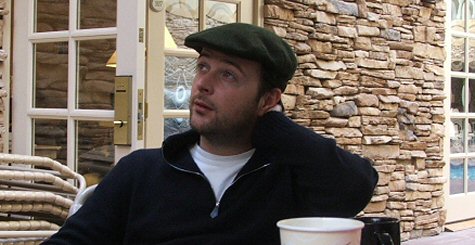
“This is a complete world, where you can bathe yourself in fantasy for as long as you like. It’s like the Holodeck, or the Shore Leave planet from Star Trek; people can live out their fantasies with no repercussions. The game accommodates the violent and the mundane, the linear and the sporadic. Maybe it says something about character in how one chooses to play it, and the storyline is definitely skewed violent, but it can be whatever you want it to be.

“That said, whenever I drive and see a car on the road that I’ve seen in the game, I, for a split-second, imagine stealing it and speeding away. Space Invaders never had that effect. ” — Jon Rahoi, top Team Elsewhere dog, San Francisco, CA.
“Good take on Grand Theft Auto. I’ve been teaching young people for 33 years. They all are affected, whether subliminally or consciously, by games like this. The only thing good about it is that it is a ‘game.’ But to have kids with a game that kills people in this day and age is, I feel, very questionable, even with the best of parents.
“If kids hit each other over the head as they did when I was growing up as a result of watching Moe, Larry and Curly do it, kids are that much closer to acting out out the same thing with lethal weapons as a result of getting a feel for the activity in a video game . ” — T. H., Los Angeles.
“You wrote in last Friday’s column that `the ESRB `M’ rating for the previous Grand Theft Auto game, called Vice City, was described as having only “violence” (the `intense’ adjective wasn’t used) and didn’t mention `use of drugs.’ Obviously the creators, Rock Star Games, are upping the ante.’
“What you’re suggesting would seem obvious from the change in descriptions for these warnings, but what is funny is that Vice City actually contained more of a drug subplot than San Andreas does (up to this point in my play at least), and even the contrast in drugs featured is pretty drastic.

“Rockstar has said in the past that Grand Theft Auto 3 was modelled more after movies like Good Fellas, where a virtual unknown gets on the mafia inside by running errands and performing hits for key mafia moguls.
Vice City was a change in theme creatively, and significantly structured after drug films, mainly Scarface in which a virtual unknown moves product and usurps a drug empire out from underneath key players.
San Andreas is pretty much a send up of Boyz `n the Hood and Menace II Society, so the drugs of choice featured are both marijuana and crack cocaine. Ironically, the game takes a more negative look at drug use in reference to crack, as the gang bangers look at the drug as a disease and push to keep their fellow bangers off the rock, so to speak. Marijuana, however, is another story.
“So in essence, I find it interesting that the game that promotes a negative vibe towards crack, but yet gives the thumbs-up to marijuana gets a harsher description than its predecessor, which pretty much incorporated the use and distribution of narcotics as a major plot point to complete the game’s missions.” — Mario Anima.

This?

A week and a half since the big tsunami and this is the “money shot”…the best color snap of what it was like to actually be there as the wave was on its way in?

With all the tens of thousands of tourists in the impact areas, with their thousands upon thousands of digital cameras?
If we can get past the ninny-nannies who might be offended by my interest in locating a better photo, is there anyone out there who’s seen one somewhere? If so, please get in touch. Thanks.