[Warning: This reaction to Scott Cooper‘s Deliver Me From Nowhere is crude and indelicate, but it’s honest.]
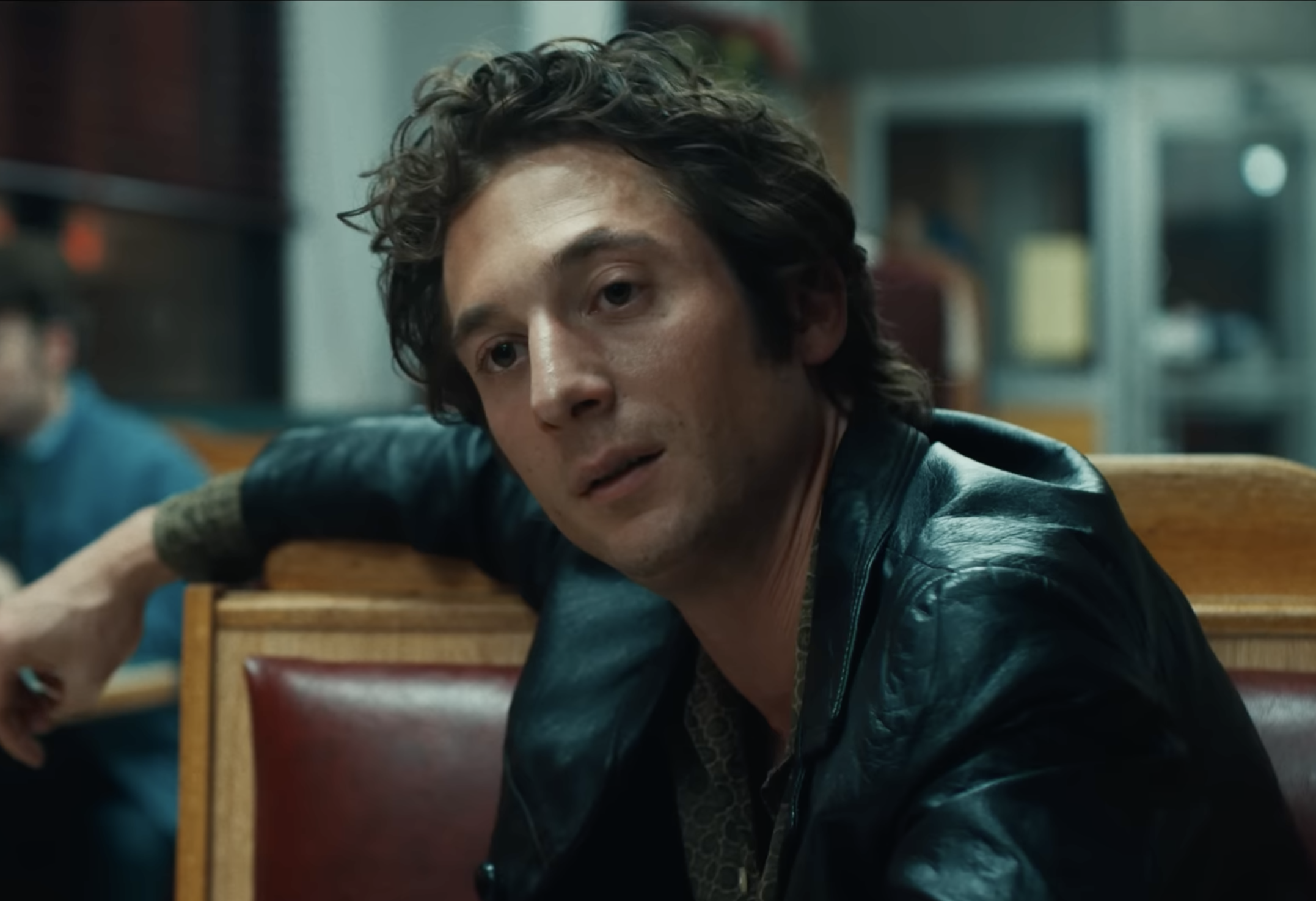
I fucking hated hanging with Jeremy Allen White‘s Bruce Springsteen in Deliver Me From Nowhere, which I caught earlier this evening.
Okay, I didn’t “hate” him exactly, but I certainly couldn’t accept White as Springsteen. I kept seeing and hearing the Bear guy, and he wouldn’t stop with the glum morose vibes…he kept “acting” at everyone with those big soulful eyes and that big beak nose. It’s not Bruce…I can’t buy into this.
Why was I touched and fascinated by Casey Affleck‘s miserable grief monkey in Manchester By the Sea, and yet annoyed and bitter about spending time with White?
When the mostly negative critical verdicts came down and the opening-weekend earnings were decidedly weak, I felt sorry for White and Cooper and Springsteen himself. My heart went out.
But now that I’ve seen it, you know what? This movie got exactly the response that it deserved. Because it’s slow as molasses and a fucking gloomhead downer.
Plus Masanobu Takayanagi‘s cinematography is way, WAY too dark. Overwhelming blackitude and enveloping shadows. The whole movie happens inside a black velvet fuck-me closet. It’s covered in Nestle’s chocolate syrup.
Plus I hated the overweight Stephen Graham, who plays Bruce’s boozing asshole dad. Ditto the funereal black-and-white 1950s flashback sequences. I even hated the low-rent band at the StonePony, and that long-haired lead singer in particular…fuck you!
Even the deep copper color of the wall-to-wall carpets in Springsteen’s Colts Neck rental bothered me.
Steady, competent performances: (a) the always on-target Jeremy Strong (as Bruce’s manager Jon Landau), (b) Odessa Young as Faye Romano, a waitress and single mom whom Springsteen fiddles around with on an absentee-fuckbuddy basis (I felt instant empathy and sorrow for this poor woman), (c) the long-haired, needlessly obese Paul Walter Hauser as a recording engineer bro.
But White is really fucking dull. I don’t like his company, and he mumbles. He’s just moping and moping and moping some more. Mope-a-dope. Me to White: “Fuck you, you fucking downhead! You’re bohhrrring!”
Friendo: Is venting like this good for your health?
HE: The movie is the problem, not me. Graham is too fucking fat. “Sit on my lap”?? Fuck these guys. But double especially fuck Takayanagi and Cooper for going with their noirish, melted black licorice color-and-lighting scheme.
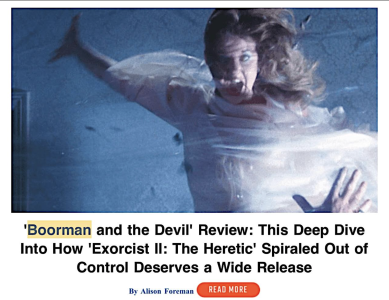
My Venice Film Festival viewing of David Kittredge‘s excellent Boorman and the Devil was greeted with blissful vibes and subdued awe. Critics and industry folks are like that — their emotions always in check.
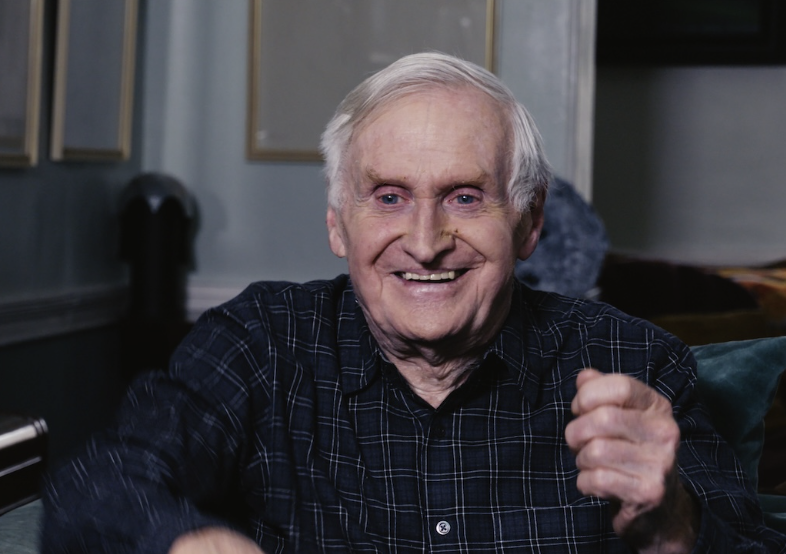
But when it played last Wednesday night at the Brooklyn’s Nitehawk Cinema under the aegis of the Brooklyn Horror Film Festival, the crowd was frequently laughing at the litany of blunders and terrible misfortunes endured by director John Boorman as he attempted to shoot the artistically ambitious Exorcist II: The Heretic during the summer and fall of ’76, followed months later by the buckshot scorn of critics and paying audiences when it opened on 6.17.77.
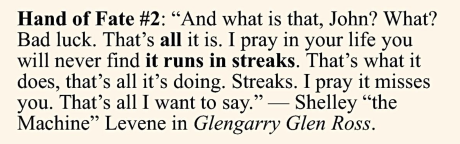
For Kittredge’s doc dispenses gallows humor in spades, and everyone over the age of ten knows what it’s like when things start going really badly…laughter is the only sane response when fate and the gods have allied against you…when a bad luck streak not only won’t stop but gets worse and worse.
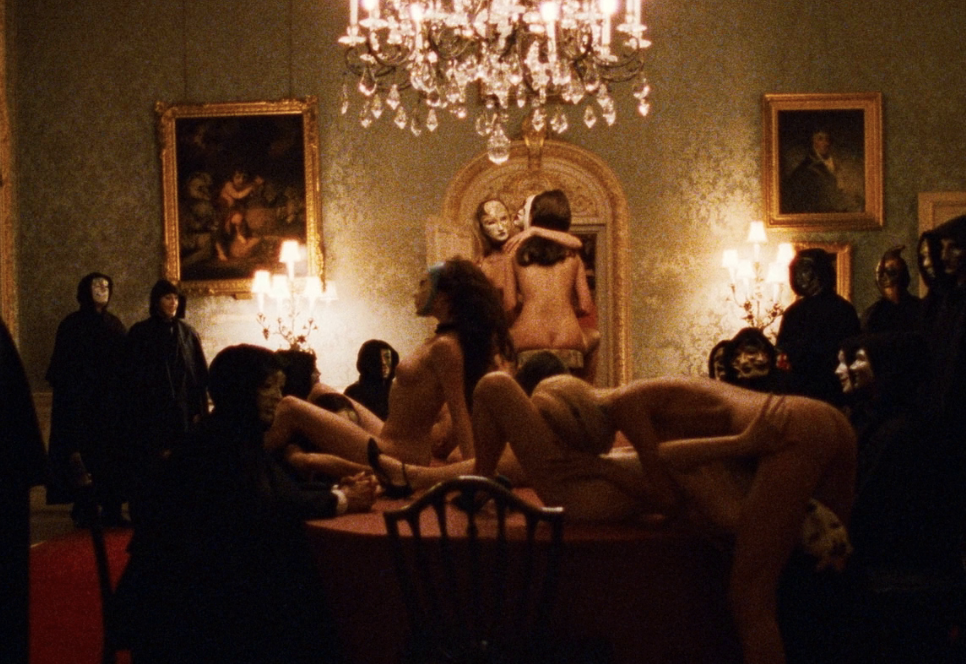
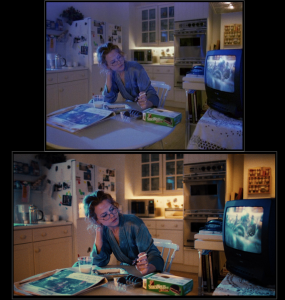
The ghost of Stanley Kubrick is choking, hissing and sputtering over the apparent teal-tinting in portions of Criterion’s 4K Eyes Wide Shut disc, which pops on 11.25.25.
I’ve seen Eyes Wide Shut at least eight or nine times (twice theatrically, once or twice on DVD, the rest via WHE’s unrated 2008 Bluray), and the blue-and-amber nocturnal accent scheme has always been the same.
Nocturnal accent colors adorning the wooden window-sill-and-frames of Tom Cruise and Nicole Kidman‘s bedroom, the window sill-and-frame lighting outside of Sydney Pollack‘s pool room salon, the bluish-amber tints in the Harford kitchen…we’re talking lots of blue and amber. Unmistakably.
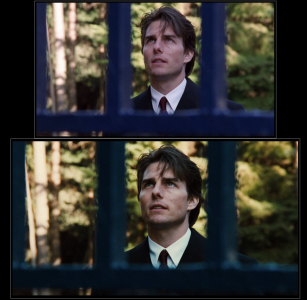
Remember the iron-bar gates of that Long Island estate where the orgy was held? They were painted vivid, bordering-on-radiant blue, and with a fresh coast of paint at that.
A DVD Beaver rendering of a still from that daylit scene (Cruise staring at the gates) shows a distinct teal flavoring — the gates were luminous plain blue in an older version, but now they’re unmistakably a dark somber teal-green.
Even the frequently obsequious and kowtowing Gary W. Tooze, owner and proprietor of DVD Beaver, admits in his review that the Criterion 4K “does have some teal-leaning.”
“Not happening…way too laid back…zero narrative urgency,” I was muttering from the get-go. Basically the sixth episode of WhiteLotusThai SERIOUSLY disappoints. Puttering around, way too slow. Things inch along but it’s all “woozy guilty lying aftermath to the big party night” stuff. Glacial pace…waiting, waiting.
I was told the story strands were going to begin to tighten up, but they’re just lying there in repose. Flaccid, lazy.
Two more episodes to go, and if episode 7 is as weak as 6 was tonight, everyone will say the whole thing was a bust.
SPOILERS FOLLOW: Before episode 6 began, series creator Mike White had only three hours to go. It’s obviously time to up the drama and intensify things (David Chase knew how to gradually turn the screws and tighten the strands in The Sopranos, not to mention deliver occasional dramatic crescendos) and he’s basically pissing away the time. In episode 6 White essentially says one thing: “I’ll deal with all this stuff later.”
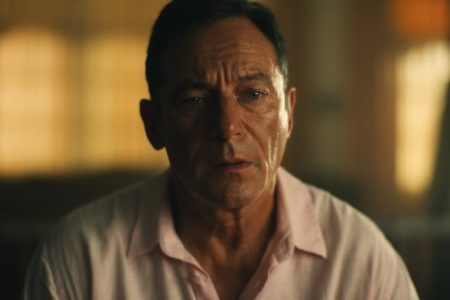
When is Jason Isaacs going to finally DO something? Or at least BLURT SOMETHING OUT? His character is a terminally boring fraidy cat, enveloped in silent anguish, hopelessly inarticulate, buried in self-loathing. I’ve been watching this shallow-ass guy lie to his family as he shudders and trembles inside for five episodes now.
All White does is (a) show us two fatalistic shooting fantasies (it was interesting that he imagined killing Parker Posey before shooting himself) and (b) asks the spiritual guru guy what it’s like to die, and is curiously moved by the Buddhist cliche about life being a fountain and we’re all drops of water, etc. Who hasn’t heard that one?
It’s actually a line from a joke I heard back in the ‘70s. A spiritual seeker endures a long and arduous journey in trying to find the hallowed and supreme guru and thereby divine the essential secret of life, and when he finally finds him is told “my son, life is a fountain.” The seeker is stunned, outraged. “That’s IT?”, he barks at the guru. “I’ve spent months trying to find you, enduring all kinds of pain, danger, exhaustion and hardship, and all you can tell me is that life is a fountain?” Supreme guru, taken aback: “You mean life ain’t a fountain?”
And Parker Posey has been married to Isaacs for…what, 25 or 30 years and she can’t intuit that he’s seriously melting down and going to hell inside over something very scary? She can’t confront him about stealing her pills? She can’t put two and two together and deduce that something has gone horribly wrong with his investment portfolio? All she can say to Isaacs over and over is “what’s going on?” How many times has she fucking asked him that? A financial shark or hotshot of some kind, Isaacs has presumably been up to some sketchy, slippery stuff and knows, being the cagey type, that the regulatory authorities might conceivably get wind of this or that financial crime, and he hasn’t figured ways of hiding assets and socking away cash in hidden foreign bank accounts on a just-in-case basis?
What’s he looking at…several months or a year or two in a country-club prison? And he can’t get started again after serving his term? He doesn’t have friends and allies who might rally round and help him out? All he can do is think about killing himself because his wife is a fragile, drug-addled zombie? Pathetic.
There’s no insight or articulation or imagination in Isaacs’ character. His frozen-in-fear, “I can’t move or even breathe” psychology is dramatically suffocating, and hanging out with this guy is driving me nuts. I’ve really and truly run out of patience.
I finally saw Walter Salles‘ I’m Still Here two days ago in Ojai. It’s obviously an absorbing, very well-crafted, fact-based poltical drama, and yes, Fernanda Torres carries the whole thing on her shoulders. Superb actress. Fully deserving of her Best Actress nomination.
But as good as it basically is and as much as Salles is a masterful filmmakr, I’m Still Here — a film about South American political terror — is not as gripping or unnerving as Costa-Gavras‘ Missing (’82) or Luis Puenzo‘s The Official Story (’85).
Within the realm of anti-left, military-dictatorship South American films about leftist victimization, it doesn’t stick to your ribs quite as much. It’s certainly less haunting.
This is because I’m Still Here‘s focus is much more on treading the emotional family waters…the anguished struggles of Eunice Paiva, the real-life mom (played by Torres), and her five kids as they attempt to cope with the sudden absence of their dad, Rubens Paiva. The film is much more committed to this side of things than on the creepy, ominous particulars of her husband’s absence (which we all know is due to his murder).
I had a problem with one aspect, however — an aspect that infuriated me more and more. What bothered me was how Torres’ Eunice constantly hides the horrifying indications about what may be going on from the kids, and in some cases flat-out lies to them. At the two-thirds mark one of her daughters, the one who’s been living in London, calls her out on this.
Eunice’s kids are very smart and exceptionally mature, and yet in the initial stages of her husband’s disappearance she treats them like emotionally retarded simpletons who can’t be trusted with the facts, and so I became angrier and angrier with her.
Always level with your kids, and never blow smoke up their asses…ever.
Interesting sidenote: Eunice Paiva was around 50 when her husband was taken by government agents, never to be seen again. The film shows many photos of how Eunice looked in 1970 and in the years that followed, and the fact is that she was much more attractive than Fernanda Torres, who has the honest, fascinating face of a formidable stage actress and an apparent inner life that you can’t help believing and investing in, but who is also, truth be told, a bit homely looking. I’m just being honest — what do you want me to do, lie?
After three-plus-years of delay and fiddling around, Bernard McMahon‘s Becoming Led Zeppelin, an obsequious 2021 doc about the early glory days of arguably the greatest metal-rock band of all time, is opening in IMAX today in roughly 200 theaters. Sony Pictures Classics is distributing.
All I can say is, it took ’em long enough.
I saw a version of McMahon’s film roughly 41 months ago in Telluride, and then it vanished. I really liked most of it but what was the big hassle? The now-playing version runs 121 minutes — the version I saw in Telluride ran 137 minutes or 2 hours and 17 minutes….the newbie is 16 minutes shorter.
In early September of ’21 the 137-minute doc screened at the Venice and Telluride film festivals, which almost always signals some kind of imminent fall release, or at least early the following year. But then it disappeared. Either nobody acquired it or it was withdrawn for further editing or something. All I know is that there’s no word about anything.
HE wild guess: There’s been a general sense of frustration with the critical response to the doc. Most reviewers found it overly obsequious and not even slightly inquisitive, and so (again, purely a guess) some re-editing and re-shaping is going on.
Led Zeppelin headliners Jimmy Page and Robert Plant, who had apparently turned down previous proposals for a definitive Led Zeppelin doc over the years, presumably because they didn’t want a warts-and-all portrait (i.e., infamous drug use and groupie debauchery on the road + the drug-related death of dummer John Bonham), are presumably hammering things out with McMahon as we speak. Or not. Who knows?
I saw and reviewedBecoming Led Zeppelin at Telluride ’21. Like most many reviewers I found it satisfactory if (and I say “if“) you’re willing to just go with it and put away your cranky hat. Providing, in other words, that you’re willing to ignore the doc’s kiss-ass attitude and general lack of curiosity about anything other than how the band came together and how the early songs were created, etc.
Forty-eight words: Becoming Led Zeppelin is highly enjoyable but a bit under-nourishing due to control-freak conditions imposed by Page and Plant. Overly sanitized, dishonest by way of omission, totally obsequious. But I still “liked” it — i.e., had a mildly good time except during the last 20 or 25 minutes.
Excerpt: “The first hour relates the individual paths of the three remaining Zeppers, and straight from the mouths — Jimmy Page, Robert Plant, John Paul Jones (all currently in their 70s and in good spirits) as well as the late John Bonham, who is heard speaking to a journalist about this and that.
“The second hour is about the launch of Led Zeppelin — the early play dates, the creation of the first two albums, the acclaim, the power and the glory. It’s basically about good times, and there’s certainly nothing ‘wrong’ with that.
“The problem is that it doesn’t dig in. It’s not even slightly inquisitive. It’s way too obliging, almost feeing like an infomercial at times. It offers, in short, a really restricted portrait, and around the 110-minute mark (and with 27 minutes to go) I started to mind this.
To my great surprise and delight, Christy Hall‘s Daddio, which I was remiss in not seeing during last year’s Telluride Film Festival, is a truly first-rate two-hander — a pure-dialogue, character-revealing, heart-to-heart talkfest that knows what it’s doing and ends sublimely.
Yes, it all happens inside a Yellow Cab on a long nocturnal trek from JFK airport to midtown Manhattan. It may not sound like much, I realize, because it’s just talk, but it holds you with ease and humanity and really effing pays off…sticks the landing with assurance.
I wasn’t exactly astonished by the quality of the lead performances from Sean Penn (driver) and Dakota Johnson (passenger), as they have the whole film to themselves and are both formidable, ace-level talents (Penn especially), but I was definitely taken aback by the quality of Hall’s dialogue and how she magically maintains a sense of story tension start to finish, even though there’s no “story” and it’s all about dodging, contemplating, confessing and looking within.
In my mind Daddio is right up there with Steven Knight‘s Locke (’13) — this century’s other great dialogue-driven, “guy driving on a nighttime highway while discussing fundamental issues” movie.
This may sound like excessive hyperbole, but I honestly feel that Daddio is in the same two-hander ballpark as Joseph L. Manchiewicz‘s Sleuth , Louise Malle‘s My Dinner with Andre, and Richard Linklater‘s Before Sunrise. I’m not saying it’s “better” than any of these three, but it delivers the same kind of step-by-step character cards.
Intially and quite naturally, Johnson’s unnamed protagonist (“Girlie”) holds her cards close to her chest, at least as far as Penn’s cabbie is concerned. But Hall shows us several text messages Girlie hae been getting from her highly hormonal boyfriend. To me he sounds like a real jerk — adolescent, eager-beaver (he actually sends her a dick pic), insensitive.
Penn’s “Clark” is an occasionally blunt (i.e., flirting with coarse) borough guy, and yet also sly, gentle and highly perceptive. Straight-up, decent, not an asshole. And a bit of an amateur shrink, or at least imbued with the observational powers of a seasoned Manhattan detective.
I’m not going to divulge what’s revealed or admitted to, but I can affirm that Daddio unfolds and hangs on in just the right way.
The conversation starts off casually and amusingly, but then a bad traffic accident happens, the traffic slows to a stop and we gradually understand that Johnson’s “Girlie” was up to while visiting her lesbo half-sister in the Oklahoma panhandle. The sister’s girlfriend sounds, by the way, like a Lily Gladstone type.
We get to absorb some melancholy situational truths about Clark and his two past wives and the (presumably modest) Queens house he lives in, etc. And yet the film primarily turns on Girlie’s relationship with the dick-pic sender, and this, trust me, takes on a greater weight as the film moves along.
On top of which Daddio is only 101 minutes long…congratulations for the discipline! And hats off to Hall, a very sharp, 40-year-old rookie.
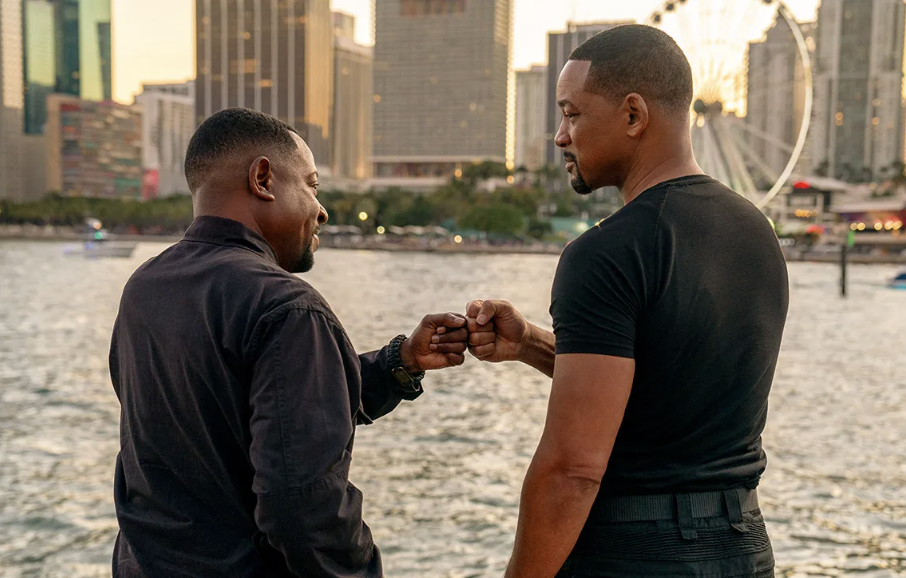
7:45pm: Okay, the initial light-hearted section (repartee, wedding, hospital, afterlife Joey Pants, healthy diet) was enjoyable, but Jesus, when and how did Martin Lawrence become Oliver Hardy? He’s funny in that bug-eyed, space-cadet way…
7:55pm: And now it’s all cartel bad guys, ice-cold vibes, hard bullets, bad business, that silver haired sociopath, etc. Not cool, man.
8:05pm: The MichaelBay cameo was okay, but the shoot-out in the nightclub and subsequent gunfire on the street…very disappointing. Seen this shit a zillion times. Highly-placed corrupted officials in Miami in league with cartel guys? I have to watch this?
8:13: Out-of-control spinning helicopter, etc. If it weren’t for Lawrence’s unhinged-cuckoo schtick (Will Smith is more or less the straight man) this movie would be worthless. People behind me are laughing at / with Lawrence…ooh–hoo–hoo! I’m not laughing ‘cause I’m not a whoo-hoo-hoo laughing-gas type but the guys behind me…turn it down, will ya?
8:24pm: Smith & Lawrence trying to fool a pair of MAGA redneck yokels by trying to fake-sing a Reba McIntire song…good stuff. Possibly the best scene so far. The forced cunnilingus scene (“licky-licky”) isn’t bad either. Oh, no… more cartel guys with automatic weapons!! Van on fire, squealing tires!! Smith’s son Armando (Jacob Scipio) is cool, good-looking, etc. Cpt. Howard (Joey Pants) is innocent!
8:39pm: This is slick, punchy, hack-level garbage. Good, high-impact, power-punch direction by Adil and Bilall, but it’s a wank…they’re trying to wank me off but I’m not the wanking type.
8:46pm: The people sitting behind me won’t stop laughing. They’re easy lays…what can I say? Okay, Lawrence is pretty funny at times. And Scipio has great coal-black eyes, a great sense of implacable cool…he might be my favorite guy in this.
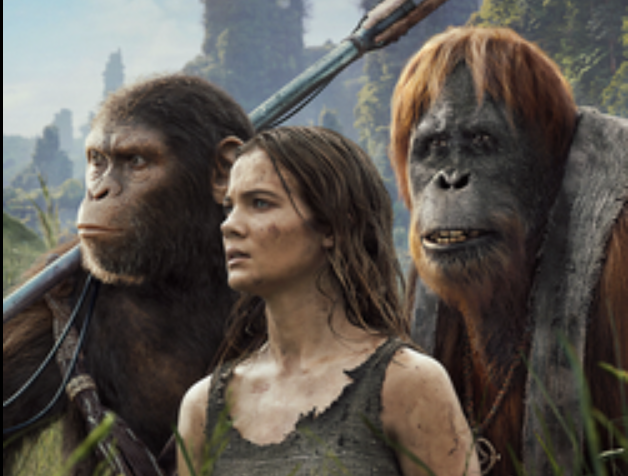
It took me a full month to see Wes Ball and Josh Friedman‘s Kingdom of the Planet of the Apes (20th Century, 5.2), mainly because I’ve been off the Apes barge for many years now. I just don’t care any more. My investment is nil.
But I’m glad I finally sat down with it as Kingdom is obviously a first-rate, well-produced, technically excellent effort — as good as this sort of thing gets. As far as it went I respected the passion and exactitude that everyone apparently invested top to bottom, especially as it contains the most realistically rendered, subtly expressive CG simians I’ve ever seen.
Plus I found the performances uniformly excellent — Owen Teague, Freya Allan, Kevin Durand, Peter Macon, William H. Macy, etc.
Plus I loved, incidentally, the re-appearance of those ape hide scarecrows, which I haven’t seen since Franklin Schaffner’e 1968 original.
But at the end of the day I felt completely untouched and indifferent. Respectful but also relieved when it finally ended. Yes, I was annoyed by the 145-minute length, but all features are too long these days. It’s a plague.
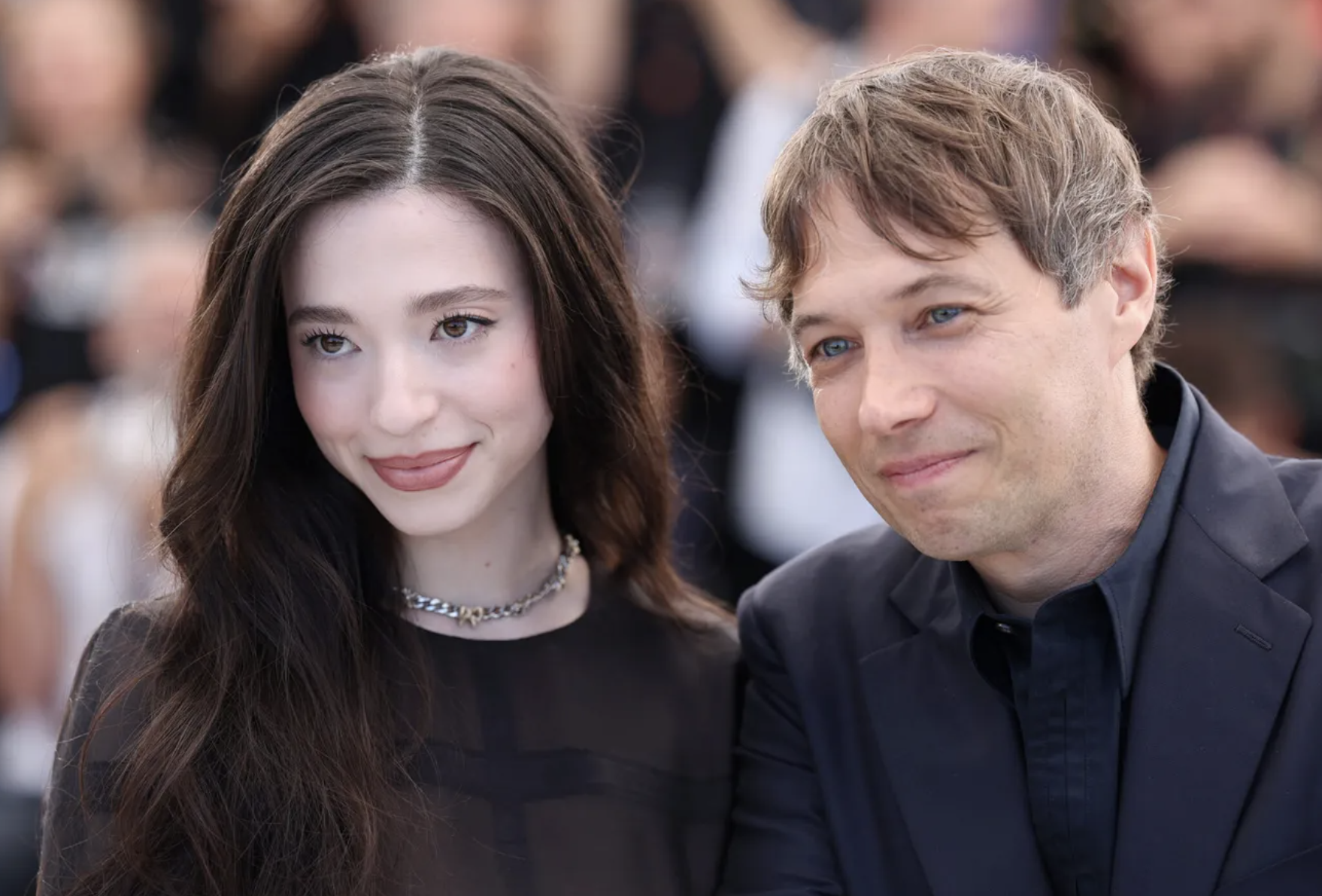
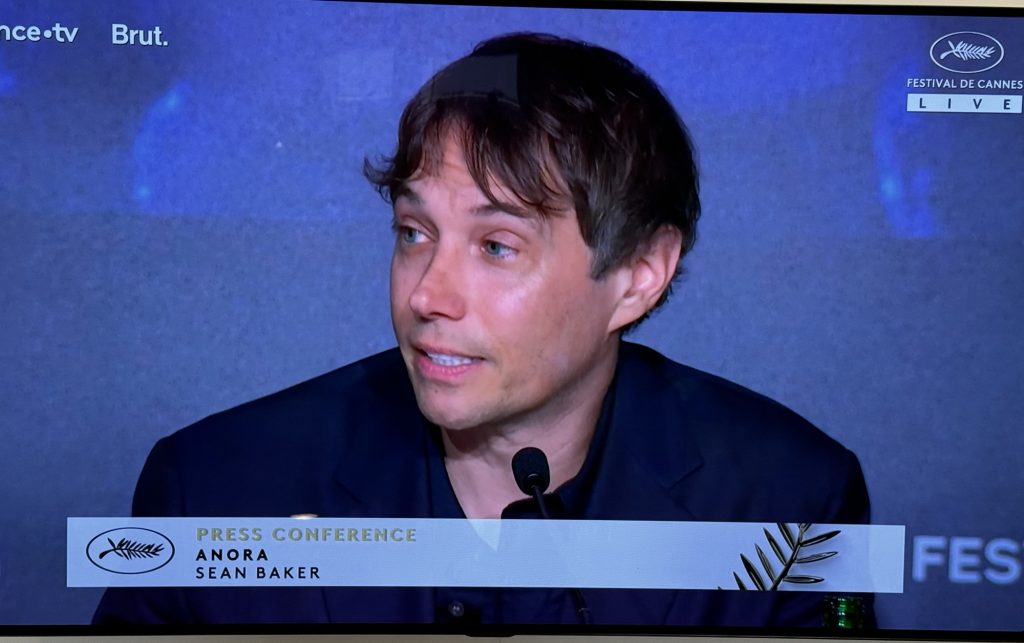
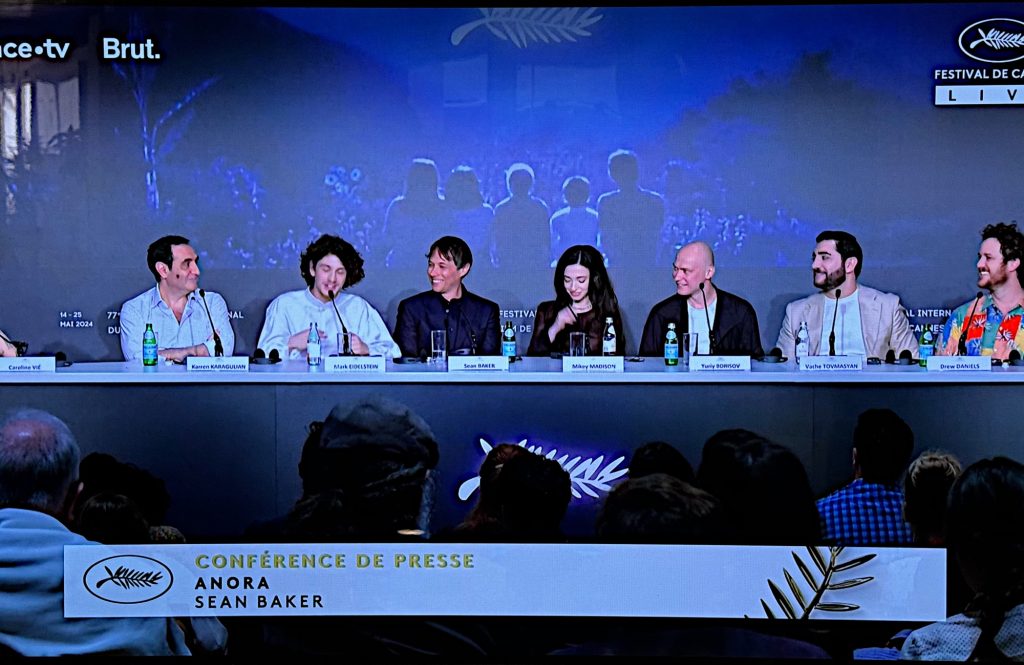
This morning I finally saw Sean Baker’s Anora, which everyone seems to believe is destined to win the Palme d’Or. I’m onboard with this prediction, and it’ll be doubly satisfying (for me at least) if Baker’s film prevents Jacques Audiard’s audacious but flawed (as in totally unbelievable) trans musical Emilia Perez from snatching the big prize.
I’ve been searching high and low for a Cannes film that would take the strut out of Perez, and now…glory hallelujah!
On top of which Anora isn’t the least bit wokey — no militant trans or gay stuff, no #MeToo currents, no POC or progressive castings, no 2024 Academy mandate inclusions for their own sake and in fact blissfully free of that whole pain-in-the-ass checklist mindset.
Baker’s loud, coarse and emotionally forceful film, mostly set in southern Brooklyn (an area close to Coney Island and Little Odessa) with two side journeys to Las Vegas, is entirely about straight white trash, and yet a certain amount of soul, grace and dignity are allowed to emerge at the very end.
It’s basically a social-conflict, family-values story (written as well as directed by Baker) about money, sex, arrogance, rage, outsider sturm und drang and a truly bountiful blend of incredible bullshit, screaming hostility and straight talk.
The first act is exasperating (mostly vulgar behavior by profligate 20something party animals) but once a certain family gets involved…look out.
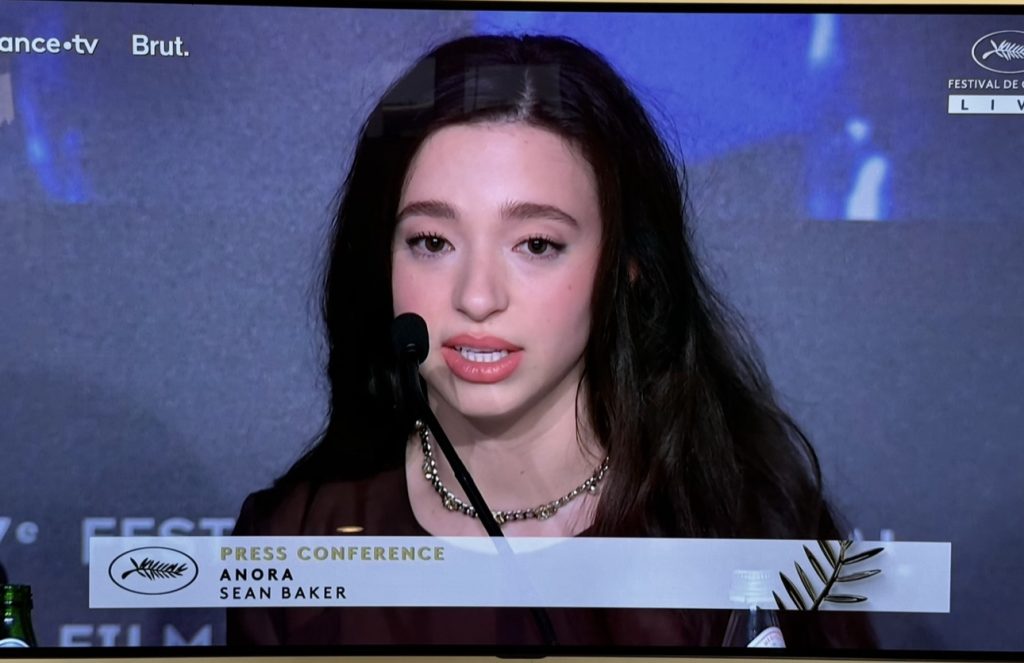
The Anora battle is between the cynical, sex-working, Russian-descended titular character (Mikey Madison, who played the hysterical, screechy-voiced Susan Atkins in OnceUponaTimeinHollywood) who prefers the colloquial “Ani” vs. a demimonde of vulgar, grotesquely wealthy Russians, principally Mark Eydelshteyn’s Ivan, the wasteful-idiot son of a Russian oligarch, and one or two none-too-bright Armenians.
And yet it ends on a note of honest emotional admission and revelation even. There’s actually a decent dude in this film, played by YuriyBorisov…a Russian fellow who isn’t a ferociously propulsive wolverine…imagine.
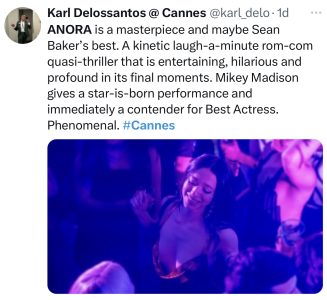
Madison is a revelation — she deserves to win the Best Actress prize. Out of the blue, her career has been high-octaned and then some.
Neon is distributing Anora — easily the strongest film they’ve ever gotten their mitts on.
Friendoon “okay” Emilia Perez: “It feels like AI Almodóvar. It checks 17 boxes, but it’s not moving — you don’t swoon. It’s actually rather conservative when it comes to the trans thing. Ten years from now, it’ll play like a trans minstrel show.”
Never settle, never surrender. Attack, attack and counter-attack. And no matter how evil or slimey your situation may be, always claim victory and never admit defeat.
These were cherished, deeply-held principles that the late Roy Cohn, one of the most satanic figures of the 20th Century, adhered to during his early ’50s-to-mid ’80s heyday, and they were passed along with interest and relish to the young Donald J. Trump in the ’70s and early ’80s. God help us but Cohn’s lessons of avarice still live in Trump today, right now…fundamental poisons, the devil’s handbook, operational tricks of the trade.
Ali Abassi‘s The Apprentice is the well-told story of Cohn and Trump’s master-mentor relationship, and God, it’s so much fun…so alive and entertaining and popping with the wicked pleasures of an evil life or attitude.
The Apprentice, which I saw late yesterday afternoon. saved me from my post-Horizon depression…a terrible black-dog, pit-of-my-stomach feeling that had taken me down, down, down. And then I saw Abassi’s fast, fleet and grainy tabloid dramedy and I was suddenly pulled out of the pit. I was chuckling and even laughing out loud, which I rarely do, and just fucking tickled to death. Thank you, God.
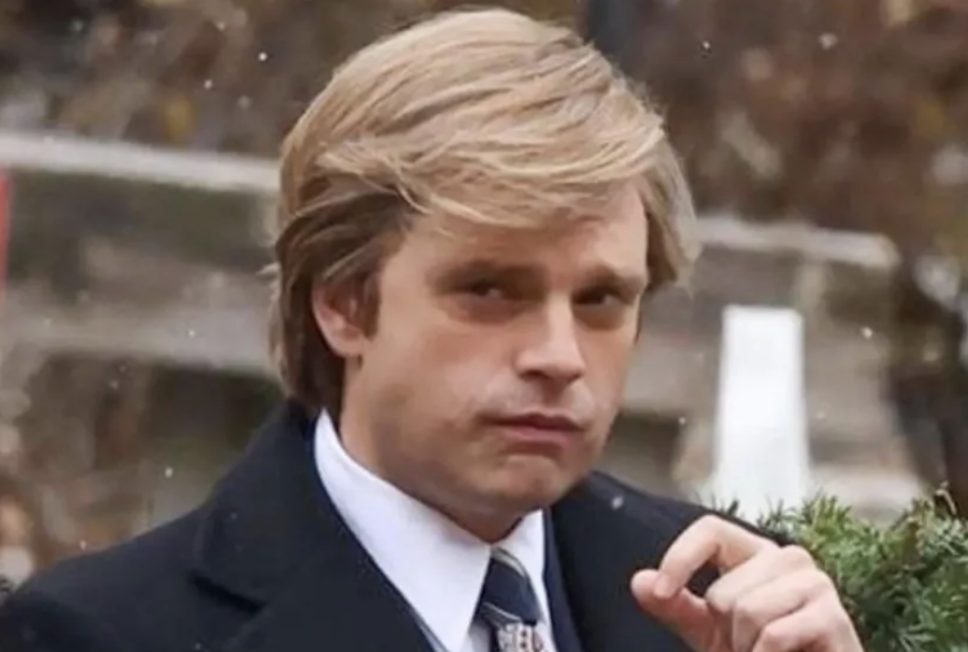
All hail Jeremy Strong‘s magnificent supporting performance as Cohn — he should definitely win the Cannes Film Festival’s Best Actor prize, the size of the role be damned — as well as Sebastian Stan‘s Trump, a note-perfect capturing of this amiable, malevolent psychopath, who apparently exuded a certain naivete and behaved in a semi-understandable fashion and may have been half-human when he was working in a senior capacity for his father’s real-estate company in the ’70s.
But that didn’t last.
Roy Cohn molded young Trump into the fiend he remains today…Cohn was the father, godfather and inspirational older brother Trump had never known while growing up. Fred Trump, Donald’s real-estate-tycoon dad, goaded him to succeed or at the very least bullshit his way through a tough racket but imparted a flinty, ruthless mentality in the process. Thanks, dad…fuck off.
Abassi’s direction is brash and brilliant, and Gabriel Sherman‘s screenplay (which was apparently cowritten by Jennifer Stahl, according to Wikipedia) is a model of no-bullshit economy — it gets right to the nub of things and never loses focus during the film’s 120-minute running time.
We’ve all been suffering through the plague of two-hour-plus films — the art of crafting an effective 100-to-110-minute narrative is apparently dead. But I would have been happy if The Apprentice had been Lawrence of Arabia. Okay, not that long but a 140- or 150-minute version would have felt like a neck massage, like a quaalude high. Keep it coming, feels so good.
The Apprentice has no distributor as we speak but please, please get this film into theatres as quickly as possible, and don’t wait for the fall — open it in July or certainly no later than August. Because it’s a huge pleasure pill that needs to be seen by as wide of an audience as possible. Very few adult films are this much fun. And if it gets seen quickly and widely enough, it might just save this country from four more years of hell. Maybe. Possibly.
There’s a bizarre passage in Tatiana Siegel‘s 5.20 Variety story about the already-infamous rape scene…the one that the late Ivana Trump shared and then denied in 2015 (obviously under pressure from Donald)…the one in which Donald throws Ivana (played by Maria Bakalova) to the ground during an argument and rapes her like a Cossack. As he’s ravaging her from behind, Trump hisses into Ivana’s ear, “Is that your G-spot…did I find it?”
Remember that Peter Coyote line from Jagged Edge when he describes Jeff Bridges‘ Jack Forrester character as “an ice man”? Well, Forrester had nothing on Trump, particularly when the latter began treating the heavily-closeted Cohn like shit when he began to succumb to AIDS symptoms.
Siegel quotes an “insider” saying that “audiences may find The Apprentice to be an oddly humanizing portrait” of Trump. Excuse me? Young Trump seems like a semi-tolerable fellow at first, but he gradually morphs into a toxic fuckhead…a killer. The truth is that Abassi’s film is an oddly humanizing portrait of Cohn as it invites the audience to share Cohn’s sense of betrayal…you actually feel sorry for this icon of evil when Trump gives him the cold shoulder.
Cohn to Trump at film’s halfway point: “You’ve got a fat ass. You should do something about that.” Strong is wonderful!
And by the way, Siegel reported yesterday that Dan Snyder, a billionaire Trump supporter who’s an investor in The Apprentice, is enraged at the damning portrait of Trump.
Variety excerpt: “Sources say Snyder, a friend of Trump’s who donated $1.1 million to his inaugural committee and Trump Victory in 2016 and $100,000 to his 2020 presidential campaign, put money into the film via Kinematics because he was under the impression that it was a flattering portrayal of the 45th president. Snyder finally saw a cut of the film in February and was said to be furious.” Hard to believe anyone could be that clueless, but there it is.
Here’s a nice taste of yesterday’s Apprentice screening.
I’ll be hitting the Apprentice press conference at 11 am, and I may even catch Abassi’s film a second time this evening, just for fun. I also plan to catch Sean Baker‘s Anora at 3 pm today.
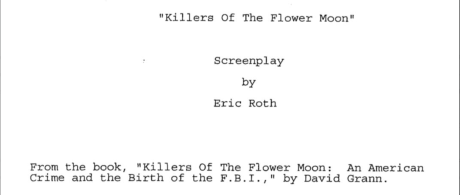
Roth’s 153-page screenplay, which arrived in my inbox around 6 am this morning, was posted late last year by “Sheshat the Scribe.”
Anyway I finally read it this morning and holy moley…if Martin Scorcese had manned up and shot this version of the tale Killers would have been a much more engrossing kettle of fish.
No exaggeration — Roth’s early-bird script is approximately 17 or 18 times better than the film Marty finally made. Because Killers suddenly has a central character you can easily roll with (i.e., FBI guy Tom White, who Leonardo DiCaprio was originally intending to portray) as well as an actual point of view.
White isn’t just the resolute, soft-spoken, voice-of-the-prairie hero of the piece but a decent, honorable lawman with occasional moments of doubt and uncertainty, but finally a dude who stays the course, toughs it out and brings at least a semblance of partial justice to a sprawling and horrific murder saga.
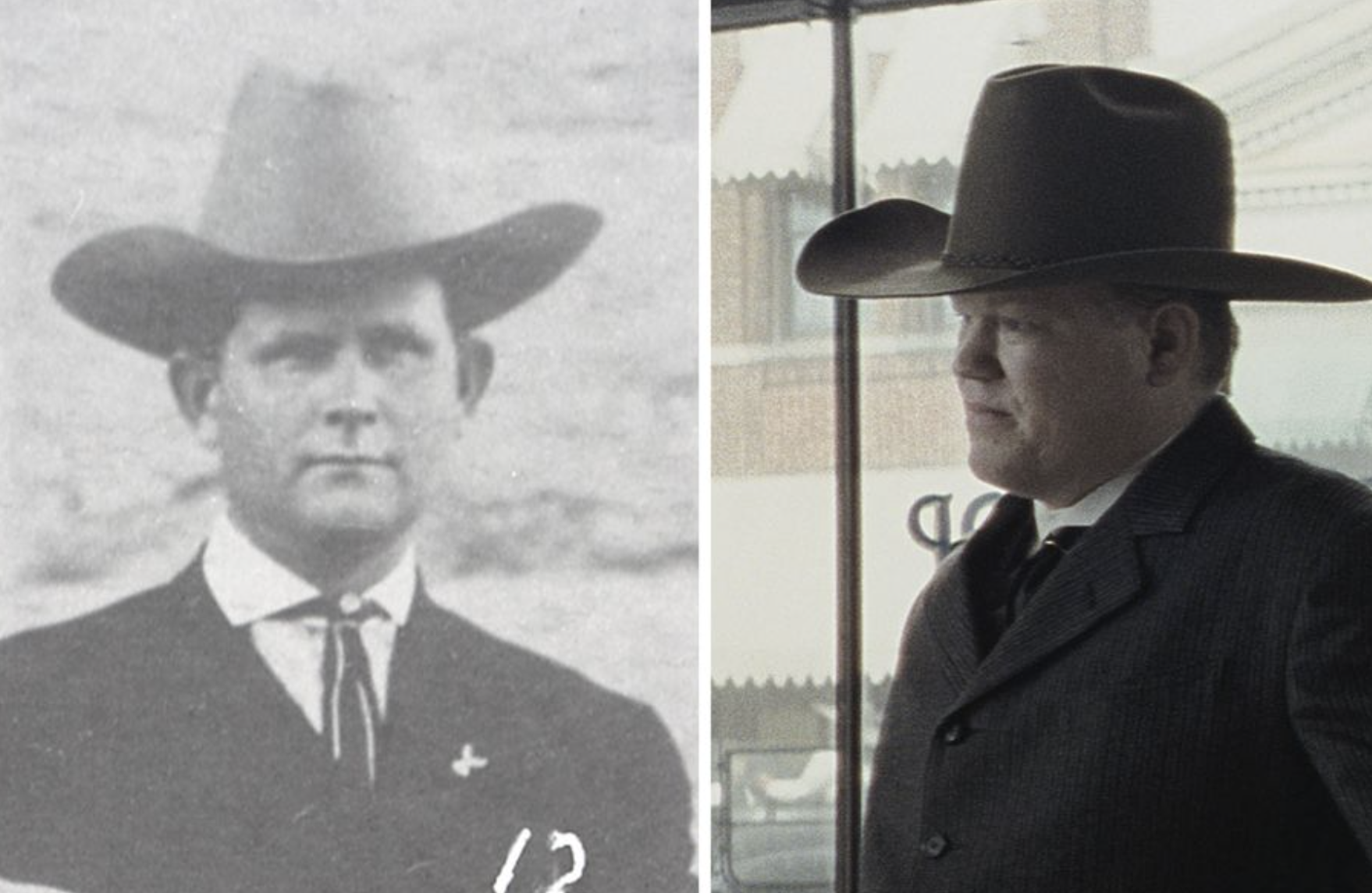
In Marty’s film version White (played by Jesse Plemons) is reduced to a supporting character who appears at the two-hour mark.
Here’s how I put it to a screenwriter pally a couple of hours ago: “My God, what a truly compelling and fascinating film Killers of thge Flower Moon could have been. Hats off to Roth for some wonderful writing, sublime tension, terrific structure. It really lives and breathes!
“And what a great, soft-spoken, drillbit character Tom White is! His laconic, man-of-the-prairie dialogue is so spare and true and eloquent.
“If only John Sturges had directed this screenplay in his prime! Or Oliver Stone in the ’80s or Michael Mann, Chris Nolan, Paul Thomas Anderson…Sam Peckinpah even.
“If only Marty and Leo hadn’t lost their nerve…if only they hadn’t been so scared of provoking the wokesters and suffering their ferocious wrath, i.e., “We’re done with white heroes! Only racists-at-heart would tell such a tale! And fuck David Grann!”
“My head was completely turned around by reading this, and Roth wasn’t even afraid of including racist cracker dialogue from time to time. (Brave.) And Mollie Burkhart actually conveys a certain gratitude (i.e., a slight smile) to White at the very end. I don’t know if Lily Gladstone even read this version of the script, but if so she almost certainly would’ve hated it.
“I wish I had read this six or seven years ago. It would have clarified a lot of things. Roth and Scorsese went with a woke version of Grann’s tale, of course, but in the early stages Roth truly did himself proud.”
If you weren’t much of a fan of Killers of the Flower Moon or even if you were, please read this early Roth draft — it’s a revelation.