By Light of Silvery Swoon

Seriously moved, enthralled or charmed as I am by Green Book, Roma, Vice, First Reformed, Can You Ever Forgive Me?, Happy as Lazzaro, Capernaum, The Mule, Black Panther, First Man, portions of Bohemian Rhapsody and the first half of A Star Is Born, Pawel Pawlikowski‘s Cold War sits at the top of the heap. Yes, even at a higher aesthetic station than Alfonso Cuaron‘s black-and-white masterwork. I’m sorry but I love Cold War a bit more.

If you ask me Cold War is the cleanest, sharpest and most tightly composed film of the year…a period haunter…a kind of half-Polish Communist, half-Montmarte jazz cavern love story that will knock your eyeballs out if you’re any kind of black-and-white connoisseur or a boxy-is-beautiful fanatic like myself.

No other 2018 film rang my bell quite the same. I don’t care what category it’s in — no other film is as concise and self-aware, as visually glistening and fatalistic and bang on the money as Cold War. It’s pure silvery pleasure, perfectly distilled, the highest manifestation of luscious arthouse porn I’ve run into all year. And it offers the greatest female performance of the year — Joanna Kulig as the sly, at times insolent, sometimes half-crazy Zula.

I recently insisted that Kulig deserves a Best Actress nomination. Her performance reignites the spirit of Jeanne Moreau in Jules and Jim (and if that doesn’t excite your spirit then I don’t know what) along with a spritz of early ’50s Gloria Grahame. A femme fatale songbird, an emotional force of nature, trouble from the word go.

You can’t watch Cold War and not fall in love with how it looks and feels. Those gleaming, whistle-clean silvery tones, Łukasz Żal‘s somewhat unusual bottom heavy framings, that feeling of being in a repressive but exotic realm, and yet one that becomes more and more of a “home” in a sense, and more familiar by the minute.

It also delivers something relatively rare in our 21st Century realm, which is a feeling that the viewer hasn’t been shown enough — that he/she hasn’t had enough time to really savor the flavor and atmosphere and characters.
Read more

Re-Communing With “At Eternity’s Gate”

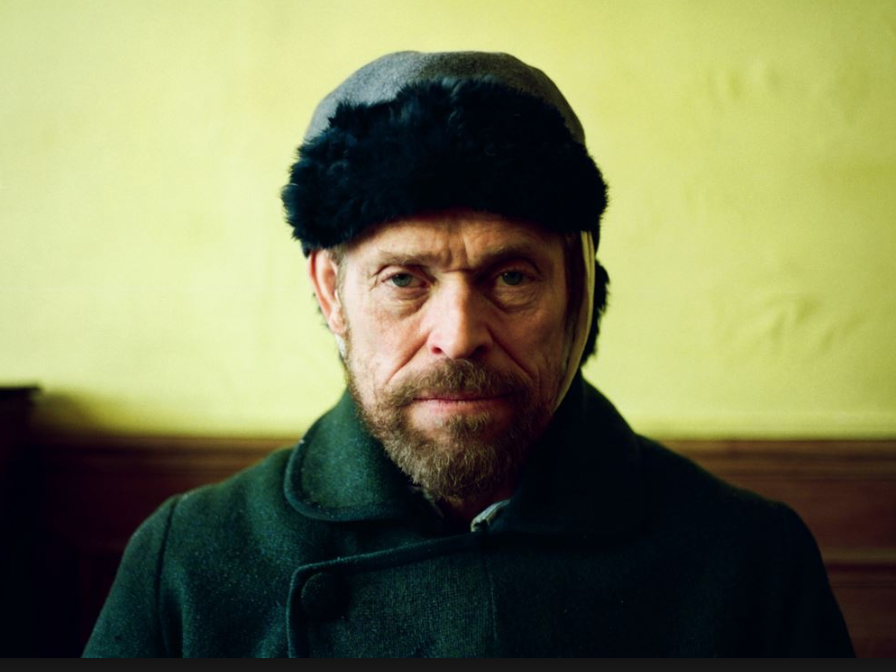
Yesterday afternoon I sat for my second viewing of Julian Schnabel‘s At Eternity’ Gate (CBS Films), which I’ve come to regard as the finest Vincent Van Gogh flick ever made. The difference between it and, say, Vincent Minnelli and Kirk Douglas‘s Lust for Life or Robert Altman‘s Vincent and Theo is an absolute belief in Van Gogh’s inner light. It’s not a tourist’s view of the man, but a portrait of an artist by an artist — a “you are Van Gogh” dreamscape flick.

In the view of many Willem Dafoe‘s performance of this gentle, conflicted, angst-ridden impressionist is his best since playing Yeshua of Nazareth in Martin Scorsese‘s The Last Temptation of Christ (’88). When I say “many” I mean the National Society of Film Critics, who yesterday morning decided that Dafoe’s performance was and is the year’s second finest, right after Ethan Hawke‘s tortured priest in Paul Schrader‘s First Reformed. That’s quite the ringing endorsement when you think of the competition.

As I said last October, At Eternity’s Gate “is more into intimate communion, intuitions, revelations.” It’s a channelling of the dreams, angels and and torment that surged within Van Gogh during the final chapter in his life, when he lived in Arles and St. Remy de Provence.

Schnabel and Dafoe sat for a q & a discussion following the screening, which happened at West Hollywood’s Soho House. After that everyone went down the hallway for a wine-and-sliders-and-swedish-meatballs gathering. HE’s own Phillip Noyce, who directed Dafoe in ’94’s Clear and Present Danger, was there; ditto producer Don Murphy.

Julian Schnabel: “The movie is about painting being above recognition. Above criticism. When you’re a younger artist, you want agreement from people. Later, you realize that what you’re doing is the thing and not the agreement from other people. I think Van Gogh was very successful. He accomplished what he wanted to do. He expressed the inexpressible. We’ve all projected this bourgeois concept about success. At a certain moment Van Gogh was, like, ‘I thought I was supposed to educate people and show them how to look at the world, but I stopped thinking about that — now I just think about my relationship to eternity, by which he meant the time to come.'”

HE interpretation by way of Tom Wolfe‘s “The Painted Word“: Van Gogh’s paintings didn’t strive to “reconstitute an anecdotal fact but constitute a pictorial fact.”

Willem Dafoe: “The idea was ‘painting what I see,’ and not painting a representation…of what I thought had to account for that thing in front of me…seeing is perception…Van Gogh is very haunted by this feeling, this vision of what he was, and he wants to share it…and I think that’s an interesting impulse…a classic artist’s impulse.”

Ruth Bader Ginsburg for Dummies

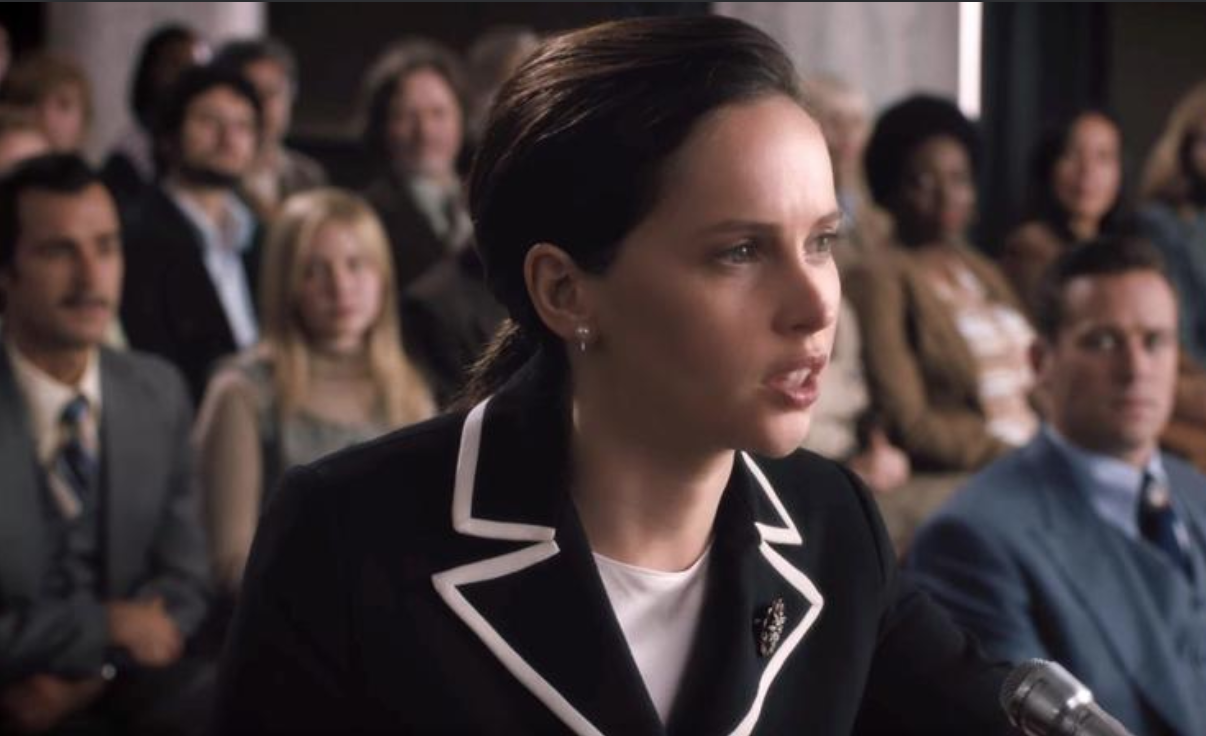
I had one strong thought in my head after seeing Mimi Leder‘s On The Basis of Sex (Focus Features, 12.25), a well-meaning but mediocre saga about the formative years of legendary Supreme Court Justice Ruth Bader Ginsburg (Felicity Jones).

That thought was that Betsy West and Julie Cohen‘s RBG, the hit documentary about Ginsburg’s life and career, is a much better movie — smarter, more engrossing for sticking to the facts, no callow tricks or formulaic finessings. And yet it gets you emotionally.

On The Basis of Sex is a Ruth Bader Ginsburg primer for none-too-brights — a frequently unsubtle, Hollywood-style treatment that clumsily tries to milk or manipulate every emotional occurence or, failing that, charm the audience at every turn.  

At every juncture the story seems to have been dumbed down to appeal to (what’s a tactful way of putting this?) viewers whose lips move at they read supermarket tabloids.

Clunky, on-the-nose dialogue.  Rote direction.  Cardboard characterizations. Over-acted, hamfisted performances, particularly by the sexist male villains.  (Sam Waterston!) Trite plotting, predictable strategies and, in one climactic instance, the use of cliched dramatic invention that made me twitch and groan in my seat.

The term “charm offensive” has never been more grossly demonstrated than a moment in which Justin Theroux, portraying ACLU legal director Mel Wulff, greets Jones with a kind of pep-rally song that involves vigorous thigh-slapping.

Bader speaks with a fairly distinctive Brooklyn accent, so how is Jones at imitating this? Not so hot. I couldn’t really hear “Brooklyn” in her speech patterns. What I heard was “British actress doing a decent job of sounding American but not really trying to get the Brooklyn thing right.”

Believe it or not there’s a sex scene between Jones and Armie Hammer, playing Ginsburg’s attorney husband Martin. Ruth Bader Ginsburg doing the nasty? Please…cut away! It was this utterly pointless detour that told me On The Basis of Sex wouldn’t be panning out. My hopes actually started to sink less than 10 minutes after it began.

Read more

Bornsies vs. Bookies

After a late September screening of Green Book (Universal, 11.16) I mentioned to a film-critic friend who loves Peter Farrelly’s film as much as I do that film snobs would be coming for it. “Film snobs?” he said derisively, contemptuously.

Last night HE commenter Bobby Peru mentioned a reaction to Green Book, overheard either during the screening or afterward. “And even though I wasn’t one of them, several journalists in the room giggled at the final scene’s embraces,” Peru wrote.

This, to me, is like the first shot fired at Fort Sumter. If I had been there with Peru and if I had suddenly morphed into Jack Nicholson‘s Badass Buddusky, I would have gone up to one of the gigglers and said, “I’m gonna kick your ass around the block for drill, man.” Okay, maybe I wouldn’t have been that belligerent, but Lordy, I hate the snooties.

One of the most reliable indications of a toxic film-snob mentality is a primal aversion to anything that delivers well-fused, well-finessed mainstream-ish elements in service of a familiar but hugely satisfying emotional payoff.

The snobs HATE this kind of thing. Some kind of genetic disorder took over their sensibilities when they hit their mid teens or perhaps when they began college, and they just aren’t susceptible to this kind of assured, emotionally rooted, feel-good thing, even one that unfolds within a disturbing social context. They recoil and flick their fingers and go “no, no…too emotionally effective…not for us.”

And so Peru, totally and irreversibly in the tank for A Star Is Born, mentions dismissals of the film’s final line and final embrace. But the crowd I saw it with at Toronto’s Elgin theatre LOVED that final line. They loved the film. They cheered it like drunken fans of a home-town hockey team. My older son Jett and his wife Cait “LOVED” Green Book whey saw it a week ago, he told me.

This is war, I’m telling you — the film snobs and the gay-culture-favoring Star Is Born-sies on one side, and the fraternal, warm-hearted Green Book worshippers on another.

Don’t overlook the gay culture subtext. Yes, that remark may initially sound curious as both films are pro-gay narratives and experiences. The difference is that while Green Book deals with an admirable gay character from the mid 20th Century who’s something of a stuffed shirt, A Star Is Born is gayer in a more modern and celebrative sense.

Farrelly’s film may be experiencing (or may experience later this month) a certain subliminal pushback from certain fellows who’d rather not immerse themselves or otherwise submit to the early ’60s experience of Don Shirley — a brilliant jazz pianist, as expert and gifted in his realm as James Baldwin was in his, living in a repressed era and relying on his considerable dignity to cope on a daily basis with the double yoke of being black and gay.

Read more

If You Can’t Remember An Ending…

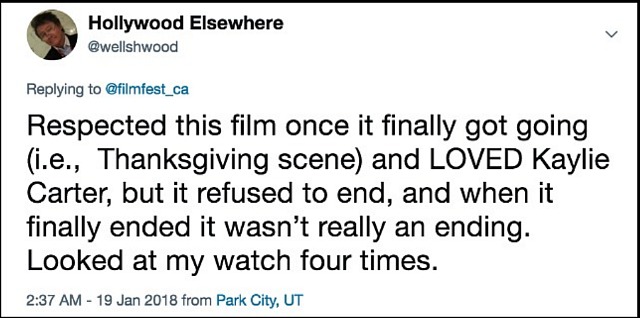
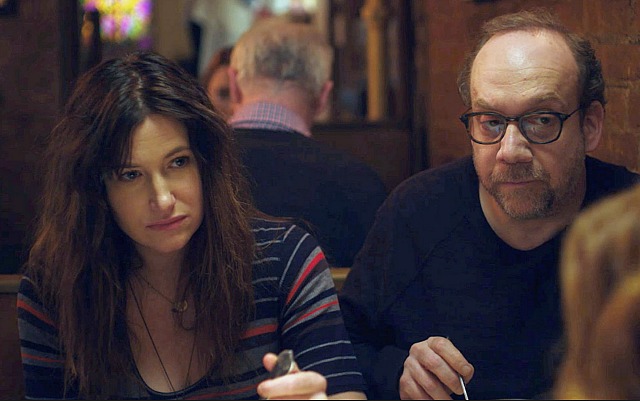
Tamara JenkinsPrivate Life (Netflix, 10.5) is a New York drama about a 40ish couple (Paul Giamatti, Kathryn Hahn) having fertility problems, and turning to a young niece (Kayli Carter) to step in as a surrogate mom. It’s a decent enough film — alternately intriguing, flinty, sad, trying, amusing, probing — but it doesn’t know how to wrap things up.

Honestly? I saw it nine months ago and I can’t quite remember how it ends. I recall that Carter spoiler spoiler spoiler but I forget why. Something to do with forgetting to take care of herself, something that goes wrong due to immaturity or carelessness. Giamatti and Hahn grim up and spoiler spoiler spoiler or they’re going to keep trying….something like that. I can’t recall.

HE movie-watching rule #17: If you can’t remember how a film ends, it’s the film’s fault — not yours. I think I became so disengaged and so impatient for something to happen that I regarded as fulfilling or satisfying that I just tuned out after a while. I respected it but not much more.

A friend agrees completely. “My recollection is that Giammati and Hahn are just going to keep going after the film ends…they’re going to keep trying to conceive. Which is exhausting to even think about. A good film in certain ways, but sorry, it’s no The Savages.”

HE to readership: Name a film that you admire or respect but you can’t quite recall how it ends. You may have a vague recollection of the finale but not a precise one. Obviously thats’ a significant flaw on the film’s part, but you still think it’s pretty good.

Divided and Temporarily Conquered

Alexis Bloom‘s Divide and Conquer: The Story of Roger Ailes is a frightshow. It leaves you with a shudder and a realization that Ailes, drooling fiend that he may well have been, really was a Luciferian visionary and a dark genius who turned Red America into a Nation of Crazy.

He was the reigning Machiavellian author of big-lie rightwing media for 20 years, the Pied Piper of Rural Dumbshit-ism, the pugnacious fat man who primed the country for the arrival of Donald Trump…a hustler who dipped his paintbrush into an apothecary jar of his own fears and paranoia (and perhaps some festering resentment toward his mother for infecting him with hemophilia as a young child) and embraced anger and aggression as primal fuel and sticking it to the liberal media machine as his guiding mission.

How engrossing is Divide and Conquer? Very. How detailed, probing and well-organized? Same. How depressing is it? Oddly, it’s strangely engrossing because Ailes was a real surface-to-air missile and a deranged motherfucker whose generator was always humming. He was never a dull man, and neither is this documentary. How much does it tell you that you didn’t know? Not that much but I didn’t care. What a demonic and diseased reptile Ailes was…a cookie filled with arsenic.

Read more

Goofy Super-Shark “Musical”

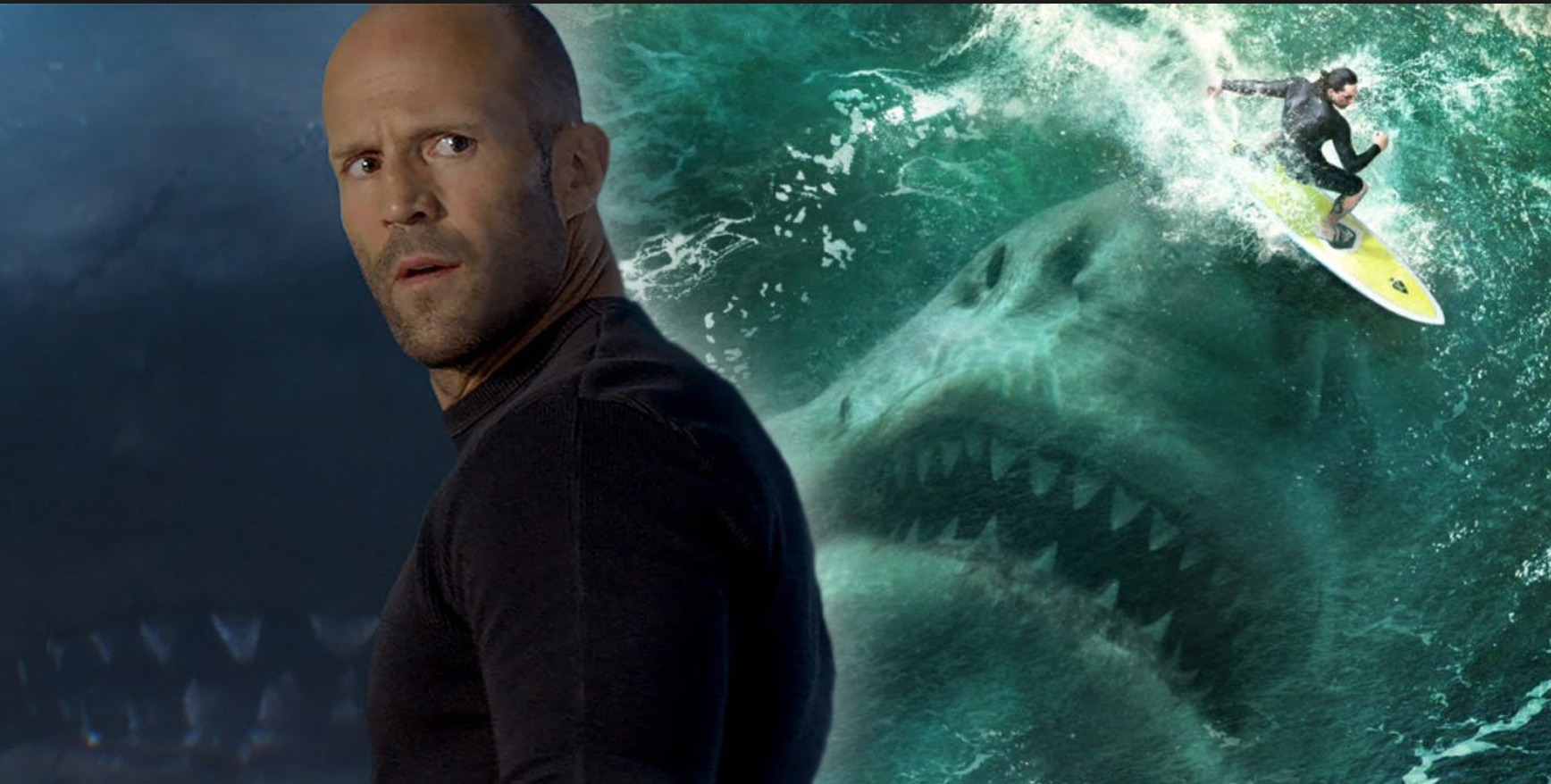
I didn’t hate The Meg, but I didn’t believe a second of it. But then you’re not supposed to.

Everyone knew that Steven Spielberg‘s Jaws was just a scary summer movie, but audiences were nonetheless persuaded that what they were seeing could be half-real. Spielberg did everything he could to make it suspenseful and flavor it up, throwing in clever tricks and diversions and making at least some of it stick to the ribs.

Meg director Jon Turtletaub has no such inclination. His weightless, stone-skimming film is part put-on, partly a Jaws competition piece and partly a $150 million theme-park jizzathon. It’s assembled like an early ’50s MGM musical, the shark encounters being the musical numbers, of course, and the dialogue scenes providing the usual connective filler.

I didn’t seethe and twitch as I sometimes do during bad movies. I sat there and guffawed from time to time, which I guess is a good sign.

The Meg definitely isn’t scary. It’s too dopey for that. It’s all about wank, wank, wank, wank, wank, wank, wank, wank, wank, wank, wank, wank, wank, wank, wank…”we have your admission and candy money…we don’t care so why should you?…eh, that wasn’t too bad…that one half-worked, the other one didn’t…please have all fat guys get eaten by the Meg…oh, look, a fat 12 year old kid…can the Meg eat him too? O joy and rapture!”

Every single guy with even a slight weight problem in this film becomes Meg food, or so I recall. Does Page Kennedy get eaten? I think so but I’m not 100% sure. I was zoning out during the last third — i.e., awake but glazed over.

Three Hollywood Elsewhere rules for shark movies: (1) Feel free to kill off fat guys and all fathers and secondary characters, but (2) no feeding women to the shark or you’ll have the MeToo! movement on your ass, and (3) never kill off an entertaining character who has a sharp-tongued, irreverent attitude thing going on.

You don’t want to hear about the plot or the set-up, which is all hand-me-down, by-the-numbers crap.

Jason Statham is the studly tough guy who has an early traumatic run-in with the Megalodon, a 75-foot-long prehistoric shark, in a kind of Octopus’s Garden in the Phillipine trench. An underwater research facility funded by a mildly overweight billionaire nerd (Rainn Wilson) with fairly atrocious taste in footwear. Oceanographers exploring a hidden ecosystem in the trench, blah blah, but the Meg tries to eat a submersible piloted by Statham’s ex-wife (Jessica McNamee) blah blah. There’s also a fetching marine biologist (Li Bingbing) who quickly develops the hots for Statham. Her oceanographer father (Winston Chao) is bland boredom personfied.

There are maybe five or six “musical numbers” during the first two acts (whew, that was close, almost got eaten!). In act three the Meg decides to chow down on a crowded swimming area a la Jaws….hors d’oeuvres! And then the big finale in which Statham singlehandedly dominates and defeats.

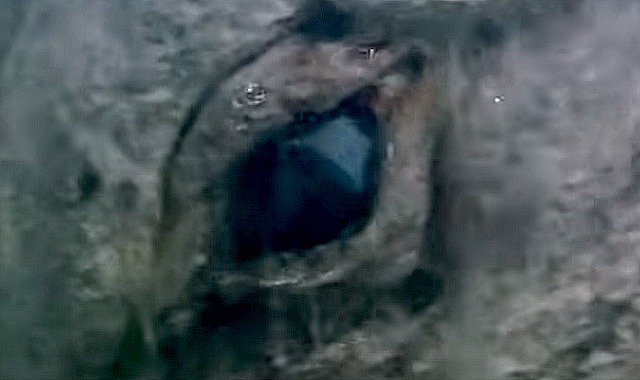
There are lots of homages to other water-logged films. There’s a scene in which a giant squid wraps itself around a submersible a la 20,000 Leagues Under The Sea. There’s a “reviving an apparently drowned pretty woman” scene a la The Abyss. There’s a scene with a little flop-eared white poodle called Pippin getting eaten, just like another dog named Pippin got eaten in Spielberg’s film. There’s a cable-drag scene out of Jaws. At one point Statham mounts and rides the Megalodon like Gregory Peck‘s Captain Ahab in Moby Dick (’56), and there’s even a close-up shot of the Meg’s eye looking right at Statham — an exact copy of Moby Dick doing the same with Peck.

Read more

Half-Interesting, 47-Year-Old Wipeout

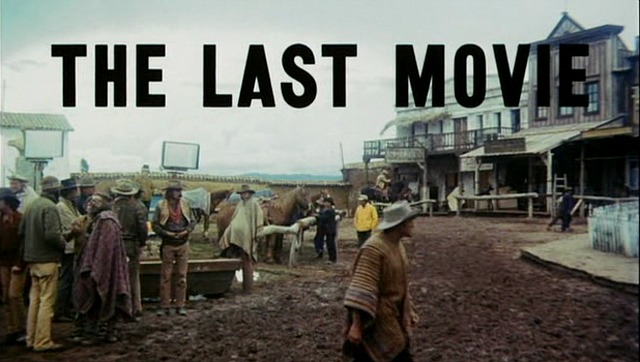
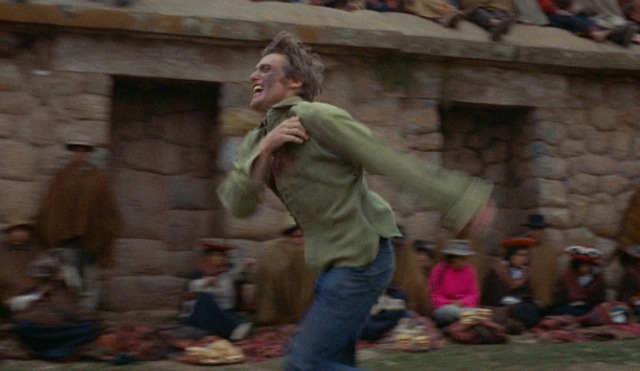
Earlier today I saw Dennis Hopper‘s The Last Movie at the Metrograph. The first third is half-interesting so I’m not sorry I saw it, but it’s mostly a sloppy mess, and that’s entirely on Hopper — the director, editor and star. The middle portion and final third are boring for the most part, and at times repellent. I read somewhere that Stewart Stern‘s original screenplay told an actual story that made sense, but the way it’s been cut together is lazy and haphazard; at times it almost feels spazzy. The film is interesting here and there (I liked the “SCENE MISSING” inserts and the fact that the main-title card doesn’t appear until 20 minutes in) but there’s no tension in any of it.

And Hopper’s lead character, a stunt coordinator named Kansas, is just an ass. A weak, squishy, impulsive jellyfish whom you half-tolerate at first, and then you grow to vaguely dislike and then hate him by the end of the first hour. He doesn’t die soon enough.

The Last Movie is set in a Peruvian village (actually a small town named Chinchero) in the Andes foothills. It’s about a Sam Fuller-directed western shooting there, and some guy dying in a stunt accident and Kansas, who seems like a reasonably decent fellow at first, deciding to stay in the village when the film wraps. He hooks up with Maria (Stella Garcia), an attractive, good-hearted woman who may or may not be a prostitute.

Kansas gradually turns into a weasel, breaking poor Maria’s heart by coming on to another woman (Julie Adams, best known for The Creature From The Black Lagoon) in her presence.

Then what happens? Kansas gets worried about running out of funds (this didn’t occur to him when he decided to stay on?) and decides to invest $500 in a sketchy goldmine scheme that quickly goes south. And then some of the native Chincherans — this is the really stupid part — decide to start making their own imaginary film with pretend cameras and microphone booms made of wood, except they don’t understand play-acting and start engaging in real violence. And Kansas gets caught in the wringer.

The primitive-natives thing is patronizing. The locals aren’t some tribe of spear-throwing jungle dwellers but small-town guys who wear boots and jeans and use telephones and order drinks in bars, and yet the movie tells us they’re as clueless and cut off from 20th Century civilization as New Guinea cannibals. A crap premise. Maria is from the same town, remember, and she seems as attuned to the complexities of modern life as anyone. If you don’t buy the idea that the natives are unable to understand the concept of acting and pretending, The Last Movie collapses like a house of cards.

The best part of The Last Movie is the first-act footage of Michelle Phillips, who was around 26 when the film was shot in 1970 and really, really beautiful. My whole mood brightened when I saw her. She married Hopper not long after The Last Movie wrapped, but they got divorced after only eight days. (Married on 10.31.70, divorced on 11.8.70.)


Michelle Phillips during filming of The Last Movie.

Mostly Agony, No Ecstasy

Bo Burnham‘s Eighth Grade (A24, 7.13) deserves all the praise it’s been getting. It’s one of the most intimate, penetrating, real-deal capturings of the dull terror of being 13 years old and more particularly an eighth-grader…God, what a horrible realm to be stuck in.

I suffered through it like everyone else, anxious and unsettled and sullen as fuck, loathing the unceasing social and scholastic demands, hating the jocks and the hot girls who hung with them after school, having to feign interest in algebra and science and suffer the soul-stifling penalty of homework every night and especially despising my pimply complexion, living in a kind of suburban concentration camp and dying for the release of TV, movies and music…anything to escape the horror and just miserable all around.

Things are obviously different for poor Kayla Day (Elsie Fisher, who played Kevin Costner‘s adolescent daughter Jamie in Niki Caro‘s McFarland, USA) but the same drill applies. On top of which she’s quiet and chubby (the word is actually fat) and acne-scarred, and yet reasonably assertive as far as posting a video diary and attending this and that social gathering, painful and awkward as they prove to be. (Thanks in no small part to a pair of cruel bitches who reject Kayla’s offers of friendship.) And sexually curious and intimidated, of course, but with sufficient amounts of smarts and self-respect that keep her from just going along when sexual invitations are offered. She’s no dummy and no pushover, but God, the misery of her condition.

On top of which Kayla’s single dad, Mark (Josh Hamilton), is caring and gentle and yet astonishingly self-absorbed. Everything he says to her is “will you pay more attention to me?…I worship and love you so much but I wish you would talk to me more…oh Kayla, you’re so very beautiful and special but you won’t let me in…could you possibly change your mind about that?” Asshole! He doesn’t remember despising almost everything about his parents at this age? He doesn’t remember that all you want is to be left alone so you can suffer in your own stew?

When she wants to talk to you, Mark, she will. Just keep paying the mortgage and putting food on the table. The rest will sort itself out.

Before beginning their careers casting directors are required to swear an oath to never hire actors who even vaguely resemble each other when casting parents and children. Moviegoers understand this ridiculous system, of course, and have therefore stopped caring when an actor playing a dad doesn’t even look like he could even be the cousin of the boy or girl he’s playing the parent of. The large-eyed Fisher is moon-faced and sort of Norwegian-looking in a farmer’s daughter sense, and a good 15 or 20 pounds overweight. Hamilton’s face is narrow with smallish, WASPY eyes, and he’s apparently careful about what he eats. Forget family resemblance — these two are from different planets. And yet we’re stuck with them as father and daughter, and having to make it all feed together in our heads.

And yet Fisher is very, very good, which is to say painful to watch. You’re sitting there going “this poor girl…she’s going to have to suffer for another two or three years and perhaps longer, depending on how it goes…she has no choice but to bear the burden.” Your heart goes out but Jesus.

Read more

Second-Tier Farhadi Is Still Pretty Good

I’ve just come out of an opening-night Cannes Film Festival screening (not the big whoop-dee-doo one in the Grand Lumiere but a concurrent press screening in the Salle Debussy) of Asghar Farhadi‘s Everybody Knows. It’s not a bust but by Farhadi’s lofty standards it’s something of a shortfaller, particularly due to how the third act unfolds.

But it’s still a Farhadi film, and that always means a character-rich, complexly plotted, proceeding-at-its-own-pace family-community drama — smartly written, always well acted — in which deeper and deeper layers of the onion are gradually peeled until the truth comes out.

Set in rural Spain, it’s about the sudden disappearance of a character but it’s not an About Elly-level thing. At all. It’s actually about a kidnapping but that’s all I’m going to divulge. But Everybody Knows follows the Farhadi form by focusing on a large community of family members, friends, co-workers (i.e., a wine farm) and whatnot, and everyone, we soon realize, knows everyone else’s secrets. Well, most of them. And by the end, everything comes out in the wash.

But the story and especially the ending don’t echo all that much in a social-fabric or social-portraiture sense. All you get from it is “people are more selfish and prideful and less compassionate than they let on,” but you knew that going in. It tells a tale about some bad business, and it stays on that level to the end. It doesn’t expand or begin to play a bigger game.

When the closing credits began to roll only five or six people clapped, and half-heartedly at that.

Something is wrong when a portion of an audience laughs at a plot revelation, which happened tonight during the third act or around 100 minutes in. There’s nothing clumsy or attitudinally funny about the “new information”, so to speak, but several journalists inside the Salle Debussy guffawed rather loudly when Penelope Cruz said a particular line.

I almost turned around and sneered because the revelation is something that’s built into the buried-family-secrets plot — you can smell it coming a mile away. Why 10 or 15 journos chortled out loud is beyond me. It’s an awkward moment dramatically, I’ll admit, but it’s not a crazy thing to throw into a drama of this sort. It’s like a third-act “surprise” out of a gothic romance novel, but it fits right into the fabric and scheme of the story.

Having heard over the last couple of days that Everybody Knows underwhelms or is some kind of “meh” thing, I went in expecting a problem movie or even one that goes thud. But it’s not that bad and is actually pretty good all the way through until the last 15 or 20. I would even say first-rate for the most part, but it does get into trouble in the third act.

The finale is okay, but it doesn’t feel complete or fulfilling enough. All the loose ends are tied up for the most part, but it doesn’t quite get there.

Read more

Non-Orthodox

Sebastian Lelio‘s Disobedience (Bleecker, 4.27) was one of my more satisfying viewings at last September’s Toronto Film Festival. It’s a classy, heartfelt hot-lesbo thing. That makes it sound a bit tawdry, I realize, but that’s the hook and the filmmakers knew that going in.

Ronit (Rachel Weisz) is a British-born Jew living a louche life in Manhattan. She returns to England when her Rabbi father passes away, and gradually reconnects with Esti (Rachel McAdams), a former lover who’s now married to an Orthodox Rabbi (Allesandro Nivola). Needless to add, Ronit and Esti get into it again.

I regret to say that my only Toronto-based comment about Disobedience was that it’s “so well-made and full of feeling that I’m not even going to use the phrase ‘hot lesbo action,’ although it does have that.”

Read more

“We, The Animals”: Drawn, Imagined, Ripe

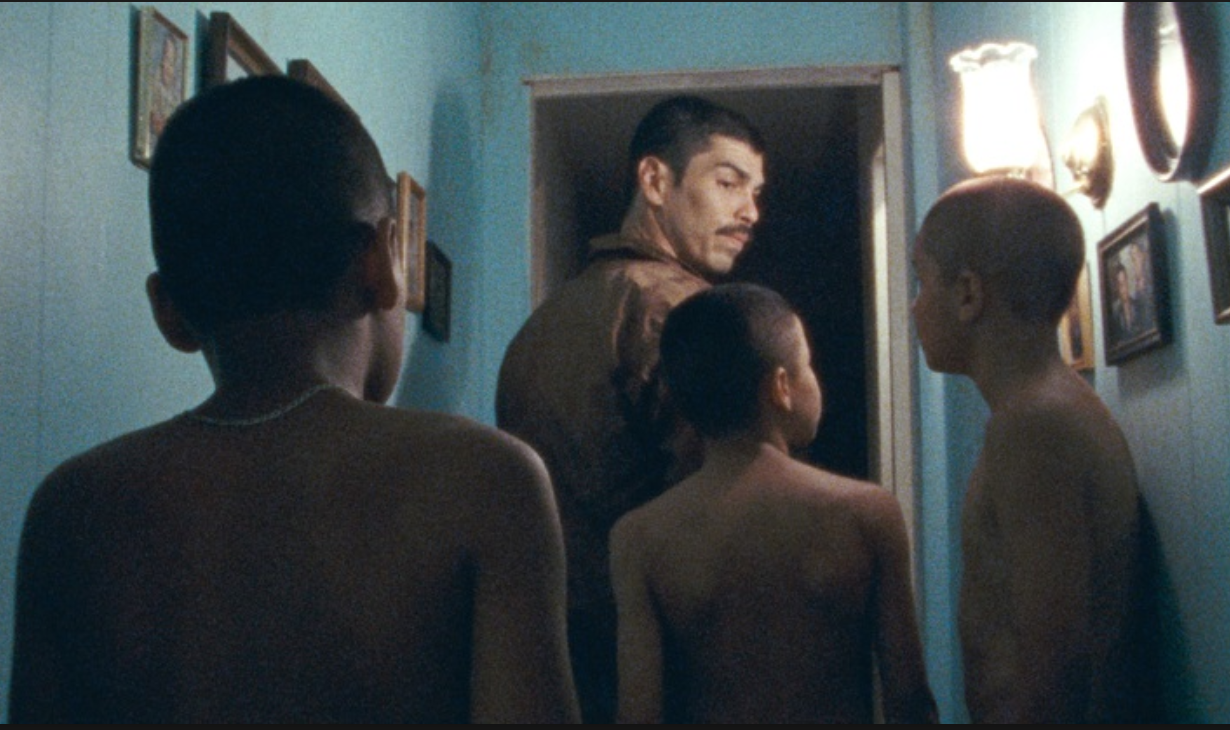
This morning Jordan Ruimy and I caught Jeremiah Zagar‘s We, The Animals, an imaginative, altogether excellent film about an unusual ’80s boyhood in Upstate New York. We had decided to attend this morning largely due to Indiewire‘s Eric Kohn having called it “this year’s Moonlight.”

Before the film began I briefly spoke to Cinetic’s John Sloss. He said that the Moonlight analogy had set the bar too high. But when it was over I was persuaded that We, The Animals, based on a 2012 Justin Torres novel, is trippier and more affecting than Moonlight ever dreamed of, and in a way that recalls Beasts of the Southern Wild with a little Tree of Life mixed in.

I re-read Kohn’s review as I was leaving the theatre, and I felt a little irked about his emphasizing the gay aspect. “As with Moonlight, Zagar taps into a cinematic toolbox for representing an outsider’s struggles,” Kohn wrote, “particularly as it pertains to a developing queerness within the confines of a world in which marginalization is baked into everyday life.”

My email to Kohn: “The analogy is not Moonlight, Eric, but magical realism, Beasts of the Southern Wild, flying above the trees, animated drawings, Malick-like impressionism a la The Tree of Life, family conflict, dreamscapes.

“The gay factor is incidental, almost negligible. Same-sex boners are not the thing here. It’s the levitation, the book of drawings, the careful editing, the apartness, the challenges faced by a ‘different’, artistic kid…the Malick of it all.”

This is easily the best film of Sundance ‘18 along with Lynne Ramsay’s plus those four docs I like (Ashby, Fonda, Williams, Studio 54).

Sundance boilerplate: “With a screenplay by Dan Kitrosser and Jeremiah Zagar, We, The Animals is a visceral coming-of-age story propelled by strikingly layered performances from its astounding cast, elements of magical realism and unbelievable animated sequences.”