Exceptional Perception

Yesterday (8.2) I was slammed by some extra-sensitive readers for writing the following in my “Bad Ellen Vibes” piece:

“My attitude is that if you’re unlucky enough to be working for a difficult, bullying boss or supervisor, or one who could certainly stand to improve his/her people skills…if you’re in a bad situation like this you need to suck it in, man up and accept this unfortunate energy as the price of working on a popular TV show. You’re there to get paid and forge relationships and move ahead with your career. Hang tough, keep your head down, do the job, and land a better job when the opportunity arises.”

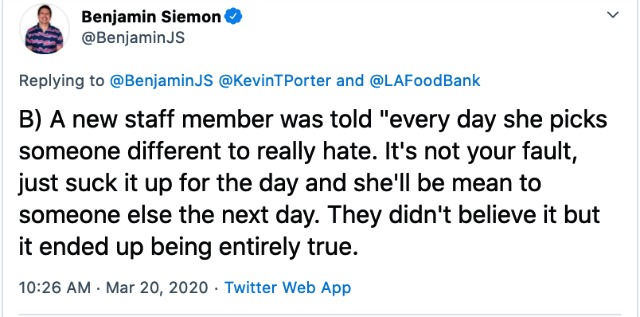
Today a “Page Six” story by Eileen Reslen quoted a 3.20.20 tweet by TV writer Ben Simeon, to wit:

“A new staff member was told ‘every day [Ellen DeGeneres] picks someone different to really hate. It’s not your fault, just suck it up for the day and she’ll be mean to someone else the next day. They didn’t believe it but it ended up being entirely true.”

I really do think that the HE comment-threaders who put me down yesterday need to apologize, preferably sooner rather than later.

Stunts Are Mostly Too Predictable

I respect stunt professionals, and certainly admire their agility and bravery. But the only stunts that really make the grade are those that don’t look like stunts. The ones that look sloppy and accidental, I mean. The more skillfully “performed” a stunt is, the less believable it is. The stunts in Paul Feig‘s 2016 Ghostbusters exemplify this “fine but who cares?” aesthetic.

And forget car stunts. I know it’s extremely difficult to roll a car or drive it off a seaside pier or whatever, but flashy car stunts have been happening in action films for over a half-century now. The birth of serious stunt driving began 52 years ago with Peter YatesBullitt. I can’t even watch them any more.

What made Steve McQueen‘s Bullitt car chase through the hills of San Francisco seem so exciting and realistic? The sounds, for one thing — the roar of the muffler-free engines, the crashing sounds when the car chasses slammed into pavement after leaping through the air. Not to mention those metal hubcaps that kept flying off the tires of the bad-guy car. There must have been similar car chases in action films in which the hubcaps went flying, but I can’t recall a single one.

Parker Is Gone

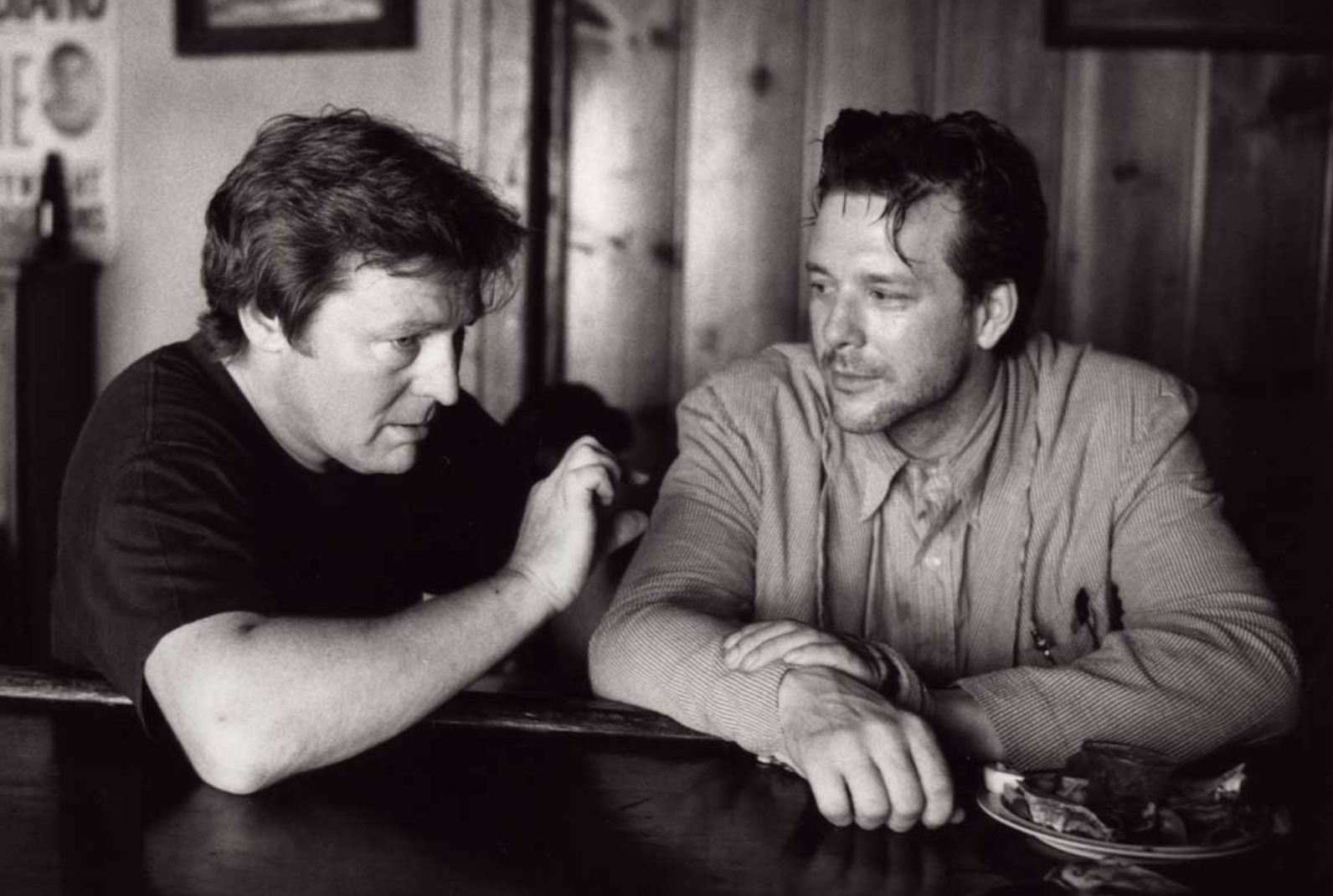
Respect and admiration for British director Alan Parker, who’s left us at age 76.

A graduate of the British TV commercial industry, Parker was a first-rate shooter and cutter — he knew how to make films look sharp and polished and feel just right. And he definitely understood the power of great music wedded to handsome, well-cut visuals (Evita, The Commitments, Fame, Pink Floyd — The Wall, Bugsy Malone) And he knew how to create atmospheres of dread and doom (Angel Heart, Mississippi Burning, Midnight Express).

The rap against Parker for many years was that he was a slick salesman who didn’t have much to say. That consensus began to change in the late ’80s when he got his act into gear and crafted four fairly mesmerizing knockouts over the span of eight years. Those films were, in order of excellence, (a) Evita (’96), (b) Angel Heart (’87), (c) Mississippi Burning (’88) and (d) The Commitments (’91).

Parker also made some films that I couldn’t stand — Shoot The Moon, Birdy, Come See The Paradise, Angela’s Ashes. The Life of David Gale. But let’s focus on the good stuff.

Posted on 2.28.18: Is Ava DuVernay‘s Selma a more accurate history lesson than the one provided by Mississippi Burning? Is it more organically truthful? Did it deliver an identity current that translated into a better-than-decent domestic haul of $52,076,908?

Yes to all, but Mississippi Burning is a better film despite all the bullshit it sold. (And let’s not forget that Selma sold some bullshit of its own.)

The key thing is that Mississippi Burning delivered an emotionally satisfying payoff that audiences bought into, and which resulted in earnings of $86 million if you adjust for inflation.

Here’s how I put it on 11.29.14: “Alan Parker‘s Mississippi Burning gets an awful lot wrong about the way things really were in Mississippi in 1964. African Americans did a lot more than sing hymns and watch their churches burn, and we all know that Parker and screenwriter Chris Gerolmo mangled the history of the FBI’s hunt for the killers of three Civil Rights workers (Michael Schwerner, James Chaney and Andrew Goodman).

“Their coup de grace was having a pair of FBI agents, played by Gene Hackman and Willem Dafoe, turn into Dirty Harry-style vigilantes in Act Three, bringing the guilty yokels to justice by playing rough games and faking them out. Pauline Kael called it ‘a Charles Bronson movie.’

“And I’ve never cared that much. Very few have, I suspect. I’ve always had a soft spot for Mississippi Burning for various reasons — the polish of it, Hackman’s performance (particularly his scenes with Frances McDormand), Peter Biziou‘s cinematography, Gerry Hambling‘s editing, the percussive rumble of Trevor Jones‘ music, da coolness. But especially Parker and Gerolmo’s bullshit plot. Because the lies they came up with are emotionally comfortable, and that’s always the bottom line.

Read more

Favorite “Platoon” Guy

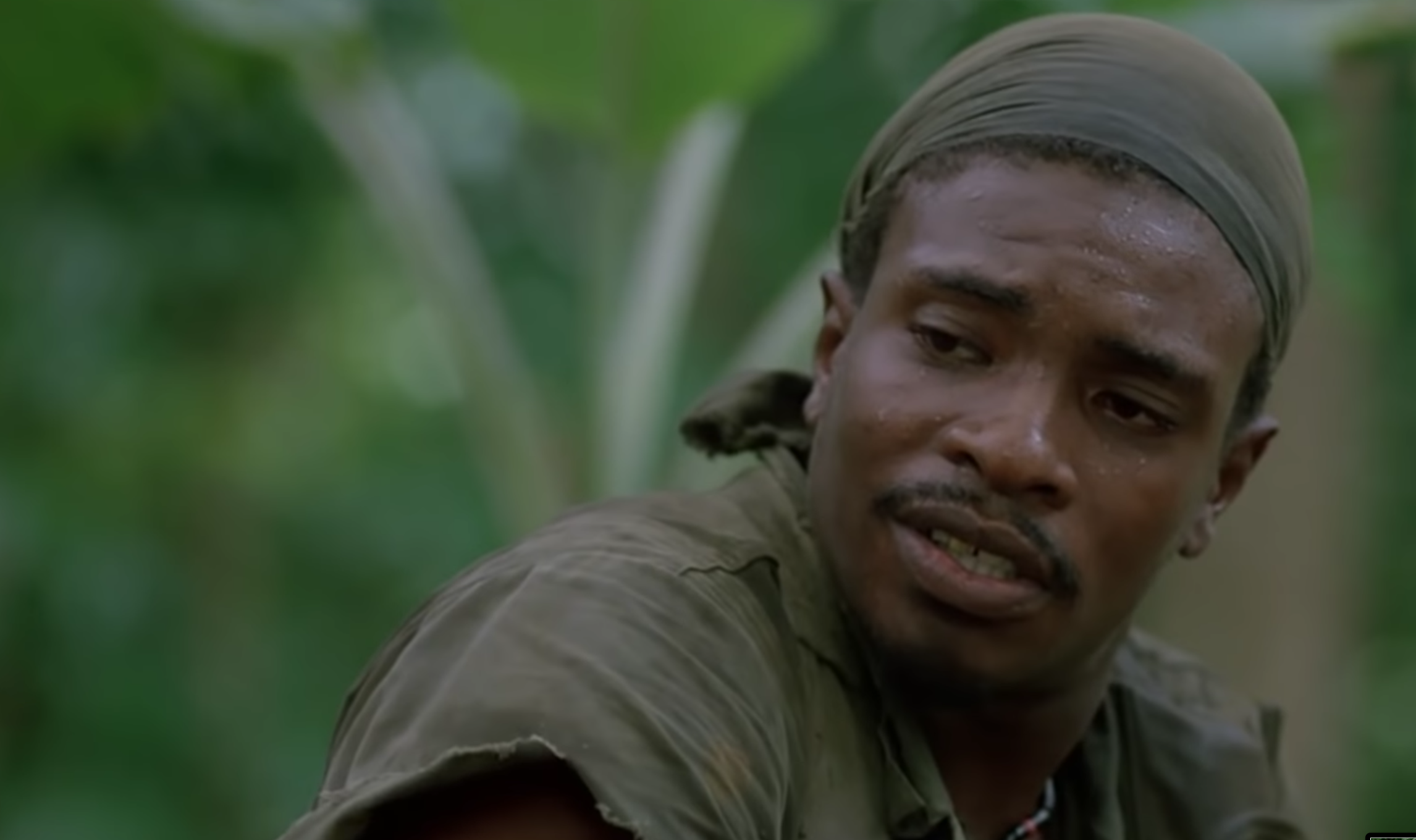
My favorite moment in Platoon is when Taylor (Charlie Sheen) and King (Keith David) are talking about their U.S. backgrounds and core identities. I don’t remember it verbatim but King asks Taylor if he comes from a wealthy family and Taylor sidesteps a response. Soon after Taylor offers some kind of poetic or idealistic reason for having volunteered for Vietnam duty (“I wanted to see the injustice and conflict first-hand”), and King says, “Well, you gotta be rich in the first place to think like that.”

I fell for King at that very moment.

I naturally loved Willem Dafoe‘s Elias (and so did Martin Scorsese — soon after he offered Dafoe the lead role in The Last Temptation of Christ because of it) and identified with the potheads. And I hated the rugged whiskey-drinkers (Tom Berenger‘s Staff Sergeant Barnes, Kevin Dillon‘s Bunny, John C. McGinley‘s Sergeant O’Neill).

I’ve seen Platoon six or seven times, but I never once spotted Johnny Depp (and he’s definitely in it, according to credits).

Joyless Creature

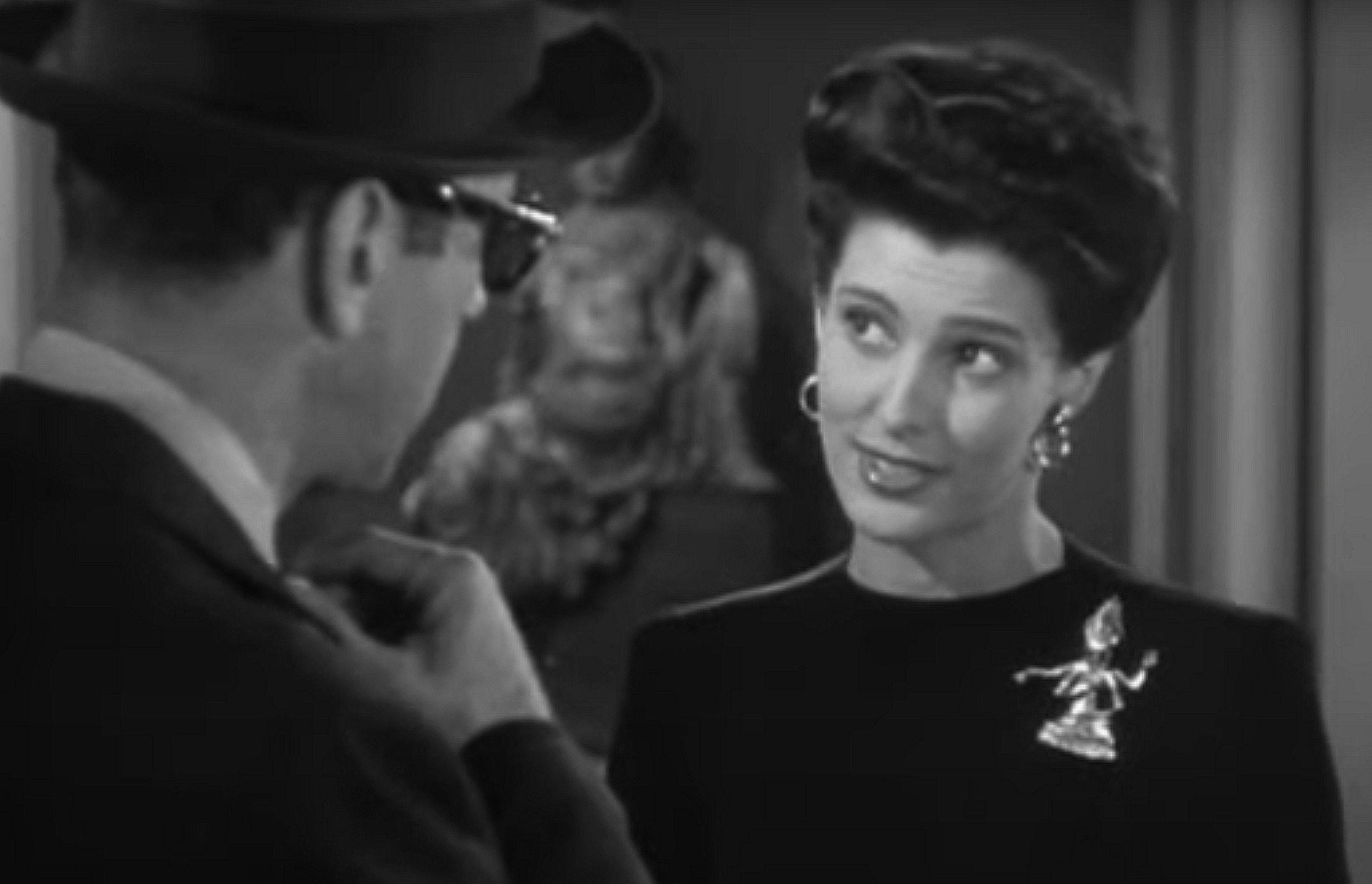
The Big Sleep‘s Agnes Louzier, the bitter femme fatale who once claimed to have never met up with a really smart guy, never one who was “smart all the way around the course,” passed a week ago at age 96.

In real life Agnes’s name was Sonia Darrin. The Big Sleep was Darrin’s only significant film, although she did appear in the semi-respectable Frankenstein Meets The Wolf Man (’43).

Wiki excerpt: Darrin costarred in 12 films between ’41 and ’50. She married William “Bill” Reese, a theater set designer and marketing services company president. The couple had four children (three sons and a daughter), and lived in Manhattan. Their youngest son is the former child actor Mason Reese.

Darrin lived on the Upper West Side of Manhattan for over 50 years.

Agnes Louzier: “A half-smart guy, that’s what I always draw. Never once a man who’s smart all the way around the course. Never once.”
Philip Marlowe: “I hurt you much, sugar?”
Agnes: “You and every other man I’ve ever met.”

Strange Bedfellows

Let’s say you intend to produce a narrative film about the late Scotty Bowers — bisexual pimp to the stars in the ’40s and ’50s, author of a tell-all book about his sexual adventures and the subject of Matt Tyrnauer‘s Scotty and the Secret History of Hollywood.

Let’s also say that you’ve managed to persuade gentle erotic mood-spinner Luca Guadagnino (Call Me By Your Name) to direct your Scotty film. But you still need to find the right screenwriter[s] to make Scotty’s story into an engaging, playable thing.

In all honesty, would you hire Seth Rogen and Evan Goldberg, a couple of edgy straight guys who’ve done little more than wallow in adolescent, arrested-development stoner comedies since they broke through 13 or so years ago…would you hire Rogen and Goldberg to write your Scotty movie, a fair amount of which would have to include some guy-on-guy action…dicks, boners and such?

If your answer is “uhm, no…that’s probably not a great idea,” I would share your viewpoint. If your response is “yeah, hiring the writers of Longshot sounds intriguing and could definitely work,” I’d love to hear an explanation.

The apparent intention is to make Scotty’s story into…what, a satirical period comedy? Or at least to goof it up to some degree? I’m not saying Scotty Bowers didn’t live his life with a certain twinkle in his eye, but Rogen-Goldberg never wrote a line or a gag that didn’t reflect stoner Millennial mindsets and attitudes. Plus their sexual conveyances have always been unrelentingly straight. How are they supposed to make bisexual currents in 1940s and ’50s Hollywood come alive?

Just to clarify, HE strongly approves of Guadagnino directing but is totally effing stunned about Rogen-Goldberg writing the script, as reported earlier today by Deadline‘s Mike Fleming.

If you were Jack L. Warner in late 1945 and planning to produce Night and Day, a film about the life of Cole Porter, who would you hire to write it? Bud Abbott and Lou Costello, right?

Fleming reports that Tyrnauer and Altimeter Films partner Corey Reeser will produce alongside Rogen and Goldberg’s Point Grey Pictures. Searchlight’s Richard Ruiz will oversee the project.

Alleged Stinker

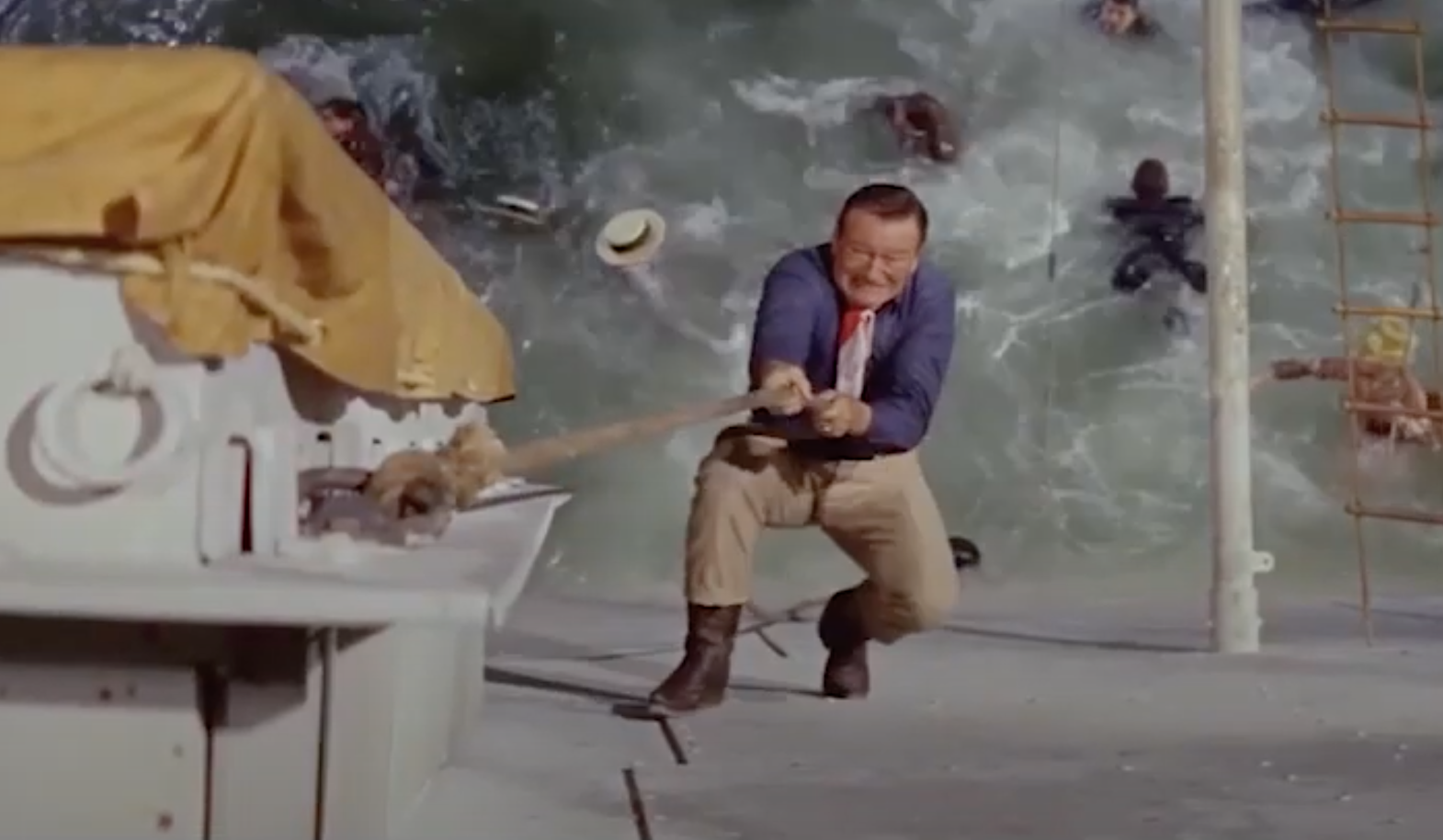
Even if I didn’t know that Samuel Bronston and Henry Hathaway‘s Circus World (’64) was a financial calamity (North American gross of $1.6 million vs. production costs of $9 million) that ended Bronson’s high-rolling career…even if I didn’t know this I could still smell a misconceived effort from the trailer.

That awful narration, the flatness of tone and lighting, the obviousness…God!

The idea was to somehow recreate the box-office appeal of Cecil B. DeMille‘s The Greatest Show on Earth (’52). It didn’t happen, in large part due to lead actors who didn’t blend.

56 during filming in ’63, John Wayne had become too bulky and too past-his-prime** to play Rita Hayworth‘s circus impresario lover, and Hayworth wasn’t doing too well herself with her alcohol problem and (alleged) early-onset Alzheimers.

No, I’ve never seen Circus World. I might give it a shot if I could see it gratis, but otherwise I’m cool with reading the bad reviews and imagining the shortcomings.

** Duke was also too old to play Angie Dickinson‘s boyfriend in Rio Bravo (’59), which was shot in ’58 when he was 51. Ditto Capucine‘s lover in North To Alaska (’60), which rolled film when he was 52 or thereabouts.

Natural Elements

Pre-dawn (5:35 am) in San Felipe (7.27.20) vs. similar vista used for opening credits of Mike NicholsCatch22 (sequence shot in Guaymas, Mexico), which opened on 6.21.70.

San Felipe
Catch22

Read more

Princess de Havilland

Posted from lounge chair on outdoor patio in 94-degree heat, and with shitty wifi to boot:

Four essential performances were given by the late, great Olivia de Havilland: (a) Maid Marian in Michael Curtiz’s Robin Hood (‘37) , (b) Melanie Wilkes in Gone With The Wind (‘39), (c) the disturbed victim in Anatole Litvak’s The Snake Pit (‘48). and (d) the vaguely gullible woman-of-means in William Wyler’s The Heiress (‘49).

There were other sturdy performances, but these four were the keepers. Have I seen every noteworthy Olivia de Havilland performance? No. The truth is that I found her virtuousness (which was always a central eiement) deflating and…I’ll leave it at that.


Olivia de Havilland, Joan Fontaine.

She was a fine, classy, top-tier thesp, for sure, but I gradually chose to regard OdH as more of a maidly vibe or a classic chastity brand than an actress for all moods and seasons — the intrepid woman of Paris, pushing on, the never-say-die trooper, sometimes riding her bicycle and occasionally speaking with THR’s Scott Feinberg.

This may sound like a putdown, but she never conveyed even the faintest hint of eroticism…not the slightest sniff. This is what almost all leading actors and actresses do, after all — they invite you to sense the aroma. Nor could you imagine her sister, Joan Fontaine, succumbing to any such impulse. Okay, perhaps Joan occasionally thought about intimacy but that’s all. My sense is that Olivia, by the measure of her screen performances, never even did that.

OdH passed this morning (or last night) at age 104. Sweet dreams, gentle waters.

Regis Philbin, John Saxon, Olivia de Havilland — the trilogy is complete.

Classic Mansplaining?

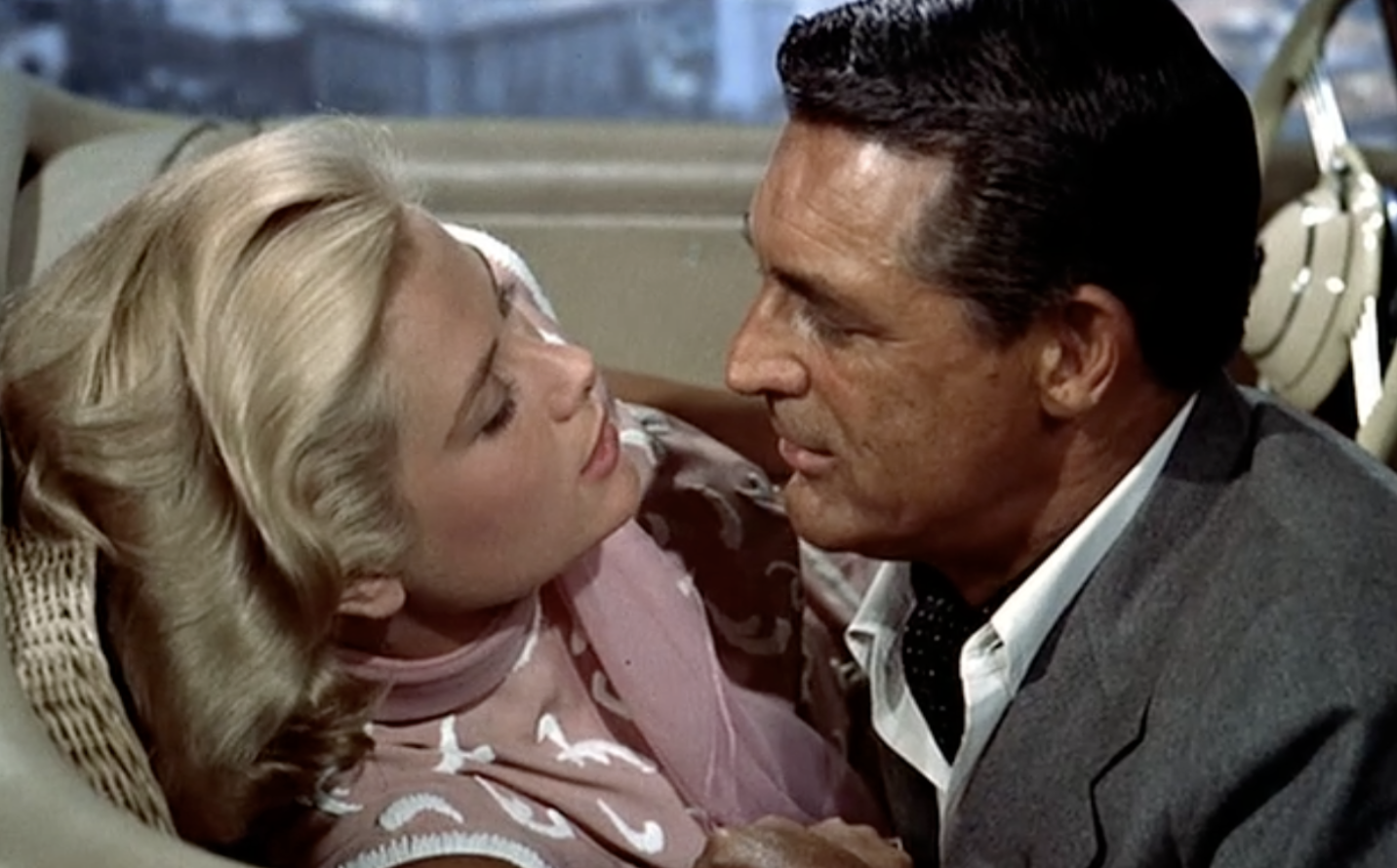
Early this morning Jill Blake conveyed delight after turning a daughter (or some younger person) on to To Catch A Thief, particularly in response to the younger person’s request to see a film with Cary Grantrunning around.”

Being a special kind of asshole, I jumped in with an anecdotal mansplainer. I pointed out that Grant doesn’t “run” anywhere in that 1955 Alfred Hitchcock classic but “scampers” cat-like across French rooftops. For this I received a hale and hearty “fuck off!”, which needed an extra “douchebag!” to really drive the point home.

Surrounded by Steers

It was impossible to survey the flotsam & jetsam frolicking and lounging around the historic, all-wooden, once-transporting Hotel del Coronado yesterday and say to myself, “Life in these United States is just as layered and fascinating and distinctive — socially, fashionably, politically — as it was 100 years ago.”

We stayed last night in San Diego’s Holiday Inn Express, which is aesthetically acceptable and atmospherically fine except — except! — for the young drunks next door who were quacking like ducks and bellowing like sea lions way past bedtime hour. We called the desk three or four times, and I guess the last warning conveyed by security (“If you don’t shut up we’re going to evict your ass”) finally got through. But what an ordeal.

The same kind of bloated manatees I was observing at the Hotel Del Coronado were, like us, staying in less pricey digs back in the city. I couldn’t bring myself to part with $300 or $350 plus tax for a HDC room…I just couldn’t.

I grew up and came of age amongst proper (okay, mostly proper) citizens of Rome for the most part. But ill-mannered, crudely spoken, Jabba-sized, poorly dressed barbarians have since stormed the gates, and this, as that ancient Pelican Walter Cronkite used to say, is “how it is” these days.

I criticize no one individual. I simply report and speak the anthropological truth.