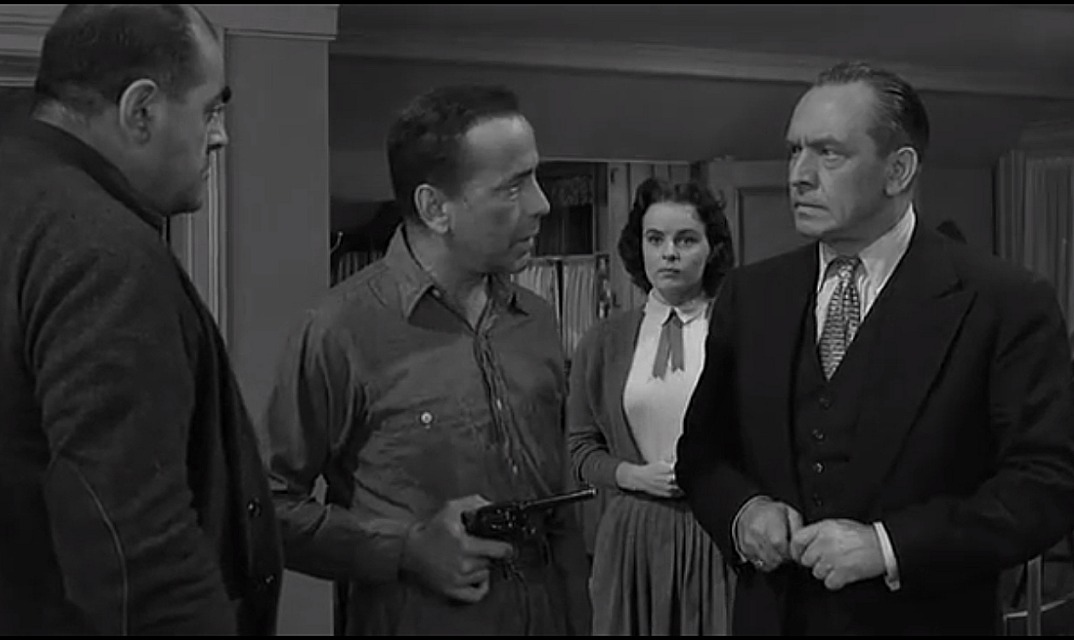
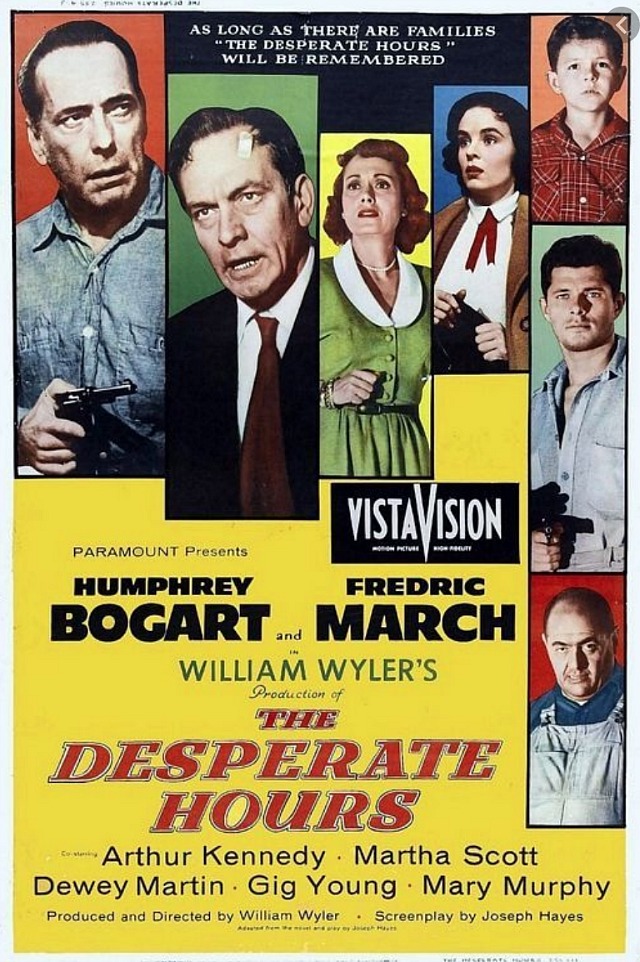
VistaVision (large format) black-and-white films were a relative rarity in the ’50s, and they disappeared when VistaVision went away in ’61 or thereabouts. If you have a special affinity for black and white (as I do), you’re pretty much obliged to give the Amazon HD versions of William Wyler‘s The Desperate Hours (’55), Robert Mulligan‘s Fear Strikes Out (’57) and Michael Curtiz and Hal Wallis‘s King Creole (’58) a looksee. All shot in VistaVision. Four or five others went this way.
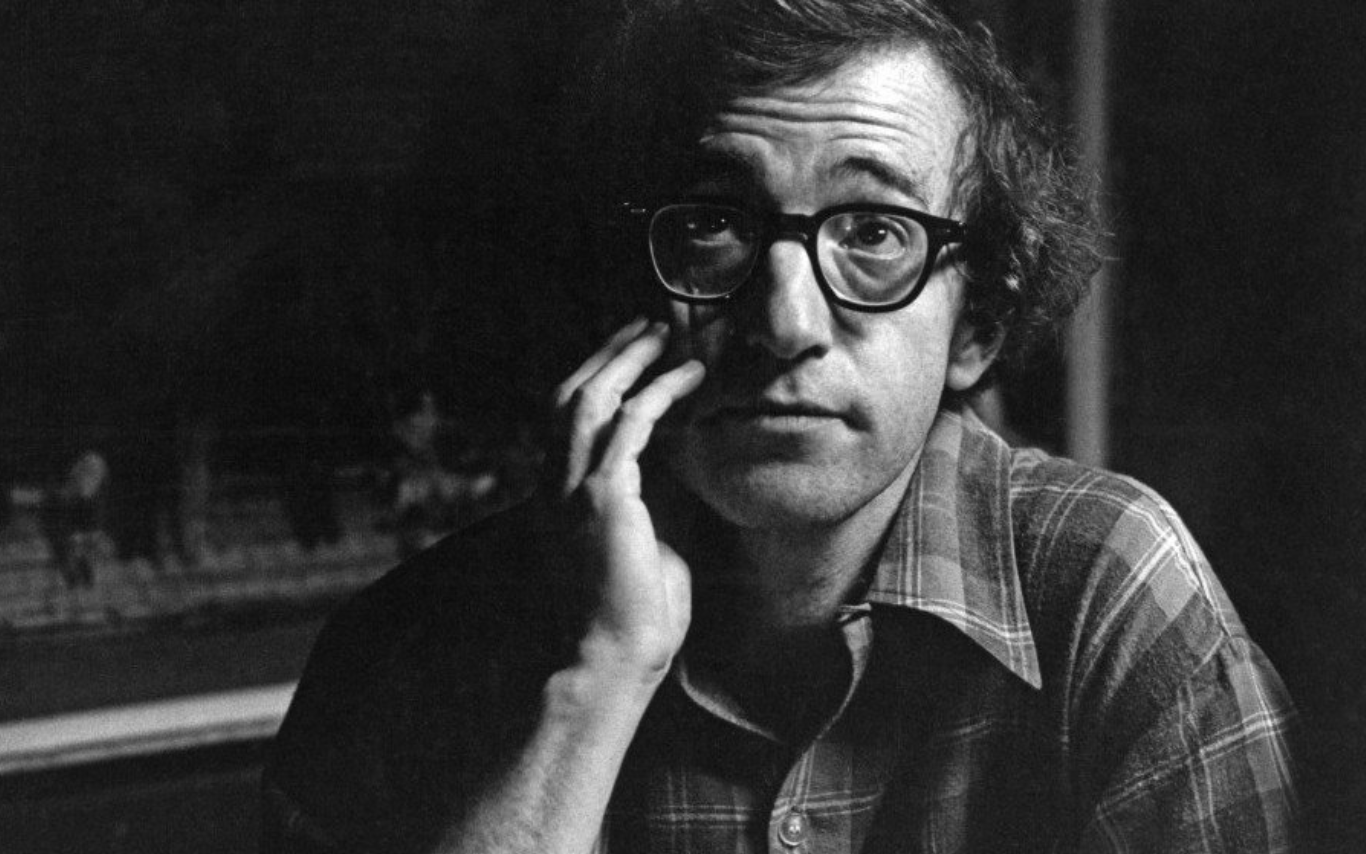
Vulture‘s Mark Harris has written a pissy, dismissive, incurious review of Woody Allen‘s “Apropos of Nothing.” He’s certainly entitled to his opinion, but reading the piece gave me stomach acid. Whereas I felt no adverse stomach sensations and experienced mostly pleasure while reading Allen’s book, especially the portion that covers his Brooklyn childhood and teen years.
Seriously — the first 80 or 90 pages of “Apropos of Nothing” are luscious. They’ll put a smile on your face. And Harris more or less pisses on them, in part because Allen delivers the same kind of riff that he used in Broadway Danny Rose, when Allen’s titular character describes a certain female cousin looking “like something you’d find in a live bait store.” Tribal self-loathing, par for the course, etc.
As I wrote on 3.29, Allen has a voice and a style and a certain shticky attitude, and much of the book is like listening to some streetcorner wise guy tell a story from a bar stool. And I’m sorry but unless you’re an Inspector Javert for the #MeToo community, “Apropos of Nothing” is an engaging read. Really. It’s easy to process. It flows right along. And it’s funny and cuts right through for the most part.
Most of Harris’s review makes a case that “Apropos of Nothing” isn’t the deepest or the most probing piece of literary self-excavation or self-examination ever published, which is true. But I weathered the mundane or underwhelming or overly glib parts. Harris, on the other hand, doesn’t like the fact that Allen is who he is, and that his voice is his voice.
“If you can read “Apropos of Nothing” with that in mind, “you’ll have a better-than-decent time with it,” I wrote. “And by that I mean diverting, chuckly, passable, fascinating, occasionally hilarious and nutritional as far as it goes.”
There are two portions of Harris’s review that made me fall over backwards in my chair.
“I understand those moviegoers who have no desire ever to watch or rewatch another Woody Allen movie,” Harris writes.
He does? One of our finest film historians and a highly perceptive film critic “understands” the nonsensical position of Woody haters, which is based on nothing but a blind belief that Dylan Farrow‘s account of what may or may not have happened on 8.4.92 is 100% reliable? There is nothing in terms of evidence or professional opinion (not to mention the account posted by Moses Farrow) that backs up Dylan’s account, but Harris nonetheless “understands” (seems to have no major argument with, feels a certain allegiance with) their ignorance. Shafts of light piercing through the clouds!
“But as a film historian, I can’t remove [Allen’s] films from my cultural vista,” Harris adds, “because they’re not only his. [For] Annie Hall is also an essential part of Diane Keaton’s filmography, and of Gordon Willis’s, and of Colleen Dewhurst’s, and of Jewish filmmaking, and of New York romantic comedy.”
In other words, if it weren’t for the charms of Annie Hall plus the creative participations of Keaton, Willis and Dewhurst, Harris might be tempted to remove Allen’s films from his “cultural vista”? I’m not going to bellow like a buffalo and slap my forehead as I list all the great and near-great films Allen has directed and written and acted in. But I will say this: I’m stunned.
Harris excerpt: “Dwight Garner, who artfully tweezed this book for the New York Times, wrote that he believes that ‘the less you’ve read about this case, the easier it is to render judgment on it.’ I have little to add to that except how deeply I wish I had read less.”
There’s a passage in Allen’s book that “stopped me in my tracks”, Harris writes. It says that “[Mia] didn’t like raising the kids and didn’t really look after them. It is no wonder that two adopted children would be suicides. A third would contemplate it, and one lovely daughter who struggled with being HIV-positive into her thirties was left by Mia to die alone of AIDS in a hospital on Christmas morning.”
But if memory serves this is all in Moses’ essay. Is Harris implying that Moses’ perspective and viewpoint aren’t worth considering? If he’s not implying this, why the hell didn’t he at least mention that Moses and Woody are on the same page?
Repeating: Expressing disgust at a candid, well-written (if occasionally redundant and overly gracious in terms of costars and collaborators) memoir by one of the most acclaimed film artists of our time, and in so doing signaling lockstep solidarity with #MeToo cancelling, is not a becoming profile, to put it mildly.
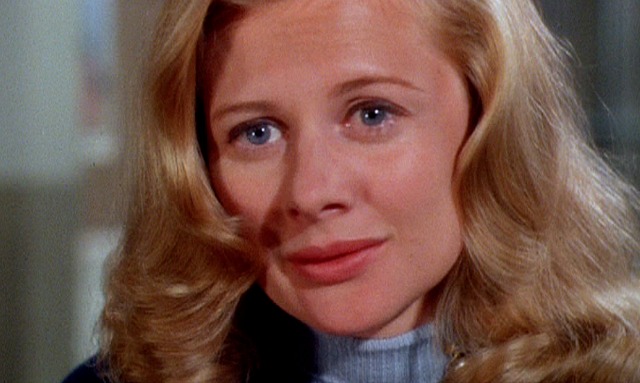
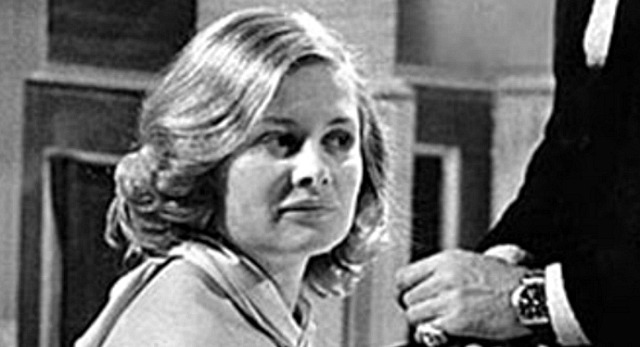
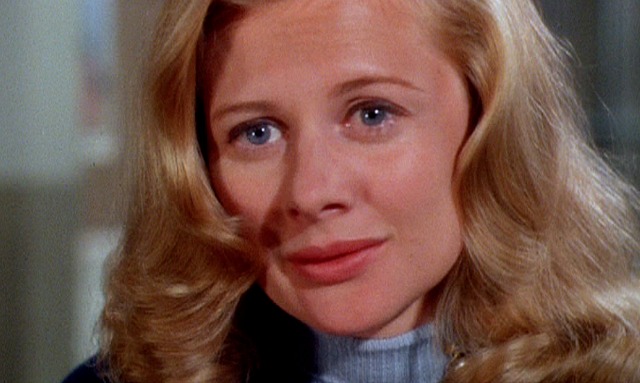
The brilliant Shirley Knight has passed at age 83. A baby buster from Oklahoma, Knight’s acting career spanned nearly 60 years (’59 to 2018). She peaked between ’60 and the late ’70s, but never slowed down. Her last film, Periphery, was released two years ago.
Knight’s performance as the escaped housewife in Francis Coppola‘s The Rain People (’69) is probably her strongest career highlight, followed by her Oscar-nominated turns in Dark At The Top Of The Stairs (which I’m ashamed to admit I’ve never seen) and Sweet Bird of Youth (’62).
Her relatively small supporting role in Richard Lester‘s Juggernaut (as a cruise-line passenger who has a fly-by-night affair with the ship’s captain, played by Omar Sharif) wasn’t any kind of career milestone, but her performance was first-rate. Her best moment was when she danced with Roy Kinnear.
More recently I was impressed by her mother-of-Helen Hunt performance in As Good As It Gets (’97), which was eccentric, spirited and funny.
I never saw Knight’s Tony-nominated performance in Kennedy’s Children (’76), and I don’t even remember her in Endless Love, Divine Secrets of the Ya-Ya Sisterhood or Grandma’s Boy…sorry. And I never saw her in Redwood Highway, a 2013 indie in which she costarred with Tom Skerritt.
I spoke to Knight at a party about four or five years ago. I told her I wished I could re-view The Lie, a 1973 live-TV drama that was written by Ingmar Bergman and dealt with a stale upper-middle-class marriage. It was captured live and on videotape at the CBS Television Center on Beverly and Fairfax. Knight played George Segal‘s wife who was having an affair with Robert Culp, or maybe the other way around. (The fact that it included a discreet semi-nude scene was striking for television back then.) Knight said she’d never seen it, and didn’t know if it had been offered for rent or sale or anything. Apparently a cruddy-looking MUBI version was viewable not long ago.
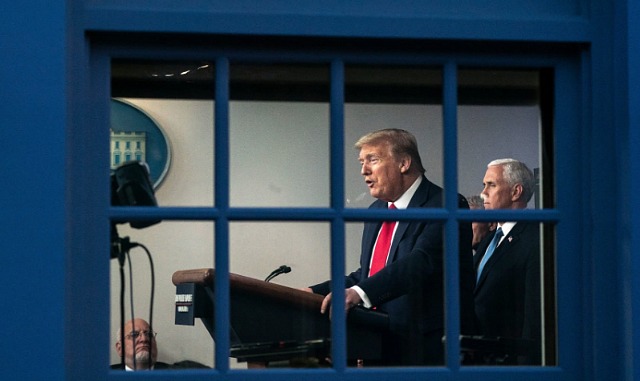
“Donald Trump is a bare-knuckled politician with imperial impulses, falsely claiming that ‘when somebody’s the president of the U.S., the authority is total,’ encouraging protesters bristling about social distancing policies to ‘liberate’ swing states, and saying that Speaker Nancy Pelosi will be “overthrown, either by inside or out.”
“Trump has completely politicized this pandemic and the briefings have become a tool of that politicization. He is standing on top of nearly 40,000 dead bodies and using the media to distract attention away from them and instead brag about what a great job he’s done.
“In 2016, Trump stormed the castle by outwitting the media gatekeepers, exploiting their need for content and access, their intense hunger for ratings and clicks, their economic hardships and overconfidence.
“It’s all happening again. The media has learned nothing.”
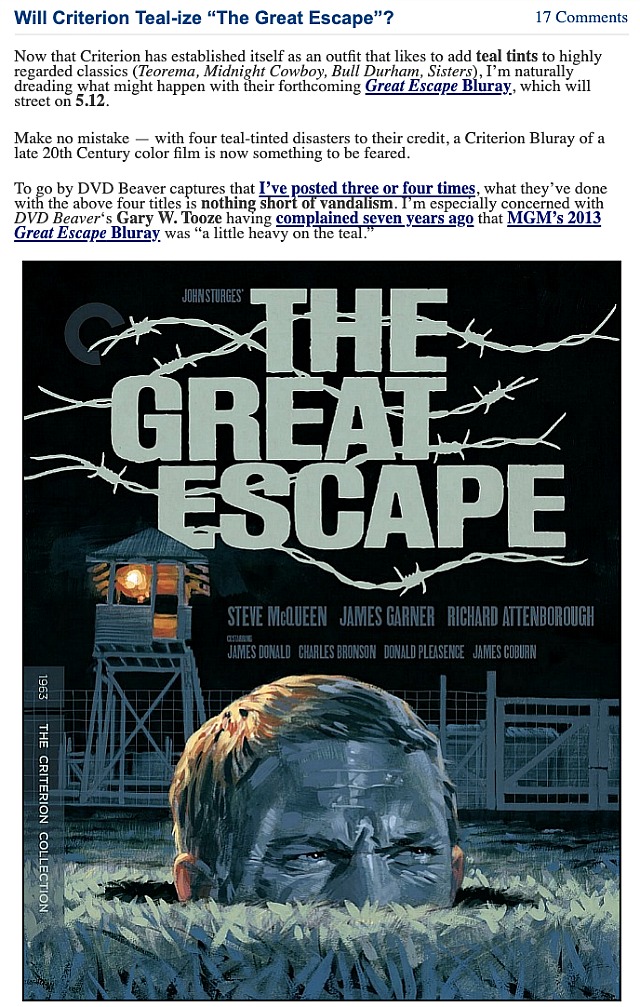
A couple of months ago I expressed a reasonable concern that Criterion’s Great Escape Bluray (5.12) might be teal-ized. Now comes a review from DVD Beaver‘s Gary Tooze that says Criterion has gone for “yellowish, golden, sometimes green or earthy hues” — no teal whatsoever — and that it looks “brighter, shows more detail and depth and looks quite strong in-motion.”
Excerpt: “Make no mistake — with four teal-tinted disasters to their credit, a Criterion Bluray of a late 20th Century color film is now something to be feared. With Criterion having teal tinted four highly regarded classics (Teorema, Midnight Cowboy, Bull Durham, Sisters), I’m naturally dreading what might happen this time around.”
Here’s hoping that Criterion has abandoned the teal-tinting inclinations that all but destroyed their Blurays of the four above-mentioned titles.
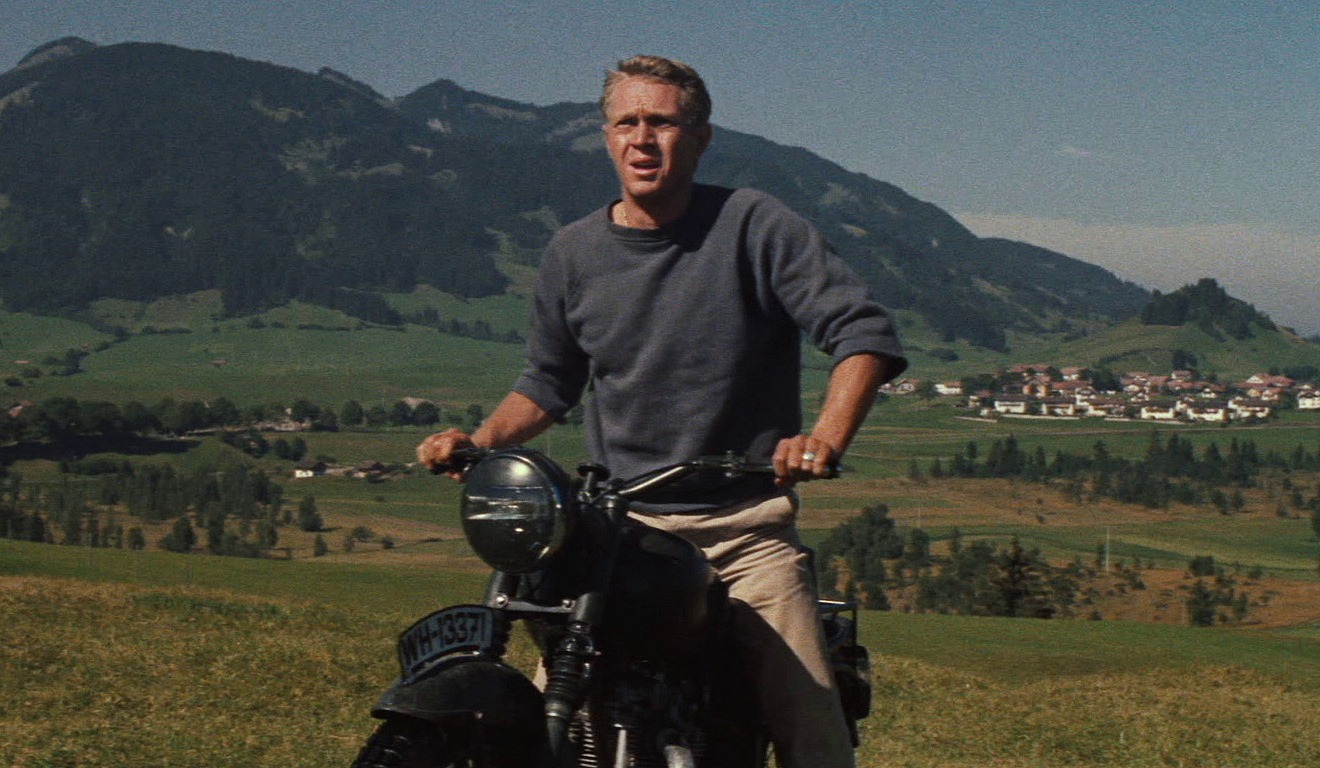
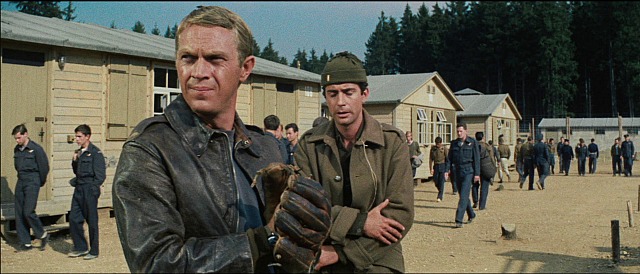
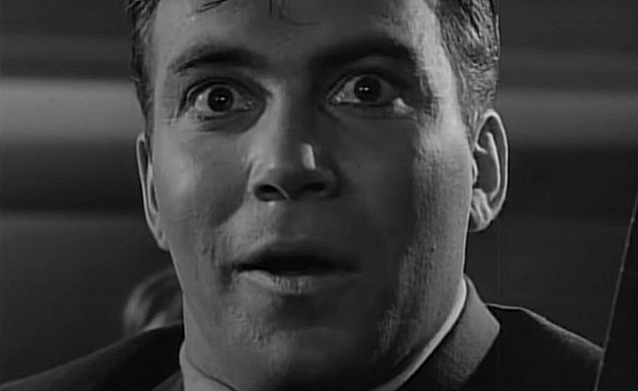
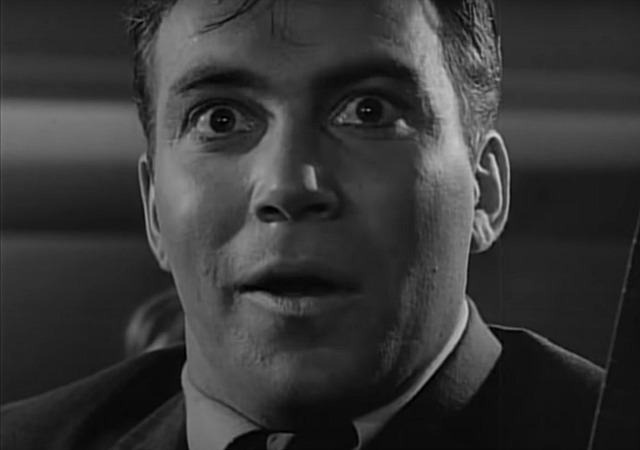
Hats off to “HotPockets4All” for the primary image — I added the Shatner CU.
The theoretical essence of the Open Up tea-bag movement (please correct me if I have it wrong) is something along the lines of “better to risk death or even die (while helping others to do same) than submit to a severely shuttered, economically smothered way of life that amounts to a kind of living death.”
Is that more or less it? Because it feels like a plot element from TheOmegaMan.
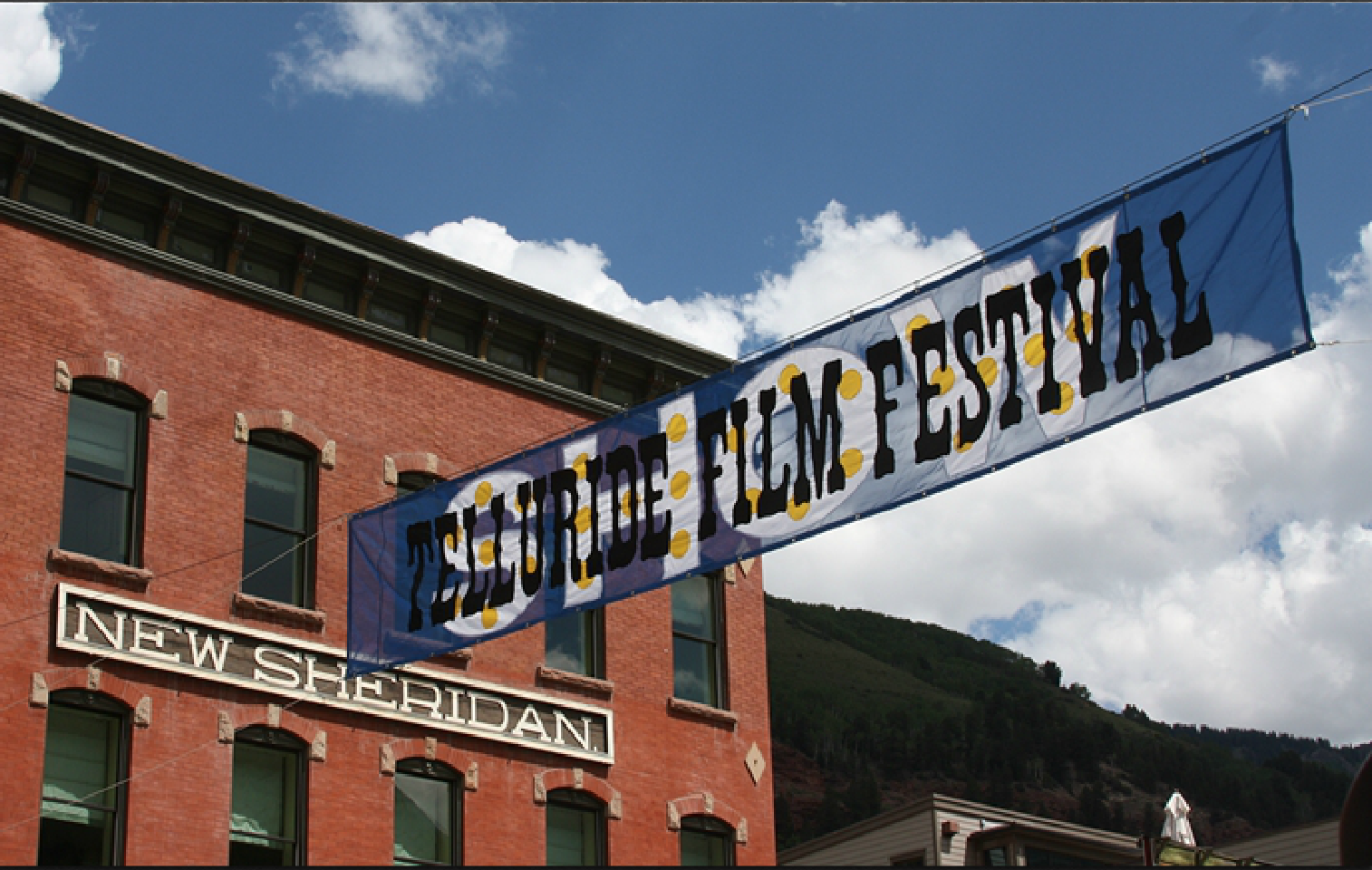
Word around the campfire is that the 2020 Telluride Film Festival might begin a day early, or on Thursday, 9.3. Maybe. Who knows?
Journo pally: Okay but do you really think Telluride can happen in early September?
HE: Sure! Actually, I don’t know. I suspect it will. Maybe they’ll hand out special blue-tinted passes to people who’ve been tested 15 to 20 days before arriving. You’ll have to send the certificate a week or two before it begins. The tested people will be allowed to congregate. The second-class festivalgoers (those who haven’t been tested) will have to maintain the usual distances and sit two seats apart. Plus no feeds or parties to speak of.
Journo pally: Well, I hope you’re right.
HE: The curve will be totally flat by August, most likely. Perhaps even by mid to late July. Yes, the virus will resurge whack-a-mole style, but Telluride people are not high-risk types for the most part. Healthier, smarter, better educated, wealthier (except for the journalists), more conscientious, better diets, no obesity to speak of. The odds of the 2020 Telluride Film Festival being turned into a catastrophic coronavirus pigfuck are not high.
Journo pally: I do hope that scenario proves more or less accurate. I’m not as convinced as you, but if that’s the way it happens, I think we’ll be fine.
HE: You’re saying in a very gentle way that I don’t really know anything. Which is true, of course. But I need to believe in this. I need to be believe in a future that includes a little bit of open-air happiness and fraternity and the return of films screened in theatres.
I had an odd dream this morning. I was attending an Oscar-related party in a large, elegant pre-war home in Los Angeles. Probably taking place in the past as social congregating was rampant. Amber light, magic hour, probably in mid-summer. I recognized exactly one fellow journalist (Michael Musto) but otherwise I might as well have been in rural Oregon or Utah. Stag, sans Tatiana…no idea why.
I was standing near a fireplace when a gray-haired guy and his wife said hello. He was a dentist, he casually mentioned, and in fact had performed some dental work on me a year or so ago. I didn’t want to be impolite but he had to be mistaking me for someone else. And, he added, I hadn’t fully paid my bill. That startled me. I suddenly realized I had in fact been to his office and somehow forgotten. I apologized and said I’d PayPal him the balance. “What’s your email?” I asked. “You have it,” he said, although he wouldn’t say his name.
I sat down on a couch in a shaded sunporch area, and laid my head back and closed my eyes. Seconds later I nodded off. I awoke some time later and noticed it was still fairly light out and that the same people were milling around. I looked at my watch and realized it was 6:30 am the following morning. I’d slept nine or ten hours. My first thought was that Tatiana was probably sleeping but would be worried, and that I had to call and explain what happened. And then I woke up.
Interpretation: The party represents my longing to experience social mingling once again. Sleeping through a party represents anguish over missing out on the joy of living during the pandemic. The dentist telling me that I still owe him money represents my anxiety about ad revenue. The absence of Tatiana indicates my existential sense of being permanently alone, in the European philosopher or J.J. Gittes sense of that term. The fact that I thought immediately of calling her when I woke up at 6:30 am means only that I knew I’d be in trouble if I didn’t.
Producer pally (reacting to yesterday’s “The Draining“): “Sheesh. Can you start your column with a more depressing headline and opening? Are you trying to drive readers away? Give us a break!”
HE to Producer Pally: “So the recipe for vigorous readership is fantasy, nostalgia, sweet music, re-voting past Oscar competitions, fairy tales and the like? We’re living through a cross between a Steven Soderbergh and a George Romero film — an open-ended pandemic nightmare with bumblefuck zombies howling about Gretchen Whitmer — life in a vast, shrouded minimum security concentration camp with wifi and streaming at home.
“On one hand I’m happy and counting our blessings — Tatiana and I are both healthy, working hard, taking occasional walks and watching a lot of streaming, and on the other hand I occasionally dream about snorting heroin. Because ‘life’ (that once-familiar state of natural being that occasionally included joy and rapture and various states of wonder **) has basically stopped.
Producer pally: “Stop the drama. It’s easy enough to find the middle ground without declaring an apocalypse.”
** As well as grimacing as young wine-drinking women shrieked with Irish banshee laughter in restaurants and bars…that was part of the symphony back then.
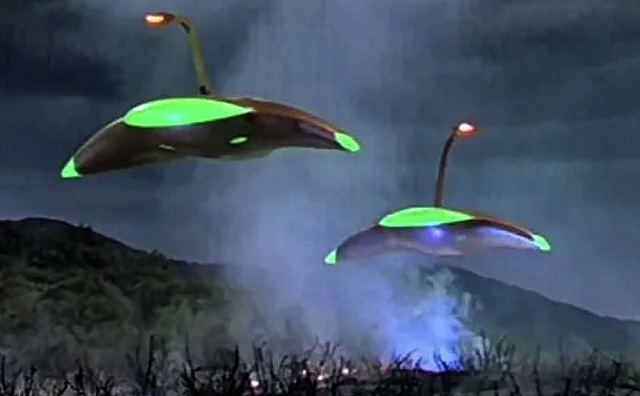
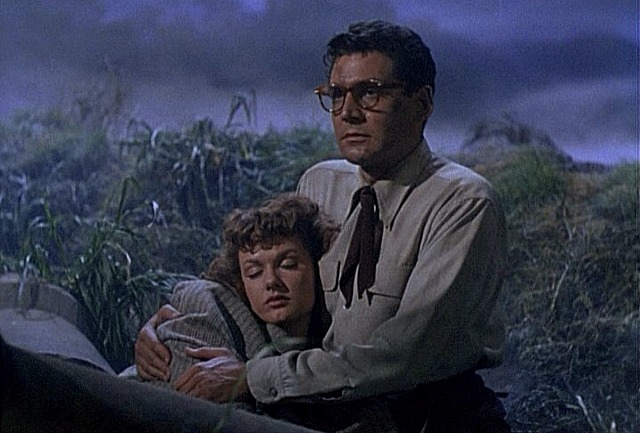
It was shot by George Barnes, whose dp credits include Spellbound, None But The Lonely Heart, The Bells of St. Mary’s, Samson and Delilah and The Greatest Show on Earth. The poor man died of a heart attack in May 1953, or roughly three months after The War of the Worlds opened in major markets.
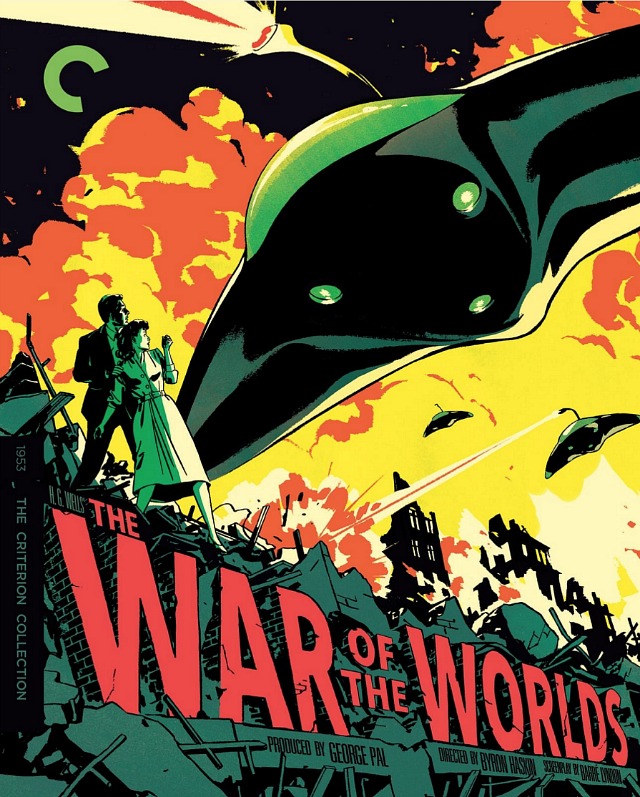
I can’t imagine…no one can imagine how the upcoming Criterion Bluray version (July 7, “new 4K digital restoration”) could possibly top the Amazon or iTunes UHD versions. The Criterion disc will look fine, of course, but what’s the point? I’ll be surprised if any half-knowledgable film fanatic calls it a serious bump-level Bluray. It’s not in the cards.
As feared and forecasted, The Hollywood Reporter has made some top-level coronavirus staff cuts, and THR‘s chief film critic Todd McCarthy is among the casualties. Once movies and film festivals start happening again (presumably by August if not before) McCarthy would presumably get his gig back. Right?
Longtime veteran McCarthy is one of the most perceptive, eloquent and widely admired film critics in the realm today. Knows everyone and everything, has written books, directed a great doc about cinematography among others, etc.
THR‘s award-season pulsetaker and industry investigator Scott Feinberg has been spared, at least for the time being.
Excerpt of McCarthy statement, posted today at 5:13 pm on Deadline: “A month ago I was surprised, out of nowhere, to get a nice raise. Yesterday I got the boot. By guys I’ve never met. Apparently if you make over a certain amount, you’re suddenly too expensive for the new owners of The Hollywood Reporter, which has recently been reported as losing in the vicinity of $15 million per year. Dozens are being forced to walk the plank. It’s a bloodbath.
“What were the bosses thinking when they gave me a raise last month? What on earth are they thinking now? As I said to The New York Times when I was let go from Variety just over a decade ago, ‘It’s the end of something.’ What the next something is — for everyone is our business — seems less knowable than ever.”
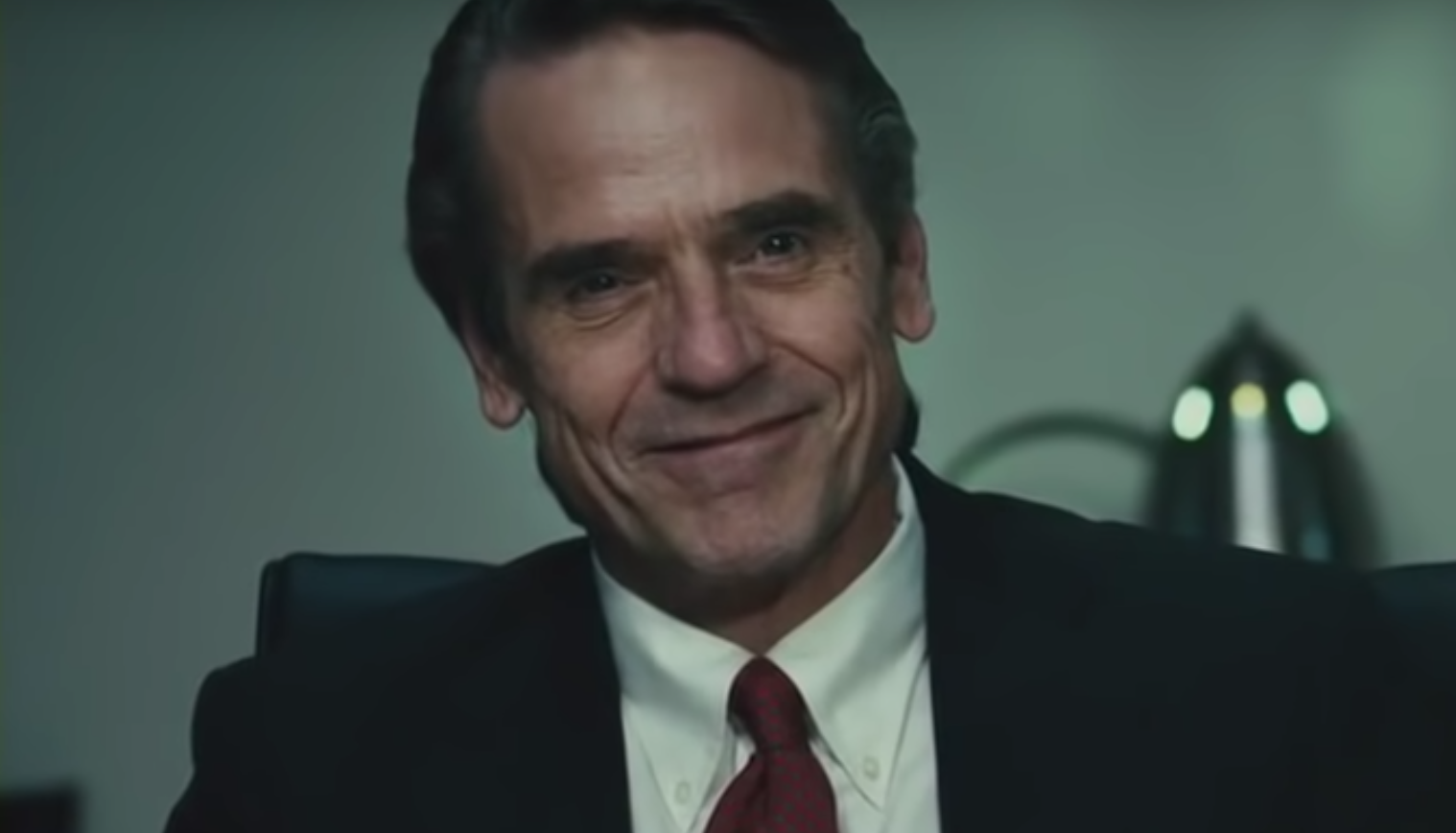
J.C. Chandor‘s Margin Call (Lionsgate/Roadside) was one of the big highlights of the 2011 Sundance Film Festival, or a decade ago. There’s no way that a film like Margin Call (a story about white financial elites grappling with a 2008-like Wall Street crisis, and costarring an accused sexual predator) would premiere at the Sundance Woke Festival of today, 95% of which focuses almost entirely on films about women’s issues, people of color, the LBGTQ community, etc.
This is why Sundance is essentially over — why it has come to the end of a long history of success and vitality (early ’90s to 2017) after succumbing to HUAC-style Khmer Rouge wokeness mixed with strong currents of punitive #MeToo consciousness. Not for being progressive, but for creating and feeding a political environment that (not absolutely but to a large extent) frowns upon the white-guy (and especially the older white guy) realm.
Margin Call is arguably Chandor’s best film ever, and it contains one of the finest Kevin Spacey performance of the 21st Century. Not to mention the performances by Jeremy Irons, Zachary Quinto, Simon Baker and Paul Bettany.
HE commenter: “Worked in investment banking during the 80’s. Most of the guys at the top tier (Spacey/Bettany characters) don’t know how to ‘read’ the numbers. The film drilled it home that they are salesmen. They wine and dine bright and aggressive young men and bring them in to the business. The boardroom scene hinges on the idea that all these financial geniuses look to a rocket scientist (Quinto) for confirmation that their business plan is screwed. 2008 is summed up with the correct conclusion — nobody knows anything. One of the year’s best.”