If Wanting These Films To Play Telluride Is Wrong…

…I don’t want to be right.

A friend insists that yesterday’s post about Little Women and other fall hotties (“Gerwig’s Little Women Avoiding Festival Circuit?”) is “hogwash.” If he’s referring to the Little Women part, he needs to complain to Indiewire‘s Eric Kohn and Anne Thompson and not me.

“I know several titles locked for Telluride,” he says, “and I don’t think you mention any of them, not even the right Netflix one. Actually there may be two.”

“Wait a minute, wait a minute,” I said. “You’re telling me that none of the hotties I listed are going to Telluride as far as you know?”

I don’t care what this guy is saying — at least two or three of the films I mentioned (Ed Norton‘s Motherless Brooklyn, Jay Roach‘s Fair and Balanced, Kasi LemmonsHarriet, Dee ReesThe Last Thing He Wanted, Steven Soderbergh‘s The Laundromat, Gavin O’Connor‘s Torrance, Roger Michell‘s Blackbird, Rupert Goold‘s Judy, Tom Harper‘s The Aeronauts) have to be Telluride-bound…c’mon.

He also commented about Jeff Sneider‘s prediction tweet about Melina MatsoukasQueen & Slim and Destin Daniel Cretton‘s Just Mercy being possible Best Picture favorites, along with my inference that admirers of these films will represent “an anti-Green Book, authentic-black-experience pushback vote.”

“The Academy is not looking to ‘make up’ for Green Book,” he says. “They strongly endorsed it and still do. Queen & Slim sounds interesting but it’s about a black couple (played by Daniel Kaluuya and Jodie Turner-Smith) killing a white policeman and going on the lam. Universal plans to [try to] cover that up largely by selling it as a love story.”

“Warner Bros. is considering Just Mercy for an awards run but it is aimed more directly at MLK weekend. WB has so many possibilities, most notably Joker, so we’ll see. Like Green Book it’s an inspiring true story.”

Just Mercy is a variation on Call Northside 777** — a “get a convict out of jail because he’s innocent” drama. The director is Destin Daniel Cretton; the costars are Michael B. Jordan, Jamie Foxx and Eva Ansley.

** Yeah, I know — Call Northside 777 who? It’s a 1948 James Stewart docudrama, based on a true story about a Chicago reporter who got an innocent guy out of jail.


An Affair To Remember

Unusual Dispensation: As the following is one of my favorite HE Plus essays over the last few months, I’m offering it for free as a special HE promotion. Feel free to click through:

I became an amateur stage actor between ’75 and ’76. I was living in Westport, Connecticut. My big move to Manhattan was about a year and a half off. The usual nocturnal distractions prevailed, of course — carousing, partying, movies. I also wrote program notes for the Westport Country Playhouse Cinema. And I acted in front of paying audiences. First I played the timid “Dr. Spivey” in a Stamford Community Playhouse production of One Flew Over the Cuckoo’s Nest (which I mentioned to Ken Kesey when I interviewed him in Park City in ’98 or thereabouts), and then a macho backwoods type named “Marvin Hudgens” in a Westport Playhouse production of “Dark of the Moon.”

Click through to full story on HE-plus]

Will Fincher’s “Mank” Be Welles Hit Job?

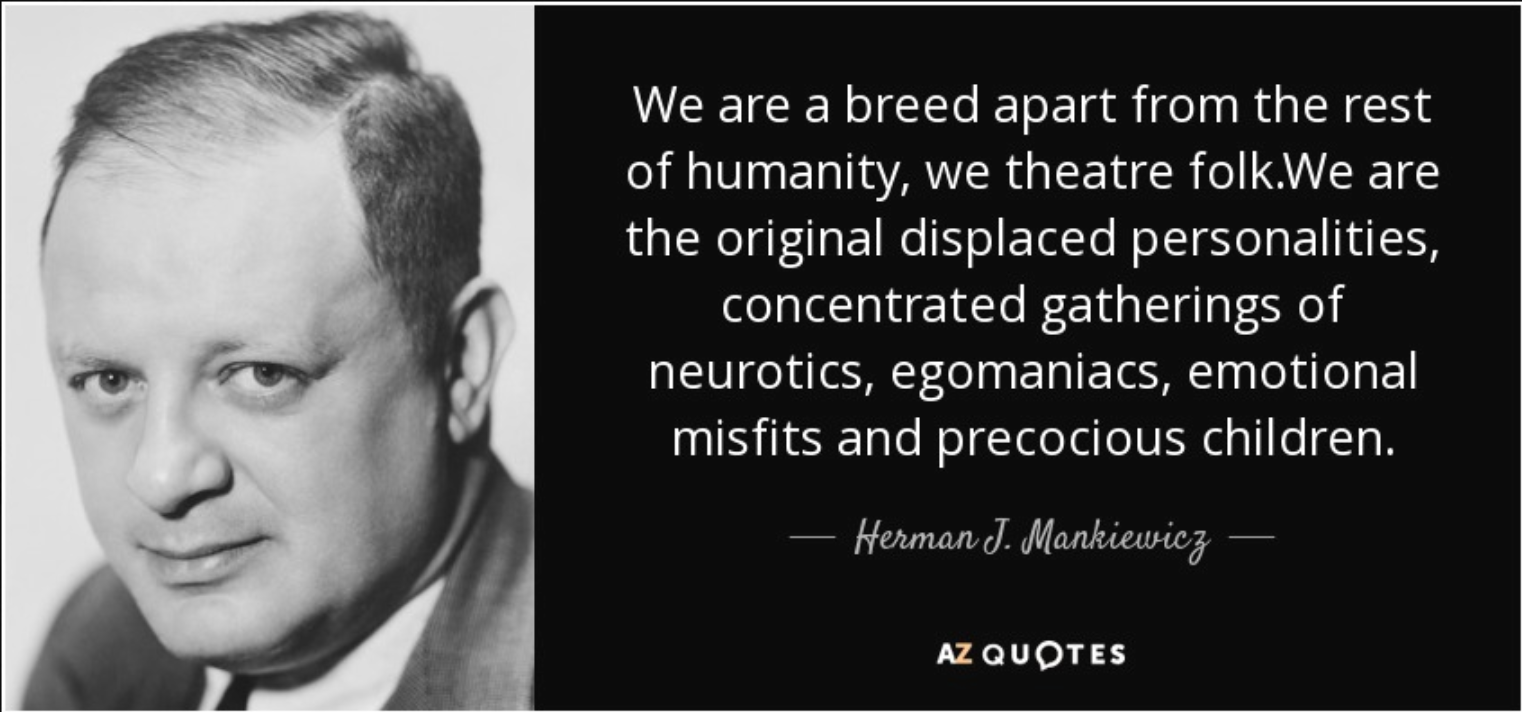
It seems logical, at least from a dramatic standpoint, that David Fincher‘s Mank, a forthcoming Netflix feature about the life and times of Citizen Kane co-screenwriter Herman Mankiewicz, would portray Kane director, producer and star Orson Welles in a less than flattering light.

The whole Welles-vs-Mankiewicz mishegoss has been the subject of fierce debate for nearly 50 years, or since the 1971 publication of Pauline Kael’s disputed essay that claimed Kane was almost entirely written by Mankiewicz. Where’s the drama if the third act isn’t about Welles trying to buy Mankiewicz off or otherwise elbow him aside?

Calling Joseph McBride and other Welles biographers and admirers! To arms! To arms! Pass out the muskets and gunpowder!

I have to be honest and say I’m not all that keen on watching Gary Oldman play Mankiewicz. Oldman is a little too old for one thing (61) — a little too weathered and blinkered. Born in 1897, Mankiewicz worked on Kane when he was a relatively spry 43 and 44, and who enjoyed his main Hollywood heyday during his 30s and 40s. Mank died of drink at age 55, in 1953.

You know who should play Herman Mankiewicz? Bill Hader or somebody in that vein. A clever 40something or nudging-40 type with a twinkle in his eye. Mankiewicz was chubby, yes, but not overly so. A thin guy could pull if off.

Wiki excerpt #1Mank and The Wizard of Oz: “In February 1938, he was assigned as the first of ten screenwriters to work on The Wizard of Oz. Three days after he started writing he handed in a seventeen-page treatment of what was later known as ‘the Kansas sequence’. While Baum devoted less than a thousand words in his book to Kansas, Mankiewicz almost balanced the attention on Kansas to the section about Oz. He felt it was necessary to have the audience relate to Dorothy in a real world before transporting her to a magic one. By the end of the week he had finished writing fifty-six pages of the script and included instructions to film the scenes in Kansas in black and white. His goal, according to film historian Aljean Harmetz, was to “capture in pictures what Baum had captured in words — the grey lifelessness of Kansas contrasted with the visual richness of Oz.” He was not credited for his work on the film.

Wiki excerpt #2: “Mankiewicz was an alcoholic. He once famously reassured his hostess at a formal dinner, after he had vomited on her white tablecloth, not to be concerned because ‘the white wine came up with the fish.’ He died March 5, 1953, of uremic poisoning, at Cedars of Lebanon Hospital in Los Angeles.”

Read more

Strangeness of “King of Kings”

A riff about King of Kings from yesterday’s Rip Torn comment thread:

What a strange, compromised in-betweener King of Kings is. Composed according to the rules of a costly, conservative, big-studio Biblical epic (i.e., even the wandering poor wearing studio-finessed wardrobes with perfect hair stylings) but at the same time political-minded and eschewing the usual religious sentiment (except towards the end). It seems to be straining to become something less conventional but without the focus and nerve to really push into that.

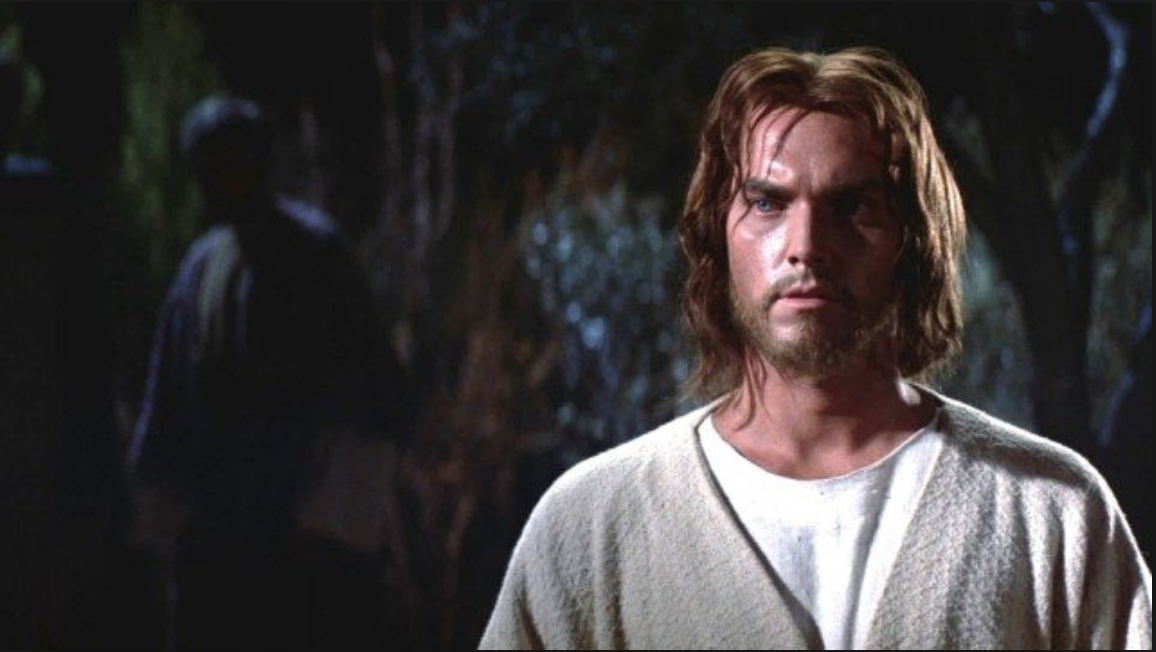
Director Nicholas Ray was quite the muscular auteur in the ‘40s and ‘50s, but he was a director-for-hire here. And yet a faint hint of personality emerged in one respect. Ray seemed to regard Jeffrey Hunter’s Jesus as a vague relation of James Dean’s Jim Stark in Rebel Without A Cause. How else to interpret Hunter’s red shepherd cloak + white undergarment matching Dean’s famous red jacket + white T-shirt outfit? But Ray’s bold power days were behind him. King of Kings was a job — he was pocketing a paycheck. You can almost sense a tone of resignation.

Ray fell apart two years later during the making of 55 Days at Peking (’63). Wiki excerpt: “Ray was a tortured individual at the time of the production of 55 Days at Peking. Paid a very high salary by producer Samuel Bronston to direct 55 Days, Ray had an inkling that taking on the project — a massive epic — would mean the end of him and that he would never direct another film again. Ray’s premonition proved correct when he collapsed on set halfway through shooting. Unable to resume working (the film was finished by Andrew Marton and Guy Green), he never received another directorial assignment.”

Young Rip Torn (29 during filming) gave a thoroughly uncharacteristic performance as Judas Iscariot, solemnly invested in playing a devoted disciple according to the accepted mode of earnest, second-banana acting in 1961. As Barabbas Harry Guardino was in his own spear-and-sandal movie, playing a Che Guevara-like mad man insurrectionist, turning on the Italian machismo spigot and using raw bleating lung power to rail against the Roman oppressors.

The only elements that hold King of Kings together are Miklos Rosza’s reach-for-the-heavens score, Ron Randell’s crisp, disciplined performance as a skeptical but compassionate Roman Centurion, and Hunter’s Nazarene — a performance that doesn’t attempt much in the film’s early stages (underwritten, going through the motions) but gradually takes hold during the second half.

Read more

Panic, Begging, Salvation

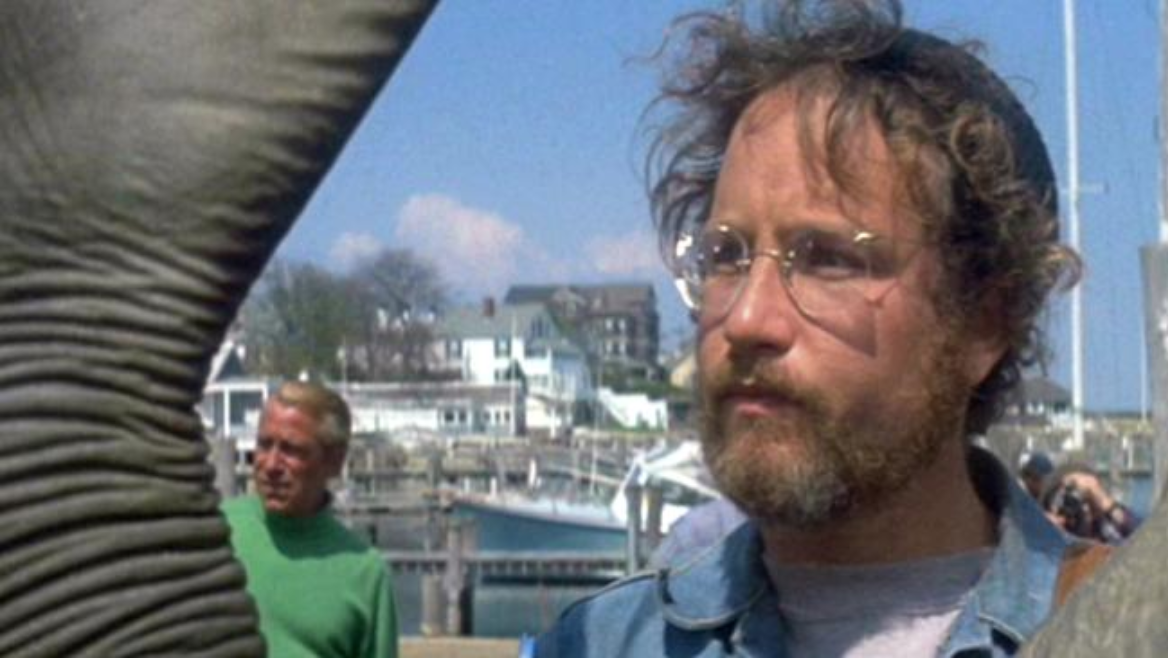
Starting at 5:08: “I can sincerely tell you that I tried to get out of [Jaws]. Because I had done a film in Canada called The Apprenticeship of Duddy Kravitz. And I turned Steven [Spielberg] down. And he said ‘why?’ I said ‘because this is going to be a bitch to shoot, and I’m really lazy.’ And then I saw Duddy Kravitz. For the first time. And I said to myself, ‘If somehow this film is sold in the United States, I will never work again.’ I had to get that [film] behind me.

“So I just did what every normal human would do. I begged for the [Jaws] part. On my knees, And then Steven gave it to me. [To do that Steven] had to deal-break another actor out of the film. I felt like shit. I got the role and did it as well as I could, and that made me ‘a something.’ I wasn’t a star, but I wasn’t not a star.”

Why doesn’t Dreyfuss talk about Stakeout? Or American Graffiti?

What’s Daughter of the Wolf?

Read more

Curious Brew

Until today I hadn’t noticed that John Turturro’s remake of Bertrand Blier‘s Going Places (’74) and the Big Lebowski sequel (aka The Jesus Rolls) are one and the same. Screen Media will distribute Turturro’s three-year-old film next year. Great title, but I’ve never understood how a flick about an older trio of “sexually depraved misfits” (played by Turturro, Bobby Cannavale and Audrey Tautou) could work. The French-made original was about reckless youth frolicking in counter-culture upheaval — a couple of amoral hooligans (Gerard Depardieu, Patrick Dewaere) and the various adventures that befall them. Substitute these guys with 40something actors in the 21st Century and it’s…I don’t know what but on some level it feels out of time. Especially with today’s #MeToo scrutiny. Pic costars Pete Davidson, Jon Hamm. Susan Sarandon (in the Jeanne Moreau role) and Sonia Braga.

Fans Expect Extra-Ness

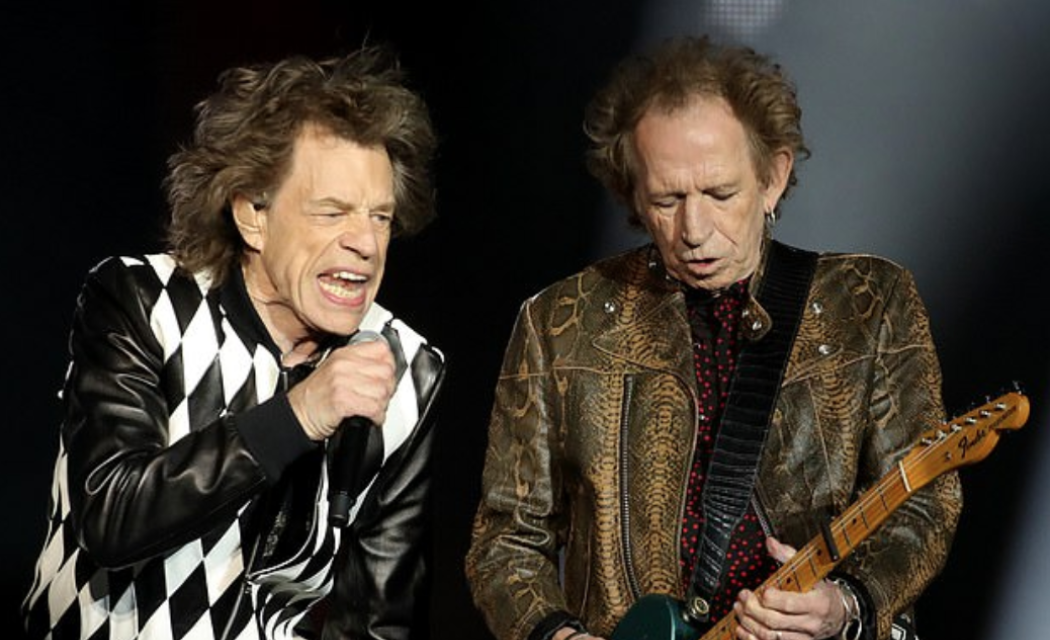
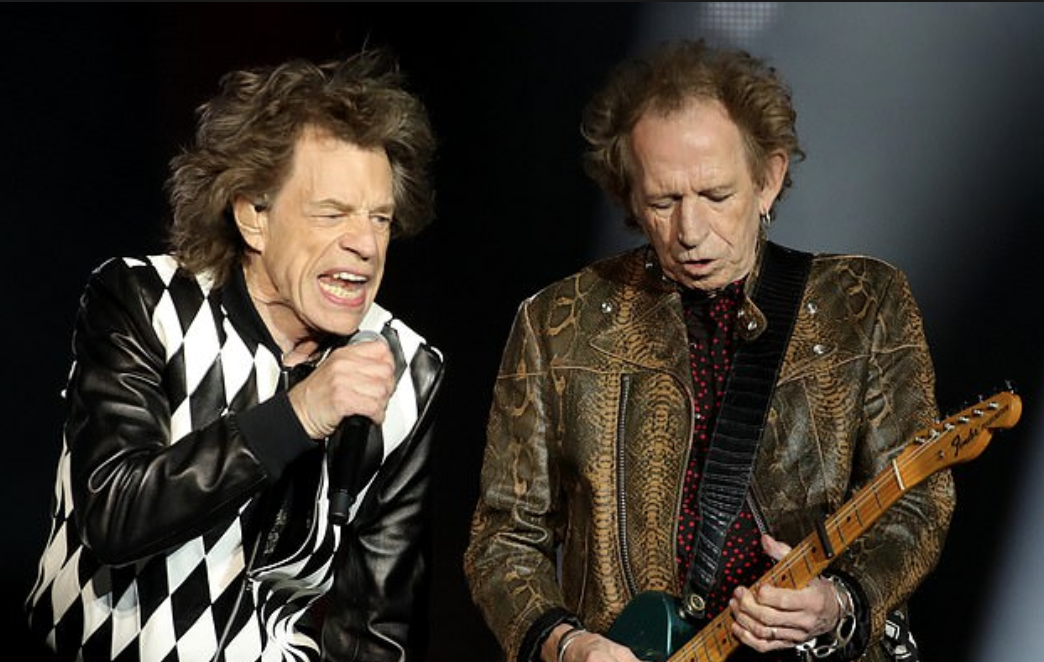
One of the ways that rock stars and movie stars reside in the same general orbit is that they have a solemn responsibility to not suddenly look “older” in any kind of “wait a minute, what happened?” head-turning way. It’s part of the basic contract. They can gradually and gracefully age but no sudden hair loss. That’s an easily maintainable thing. They have to do a better job of coping with the ravages of time than Average Joes, and that means no weird hair dyes or expanding neck wattles.

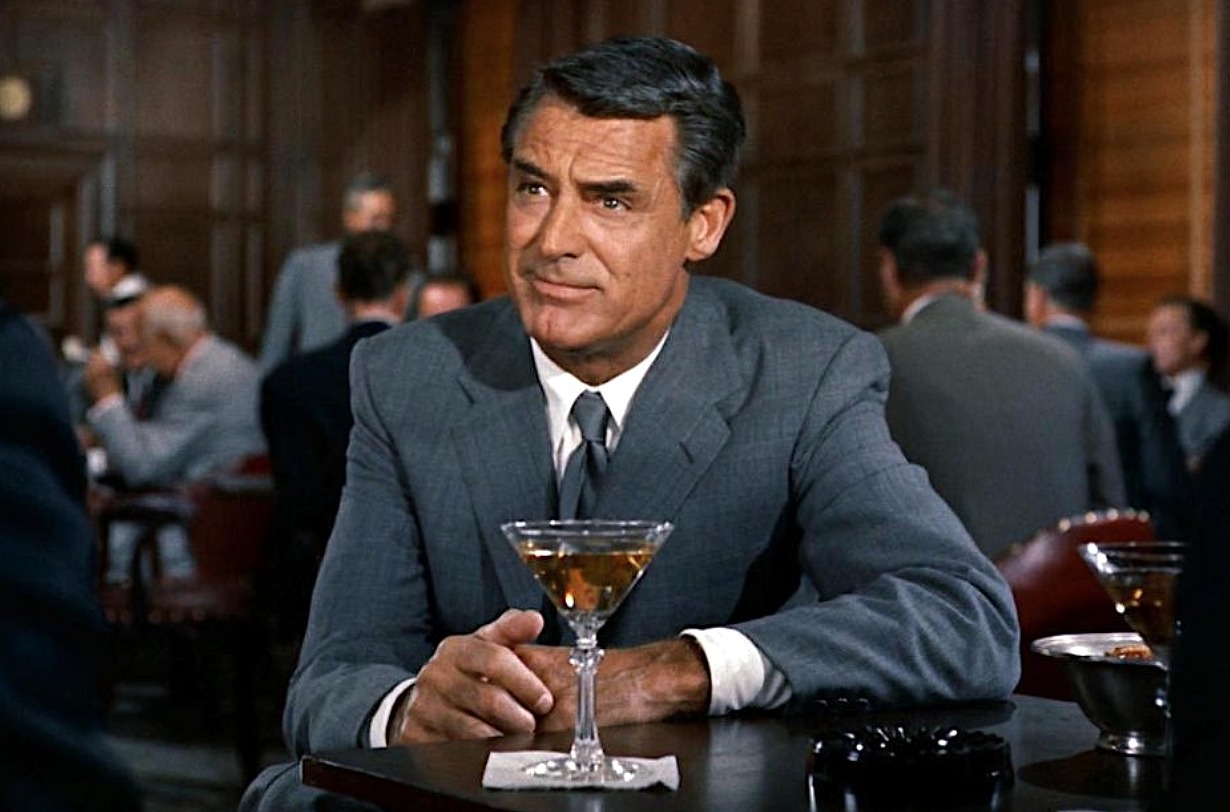
Mick Jagger has always understood this. Cary Grant set the standard 60 years ago when he played a Madison Avenue ad man at age 54 while looking 45 or even a tad younger. A year earlier Orson Welles defined the other side of the scale by playing Det. Hank Quinlan in Touch of Evil when he was only 42 years old, and yet looking like a dessicated wreck of at least 60 if not 65 years. This, trust me, was one of the reasons that North by Northwest made five times more dough than Touch of Evil. You can argue and put me down, but people prefer examples of defying the inevitable rather than submitting to it.

Svetlana’s “Show Me” Takes Top Taormina Prize

Last night Svetlana Cvetko‘s Show Me What You Got won the Taormina Film Festival‘s Cariddi D’Oro Award for Best Film, which sounds like some kind of “whoa”-level, top-tier honor. The Italian name of the award is “Premio Cariddi d’Oro per il Miglior Film.”

The black-and-white, Jules et Jim-like, menage a trois relationship film costars Cristina Rambaldi, Mattia Minasi and Neyssan Falahi.

Directed and co-written (with producer David Scott Smith) by Cvetko, Show Me What You Got runs 100 minutes. It premiered at the respected, decades-old film festival last Tuesday. HE’s own Phillip Noyce (The Quiet American, Rabbit Proof Fence, Clear and Present Danger) is the exec producer.


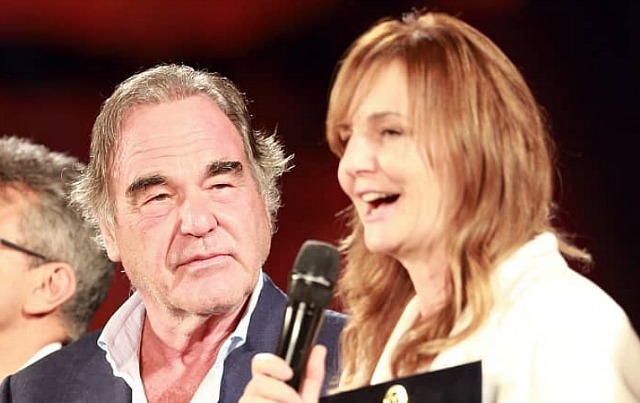
(l.) Revealing Ukraine director Oliver Stone, (r.) Show Me What You Got director-cowriter Svetlana Cvetko during Saturday’s Taormina Film Festival award ceremony.

Oliver Stone‘s Revealing Ukraine, a doc about the history of Ukraine since the Soviet Union collapse, won the festival’s Grand Prix award.

Christina Rambaldi is a niece of the late Italian special-effects maestro Carlo Rambaldi (Close Encounters of the Third Kind, E.T., the Extra-Terrestrial).

It’s significant that I didn’t hear about Svet’s moment of triumph until 20 hours had passed (it’s now just after 8pm on Sunday) but we’ll let that go.

It’s also significant, I feel, that Minasi and Falahi are ginger-haired. You can say “and what of it?” and I would say “nothing — it’s just worth noting.” You could say “it’s in black and white so who the hell cares what color their hair is?” and I would say “none, nobody, it’s fine…congratulations to all ginger-haired romantic leads the world over!”

Honestly? If I had my druthers I would prefer romantic leads who look like…oh, the young Alain Delon, say, or the young William Holden. But that’s me. And who cares what I think about this topic? No one.

Read more

Satirical Monthly That Held On For Decades

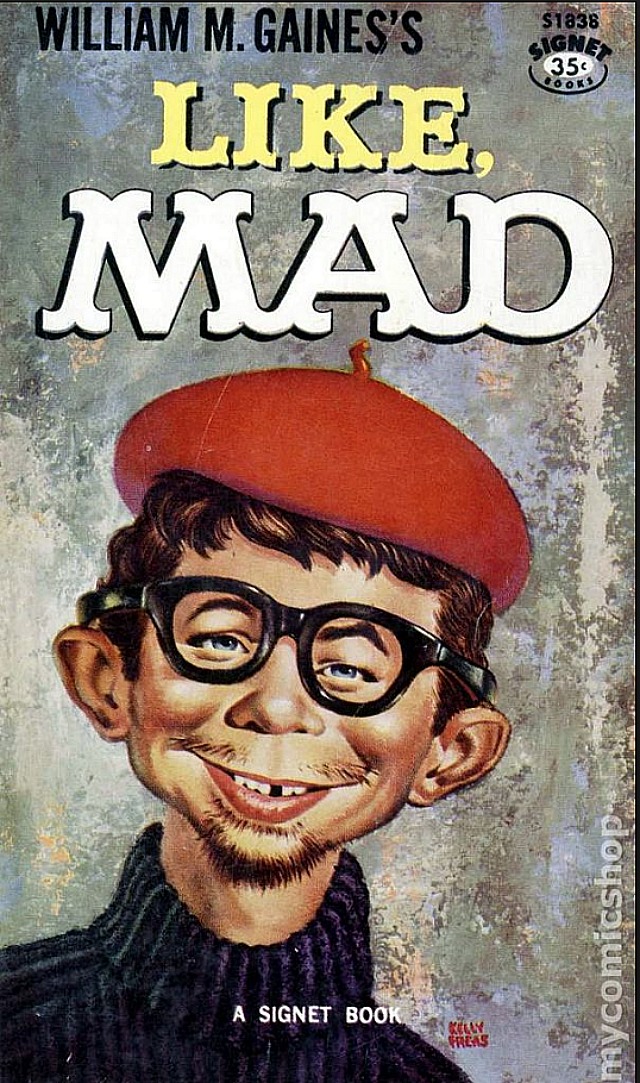
I didn’t mention the death of Mad magazine because in my mind it stopped being a truly influential cultural satire publication 40something years ago. Seriously — Mad stopped being a necessary thing sometime in the early to mid ’70s. (The vital era was really the mid ’50s to mid ’60s.) I respect the fact that they kept publishing well past peak cultural potency — who doesn’t admire drive and tenacity? — but every publication has its day, and Mad‘s was during the Eisenhower and Kennedy administrations.

Somehow or some way Mad, Steve Allen, Lawrence Ferlinghetti, Tuli Kupferberg and Lenny Bruce were part of the same ’50s comic-hipster mindset; they all seemed to be sipping from the same attitude well. Mad and Bruce both ascended around 1955, when Mad dropped the comic book format and became a magazine. Bruce died in ’66; the Mad vitality began to ebb or dilute around that same time. More and more people getting stoned changed the game — in the ’50s and early ’60s Mad delivered its own kind of pot high in a way. Yes, it hung on for decades after that (and hats off to those who kept the brand burning), but now it’s really over and done with.

Read more

Reactions to “Midsommar”?

On 6.25 I said the following about Ari Aster‘s Midsommar (A24, now playing): “No matter how you feel about elevated horror, chilling Swedish pagan rituals, shitty boyfriends or Florence Pugh, this is a 100% essential summer freakout flick.”

In other words, it’s a film you have to see no matter what your particular interest levels may be. Because it’s currently understood by everyone to be culturally unmissable right now.

So a fair number of people went to see it yesterday, and…?

Excerpt #2: “Yes, Midsommar is a breakup film — David Edelstein called it ‘a woman’s fantasy of revenge against a man who didn’t meet her emotional needs’ as well as ‘a male director’s masochistic fantasy of emasculation at the hands of a matriarchal cult.’ That’s about as concise and on-target as a capsule description could be.”

From Owen Gleiberman’s 7.4 Variety column, posted at 2 pm:

“What we mean when we say ‘the ’60s’ may be ancient history, but the hidden legacy of the ’60s is that we’re increasingly a nation of sects, tribes, people obsessively seeking out those of like-minded desire. There’s a case to be made that we’re now evolving, in our thinking, into a nation of cults, which is why, when it comes to politics, rationality seems, more and more, to have vacated the building — not only on the right (though primarily there), but on the left as well. Debate, more and more, seems over. It has been replaced by the fundamentalism of belief.

“The horror of Midsommar is that innocent people die, in gruesome ways. But the real horror of Midsommar is that Florence Pugh’s Dani, drawn to the center of her own shattered identity, replaces it by becoming the self-actualized queen of her surroundings. Dani, in this movie, is really all of us. She loses herself, only to find her new self. She sheds her skepticism and joins the group. She fixes her broken relationship with her lover by reducing him to a piece of timber. She heals her trauma by giving her benediction to flowers of evil. And she does it, in the end, with a smile.”

Embraced By Regressives

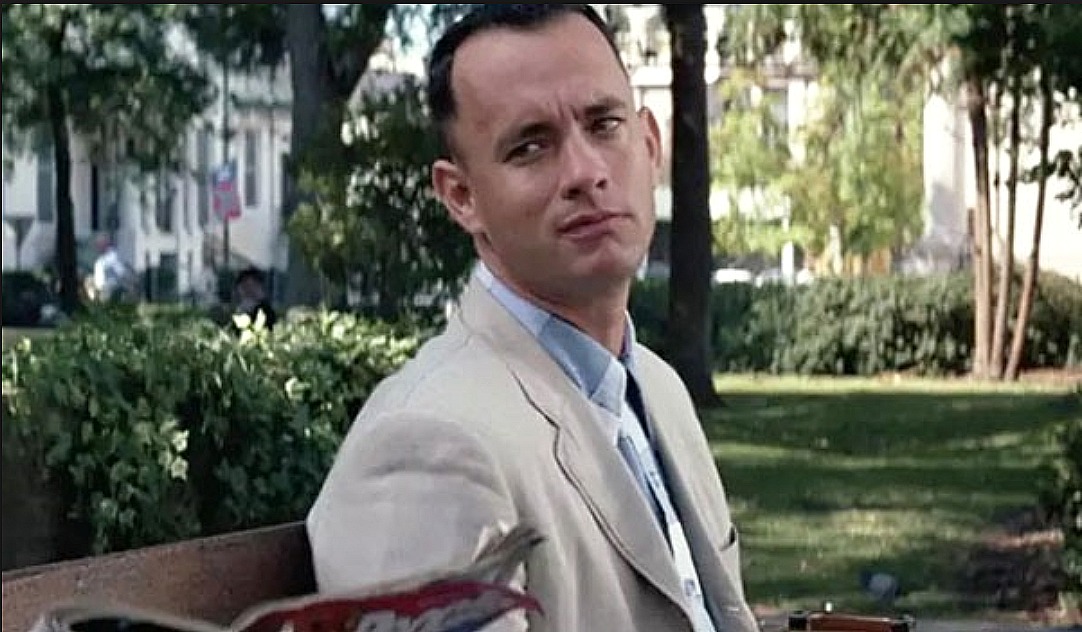
Eric Kohn doesn’t have to try and convince me that Forrest Gump blows — I’ve been pissing on the legacy of this Robert Zemeckis-Tom Hanks film from the get-go.

Best passage: “There’s a reason Forrest Gump became a beacon to an antiquated Republican Party when it came out in the run-up to the 1994 midterm elections: it preaches conservatism in its bones, whether its creators intended it that way or not.

“Through the lens of Hanks’ lovable naif, who somehow stumbles through every monumental moment in American history and emerges unscathed, Forrest Gump reads as a repudiation to any nuanced assessment of the country. It celebrates family values and obedience to the system over anyone who clashes with it. Every whiff of rebellion is suspect.

“This no-nothing white man becomes a war hero and a wealthy man simply by chugging along, participating in a country that dictates his every move. He never comprehends racism or the complexities of Vietnam; the movie portrays political activism and hippy culture as a giant cartoon beyond Forrest’s understanding, while presenting his apolitical stance as the height of all virtue.

“Viewed in retrospect, Forrest Gump whitewashes and dumbs down American history at every turn.”

From “How Do Those Chocolates Taste Now?“, posted on 7.10.14:

Yesterday afternoon N.Y. Post film critic Lou Lumenick posted a tribute piece about Robert Zemeckis‘s Forrest Gump, which opened 20 years and four days ago (i.e., 7.6.94). Millions of moviegoers fell in love with this delusional film about a kindly, aw-shucks simpleton who leads a charmed life. We all know it wound up with six Oscars and made a mountain of money, etc.

But in my mind Gump‘s most noteworthy achievement is that it showed how myopic Americans (particularly American males) were about themselves. They really love (or loved) the idea of half-sweethearting and half-dipshitting their way through life. Gump is also one of the most lying, full-of-shit films ever made when it came to portraying the tempests of the 1960s.

Here’s how I put it way back in October 2008, although I was drawing at the time from an L.A. Times Syndicate piece about the Gump backlash that I wrote just after it opened:

“I have a still-lingering resentment of Forrest Gump which I and many others disliked from the get-go for the way it kept saying ‘keep your head down’, for its celebration of clueless serendipity and simpleton-ism, and particularly for the propagandistic way it portrayed ’60s-era counter-culture types and in fact that whole convulsive period.

Read more

Ample Cash On Hand

In North by Northwest Cary Grant‘s Roger Thornhill drops a lot of cash on a lot of random expenses — cabs, beverages, tips, bus tickets, dry cleaning. I’ve calculated that he spends a minimum of $275, which comes to roughly $2390 in the 2019 economy. That’s a lot to be carrying around. The film was shot in the summer of ’58, when the only credit card was Diner’s Club and no one had ever heard of debit cards. Thornhill, on the run for murder and unable to just stroll into his local bank for a withdrawal, had to pay for everything with pocket cash.

[Click through to full story on HE-plus]