Second Viewing of “Rocketman”

Among my initial reactions to Rocketman, filed during the Cannes Film Festival: (a) I respected the traditional musical scheme and the Ken Russell-meets-All That Jazz theatricality, (b) it’s a “better”, more ambitious film than Bohemian Rhapsody, and yet (c) the only portions I actually “liked” were the first 40 or 45 minutes’ worth (i.e., the young-Elton English stuff), and (d) that once Elton hits the big-time in Los Angeles and starts self-destructing with booze and cocaine (a section that lasts 60 to 70 minutes) the film becomes…well, a bit tiring.

Watching an angry, miserable, emotionally distraught rock star self-destruct (which I’ve seen a hundred times in a hundred rockstar bios and docs) is essentially numbing.

I paid to see Rocketman again last night with Tatyana, and experienced roughly the same reactions. Except, that is, for (d) — those 60 minutes of flamboyant self-destruction don’t play very well the second time. Like, at all.

I’m not walking back my view that Rocketman is a “better” film than Bohemian Rhapsody — it’s certainly more ambitious — but it’s boring to watch a guy snort coke, guzzle vodka, wipe away tears and snarl at people in scene after scene. Get to rehab already!

My advice to those who liked Rocketman after a single viewing is to leave it there.

Tatyana was moderately okay with it and appreciated the early song-and-dance sequences (“I Want Love”, “Saturday Night’s All Right for Fightin’) but she, too, felt that some scenes dragged on for too long during the second hour. She said she liked Bohemian Rhapsody better. She respected Taron Egerton’s performance and thinks he’s a good actor “but I noticed the time when I was watching Rocketman, but I never noticed the time with Rami Malek.”

I’ve mentioned this before but Egerton bothers me. His singing voice isn’t close to Elton’s, and he doesn’t begin to physically resemble him. Plus he’s taller, broader and more muscular than the Real McCoy. I’m sorry but Egerton just isn’t right. Plus he’s constantly “acting”. I’ve seen Elton twice in concert, talked with him at a party, been listening to his songs since the Nixon administration, etc. And I just can’t give in to Egerton the way I submitted to Malek-as-Freddie Mercury.

Respectful Meyers Reply

In a chat yesterday with Late Night screenwriter and costar Mindy Kaling, director Nancy Meyers (It’s Complicated, Something’s Gotta Give, Father of the Bride) struck back at critics who have taken her to task for making superficial “copper pots and white sweater” movies — i.e., wish-fulfillment romcoms about well-off women who live in swanky homes with luxurious, to-die-for kitchens.

“I don’t love [it] when a journalist or critic will pick up on that aspect, because they’re missing why it works,” Meyers complained. “It’s never done to male directors who make gorgeous movies, or where the leads live in a gorgeous house.”

As one who’s repeatedly brought up the copper-pot thing, I’ve never felt there was anything necessarily problematic about Meyers’ characters hanging out in spacious kitchens with gleaming copper frying pans, etc. The problem is that her romcoms rarely seem to rise above this fetishy focus or characteristic — they rarely dig in and climb up to the next level a la James L. Brooks in the’80s and’90s. With one exception (i.e., The Intern), her movies are primarily delivery devices for upmarket wealth porn.

Just about every Nancy Meyers movie involving a female lead of a certain age begins with Meyers saying to herself, “Wouldn’t it be wonderfully satisfying and exciting if…?”

Example: The romantic fantasy in It’s Complicated is that after a foxy older divorced woman (Meryl Streep) begins seeing an attractive new guy (Steve Martin) her re-married, somewhat girthy ex-husband (Alec Baldwin) gets the hots for her and starts cheating on his younger wife (Lake Bell) as they begin an extra-marital affair.

I didn’t buy this any more than I bought the basic plot of Meyers’ Something’s Got To Give (Jack Nicholson‘s randy music executive falling for Diane Keaton‘s affluent screenwriter as she’s courted by Keanu Reeves‘ young physician). In real life a guy like Baldwin would cheat on his new 30something wife with another young ‘un.

The point is that Meyers’ films are always about comfort — i.e., about upper-middle-class affluence, bright chatter, attractive lighting and an attractive older female lead getting to express how strong and soulful she is in the third act.

From my thumbs-up review of The Intern (9.25.15): “Meyers is just as much of a consistent and well-defined auteur as Michael Mann or John Ford or Samuel Fuller — she just makes movies that always happen within a realm of comfort, affluent insulation, alpha vibes and 40-plus romantic pangs. And so nothing rude or disturbing or creepy or traumatic happens, and you just have to accept that this is par for the course.

“A visit to Nancy Meyers Land means shutting out…what, 80% or 90% of the misery and aesthetic offenses and uncertainties and annoyances and dull horrors of real life?”

YouTube Zotzing Reifenstahl Classic

Yesterday YouTube announced a decision to specifically prohibit hate-agenda videos, or those “alleging that a group is superior in order to justify discrimination, segregation or exclusion based on qualities like age, gender, race, caste, religion, sexual orientation or veteran status,” per a statement posted here.

This sounds like the right way to go except — except! — when it comes to removing Leni Riefenstahl‘s Triumph of the Will (’35), a rhetorically abhorrent but nonetheless masterful piece of political propaganda.

Will is subject to removal because it “promotes or glorifies Nazi ideology, which is inherently discriminatory,” the YouTube statement declared. Indiewire‘s Eric Kohn has reported that a full-length Triumph was removed from YouTube last night. But there are still several clips from the film currently viewable.

The problem is that the cinematography and editing of Triumph of the Will have long been regarded as brilliant in and of themselves. On a purely visual level the film is widely acknowledged as a seminal influencer of generations of filmmakers. Some critics claimed that Will seemed to have influenced the final resistance-assembly scene in Star Wars when Han, Luke and Chewy are awarded medals by Princess Leia. And don’t forget that 1984-ish Apple ad.

There isn’t a cinematographer or director who won’t acknowledge that Triumph of the Will is a major cinematic milestone.

Obviously it can be watched via other platforms. I own a high-quality Bluray that Robert Harris restored in 2015. But what YouTube has done feels slippery-slopey.

There is a difference between garden-variety hate-mongering and important cinematic history.

If you take Triumph of the Will down from YouTube then in a certain way the Nazi Nuremberg rally of 1934 “didn’t happen”, and once you do that elsewhere how different would it be, really, to remove any and all visual records of the Holocaust? Because once you’ve done that in all formats then the murder of six million Jews “didn’t happen” either. The sword cuts both ways.

Read more

Curiously Non-Distributed “What She Said”

HE to Rob Garver, director of What She Said: The Art of Pauline Kael: “I saw your brilliant, deeply moving doc in Telluride in 2018, but here we are eight months later and no distribution arrangement? It seems to still be playing the festival circuit (Miami last January, Princetown and Edinburgh this summer) but I don’t understand why it isn’t available as a streaming option at this stage. I would kill to own a Bluray of your film.

“Plus now there’s a 100th anniversary celebration of Kael’s favorite films happening at the Quad (6.7 thru 6.20) and they aren’t showing your doc as part of the presentation? What’s up with that?

Critic friend: “It’s mystifying [that distribution for Garver’s film hasn’t been arranged]. People are acting like there isn’t a big enough audience for it, but documentaries come out every day that have a micro-sliver of an audience (if that). And the movie’s terrific! I was almost shocked by how good it was (given that it’s basically the story of Pauline’s writing — a tricky vantage to sustain over a whole movie).

“I’m always astounded at the hostility to Pauline that comes up in your reader comments, as if her opinions are now not worth the paper they were printed on. Jesus — the levels of male myopia. (And yes, I do think it’s a dude thing.) But as a fan, both of her and the movie, you should really beat the drum for a distributor to pick it up. I could see it playing for a month at Film Forum alone.”

And in Los Angeles at the Nuart or Westside Pavillion. And at the Castro in San Francisco. And so on. And then onto Bluray and streaming.

Finished “Fosse/Verdon”

HE response: Michelle Williams‘ Gwen Verdon out-points Sam Rockwell‘s Bob Fosse, agreed, but both are knockouts. I’ve been saying all along that Williams gives the more affecting performance, but Rockwell’s expression as he’s lying on that Washington, D.C. sidewalk at the very end of “Providence” (premiered on 5.28, caught it yesterday on the plane) is one of those unforgettable moments. His eyes don’t convey shock or terror but a kind of quizzical “really?” He seems almost half-amused by the realization that there really is such a thing as an “end” of a life. The way he’s looking at Williams and going “wow, okay, this is it…thanks for our life together, turbulent as it sometimes was…sorry I was such a selfish dick but that’s who I am or, you know, what I was”…WOW! Yes, Williams owns it for the most part, but Rockwell’s Fosse is easily his finest performance and his first epic one.

Read more

Sea-Faring vs. Submarine Movies

There are sea-faring dramas (i.e., films that primarily take place on floating vessels making longish or otherwise difficult voyages) and there are submarine movies (i.e., films that mostly happen underwater in 20th Century submersibles). These are two different kinds of aquatic animals and should not be mixed up or confused.

Topping the list of HE’s finest sea-faring dramas: Peter Weir‘s Master and Commander, J.C. Chandor‘s All Is Lost, Alfred Hitchcock‘s Lifeboat, Peter Ustinov‘s Billy Budd, John Huston‘s Moby Dick, Lewis Milestone‘s Mutiny on the Bounty (no one’s idea of a great film but one that delivers excellent 18th Century sea-faring realism), Paul Greengrass‘s Captain Phillips, Wolfgang Petersen‘s The Perfect Storm, James Cameron‘s Titanic, Richard SalesAbandon Ship!, Byron Haskin‘s Treasure Island, John SturgesThe Old Man and the Sea, Ang Lee‘s Life of Pi.

No good: Ron Howard‘s In The Heart of the Sea. Irritating: Baltasar Kormakur‘s Adrift w/ Shailene Woodley. Disqualifiied: the stupid Pirates of the Caribbean movies, Cabin Boy.

HE’s finest submarine movies, in this order: Das Boot, Crimson Tide, U-571, The Hunt for Red October, 20,000 Leagues Under The Sea, Destination Tokyo, Run Silent, Run Deep, The Enemy Below, Ice Station Zebra, Up Periscope, Voyage to the Bottom of the Sea….what others?

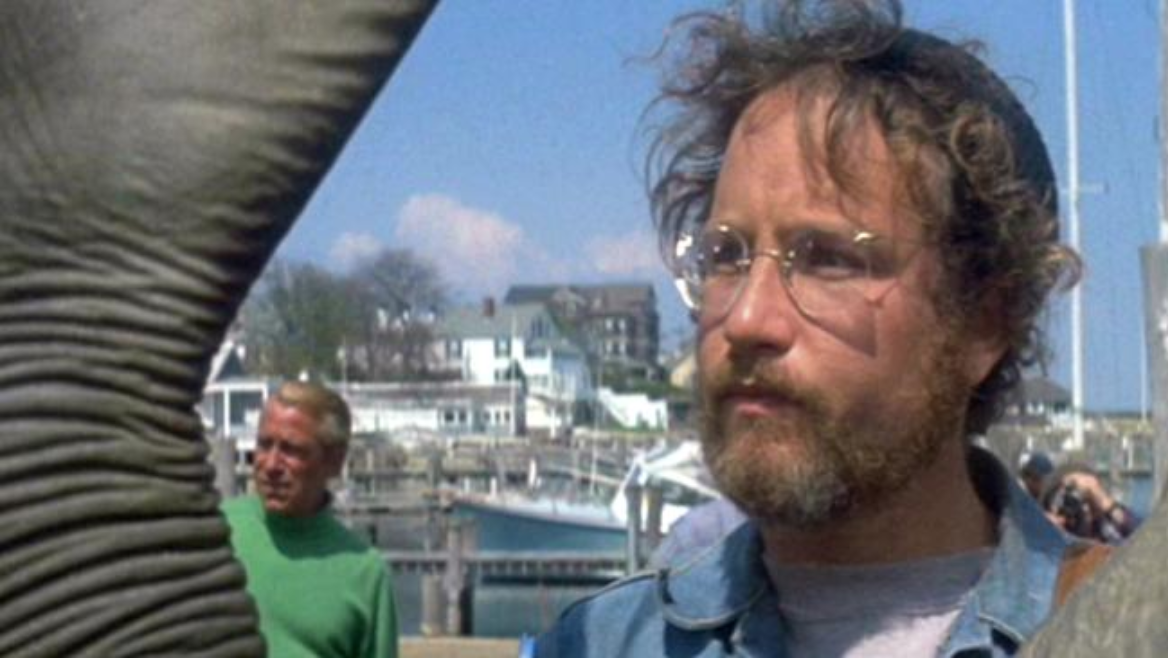
Steven Spielberg‘s Jaws is neither fish nor fowl — it’s basically a landbubber monster movie that concludes with a third-act voyage in which three men try to hunt down and kill the beast.

Hanks’ Once-Cold Cards Have Heated Up

In an April ’16 Tom Hanks career assessment piece, I wrote than “once your cards have gone cold, it’s awfully hard to heat them up again.”

I added that “there’s nothing more humiliating than for a man who once held mountains in the palm of his hands having to push his own cart around the supermarket as he buys his own groceries and then, insult to injury, has to wait in line at the checkout counter.”

The piece was triggered by a Hanks quote from a Tribeca Film Festival discussion with John Oliver: “I peaked in the ’90s.”

Hanks had been respectably plugging along since the end of his late ’80s-to-early aughts heyday (The Road to Perdition was his last big score in that run). Holding on, hanging in there. But just a few months after the Oliver chat, his cards began to warm slightly. Then they got hot again.

Hanks’ less-is-more performance as the white-haired Chesley Sullenberger in Clint Eastwood‘s Sully was respectfully received; ditto his Ben Bradley in Steven Spielberg‘s The Post. But the strongest indication that his mojo was back came when Hanks improvised his way through a pause in a West Los Angeles performance of William Shakespeare’s Henry IV.

It seems like a fait accompli that Hanks will be be Best Actor-nominated for playing the amiable Fred Rogers in Marielle Heller‘s A Beautiful Day in the Neighborhood (Sony, 11.22).

Six months later Hanks will star as Commander Ernest Krause in Aaron Schneider‘s Greyhound (Sony, 5.8.20), a World War II drama. Later that year he’ll star in Miguel Sapochnik‘s BIOS (Universal, 10.2.20).

Who knows if Hanks will star in Paul Greengrass‘s News of the World, a post-Civil War-era drama, but the project was certainly announced a few months ago.

At some point down the road Hanks will reportedly portray Colonel Tom Parker, the cigar-chomping, straw-hat-wearing hustler who did more to destroy Elvis Presley‘s life and career than anyone besides Elvis himself, in a Baz Luhrman-directed drama.

That’s quite an impressive lineup for a guy whose career had appeared to be in flatline mode only four or five years ago.

Read more

His New Handle Is “RBatz”

Robert Pattinson is officially locked and loaded to play Bruce Wayne + alter ego in Matt ReevesThe Batman.

Reeves: “I’ve talked about making it a very point of view, noir-driven definitive Batman story in which he is investigating a particular case and that takes us out into the world of Gotham. I went on a deep dive again revisiting all my favorite comics. Those all inform by osmosis. There’s no continuation of the Nolan films. It’s very much trying to find a way to do this as something that for me is going to be definitively Batman and new and cool.”

Late To The Table

With their criminal husbands suddenly out of the picture, a small crew of desperate women (Melissa McCarthy, Tiffany Haddish, Elisabeth Moss) decide to step into their shoes, pick up where they left off and prove their mettle in a brutal realm. So reads a potential synopsis of Andrea Berloff‘s The Kitchen (Warner Bros., 8.9), an apparently non-comedic period crime drama set in Hell’s Kitchen and based on a Vertigo comic book miniseries by Ollie Masters and Ming Doyle.

Marketing slogan suggestion #1: “This may sound like Widows II, but that was 21st Century Chicago and this is midtown Manhattan in the late ’70s. So in a way we were first even though we’re second.”

Marketing slogan suggestion #2: “Those Widows women were following in the footsteps of three very tough Manhattan forebears, and they didn’t even know it!”

No matter how you sell it, audiences are naturally going to say “this again?”

Widows was born a little over four years ago (March of ’15) when it was announced that Steve McQueen and Gillian Flynn would adapt the British ’80s TV series into a feature with McQueen directing. Two years later (February ’17) Berloff was hired by New Line execs to direct The Kitchen, which she’d previously adapted into a screenplay.

Widows began principal photography in on 5.8.17. The Kitchen began principal photography on 5.7.18. Widows premiered at the Toronto Film Festival on on 9.8.18 and opened three months later. The Kitchen, as noted, will open on 8.9.19.

The only thing could possibly save The Kitchen would be if it were filmed as a black comedy. With McCarthy and Haddish in the leads, that would seem like a natural way to go. But the trailer indicates that it’s mostly a straight violent drama (the musical theme is “Paint It Black”) with a few ironic asides (“What do you wear to a mob meeting? Do you get dressed up?”)

Put another way, how could Berloff and her producers, Michael De Luca and Marcus Viscidi, have decided against making a black comedy version of more or less the same plot, i.e., “women criminals muscle their way into a brutally tough, all-male arena”? In what galaxy could they have decided “it doesn’t matter if we wind up looking like Widows II: Manhattan Moms in the marketing materials — we’ll carve out our own identity regardless”?

“The Sun Isn’t Yellow, It’s Chicken”

A couple of days ago I half-lamented and half-predicted that very few critics would have the balls to even mention the fact that the reptilian star of Godzilla: King of the Monsters is a big-bellied, roly-poly fella.

The reason, I explained, is that in today’s French terror culture noting that this or that character is corpulent would be immediately suspected as a form of fat-shaming, which these days is regarded in the same light as racism or homophobia. So the safe thing, Godzilla-wise, is to keep quiet lest you be carted off to the Place d’Concorde.

I’ve just spent a couple of arduous hours sifting through 20 or 25 reviews of Godzilla: King of the Monsters, and can report that almost everyone has indeed sidestepped the Fatzilla factor.

Only two critics have exhibited cast-iron cojones in this regard — Variety‘s Owen Gleiberman and N.Y. Times critic Glenn Kenny.

Gleiberman: “Is it my imagination, or does it look like Godzilla has been hitting the dessert cart? I’m not merely speaking about his distended belly. The creature has been designed so that his head and neck, which used to resemble the top of the letter f, now sort of melt right into his torso. As a result, his face no longer pops in the same vivid anthropomorphic way. And that’s a miscalculation. If Godzilla looks a little chunkier than before, so be it, but you don’t want to watch a Godzilla movie thinking that his personality is slightly out of focus — that he’s not quite the same dude.”

Kenny: “As in the 2014 film, this Godzilla is a stouter fellow than we have seen in previous incarnations. While underwater, he resembles a giant electric eel with bourbon bloat.”

National Review critic Kyle Smith seemed to indicate agreement or at least amusement when he riffed early this morning about my Fatzilla thing.

Toronto Globe and Mail critic Barry Hertz seemingly went in the opposite direction, proclaiming that “the creature design is superb.”

The following critics have bypassed the obvious (i.e., chickened out): Time Out‘s Josh Rothkopf, TheWrap‘s Alonso Duralde, CNN’s Brian Lowry, the Empire guy, the Uproxx guy, the South China Morning Post‘s James Mottram.

Even N.Y. Post critic Johnny Oleksinki, who normally just blurts out whatever he’s thinking, played it carefully this time.