Late To The Table

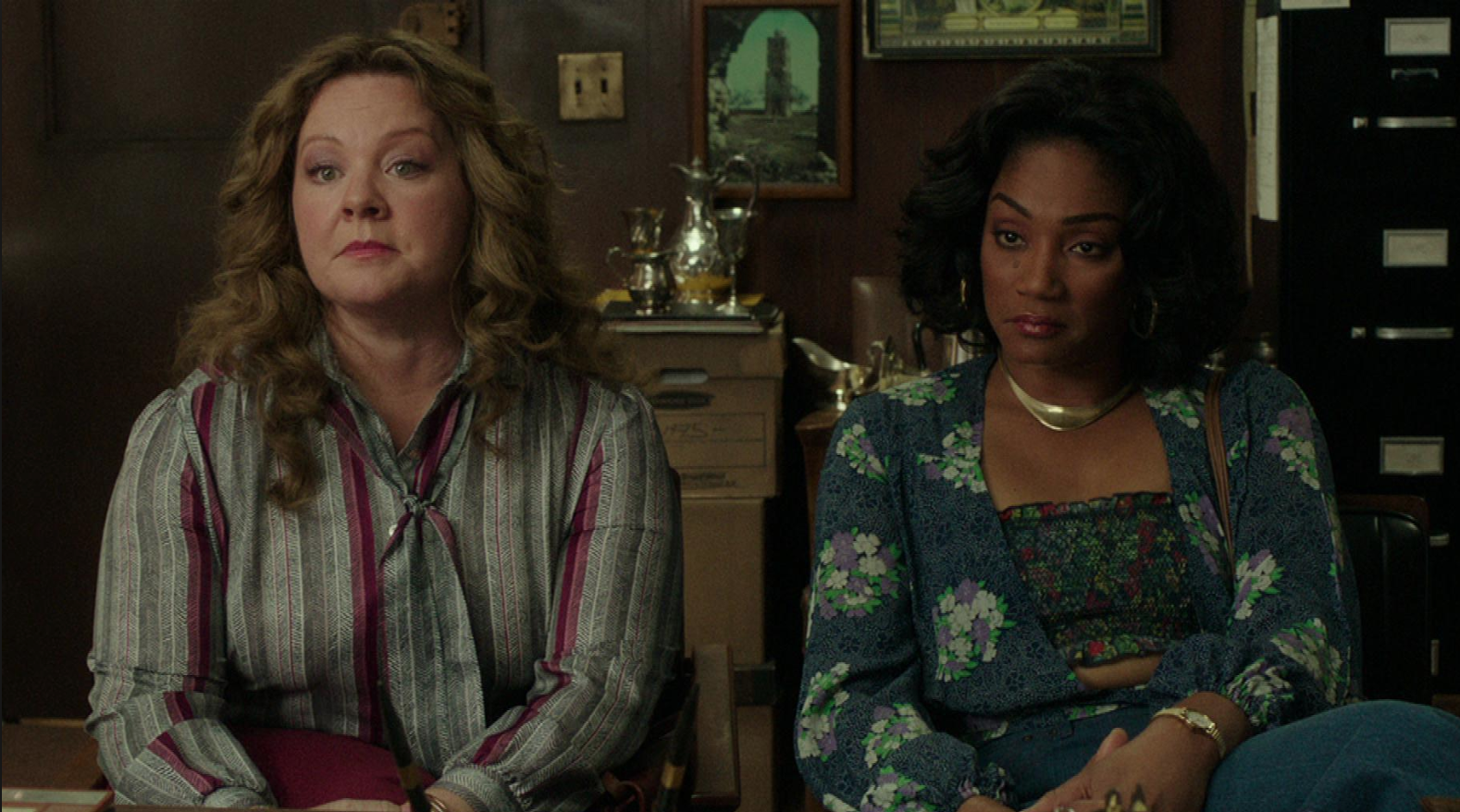
With their criminal husbands suddenly out of the picture, a small crew of desperate women (Melissa McCarthy, Tiffany Haddish, Elisabeth Moss) decide to step into their shoes, pick up where they left off and prove their mettle in a brutal realm. So reads a potential synopsis of Andrea Berloff‘s The Kitchen (Warner Bros., 8.9), an apparently non-comedic period crime drama set in Hell’s Kitchen and based on a Vertigo comic book miniseries by Ollie Masters and Ming Doyle.

Marketing slogan suggestion #1: “This may sound like Widows II, but that was 21st Century Chicago and this is midtown Manhattan in the late ’70s. So in a way we were first even though we’re second.”

Marketing slogan suggestion #2: “Those Widows women were following in the footsteps of three very tough Manhattan forebears, and they didn’t even know it!”

No matter how you sell it, audiences are naturally going to say “this again?”

Widows was born a little over four years ago (March of ’15) when it was announced that Steve McQueen and Gillian Flynn would adapt the British ’80s TV series into a feature with McQueen directing. Two years later (February ’17) Berloff was hired by New Line execs to direct The Kitchen, which she’d previously adapted into a screenplay.

Widows began principal photography in on 5.8.17. The Kitchen began principal photography on 5.7.18. Widows premiered at the Toronto Film Festival on on 9.8.18 and opened three months later. The Kitchen, as noted, will open on 8.9.19.

The only thing could possibly save The Kitchen would be if it were filmed as a black comedy. With McCarthy and Haddish in the leads, that would seem like a natural way to go. But the trailer indicates that it’s mostly a straight violent drama (the musical theme is “Paint It Black”) with a few ironic asides (“What do you wear to a mob meeting? Do you get dressed up?”)

Put another way, how could Berloff and her producers, Michael De Luca and Marcus Viscidi, have decided against making a black comedy version of more or less the same plot, i.e., “women criminals muscle their way into a brutally tough, all-male arena”? In what galaxy could they have decided “it doesn’t matter if we wind up looking like Widows II: Manhattan Moms in the marketing materials — we’ll carve out our own identity regardless”?
“The Sun Isn’t Yellow, It’s Chicken”

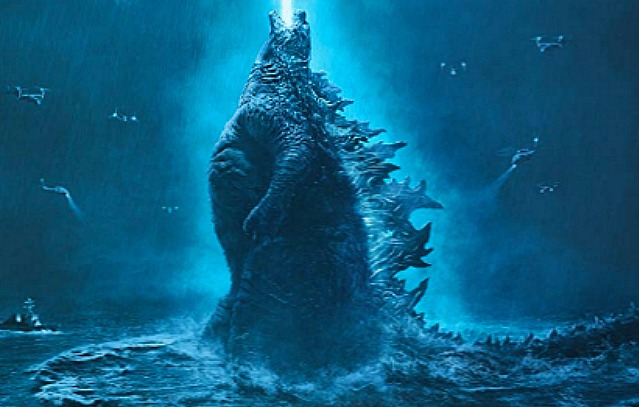
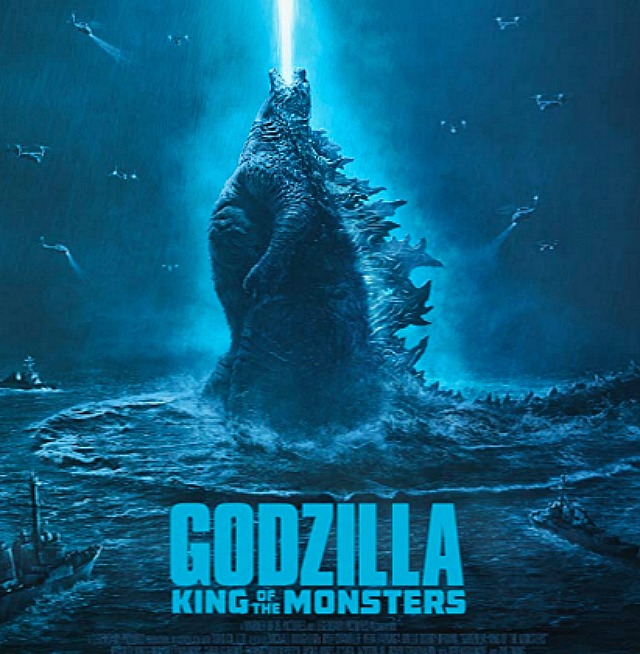
A couple of days ago I half-lamented and half-predicted that very few critics would have the balls to even mention the fact that the reptilian star of Godzilla: King of the Monsters is a big-bellied, roly-poly fella.

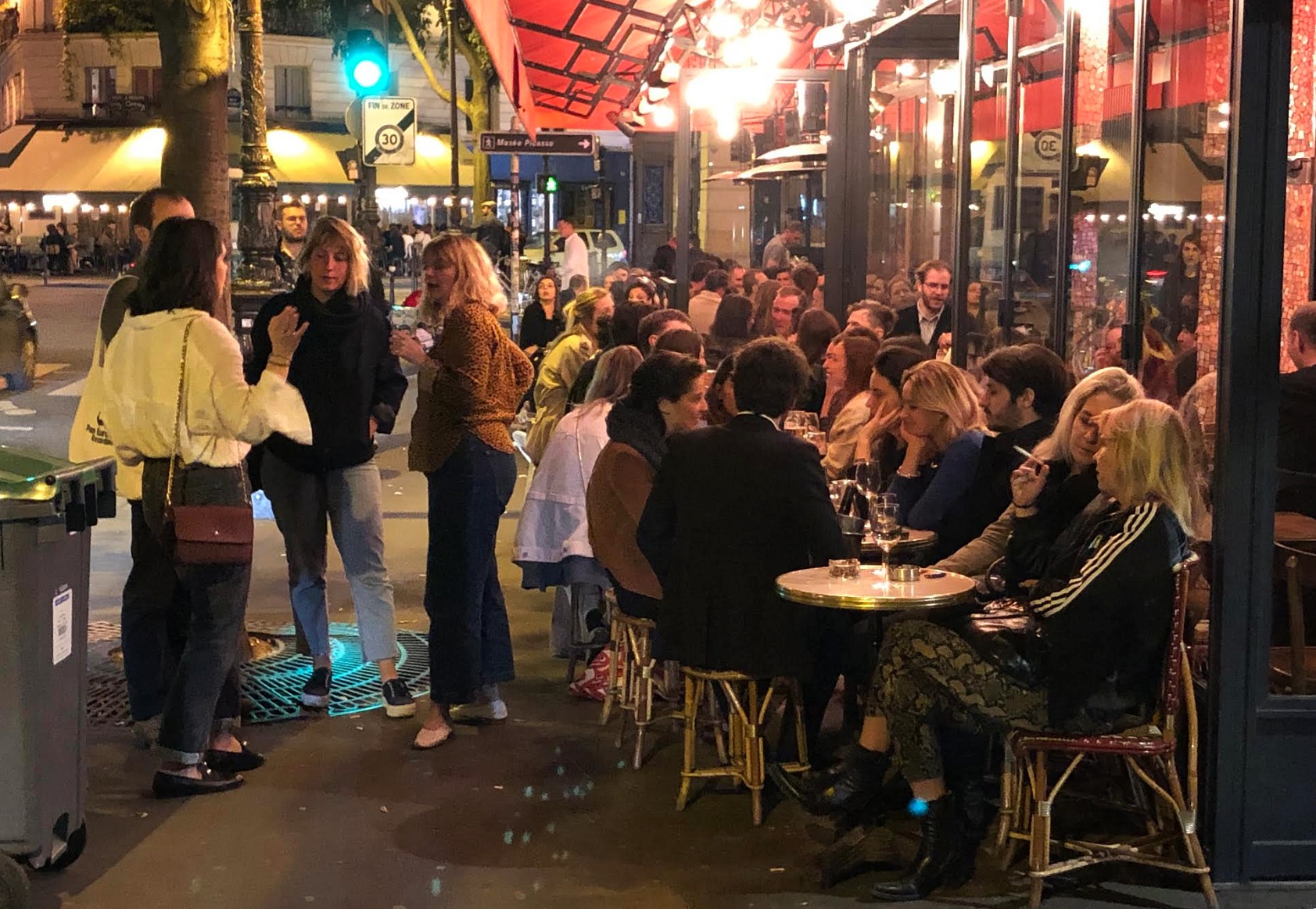
The reason, I explained, is that in today’s French terror culture noting that this or that character is corpulent would be immediately suspected as a form of fat-shaming, which these days is regarded in the same light as racism or homophobia. So the safe thing, Godzilla-wise, is to keep quiet lest you be carted off to the Place d’Concorde.

I’ve just spent a couple of arduous hours sifting through 20 or 25 reviews of Godzilla: King of the Monsters, and can report that almost everyone has indeed sidestepped the Fatzilla factor.

Only two critics have exhibited cast-iron cojones in this regard — Variety‘s Owen Gleiberman and N.Y. Times critic Glenn Kenny.

Gleiberman: “Is it my imagination, or does it look like Godzilla has been hitting the dessert cart? I’m not merely speaking about his distended belly. The creature has been designed so that his head and neck, which used to resemble the top of the letter f, now sort of melt right into his torso. As a result, his face no longer pops in the same vivid anthropomorphic way. And that’s a miscalculation. If Godzilla looks a little chunkier than before, so be it, but you don’t want to watch a Godzilla movie thinking that his personality is slightly out of focus — that he’s not quite the same dude.”

Kenny: “As in the 2014 film, this Godzilla is a stouter fellow than we have seen in previous incarnations. While underwater, he resembles a giant electric eel with bourbon bloat.”

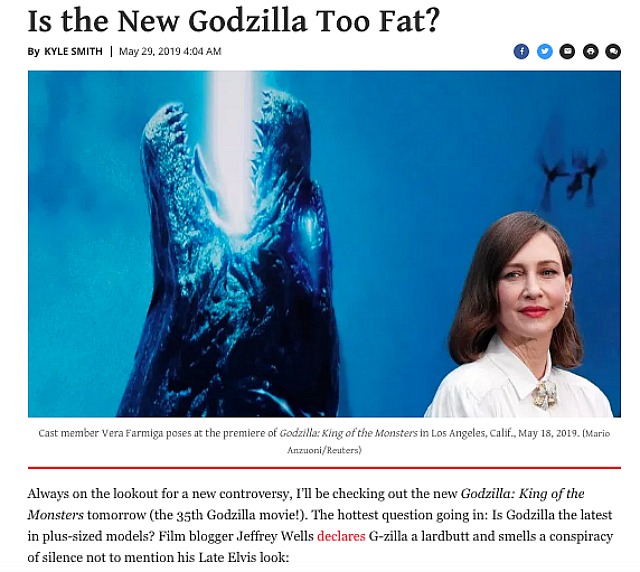
National Review critic Kyle Smith seemed to indicate agreement or at least amusement when he riffed early this morning about my Fatzilla thing.

Toronto Globe and Mail critic Barry Hertz seemingly went in the opposite direction, proclaiming that “the creature design is superb.”

The following critics have bypassed the obvious (i.e., chickened out): Time Out‘s Josh Rothkopf, TheWrap‘s Alonso Duralde, CNN’s Brian Lowry, the Empire guy, the Uproxx guy, the South China Morning Post‘s James Mottram.

Even N.Y. Post critic Johnny Oleksinki, who normally just blurts out whatever he’s thinking, played it carefully this time.

Last Night…

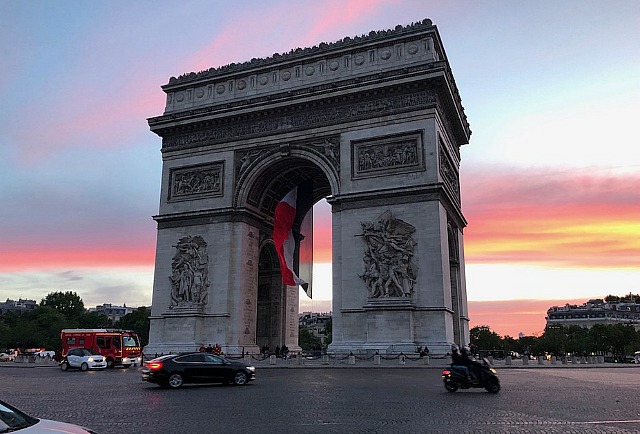
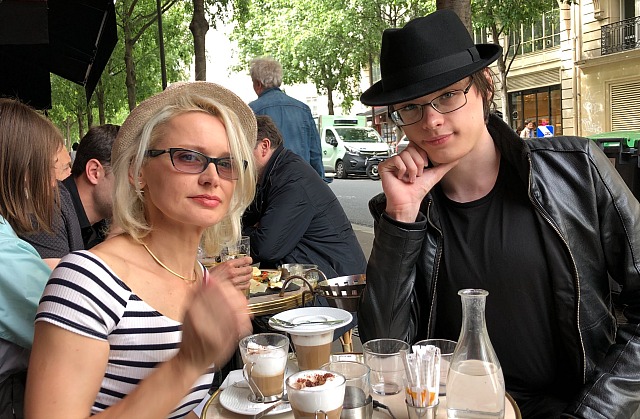
The red-pinkish caramel skies are my excuse for posting a touristy Arc de Triomphe photo. Although I’ve been coming here since the ’70s, last night was my first time ascending the monument’s circular metal staircase (my lungs and leg muscles were fine until the very end of the climb) and then finally standing on top and gazing all over, the late-night breezes gently slapping my face.

Read more

Whither “Booksmart”?

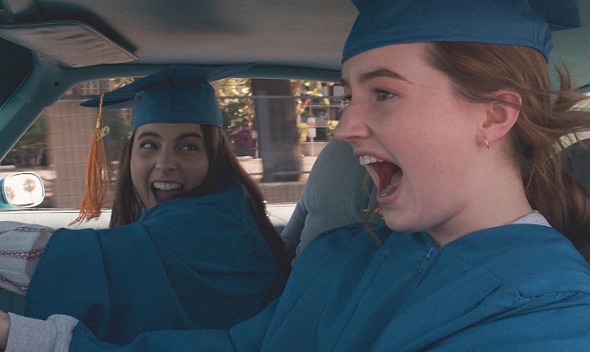
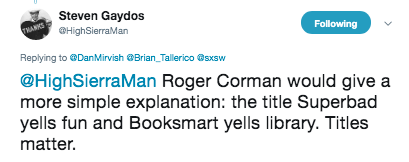
So why the meager Booksmart business? You can call it a female reboot of Superbad if you want, but it has its own story, theme and attitude. It’s very well directed by Olivia Wilde, and it doesn’t just go through the motions. It delivers what seemed to me like an authentic, connected, well-crafted portrait of Los Angeles teen culture. Is it as good as Superbad? I think it comes reasonably close. Does it offer the same kind of zeitgeist-capture that Risky Business or American Graffiti managed in their eras? In a way it does.

Deadline‘s Anthony D’Alessandro: “We can’t ignore the small start of UA/Annapurna’s Booksmart, which is bound to see $7.8M over four days. The movie looked like a female Superbad, but more indie. Great reviews and solid exits, but no one is taking the time out over the holiday weekend to see it. Saturday’s $2.1M ticket sales were down 16% from Friday. Smart, R-rated, critically acclaimed teenage girl pics remain a tough sub-genre. Booksmart‘s bests plays were in big cities on the coast, especially in the west.”

Why has it underperformed? Is it because audiences generally prefer to watch guys perform this kind of rambunctious material? Or is it…what, the lesbian angle or something? (A possible factor outside the big cities, especially in the middle of the country.) Booksmart was supposed to be the film that would finally deliver serious coin to Annapurna, which needs a hit. I was suspicious of the ecstatic SXSW reviews, but this was an exception to the rule.

Dalton vs. Connors

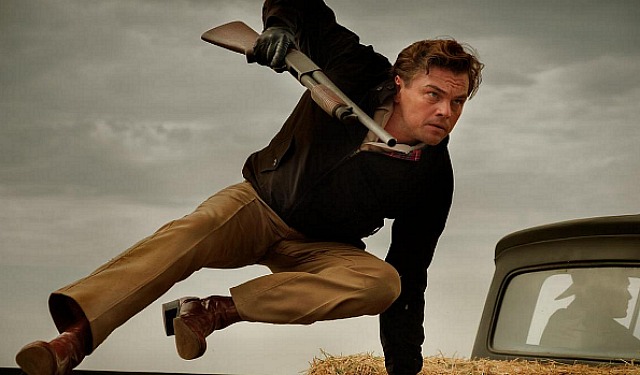
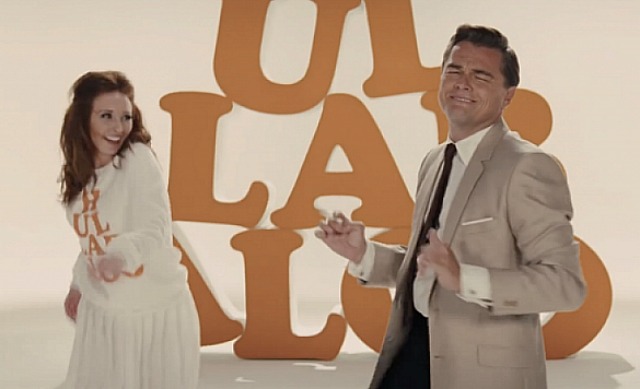
In Once Upon A Time in Hollywood, we’re informed that Leonardo DiCaprio‘s Rick Dalton starred in Bounty Law, a black-and-white TV series that ran from 1958 to 1963. Early on we’re shown a quick Bounty Law TV promo, with Dalton turning and staring at the camera as in “yup, that’s me and I’m definitely cool.” But he doesn’t do it quite right. He doesn’t sell that studly “I own this shit” thing. Leo basically looks like he’s waiting for Tarantino to say “cut.”

There’s a measure of irony in the obviously gifted, Oscar-winning Leo not doing this kind of thing as well the less talented, non-Oscar-winning Chuck Connors in that opening-credits blam-blam sequence for The Rifleman.

Posted on 10.31.17: “If Chuck Connors never did anything else, that look he gives the camera after firing off 12 shots from his specially modified Winchester 44-40 model 1892 would be enough. He doesn’t glare, doesn’t scowl, doesn’t smirk, doesn’t grin or suggest any kind of cockiness, and yet that look in his eyes manages to say ‘this is what I do, take it or leave it — I drill guys over and over, pretty much every week, and yet I’m even-tempered and respectable and so the law’s always on my side…pretty good deal, eh?’

“But who ever heard of a Winchester that fires 12 shots in a row? Look at it — where would 12 cartridges even fit?”

Necessary Tragedy

I’ve been visiting the Eiffel tower off and on for decades. A year ago a pair of ten-foot-tall glass barriers were erected to protect the monument from possible terrorist attacks. The structure is safer now, but it feels like a tragedy. From 1889 to 2018 the Eiffel tower and the grounds beneath it were open and accessible to everyone — now it feels like a a place of paranoia and a metaphor for the menace that we all realize is out there and possibly preparing to strike at any time. We all want to feel safe, but it’s shattering to see this once-egalitarian atmosphere suffocated in a sense. By erecting these walls the French government has basically announced that Islamic terror has established psychological dominance. Imagine the atmosphere in Washington, D.C. if the U.S. Capitol and the White House were to be surrounded on all sides by similar barriers. This is the world we live in now, and it’s heartbreaking.

Read more

“Sometimes Trouble Wants You”

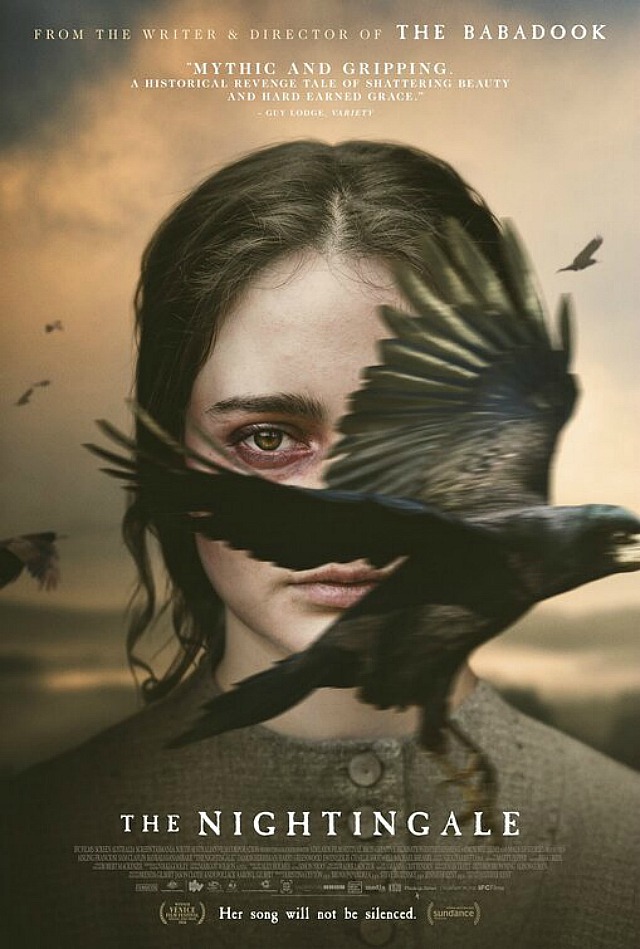
The new trailer for Jennifer Kent‘s The Nightingale (IFC Films, 8.2) is framed within a 1.37:1 aspect ratio, and yet none of the reviews I’ve read since last September’s Venice Film Festival have even mentioned it.

A.A. Dowd review, posted on 1.27.19: “’This is not an easy sit,’ we were told [by a Sundance] programmer. But even this warning didn’t seem to properly brace the crowd for…nearly two-and-a-half hours of relentless, unspeakable violence, [which] provoked distressed walkouts. Judging from some overheard post-screening grumbles (‘I thought it was going to be scary, but then it wasn’t‘), plenty of those who stayed for the whole thing were expecting something closer in spirit to Kent’s The Babadook, which premiered at Sundance five years ago. What they got instead was ceaseless, numbing brutality — a Western revenge yarn of such heightened cruelty and suffering that it basically demands to be read as allegory.”

The designer of the first-rate Nightingale poster deserves a salute. Haunting and oddly beautiful.

“I’ll Play What’s Dealt”

I knew Tommy Lee Jones would be a star of some magnitude after watching him play Coley Blake, a hard-luck loser and accused murderer, in Michael Miller‘s Jackson County Jail.

An above-average exploitation flick, Jail was produced by Roger Corman and released by New World into subruns and drive-ins in the spring of ’76.

Donald E. Stewart‘s script is about a Los Angeles ad exec named Dinah Hunter (Yvette Mimieux) who’s wrongfully arrested in shitkicker country and then raped in a small-town jail cell. She and Blake break out of the slam and go on the run. It gradually becomes apparent that Blake, who wears the shell of an outlaw nihilist, carries shreds of decency and compassion.

Blake’s bitter signature line, spoken to a surly cop, is “I’ll play what’s dealt.”

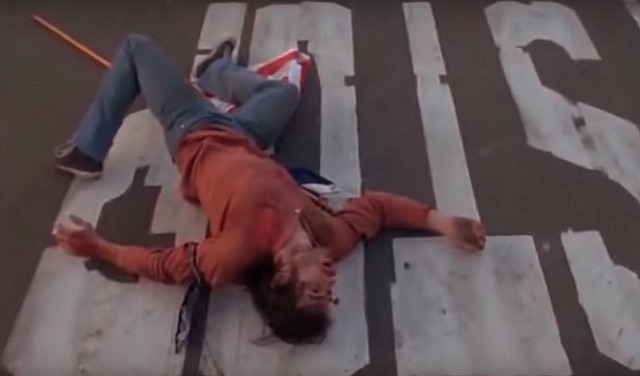
Jones’ big climactic scene happens at the end of the clip (starting around 8:30). Blake is running from the law during a small-town 4th of July celebration. The cops shoot him two or three times in the back. He staggers and falls to the pavement alongside an American flag. Blake dies with a long exhalation of breath, just like Stephen Boyd‘s Messala in Ben-Hur.

When the film ended I knew right away that Jones, 29 when the film was shot, was X-factor and waiting to happen.

You can stream Jackson County Jail on Amazon, but only in standard def.

Read more

“Once Upon A Time in Hollywood” Is….

If you want a fast-and-hard assessment of Quentin Tarantino‘s Once Upon A Time in Hollywood, which I attempted to convey two or three hours ago, it goes like this: Four-fifths of this half-century-old Hollywood fantasy is lightly amusing, in and out, yes and no, decent and diverting as far as it goes. But the final fifth is payoff time — a taut, time-clocky, here-we-go, edge-of-the-seat finale that is absolutely insane, exuberant, take-charge and fucking-ass nuts.

I could boil it all down and simply call the last half-hour a “happy” ending, except the craziness is so balls-out unhinged…I’m obviously having trouble describing it. I have my tastes and standards and you all have yours, but by the measuring stick of Hollywood Elsewhere the finale is really, really great. As in laugh-out-loud, hard-thigh-slap, whoo-whoo satisfying. Do I dare use the term good-vibey? And the very end (as in the last two minutes) is…naahh, that’ll do.

But most of the film (the aforementioned 80%) is what most of us would call an okay, good-enough, sometimes sluggish, oddly digressive, highly restrictive wallow in the world of B-level Hollywood at the dawn of the Nixon administration.

By which I mean OUATIH is pretty much tension-free and not all that juicy except for two brawny-fisticuff scenes involving Brad Pitt‘s Cliff Booth, a laid-back, muscle-bound, serenely cool stunt man. Take no notice of any critic who claims Pitt isn’t the star of this baby and then some. Leonardo DiCaprio‘s Rick Dalton, a late-30ish actor stuck in a career slide and freaking badly, is all nerves and anxiety, a smoker of too many cigarettes and a slurper of way too much alcohol.

Who are these guys? And how will Dalton, a fading TV actor with a backpack full of fear and trepidation, find a way out of the thicket? And what role, if any, will Booth, Rick’s sidekick, stunt man and best bruh, play in turning things around, if in fact that is in the cards?

And what about those motley, zombie-like hippie weirdos encamped at the dusty Spahn Movie Ranch out in Chatsworth, whom Cliff immediately recognizes as bad ones? And how, if at all, will Rick ever break into A-level movies and thereby rub shoulders with the likes of Roman Polanski, aka Mr. Rosemary’s Baby, and his dishy wife Sharon Tate?

I wasn’t irritated or put off by the first four-fifths but I was waiting, waiting, waiting. I was fine with it being a relatively decent, often wise-assed, sometimes hugely enjoyable attitude and atmosphere smorgasbord of period aroma, jokes, flip humor, character-building, asides and “those were the days.”

But with the exception of those two hugely enjoyable stand-up-and-kick-ass scenes (Cliff vs. Bruce Lee on a movie set, Cliff vs. the mostly-female Manson family at the Spahn ranch), all I was feeling was a kind of second-gear sensation…an “okay, okay, okay but where’s the tension, what’s with all the digressions and when the hell is this movie going to step up and kick into third if not fourth gear?”

It’s not really Once Upon A Time in Hollywood, of course, but Once Upon A Time in Quentin’s Non-Historical Hollywood Memory Kit Bag.

Read more

Quizzical Reaction

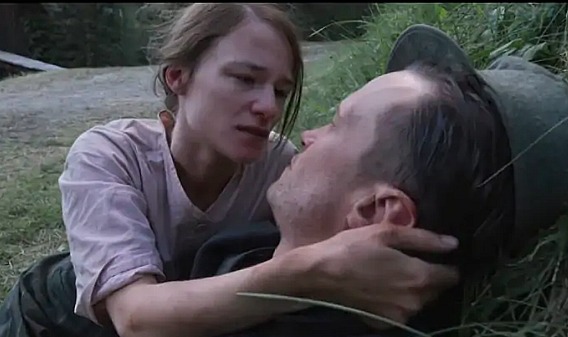
Due respect to the Fox Searchlight team and their just-announced decision to pay $12 million for Terrence Malick‘s A Hidden Life, but the universal reaction among Cannes-attending journos (or at least the ones I spoke to yesterday) is that Malick’s pastoral, moralistic period drama is looking at an uphill struggle to land a Best Picture nomination, which is presumably Fox Searchlight’s strategy.

The headline of a 5.20 Indiewire story by Anne Thompson proclaimed that “with Fox Searchlight Behind It, A Hidden Life Could Go Far,” adding that “a robust Oscar campaign is forthcoming.”

Variety‘s Elsa Keslassy and Brent Lang reported yesterday that “the reviews have been strong,” but they’ve actually been mixed. What they seem to have meant is “Justin Chang and David Ehrlich adore it.”

A Hidden Life was in fact panned by The Hollywood Reporter‘s Todd McCarthy, Time‘s Stephanie Zacharek (who called it “pious“) and A.V. Club’s A.A. Dowd, among others.

Keslassy-Lang: “Malick movies have been box office duds in recent years. He hasn’t had a film that cracked $1 million at the domestic box office since 2011’s The Tree of Life, which Searchlight also released and pushed to a $13.3 million haul.

“Malick tone poems such as Knight of Cups ($566,006), Song to Song ($443,684), and To the Wonder ($587,615) collapsed on the shoals of audience indifference.”

Read more