Necessary Tragedy

I’ve been visiting the Eiffel tower off and on for decades. A year ago a pair of ten-foot-tall glass barriers were erected to protect the monument from possible terrorist attacks. The structure is safer now, but it feels like a tragedy. From 1889 to 2018 the Eiffel tower and the grounds beneath it were open and accessible to everyone — now it feels like a a place of paranoia and a metaphor for the menace that we all realize is out there and possibly preparing to strike at any time. We all want to feel safe, but it’s shattering to see this once-egalitarian atmosphere suffocated in a sense. By erecting these walls the French government has basically announced that Islamic terror has established psychological dominance. Imagine the atmosphere in Washington, D.C. if the U.S. Capitol and the White House were to be surrounded on all sides by similar barriers. This is the world we live in now, and it’s heartbreaking.

Read more

“Sometimes Trouble Wants You”

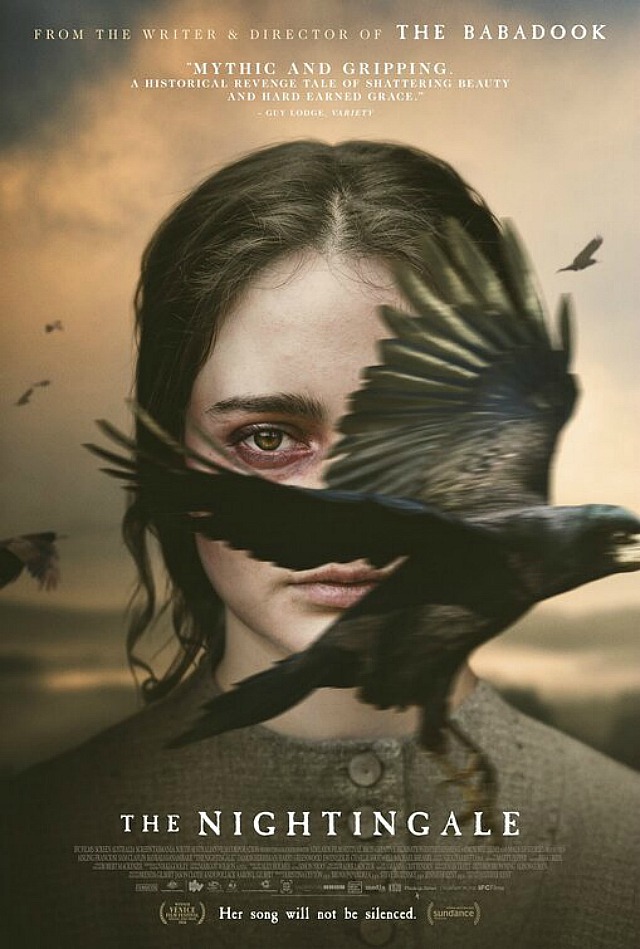
The new trailer for Jennifer Kent‘s The Nightingale (IFC Films, 8.2) is framed within a 1.37:1 aspect ratio, and yet none of the reviews I’ve read since last September’s Venice Film Festival have even mentioned it.

A.A. Dowd review, posted on 1.27.19: “’This is not an easy sit,’ we were told [by a Sundance] programmer. But even this warning didn’t seem to properly brace the crowd for…nearly two-and-a-half hours of relentless, unspeakable violence, [which] provoked distressed walkouts. Judging from some overheard post-screening grumbles (‘I thought it was going to be scary, but then it wasn’t‘), plenty of those who stayed for the whole thing were expecting something closer in spirit to Kent’s The Babadook, which premiered at Sundance five years ago. What they got instead was ceaseless, numbing brutality — a Western revenge yarn of such heightened cruelty and suffering that it basically demands to be read as allegory.”

The designer of the first-rate Nightingale poster deserves a salute. Haunting and oddly beautiful.

“I’ll Play What’s Dealt”

I knew Tommy Lee Jones would be a star of some magnitude after watching him play Coley Blake, a hard-luck loser and accused murderer, in Michael Miller‘s Jackson County Jail.

An above-average exploitation flick, Jail was produced by Roger Corman and released by New World into subruns and drive-ins in the spring of ’76.

Donald E. Stewart‘s script is about a Los Angeles ad exec named Dinah Hunter (Yvette Mimieux) who’s wrongfully arrested in shitkicker country and then raped in a small-town jail cell. She and Blake break out of the slam and go on the run. It gradually becomes apparent that Blake, who wears the shell of an outlaw nihilist, carries shreds of decency and compassion.

Blake’s bitter signature line, spoken to a surly cop, is “I’ll play what’s dealt.”

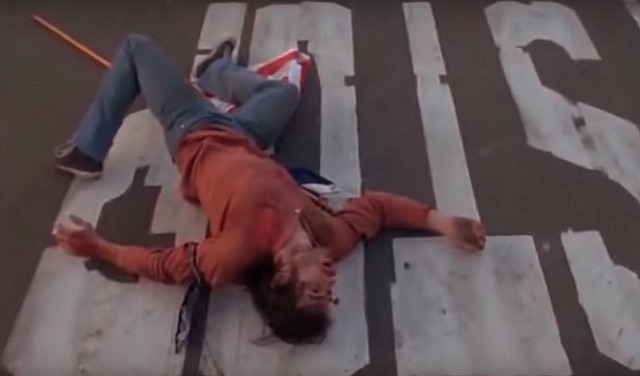
Jones’ big climactic scene happens at the end of the clip (starting around 8:30). Blake is running from the law during a small-town 4th of July celebration. The cops shoot him two or three times in the back. He staggers and falls to the pavement alongside an American flag. Blake dies with a long exhalation of breath, just like Stephen Boyd‘s Messala in Ben-Hur.

When the film ended I knew right away that Jones, 29 when the film was shot, was X-factor and waiting to happen.

You can stream Jackson County Jail on Amazon, but only in standard def.

Read more

“Once Upon A Time in Hollywood” Is….

If you want a fast-and-hard assessment of Quentin Tarantino‘s Once Upon A Time in Hollywood, which I attempted to convey two or three hours ago, it goes like this: Four-fifths of this half-century-old Hollywood fantasy is lightly amusing, in and out, yes and no, decent and diverting as far as it goes. But the final fifth is payoff time — a taut, time-clocky, here-we-go, edge-of-the-seat finale that is absolutely insane, exuberant, take-charge and fucking-ass nuts.

I could boil it all down and simply call the last half-hour a “happy” ending, except the craziness is so balls-out unhinged…I’m obviously having trouble describing it. I have my tastes and standards and you all have yours, but by the measuring stick of Hollywood Elsewhere the finale is really, really great. As in laugh-out-loud, hard-thigh-slap, whoo-whoo satisfying. Do I dare use the term good-vibey? And the very end (as in the last two minutes) is…naahh, that’ll do.

But most of the film (the aforementioned 80%) is what most of us would call an okay, good-enough, sometimes sluggish, oddly digressive, highly restrictive wallow in the world of B-level Hollywood at the dawn of the Nixon administration.

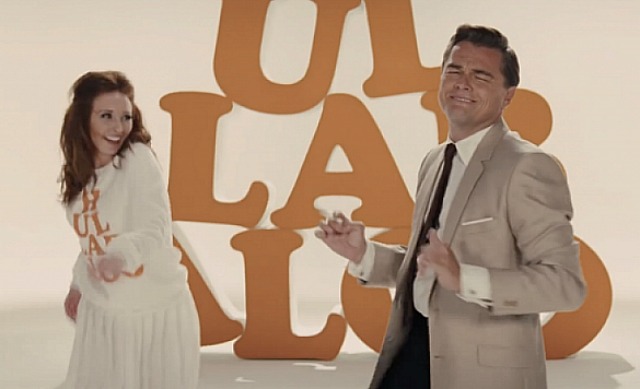
By which I mean OUATIH is pretty much tension-free and not all that juicy except for two brawny-fisticuff scenes involving Brad Pitt‘s Cliff Booth, a laid-back, muscle-bound, serenely cool stunt man. Take no notice of any critic who claims Pitt isn’t the star of this baby and then some. Leonardo DiCaprio‘s Rick Dalton, a late-30ish actor stuck in a career slide and freaking badly, is all nerves and anxiety, a smoker of too many cigarettes and a slurper of way too much alcohol.

Who are these guys? And how will Dalton, a fading TV actor with a backpack full of fear and trepidation, find a way out of the thicket? And what role, if any, will Booth, Rick’s sidekick, stunt man and best bruh, play in turning things around, if in fact that is in the cards?

And what about those motley, zombie-like hippie weirdos encamped at the dusty Spahn Movie Ranch out in Chatsworth, whom Cliff immediately recognizes as bad ones? And how, if at all, will Rick ever break into A-level movies and thereby rub shoulders with the likes of Roman Polanski, aka Mr. Rosemary’s Baby, and his dishy wife Sharon Tate?

I wasn’t irritated or put off by the first four-fifths but I was waiting, waiting, waiting. I was fine with it being a relatively decent, often wise-assed, sometimes hugely enjoyable attitude and atmosphere smorgasbord of period aroma, jokes, flip humor, character-building, asides and “those were the days.”

But with the exception of those two hugely enjoyable stand-up-and-kick-ass scenes (Cliff vs. Bruce Lee on a movie set, Cliff vs. the mostly-female Manson family at the Spahn ranch), all I was feeling was a kind of second-gear sensation…an “okay, okay, okay but where’s the tension, what’s with all the digressions and when the hell is this movie going to step up and kick into third if not fourth gear?”

It’s not really Once Upon A Time in Hollywood, of course, but Once Upon A Time in Quentin’s Non-Historical Hollywood Memory Kit Bag.

Read more

Quizzical Reaction

Due respect to the Fox Searchlight team and their just-announced decision to pay $12 million for Terrence Malick‘s A Hidden Life, but the universal reaction among Cannes-attending journos (or at least the ones I spoke to yesterday) is that Malick’s pastoral, moralistic period drama is looking at an uphill struggle to land a Best Picture nomination, which is presumably Fox Searchlight’s strategy.

The headline of a 5.20 Indiewire story by Anne Thompson proclaimed that “with Fox Searchlight Behind It, A Hidden Life Could Go Far,” adding that “a robust Oscar campaign is forthcoming.”

Variety‘s Elsa Keslassy and Brent Lang reported yesterday that “the reviews have been strong,” but they’ve actually been mixed. What they seem to have meant is “Justin Chang and David Ehrlich adore it.”

A Hidden Life was in fact panned by The Hollywood Reporter‘s Todd McCarthy, Time‘s Stephanie Zacharek (who called it “pious“) and A.V. Club’s A.A. Dowd, among others.

Keslassy-Lang: “Malick movies have been box office duds in recent years. He hasn’t had a film that cracked $1 million at the domestic box office since 2011’s The Tree of Life, which Searchlight also released and pushed to a $13.3 million haul.

“Malick tone poems such as Knight of Cups ($566,006), Song to Song ($443,684), and To the Wonder ($587,615) collapsed on the shoals of audience indifference.”

Read more

Midnight Panini

It’s straight-up noon on Tuesday, 5.21 — four hours away from the 4 pm Salle Debussy press screening of Quentin Tarantino‘s Once Upon A Time in Hollywood.

Hollywood Elsewhere saw three films yesterday — one great, one a mitigated middle-ranger with a transformative ending, and one shortfaller.

The kickoff was Celine Sciamma‘s Portrait Of A Lady on Fire (Grand Lumiere, 8:30 am) — by my sights as close to perfect as a gently erotic, deeply passionate period drama could be.

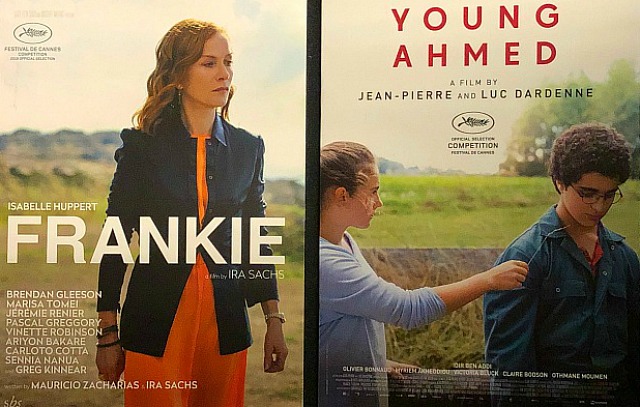
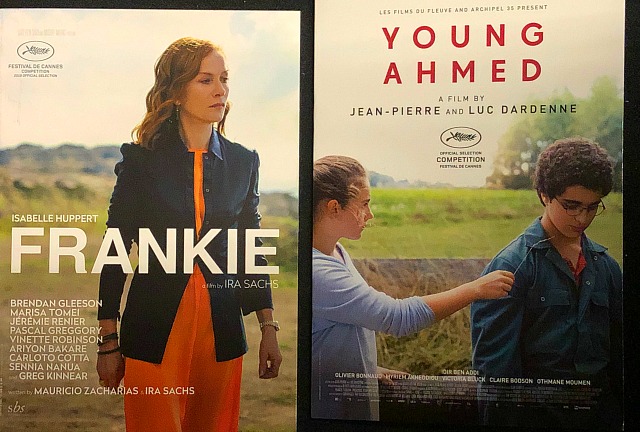
The second was Jean-Pierre and Luc Dardenne‘s Young Ahmed (Grand Lumiere, 4 pm), an 84-minute waiting-game movie about a young Islamic psychopath and would-be Jihadist (Idir Ben Addi) planning to murder his female teacher out of blind adherence to Islamic derangement syndrome, but which actually ends rather profoundly. The last couple of minutes are so good, in fact, that I wound up forgiving the first 80 or so.

The final film was Ira SachsFrankie (Salle Debussy, 10:30 pm), a morose, ploddingly-written, Eric Rohmer-like thing about three middle-aged couples looking at dour futures involving death, separation and loneliness. All the actors (Isabelle Huppert, Marisa Tomei, Brendan Gleeson, Greg Kinnear, Vinette Robinson, Jéremie Renier, Ariyon Bakare, Carloto Cotta) wear out their welcome in record time, and behave as if they’d rather be somewhere else. To me if felt almost entirely unsatisfying — each and every scene struck me as underwhelming if not draining.

The only moment that sparked a strong reaction was a compassionate sex scene between the ailing Huppert, playing the titular lead and a film actress, and her bearded, walrus-like husband, played by Gleeson. On one hand it reminded me of a somewhat similar sex scene in Robert Altman‘s Three Women; on another level it almost made me convulse with discomfort.

Read more

Malick’s “Hidden Life”: Same Old Wackadoodle

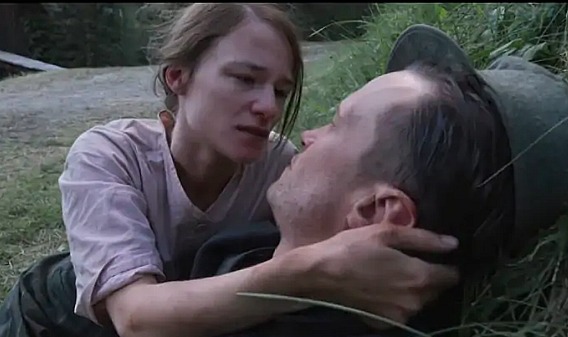
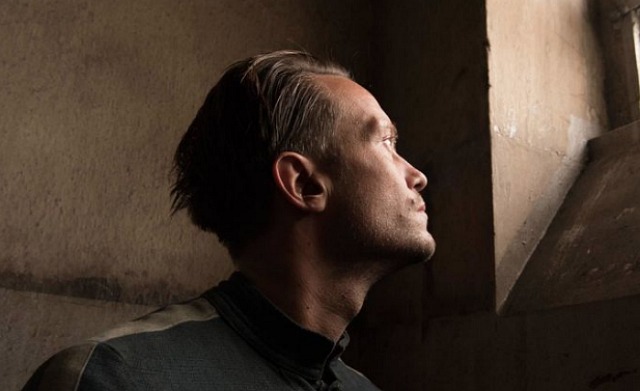
Everyone understands that Terrence Malick‘s A Hidden Life (formerly Radegund) is about Franz Jagerstatter (August Diehl), the Austrian farmer and martyr who was executed for refusing to fight for the Germans during World War II, and who was declared a saint 12 years ago by Pope Benedict.

Since it finished shooting in August 2016, or over the last two and two-thirds years, the expectation has been that A Hidden Life would mark Malick’s return to at least a semblance of traditional narrative preparation (i.e., a movie based on a carefully composed screenplay and featuring actors speaking pre-written dialogue).

Two years ago Malick acknowledged that until recently he’d been “working without a script“, but that with Radegund he’d “repented the idea.” Malick’s last semi-traditional film was The New World (’05), and before that The Thin Red Line (’99).

The idea, then, was that A Hidden Life might represent a return to a kind of filmmaking that Malick hadn’t really embraced since these two films (respectively 14 and 20 years old), or perhaps even since Days of Heaven, which was shot 43 years ago and released in the fall of ’78.

Because over the last decade (and I wish this were not so) Malick has made and released four story-less, mapped-out but improvised dandelion-fuzz moviesThe Tree of Life (’10), To The Wonder (’12), Knight of Cups (’15) and Song to Song (’17).

The fact that The Tree of Life was widely regarded as the first and best of Malick’s dandelion fuzzies (the principal traits being a meditative, interior-dreamscape current plus whispered narration, no “dialogue” to speak of and Emmanuel Lubezski cinematography that captures the wondrous natural beauty of God’s kingdom)…the fact that The Tree of Life was the finest of these doesn’t change what it basically is.

So does A Hidden Life represent a return to the old days? Does it deliver an actual story with, like, a beginning, middle and end? Does it offer a semblance of character construction and narrative tension with some kind of skillfully assembled climax, etc.?

No, it doesn’t. For Malick has gone back to the same old dandelion well with a generous lathering of Austrian countryside visuals plus some World War II period trimmings.

Malick’s script tells Jagerstatter’s story but obliquely, as you might expect. The big dramatic turns are “there”, sort of, but are dramatically muted or side-stepped for the most part. I hate to repeat myself but A Hidden Life generally embodies a meditative, interior-dreamscape approach plus whispered narration, some “dialogue” but most of it spoken softly or muttered plus a lot of non-verbal conveyances, and some truly wonderful eye-bath cinematography by Jörg Widmer that more than lives up to Lubezski standards.

The thing you get over and over from the film is how magnificent the locations look — mainly the small Italian mountain village of Sappada plus Brixen and South Tyrol, also in northern Italy.

Otherwise it’s basically a moody, meditative swoon flick about a highly moral, independent-minded Austrian who couldn’t find a way to fight for the German army in good conscience, and who stuck to his guns and paid the price for that.

Does the film suggest there are strong similarities between Nazi suspicion of Jews and other races and the racial hate that Donald Trump has been spewing since at least ’15? Yeah, it does, and that’s a good thing to chew on.

Can A Hidden Life be called a “good” film, as in professionally and passionately prepared with an adult-level story that pays off to some extent? Yeah, I suppose so. I’m certainly not calling it a bad or sloppy or indifferently made film, but it’s still the same old dandelion cereal that Malick has been serving since the dawn of the Obama administration.

The version I saw this morning allegedly ran 2 hours and 53 minutes. I didn’t time it myself, although I should have.

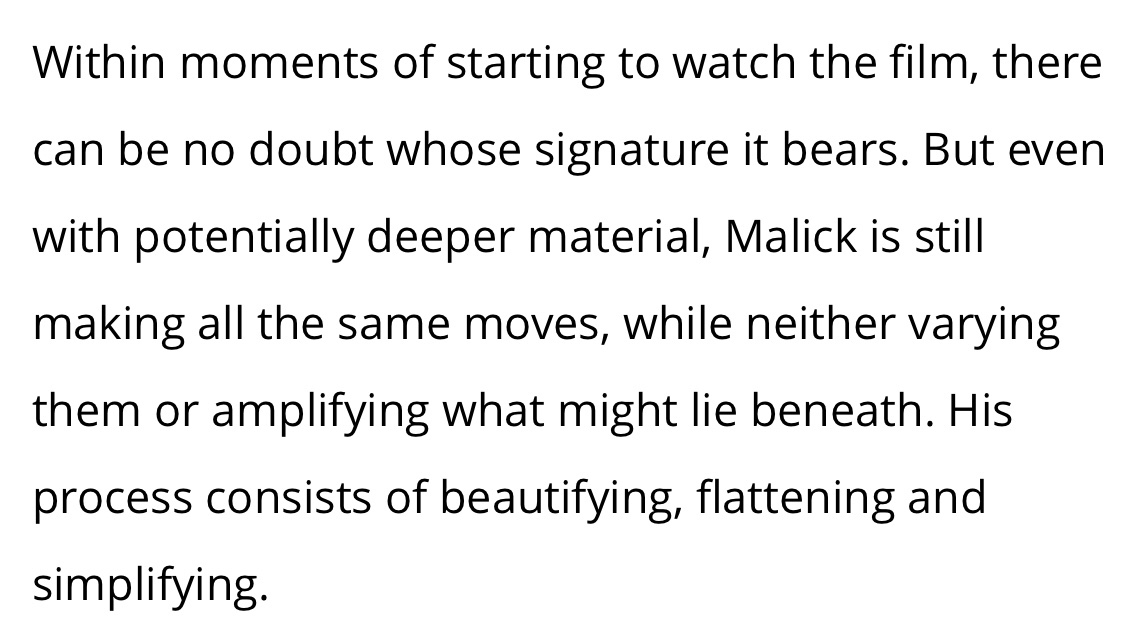
Consider this closing paragraph from Todd McCarthy‘s 5.19 Hollywood Reporter review:

And this description from The Guardian‘s Peter Bradshaw:

“The style that Malick has found for this subject is very much the same as ever: an overpowering sense of being ecstatically, epiphanically in the present moment, an ambient feeling of exaltation created by a montage of camera shots swooning, swooping and looming around the characters who appear often to be lost in thought, to an orchestral or organ accompaniment, and a murmured voiceover narration of the characters’ intimate but distinctly abstract feelings and memories.” In short, another one of Malick’s “signature symphonies.”

This Way Lies Madness

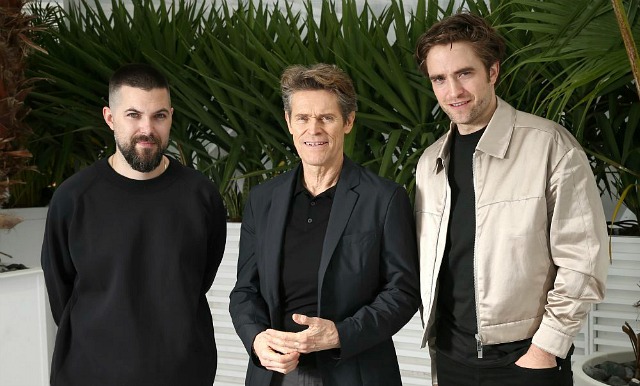
Robert EggersThe Lighthouse (screened this morning at Directors’ Fortnight) is an absolute masterpiece — a tale of slowly burgeoning madhouse by way of isolation, booze, demons and nightmares. It contains Robert Pattinson‘s finest role and performance ever, but Willem Dafoe‘s old bearded sea dog matches him line for line, glare for glare, howl for howl.

This 35mm black-and-white masterwork (projected in a 1:1 aspect ratio) is really about a battle of performances as well as a fight between earthly duties and the madness of shrieking mermaids and King Triton. Nightmares au natural but full of ancient myths and fables. Totally 19th Century in terms of atmosphere, set design and especially in the Melville-like dialogue, co-written by Egger and his brother Max. Jarin Blaschke‘s cinematography is an instant classic in itself. Why was this stunningly good film not accepted for Cannes competition?

Delbert Grady Is Watching

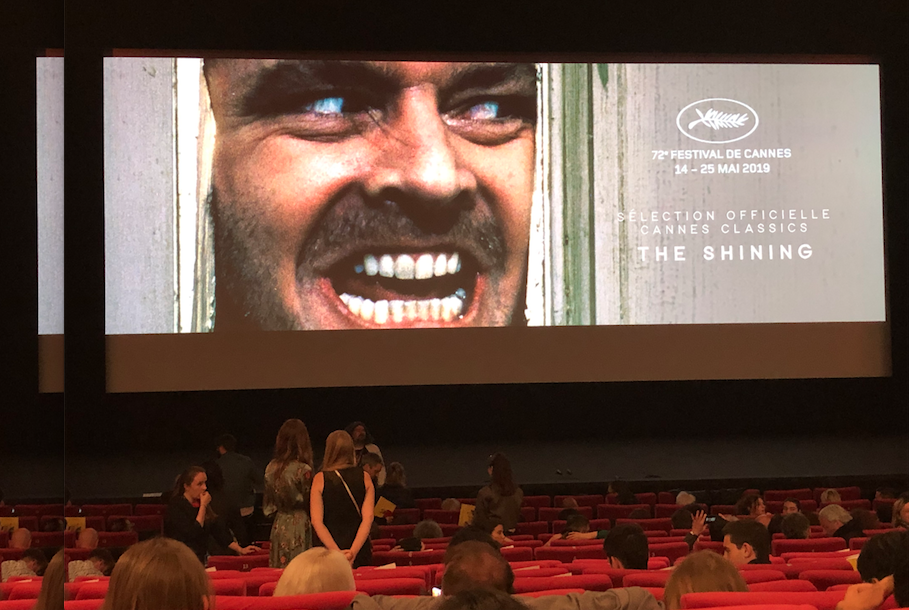
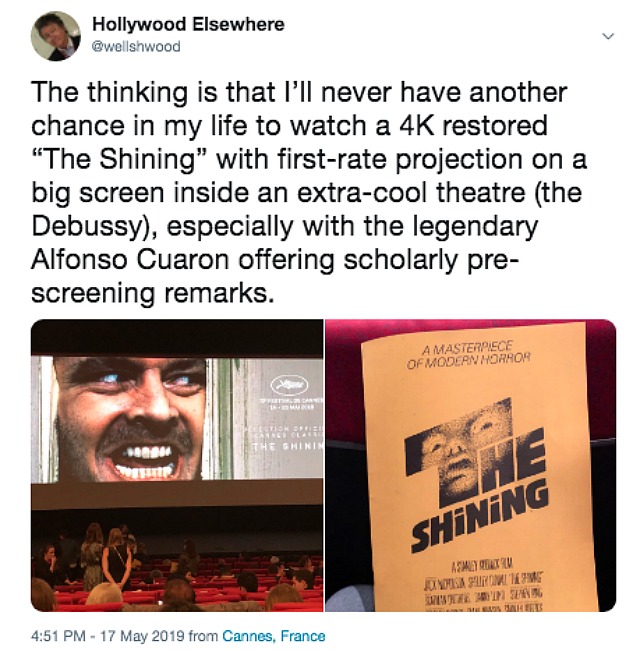
A little while ago I walked over to the Debussy for a 10:45 pm screening The Shining. I wanted to see Stanley Kubrick‘s eerie-vibe classic on a big screen again, and the 4K digital remastering made it look…uhm, as good as it ever has. I was half-hoping for some kind of slight bump, but after 20 or 25 minutes I was admitting to myself “this looks fantastic, but it doesn’t look any better than my Shining Bluray does on my Sony 4K HDR 65-incher.” So I excused myself and went back to the pad. Sleep is more important.

Update / correction: The 4K Shining isn’t a “restoration” but a remastering. It was created from “a new 4K scan of the original 35mm camera negative at Warner Bros. Motion Picture Imaging. Filmmaker Steven Spielberg and Stanley Kubrick’s former personal assistant Leon Vitali worked closely with the team at Warner Bros. during the mastering process.”

RPatz as Batman? Really?

Variety‘s Justin Kroll is reporting that Robert Pattinson is in negotiations to play The Batman in Matt Reeves’ forthcoming superhero film, which will open on 6.25.21.

Kroll explains that the RPatz thing isn’t a done deal, but that the former Twilight star is “the top choice and [the deal] is expected to close shortly.” Reeves and Pattinson will start shooting this summer.

RPatz will presumably be visiting Cannes this weekend to take bows for his performance in Robert EggersThe Lighthouse, which costars Willem Dafoe.

Is Pattinson brawny and muscular enough to play Batman? He’s tall with moderately wide shoulders, but isn’t he a bit on the wirey and willowy side?

It’s ironic that just as Pattinson has solidified his rep as the Intrepid Indie King (Cosmopolis, The Rover, Maps to the Stars, The Lost City of Z, Good Time), he’s been sucked right back into a big-studio franchise. He’s only in it for the money, of course, and who wouldn’t be?

“Rocketman”: A Glammy, Superficial Jukebox Fantasia

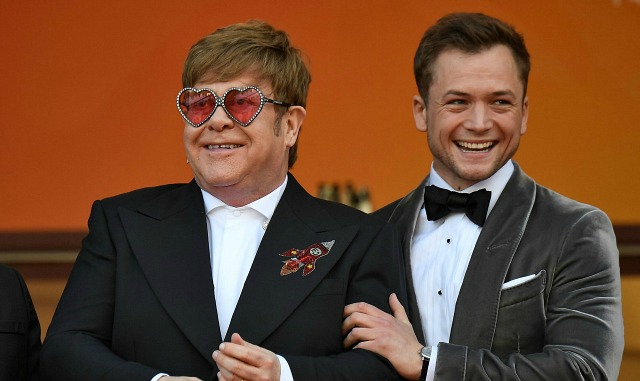
Several top-tier critics attended Thursday night’s gala premiere of Dexter Fletcher‘s Rocketman, the Elton John musical biopic, and their reviews began to pop just before 2 am Cannes time. I’ve read four or five so far, and the general verdict seems to be that it’s less interested in rock biopic realism (i.e., who John actually was and how he found his voice) and more interested in selling the flamboyant glam aspects of John’s early career.

In short, Rocketman sounds (and please stop me if you think I’m overdoing it here) like an Elton John flick for simpletons — for superficial minds, the easily impressed and your none-too-hip iTunes purchasers of one of John’s greatest hits albums.

I’m alluding to people who associate Elton more with his having sung the Lady Diana version of “Candle in the Wind” or perhaps for his Ceasar’s Palace gigs in Las Vegas than, say, his first serious industry gig at West Hollywood’s Troubadour in August ’70, or for his legendary, self-named 1970 debut album or the equally great “Honky Chateau” (’72).

Before I post a couple of review excerpts, I want HE regular Bobby Peru to consider the following line from Peter Debruge’s Variety review, to wit: “It’s Taron Egerton’s voice doing most of the singing here. He’s solid, but he’s no match for Elton’s pipes.”

HE to Debruge: No shit?

Another Debruge line: “Rocketman isn’t really about Elton as a musician.”

TheWrap‘s Steve Pond: “Bohemian Rhapsody acted like a standard biopic with concert and recording scenes thrown in, [but] Rocketman takes a wilder, bolder approach: It’s a full-fledged musical, using dozens of Elton John songs to tell his life story in a way that freely mixes reality and fantasy.

“This is a jukebox musical for the big screen, Mamma Mia! forced into a vaguely biographical form or one of the Broadway shows that use an artist’s music to tell their story, among them Jersey Boys and Beautiful: The Carole King Musical.”

“But it’s about Elton John, so that means it’s bigger, wilder, more extravagant and more excessive than those works. Sometimes that means it’s more fun, too, but it can also be a melodramatic slog when it’s not embracing the craziness of its musical numbers. And some of those numbers, to be honest, are far more diverting than others.

“As someone who hated Bohemian Rhapsody‘s factual errors, I can respect a biopic that announces from the start that it’s not to be taken seriously as an account of what actually happened. So while I struggled with a narrative that uses songs years before they were written, I know the rules of this particular game == and if what we see onscreen has a little crazy poetry in it, and it captures a bit of how things might have felt to Elton way back when, that’s all that matters.”

Read more

Souls Torn Asunder

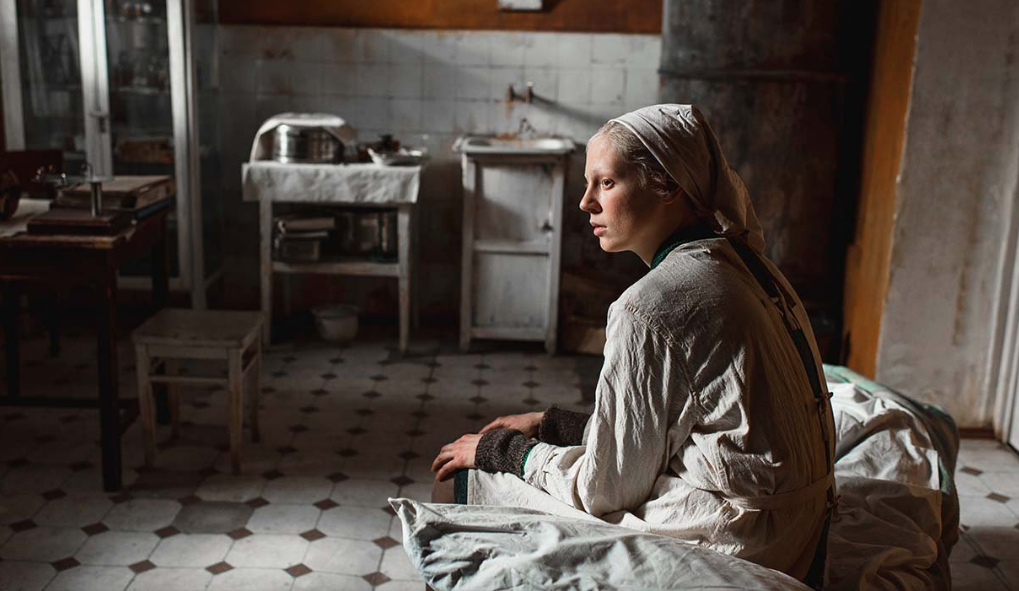
A week before leaving for Cannes I streamed Kantemir Balagov‘s Closeness (’17), a dark kidnapping drama set in a sodden Russian backwater. The idea was to prepare for Balagov’s Beanpole, a psychological survival tale set in Leningrad just after the ravages of World War II. I saw it early this morning. It’s just as grim if not grimmer than Closeness, but it’s also more ambitious in an atmospheric, large-canvas sense. And a whole lot sadder.

Balagov is only 27, but he’s already delivering the studied chops and immaculate directorial control that are par for the course among accomplished directors twice his age. Beanpole is basically about two shell-shocked women, scarred by the horrific siege of Leningrad and trying to re-assemble their shattered lives and emotions and somehow move on.
I respected the hell out of Beanpole but I honestly couldn’t derive much levitation or transcendence. To me it felt slow and trying and dirge-like. As much as I adore the idea of a 27 year-old creating a film as jarringly realistic and well assembled as this, it still left me feeling drained and dispirited. Plus it runs 134 minutes, which struck me as needlessly prolonged.

Balagov is quite the portraitist (and, to go by a just-posted Variety interview, quite the cultured film scholar), but he’s too much of a gloom-head, at least from my perspective. For this haunting portrait of post-war devastation is counter-balanced by glacial pacing and a strange reluctance or aversion to dealing with the death of a young boy…my God.

I felt sorrow and pity for each and every character, of course, but it feels too sludgy and oppressive, even for a story like this one.

Viktoria Miroshnichenko‘s titular character, Iya, is an all-but-catatonic, seven-foot-tall giraffe from whom verbal expression does not easily emanate. Why must she take 30 to 45 seconds to collect her thoughts before answering the simplest questions? Because that’s Balagov’s intention — to convey her destroyed inner state with traumatized expressions, gut feelings and minimal dialogue. I quickly ran out of patience with Iya’s blank stares, which is a way of saying that Miroshnichenko is not, in my judgment, a riveting actress.

Vasilisa Perelygina‘s Masha, Iya’s best friend, is far more interesting — more expressive and generally more alluring. If Perelygina had played the lead (which is to say if Iya had been eliminated), I would feel very differently about Beanpole. In my estimation she’s a natural movie star. But not Viktoria. Iya is impenetrable and burdensome and, as far as the afore-mentioned death of the child is concerned, inexplicable and even hateful.

The ghastly murder of Masha’s young son is “addressed” but not really dealt with, and I was simply unable to get past this. Balagov’s idea, I gather, is that if a character is profoundly devastated by war trauma, it’s within her realm to accidentally smother an innocent. In basic emotional movie-watching terms that’s simply not acceptable.

Does Masha react with shock and rage? No, she barely raises an eyebrow. Her attitude seems to be “that was horrendous what you did, of course, but the German army’s siege of Leningrad was equally awful if not more so, so I understand.” All she does, really, is insist that Iya lives up to a quid pro quo arrangement — you killed my child so get pregnant so I can raise another one.

Would any mother in the history of civilization react this way?

The principal characters (excepting a 50-year-old doctor and the rich, chilly parents of Masha’s amorous suitor, a dorky kid who has a nose like Vladmir Putin) are all numb and haunted-looking, which of course is fitting and necessary. This is not a film about steady keels and bright futures. If nothing else Beanpole is quite the sweeping statement on post-war devastation.

A late-arriving lesbian attraction element kicks in and allows for a semi-hopeful ending, but it arrives too late. If the romantic attraction aspect had been a factor early on (at least starting in the second act), I would have bought into it.

The best scene is a dinner-table conversation between Masha and the mother of Putin-nose, and as mentioned the general aura of post-war devastation throughout is certainly throttling from a general mise-en-scene perspective (camera lighting, art direction, rusty atmosphere), one that I can’t help but admire and respect from a certain distance.

If the story had been all about Masha, Beanpole would have been a much more absorbing film. I was mesmerized by Perelygina’s performance. She’s really got it.

But Beanpole is finally a movie for film festival and arthouse dweebs and not for guys like myself.