A Lifetime Ago

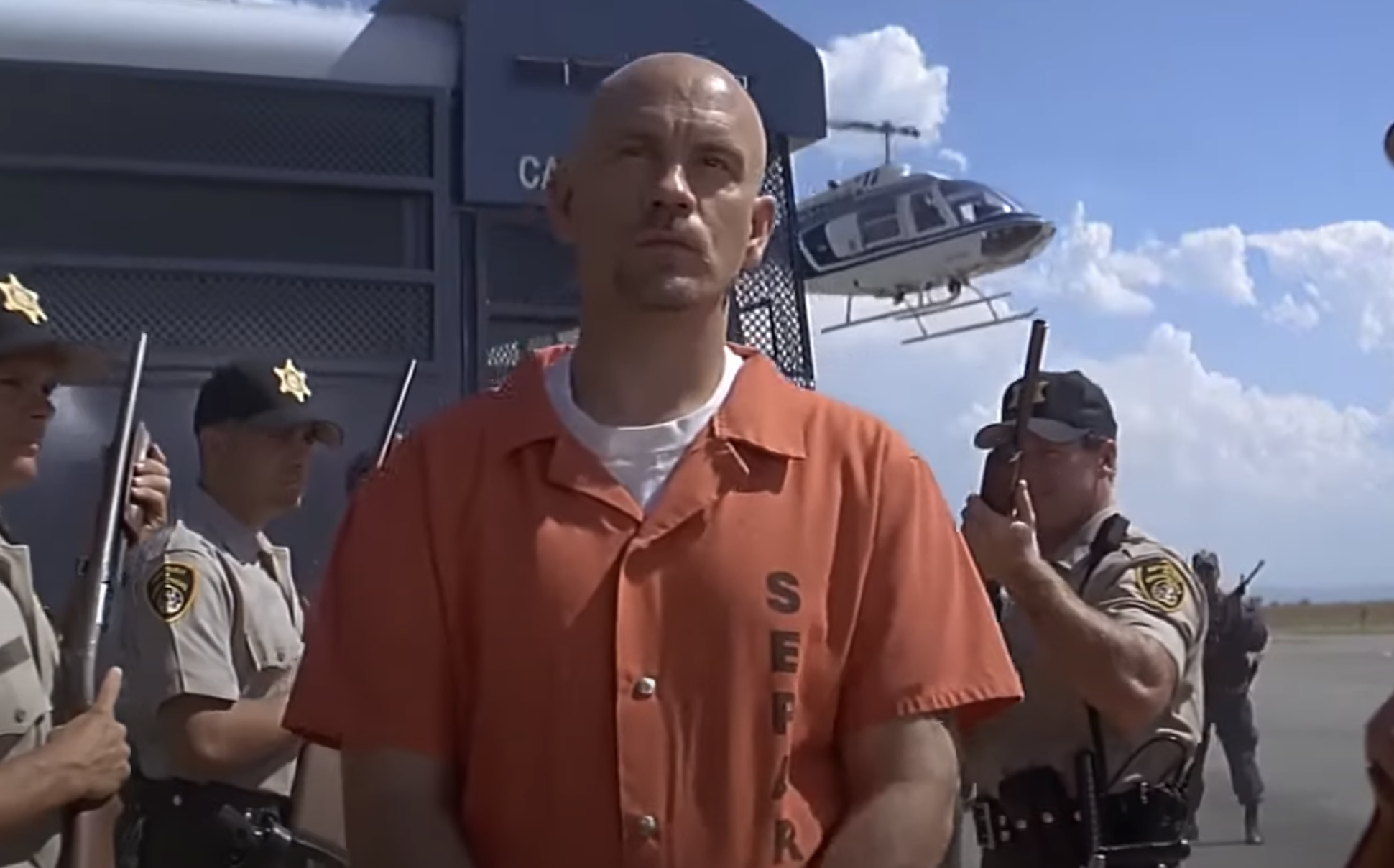
All hail Simon West, Scott Rosenberg and Jerry Bruckheimer‘s Con Air, which is over a quarter-century old now. (Damn near 27 years.) I re-watched it last night with Jett, and it’s still one of the greatest sociopathic action comedies ever made. There’s a perverse satiric thrust built into almost every damn scene, which is one reason why I feel it’s among the best Jerry Bruckheimer flicks ever made.

I’ve been saying this from the get-go but it can’t hurt to repeat: Con Air is a blend of ultra-slick action-movie chops along with an attitude of subversive genre parody. It’s primarily a wickedly funny and (at times) almost surreal conceptual comedy, and secondarily an action thriller. It’s a very handsomely shot and well-edited thing but there’s barely a single sincere line in Rosenberg’s entire script.

And let’s remember that it wasn’t all Rosenberg — Con Air was punched up by a crew of pinch-hitting screenwriters, which was also how The Rock, Gone in Sixty Seconds and Crimson Tide came together.

Con Air plays the big-budgeted action thriller game while mocking and toying with big-budget machismo at every turn. Not in a silly spoof way but using a kind of flip, inside-baseball attitude. As if the people who were paid to put it together — gifted, too-hip-for-the-room writers with jaded nihilist attitudes — felt vaguely befouled for working on a project so caked with cynicism and Hollywood corruption, and decided to inject snide, subversive humor as a form of therapy.

The marvel of Con Air is that the mixture of this attitude with cold action-movie efficiency (this being one of those happy-accident movies that occur every so often) also worked as entertainment because the movie included you in — it made you feel as if you were laughing with it, not at it.

Comment from “jimjonesiii” (posted on 10.2.08): “I`m a fat redneck ape and I approve this movie.”

I love John Malkovich‘s performance as Cyrus the Virus — every line and body gesture says “this time out I’m a total paycheck whore, but you’ll also notice I’m very good at this sort of dry attitude comedy.”

I’ll always chuckle at the buffed-up Nic Cage at his most comically stalwart and sincere. And at John Cusack‘s smarty-pants dialogue and his dopey sandal shoes. And that scene of Dave Chappelle‘s frozen body dropping from 10,000 feet and landing on an old couple’s car hood. (Chappelle was 25 or 30 pounds lighter in ’97, and he had hair!) Cage’s “Don’t mess with the bunny” line. Steve Buscemi defining the word irony. Colm Meaney‘s muscle car (a Sting Ray) getting dropped from 2000 feet up. That idiotic Las Vegas plane-crash finale. Ridiculous but all fun, all the time.

Rosenberg once recalled that Bruckheimer wasn’t pleased with the climax Rosenberg had come up with. Rosenberg, being a typically egoistic writer, got defensive and snarky. Rosenberg: “Jesus…c’mon, Jerry, what more could you want from this thing? What do you want me to do…crash the fucking plane down the strip in Vegas?” Bruckheimer: “Yes! Perfect!”

Con Air is a remnant of an era in which Jerry Bruckheimer movies briefly flirted with with this special signature attitude — i.e., mocking the big-budget action genre and at the same time kicking ass with it.

Con Air was partly Rosenberg, of course, but also partly from Jerry’s own attitude at the time as he hadn’t yet come into his own and was still working to some extent with the legacy and attitude of late partner Don Simpson . And partly from the Clinton era zeitgeist, partly from the luck of the draw, partly good fortune.

The Jerry Bruckheimer who made this film in ’96-’97 would have howled at the absurdity of making a Lone Ranger movie starring Johnny Depp as Tonto.

I will defend Con Air until the cows come home. It’s expensive guy-movie junk in a sense — one that simultaneously chokes on its own cynicism and yet makes you laugh at the absurdity of making movies of this sort, and yet put together with great care and precision and polish.

Bruckheimer used to say “I make guy movies but I don’t serve hamburger — I serve first-rate steak.” Con Air is like a pricey, perfectly cooked marbled T-bone in a great restaurant in old town Buenos Aires or downtown Chicago or the east 50s in Manhattan.

I hold Con Air, Gone in Sixty Seconds, Crimson Tide and The Rock in roughly the same regard. All four are among my all-time favorite guilty pleasure movies. Those were the days. Jerry doesn’t make ’em like this any more.

P. Vice“, posted on 10.2.08: “I love it. First we decry the unwashed apes and their pathetic taste in movies, then we praise shit like Con Air which is a movie about apes, made by apes for…you guessed it…apes. Hypocrites, one and all.

“And besides, Armageddon is clearly the real deal when it comes to slyly satirizing genre conventions while satisfying them with a straight face. Simon West doesn’t deserve scraps from Michael Bay‘s dinner table.”

LexG, posted on 10.2.08: “CON AIR = COMPLETE, TOTAL and WHOLESALE MEGAAAAAA-OWNAGE. I love that score. Especially the part that goes TSEW, TSEW, TSEW, TSEW over and over again. MASTERPIECE. And also the only time Scott Rosenburg’s weakness for wack-ass character names was amusing. DIAMOND DOG is somehow awesomely stupid, yet MR. SHHHHHHH and MAN WITH THE PLAN is just straight-up EMBARASSING.”

Nick Rogers,” posted on same date: “Con Air contains some of the most subversive, and entertaining, ‘slumming’ performances I’ve ever seen. Wells, don’t feel guilty about liking this at all. Can’t say I agree with you about Gone in 60 Seconds (too much talking, not enough carjacking), but this is a brilliant post.”
Son of Spoken But Not Heard

[Originally posted on 9.6.20] I’ve been a sucker all my life for scenes of long-delayed revelation or confession that are nonetheless inaudible due to directorial strategy.

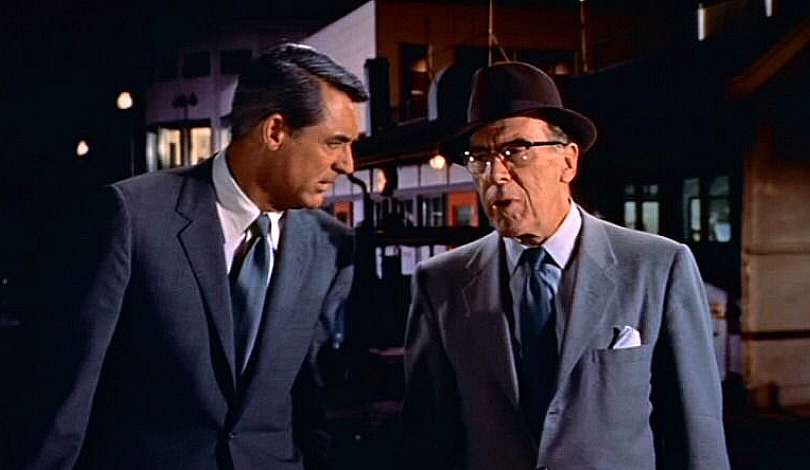
Two of my top three are YouTubed below. My third favorite is Leo G. Carroll‘s remarkably concise explanation to Cary Grant about the whole George Kaplan decoy scheme in North by Northwest. The all-but-deafening sound of nearby aircraft engines allows Carroll to explain all the whats, whys and wherefores in roughly ten or twelve seconds; otherwise a full-boat explanation would take at least…what, 45 or 50 seconds? A minute or two?

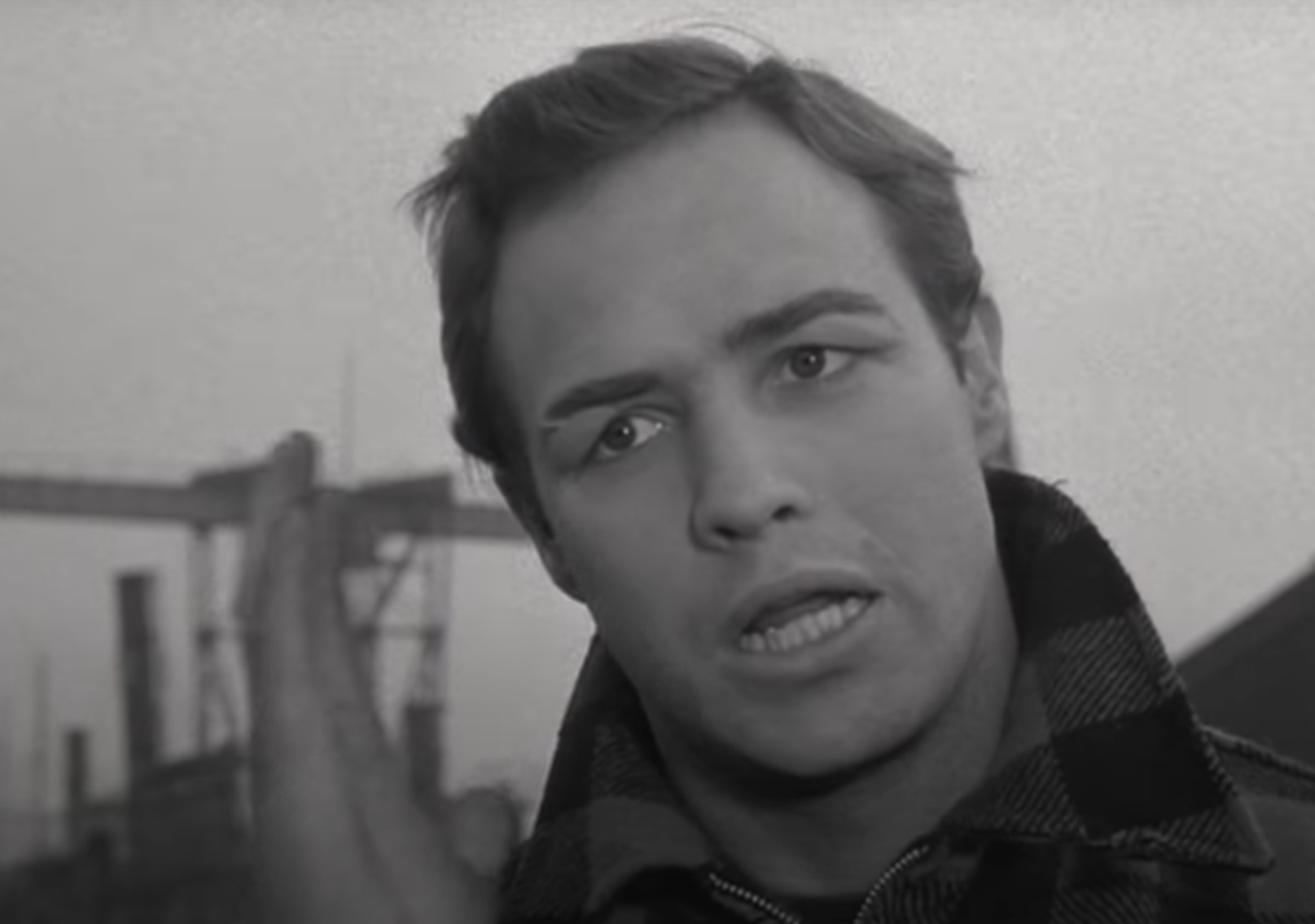
My favorite is the On The Waterfront moment in which Marlon Brando‘s Terry confesses to Eva Marie Saint‘s Edie that he was unwittingly complicit in her brother’s murder. Because it’s not just an admission but a plea for forgiveness with Terry insisting it wasn’t his idea to kill Joey or anyone else (“I swear to God, Edie!”), and that he thought “they was just gonna lean on him a little,” as he says to his brother Charlie (Rod Steiger) in the film’s second scene.

I’m mentioned the Mississippi Burning moment between Gene Hackman and Frances McDormand a couple of times before. It’s arguably the most powerful moment in this racially charged 1988 thriller, which is based on the infamous 1964 murder of three civil-rights workers. A third-act fantasy spin was the main criticism when it opened, but it emotionally satisfied and that’s what counts.

There’s also that Foreign Correspondent moment inside the Butch windmill when Joel McCrea can hear the murmur of bad-guy voices but not what’s being said. Others?


Cary Grant, Leo G. Carroll during the Chicago / Midway airport confession scene.

“Back Off, Godzilla!”

Before I took my first tentative stabs at small-time Hollywood journalism in ’77 and ’78, I was a timid, floundering wannabe…a “secret genius” living in Santa Monica, suffering from occasional nightmares and wondering where and what the hell.

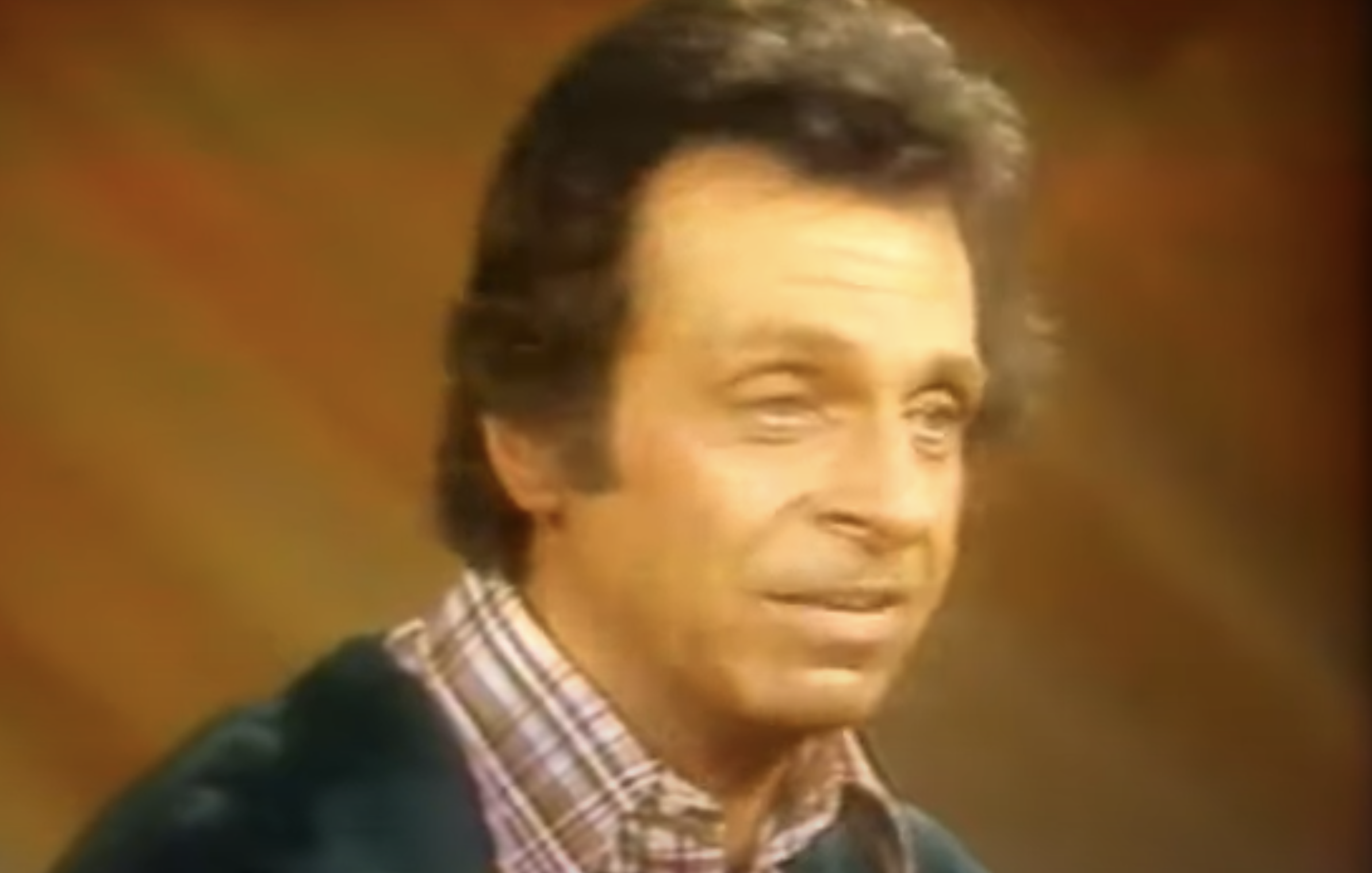
Right around that time or more precisely in December of ’74, I was an audience member during a taping of Both Sides Now, a short-lived, Los Angeles-based impromptu debate show that was co-hosted by the conservative-minded George Putnam and the iconcoclastic Mort Sahl.

Sahl, whom I finally met and chatted with at the Beverly Glen shopping area in ’02, had been one of my all-time favorite comedians. He broke ground for an entire generation of hip, social-critique comics who began to punch through in the ’70s and ’80s (George Carlin, Bill Maher, etc.).

The Both Sides Now guest that night was screenwriter Robert Kaufman (Getting Straight, Love At First Bite). Kaufman’s latest screenwriting effort, the Richard Rush-directed Freebie and the Bean, had just opened that month. I wasn’t a fan of the chaotic action-comedy tone and so when the q & a portion began I stood up and expressed this opinion. Kaufman pushed back rather curtly, initially by calling me inarticulate.

The irony is that in early October of ‘82 Kaufman and Ted Kotcheff, who was then doing press interviews (or who had recently done them) for First Blood…I met Kaufman and Kotcheff at Joe Allen one night, and they were giving me a big rundown on the convoluted pre-production and production experience of Tootsie.

Kaufman had been one of the Tootsie writers (along with Don McGuire, Murray Schisgal, Elaine May, director Dick Richards) and the stories were fairly wild, or certainly seemed that way at the time. The anecdotes were hilarious…a window into a flavorful and frenzied development process.

In my subsequent, highly entertaining discussions with Kaufman about Tootsie I naturally never raised the eight-year-old topic of our mild little Freebie and the Bean contretemps…a mere blip on Kaufman’s mid ‘70s radar screen.

“It Wasn’t A Comedy,” posted on 4.21.20: In the late fall of ’82 I wrote a big, laborious piece for The Film Journal (which I was managing editor of) about the making of Tootsie and particularly the then-astounding notion that a present-day New York comedy about an actor who can’t get a job could cost $21 million, which at the time was way above the norm.

I talked to several creative participants about it, including cowriters Robert Kaufman, Murray Schisgal and director Sydney Pollack. At at the end of the writing process I was fairly sick of the whole saga.

But I never heard this particular story from Dustin Hoffman before today.

The one Tootsie element I didn’t care for (no offense) was Dave Grusin‘s music. Too peppy, too coy, too cute-sounding, And I wasn’t a huge fan of Teri Garr‘s performance. But I loved the supporting turns by Pollack (as Hoffman’s agent), Charles Durning, Jessica Lange, Doris Belack, Bill Murray and Dabney Coleman.

Read more

Death In A Strip Club

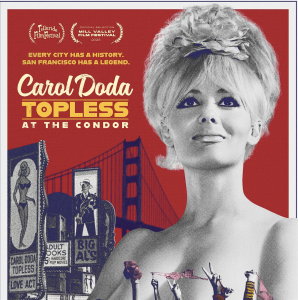
I’ll soon be catching a 3.22 screening of Jonathan Parker and Marlo McKenzie‘s Carol Doda Topless At The Condor. Due respect to the life and legend of the late Carol Doda (i.e., the first-ever topless club dancer), but I’m mostly interested in the bizarre death of Condor Club manager Jimmy Ferrozzo. It happened right around Thanksgiving of 1983. The “beefy” 40-year-old Ferrozzo was crushed to death by a white, hydraulically-lifted piano while he was doing the deed with one of the club’s strippers, 23 year-old Theresa Hill.

Read more

Obviously Missed A Few

This isn’t a definitive, comprehensive correction of yesterday’s “Eliminating 2024 Best Picgture Contenders” piece, but just a post that adds a few titles. The idea, remember, was to differentiate between films that might have a shot at being in the late ’24 and early ’25 Oscar race, and those that obviously haven’t a prayer.

I didn’t mention Jon WattsWolfs, a George Clooney-Brad Pitt “psychological thriller” of some kind. Why they’ve gone with the non-grammatical Wolfs rather than Wolves is anyone’s guess.

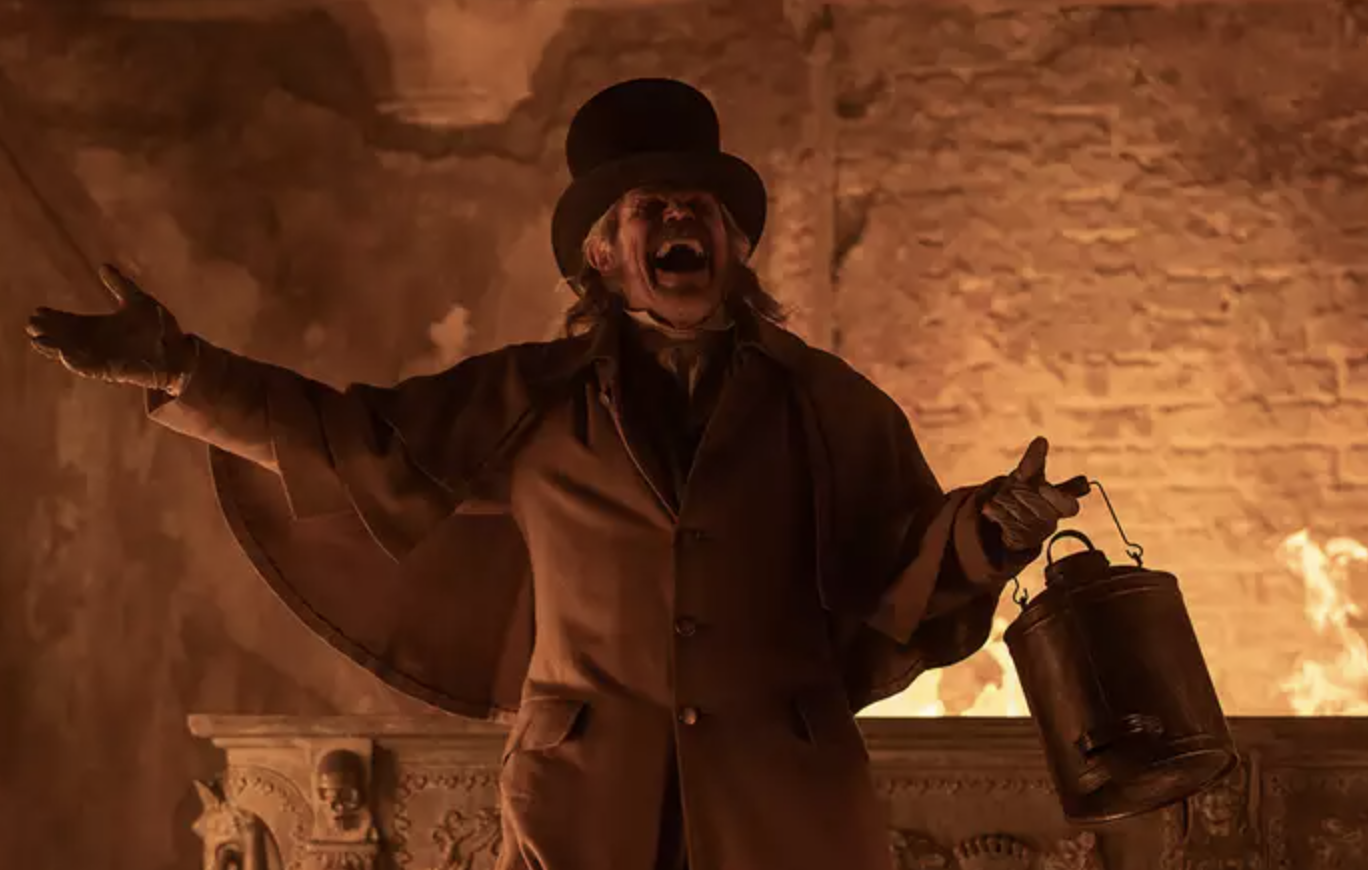
Nor did I mention Robert EggersNosferatu (how many damn Dracula films
have I sat through?…how many more to come?), Justin Kurzel’s The Order (white supremacist baddies),
Duke Johnson’s The Actor,
Ron Howard’s <em>Eden and Richard Linklater’s Nouvelle Vague (currently filming).

I should have included Alex Garland‘s Civil War as a possible Best Picture contender. Obviously my error but as I mentioned a couple of days ago that there’s no trusting SXSW buzz.

I also should have mentioned Terrence Malick’s The Way of the Wind but any film that’s been in post since 2019 has to be regarded askance or at least with a degree of suspicion.

Speaking as a huge fan of Audrey Diwan’s Happening, her forthcoming Emmanuelle…well, who knows but it appears to be a sapphic variation on Just Jaeckin’s 1974 original, which was primarily about softcore titillation.

Clint Eastwood’s Juror No. 2 also should have been mentioned; ditto Luca Guadagnino’s Queer, a script version of which I’ve been sent and have read about half of.

When Chris Halverson had the temerity to suggest that David Leitch‘s The Fall Guy might become this year’s Barbie or Top Gun, I responded as follows: “You’re farting around by even mentioning this kind of flotsam in an award-season context. You can totally, absolutely forget The Fall Guy, obviously a wank-off, jizz-whiz distraction, in any sort of award-season context. Leitch (John Wick, Bullet Train) is clearly a soul-less popcorn exploiter who’s only in it for the money and the cheap highs.”

I was need to repeat this passage: “Paul Mescal and Barry Keoghan are problematic, anti-charismatic actors who alienate as much as attract. At least from HE’s perspective. In my view they are human torpedoes with a bizarre gyroscopic mechanism that causes the cylindrical device to do a 180 once fired and head right back towards the launching submarine. Beware of Keoghan and Mescal!”

The best HE comment about Kevin Costner’s Horizon came from Naido: “Costner is more woke than people remember — he’s just not a post-2016 obsessive. I think his movie will be 10-years-ago-liberal, which will sail by in 2024 though it would’ve taken a beating from 2016-2022. Winds are changing just a bit.”

“Complete Unknown” Chickenshit Nose Strategy

Back in the bad old 20th Century “hook nose”, a perjorative term about Jews, was used here and there. Wikipedia has a “Jewish nose” page, and the first sentence reads as follows: “The Jewish nose, or the Jew’s nose, is an antisemitic ethnic stereotype, referring to a hooked nose with a convex nasal bridge and a downward turn of the tip of the nose.”

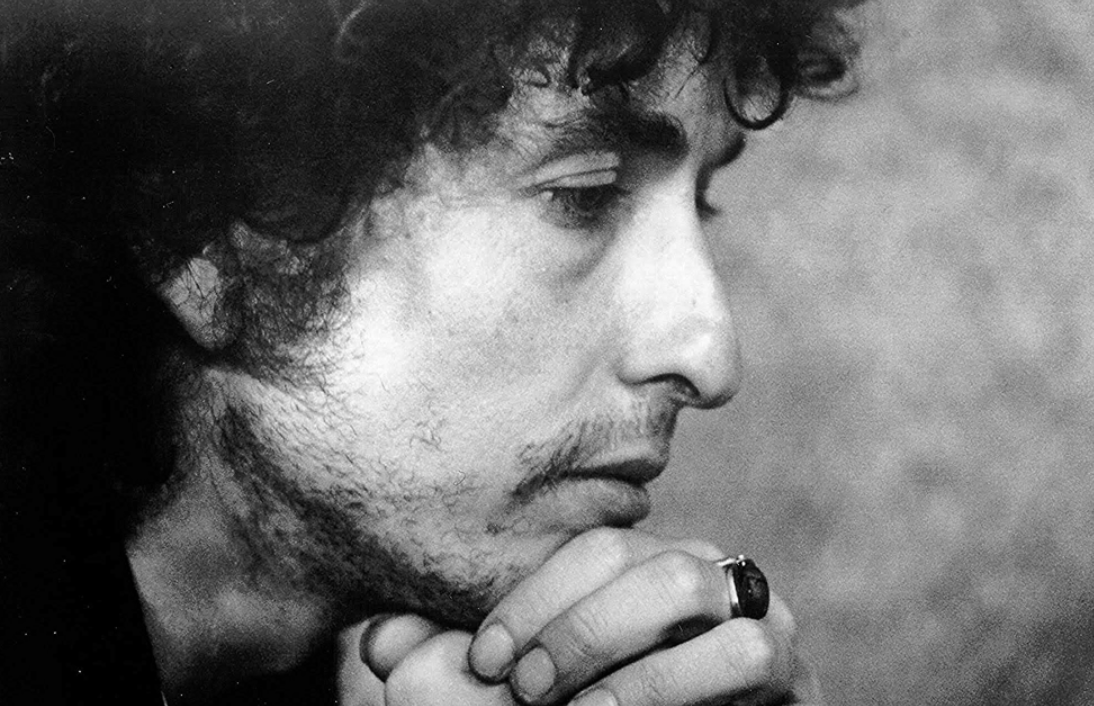
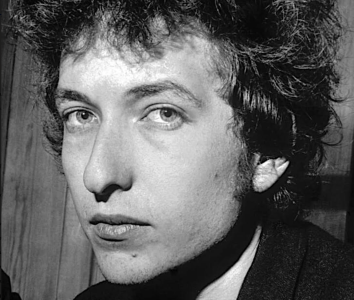
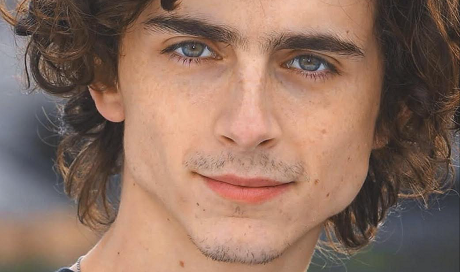
And yet some people of various Middle Eastern tribes (Hebrew, Arab and others) do have hook noses — they’re an anatomical fact of life. And one of them, inescapably and undeniably, belongs to Bob Dylan. Look at the two photos below — there’s no debate.

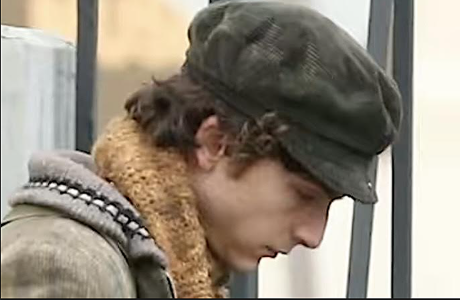
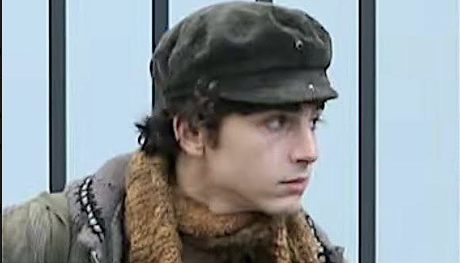
And yet the fake (i.e., prosthetic) Dylan nose currently being worn by Timothee Chalamet as the filming of James Mangold‘s A Complete Unknown gets underway, is clearly a modified Dylan schnozz — i.e., definitely not hooky.

Why is it an “almost” Dylan nose rather an actual, accurate one? Because Complete Unknown director James Mangold is terified of igniting the same kind of negative social media reaction that slightly tarnished Bradley Cooper‘s Maestro, despite the fact that his Leonard Bernstein prosthetic nose looked totally fine in the film — it just seemed a wee bit extreme in a single black-and-white photo.

Mangold is still taking no chances. He undoubtedly told his makeup department to err on the side of caution. They’ve apparently succeeded.

A Complete Unknown is a ’60s biopic about Dylan transitioning from acoustic folk to electric rock. It costars Elle Fanning, Edward Norton, Nick Offerman, Monica Barbaro and Boyd Holbrook.

>

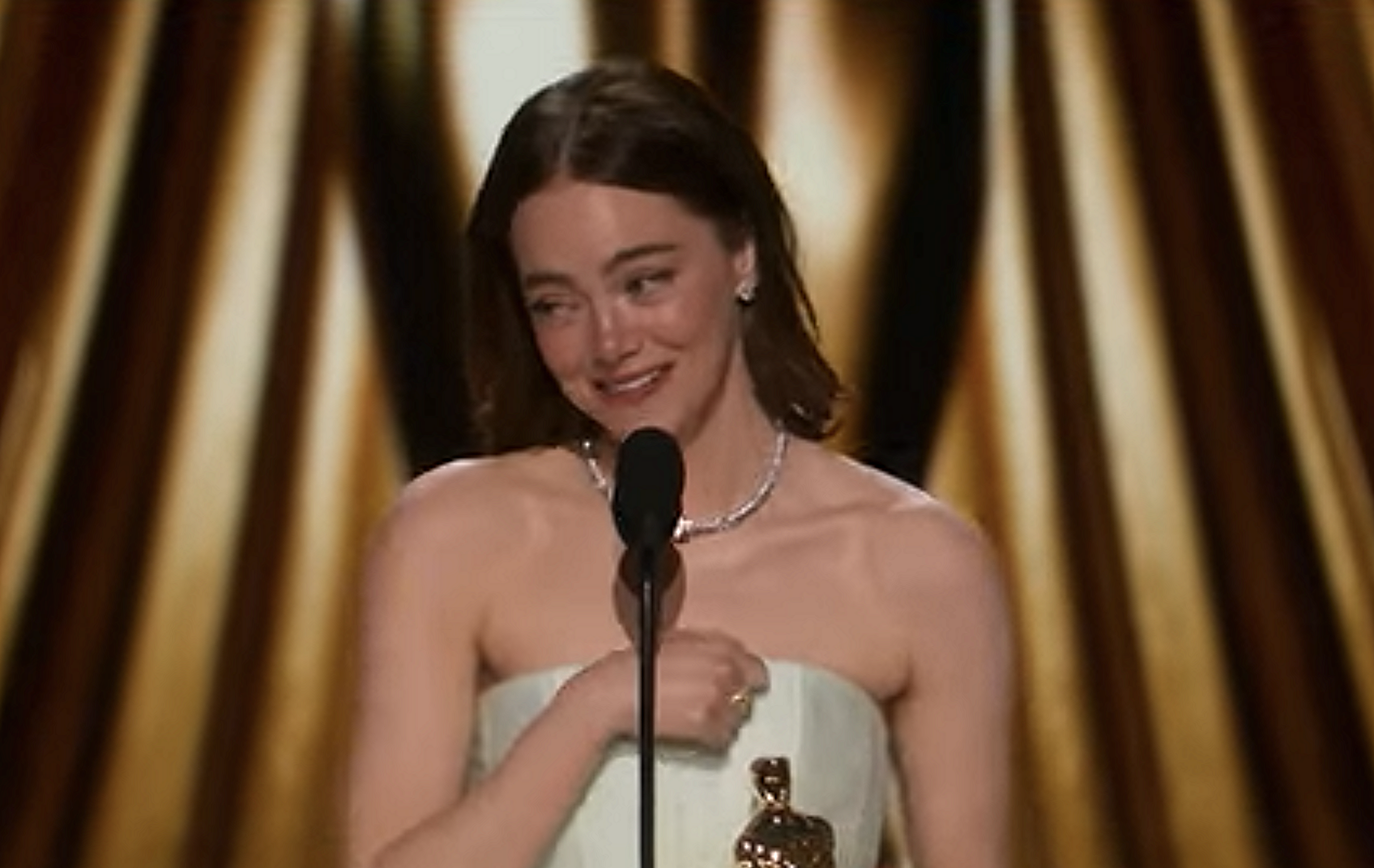
The Only Folks Who Were Glum When Emma Won

…were the wokesters (i.e., those who feel that the celebration of this or that non-white or non-straight identity is more important than the cherishing of art and craft and soul from whichever contender).

Mid ’70s Jailbirds

John Cena‘s recent nude moment on the Oscar stage reminided me of something I’ve never mentioned and had almost forgotten about.

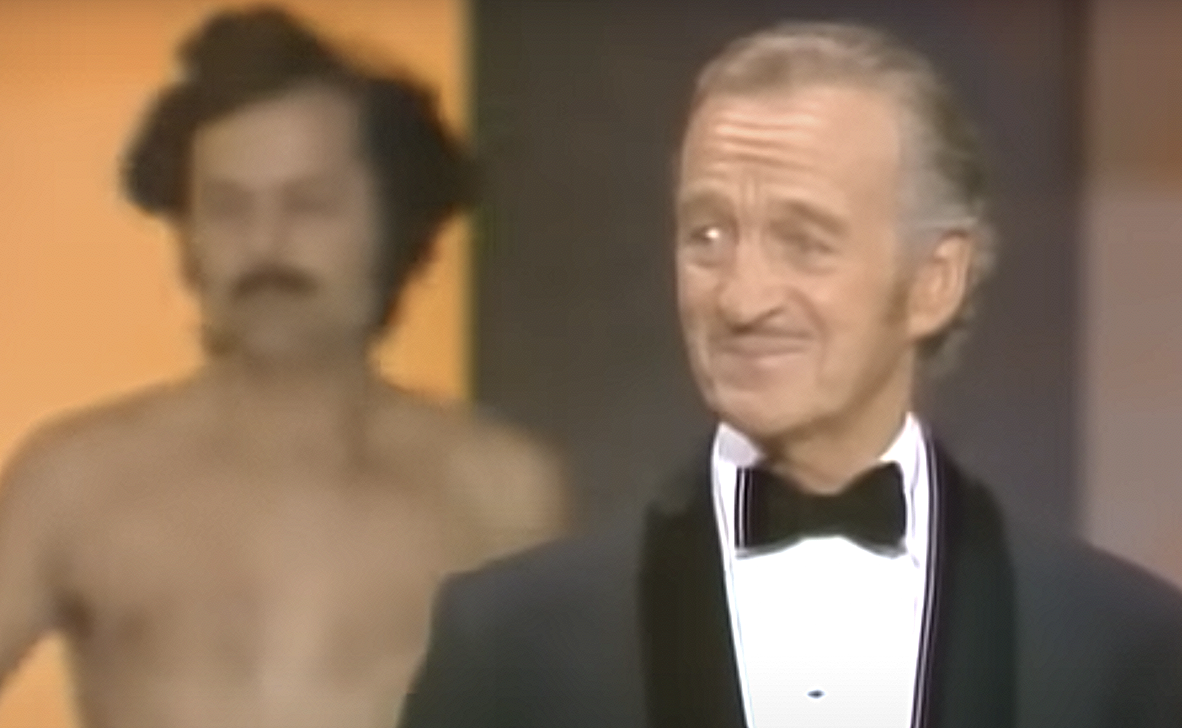
I’ve written before about having servied four days in L.A. County Jail, for the crime of having failed to pay 27 parking tickets. It happened sometime in the late spring or early summer of ’74, and it was during the initial processing (when they create your identity card, make you take a shower and give you the orange jumpsuit and your bedding) that I noticed that the Oscar streaker guy, Robert Opel, was also being processed.

Opel’s photo had been in the papers; he’d also been interviewed by local TV news shows so the recognition was instant. Did I go over and strike up a conversation? Nope — wimped out. But it was him, all right.

Opel was born in 1939 in East Orange, New Jersey. After graduating from a Pittsburgh-area college he allegedly worked as a speechwriter for California Governor Ronald Reagan.

Opel was teaching for the Los Angeles Unified School District at the time of the Oscar streaking incident, and was canned because of that.

Opel was mostly gay with a little bi action on the side. After moving from L.A. to San Francisco during the mid ’70s, he opened Fey-Way Studios, a gallery of gay male art, at 1287 Howard Street. The gallery helped bring such erotic gay artists as Tom of Finland and Robert Mapplethorpe to national attention. But in the mid ’79 he was in a relationship with Camille O’Grady.

At age 39 Opel was shot to death at his San Francisco studio — it happened on July 7, 1979. His killer was Maurice Keenan, a thief who is still doing time for the crime.

There’s a documentary about Opel on YouTube. It’s called Uncle Bob, directed by Opel’s nephew and namesake.

Read more

Heavenly Monochrome

Robert Elswit‘s black-and-white lensing of Steven Zaillian‘s Ripley (Netflix, 4.4, eight episodes) is drop-dead beautiful — that much is certain.

Pic is based on Patricia Highsmith‘s “The Talented Mr. Ripley” (’55) and is obviously a handsomely stylish re-fresh of Anthony Minghella’s 1999 theatrical film version.

The Minghella was set in 1958 (i.e., two years before the release of Rene Clement‘s Purple Noon). The Zallian newbie is set in “the ’60s,” according to the Wiki page.

Scorsese’s Seventh Best Film

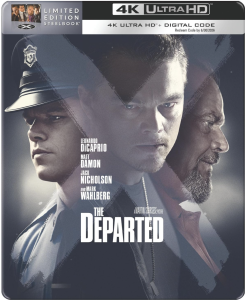
Martin Scorsese‘s The Departed is now close to 18 years old. Ranking ahead on the Scorsese hot list are Goodfellas, Mean Streets, Taxi Driver, Raging Bull, The Wolf of Wall Street and The Last Temptation of Christ.

So The Departed ranks seventh, and that ain’t hay.

A new 4K Bluray of The Departed pops on 4.23.

And I’ll repeat my argument with two Jack Nicholson/”Frank Costello” lines. One, Costello describing Rome as a place with “nicer wops” but “no pizza.” I’ve visited Rome five or six times and pizza joints are everywhere. And two, repeating that cliche about Chinese laundry guys saying “no tickee, no laundry.” Except the line is “no tickee, no washee.”

Read more

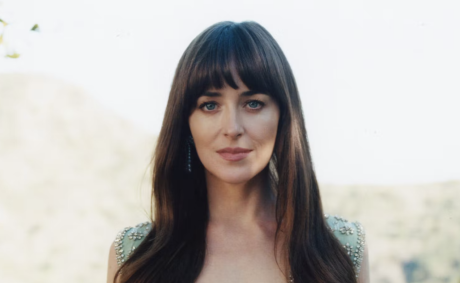
Respect for Dakota Johnson

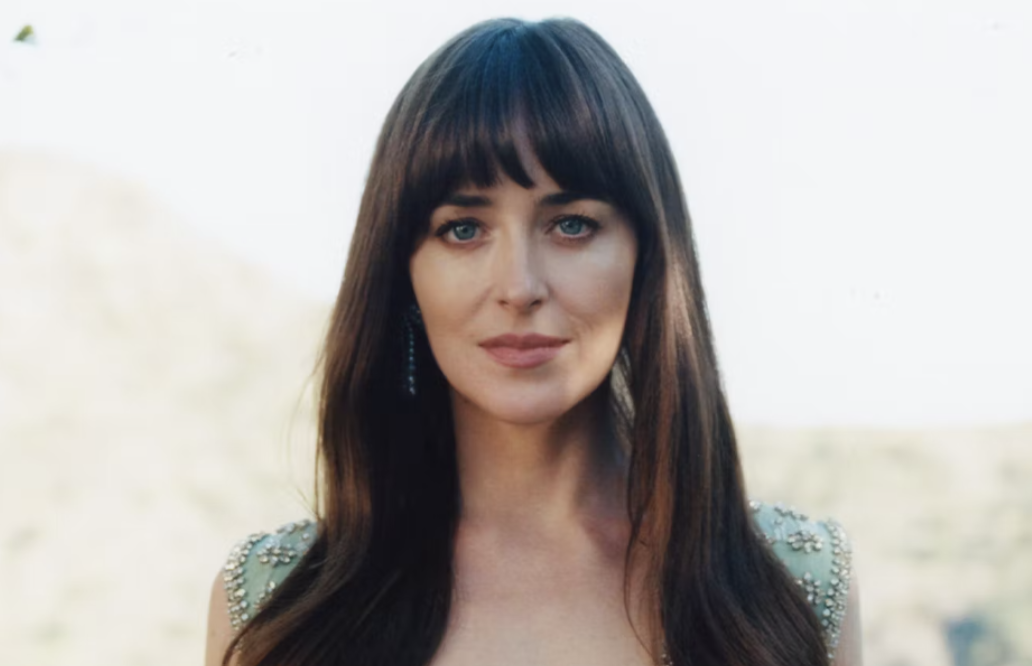
Given the widespread loathing and the massive flop rejection of Madame Web, Dakota Johnson naturally has to distance herself from it (“who, me?) and more or less throw the carcass under the bus. Hence her chat with Bustle‘s Charlotte Owen (3.5.24):

“[Making Madame Web] was definitely an experience for me. I had never done anything like it before. I probably will never do anything like it again, because I don’t make sense in that world.” [Translation: ‘Nobody believed I was supergirl material….I look too passive or spacey or something.”]

“And I know that now. But sometimes in this industry, you sign on to something, and it’s one thing and then as you’re making it, it becomes a completely different thing, and you’re like, ‘Wait, what?’ But it was a real learning experience, and of course it’s not nice to be a part of something that’s ripped to shreds, but I can’t say that I don’t understand.

“It’s so hard to get movies made, and in these big movies that get made — and it’s even starting to happen with the little ones, which is what’s really freaking me out — decisions are being made by committees, and art does not do well when it’s made by committee. Films are made by a filmmaker and a team of artists around them. You cannot make art based on numbers and algorithms.

“My feeling has been for a long time that audiences are extremely smart, and executives have started to believe that they’re not. Audiences will always be able to sniff out bullshit. Even if films start to be made with AI, humans aren’t going to fucking want to see those.”