A Coward’s Approach

Roughly four months ago I was so conflicted and distressed about my negative reaction to Luca Guadagnino‘s Suspiria that I chickened out by not posting on Hollywood Elsewhere classic. Instead I hid it behind the HE Plus paywall. I wouldn’t blame Luca if he resented me for writing what I wrote (which was actually a chickenshit equivocation) but if I don’t stick to my guns when the writing of a review feels awkward or painful, I’m not worth anything as a critic or columnist.

Here’s the half-assed review that I didn’t have the balls to post when Suspiria was about to open:

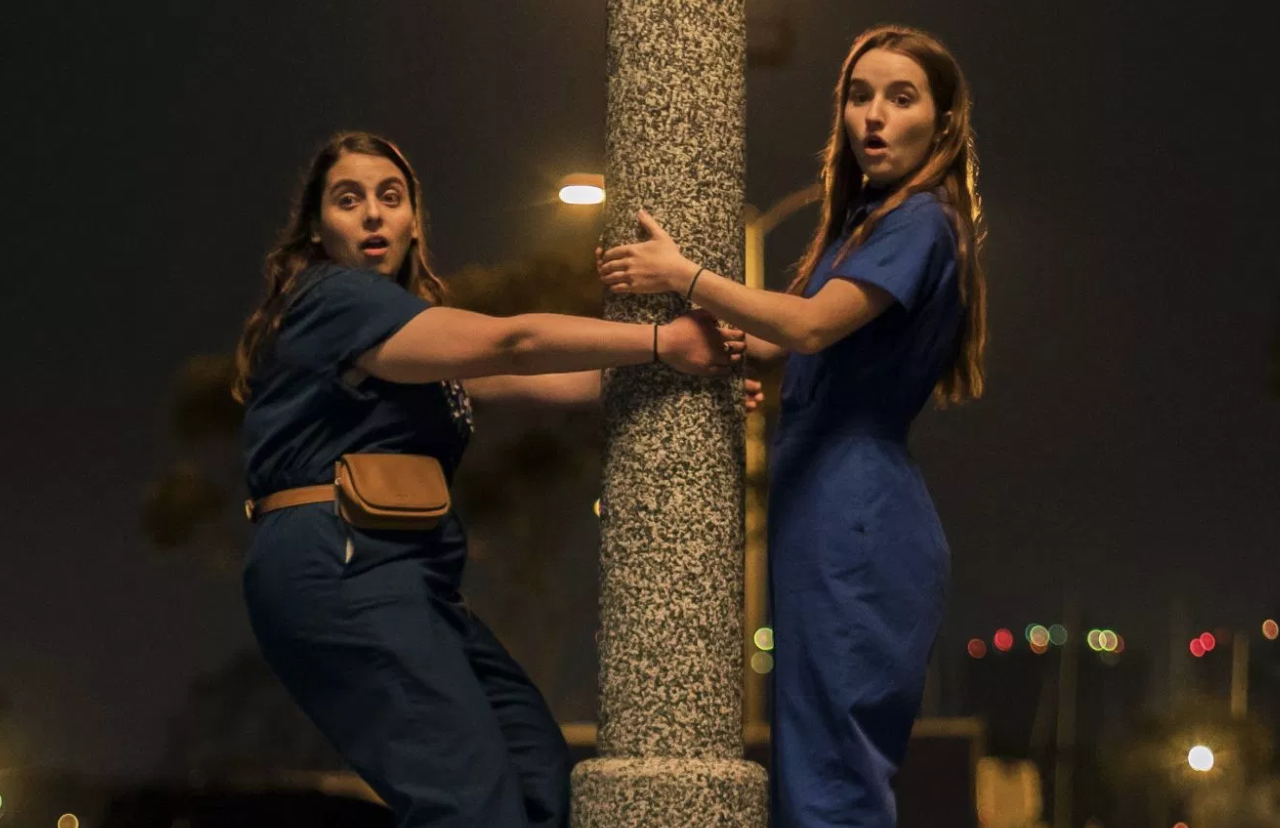
Luca Guadagnino‘s Suspiria (Amazon, 10.26) has brought distress and left me glum and conflicted. I’m torn by my admiration and affection for a great filmmaker and a wonderful human being and…well, my troubled responses to this strange detour film. It’s left me in a bad, self-doubting place, and as wimpy as this sounds I think my reactions to Suspiria are probably best left alone.

Am I chickening out? Yes, I am — sorry. But this is what happens when you know a guy who’s made a striking, complex film that’s put you in a weird place.

When I think of Luca I think of his kindness and spiritual warmth, his wonderful Italian humor, his home town of Crema, distressed palazzo interior design, empathy, generosity, sincerity, Call Me By Your Name, A Bigger Splash, I Am Love, Jonathan Demme, Northern Africa, that wonderful lunch we shared at that cliffside restaurant in La Spezia and a joyful dinner we had at a Japanese restaurant in Los Angeles about a year ago. And I’d rather just focus on all that stuff for now.

Okay, I’ll share a few thoughts about Suspiria but just a few dots and jabs.

Suspiria is set in 1977, the year that Dario Argento’s original came out. The subject is a coven of venal, sadistic, cold-eyed witches up to no good in a shadowy corner of Berlin, and particularly inside a grayish, greenish, ultra-gloomy ballet studio.

It’s a movie about chills, cruelty, brutality, sadism and, for the requisite grand finale, the raising of a filthy, thorn-fingered devil or demon (a brother or a cousin of the Rosemary’s Baby devil who impregnated Mia Farrow).  

It has something to do with the demons and rank nightmares that are buried within the German psyche — World War II, concentration camps, ‘70s terrorism (Baader-Meinhof gang). What a coven of ballet-school witches have to do with Germany’s dark history, I have yet to fully understand.  Maybe nothing.  Maybe the witches and Germany’s ugly past are simply co-existing.  

Read more

Buchanan’s Bubble

In a last-minute 2019 Oscars prediction piece, N.Y. Times carpetbagger Kyle Buchanan is betting on two trophies for Alfonso Cuaron‘s Roma — Best Picture and Foreign Language Feature.

Buchanan may be correct about Roma winning the Best Picture Oscar. 60% or 65% of my own insect antennae signals are telling me the same thing. First and foremost is the fact that Roma is a perfectly crafted, world-class art film. I’ve also stated that Roma is obviously in synch with current p.c. aspirations and representation sentiments among progressive-minded Academy voters, and that voters will most likely feel better the next morning if they give the prize to Cuaron’s film, etc. Plus it boasts the inclusion-and-representation symbolism of Yalitza Aparacio in the lead role.

What Buchanan apparently isn’t taking into consideration is the fact that he, Kyle Buchanan, lives, works, schmoozes, networks and chit-chats inside the blase liberal Hollywood cool-cat social bubble that everyone else is inhabiting (Hollywood Elsewhere included), and that sometimes the only way to really see through the Oscar confetti is to step outside that bubble and become Steppenwolf.

Here’s how Buchanan assesses the Best Foreign Language Feature situation a la Sunday night:

“This is one of the strongest foreign-film lineups in recent memory, and in any other year, all of these movies would have the profile of a winner, including the Palme d’Or winner Shoplifters, Lebanon’s moving Capernaum and Cold War and Never Look Away, which both scored cinematography nominations as well. (Cold War even cracked the race for best director.) Still, in a year when Roma could make history as the first foreign-language film to win best picture, it would seem outrageous for the movie to miss this prize on its path to victory.”

With Roma possibly fated to win the Best Picture Oscar, how the hell would be it be “outrageous” if it failed to win the Best Foreign Language Feature Oscar? Why does it have to win both Oscars? Especially when so many have been swooning over Cold War, which should, I feel, win the Foreign Language Oscar in a walk?

A Pretty…No, A Very Good Year

Steve Martin and Alec Baldwin brought a playful ironic touch to their hosting duties. The 2010 Oscars were, of course, mainly about the triumph of Kathryn Bigelow and The Hurt Locker over James Cameron and Avatar. And about Joel and Ethan Coen‘s brilliant A Serious Man not winning anything. And about Jeff Bridges winning the Best Actor Oscar for playing a nicotine-fingered, beer-bellied drunk in Crazy Heart (in a fair world George Clooney would have won for Up In The Air). And The Blind Side‘s Sandra Bullock winning for Best Actress when it really should have been Carey Mulligan for An Education).

Read more

At Long Last

I respected Get Out in a limited sort of way. Over and over I called it a racially-stamped riff on Ira Levin‘s The Stepford Wives — no more and no less. My basic reaction was “it’s good enough but people need to calm down, especially those drooling lunatics who are claiming with a straight face that it should win the Best Picture Oscar….good God.”

That all happened a year ago. Seems weird in hindsight, no? Now it’s early ’19 and in the wake of those Us trailers and the newbie for the forthcoming CBS All Access Twilight Zone, people are starting to walk back their Jordan Peele enthusiasm. To some extent at least. I can sense it with my insect antennae. I think Josh Hadley’s anti-Peele YouTube rant overdoes it, but after being kicked, jeered and spat upon by the Get Out crazies it’s a relief to hear someone go 100% negative without any hesitation or qualms.

Read more

Son of Honest Failure

I couldn’t stand Martin Scorsese‘s New York, New York when I caught it in mid-July 1977. It made me go numb. I’d fallen deeply in love with Scorsese and Robert DeNiro after seeing Mean Streets three or four years earlier, but New York New York was so bad that I thought they’d both done serious harm to their careers.

How could two gifted guys who understood the urgent, nocturnal culture of Manhattan and all the undercurrents that propel that…how did they manage to make such a busy, agitated, synthetic downer?

Everyone understood what Scorsese was going for — a dysfunctional love story within a deliberately glossy, sound-stagey tribute to flamboyant big-studio musicals of the ’40s and early ’50s.

There were no difficulties with Liza Minnelli‘s performance as gifted singer Francine Evans, and certainly none with the music or production design. The problem was that Robert DeNiro Jimmy Doyle, a saxophonist, is one of the most infuriating assholes in film history.

The other problem is that New York, New York was a cocaine movie — actually one of the most infamous coke films ever made. It’s all there, chapter and verse, in Peter Biskind‘s “Easy Riders, Raging Bulls.”

Posted almost exactly nine years ago: “HE reader Bobby Rivers has pointed out that during last night’s Martin Scorsese montage before he accepted his Golden Globe life achievement award, there was no clip from New York, New York, even though the band played the Kander & Ebb title tune as Scorsese walked to the stage.

“The reason, of course, is that very few people feel much affection for New York, New York.

It has, however, one electric scene — i.e., when De Niro is physically thrown out of a club that Minnelli is performing in, and he kicks out several light bulbs adorning the entrance way as he’s manhandled out by the manager and a bouncer. I would never buy the Bluray, but I would stream this calamity (which Pauline Kael called “an honest failure”) just to watch this bit again.

There’s a piece of it in the above trailer — it begins at 1:55.

“Gunga Din” Ghost Town

34 degrees in Lone Pine — good morning. The snow-covered Sierra Nevadas loom in the near distance. The air is intoxicating but a bit thin, and obviously nippy. I’m looking around for a nice, well-heated breakfast diner as we speak.

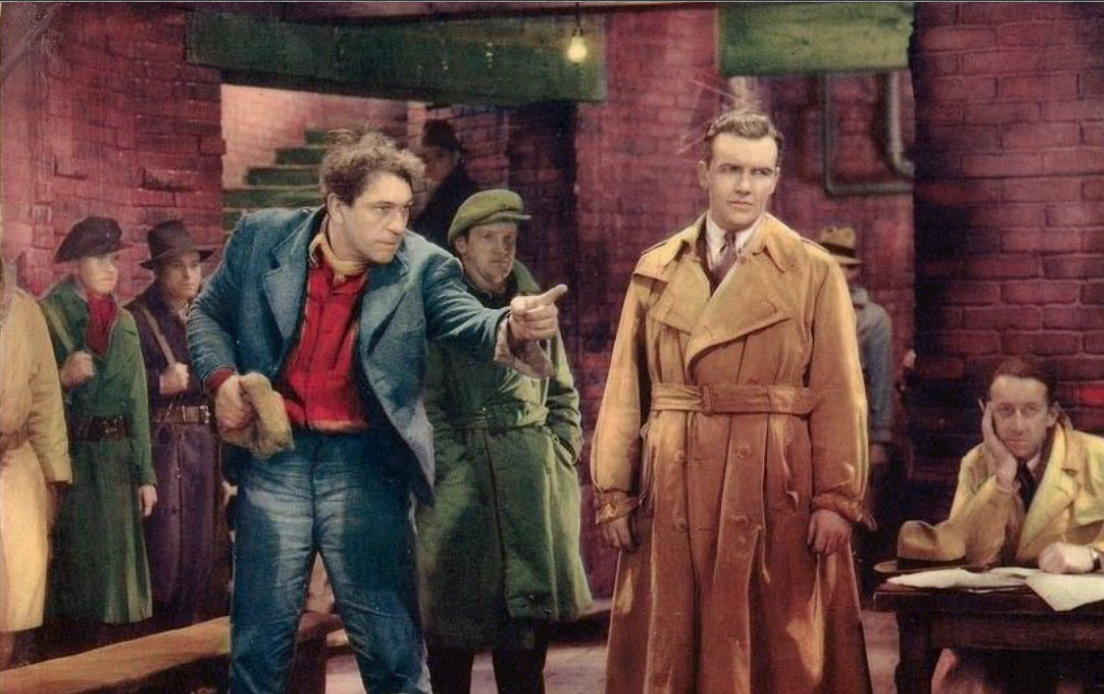
George StevensGunga Din, which no self-respecting Millennial or GenZ-er gives a shit about, shot its outdoor footage in the Alabama Hills region, about 35 or 40 minutes away. Above-the-title talent (Stevens, Victor McLaglen, Cary Grant, Sam Jaffe, Douglas Fairbanks, Jr., Eduardo Cianelli, Joan Fontaine) stayed in the original Dow Villa, which was built in the early 1920s. But production company grunts and extras slept in a tent camp and used temporary showers and latrines. I don’t know how long the Lone Pine shoot lasted, but the whole film took just shy of four months — 6.24.38 to 10.19.38.

Gunga Din opened on 2.17.39, when the late William Goldman, who wrote so passionately about Jaffe’s “stupid courage” during the Khyber Pass action finale, was but a lad of seven. It grossed $2,807,000 and ranked #10 on the top-grossing films of 1939, but it cost $1,915,000 to complete and therefore, by RKO Radio Pictures bookkeeping standards, recorded a loss of $193K.

A Hollywood Elsewhere Gunga Din riff that I posted on 12.24.17.

Here’s a piece about Eduardo Cianelli‘s “guru” character, posted four years ago (2.22.15) and titled “Among Filmdom’s Wisest and Most Elegant Villains“:

“In the legendary Gunga Din, Eduardo Ciannelli‘s fanatical leader of the Thug rebellion is called a ‘tormenting fiend’ by Douglas Fairbanks, Jr. and is made to seem demonic in that famously lighted shot by dp Joseph H. August. But he’s easily the most principled, eloquent and courageous man in the film. Not to mention the most highly educated.

“And yet there’s an unlikely scene inside the temple that hinges on Ciannelli’s guru being unable to read English, despite his Oxford don bearing and his vast knowledge of world history.

Read more

Rat Pack Casino

Sometime back in the ’90s or early aughts Las Vegas Review-Journal film and culture writer Carol Cling floated the idea of an old-fashioned Rat Pack casino on the Strip — a time-trip experience that would deliver the ’50s design, atmosphere and attitude of the Sands, which was located at 3355 Las Vegas Blvd (where the Venetian stands today). Old-fashioned coin slot machines, for example — the kind that would take nickels, quarters, 50-cent pieces and silver dollars, and when someone would win the bells and whistles would sound as the coins clattered onto those metal trays…great vibe!

Back in the days of Cinevegas I suggested a space-aliens casino — a kind of Star Wars meets Alien meets Forbidden Planet meets James Arness in The Thing meets Mars Attacks…flying saucers hovering above the main entrance, booze-sipping monsters at the cantina bar, concierge and hotel staff with green-sparkly faces and Ray Walston-styled insect antennae sticking out of their heads…a casino from another planet.

Sometimes Images Say It Better

Scott Feinberg‘s 2.15 Hollywood Reporter essay about what went wrong with the awards campaign for A Star Is Born is deftly, in some ways cautiously phrased. He doesn’t even mention the overbearing, way-too-early celebrity endorsements (Sean Penn, Robert DeNiro, et. al.), and he’s somewhat oblique in the matter of Variety‘s Kris Tapley (“Others, just as problematically, reacted to ASIB‘s first screenings with predictions of historic Oscar success — which, shortly thereafter, made its loss of Toronto’s audience award to Green Book feel like a major disappointment”). But Jonathan Allardyce‘s illustration is perfect. I’d pay good money to see Tapley or Penn added.


Hollywood Reporter illustration by Jonathan Allardyce. But he didn’t go far enough!

To Serve A Cat

When I buy cat food, I try to imagine what brands and flavors I’d want to eat if I were a cat. That means a lot of dry food — chicken-flavored pellets and cereal-like munchies. As far as “wet” foods are concerned, I decide based on how the various Fancy Feast servings smell when I dish them onto the cat plate. That automatically means no pate-like servings. I don’t like grilled cat dinners either. I only like the sliced and flaked kind.

Note: Anya, our two-year-old Siamese, eats a variety of fruits and vegetables — tomatoes, avocados, watermelon — as well as yogurt, cheese, toasted bread, sour cream. She doesn’t like bananas but she likes clam soup. And vanilla ice cream.

Read more

“Cold War” Surge Is On

Click here to skip the Sink In

You can’t watch Cold War and not fall in love with how it looks. If you have the slightest respect for what goes into exquisite composition, you can’t help but succumb. Those gleaming, whistle-clean silvery tones, Łukasz Żal‘s somewhat unusual bottom-heavy framings, that feeling of being in a repressive but exotic realm. It’s easily one of the most beautifully crafted films of the 21st Century, and yet it never feels ponderous or self-inflating or anything less than perfectly centered.

And now, 12 days before Oscar night, the winds seem to be favoring Cold War. Apparently. Seemingly.

The fact that Żal’s lensing took the top prize at last weekend’s ASC (American Society of Cinematographers) awards is highly significant. Think of it…a Polish-made, black-and-white, boxy-shaped smarthouse film beat the commanding palettes of Roma, A Star is Born, First Man and The Favourite.

Call it a late-inning surge, and I’m starting to think Cold War‘s momentum may spill over into the foreign language realm. Maybe.

Read more