For three days in early October 2009 I visited the set of Rod Lurie‘s Straw Dogs in Shreveport, Louisiana. The time I spent chatting with the cast and crew and watching a couple of scenes being shot was interesting and occasionally fascinating. I was mezzo-mezzo with the film that resulted (no one thought it approached the level of Sam Peckinpah’s 1971 original) but we’ll let that go for now.
I actually don’t know why I’m mentioning Lurie or the film because the defining event of my Shreveport visit was hooking up with a 39 year-old blonde from Florida. Let’s call her Melissa.
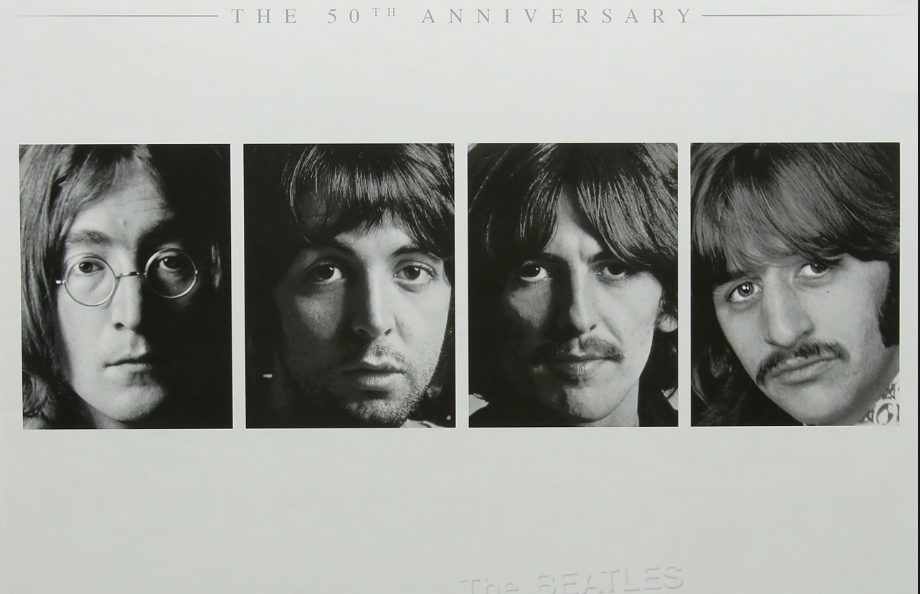
On 11.9 a six-CD deluxe re-issue of the Beatles’ White Album will go on sale. Boilerplate: “The album’s 30 tracks are newly mixed by producer Giles Martin and mix engineer Sam Okell in stereo and 5.1 surround audio, joined by 27 early acoustic demos and 50 session takes, most of which are previously unreleased in any form.”
The late George Martin once remarked that there were too many sub-par tracks on the White Album, and that it would have been a better package if the chaff had been removed. I agree with him. The White Album is an angry, jagged, bloated thing — constantly arguing with itself and indeed the very concept of unity. It’s full of ego wars and me-me-me.
Here’s the HE version of a better, pruned-down version — a single disc, 14 tracks, and in this order:
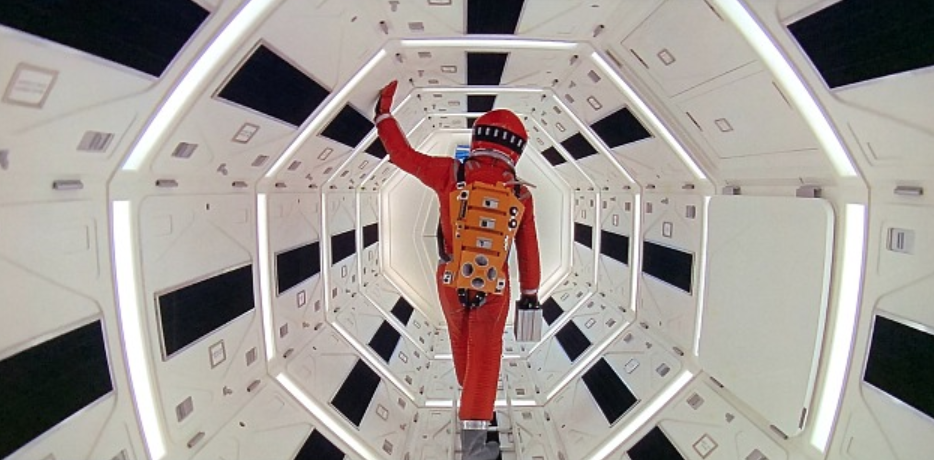
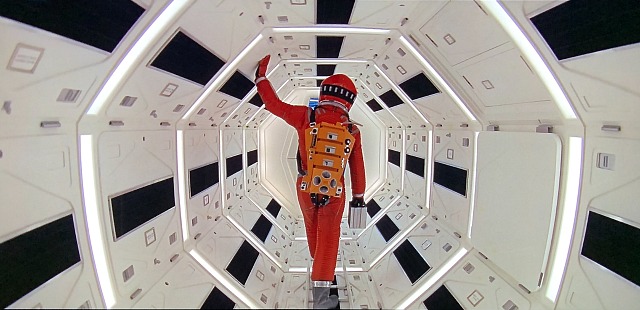
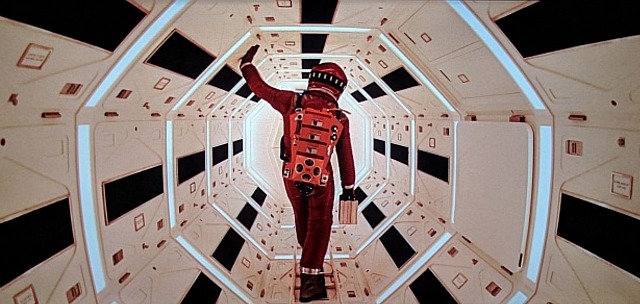
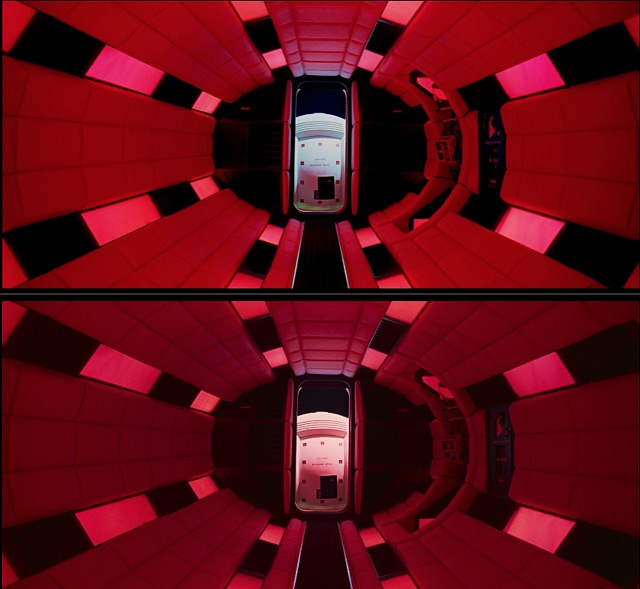
I can report directly that on the new 4K 2001 disc, the Discovery tunnel wall is indeed a kind of light rose-beige color. And yet the tunnel in the 2007 2001 Bluray, which I looked at this morning, is straight white. And I’m doubting the rose-beige thing. As I wrote a few days ago, “After watching 2001 in theatres at least 14 or 15 times over the last half-century, I’ve never once seen a print with a faint rosey-orange tint in the passageway scene. Not once, not ever.”
You have to wonder why Stanley Kubrick would have said to his set designer, “I don’t want the walls to be plain white or bone white…I want a William Haines feeling…I want a warmer, gentler, more feminine color.” I could see George Cukor or Vincent Minnelli requesting this, but not Kubrick.
from 2007 Bluray.
from 2018 4K Bluray (second generation capture).
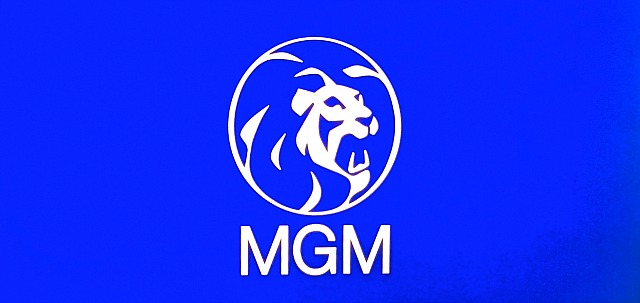
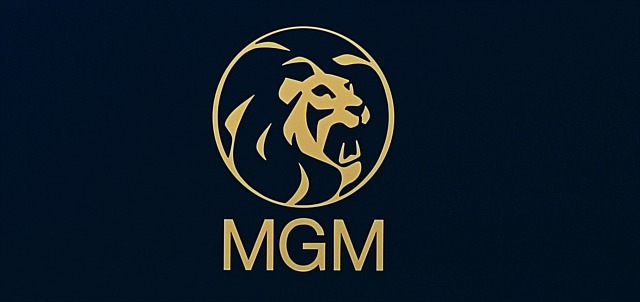
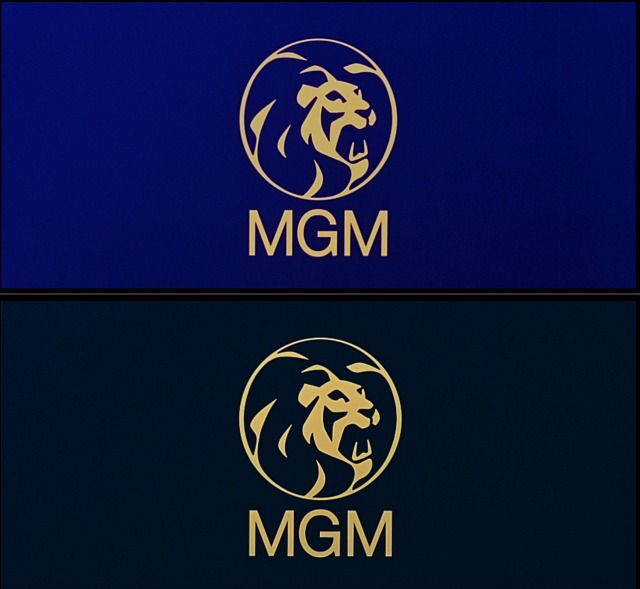
I can also report that the MGM logo on the 2007 Bluray is indeed bright blue with white lettering, and that the same image on the 4K disc is dark blue with amber lettering. I’ve seen them both with my own eyes, and only one is correct. I think it’s the former. I think the dark blue-with-yellow-lettering logo is bullshit.
A couple of weeks ago I posted an HE-plus piece about one of the most moronic time-passage sequences in the history of motion pictures. It’s contained in Chris Weitz‘s New Moon, the second Twilight film. It proves one of two things: (a) the Twi-harders were either bone dumb or (b) the producers believed them to be.
New Moon contained an ambitious shot that tried to visually convey how completely Kristen Stewart‘s Bella had sunk into depression. Months and months of sitting in a stupor. The camera circled around her three times as she sat in her bedroom in front of a bay window that looked out on her front yard, and either you spotted what was happening or you didn’t.
Anyone with a reasonable number of brain cells would have noticed how the front yard changed from month to month. In the first shot a tree has brown leaves and kids on the street are wearing Halloween costumes. In the second the branches are bare and somebody’s raking leaves on the front lawn. In the third shot the lawn is covered with snow.
And yet Summit producers decided to place titles — OCTOBER, NOVEMBER, DECEMBER — over each camera pass so viewers wouldn’t be confused about the time-passage aspect. Presumably fans complained during test screenings that they couldn’t understand why leaves would fall of a tree so quickly or how there would suddenly be snow covering the front yard, etc.
I don’t believe Weitz decided to use the titles on his own. I’ll bet $100 he was forced into it.
An exclusive Peggy Siegal party for Julian Schnabel‘s Vincent Van Gogh film, At Eternity’s Gate (CBS Films, 11.16), happened today in the Hollywood hills.
The main honorees were director Julian Schnabel and the great Willem Dafoe, whose performance as the tortured and gifted Vincent Van Gogh is surely his finest since inhabiting Jesus of Nazareth 30 years ago in Martin Scorsese‘s The Last Temptation of Christ (’88). At the very least Dafoe (who was well on his way to a Best Supporting Actor win last year until Sam Rockwell stormed the Bastille) has to be Best Actor nominated…c’mon! This is great, primal, world-class channelling. Ask anyone.
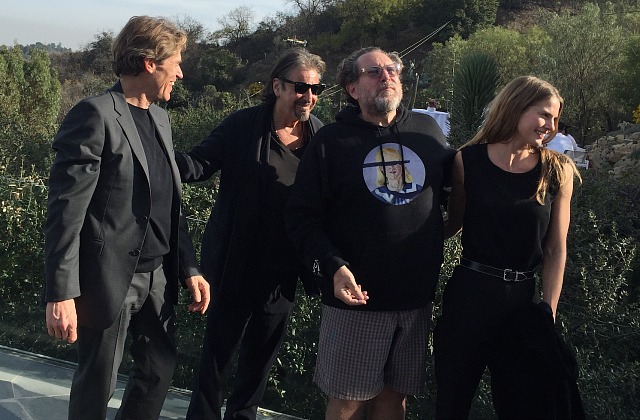
(l. to r.) At Eternity’s Gate star and like Best Actor niminee Willem Dafoe, Al Pacino, director Julian Schnabel and co-screenwriter and co-editor Louise Kugelberg.
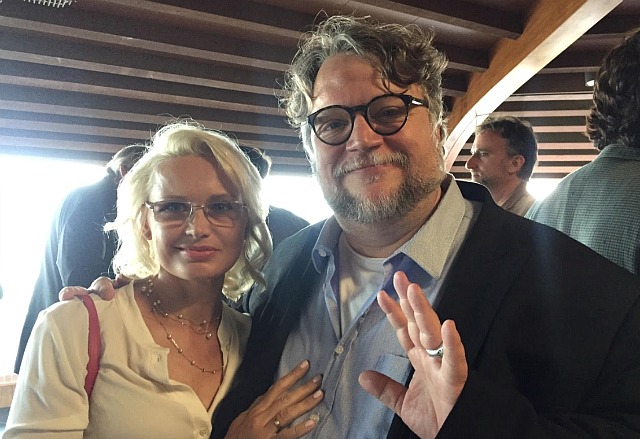
Tatyana Antropova, Guillermo del Toro.
Al Pacino, who arrived somewhat late.
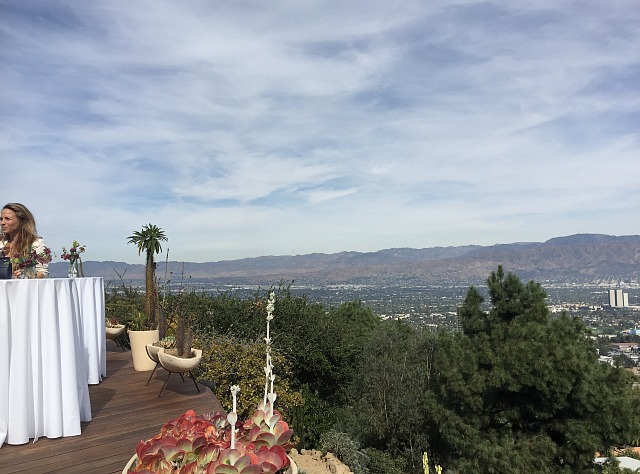
San Fernando Valley view from the patio.
The fraternal, warm-hearted Guillermo del Toro conducted a q & a with Schnabel, Dafoe and co-screenwriter and co-editor Louise Kugelberg. Al Pacino (The Irishman) and Benicio del Toro were also in attendance.
Hollywood Elsewhere correspondent Tatyana Antropova, a longtime Van Gogh admirer who read Irving Stone‘s “Lust for Life” in her late teens, attended on my behalf.
Yesterday Hunter Tremayneposted the following Bohemian Rhapsody comment on HE: “Saw it tonight in Barcelona. Place was packed with families. Laughing, clapping, cheering, the works. People were singing Queen songs all the way to the metro.”
Right away I decided to catch it again, and soon after persuaded a couple of friends to come along. Around 6:50 pm I drove down to the local Wilton Bowtie Cinema to get seats, and the second I entered the lobby I saw Sophie Cabot Black, my ex-girlfriend from the mid ’70s. She was sitting on a bench and studying her phone, and didn’t see me at first.
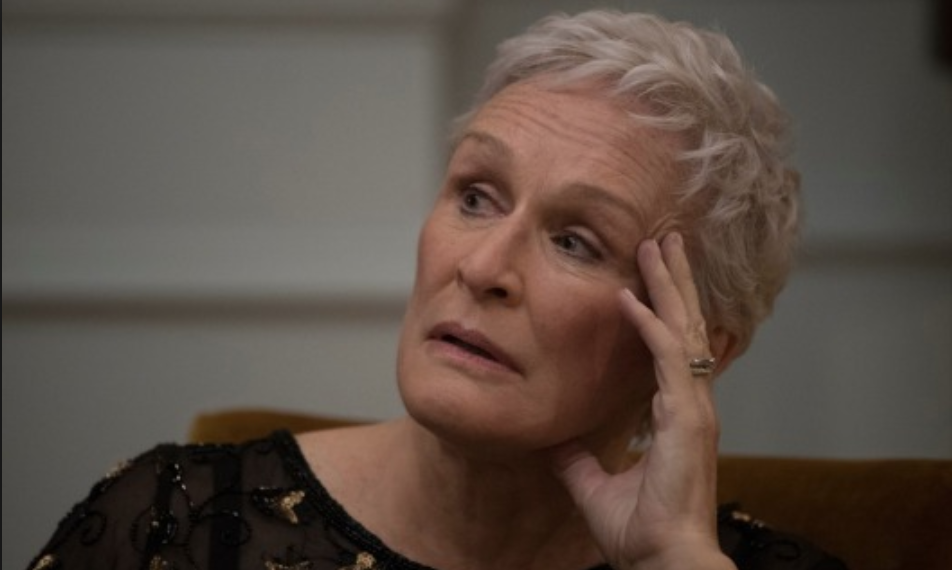
Olivia Colman, Lady Gaga, Melissa McCarthy, Charlize Theron, Rosamund Pike and even Hereditary‘s Toni Collette are discussed, but not Close. And all I can say is “you guys are amazing.”
Is this because of Anne’s unfortunate opinion that The Wife is okay but not exceptional? But it is exceptional and actually rather riveting. It’s a “play,” yes, but a very well written and expertly performed one, with a nicely layered build-up to the big payoff at the end. It works, it delivers, it knocks people out.
And what about the metaphor of Close’s character — the brushed-aside but stronger, smarter and more talented wife who lets her husband have it at the end? It fits right into the zeitgeist in a certain sense (i.e., silver-haired women have had it up to here) and is hugely popular with the over-55 set. I’ve attended two screenings with a somewhat older industry crowd, and Close’s performance is a very big thing with them. The after-buzz was palpable both times, trust me, and you guys are ignoring this?
Don’t tell me you’re giving it the Indiewire brush-off because Sony Classics opened The Wife in August. That’s so shallow, so herd-mentality.
Look at this holiday-themed Starbucks cup. Those are flames. You can say “yes, the flames of a living-room fireplace as dad throws another log on and mom serves cups of egg nog.” But one could just as easily say these are the flames of hell. One could argue that flames are more commonly associated with the caverns of Hades than they are with the family hearth. If you were marketing vp for Starbucks would you have signed off on this? On some level the artist who composed this may have been channeling the social hate currents of the Trump era.
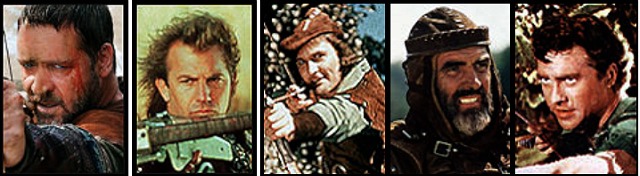
The Robin Hood legend is just that — a one-size-fits-all bag of mythical bullshit that each culture re-imagines and re-invents to suit its own agenda, and then casts a certain sort of dashing fellow — Errol Flynn, Richard Todd, Sean Connery, Kevin Costner, Russell Crowe — to fill the shoes.
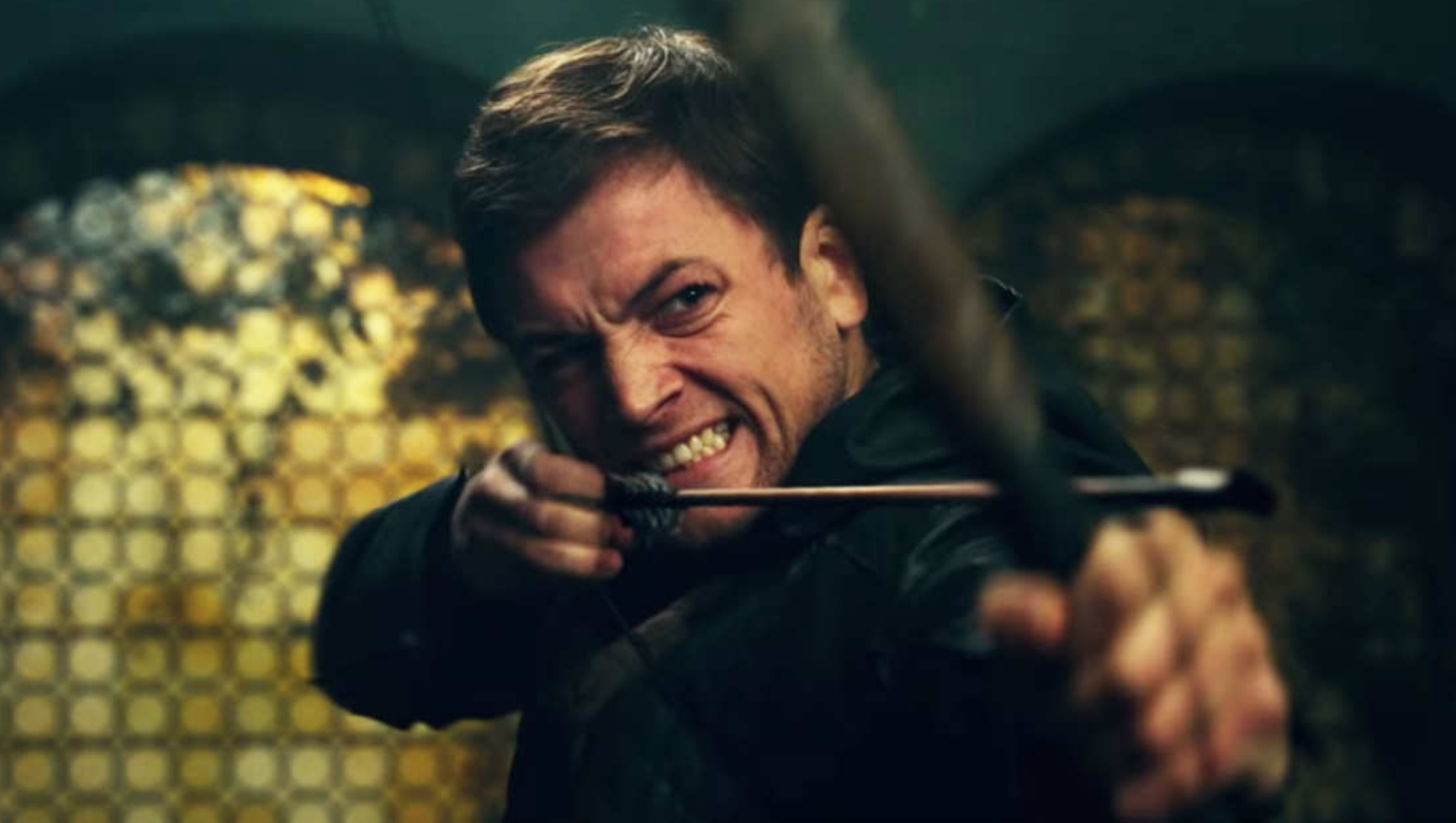
But Otto Bathurst‘s Robin Hood flick is obviously an abomination — a lazy, ludicrous, video-game-level wank with Taron Egerton, Jamie Foxx and Ben Mendelsohn in the leads. A Robin Hood fantasy that not only ignores any semblance of historical auras and atmospheres, but totally spits in the face of anyone who’s ever felt a twinge of respect or affection for the previous versions. “We’re totally ripping the past to shreds,” Bathurst is saying. “We don’t care about anything except ideas and attitudes that synch with our 21st Century jizz-whizziness…we don’t care, we don’t care, we don’t care.”
Anyone who finds this shit entertaining needs psychological counseling. Lionsgate will release Robin Hood on 11.21.18.
I’ve arranged to see WHE’s forthcoming 2001: A Space Odyssey 4K UHD Bluray (streeting on 11.20) at a friend’s place (possibly as soon as this weekend), but some screen captures & comparisons posted by DVD Beaver‘s Gary W. Tooze are alarming. Because what I’m seeing are images that are significantly darker than the 2001 images I’ve been looking at for decades on theatre screens, VHS, laser discs, DVDs and the 2007 WHE Bluray. And the sides of the earlier Bluray (2007 and 2011) have been sliced off, for some reason, on the 4K.
I need to wait until I see the 4K myself, but the Tooze images are not pleasing, and the last time I checked he wasn’t blatantly misrepresenting Bluray images as a rule. So I’m wondering how or why Stanley Kubrick‘s 1968 classic is looking so damn murky and muddy.
All I know is that I’m alarmed all over again. Remember that despite what we’ve all read about this not being the non-restored Nolan “nostalgia” version with the piss-yellow and teal tints (and it’s really not, I’m told), this WHE 4K Bluray has had three fathers — Ned Price, Chris Nolan and Leon Vitali. And at least one of them is the bad guy here because 2001 has never been this dark, and it never should be. I mean, some of the 4K screen captures are ridiculous.
1. Tooze comparison #1 — the MGM logo. All my life the color of 2001‘s MGM logo has been a slightly muted publisher’s blue, like the top image from the 2007 Bluray. Now it’s a mixture of gravel gray and midnight blue — like the color of flagstone mixed with a dusky, early-evening sky. In short, it’s a lot darker and completely different than the logo image I’ve been looking at for half a century now. What is this?
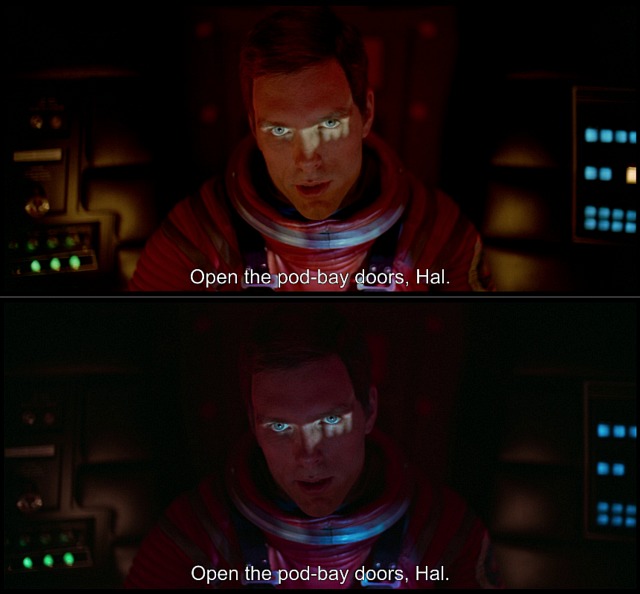
2. Tooze comparison #2 — “Open the pod bay doors, Hal”. In the above 2007 Bluray image, Dave looks like he always has inside the pod while asking HAL “what the hell’s the problem,” etc. In the bottom 4K image, he looks like a demon ghost from The House on Haunted Hill. All you can really see are his piercing, key-lighted eyes. What the hell is this?
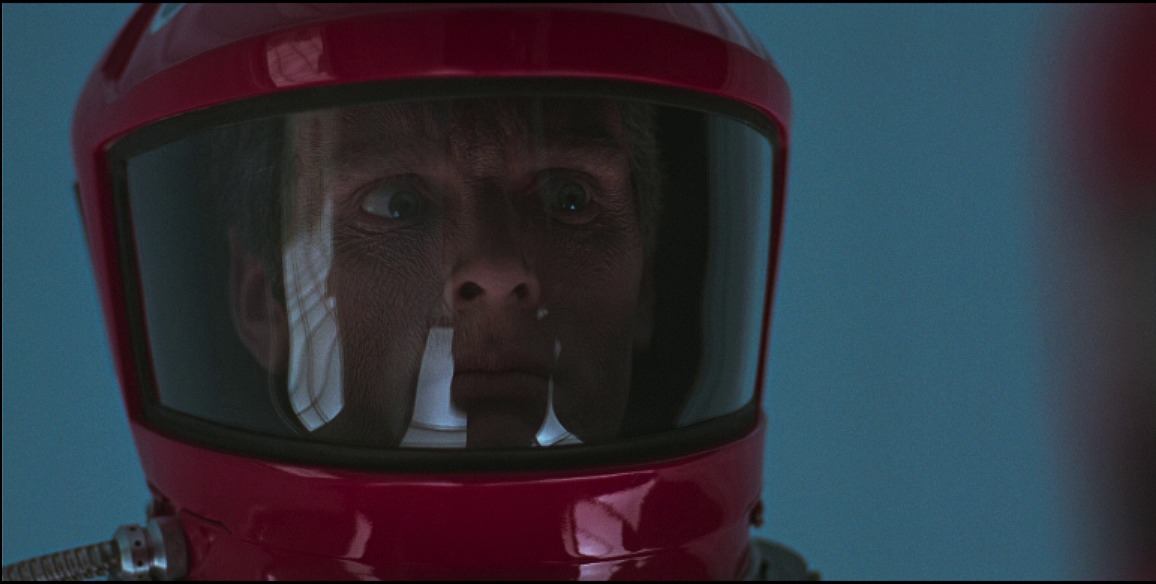
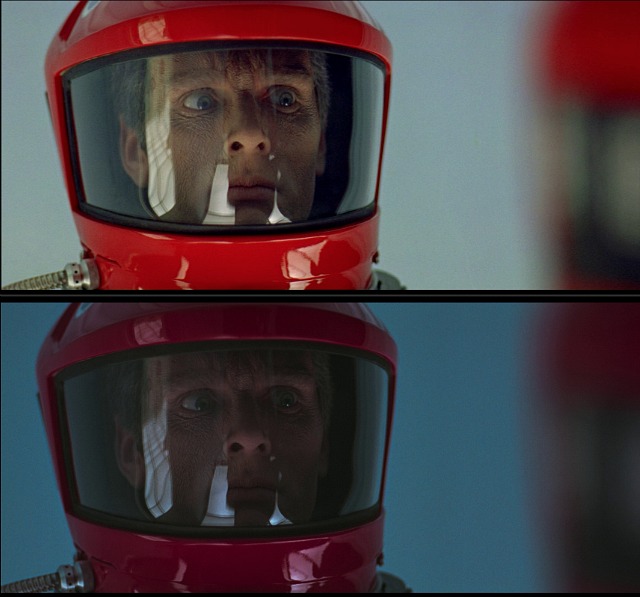
3. Tooze comparison #3 — Space-suit Dave in French chateau. The 2007 Bluray image of red-helmeted Dave is perfect, but you can barely make out his facial features in the 4K image. This isn’t just overly dark — it’s absurdly dark, as in the person who mastered this shot was (a) drunk, (b) stoned or (c) an anarchist who snuck into the WHE video mastering room with the intention of fucking things up.
4. Tooze comparison #4 — Discovery air-lock chamber. If you compare closely you’ll see that visual information on the right and left sides of the 2007 Bluray image (which was taken from a 35mm source) has been sliced off for the 4K.
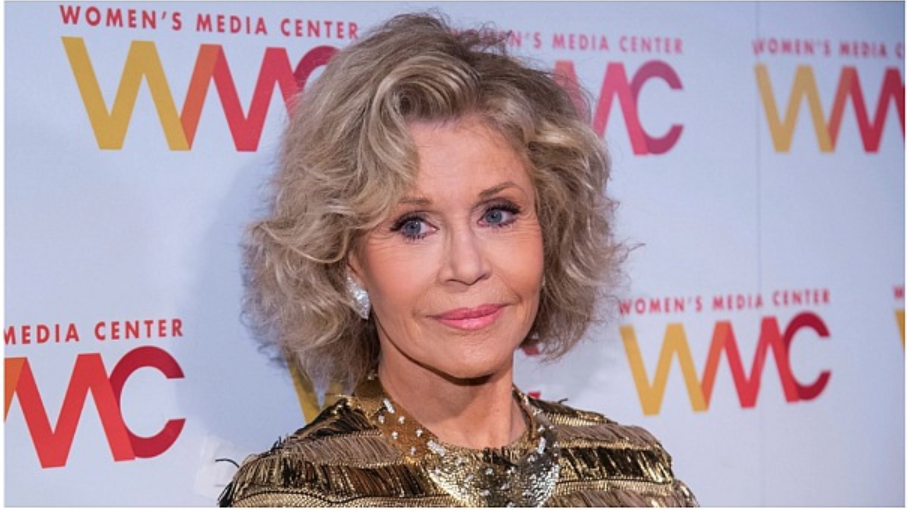
This morning a politically naive Variety editor decided that Jane Fonda comparing Donald Trump to Adolf Hitler required a “whoa!” headline. Louis C.K., Michael Moore…what serious historian or fair-minded journalist hasn’t made this comparison? Fonda: “If you have read anything about the rise of the Third Reich and Adolf Hitler you will see the parallels. Attacking the media is the first step and move toward fascism. The cornerstone of democracy is an independent, democratic media. And it’s under attack in a major way because bad guys are running it all. We have to make sure it doesn’t continue.”
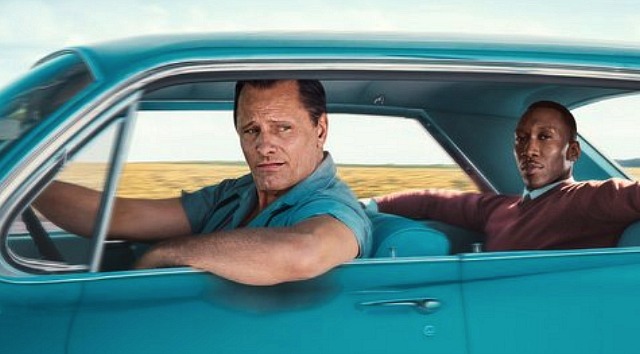
After a late September screening of Green Book (Universal, 11.16) I mentioned to a film-critic friend who loves Peter Farrelly’s film as much as I do that film snobs would be coming for it. “Film snobs?” he said derisively, contemptuously.
Last night HE commenter Bobby Perumentioned a reaction to Green Book, overheard either during the screening or afterward. “And even though I wasn’t one of them, several journalists in the room giggled at the final scene’s embraces,” Peru wrote.
This, to me, is like the first shot fired at Fort Sumter. If I had been there with Peru and if I had suddenly morphed into Jack Nicholson‘s Badass Buddusky, I would have gone up to one of the gigglers and said, “I’m gonna kick your ass around the block for drill, man.” Okay, maybe I wouldn’t have been that belligerent, but Lordy, I hate the snooties.
One of the most reliable indications of a toxic film-snob mentality is a primal aversion to anything that delivers well-fused, well-finessed mainstream-ish elements in service of a familiar but hugely satisfying emotional payoff.
The snobs HATE this kind of thing. Some kind of genetic disorder took over their sensibilities when they hit their mid teens or perhaps when they began college, and they just aren’t susceptible to this kind of assured, emotionally rooted, feel-good thing, even one that unfolds within a disturbing social context. They recoil and flick their fingers and go “no, no…too emotionally effective…not for us.”
And so Peru, totally and irreversibly in the tank for A Star Is Born, mentions dismissals of the film’s final line and final embrace. But the crowd I saw it with at Toronto’s Elgin theatre LOVED that final line. They loved the film. They cheered it like drunken fans of a home-town hockey team. My older son Jett and his wife Cait “LOVED” Green Book whey saw it a week ago, he told me.
This is war, I’m telling you — the film snobs and the gay-culture-favoring Star Is Born-sies on one side, and the fraternal, warm-hearted Green Book worshippers on another.
Don’t overlook the gay culture subtext. Yes, that remark may initially sound curious as both films are pro-gay narratives and experiences. The difference is that while Green Book deals with an admirable gay character from the mid 20th Century who’s something of a stuffed shirt, A Star Is Born is gayer in a more modern and celebrative sense.
Farrelly’s film may be experiencing (or may experience later this month) a certain subliminal pushback from certain fellows who’d rather not immerse themselves or otherwise submit to the early ’60s experience of Don Shirley — a brilliant jazz pianist, as expert and gifted in his realm as James Baldwin was in his, living in a repressed era and relying on his considerable dignity to cope on a daily basis with the double yoke of being black and gay.