Don’t Let Hudson Hawk In Your Head

It’s been 26 years since I suffered through Micheal Lehman‘s Hudson Hawk. I’d kinda forgotten the particulars, although it all came rushing back when I began watching clips. The only thing I liked about it was James Coburn playing George Kaplan. Not Coburn’s performance, mind, but screenwriters Steven de Souza and Daniel Waters‘ decision to pay tribute to North by Northwest‘s “non-existent decoy.”

No, I didn’t decide to hate Hudson Hawk because just about everyone trashed it or because it cost $65 million and earned $17.2 million or any of the other lynch-mob rationales. I hated it all on my lonesome because it struck me as smug and arrogant and unfunny, and because watching it was like being held down on the pavement as Bruce Willis and producer Joel Silver strolled over, bent down and farted in my face.

Go ahead — open your mind to Richard Brody’s revisionist assessment (“The Misunderstood Ambition of Hudson Hawk”) in the current New Yorker. It’s an intriguing argument, if unpersuasive. Because those YouTube clips don’t lie. Sink into that haughty attitude, those frosty vibes, that rot and corrosion.

And remember that Brody led the charge in that strangely successful campaign to elevate (resuscitate?) the reputation of Alfred Hitchcock‘s disastrous Marnie, which was verified when a 2015 BBC Culture poll ranked Marnie as #47 among the 100 Greatest American Films of all time. This led to one of the all-time greatest HE comments (“brenkilco” remarking that this Brody-led fraternity is “insidious and frightening…they’re just like ISIS except instead of beheading people they like Marnie“) but also to a 7.23.15 HE piece called “O Come All Ye Marnie Haters!

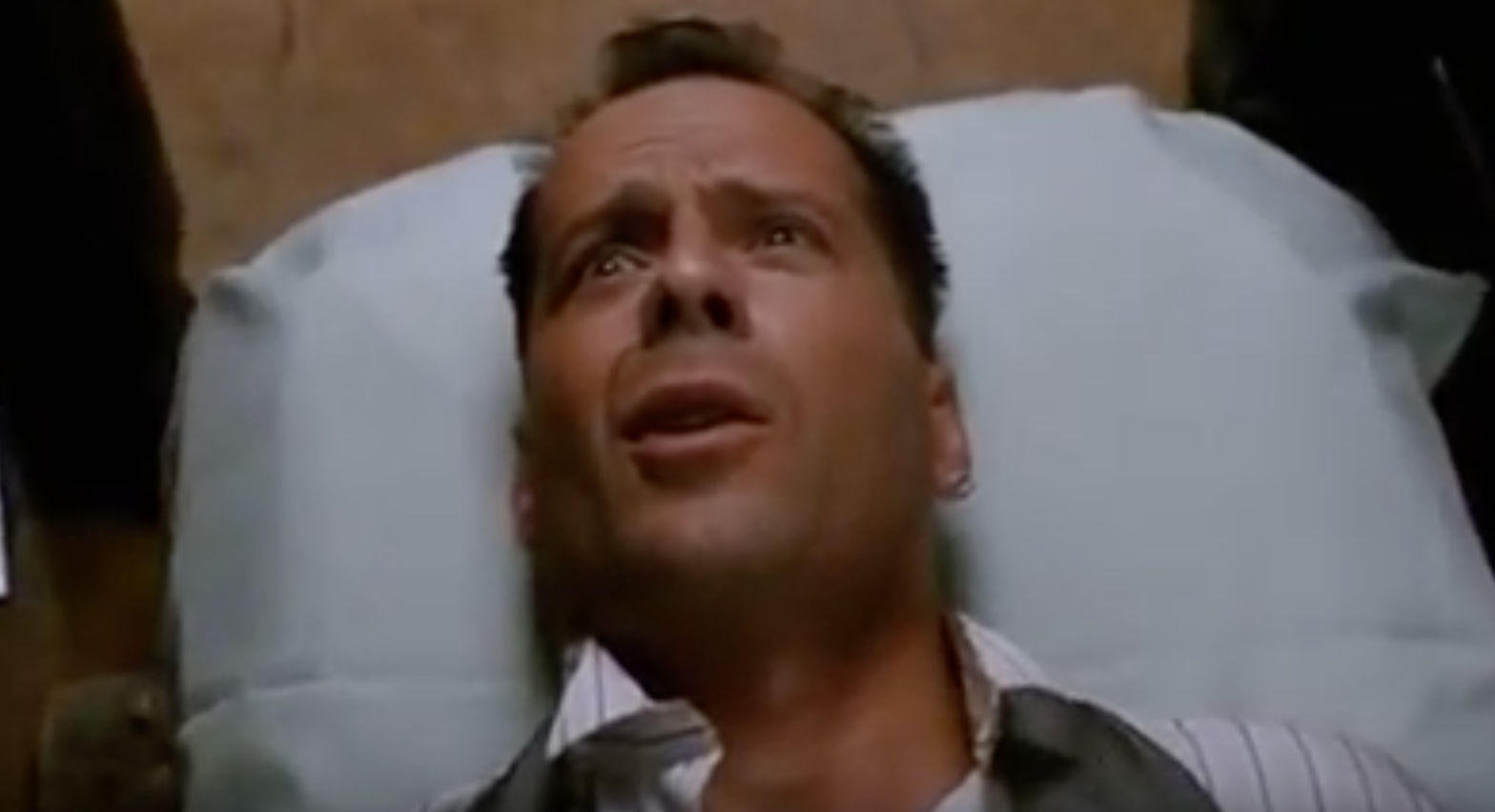
Now Brody is trying to restore Hudson Hawk to respectability. Hey, why not? Larry Karaszewksi agrees with him. By all means read the piece, but also watch the below clip. In the space of 164 seconds it will start to drive you insane.

Jenkins vs. Cameron with HE Referee

James Cameron‘s argument with Wonder Woman, as explained in an 8.24 Guardian interview, was basically that Gal Gadot looked too dishy, too made up, too objectified. Which was basically a shot at director Patty Jenkins for catering to traditional male-appetite Hollywood fantasies. Cameron would have preferred a butchier, more bad-ass Wonder Woman in a kind of mid-’90s Linda Hamilton mode.

Jenkins’s Twitter reply: “Cameron’s inability to understand what Wonder Woman is, or stands for, to women all over the world is unsurprising as, though he is a great filmmaker, he is not a woman. Strong women are great, [but] if women have to always be hard, tough and troubled to be strong, and we aren’t free to be multidimensional or celebrate an icon of women everywhere because she is attractive and loving, then we haven’t come very far, have we?”

HE verdict: Cameron is right — Jenkins was catering to traditional Hollywood standards by making Gadot’s Amazon warrior a super fox as well as loving and maternal. But that’s cool. As I was watching it in a Paris plex last June I told myself, “This is different, this is good…Wonder Woman has a fuller, more caring heart than her male counterparts in the Marvel or D.C realm. And therefore she has her own identify, her own piece of superhero turf. Plus she has great eyes, hot legs and a really warm smile. I don’t have a problem with that.”

Can’t Help But Feel Badly About It

N.Y. Times critics A.O. Scott and Manohla Dargis were recently asked to choose the five best New York movies for a special project called “One Film, One New York.” The winners were Spike Lee‘s Crooklyn, Gene Kelly and Stanley Donen‘s On the Town, Susan Seidelman‘s Desperately Seeking Susan, Ang Lee‘s The Wedding Banquet and Martin Scorsese‘s New York, New York.

Scott and Dargis were somewhat restricted by having to choose films that are more or less family-friendly or, you know, not too coarse or graphic or profane. Which is sorta like being asked to choose the best westerns in which gunslingers don’t wear six-shooter holsters around their waist.

On top of which New York, New York was regarded at the time of its release as a notorious cocaine movie. A whole lotta tootin’ goin’ on, and yet 40 years later a pair of top-tier critics…forget it.

I haven’t re-watched any of their picks since their original release, and that goes double for New York, New York. I caught it a little more than 40 years ago, and only once at that. It’s basically a ’40s and ’50s period piece about a singer and a saxophone player (Liza Minelli, Robert DeNiro) who discover that they’re incompatible after getting hitched in a hurry and having a kid, largely because the sax player has a temperamental nature.

I’ve written a couple of times that it has one terrific scene — i.e., when De Niro is thrown out of a club that Minelli is performing in, and he kicks out several light bulbs adorning the entrance way as he’s manhandled out by the manager and a bouncer. If I could only find that scene on YouTube, but there’s no trace of it.

You still can’t stream New York, New York, and for people with limited search abilities (like myself) the only way to catch a high-def version is to buy a 2013 English import Bluray.  

Back Pages

It’s sad that the print edition of Village Voice is going away, sure, but I can’t honestly say I’m devastated. I never pick up a newspaper. Nobody does. But I’ve always liked — hell, cherished — the fact that the Voice is there. If I could guarantee that the print edition would survive by snapping my fingers three times, I would do that. Who wouldn’t? I’m just as sentimental as the next guy.

The newsprint Voice is an atmospheric artifact — a tangible remnant of the Manhattan that I lived and struggled and sometimes barely survived in from late ’77 to mid ’83. When I think of the effort and feeling and discipline that have gone into each Voice issue, even recently, even with me living in West Hollywood, and what its absence will do to downtown culture, etc. Not that anyone under 40 will notice all that much.

I was a New Yorker when the Voice definitely mattered. Reading the new issues of it and the Soho Weekly News at the Village Bowl (a little diner on West 13th near 8th) back then — what an affinity that was. I would take the issues home, leave them at my Sullivan or Bank Street apartments, carry them with me for something to read on the subway.

But I almost never pick up print these days, and when I do it’s only for a fast skim. My reaction would be the same if the L.A. Weekly, which has been printing since ’78, were to turn into an online-only publication. I picked up a copy at Amoeba last week, and that’s saying something. But I’m not saying anything nervy here. The printed Voice launched almost 62 years ago, on 10.26.55. I’m sorry.

Read more

Night of the Living Roger

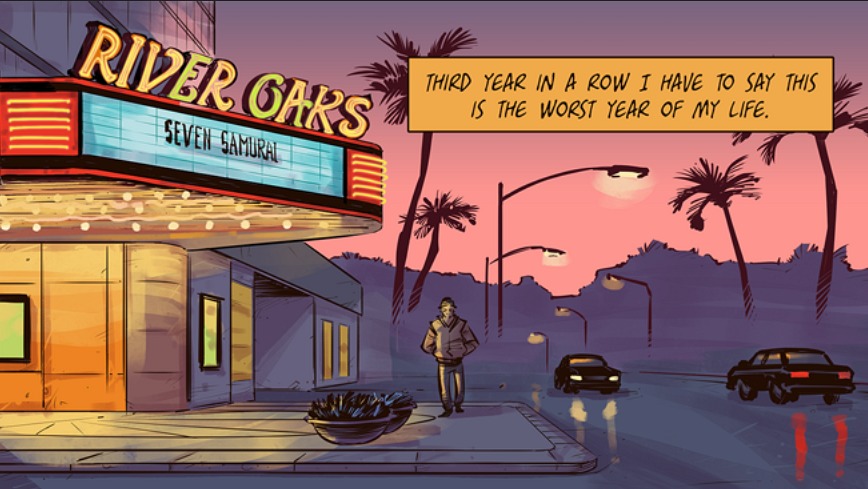
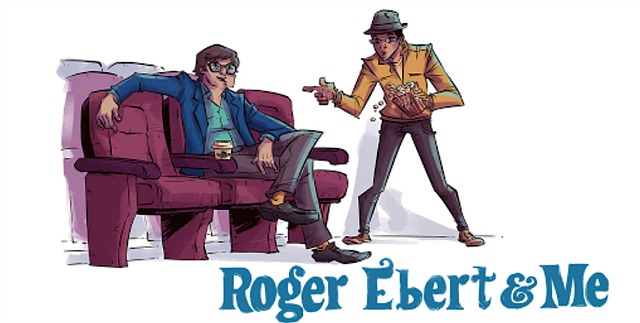
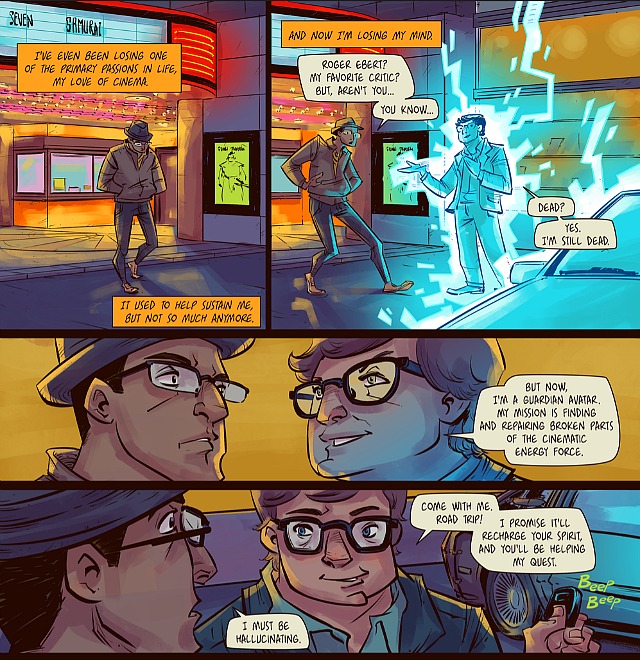
Milton Lawson to Jeffrey Wells: “Longtime fan of the site, here to show you a new short story you might enjoy called ‘Roger Ebert and Me‘. It’s a short 10-page comic about a true Movie Catholic enduring a crisis of faith. Filled with cinematic easter eggs. I know you’re not the biggest fan of the comics medium but sometimes it can be put to great use beyond the spandex superhero realm. Check it out? Here it is.

Wells to Lawson: It’s perfect up until the moment where your character talks about his mother, and Roger says she wouldn’t want you to give up hope. That’s fine, but it goes off the rails after that. Roger is not the Silver Surfer. He cares and has great insight, but he doesn’t have special cosmic powers, and he’s not the bringer of perfect, inspired solutions. He was just a brilliant critic who died too soon. You can’t put him on too high of a pedestal.

What needs to happen is this: You and Roger visit the diner where the Looper scene with Bruce Willis was shot. (Or the Baltimore diner from Barry Levinson‘s Diner.) As you’re walking toward an empty table, Roger notices Gene Siskel talking to another young cineaste like yourself.

Roger: “Uhh, Gene? The hell are you doing here?”

Gene: “Well, I’m dead too so I can do anything I want. And I can dispense life wisdom as well as you can, Roger, and probably a little better.”

Roger: “You never quit, do you, Gene?”

Gene: “Oh…Roger, this is Kevin Zackey, by the way. Kevin? Roger. Kevin’s going through a rough patch.”

Read more

Belushi Delivers Award-Worthy Turn in Woody Flick?

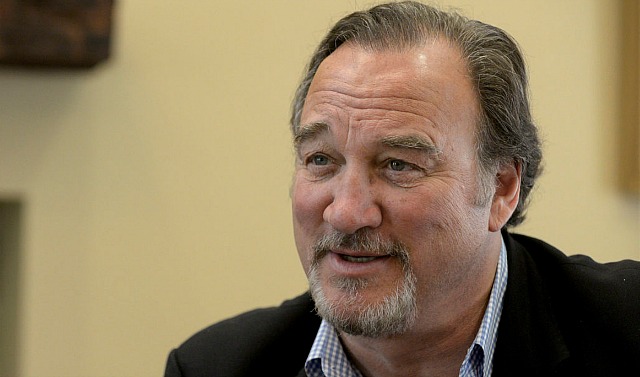
I’m told that Kate Winslet isn’t the only one who delivers a grand-slam, award-worthy performance in Woody Allen‘s Wonder Wheel (Amazon, 12.1). Unexpected as it may sound, Jim Belushi scores strongly and sympathetically as Winslet’s schlubby-nice-guy husband who grapples with some kind of Chekhovian anguish when her waitress character, Ginny, takes up with Justin Timberlake‘s Mickey, a Brooklyn lifeguard.


Has Jim Belushi scored with an Oscar-calibre supporting performance in Woody Allen’s Wonder Wheel? As Marcus Licinius Crassus said in Spartacus, “Time will solve that mystery.”

A tipster believes that Belushi’s turn will probably generate Best Supporting Actor talk after Wonder Wheel debuts at the New York Film Festival on 10.14. Which, of course, would constitute a huge career rebound for Belushi, who’s been steadily working since his ’80s and early ’90s heyday (Red Heat, Salvador, K-9, Thief, Curly Sue) but in an under-the-radar, off-the-grid fashion. Or at least the grid that I pay attention to.

If the talk turns out to be valid, Belushi will have a perfect Oscar-season narrative along with a much-admired performance — riding high in the ’80s, loses the big-screen mojo, quietly plugs away for the last 25 years, does pretty well on TV (including his According to Jim series from ’01 to ’09, as a co-lead in The Defenders, a comedy series with Dan Aykroyd in 2010 and ’11 + a recent four-episode role in Twin Peaks) and is now suddenly back in the big game as a possible Oscar contender at age 63.

How did Belushi happen to land the role? Why him and not any number of higher-profile character actors who were probably considered? Last summer Woody was quoted saying that he cast Belushi because he was “absolutely perfect for it.”


Belushi as he appears in Wonder Wheel, as Kate Winslet’s cuckolded husband.

“This Old Man Is All That’s Left”

Morgan Freeman deserves to be the the next recipient of the SAG Life Achievement Award. The trophy will be presented at the 24th annual Screen Actors Guild Awards on 1.21.18. But when I think of Freeman I think “immaculate actor, major brand, beautiful voice but for the last 17 years has mostly taken paycheck work.” How lucky or choosy has Freeman been in terms of scoring good roles in top-tier or reasonably decent films? Starting with his breakout role in Street Smart (’87), Freeman has a total of ten films on his serious honor roster: Clean and Sober, Glory, Driving Miss Daisy, Unforgiven, The Shawshank Redemption, Se7en, Amistad, Million Dollar Baby (Oscar winner for Best Supporting Actor), The Bucket List (okay, a so-so film but Freeman was first-rate) and Invictus. Eleven films out of…what, 100 or thereabouts? And most of them in the ’90s. But he did his best in what he was able to grab. And Freeman’s pre-Street Smart perfs were distinctive, particularly his angry-convict scene with Robert Redford in Brubaker.

When The Farrelly’s Couldn’t Miss

The 20th anniversary of There’s Something About Mary is 11 months off, but Fox Movie Night’s James Finn and Schawn Belston are celebrating it next week (8.29) all the same. Ben Stiller told the Farrelly brothers that he didn’t like the hair gel scene — thought it was unbelievable and therefore not funny. I felt the same way. The audience was roaring with laughter as I sat in my seat like a sphinx. The only Mary scene I really laughed at was Matt Dillon‘s with the dog.

Bobby and Peter Farrelly were touched by lightning for seven years — from Dumber and Dumber to Me, Myself and Irene. Their 21st Century track record has been spotty, but I’ll never back off in my admiration for 2012’s The Three Stooges. During a late ’90s phone interview I asked for their opinion of Ernst Lubitsch, and without missing a beat one of them said “who?” That’s confidence, that’s fearlessness.

Fox Movie Night used to screen classic studio-era films (All About Eve, The Ow-Box Incident), but nostalgia standards are changing. People in their late 30s and early 40s regard late ’90s films as kind of old-timey, ’80s films as moldy and crusty and ’70s and ’60s films as artifacts from the Iron Age.

Whadaya Want From Me?

Christian Bale as Captain Joseph Blocker in Scott Cooper‘s Hostiles, which will premiere at the Telluride Film Festival. Set in 1892, pic is about Blocker and some other soldiers (Jesse Plemons, Ben Foster, Timothee Chalamet) escorting a dying Cheyenne war chief (Wes Studi) and his family back to his tribal lands. Could Bale be playing the great-grandfather of Dan Blocker, who starred in NBC’s Bonanza several decades hence, or is he just another rugged individualist given to blocking his emotions?


Christian Bale in Scott Cooper’s Hostiles.

Kyra Bumped Into ’18?

I was no fan of Andrew Dosunmu‘s Where Is Kyra? after catching it during Sundance ’17. I called it “more or less a bust…a funereal quicksand piece about an unemployed middle-aged woman (Michelle Pfeiffer) in a terrible financial jam, and about a relationship she has with a fellow down-and-outer (Keifer Sutherland). It’s a carefully calibrated, well-acted, oppressive gloomhead flick that feels like it’s happening inside a coffin or crypt. This is Dosunmu’s deliberate strategy, of course, but the end-of-the-road, my-life-is-over vibe is primarily manifested by the inky, mineshaft palette of dp Bradford Young — HE’s least favorite cinematographer by a country mile.”


Michelle Pfeiffer, Keifer Sutherland in Where Is Kyra?.

I don’t know anything but this morning a reader confided the following: “A producer [has] told me that Where Is Kyra? will be a 2018 release, most likely sometime first quarter although that’s not set in stone yet. But it will definitely be 2018 sometime, with no 2017 awards qualifying date for Pfeiffer. I know you didn’t like it overall, but it got great reviews from Variety, TimeOut New York, IndieWire and others, and Pfeiffer got rave reviews. It has 78% on RT so far, so it’s weird they’d just dump it in January or February. I think it at least deserves a December release for Pfeiffer. I doubt she would have gotten further than an Indie Spirit nom, but this sounds like a great showcase for her. Too bad.”

They Can Smell It

From Owen Gleiberman‘s latest Variety essay, “Healthy Tomatoes? The Danger of Film Critics Speaking as One,” posted this morning: “Remember when film critics were obsolete? When we’d lost our swagger, our sway, our influence? When it seemed like the entire world had gone critic-proof, because we just didn’t matter anymore?

“It’s hard to pinpoint when, exactly, film critics attained Peak Irrelevance, but it’s starting to seem like an eon ago, because this summer a chorus of people — moviegoers, film-industry executives, critics themselves — have been singing a very different tune. It’s called: We’re back! Critics, in case you hadn’t heard, have emerged from the dark cave of our obsolescence and are once again bringing the news, keeping the studios in check, making the world safe for bad movies to die the grisly box-office death they deserve. Look out, Emoji Movie! We’re coming at you with a pitchfork.

“As someone with a vested interest in thinking that critics matter, I’d argue that our influence never totally went away. There was certainly a perception that it did, a feeling that went hand in hand with the notion that we were elitist art-head snobs who stood on the other side of a divide from the mainstream audience. Film critics have been called out for elitism ever since there were movies, but in an age when mega-budget franchise filmmaking had become a literal universe, one that dwarfs everything around it (including critics), that hostility reached a new pitch of jaded dismissal.”

HE response to Gleiberman: “I’m glad critics are back also, but there’s still an elite cadre of ivory-tower snobs who have done and are continuing to do their level best to convince Average Joe ticket-buyers to be highly suspicious of critical opinion. One result is that while every critic on RT loved Logan Lucky, for the most part Joe & Jane Popcorn stayed away in droves. A famous Samuel Goldwyn‘s statement has been quoted a million times and has never stopped being true. “If people don’t want to see something, you can’t stop ’em.”

Read more

Genius Monkey Reunited With Organ Grinder in Heaven

After 91 and 1/2 years, the feisty and flinty Jerry Lewis is gone. The indisputable king of comedy during the Martin & Lewis heyday of the early to mid ’50s (although their partnership actually began in Atlantic City in ’46), and a boldly experimental avant-garde comedic auteur from the late ’50s to late ’60s. And a truly delicious prick of a human being when he got older, and oh, how I loved him for that. Refusing to suffer fools can be a dicey thing when you’re younger and have to get along, but it’s a blessing when you’re an old fart with money in the bank.

I know that Lewis was one of my first impersonations when I was a kid….”Hey, ladeeeeeee!” (I performed this for director Penelope Spheeris way back when, and while she could’ve gone “uh-huh” she said “hey, that’s pretty good!”)

If you were born in the ’70s, ’80s or ’90s and therefore haven’t a clue who Jerry Lewis was, please, please consider reading Shawn Levy’s “The King of Comedy: The Life and Art of Jerry Lewis,” which I’ve long regarded as the best researched, the best written and probably the most honest portrait of the occasionally contentious Lewis. If you get hold of a paperback or Kindle copy, find the passages to do with Bob Crane — hair-raising. Or the business about Levy and Lewis in the epilogue, which, Levy says, “were so infamous that I’m told Marty Short spent an evening entertaining Tom Hanks and Paul Reiser at dinner doing impressions of Jerry from it.”

You also have to read Nick Tosches‘ rhapsodic, utterly brilliant “Dino: Living High In the Dirty Business of Dreams.”

I can’t sit here on a Sunday morning and tap out some brilliant, all-knowing, heart-touching essay on what a huge electrical energy force Lewis was for 20 years in the middle of the 20th Century. So I’m just going to paste some choice HE posts, starting with an excerpt from my one and only interview with the guy at the Stein Erickson hotel during the 1995 Sundance Film Festival and on through to my last in-person encounter when Lewis did a q & a at the Aero theatre to promote Daniel Noah’s Max Rose.

Posted on 5.1.13: “Jerry Lewis has long been regarded as a difficult man, but listen to him at this recent Tribeca Film Festival appearance. He’s 87 and yet he seems more engaged and feisty and crackling than the vast majority of his contemporaries. There’s something about old show-business buzzards. The scrappy survival instincts that helped them make it when young are the same qualities that keep them sharp in their doddering years. You don’t have to be a prick to be intellectually focused and alert (the elegant Norman Lloyd is in his late 90s and a beautiful man to speak with) but if given a choice between a state of advanced vegetation and being a Jerry Lewis type of old guy, I’d definitely go with the latter. I suspect that Lewis biographer Shawn Levy will go ‘hmmm’ when he reads this.”

Read more