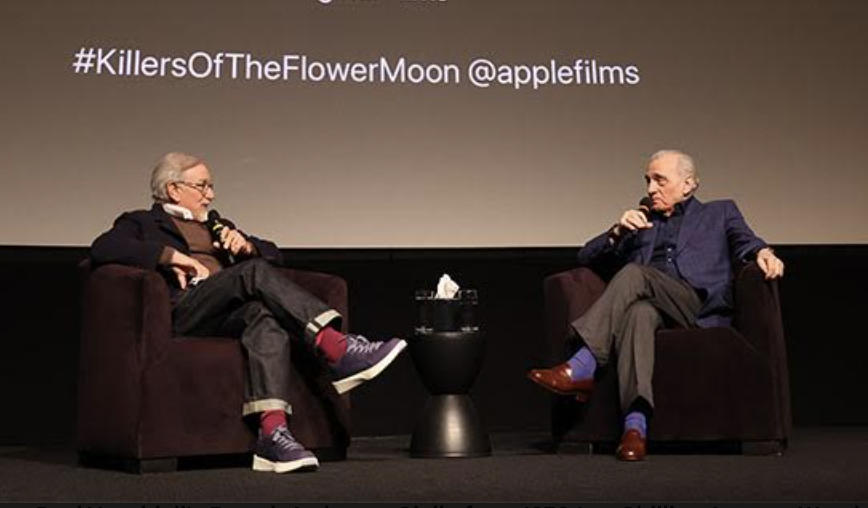
You have to admire Martin Scorsese‘s “killer’ footwear combo….those shiny brown Italian loafers accented by violet socks…perfect. Especially compared to Steven Spielberg‘s whiteside lace-ups and maroon socks…atrocious. Older guys are allowed to wear comfort shoes, agreed, but whitesides are completely verboten.
Marty looks like an elegant resident of Bologna or Milan…Spielberg looks like Joe Schlubbo at the hardware store.
Brooklyn friendo to HE: “Now that Napoleon is out of the running, it’s Killers of the Flower Moon vs. Oppie….neck and neck until March. Maestro may have given you multiple orgasms but that’s not gonna be universal. Bitch and moan all you want but you’re not changing this narrative.”
HE to Brooklyn friendo: “Honest people are admitting all over town that Oppenheimer is a brilliant film but a long, punishing sit. And nobody really likes Killers of the Flower Moon, and the Ernest and Molly Burkhart relationship, though based on fact, seems nonsensical. Neither film is really daring or delicious or devastating…neither delivers the kind of emotional highs that win Oscars. Oppenheimer tires, exhausts, depletes, gives you a headache, makes your legs ache.
In the minds of average non-obsessives the top two contenders are The Holdovers and Maestro…hands down.”
…but she sorta kinda wishes that David Grann‘s saga had been directed by, say, a full-blood Osage helmer instead…no offense. Martin Scorsese did the best that he could, she’s saying, given his white-guy limitations and the curious focus on Leonardo DiCaprio‘s Ernest Burkhart.
The director of Goodfellas, Mean Streets, Casino, The Departed and The Wolf of Wall Street warrants respect, she’s saying — an A for effort.
“Marty is a titan, but he’s not bigger than history,” Gladstone has toldVariety‘s Selome Hailu.
“He’s a major shaper of it though. It’s the tricky nature of a story like this. You have more representation [in Killers], but coming from somebody who’s not from the community. So you always have to look at it with a different angle. And there’s nothing wrong with that. You just have to be very aware of the film that you’re watching and what lens it was made through.”
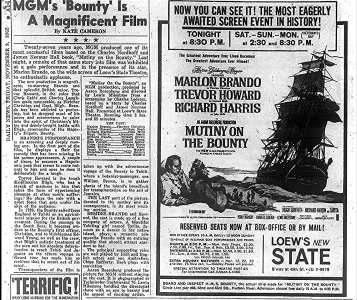
This almost felt like a fitting crescendo as the film was widely regarded as a crisis itself, albeit a “what the hell happened?” kind. The final production tab was $27 million, or roughly $275 million in 2023 dollars — a startling level of exorbitance.
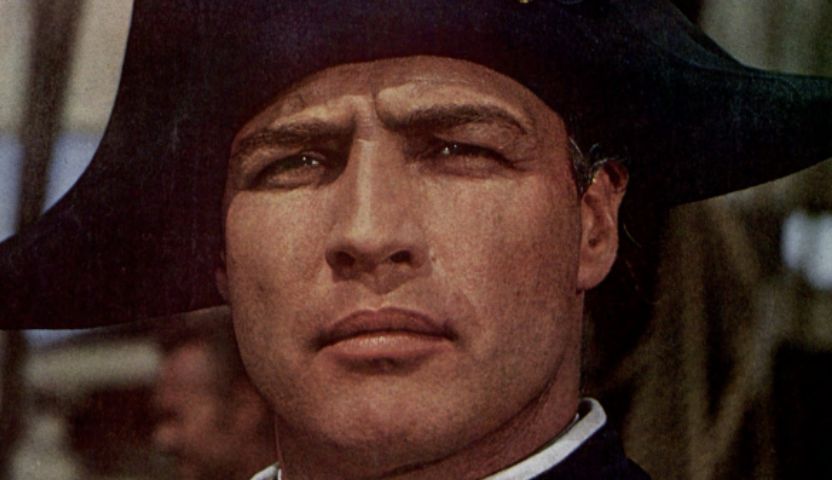
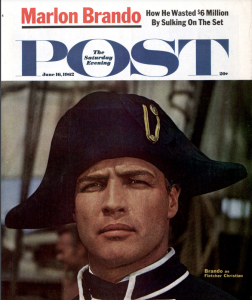
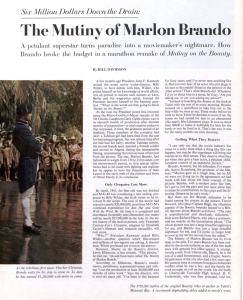
Bounty had been shooting for two years, partly under the directorial command of Sir Carol Reed but mostly Lewis Milestone, who didn’t get along wih star Marlon Brando and vice versa. A few months earlier the film had been publicized as a cost-overrun disaster, particularly by a June 1962 Saturday Evening Post cover story, written by Bill Davidson, that identified Brando as the principal culprit.
Production was marked by constant tempest (Reed either quit or was let go, and Milestone, his successor, also left under turbulent circumstances), largely, according to Davidson, due to Brando’s egoistic big-star behavior. Brando sued the Post for $5 million over claims that the article had wrongfully damaged his professional reputation. It did, in fact, do that.
Filming was almost as prolonged and costly as the $31 million Cleopatra, which would open seven months later in June 1963.
I wouldn’t call Mutiny on the Bounty a flawed film as much as a “good but not quite there” one. It’s actually a well-written, handsomeiy produced, eye-filling wow for the first 70% or 75%, and Bronislau Kaper‘s score is inescapably rousing in a crash-boom-bang sense.
I would give it an 8.5 grade up until and including the mutiny sequence. But the tension flies out the window after the mutiny, and the remainder of the film is just okay. And Brando’s (i.e., Fletcher Christian‘s) high-minded urging that he and the crew should return to England to plead their case? Totally absurd. Tantamount to suicide. I agree with the decision by Richard Harris‘s Mills and other crew members to burn the ship after Brando suggests this hair-brained notion.
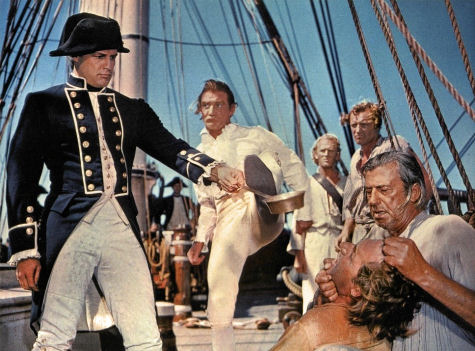
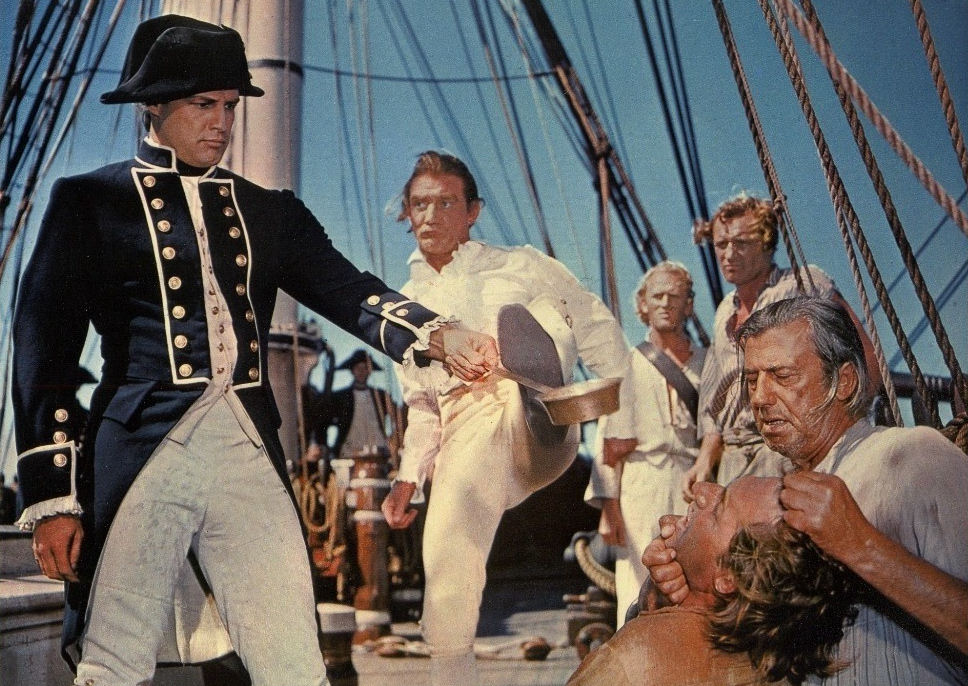
The act that ignites the mutiny scene as Brando’s Fletcher Christian tries to give fresh H20 to a thirsty seaman, and Howard’s Cpt. Bligh expresses his opposition.
Say what you will about Bounty‘s problems — historical inaccuracies and inventions, Brando’s affected performance as Christian, the floundering final act. The fact remains that this viscerally enjoyable, critically-dissed costumer is one of the the most handsome, lavishly-produced and beautifully scored films made during Hollywood’s fabled 70mm era, which lasted from the mid ’50s to the late ’60s.
It has a flamboyant “look at all the money we’re spending” quality that’s half-overbaked and half-absorbing. It’s pushing a certain pounding, big-studio swagger.
There’s a way to half-excuse Bounty for doing this. It was made, after all, at a time when self-important bigness was regarded as a kind of aesthetic attribute unto itself, with large casts, extended running times, dynamic musical scores (overtures, entr’actes, exit music) and intermissions all par for the course. And there’s no denying that a lot of skilled craftsmanship and precision went into this manifestation.
Bounty definitely has first-rate dialogue and editing, and three or four scenes that absolutely get the pulse going (leaving Portsmouth, rounding Cape Horn, the mutiny, the burning ship). And I happen to like and respect Brando’s performance — it gets darker and sadder as the film goes along — and you can’t say Trevor Howard‘s Captain Bligh doesn’t crack like a bullwhip. (Bosley Crowther‘s review said his emoting was imbued with “wire and scrap iron”, and that Brando’s came from “tinsel and cold cream”.) And Richard Harris and Hugh Griffith are fairly right-on. And everybody likes the topless Tahitian girls.
I’d forgotten how foppy and buffoonish Brando’s Fletcher Christian character is, and how frequently his contentious relationship with Trevor Howard‘s Captain Bligh is played for easy laughs during the first 100 minutes.
The extremely wide 2.76 to 1 Ultra Panavision image, shot by Robert Surtees and derived from the original 70mm elements, is really quite beautiful, and the colors are full and luscious.
My difficulties with the jokey humor aside, I have to acknowledge the “make love to that damn daughter of his” scene between Howard and Brando, and pay my respects to the way Brando pauses ever so slightly before and after he says the word “fight”. It’s the film’s wittiest moment — the only line that still makes me laugh out loud.
The decision not to offer a “making of” documentary on the Bounty Bluray was unfortunate, given that Mutiny on the Bounty‘s production history was one of the most expensive and out-of-control in Hollywood history, and therefore worth recounting for history.
Fox Home Video included an ambitious making-of-Cleopatra doc along with their Cleopatra disc, and it’s a far more engaging thing to watch than the film itself. Too bad Warner Home Video didn’t follow suit. Laurent Bouzereau or someone on his level could’ve really gone to town with it.
Will you look at that flaming eyesore of a jacket or shirt that Travis Kelce is wearing? Red, white and green blobs on a black background? It’s a clown garment.
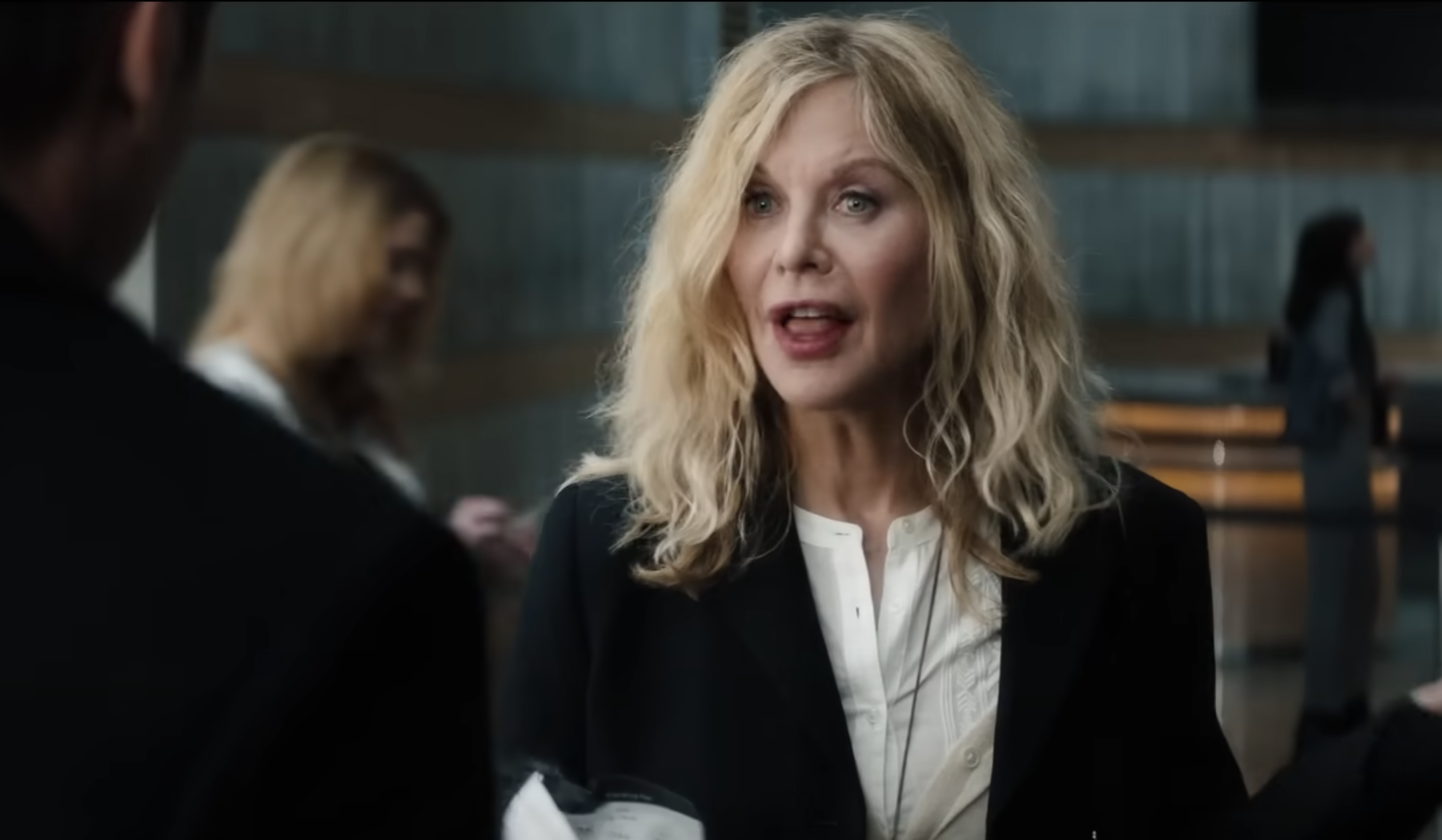
Variety‘s Courtney Howard and The Hollywood Reporter‘s Frank Scheck have reviewed Meg Ryan‘s What Happens Later (Bleecker Street, 11.3), an older person’s romcom set in a snowbound airport, and based upon Steven Dietz’s play Shooting Star.
Apart from noting that it’s a two-hander and agreeing upon the magical realist atmosphere, the disparity of opinion is startling.
Scheck: “Not so much a romcom as a comic drama infused with strong doses of magic realism that some viewers will find charming and others insufferably twee. What might have proved effective theatrically comes across as wholly artificial and schematic onscreen, despite Ryan’s considerable efforts as both director and performer. The proceedings inevitably feel claustrophobic. While Ryan’s bountiful charm is as evident as ever, her character unfortunately comes across like an older version of the manic pixie dream girl. And the movie’s heavy-handed magical realist elements counter the slightness of the material to deadly effect.
Howard: “Meg Ryan not only dazzles before the camera in What Happens Later, but behind it as well, as director and co-writer. Through the prism of one former couple’s relationship woes, this effervescent, enlightened romantic comedy explores our innate need for reconciliation within ourselves and with each other. It’s a delight to welcome Ryan back to the silver screen after an extended hiatus, and in the genre she helped rejuvenate alongside filmmakers like Rob Reiner and Nora Ephron (to whom this film is touchingly dedicated).”
I haven’t seen What Happens Later, but Howard’s use of the term “touchingly dedicated” almost certainly indicates bias. She’s in the tank for romcoms, I suspect, and loves the idea of Ryan making one of her own.
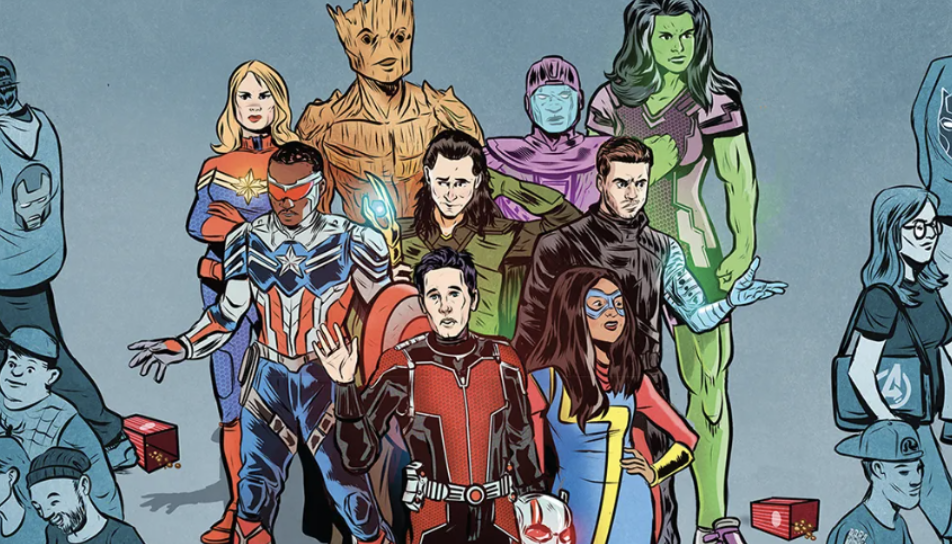
“The Marvel machine was pumping out a lot of content, but did it get to the point where there was just too much, and they were burning people out on superheroes?”
This quote, spoken by Wall Street analyst Eric Handler and reported by Variety‘s Tatiana Siegel, is music to Hollywood Elsewhere’s ears.
I’ve been waiting for over a decade for the Marvel downfall or at least the gradual weakening of this satanic strain, and now that it’s slowly, finally happening there are tears of joy in my eyes.
I haven’t felt this good since the death of Robert Downey, Jr.’s Tony Stark, and I was clicking my heels over that one.
The impetus behind Siegel’s new “Marvel is in trouble” article (okay, call it a “the tide has turned and things are swirling downward” piece) boils down to widespread readings and presumptions about The Marvels (Disney, 11.10) blowing the big one.
That plus the seeming downfall of Jonathan Majors, but this has been a nagging legal thing for several months now, partly due to Siegel reporting on Major’s issues (sexual assault charges) and seemingly pushing for his demise.
Even I, a committed hater of all things spandex and particularly a cinematic brand that significantly contributed to the death (or at least the diminishing popularity until Oppenheimer came along) of tangy, character-driven, real-world theatrical films…Marvel plus Covid plus streaming plus the appalling cinematic tastes of Millennials and Zoomers…a brand that every major over-45 filmmaker (Marty!…Fuck Joe Russo!) has been deploring and damning for years…even I was delighted by Spider-Man: No Way Home two years ago…I admit it.
But generally the Marvel machine was been drooping and groaning and shortfalling for at least a couple of years now, and not just in my head.
Siegel: “The source of Marvel’s current troubles can be traced back to 2020. That’s when the COVID pandemic ushered in a mandate to help boost Disney’s stock price with an endless torrent of interconnected Marvel content for the studio’s fledgling streaming platform, Disney+.
“According to the plan, there would never be a lapse in superhero fare, with either a film in theaters or a new television series streaming at any given moment.
“But the ensuing tsunami of spandex proved to be too much of a good thing, and the demands of churning out so much programming taxed the Marvel apparatus. Moreover, the need to tease out an interwoven storyline over so many disparate shows, movies and platforms created a muddled narrative that baffled viewers.
“‘The more you do, the tougher it is to maintain quality,” says Handler. “[Marvel] tried experimenting with breaking in some new characters, like Shang-Chi and Eternals, with mixed results. With budgets as big as these, you need home runs.”
Speaking of Eternals, another anvil tied around Marvel’s ankles these days are workester themes and plotlines. Fanboys don’t like that shit as a rule. Just ask Kathy Kennedy.
Siegel: “The Marvels will struggle to get the ball past the infield, at least by Marvel’s outsized standards. The movie, which cost $250 million and sees Brie Larson reprising her role as Captain Marvel, is tracking to open to $75 million-$80 million — far below the $185 million Doctor Strange in the Multiverse of Madness took in domestically in its debut weekend last year.
“The Marvels has seen its release date moved back twice, too, once to swap places with Quantumania, which was deemed further along, and again when its debut shifted from July to November to give the filmmakers more time to tinker. But that extra time didn’t necessarily help. In June, Marvel, which traditionally only solicits feedback from Disney employees and their friends and families, took the uncharacteristic step of holding a public test screening in Texas. The audience gave the film middling reviews.”
HE to Regular Joe: Saying you “liked” it enough to possibly see it again is both a serious compliment and an increasingly rare one these days. At the same time saying you found it “entertaining” almost qualifies as damnation with faint praise. Almost but not quite. I know you didn’t mean it this way but there’s a certain low-flame element in what you’re saying
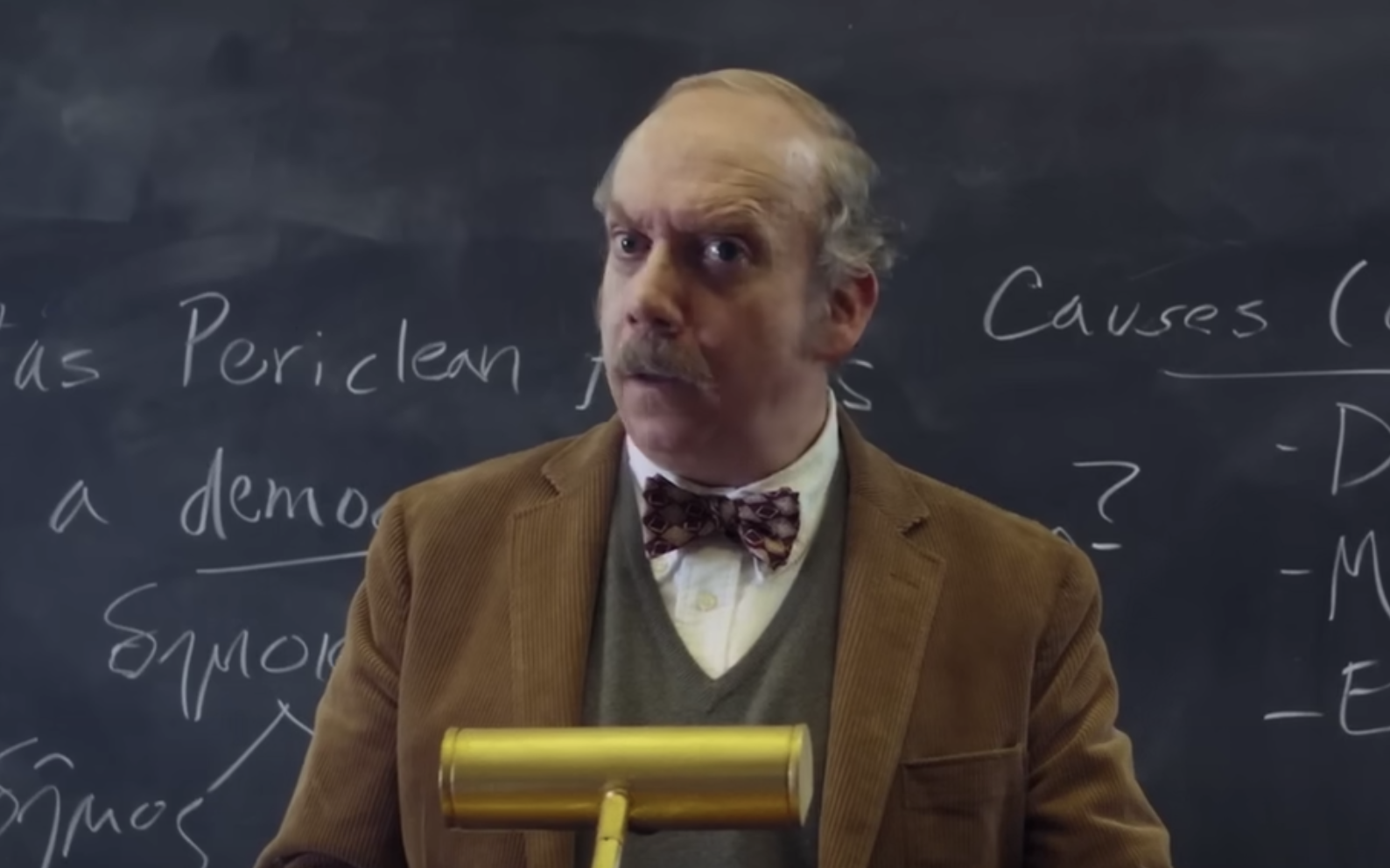
In my book The Holdovers is a tartly finessed gift and something close to a well-varnished treasure — the kind of wisely seasoned, well-assembled, character-rich relationship dramedy that (here comes the crusty cliche that everyone has been repeating since Telluride) they just don’t make any more.
Mostly set in late December of ’70, The Holdovers delivers a sublime time-travel effect — a visit to a land of wonder and imagination…Jesus, I sound like Rod Serling here. It’s basically a visit to a land of real-people flavorings and shadings, of realistic complications and emotional detours and random speedbumps…the kind of food that was occasionally served on the menu back in the 20th Century…the kind of stuff that been-around-the-track types remember from films like The Last Detail, etc. Three characters with their particular, baked-in contours and attitudes on a journey of gradual self-discovery or resignation or whatever.
I know what you’re saying about the likely expectations or criteria that Millennials and Zoomers might have in their heads. Over the last 15 years these unfortunately bruised and coarsened souls have been conditioned to want more push or punch from films of this sort — payoff elements of a grosser or more pratfally nature (erections, farts, belchings, defecations, brown torpedoes, vomitings, ejaculations, handjobs, blowjobs, slaps and punches and ball-kickings, guys jumping out of second-story windows and suffering nary a bruise or scratch, fire alarms, cops being called, car thefts or crashings or breakdowns or speeding tickets, encounters with local yokel mechanics or grumpy old codgers or eccentric trans folk). I know what they want. They want “holy shit!” or “oooh-hah-hah-hah!!” or “gaaahhh!”
As Marcus Licinius Crassus once said, it’s all a matter of taste. And as Francois Truffaut once explained, taste is a result of a thousand distastes, I’m not saying that the cinematic appetites of Millennials and Zoomers are tragic, but in a sense a fair-sized percentage of them don’t seem to know (or don’t care to know) what distastes are, or have rejected the idea of distastes or something along these lines. Over the last 15 or 20 years their standards have been systematically lowered and ground into mush, and so they want relationship dramedies in a Seth Rogen-y vein.
You know that feeling of shuddering disgust that many critics expressed in their reviews of Rogen’s Long Shot? The Holdovers has none of that shit in its veins. It’s a fine wine by comparison.
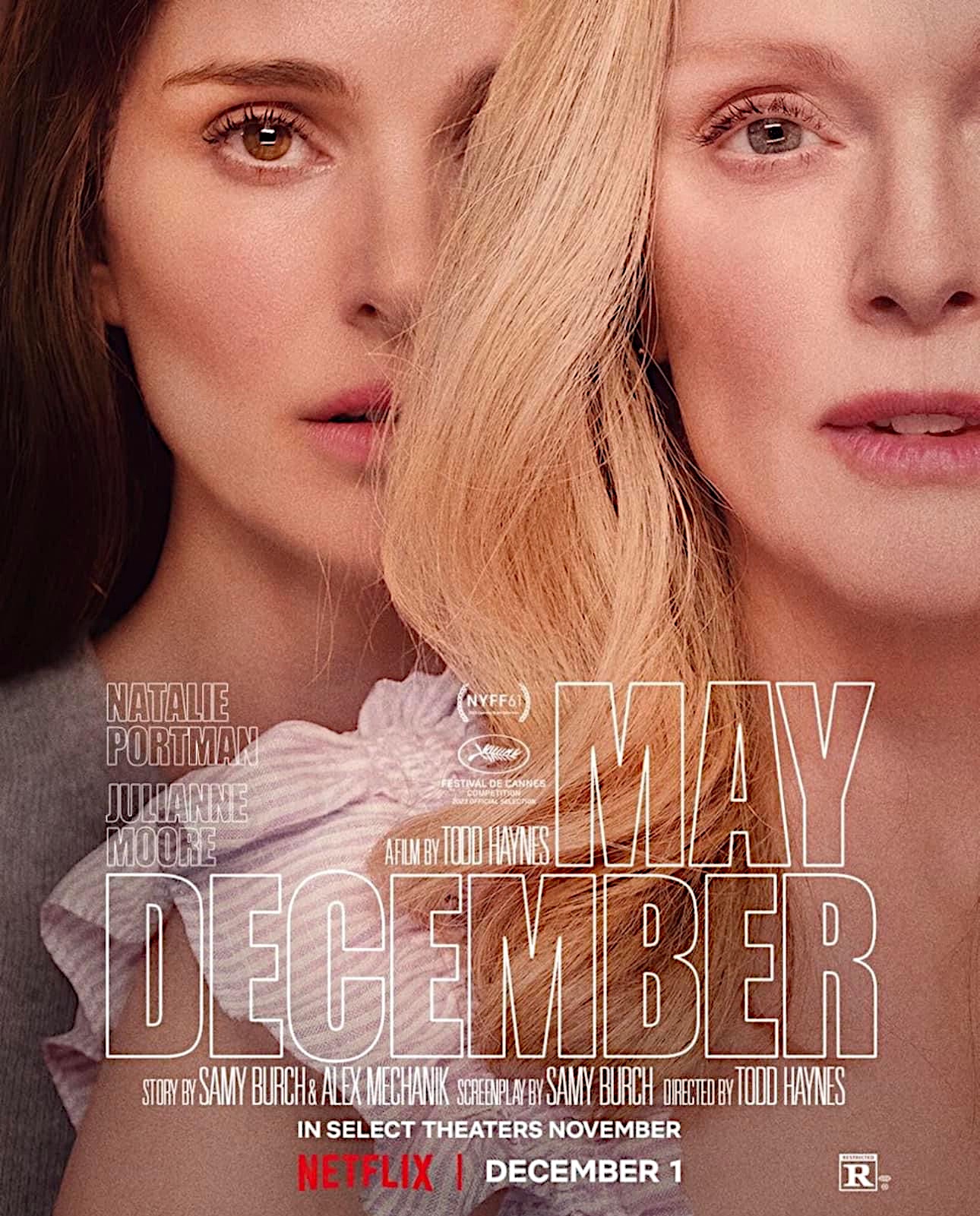
During last May’s Cannes Film Festival N.Y. Times critic Manohla Dargis, who’s become an unbridled celebrator of feminist-brand cinema in recent years, praisedTodd Haynes’ MayDecember (Netflix, 12.1), an underwhelming (to put it kindly) attempt at blending the Mary Kay Letourneau saga with a semblance of a re-heated Persona. Dargis actually wentapeshit, predicting Oscar glory. I wouldn’t say that reactions to the recent N.Y. Film Festival screenings of Haynes’ film have necessarily put the kibbosh on this fantasy, but I would say that the general lack of excitement is palpable.
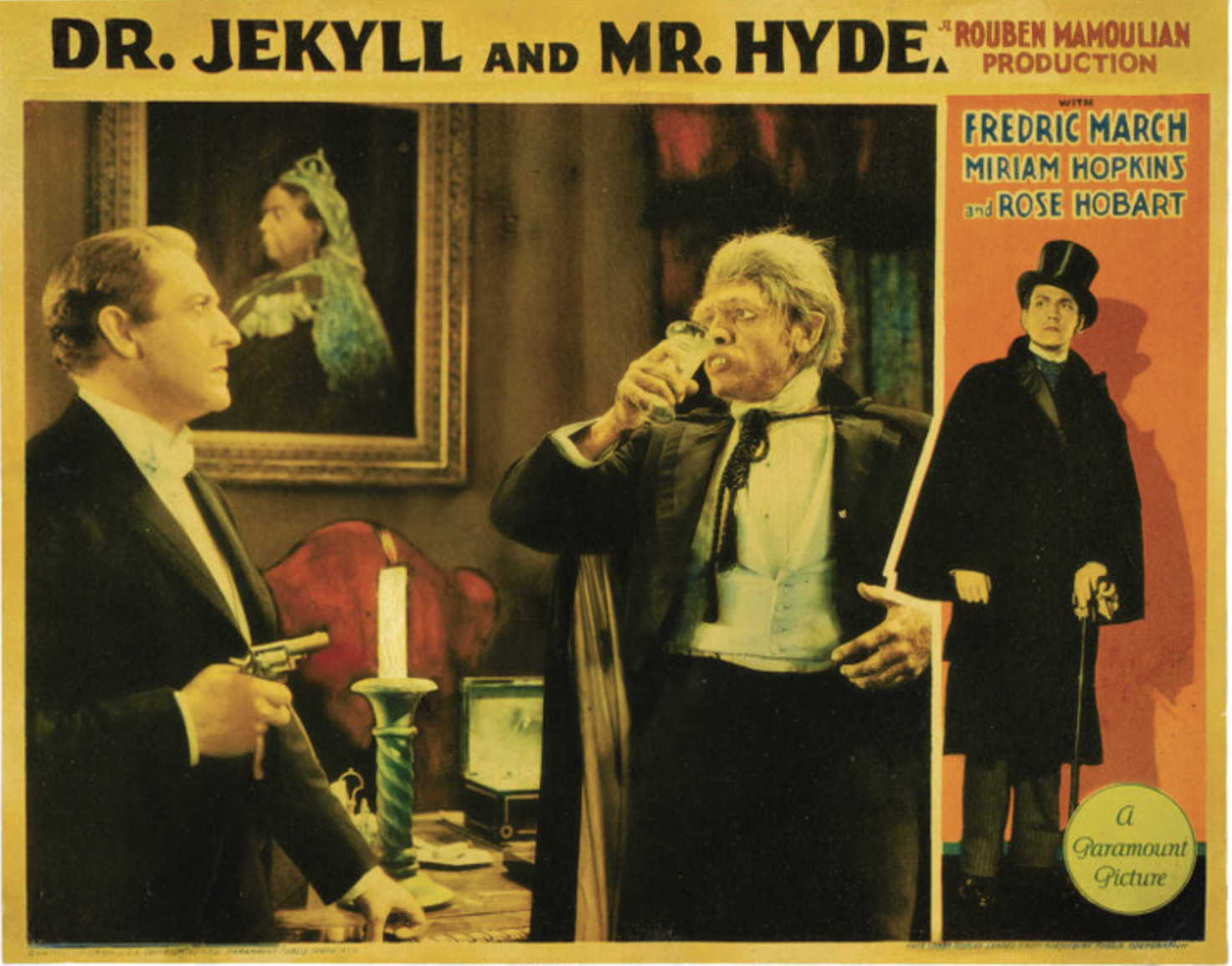
Last night I saw for the very first time Rouben Mamoulian‘s Dr. Jekyl and Mr. Hyde (’31). I had watched two or three segments (particularly the Miriam Hopkins stocking-removal + side-boob scene) but never the entire thing.
It was a beautifully restored version showing on the Criterion Channel, but I was doubly impressed and actually astonished by the extended POV sequence in the very beginning, which I had somehow never read about.
It was almost certainly Mamoulian’s idea to begin with, I’m guessing, but the renowned cinematographer Karl Struss (Sunrise, The Great Dictator, Limelight) was obviously a full partner. The shot uses a circular, partially-closed iris view, and it starts with Fredric March‘s unseen Dr. Jekyll playing an organ, talking to his butler, walking through his home, putting on an evening cape, leaving his home (we finally get a peek at March when he looks in a mirror) and arriving as a college classroom for a lecture.
If before last night you had asked me what film was the first to make use of extended POV cinematography, I would have said Robert Motgomery‘s Lady in the Lake (’47), a hardboiled Phillip Marlowe crime story.
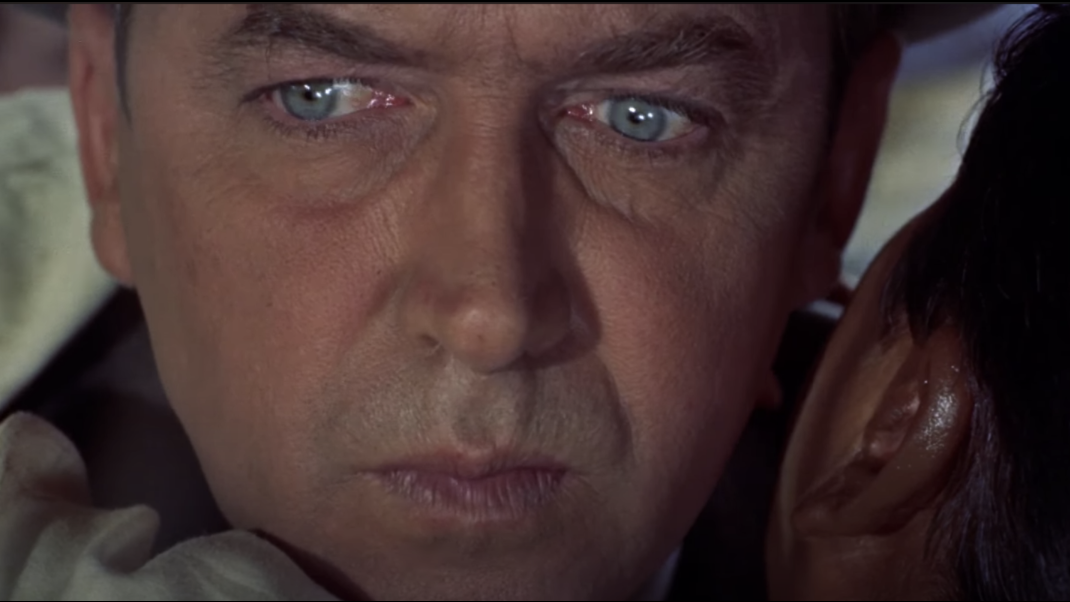
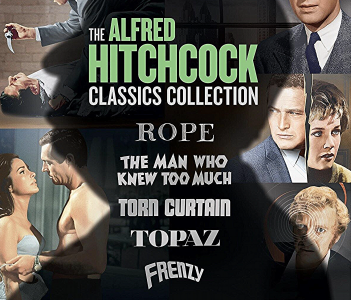
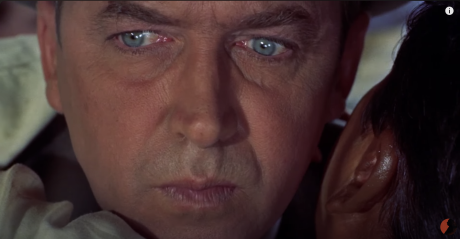
It will be interesting to watch the forthcoming 4K UHD of Alfred Hitchchcock‘s The Man Who Knew Too Much (’55), which was shot by Robert Burks in VistaVision. But not the others.
If you’re talking about a 4K UHD remastered Hitchcock film that would really get people excited, the most desired would be North by Northwest (’59). The last Bluray upgrade happened in ‘07. Overdue for 4K. Way.
Hitchcock and Burks shot five films in VisaVision: To Catch a Thief, The Trouble with Harry, The Man Who Knew Too Much, Vertigo and North by Northwest.