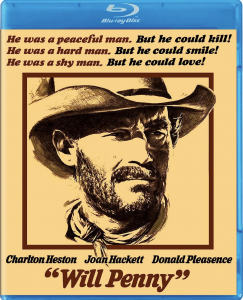
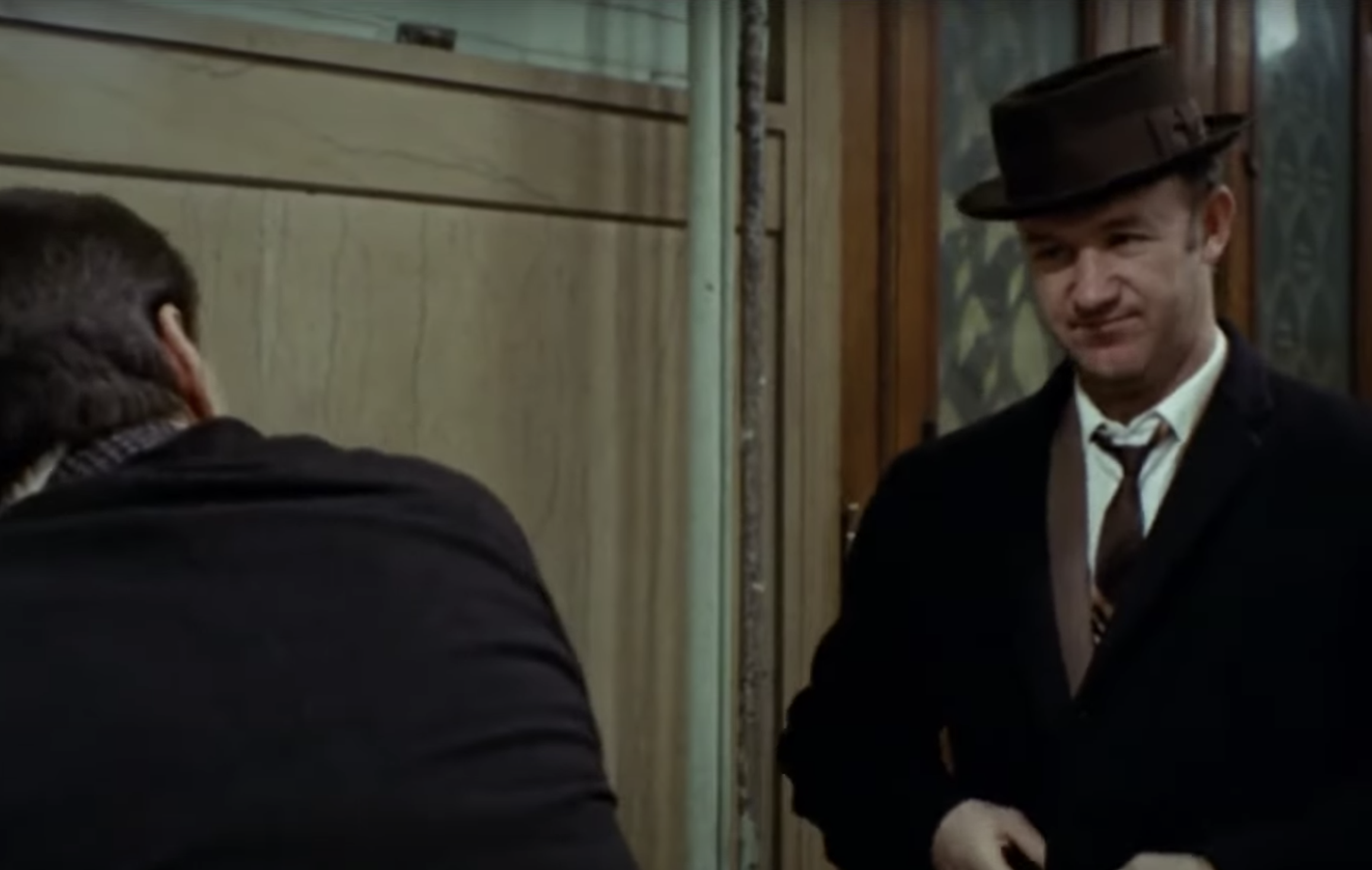
I suppose I’ve no choice but to order the Bluray and hope for the best.
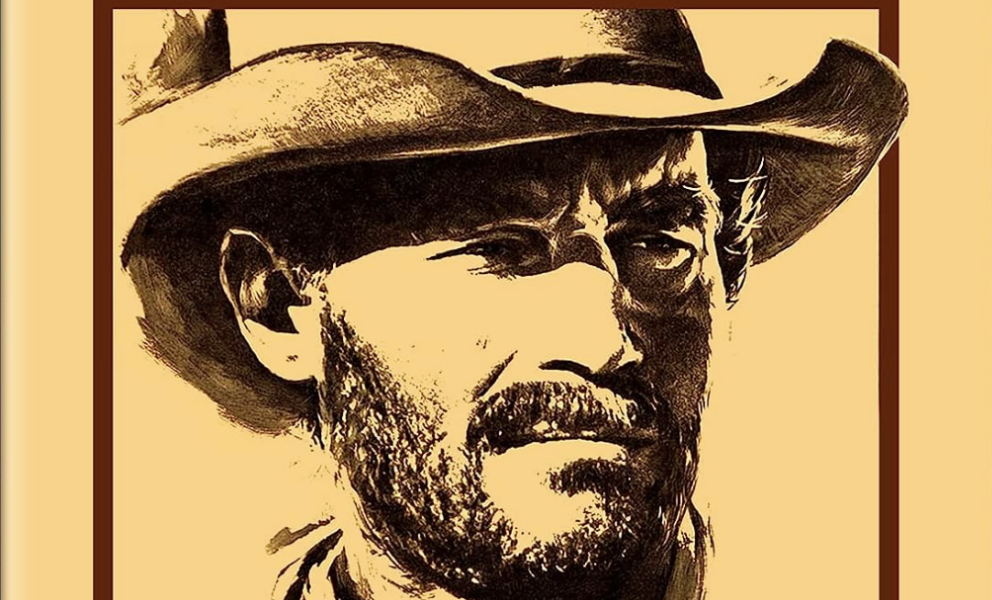
“And I got to really like [Charlton Heston]. A lot of people told me that I wouldn’t like him, but I liked him. And he tried very hard. I mean, Will Penny is far and away the best thing he’s ever done.” — Bruce Dern.
I’m sorry to disagree with the five or six snipingnaysayers out there, but HE agrees with Variety‘s Owen Gleiberman and the Critical Drinker about Alejandro Monteverde‘s Sound of Freedom, which I saw last night at the AMC Sono8.
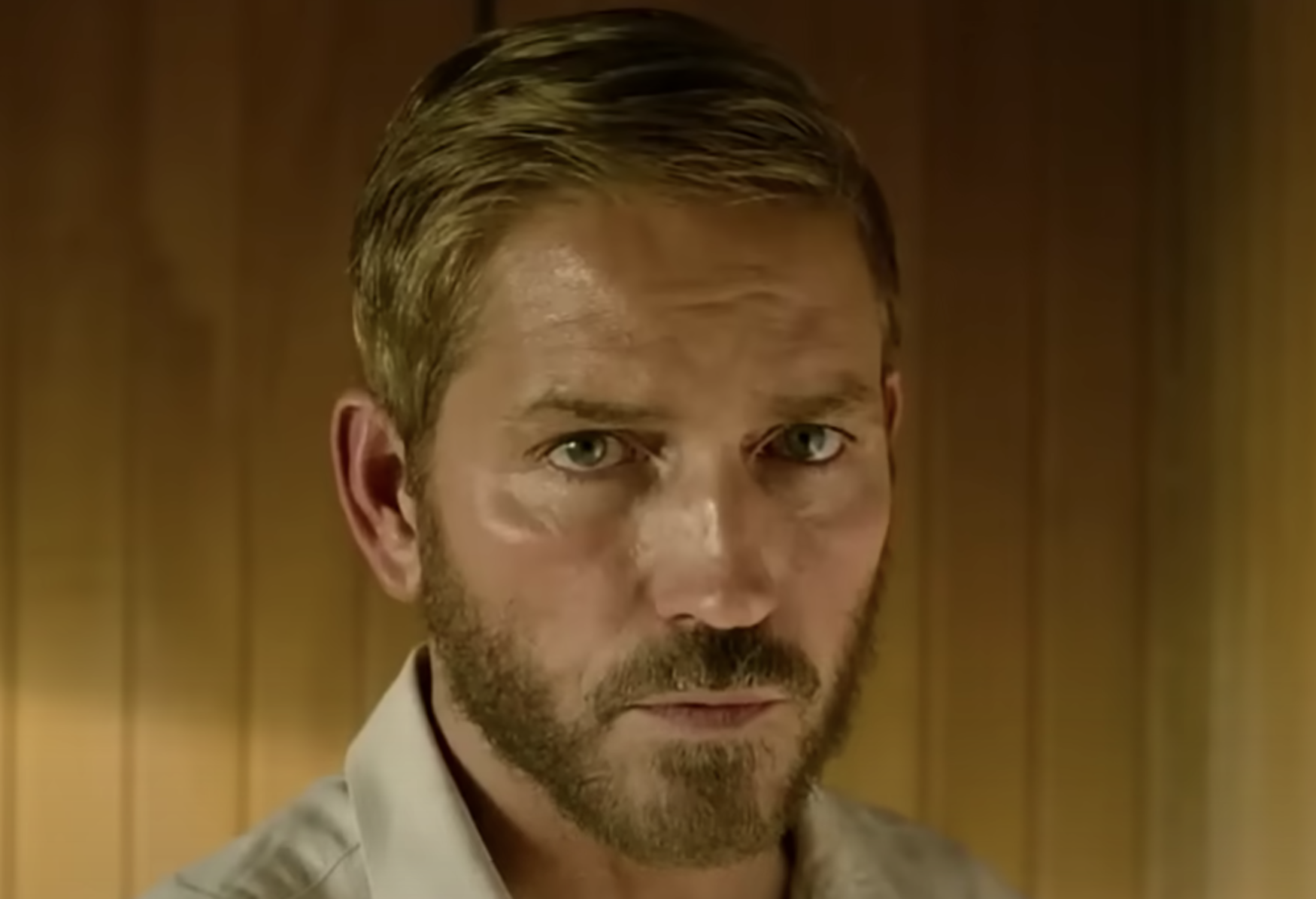
This is an entirely decent, well-honed, approvable, maturely-judged, non-exploitive genre film about a solemn, real-life good guy (Tim Ballard, played by Jim Caviezel) struggling to save kids from south-of-the-border sex traffickers, and two kids in particular.
The mere thought of young tykes being used as sex slaves is obviously enough to make anyone’s skin crawl or stomach turn, but the film doesn’t subject you to anything even semi-explicit, thank God — it’s all implied. (Not that this implication makes Sound an easy sit — it’s not.)
Nonetheless child trafficking is real and widespread and the film (which was shot five years ago) is reflecting statistical reality as far as I’m able to discern.
You don’t have to be a rightwinger to accept or recognize that Sound of Freedom is dealing straight cards, but there’s a tendency, I’ve noticed, among lefty critics to put it down because of the bizarre QAnon associations. I too have a problem with wacko righties and their “Pizzagate” conspiracy theories. But the lean and mean Sound of Freedom feels steady and subdued and un-fraught with cliche. No shoot-outs, only one ultra-violent confrontation, no feeling of any sort of Mel Gibson-like fetish for blood and bruises.
Ballard is easily Caviezel’s best role since The Passion of the Christ (’04), and the basis of his finest performance in 19 years. And Bill Camp has a juicy supporting role as Vampiro, a former bad guy who’s looking to atone for past sins. He’s always smoking cigars and constantly slurping liquor, but his heart is in the right place.
I catch films at the Sono8 from time to time, and one of things I like about going there is that there are almost always acres of open seats. I’ve rarely attended a showing that was even half-full. Except for last night, that is. I attended a 6:50 pm show (the actual film starting at 7:15), and every last seat was filled except for the front-row seat that I’d reserved. This means something.
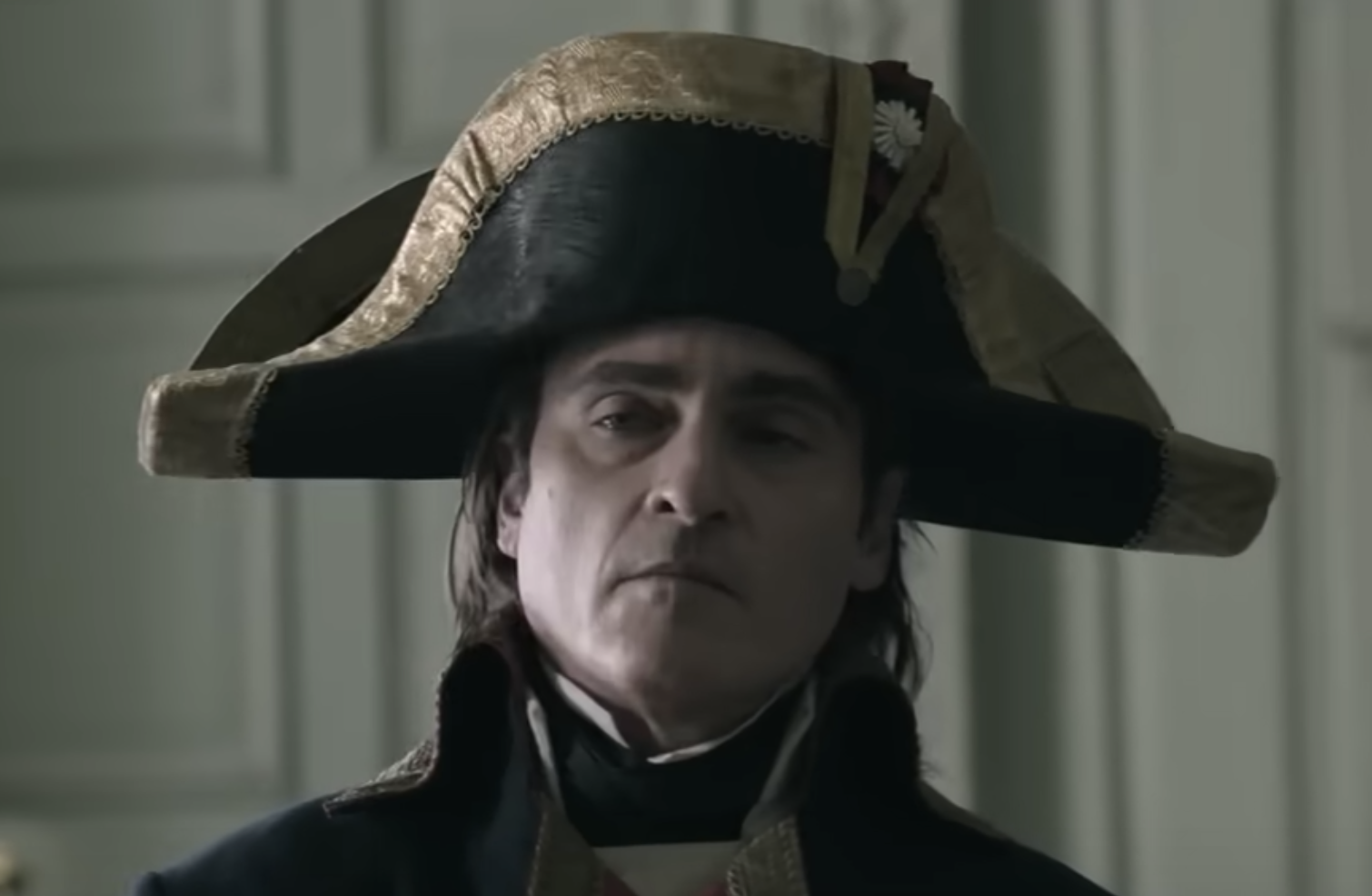
With this morning’s debut of the grand and stirring trailer for Ridley Scott‘s Napoleon (Apple/Sony, 11.22), there can be no doubt that Dariusz Wolski‘s cinematography (Barry Lyndon-ish, exquisitely lighted, immaculately framed) will be Oscar nominated…no question about it. An absolute visual knockout.
Let’s go for the gusto and predict that Napoleon will almost certainly be nominated for a Best Picture Oscar…look at it! And given this, how could Scott not land a Best Director nomination?
I’m almost disappointed that this trailer has popped online, as I’d understood it would be exclusive to theatres (attached to Mission: Impossible — Dead Reckoning Part One) for a few days. I bought a ticket to see MI:7 tomorrow evening specifically to catch the Napoleon trailer on a big screen.
As expected, Joaquin Phoenix‘s Napoleon Bonaparte doesn’t speak with a Pepe Le Pew French accent. Nobody in the entire cast does, it seems.
Phoenix will deliver a fascinating performance, I’m sure, but his obviously un-youthful, unmistakably creased, late-40ish features argue that he’s too old for the part.
Phoenix was roughly 48 during filming, and (let’s be honest) looked it. Napoleon Bonaparte’s rise-to-power heyday was between ages 20 and 40, or between 1789 (the launch of the French revolution) and the Battle of Wagram (1809). He met the 32 year-old Josephine (Vanessa Kirby) when he was 26, which was also Phoenix’s age, more or less, when he played the rancid Commodus in Scott’s Gladiator (’00).
Marlon Brando‘s performance as Napoleon in Henry Koster‘s Desiree (’54) was more age-appropriate. Born in 1924, Brando was 29 and 30 during filming.
Oh, and by the way? Catherine Walker‘s presumably brief performance as Marie Antoinette seems perfect. That impudent, fuck-the-peasants expression is just right.
Yesterday we paid the River Country folks to go tube-rafting down the Delaware. A few miles south of Frenchtown. I wanted a Deliverance-type experience, but there were no canoes to speak of. Chumps on rubber tubes. On one hand it was quite peaceful and soothing, and on the other hand the current was barely there. Every now and then the current would accelerate slightly and you could imagine you were Tom Sawyer or Huckleberry Finn cruising down the Mississippi. But most of the time we were drifting at the speed of a 92 year-old guy shuffling toward the bathroom at 3 am. So I just gave into the lethargy.
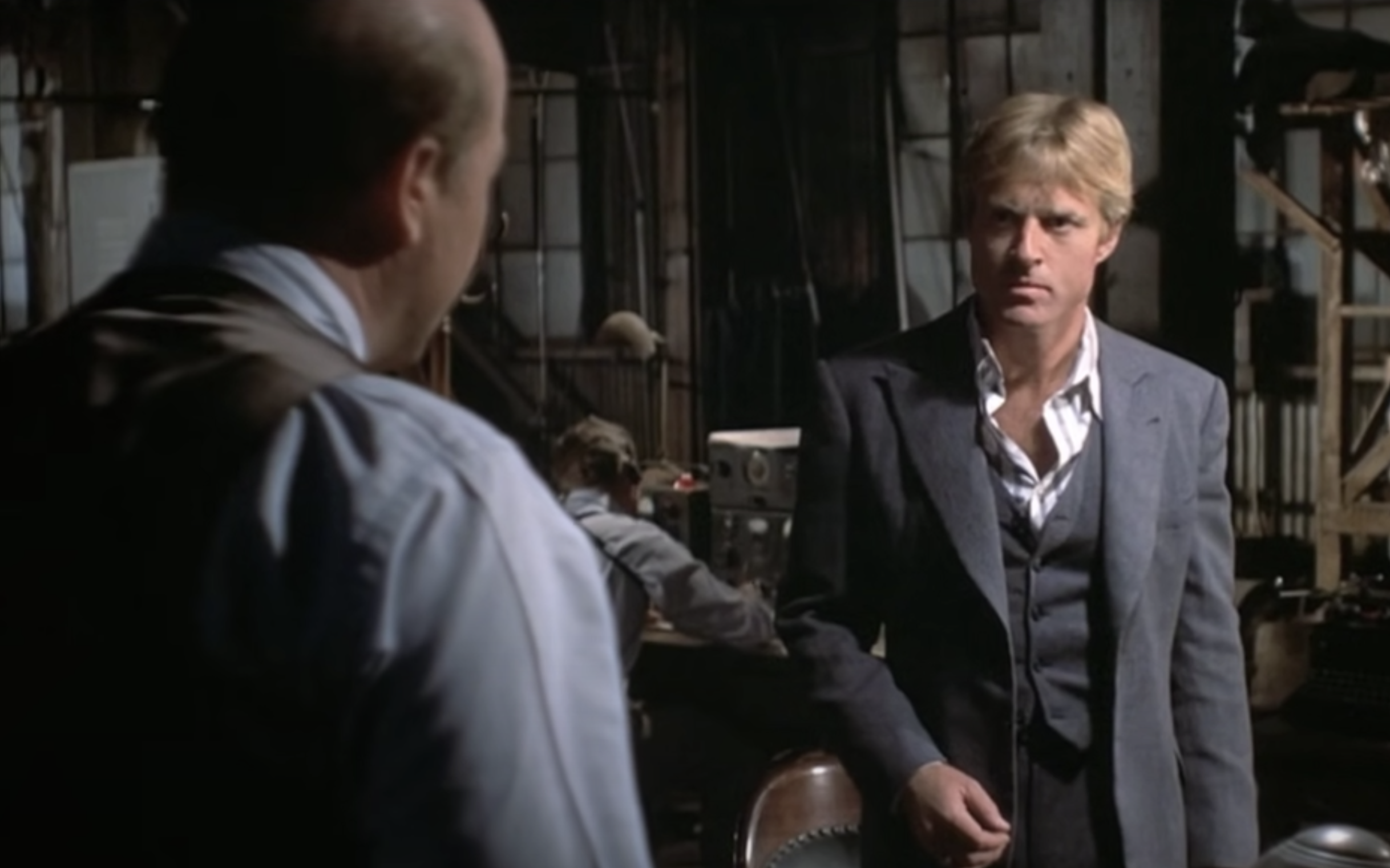
“In the late 60’s my agent (as an actor) was a wonderful guy — Bill Robinson. He didn’t represent producers (nobody did back then) or directors. I was successfully acting in movies, but I wasn’t interested in being a movie star. I, and many of my young friends, hoped we could make our way as filmmakers. Around 1970 Robinson hired Mike Medavoy to work for him. It was his first job as an agent, and I introduced Mike to many of my aspiring friends. (Not that it matters, but they included Spielberg, Malick, Coppola, Donald Sutherland and others.)
“One of my best friends [at the time] was Terry Malick — a young AFI student. Another was John Calley, a producer who then became head of Warner Brothers. I had an idea for a movie about big-rig truckdrivers, loosely based on a bunch of country & western songs about life on the road. Calley backed my idea of hiring Terry to write it, and the script, Deadhead Miles (his first), ended up being made in 1971/72 by Paramount. It was disastrous, because I made the two biggest mistakes a producer can make: (1) I hired the wrong director, and (2) I didn’t fire him.
“While licking my wounds from that project, I read a script by another young, unknown writer who was just out of UCLA — David Ward. It was called Steelyard Blues. I thought it was a fresh, original but difficult film to get made, and I asked David what he wanted to do next. He gave me a 2 or 3-minute pitch about a young con man whose best friend is killed by a guy who he decides to con out of every cent he’s got, with the help of an experienced con man. He told me the ending would be ‘his surprise’.
“That was it: I was hooked. I told him to tell it again on tape, then set out to find enough money to option Steelyard Blues and commission The Sting.
“After several months, I met Julia and Michael Phillips and we pooled our meager resources. We made Mike our agent, and got Steelyard Blues made at Warner Brothers in 1972/73. Richard Zanuck and David Brown were our executives there. When the script for The Sting was finished, we set about to get it financed. It took over a year to finish; we never saw a word of it…or knew the ending…until Ward handed it in.
“We gave it first to Redford. It was fairly easy to do as I knew him from developing a script that we’d had many discussions about, and Julia knew him from working at First Artists in NYC. We wanted to try to get Ward approved to direct it, but Redford resisted that concept. I also sent it early on to my pal John Calley, but he didn’t want David, and didn’t like the script very much. He thought it was ‘a shaggy dog story.’ He made fun of himself for years about that. Frankly, no one ‘packaged’ our project. Our package was us, Redford, and the script: take it or leave it.
“So, in gratitude to Zanuck/Brown for having treated us well on Steelyard Blues, Julia, Michael and I then gave them The Sting to present to Universal, where they had moved their company. (That’s why it’s a ‘Zanuck/Brown presentation.’ They were not producers or executive producers — a misperception they hastened to allow and refused to correct in perpetuity.) They slipped it to George Roy Hill, who told Newman about it. He read it and asked to do it.
“By the way, Robert Shaw wasn’t the first person offered the part of Lonnegan: Richard Boone was. He turned it down.
“Along the way Dan Melnick, newly installed at MGM, heard about the script and asked to read it. I think Mike may have been the one who sent it to him. But it was too late, and we continued our negotiations with Universal. Melnick was pissed: it was the first time I had heard the phrase, ‘Don’t get mad…get even.’ I guess he decided to take it out on Mike. He evidently forgave me, since he financed my next production, Hearts of The West, at MGM. I never met Jim Aubrey.
“Rob Cohen? The story I’ve always heard from him is that he went to work as a reader at ICM, where Mike Medavoy had moved after working for Bill Robinson. Rob had done coverage for the script, and Mike had then read it. I’ve read his coverage and it was enthusiastic, prescient and compelling.
“After this Julia, Michael and I optioned another script by a first-time writer, Paul Schrader‘s Taxi Driver. But that’s another story.
“A good example of the vagaries of casting: The original Sting script was written for a kid and a geezer. Perfect casting in those days would have been Jeff Bridges and Lee Marvin. That residual relationship is why Newman calls Redford ‘kid’ in the movie, despite their barely-discernable 10-year difference in age.”
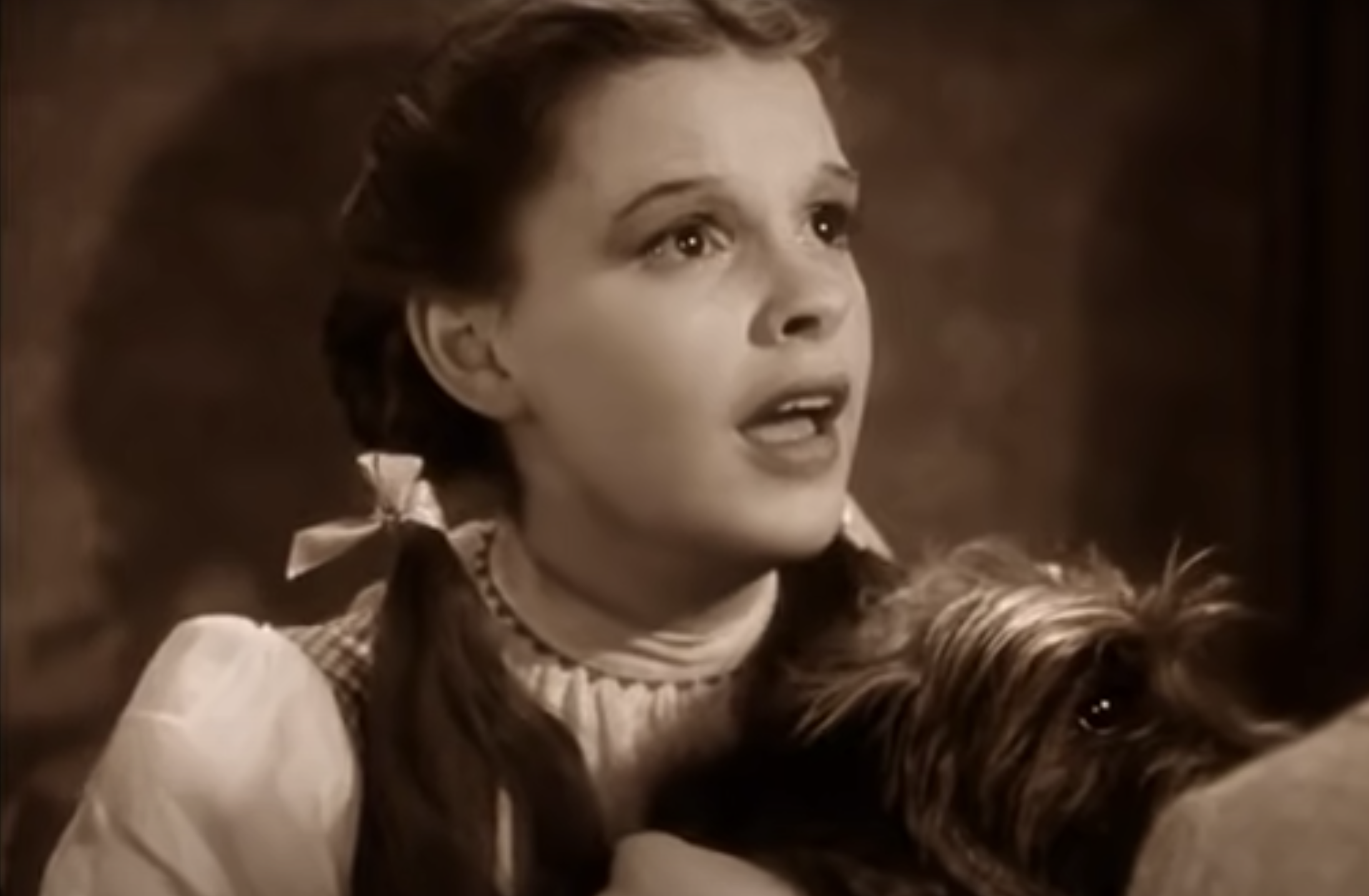
“Oh, but anyway, Toto, we’re home…home! And this is my room and you’re all here and I’m not going to leave here ever, ever again. Because I love you all! And…oh, Auntie Em, there’s no place like home!”
You can snort and sneer but Judy Garland‘s delivery of this final passage of dialogue in The Wizard of Oz (’39) is one of the most emotionally affecting moments in the history of cinema. You can just dive in and watch this scene cold without sitting through the 100-minute film that precedes it, and it still gets you every time. Because it doesn’t seem as if Garland is reciting dialogue (written by Noel Langley, Florence Ryerson, Edgar Allan Woolf and possibly Herman J. Mankiewicz), She seems to be really feeling it rather than selling it.
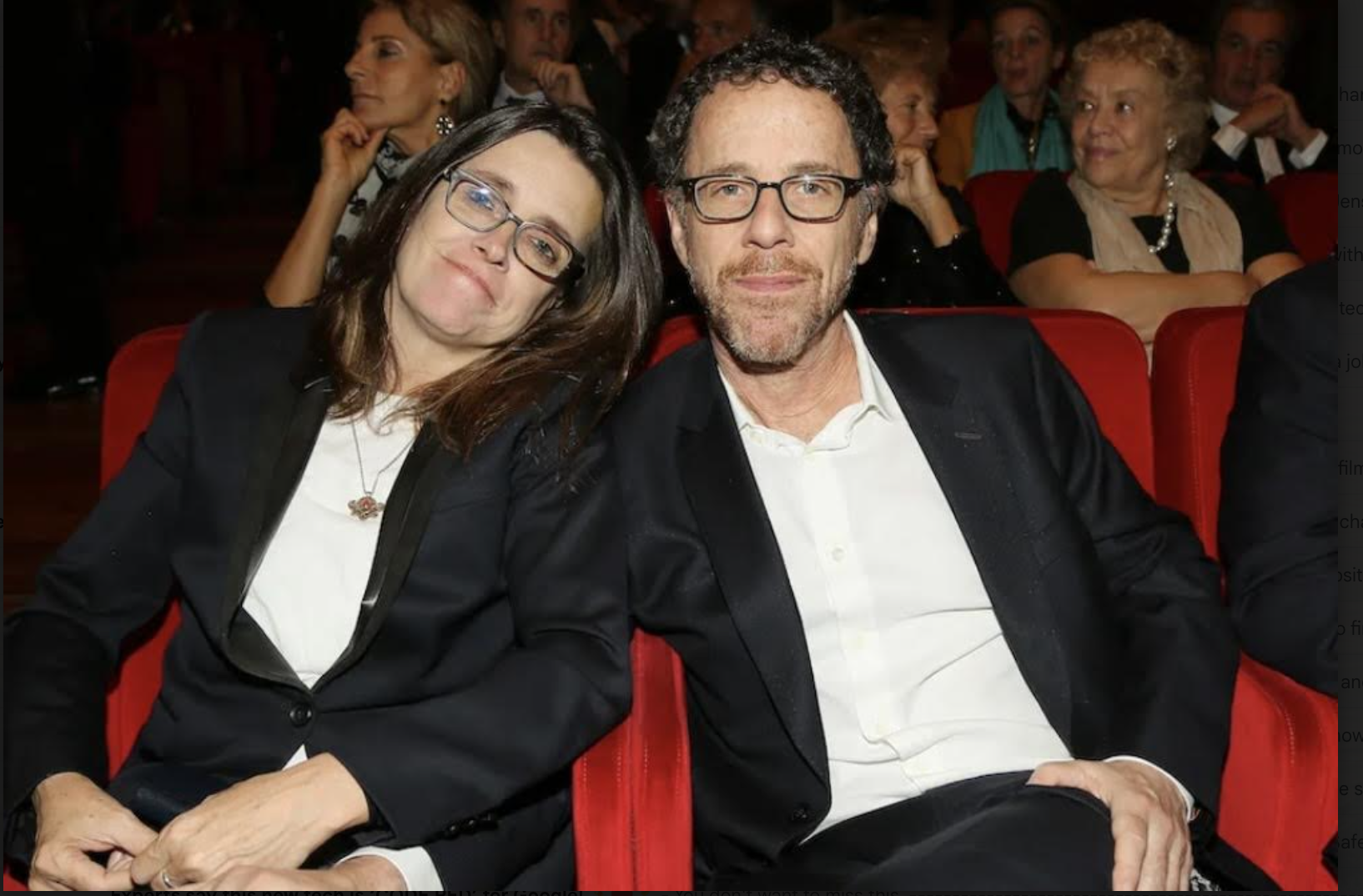
The famous and deeply respected Ethan Coen is the director of Drive-Away Dolls (Focus Features, 9.22), a kind of goofball, arch-attitude lesbian road comedy that the 65-year-old Coen cowrote with his wife, Tricia Cooke. Tricia has edited or co-edited many Coen brothers films over the decades. Married since 1990, Ethan and Tricia reside in Manhattan and have two children — daughter Dusty and son Buster Jacob.
Forgive my ignorance but I’ve been under the impression that queer means unregenerately queer (we’re no longer allowed to use the word “gay”) without any ifs, ands or buts. I would’ve thought that a woman who’s been married to a straight guy for 33 years and who presumably resides with him, and who’s also raised two kids with him, and yet whose primary emotional or sexual allegiance is to women would be described as bisexual or bi. Or is Trish a recently avowed queer person who used to be bi until she changed her mind or something?
Sorry but I’ve never heard of a queer woman with her matrimonial and maternal particulars. Maybe someone can help me out.
I saw Dominik Moll‘s The Night of the 12th (Film Movement, 5.19) last night at the delightful New Plaza Cinema (35 W. 67th Street, NYC) — a modest but dedicated arthouse for discerning adults. I was so happy to be sitting in the front row of a theatre where I belonged, a Film Forum- or Thalia-like shoebox…whistle-clean, air-conditioned comfort, ample leg room and surrounded by older folks not eating popcorn.
The film is a mostly fascinating, vaguely haunting, Zodiac-like police investigation drama that won six Cesar awards (Best Picture, Best Director, Best Adaptation, Best Supporting Actor, Most Promising Actor, Best Sound) last February.
It’s a shame, I feel, that almost no one in this country is going to pay the slightest amount of attention. It’ll eventually stream, of course, but it probably won’t attract anyone outside Francophiles and the fans of grim police procedurals, mainly because it doesn’t do the thing that most people want from such films, which is the third-act delivery of some form of justice or at least clarity.
Night is about a cold case — a prolonged and frustrating and ultimately fruitless investigation of a savage murder of a young girl in Grenoble, France…frustrating and fruitless unless you tune into the film’s forlorn wavelength, which is about something more than just whodunit.
It’s based on a fact-based 2020 novel by Pauline Guéna.
The victim is Clara (Lulu Cotton-Frapier), a beautiful, blonde-haired 21 year-old student who lives with her parents. After leaving a party in the wee hours and while walking down a moonlit street, she’s approached by a hooded wacko and set aflame — a horrible sight. The film is about two Grenoble detectives, played by Yohan (Bastien Bouillon) and Marceau (Bouli Lanners), as they interview and investigate several potential killers whom the casually promiscuous Clara had been sexual with at different times.
All of these guys are scumbags of one sort of another, and you start to wonder why she didn’t have at least one male friend or lover who wasn’t an animal. The digging goes on and on, but no paydirt.
The essence of The Night of the 12th is militant feminism mixed with intense grief. It’s saying there’s a subset of appallingly callous young men out there today…aloof, cruel, thoughtless dogs who sniff and mount out of raw instinct, and this, boiled down, is what killed poor Clara.
Last month in Cannes Martin Scorsese said that Killers of the Flower Moon wasn’t a whodunit but “a who-didn’t-do-it?”
Same with Night — Yohan concludes at the end that “all men” killed Clara, and so among the Cesar voters and the guilty-feeling industry fellows who felt an allegiance with their feminist collaborators… this water-table sentiment, an adjunct of the Roman Polanski-hating faction, is presumably what led to The Night of the 12th‘s big sweep.
By this measure Night isn’t about a “cold case” — it’s a kind of hot-flush case that points in all kinds of directions to all kinds of potential young-feral-dog killers…a limitless (in a sense) roster of bad guys.
In order to make this point about “all men” being at fault, the film necessarily can’t allow the Grenoble detectives to finally nab a single killer.
But of course, Clara’s curious attraction to bad boys and her generally impulsive nature was at the very least a significant factor in her fate. She was obviously flirting with this kind of snorting louche male for a deep-seated reason of some kind. Clara could have theoretically been a cautious or even withdrawn type, barely experienced in sex and sensuality and perhaps even prudish, and she still might have been torched by a sicko. But you’re not going to tell me that “playing with bad boys” wasn’t central factor.
Sensible women choose their lovers sensibly, and Clara didn’t roll that way. If you don’t use common sense in your romantic life, sooner or later the bad stuff will rub off.
So where did the bad-boy fetish come from? In The Limey (’99) we understood why Terrence Stamp’s daughter Jenny was attracted to dangerous men, but Clara’s dad (Matthieu Rozé) is a moderate mousey type and her mom (Charline Paul) is a diligent homemaker. So how and why did she develop the appetite?
The screenwriters (Moll and Gilles Marchand) don’t even toy with this emotional dynamic as they don’t subscribe to a belief that Clara might have flown too close to the flame. They seemingly believe that Clara was 100% innocent of any dangerous behavior by way of skunky boyfriends. I think that’s a dishonest attitude, and so I didn’t finally buy what the film was saying.
I saw the film with mostly older singles and straight couples, but there were at least two female pairs who were kind of sniffling and crushed at the end — the same emotional vibe I felt among women after a Toronto screening of Boys Don’t Cry.
This is admittedly a day late and a dollar short, but yesterday Brian Wilson celebrated his 81st birthday. On the very same day Sutton Wells, aged 19 months, was dancing in her bedroom to that Pet Sounds instrumental track (i.e., the second-to-last cut, just before “Caroline No”). Will someone please send this to Brian already? Seriously.
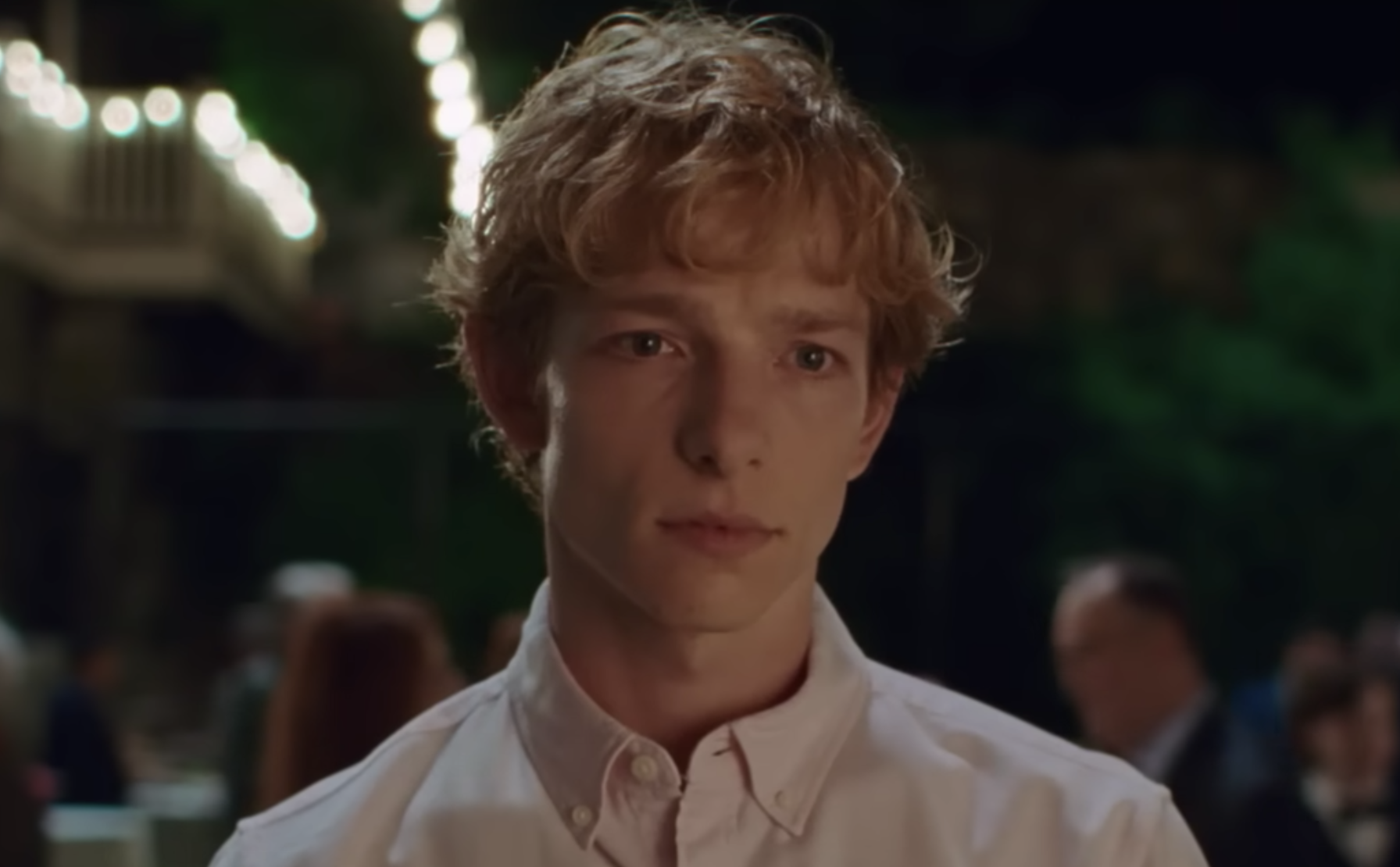
…with his teenager hair — longer, curly — than his older 20something hair (shorter, no curls). He shouldn’t have cut it. If he hadn’t, Faist would be the unquestioned star of Challengers. Because Zendaya‘s acting manner is too dry and flat (as always), and because Josh O’Connor is too grinny and joshy and “yuh-huh…yeah, bro.”
Luca Guadagnino’s tennis film is being called “a romantic sports comedy.” It follows a Grand Slam tennis champion Faist) who signs up to compete in a challenger event against the former lover (O’Connor) of his wife and coach (Zendaya). Or am I misunderstanding?
Challengers (MGM) opens on 9.15.23, just after debuting at the Venice Film Festival.
For days and days the French Connection censorship story has confounded everyone. The “whodunit” factor, I mean, although it’s been obvious for several days that the nine-second deletion was done at the behest of director William Friedkin (formerly known as Hurricane Billy).
Has the 87-year-old Friedkin gone silly in his old age? Bending over in obeisance to the wokesters? I personally think —- all due respect —- that this formerly ballsy, gold-standard helmer should be roasted on a spit for censoring his own film. It sets a terrible precedent.
On Friday, 6.9, HE commenter “The Multiplex” reported that “in Disney’s DCP asset list the currently-streaming version of The French Connection is listed as ‘2021 William Friedkin v2.'” This info, I noted, “is seemingly fortified by a statement from The Criterion Channel, passed along by “The Connection” in another 6.9.23 HE story titled “HE to Friedkin re Censorship Fracas.” CC’s statement said that “according to our licensor [Disney], this is a ‘Director’s Edit‘ of the film.”
After reciting the same evidence that I reported several days ago — “2021 William Friedkin V2.” plus Criterion calling the censored version a “Director’s Edit” — Kenny merely says that “this ostensibly puts the ball in Friedkin’s court.” Ostensibly?
Kenny adds that (a) he’s “reached out to Friedkin through CAA and received no response” and that (b) “a film asset manager I’ve asked about this matter has reached out to Friedkin personally and received a response from Friedkin’s personal assistant saying basically nothing.” And the name of that tune is The Guess Who’s “No Sugar Tonight (In My Coffee).”
“Wells likes to cultivate a barrel-chested, combative, curmudgeonly air in his writings. (Commenting on the blanket of orange wildfire smoke that recently enveloped Manhattan, he shrugged it off, stating, “You should try breathing Hanoi air on a shitty day. Tough guys only.”) He’s long had differences with Criterion’s physical product practices, over issues like aspect-ratios and color timing. He almost invariably couches his complaints in ad hominem terms, and this French Connection business allowed him to really go to town in that respect.
“In one of several subsequent posts commemorating the Twitter rage over what many were still calling Criterion’s censorship of Friedkin’s film, Wells instructed the company’s president to ‘blow it out your ass,’ never specifying the “it” to which he referred. As with the inference that Criterion is some kind of ‘woke’ company, Wells believes that the label represents what he calls a ‘dweeb’ sensibility, and is populated by people who would more than likely snub him at receptions and on movie queues. And honestly, on the latter count, he’s probably not wrong, although not necessarily for the reasons he thinks.”
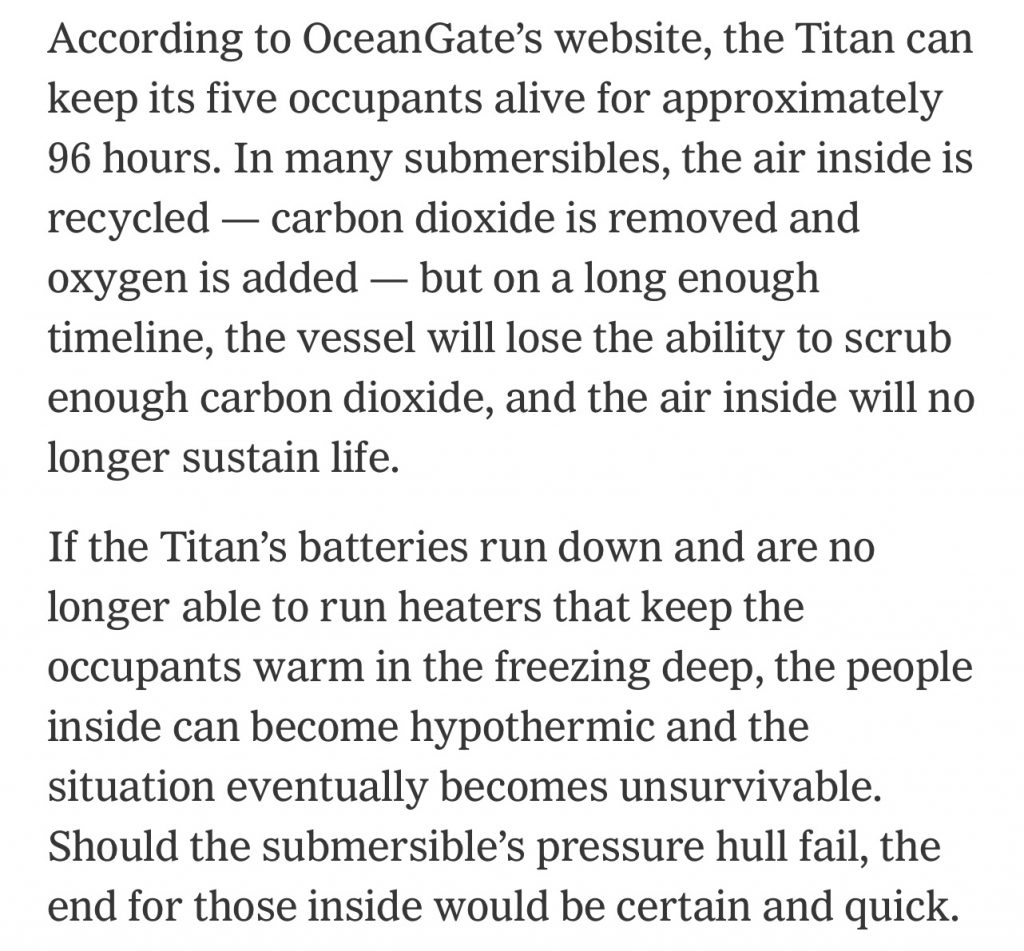
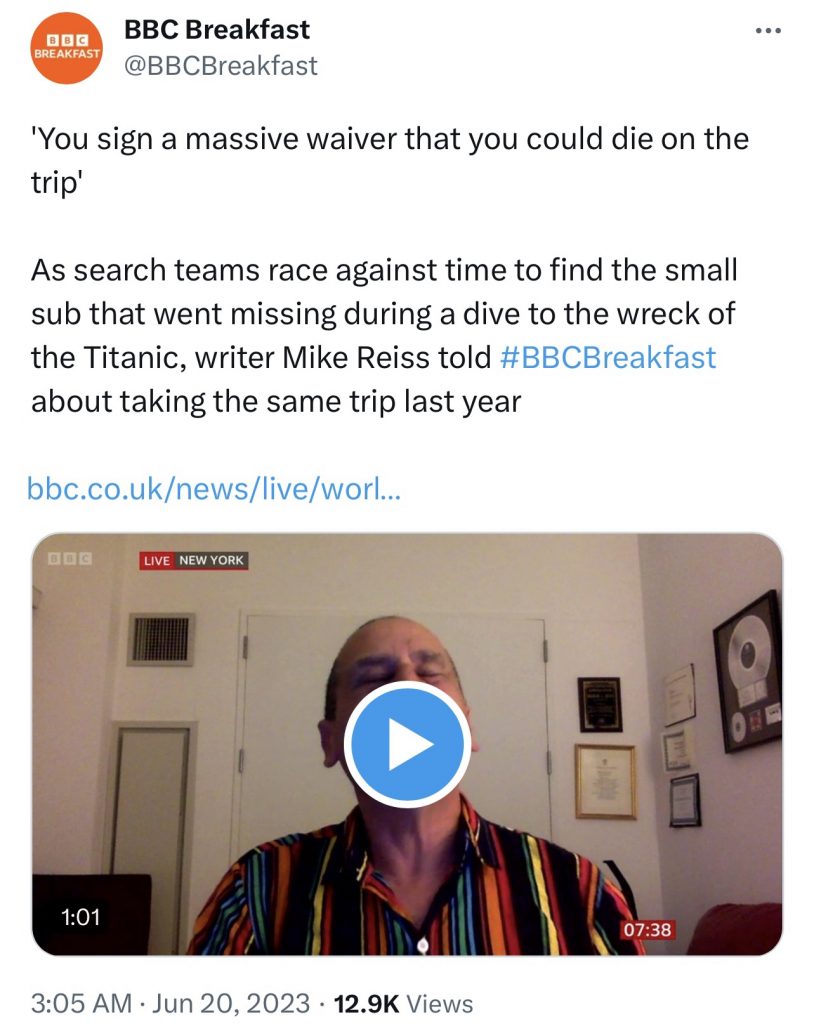
It’s been estimated that the Titan, the small, deep-sea, Titanic-spotting submersible that went missing early Sunday morning, can sustain the lives of five on-board travelers for 96 hours, or four 24-hour days.
The 23,000-pound Titan began descending around 4 am on Sunday, or roughly 53 hours ago. (It’s now 9 am eastern.) Start to finish Titanic dives last ten hours, including a 2 and 1/2 hour descent to the wreckage some 13,000 feet below.
If the five aren’t rescued by early Thursday morning, an agonizing finale awaits. The clock is ticking — at most rescuers have the remainder of today (Tuesday, 6.20) and all-day Wednesday.
This paragraph, from a N.Y. Timesreport, conveys the bottom line: