Try Listening To HE’s 18-Year-Old “High Noon” vs. “Rio Bravo” Piece

Now that HE’s TTS (text-to-voice) capability has been installed, HE regulars might want to listen to a High Noon vs. Rio Bravo essay that I posted a little more than 18 years ago. (You’ll need to click through to the piece to activate the listening bar.)

I’ve chosen the voice of a male Englishman, but it’s just a placeholder. I’m not especially happy with this guy because he’s just a genteel robotic voice — he doesn’t seem to understand what he’s saying or, for that matter, the English language itself.

So I’m currently searching around for a TTS software platform that can deliver voices that do seem to understand the import of what they’re reading, and which know a little something about when to pause and which words to emphasize and what parentheses mean, etc. (Hume is one optionRevoicer is another.) My ideal voices would be (a) mid ’60s Lee Marvin, (b) early ’60s Richard Burton or (c) my own.

So let’s go back to July 2007George Bush is president, Iraq is a mess, the arrival of woke terror is at least a decade away, the pandemic won’t begin for another 13 years, the greatest movie year of the 21st century is half over, and people are beginning to talk seriously about a certain Illinois senator with a funny-sounding name who’s running for president.

___________________________________

Talk to any impassioned, ahead-of-the-curve film snob about classic westerns, and he/she will probably tell you that Howard HawksRio Bravo (1959) is a much better, more substantial film than Fred Zinneman‘s High Noon (1952). More deeply felt, they’ll say. Better shoot-em-up swagger, tastier performances, more likable, more old-west iconic.

Many people I know feel this way. And now director Peter Bogdanovich is saying it again in a New York Observer pieceRio Bravo is even better than you thought, High Noon doesn’t hold up as well, etc.

Something snapped when I read Peter’s article this afternoon. Goddamn it, the Rio Bravo cult has gone on long enough! Bogdanovich calls it “a life-affirming, raucous, profound masterpiece”…okay. But I’m going to respond politely and call that a reach. I’ve long admired admire Hawks’ movies and the whole Hawks ethos as much as the next guy, but it’s time to curtail this here and now.

High Noon may seem a bit stodgy or conventional to some and perhaps not as excitingly cinematic to the elites, but by any semblance of a classic understanding of what constitues high-quality cinema, it’s a far greater film than Rio Bravo.

It’s not about the Old West, obviously — it’s a metaphor movie about the Hollywood climate in the early ’50s — but it walks and talks like a western, and is angry, blunt, honed and unequivocal to that end. It’s about the very worst in people, and the best in a single, anxious, far-from-perfect man.

I’m not speaking so much about Gary Cooper‘s Will Kane as High Noon‘s screenwriter-producer Carl Foreman, who was being eyeballed by the Hollywood right for alleged Communist ties when he wrote it, and receiving a very tough lesson in human nature in the process. He wound up writing a crap-free movie that talks tough, cuts no slack and speaks with a single voice.

You know from the get-go that High Noon is going to say something hard and fundamental about who and what we are. It’s not going to poke along some dusty trail and go yippie-ki-yay and twirl a six-gun. It’s going to look you in the eye and say what’s what, and not just about the political and moral climate in some small western town that Gary Cooper‘s Willl Kane is the sheriff of.

Rio Bravo and High Noon are both about a lawman facing up to bad guys who will kill him if he doesn’t arrest or kill them first. The similarities pretty much end there.

High Noon is about facing very tough odds alone, and how you can’t finally trust anyone but yourself because most of your “friends” and neighbors will equivocate or desert you when the going gets tough.

Rio Bravo is about standing up to evil with your flawed but loyal pallies and nourishing their souls in the bargain — about doing what you can to help them become better men. This basically translates into everyone pitching in to help an alcoholic (Dean Martin) get straight and reclaim his self-respect.

High Noon doesn’t need help. It’s about solitude, values…four o’clock in the morning courage.

We’d all like to have loyal supportive friends by our side, but honestly, which represents the more realistic view of human nature? The more admirable?

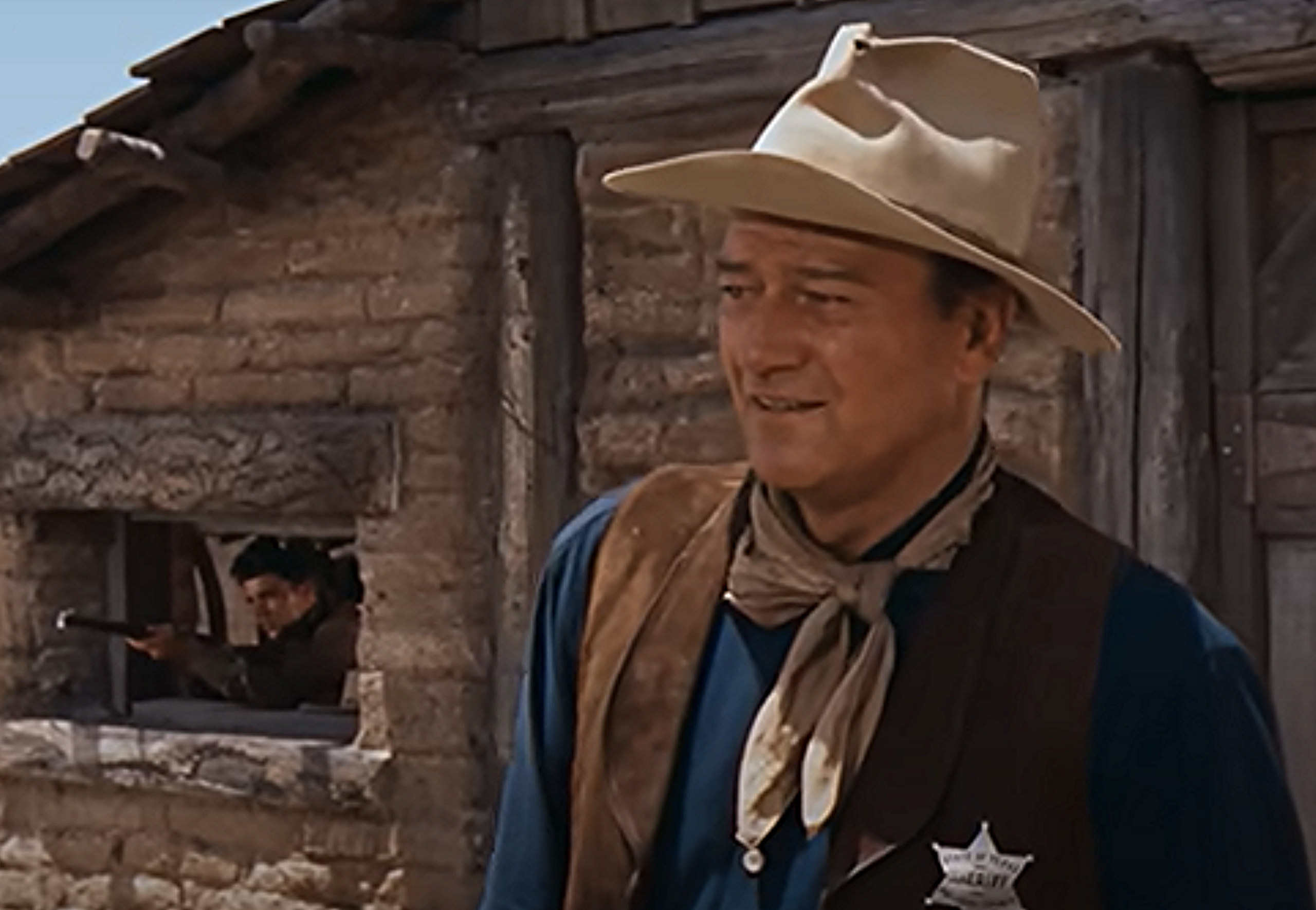
The first 10 or 12 minutes of Rio Bravo, I freely admit, are terrific in the way Hawks introduces character and mood and a complex situation without dialogue. Let it be clearly understood there is nothing quite like this in all of High Noon. I also love the way John Wayne rifle-butts a guy early on and then goes, “Aww, I didn’t hurt him.”

But once the Duke and Walter Brennan, Martin, Ricky Nelson and Angie Dickinson settle into their routines and the easy-going pace of the thing, Rio Bravo becomes, at best, a somewhat entertaining sit-around-and-talk-and-occasionally-shoot-a-bad-guy movie.
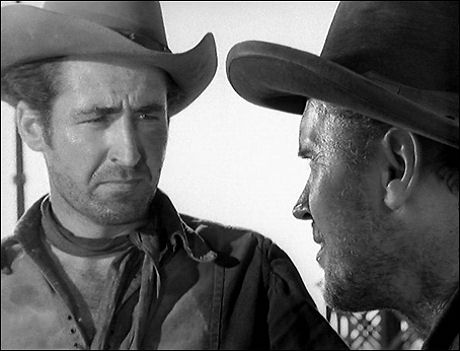
More than anything else, Rio Bravo just ambles along. Wayne and the guys hang out in the jailhouse and talk things over. Wayne walks up to the hotel to bark at (i.e., hit on) Dickinson. It tries to sell you on the idea of the big, hulking, 51 year-old Wayne being a suitable romantic match for Dickinson, who was willow slender and maybe 27 at the time but looking more like 22 or 23.

Plus the villains have no bite or flavor — they’re shooting gallery ducks played by run-of-the-mill TV actors. Most of Rio Bravo is lit too brightly. And it seems too colorfully decorated, like some old west tourist town. It has a dippy “downtime” singing sequence that was thrown in to give Nelson and Martin, big singers at the time, a chance to show their stuff. Then comes the big shootout at the end, which is certainly okay but nothing legendary.

Does Rio Bravo have a sequence that equals the gripping metronomic ticking-clock montage near the end of High Noon? No. Is the dialogue in Rio Bravo up to the better passages in Zinneman’s film? No. (There’s nothing close to the scene between Cooper and Lon Chaney, Jr., or the brief one between Cooper and Katy Jurado.) Is there a moment in Rio Bravo that comes close to Cooper throwing his tin star into the dust at the end? No. Is there a “yes!” payoff moment in Rio Bravo that’s as good as the one in High Noon when Grace Kelly, playing a Quaker who abhors violence, drills one of the bad guys in the back? No.
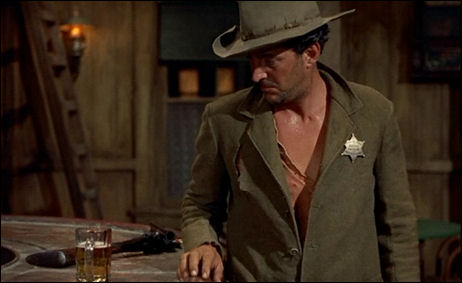
Floyd Crosby‘s High Noon photography is choice and precise and gets the job done. It doesn’t exactly call attention to itself, but it’s continually striking and well-framed. To me, the black-and-white images have always seemed grittier and less Hollywood “pretty” than Russell Harlan‘s lensing in Rio Bravo, which I would file under “pleasing and acceptable but no great shakes.”

Dimitri Tomkin wrote the scores for both High Noon and Rio Bravo, but they don’t exist in the same realm. The Bravo score is settled and kindly, a sleepy, end-of-the-day campfire score. High Noon‘s is strong, pronounced, “dramatic” — so clear and unified it’s like a character in itself. And I’ve never gotten over the way the rhythm in that Tex Ritter song, “Do Not Forsake Me O My Darling,” sounds like a heartbeat.

Bogdanovich writes that Rio Bravo didn’t win any Oscars or get much critical respect, but “it was far more popular with audiences than High Noon.” He’s right about this. The IMDB says Rio Bravo earned $5,750,000 in the U.S. when it came out in ’59, and that High Noon brought in $3,750,000 in 1952 dollars. Big effin’ deal. High Noon whipsRio Bravo‘s ass in every other respect.
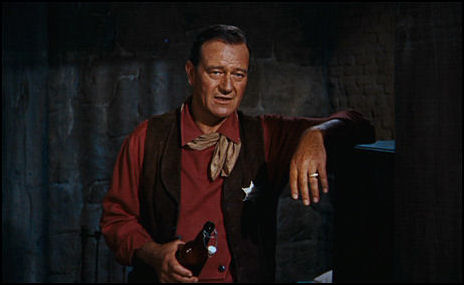
That said, there’s an intriguing Hawks assessment by French director Jean-Luc Godard in the Bogdanovich piece. Godard doesn’t argue that Rio Bravo is pretty much what I’ve described above, but says it’s still a better film than High Noon because — I love Jean-Luc Godard — the exceptionally good things in Rio Bravo can be ignored, and therefore may be unnoticable to a good-sized portion of the audience.

“The great filmmakers always tie themselves down by complying with the rules of the game,” Godard states. “Take, for example, the films of Howard Hawks, and in particular Rio Bravo. That is a work of extraordinary psychological insight and aesthetic perception, but Hawks has made his film so that the insight can pass unnoticed without disturbing the audience that has come to see a Western like all others. Hawks is the greater because he has succeeded in fitting all he holds most dear into a well-worn subject.”


Read more

“House” On Fire

Only 60 minutes before the press screening of Julian Schnabel In The Hand of Dante so I must be brief:

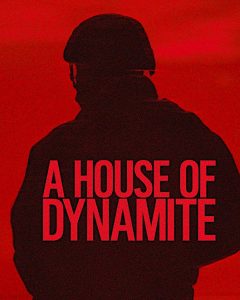
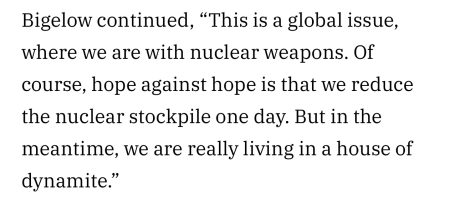
The house in Kathryn Bigelow and Noah Oppenheim‘s A House of Dynamite (Netflix, 10.10 theatrically) is the world itself…the entire interconnected realm…everyone…all the countries, all the leaders…and no one, it turns out, is fully up to dealing with impending Armageddon…not technologically, not emotionally or psychologically…so the movie is a firehouse alarm…a serious warning…a reality check from holy-shitville.

We’re all living on the edge of terrible destruction, Bigelow and Oppenheim are basically saying. How close or imminent is it? Very close, closer than we think, and our ability to protect Chicago or Washington or New York City, not to mention retaliate against the suspected aggressor[s], who might be our friends in the DPRK, is not what anyone would call formidable.

Bigelow’s film is therefore not a 21st Century version of Sidney Lumet‘s Fail Safe (although it’s certainly Fail Safe-adjacent) or Stanley Kubrick‘s Dr. Strangelove without the laughs…because unlike these mid ‘60s thrillers, it doesn’t…well, I guess I shouldn’t spoil.

But it’s basically “you think there’s some kind of response to an incoming missile that might save us? Or at least allow for semblance of a future? Think again.”

Odyssey of Vaporetto Line 20

…and its ghost-like, possibly non-existent cousin called the MC…yeah.

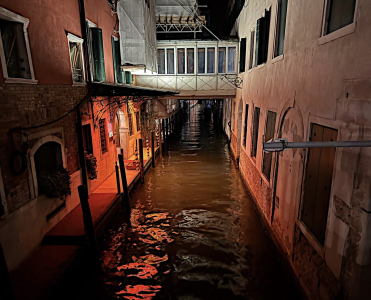
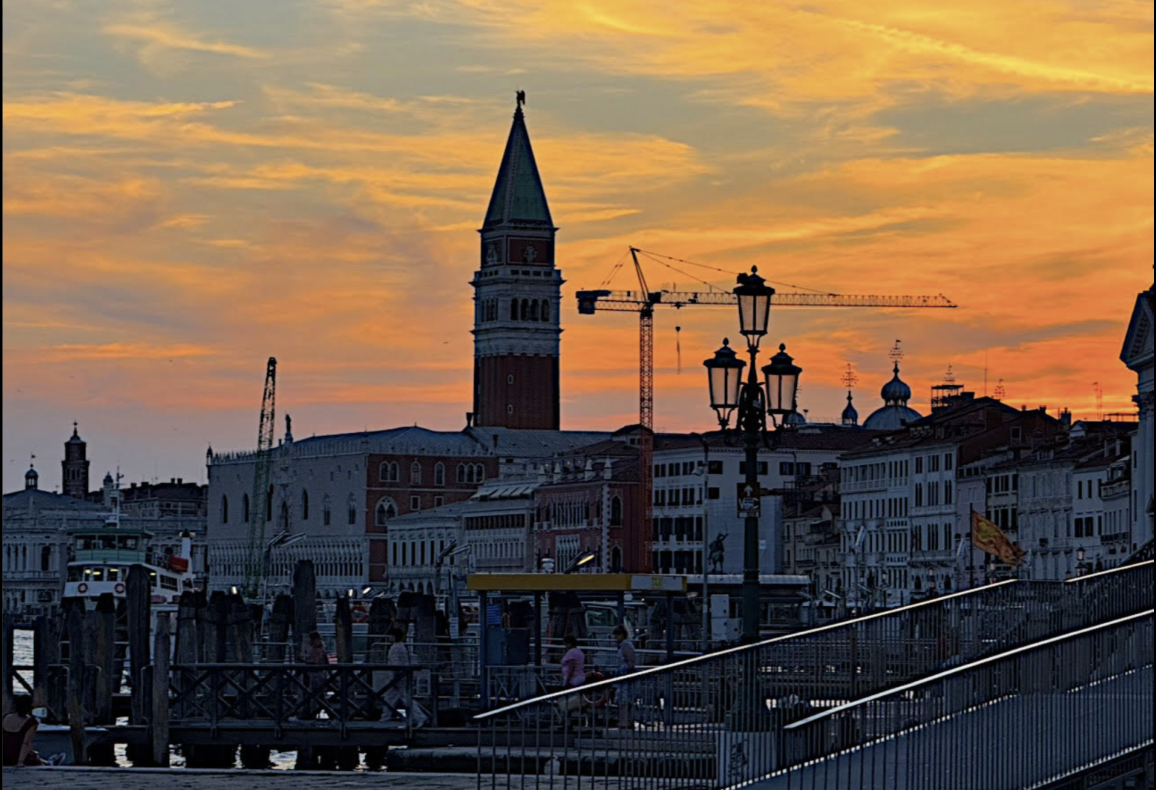
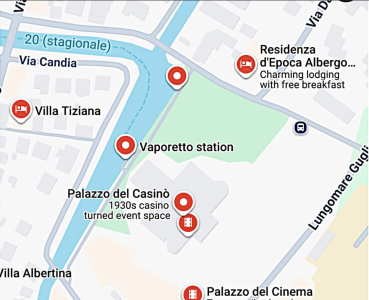
Since arriving at HE’s Venice pad early Monday evening, I’ve been trying to crack the elusive, almost DaVinci Code-ish, secret-society schedule of the vaporetto that travels from San Zaccaria to the Lido Casino, which is where the Venice Film Festival unfolds.

We’re basically talking about a mystery vaporetto or vaporettos, one called Line 20 (apparently the most reliable) and another called MC (Mostra Cinema) and, at the same time, Line 2. But their existence is mostly in the realm of rumor and hearsay.

Could I go so far as to call these vaporetto lines mythical? Is their legend based on the stuff that dreams are made of? You tell me.

Where to board Line 20 at the San Zaccaria stop, as there are THREE yellow-painted stations for embarking and disembarking at this location? Beats me. People “say” stuff but nobody knows nuthin’. You can ask and search and poke around and explore all you want, but it just gets away from you.

Firstshowing.net’s Alex Billington, a valuable ally and a good hombre, says “dock B” is the way to go. And maybe he’s right.

But last night there were NO signs at ANY of the San Zaccaria stops that said ANYTHING about Line 20 or Line MC.

Info is scant because the MC and 20 lines are temporary or seasonal, and it’s all smoke and haze and shadows. Nothing is clear.

Have demons (hooved beasts with pointy tails and horns on their heads) posted information about these two lines with a deliberate intention of sewing pique and confusion?

Why do I feel, vaporetto-wise, like I’ve been took, hoodwinked, led astray, taken to the cleaners, boondoggled, flim-flammed, hog-tied, sold a bill of goods, led down the garden path, and had a tin can tied to my tail?

Easily Stamp’s Finest, Tenderest Scene

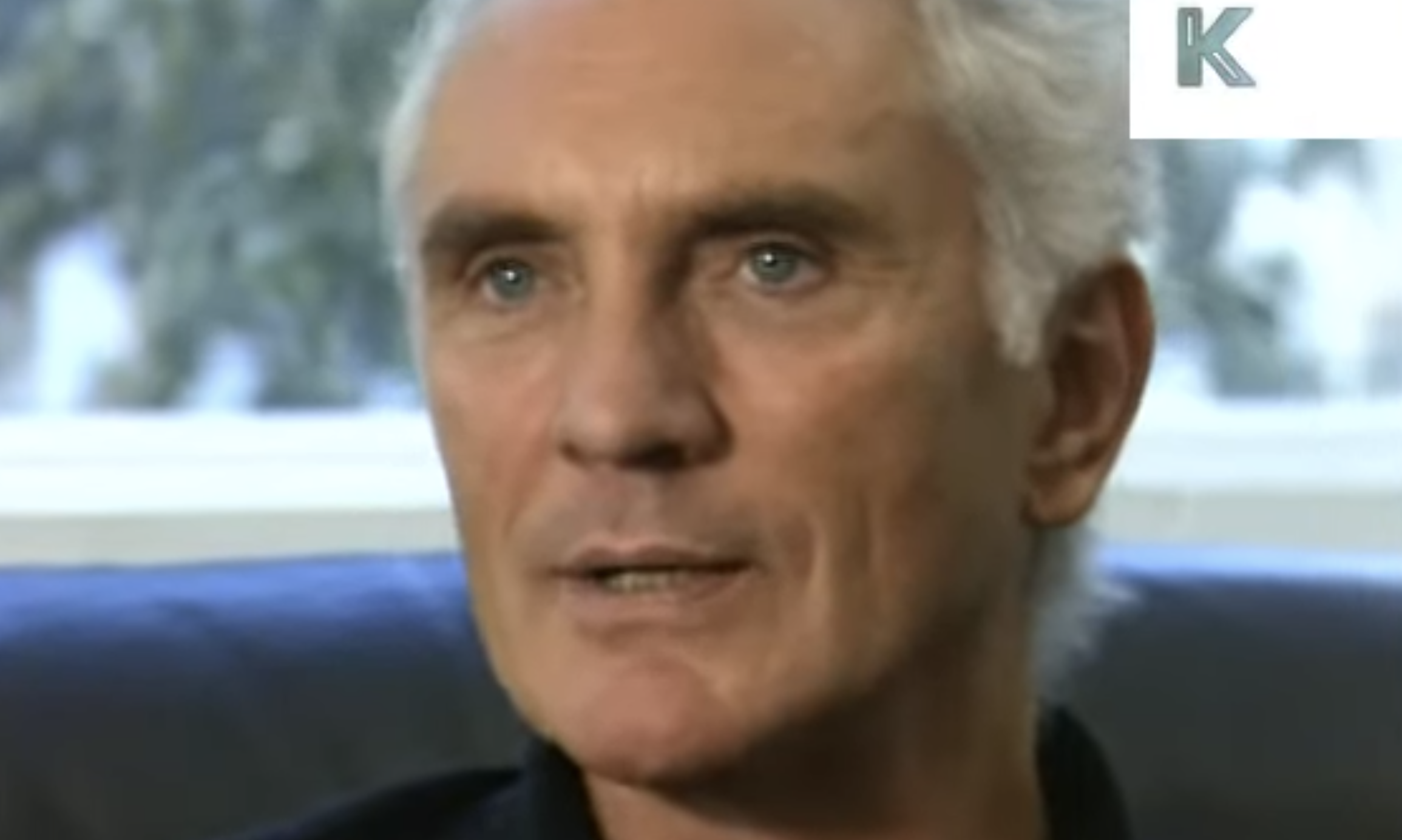
Terence Stamp‘s Willie Parker to John Hurt‘s Braddock in Stephen Frear‘s The Hit: “Why should I be scared? Death is just a stage in the journey. We’re here, and then we’re not here. And we’re somewhere else. Maybe. And it’s as natural as breathing.”

Why is the quality of this clip so shitty? Criterion has had a 1080p Bluray version out for several years now.

Bad Teacher?

Sharp-minded friendo to HE: “Go see Weapons.”
HE to sharp-minded friendo: “Out Friday.”
Sharp-minded friendo: “Don’t read anything about it. The less you know, the better.”
HE: “Horror.”
Sharp-minded friendo: “It’s a film.”
HE: “Missing kids, all from a single classroom, outraged parents.”
Sharp-minded friendo: “Just see it.”
HE: “It’s…what is it, a metaphor for middle-class hostility…anger vented at woke women? Something like that?”
Sharp-minded friendo: “Don’t go in with baggage and preconceived expectations.”
HE: “Is it okay if I watch the trailer?”

Jessie Buckley’s Heaving Seas

Yesterday Alice Newell-Hanson’s N.Y. Times Style Magazine profile of Jessie Buckley, an endlessly flattering exercise in kiss-ass portraiture, appeared online.

It’s a longish, elegant, very well-written article, but given Newell-Hanson’s commitment to flattery, it totally ignores what in-the-know types are allegedly thinking and saying about Buckley’s next two envelope-pushing films.

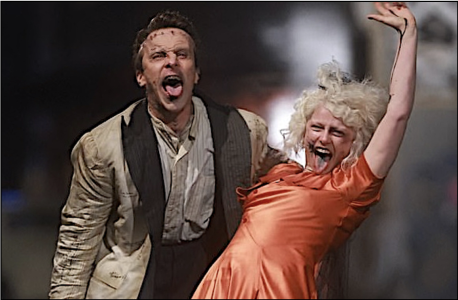
These would be (a) Chloe Zhao‘s Hamnet (Focus Features, 11.27), an allegedly glum historical fiction about Agnes Shakespeare (Buckley) and her errant, responsibility-shirking playwright husband, William (Paul Mescal), and (b) Maggie Gyllenhaal‘s The Bride! (Warner Bros., 3.6.26), apparently some kind of feminist, toxic-male-hating take on James Whale‘s The Bride of Frankenstein (’35).

Key Newell-Hanson passage: “Buckley has earned a reputation for playing complicated roles with devastating power. Zhao, the director of Hamnet, says that as soon as she read Maggie O’Farrell‘s book, she knew the role had to be Buckley’s. Few other actresses of her generation can gain access to such a wide spectrum of emotions, or seem as willing to risk being disliked for exploring the tougher ones.

“‘She has no fear in terms of how she’s perceived,’ says Mescal. ‘She’s never trying to hide or draw lines.'”

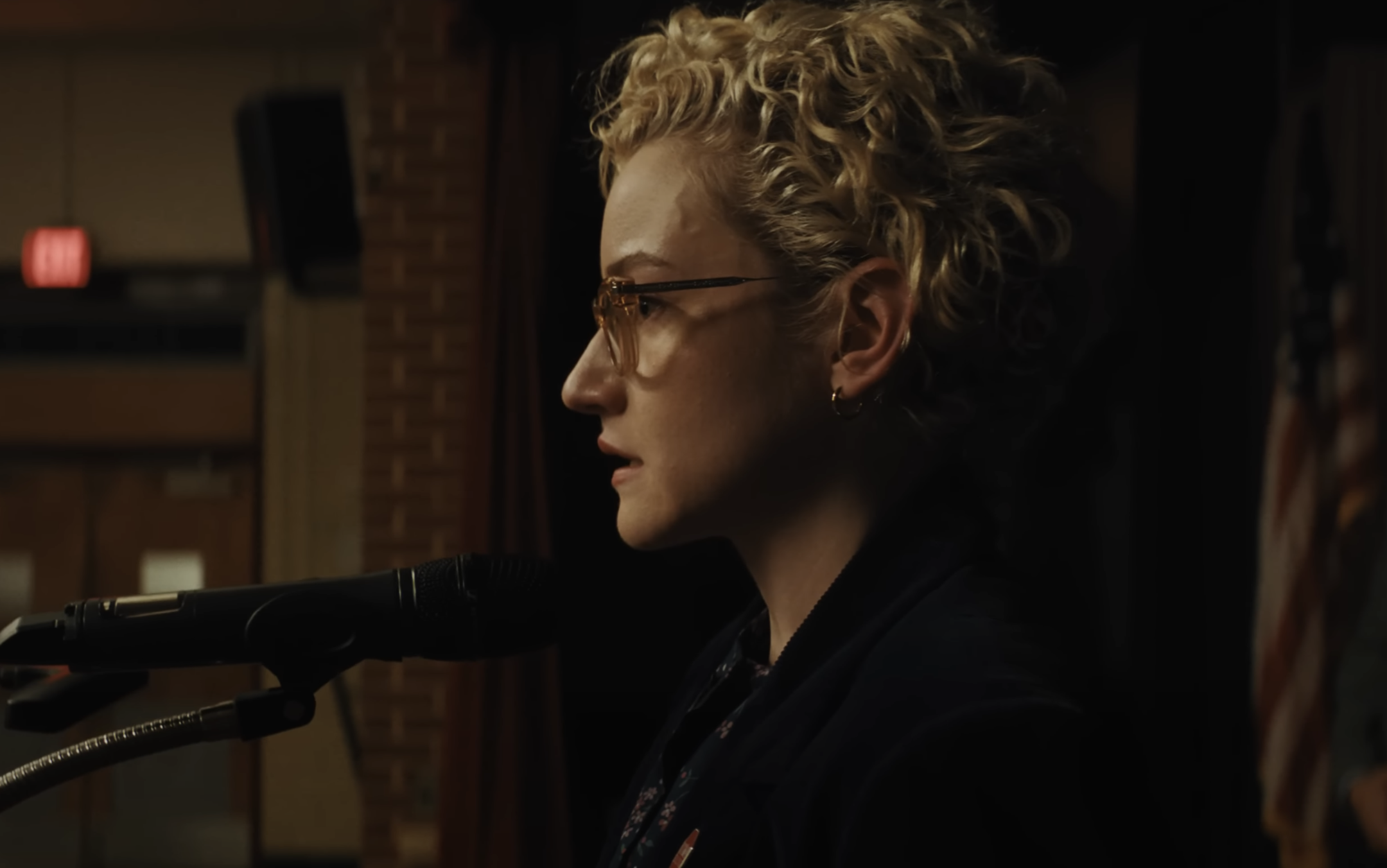
Buckley’s choppy scarecrow haircut, posted below and featured in the Times article, lends a certain credence to Mescal’s observation.

Straight Hamnet dope, as reported two weeks ago (7./25.25) by World of Reel‘s Jordan Ruimy:

Excerpt: “While Buckley and Mescal’s performances are said to be solid, Zhao’s direction — and especially her screenwriting — are being called flat, with a tone that feels completely off. One viewer summed it up as ‘two hours of Buckley looking miserable,’ without much emotional depth or nuance to her grief.”

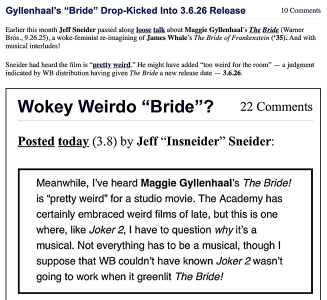
Straight Bride! reporting, dated 3.19.25:

Obviously The Bride! was bumped into ’26 because…well, WB distribution certainly didn’t do this because it’s some kind of glorious knockout.

Read more

Artist/Creative Types Going Through A Spiritual Crisis

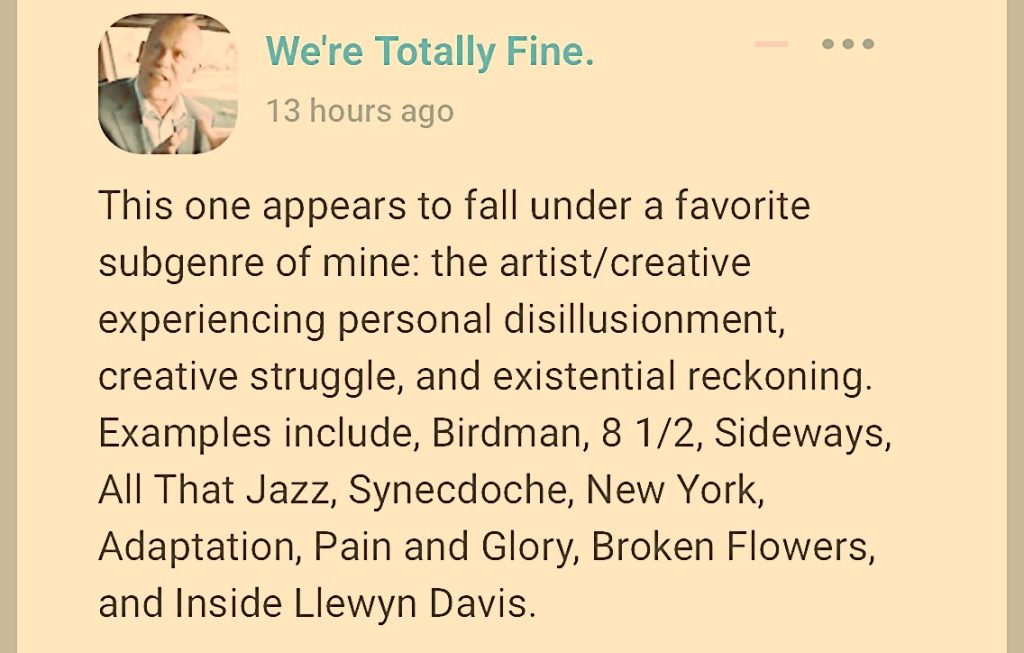
In yesterday’s Jay Kelly thread, HE commenter “We’re Totally Fine” said the premise of this upcoming Noah Baumbach film seems to belong to a favored sub-genre — films about Hollywood guys who’ve run out of gas, are going through a bad patch or have otherwise lost their way.

HE additions to this list:

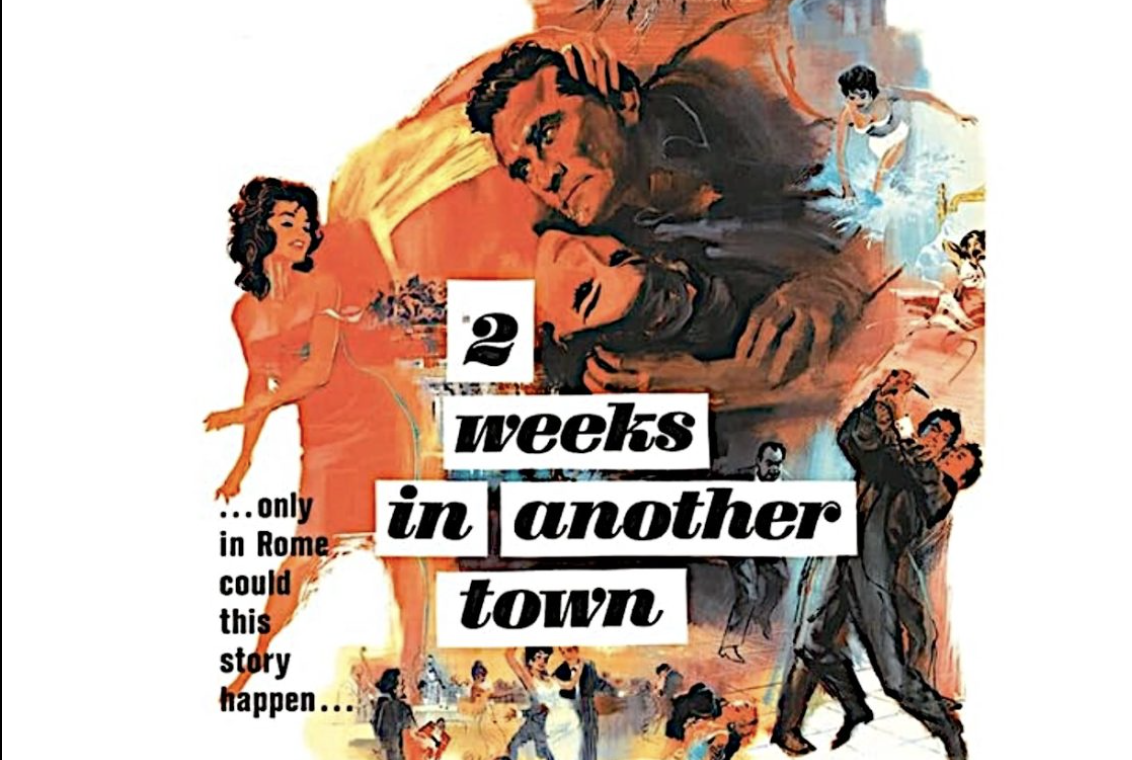
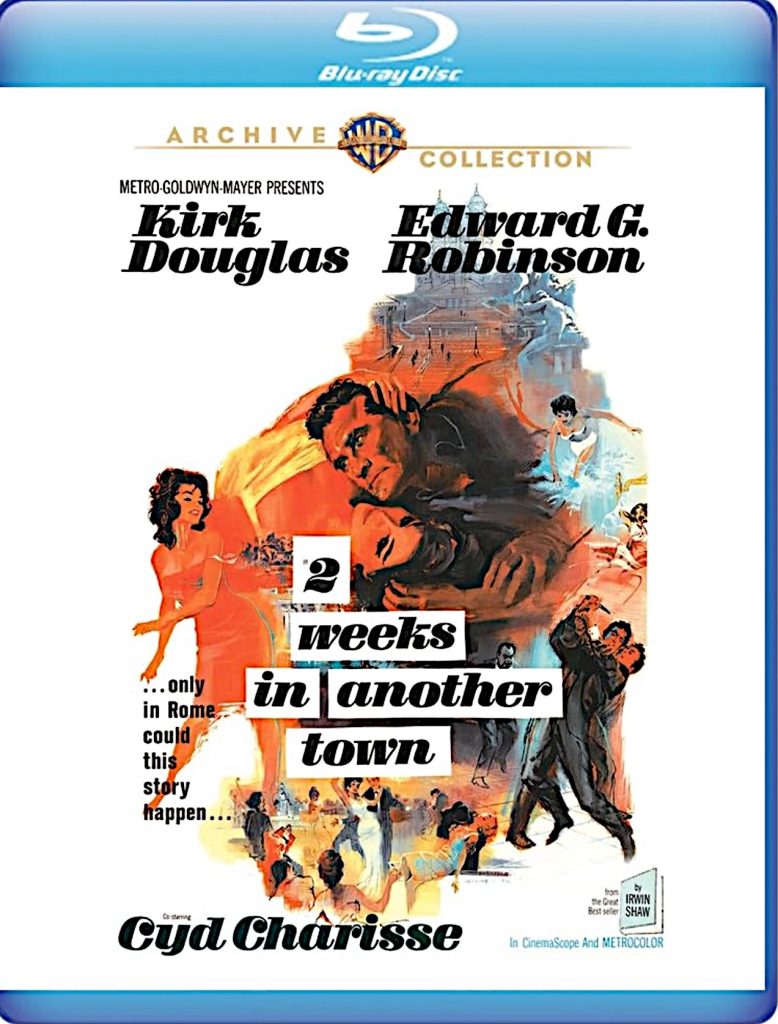
(a) Vincente Minnelli’s Two Weeks in Another Town (‘62), which is about an alcoholic, burnt-out actor (Kirk Douglas) trying to get back into the swing of things while assisting an old director friend (Edward G. Robinson) in Rome.

(b) Federico Fellini’s 8 1/2 (‘63)…obviously. I don’t want to even glancingly mention Rob Marshall’s Nine (‘09), but it’s closely wedded to the Fellini so I haven’t much choice.

(c) Paul Mazursky’s Àlex in Wonderland (‘70) — another 8 1/2 descendant.

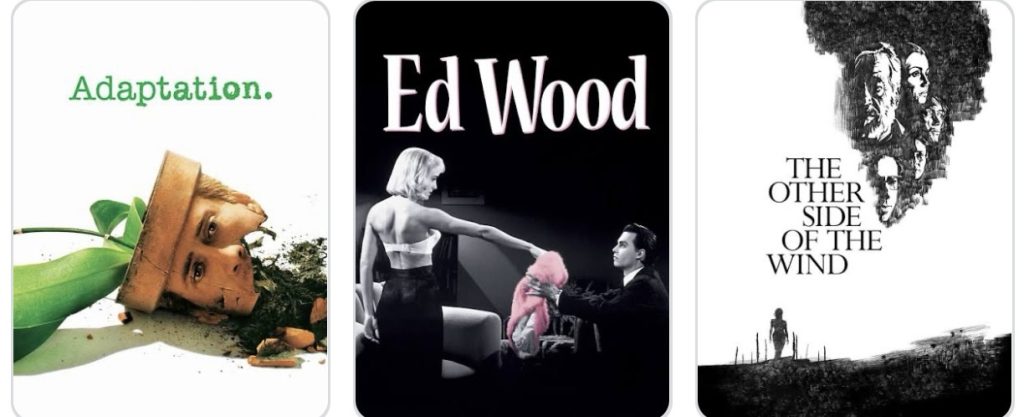
I’m not including Tim Burton’s Ed Wood (‘93) because except for that one gloomhead scene with Orson Welles in Musso and Frank’s, Johnny Depp’s titular protagonist doesn’t behave like a filmmaker who’s lost his way — he’s actually a relentless optimist.

Sullivan Stood Up

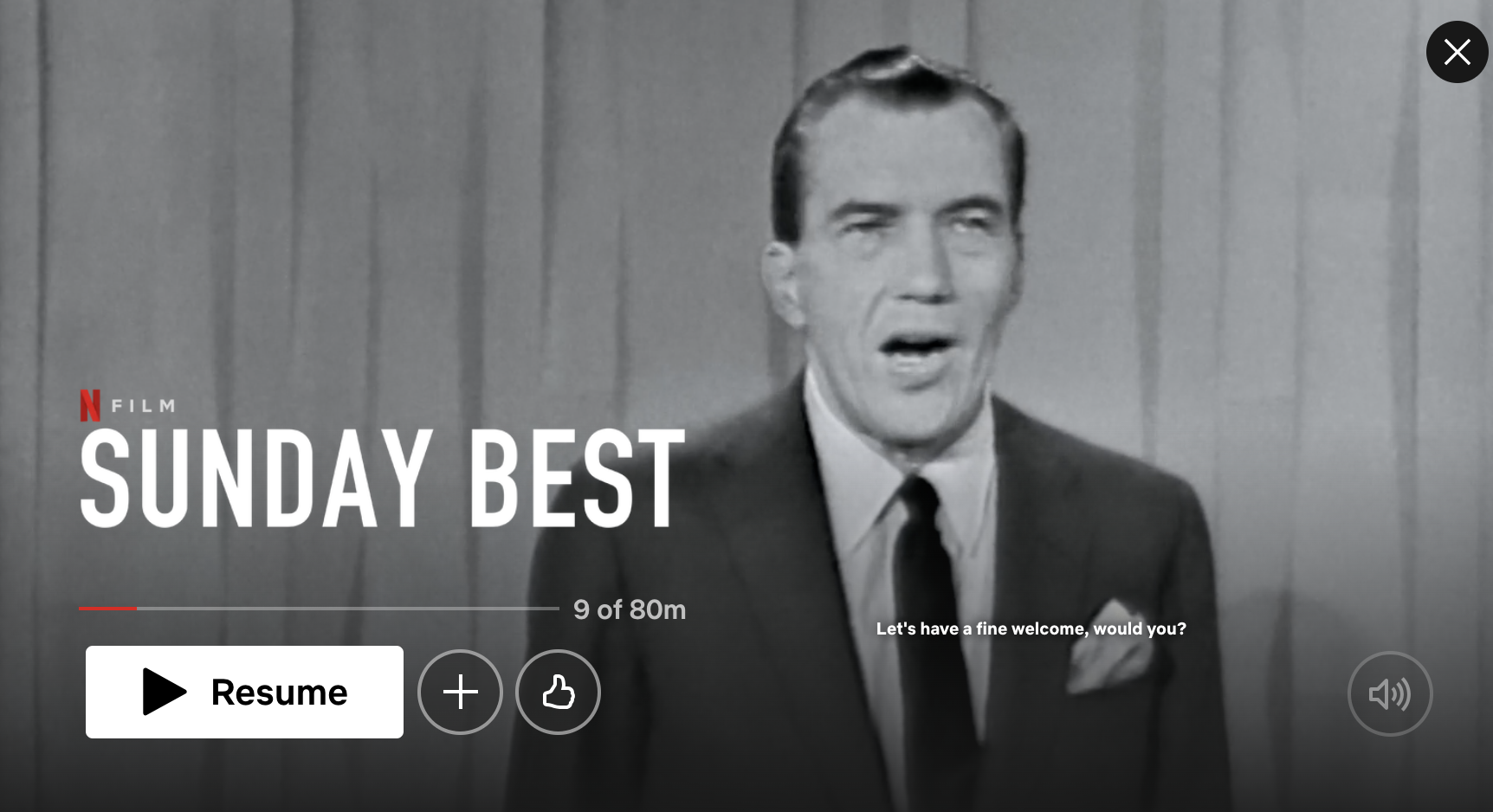
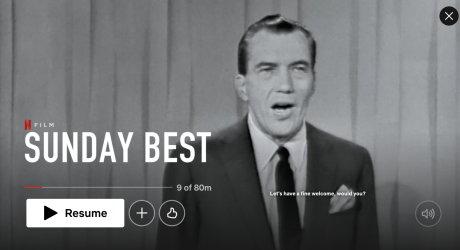
Sacha JenkinsSunday Best (Netflix, now streaming) is a heartfelt, somewhat simplistic tribute to the late variety show host Ed Sullivan and particularly a celebration of Sullivan’s defiance of racist norms in this country back in the ’50s and early ’60s by booking top black performers on The Ed Sullivan Show (1948 to 1971)

If you’d asked me for a capsule description of Sullivan before viewing this 87-minute doc, I would have said something like “famously stiff-necked TV host with a sharp eye for emerging stand-out performing talent…particularly Elvis Presley in 1956 and The Beatles in ’64 and ’65…whatever and whomever was beginning to attract big attention, Sullivan booked them on his one-hour Sunday night show (CBS, 8 pm), always leaving them bigger names than before they’d appeared.”

But to hear it from Jenkins (who passed last May at age 53), Sullivan’s proudest historical achievement was his support of black entertainers. In this respect Sullivan was damn near revolutionary or at the very least bold as brass, Jenkins is saying.

Within this country’s generally racist whitebread culture during the eras of Harry Truman, Dwight D. Eisenhower, JFK and even Lyndon Johnson, Sullivan was way ahead of the social curve — impassioned, color-blind, conservative but adamant.

Sullivan biographer Gerald Nachman: “Most TV variety shows welcomed ‘acceptable’ black performers like Louis Armstrong, Pearl Bailey and Sammy Davis Jr….but in the early 1950s, long before it was fashionable, Sullivan was presenting more obscure black entertainers…Bo Diddley, Jackie Wilson, Fats Domino, the Platters, Brook Benton, the Supremes, Nina Simone.”

TV critic John Leonard: “There wasn’t an important black artist who didn’t appear on Ed’s show. [The Irish, Harlem-born Sullivan] defied pressure to exclude black entertainers or to avoid interacting with them on screen. Sullivan had to fend off his hard-won sponsor, Ford’s Lincoln dealers, after kissing Pearl Bailey on the cheek and daring to shake Nat King Cole‘s hand.”

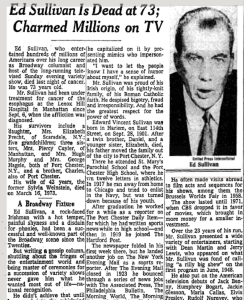
If you search around there are several anecdotes that suggest Jenkins’ portrait of the straightlaced, somewhat prudish Sullivan is less than fully candid, if not sugar-coated. (Read his N.Y. Times obit, which is much tonally dryer and more circumspect than Jenkins’ cheerleader approach.)

Of course it’s partisan! Jenkins’ film is sharing a cultural-political viewpoint that many boomers (kids during the show’s heyday) probably haven’t considered, which is that in terms of encouraging liberal thought and condemning racism, Sullivan, by ushering scores of black performers into America’s living rooms, was as much as a positive social influencer, in a certain sense. as Martin Luther King.

Over the last 60 or 70 years Sullivan’s default associations have been Presley and the Beatles, slam dunk. Ask anyone. Jenkins doc, which debuted at the Tribeca Film Festival in ’23, pushes the “ballsy racial reformer” portrait much more than any colorful side sagas or anecdotes about white performers.

How good is Sunday Best on a craft or audience-absorption level? Passable, not great.

Read more