“Clown Cried” In A Cosmic Blink Of An Eyelash

On 8.5.15 L.A. Times staffer Noah Bierman reported that Jerry Lewis had donated a copy of The Day The Clown Cried, an unfinished 1972 holocaust drama that Lewis had directed, written and starred in, to the Library of Congress.

It was stipulated, however, that the film couldn’t be screened “for at least ten years,” and only then with the permission of the Lewis estate. (Lewis passed on 8.20.17 at age 91.)

On 10.14.15 (or two months after the Bierman piece) I was informed by Mike Mashon, head of the Moving Image section on the LoC campus, that the embargo on TDTCC would be in place “for ten years,” and would therefore extend until 2025.

Although the LoC apparently intends to eventually screen The Day The Clown Cried at its Audio Visual Conservation campus in Culpeper, Virginia, curator Rob Stone has stated the LoC does not have a complete print of the film.

Posted on 6.15.16: I’m hardly an authority when it comes to Jerry Lewis‘s never-seen The Day The Clown Cried (’72), but to my knowledge an assembly of scenes from the finished film has never been shown to anyone.

I’ve read all the articles, I’ve read the script, I’ve seen that BBC documentary that popped last January, and I’d love to view it when the embargo is lifted nine years hence (i.e., in 2024). But I’ve never watched actual scenes.

This morning a friend passed along a 31-minute Vimeo file (posted two months ago but yanked on Thursday morning…sorry) that provides the first real taste of Clown, or at least the first I’ve ever sat through.

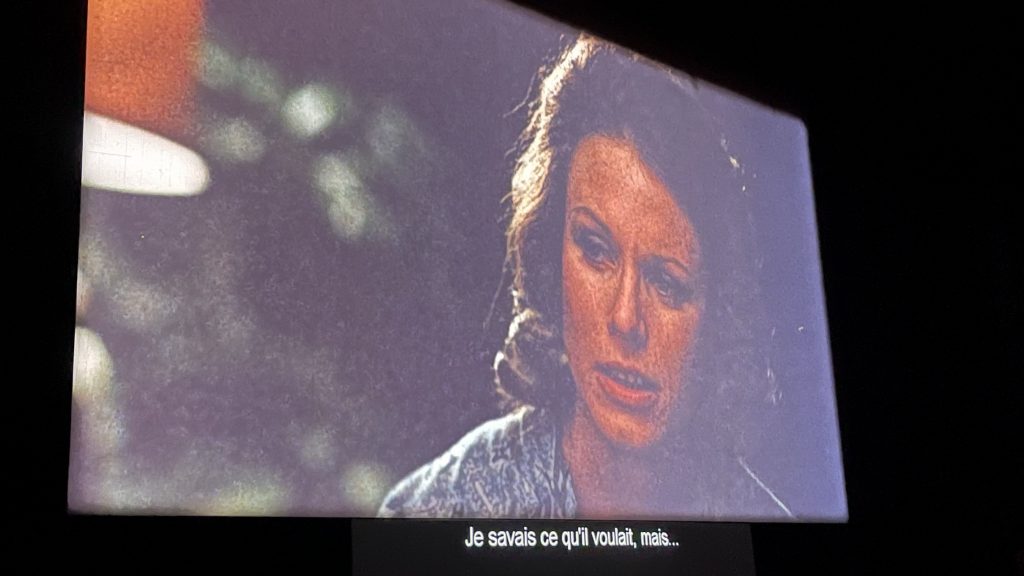
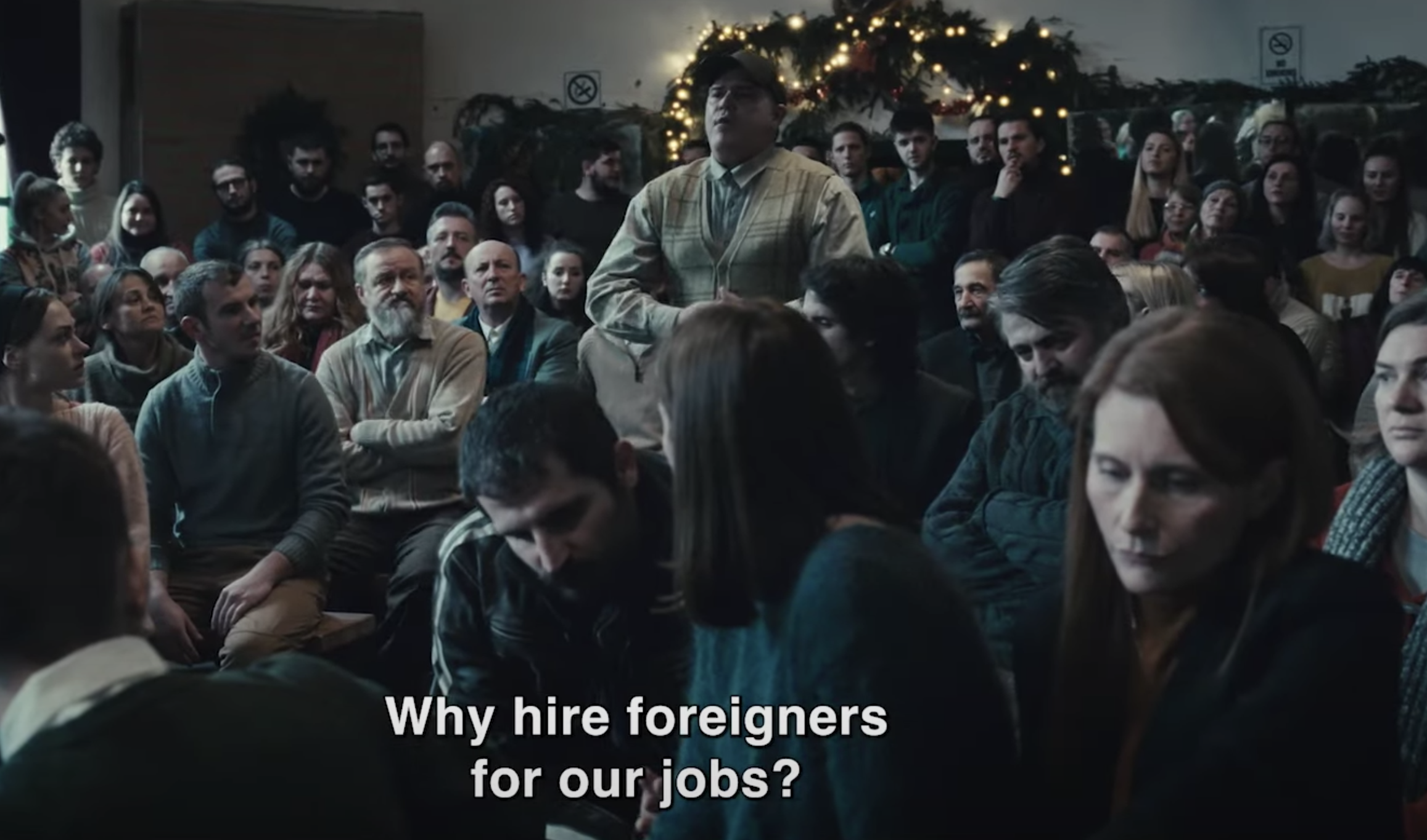
It’s basically a compressed, German-dubbed version of Lewis’s film that’s intercut with acted-out portions of the script by a troupe of 70somethings. It’s taken from Eric Friedler‘s 2016 documentary called Der Clown.

And you know what? I don’t see what’s so godawful about it.

Okay, the scheme is manipulative bordering on the grotesque — Lewis as a German-Jewish clown in a Nazi concentration camp who’s ordered in the final act to amuse a group of children being sent to the “showers” — but that elephant aside it didn’t strike me as all that agonizing or offensive. Really. Lewis’s performance seems more or less restrained as far as the writing allows, and the story unfolds in a series of steps that seem reasonably logical. The supporting perfs and period milieu seem decent enough.

When everyone finally sees The Day The Clown Cried in 2024 (or ’25) the verdict may be that it’s not a mediocre, miscalculated effort (or that it is…who knows?), but I didn’t smell a catastrophe as I watched this whatever-you-want-to-call-it. Plus it costars HE’s own Harriet Andersson.

Joaquin Phoenix’s “Distended Testicles”

Ari Aster’s Beau Is Afraid (A24, 4.21) was previewed yesterday (Saturday, 4.1) to a paying audience at Brooklyn’s Alamo Draft House (445 Albee Square, Brooklyn, NY 11201), and Variety’s Brent Lang was apparently there to endure it.

Before reading any further, HE readers are requested to read Wikipedia’s longish Beau Is Afraid synopsis, which goes on for eight bulky paragraphs.

Presuming that the synopsis is legit, Aster’s 179-minute “horror comedy” (set to open in select IMAX theaters on 4.14 before opening wider on 4.21) is apparently some kind of grotesque, audiencepunishing fantasia — a surreal acid trip version of a 21st Century Alice in Wonderland-meets-Homer’s The Odyssey, except with a bloated, gray-haired, “twitchy and over-medicated” Phoenix in the Alice role — and not for the faint of heart.

A few excerpts from Lang’s article, which was filed late Saturday afternoon:

(1) Q&A moderator Emma Stone to Aster following the screening: “Are you okay, man?”

(2) The film features a paint-drinking, antagonistic teenaged protagonist (Kylie Rogers), an animated sequence, a “recurring gag involving Phoenix’s distended testicles”, and “a sex scene with [the mid 50ish] Parker Posey that may rank among the wackiest ever committed to film.”

(3) “The [Draft House] crowd seemed to love it, although the general public may have a tougher time” with this “bladdertesting epic.”

(4) Aster comment during the Stone Q&A: “I want [the audience] to go through [Phoenix’s] guts and come out of his butt.”

(5) The black-garbed Phoenix attended the screening but chose not to participate in the Q&A.

Lang’s article ends as follows:

Posted on 1.10.23:

Peeking Back at “Kafka”

I’ve just re-watched Steven Soderbergh‘s Kafka (’91), a half-spooky, half-gloomy noir that looks and feels like early 1920s German expressionism. It’s mostly and appropriately shot in black-and-white, but it’s such a downer to sit through that it almost feels euphoric when the film suddenly shifts into color during the last 15 minutes or so.

Written by Lem Dobbs and handsomely shot by Walt Lloyd, the Prague-set period flick (1919) fictionalizes the adventures of the fearful and paranoid Franz Kafka (Jeremy Irons) as he attempts to uncover the dark plottings of a creepy cabal of ne’er-do-wells who operate out of “the castle” that overlooks the city.

Kafka didn’t go down too well when it opened 31 years ago, and I can’t say it works any better today.

Irons overdoes the anxious, often terrified, bug-eyed thing. After a while you’re saying “Jesus, will you stop twitching and glaring and play it cool for a change?…channel some Lee Marvin and at least pretend to be a man.”

Okay, it’s not that bad. I was bored, yes, but I didn’t hate sitting through it. It’s just that my heart rate went down.

It’s a serious shame that an HD version isn’t streamable. The 480P version that I watched today looks awful…so soft and bleary at times that it almost seems out of focus.

Sometime in ’21 Soderbergh created a new version of Kafka, titled Mr. Kneff. Re-cut, re-imagined and dialogue-free with subtitles. It screened at the Toronto Film Festival that year, and was supposed to be released as part of a Soderbergh box set sometime in late ’21 or maybe sometime in ’22. It never happened, but I’m told the box set will show its face sometime…aahh, who knows? But maybe later this year.

The climactic final act of Kafka abandons black-and-white for color (which my eyes rather enjoyed) and becomes a kind of Indiana Jones film. Briefly.

Irons enjoyed a great big-screen run of A-quality films between the early ’80s and mid ’90s — roughly 12 or 13 years. The French Lieutenant’s Woman, Moonlighting, Betrayal, Swann in Love, Dead Ringers, Reversal of Fortune, Kafka, Damage, M. Butterfly, The House of the Spirits. In ’84 I saw Irons opposite Glenn Close in the first Broadway version of The Real Thing. He was the absolute king of the world back then.

I’ve enjoyed re-reading my second-hand (i.e., possibly inaccurate to some extent) story about Irons and temporary Kafka costar Anne Parillaud. The piece was initially initially posted in 2009.

Enough Of This Horizon Line John Ford Shit

Dead-center horizon lines are banal, agreed, but the best outdoorsy photos, paintings and cinematic compositions are about whatever works, depending on the ingredients…the mystical altogether, balance and intrigue…God’s eye is God’s eye, and horizon lines be damned. I’ve been snapping photos since I was 12 or 13 so don’t tell me, John Martin Feeney.

Bizarre Murder In Wilton

A highly unusual and disturbing thing happened in bucolic Wilton on the morning of Tuesday, 3.21, or five days ago. A 39 year-old married guy was stabbed to death by a 31 year-old nutbag neighbor. The victim’s name was Arinzechukwu “Red” Ukachukwu (tough pronounce), and the killer was and is Sebastian Andrews, a 31 year-old guy who was living with his father and an older brother on Wilton’s Indian Hill Road.

The victim and his wife, Alisha Lager, bought their home “after the pandemic,” according to a toothless story by Hearst Media Group’s Peter Yankowski. Lager is left to care for their two-year-old son.

I found an attractive, magic-hour photo of the couple on Lager’s Facebook page. The victim, the assailant and Lager — all Millennials.

Yankowski: “Born on 1.12.84, Ukachukwu was a creative entrepreneur, musician and a tech wizard. He was raised in Brooklyn by parents who were active in the Nigerian community. He attended private schools and then Fiorello H. LaGuardia High School of Music & Art and Performing Arts. In 2005 he graduated from the University of Albany with a degree in economics.”

Fox61’s Matt Caron reported that at last Wednesday’s hearing Andrews asked to speak and was advised by his attorney, Kevin Black, not to say anything. The state’s attorney said that “there appears to be some sort of psychological issue involved.”

The arrest warrant reports that Andrews alleged that he found Ukachukwu “trespassing on [his father’s] property several times.” This appears to be an unsubstantiated claim.

Compounded with the “psychological issue,” facts suggests that the killing was some kind of bizarre racial hate crime, perhaps in a vein vaguely similar to the 2020 killing of Ahmaud Arbery. Who stabs a neighbor with a kitchen knife and then drags his body into a garage and then takes a shower and calmly waits for the cops to arrive?

The crime was reported by Andrews’ father, who saw the killing happen in real time. Nobody has spoken to him, nor has anyone explored if his now-jailed son had some kind of social media history. I poked around and found nothing.

Noteworthy Overhead Tracking Shot

In yesterday’s pan of the revolting and deplorable John Wick: Chapter Four, I should have mentioned my grudging respect for an extended, uncut overhead shot of Keanu
Reeves going from room to room and blasting bad guys at every turn with the camera constantly maintaining its God’s-eye viewpoint.

In a 3.25 interview with TheWrap‘s Scott Mendelson, dp Dan Laustsen (totally unpronouncable) explains that the scene utilized a set built on one of the Studio Babelsberg sound stages.

Laustsen: “It’s one crane shot and one spider cam shot where we are starting on the stairs and flying around. We did in eight or ten takes. The light must be outside the set. We see the whole set. That’s the challenge when your shots are wide and the entire set is in view.”

Insane Diseased Pornoviolent Fantasia

The “rules” of high-powered action films over the last 20-plus years is that there are no rules. Life is worthless, death is immaterial, nothing matters, nothing sticks and everything’s everything, baby. You can globe-hop at will and stage big set pieces and start fires and blast everything to bits and nobody blinks an eye…explode at will, kill dozens or hundreds of guys, jump out of three-story buildings, get hit by speeding cars, get shot two or three or eighteen times yourself…it’s all a bullshit cartoon. There are no humans with recognizable characteristics…no behavior that makes a lick of sense.

This is the cold, cynical, sick-fuck, android travel-porn world of Chad Stahelski, a former stunt man and a soulless visual composer, and the godforsaken John Wick: Chapter Four, which I just suffered through for 169 minutes. And the theatre lobby is like fucking Disneyland…family fun for dads, kids, moms, little girls. It’s surreal, sickening.

I saw Wick 4 because I was feeling good about life and I needed to re-pollute my soul…because I needed an injection of green Stahelski poison coursing through my veins. And because I wanted to revel in the Paris portions of this insane, rancid, ugly-ass film, which take up the last…oh, 45 or 50 minutes. And because I wanted to cheer the death of Keanu Reeves‘ John Wick, and I don’t mean an action-film tentpole death that doesn’t really mean anything (like the “death” of 007 in No Time To Die, which ended with a credit crawl pledge that said “James Bond will return”) but a real, honest-to-God, stick-him-in-the-ground death that doesn’t allow for rebirths or reboots. Because I half-liked the first Wick but have hated the expanding insanity that followed.

That’s why I caught a 3 pm show on Saturday, 3.25. As to whether or not my expectations were satisfied…I can’t answer that.

Filming started in June 2021, initially in Berlin and Paris before moving on to Osaka and New York City. They wrapped in October of that year.

The varied Paris locations are grand and beautiful, and scene to scene it’s all handsomely lighted and designed and shot with appropriate pictorial panache. I sat there like an Egyptian sphinx. I had my phone on the whole time, and when the boredom became too much you’d better believe I checked my texts and did some research.

I was pleased and comforted that Stahelski covered all the diverse casting bases…a studly Anglo-Hawaiian lead (Reeves), three Asian actors (Donnie Yen, Hiroyuki Sanada, Rina Sawayama), a young Swedish evil guy (the ice-cold Bill Skarsgård, aka “Pennywise”), three black dudes (Shamier Anderson, Lance Reddick, Laurence Fishburne), an action star in a fat suit who says “you shot me in the ass!” (Scott Adkins), a Chilean guy (Marko Zaror) and an aging British smoothie (Ian McShane).

Wick 4 is the first action film I’ve seen in which the guns don’t appear to shoot actual bullets. They shoot “ding” bullets, which is to say bullets that aren’t as lethal or damaging as they usually are. I’m not saying they’re high-powered beebee pellets, but some guys need to be shot three and four times before they go down for the count. Either way Reeves doesn’t have to worry because he never gets shot until…I’d better not say.

Posted on HE 11 1/2 years ago: “In 1987 Lethal Weapon used a funny jumping-off-a-building gag. Ragged-edge cop Mel Gibson is sent to the top of a four-story building to talk an unstable guy out of making a suicide leap. Gibson winds up cuffing himself to the guy and jumping off the building, and they’re both falling to their deaths…not. They land on one of those huge inflated tent-sized bags…whomp!…that cops and firemen use to save people. All is well.

“Flash forward to another jumping-off-a-building scene in Brad Bird and Tom Cruise‘s Mission: impossible 4 — Ghost Protocol (’11), which I saw last night. An American operative is being chased over a rooftop by baddies in Budapest. He fires some rounds, kills a couple of guys, and then escapes by leaping off the building, continuing to shoot as he falls four or five stories to the pavement below. He’s saved, however, when he lands on a modest air mattress that’s about one-tenth the size of Lethal Weapon‘s tent-sized bag.

“Where did this miracle air mattress come from? We’re not told. In what physical realm does a guy leap backwards four stories onto an air mattress that’s a little bit larger than a king-sized bed and live? I’ll tell you what realm. The realm of Mission: Impossible 4 — Ghost Protocol and its brethren.

Read more

No Half Measures

From Glenn Erickson’s longish review of the new 4K Bluray of Damien Chazelle‘s Babylon, which streets today: “Babylon lives up to the crazy reports that accompanied its theatrical release last December — it’s a spectacular Hollywood history movie that ignores Hollywood history in favor of exaggerated orgies and drug use, as if Kenneth Anger’s bad gossip were just the tip of the scandal iceberg.

“In entertainment terms it’s a 188-minute gross-out that wants to be shocking but is mainly unpleasant. Anachronistic profanity is non-stop, but the dealbreaker comes in the very first scene with an enormous, diarrhetic elephant whose bodily eliminations rival Noah’s Flood. Margot Robbie is a dynamo and Brad Pitt as charming as ever, but the movie overall is ideal only for the curious and the masochistic.

Babylon, in short, is oppressively off-putting, and no deep thought is required to explain why it wasn’t a hit. Word of mouth likely did the job, as most audiences would find it unpleasant at best and at worst intolerable. Personal tastes vary, but I know nobody who would think the movie’s excesses are entertaining. If I were to take a date to this picture, within three minutes I’d be telling the person, ‘it’s perfectly okay if you want to walk out right now.’ Babylon may do much better on disc and streaming than it did in theaters — a lot of moviegoers out there are curious.”

The HE community is encouraged to read Erickson’s entire essay.

Posted by yours truly on 11.17.22:

Read more

If Egerton Is Starring…

Kingsman: The Secret Service, Kingsman: The Golden Circle, Billionaire Boys Club, the absolutely vile Robin Hood and the slow-paced (except for the opening 40 minutes) Rocketman…I’ve never liked and have mostly hated films starring Taron Egerton. I’m therefore reluctant to see anything he’s starring in.

From Brian Tallerico’s 3.16 review of Jon S. Baird and Noah Pink‘s Tetris (Apple, 3.31):

“Egerton stars as Henk Rogers, the founder of a company called Bullet-Proof Software, and a man who basically stumbled into the legacy of Tetris at a gaming convention in his new home country of Japan. He instantly realizes the potential of a game that had yet to make its way around the Iron Curtain to any part of the world other than Tokyo. And he wants a piece of it.

“Rogers narrates Tetris, a complicated film about a simple game. It’s just a rolling array of dropping blocks, but the details about market shares, legal rights, and Cold War politics drive this plot, not the game itself. Rogers is a low-level player in the gaming world, and getting the rights to something as Tetris will require navigating around power figures in both business and politics.

“It sounds like a lot, and yet it’s also not enough. All of this intrigue and negotiation gets Tetris to a remarkably repetitive and monotonous place that’s not helped by director Jon S. Baird’s glib tone, one that looks back on the ‘80s with a sort of goofy bemusement that feels disingenuous. The movie bounces back and forth between conference rooms and scary Russian alleys, but it never finds the right depth of character or deviation in either, choosing to enliven the dry material with an odd amount of condescension instead of actual tension. “Can you believe these crazy Russians?” is an odd tone to strike, especially with the current state of the world in 2023.

“The saddest thing about Tetris is that it’s easy to see why someone wanted to tell this story. The little guy never wins in Russia, and he usually goes to jail for even thinking he could play, but American business is built on narratives of Davids beating business Goliaths. Merging the two for a story in which an ambitious American had to use the tools of Capitalism to topple Communism sounds like an easy sell, and there’s probably a great documentary to be made on this subject. But breaking it out into a drama or thriller requires a different set of rules, and, despite Egerton’s best efforts, the team behind “Tetris” never figured out how to tell this story.”

Nancy Wells + Lizabeth Scott


Nancy Wells, Lizabeth Scott, nylons.

Dead Reckoning (’47), a noirish hriller in which Humphrey Bogart and Lizabeth Scott costarred, stinks. I caught it once and probably never will again. Scott, a femme fatale type with a smoky voice, never appeared in a really good film, not even during her mid to late ’40s heyday. You could argue that her most appealing performance was in Loving You (’57), and in that she was a second-banana to Elvis Presley.