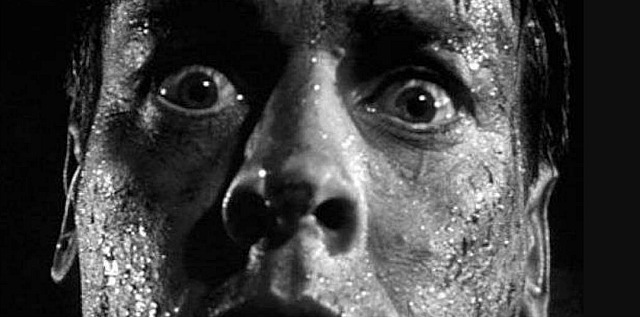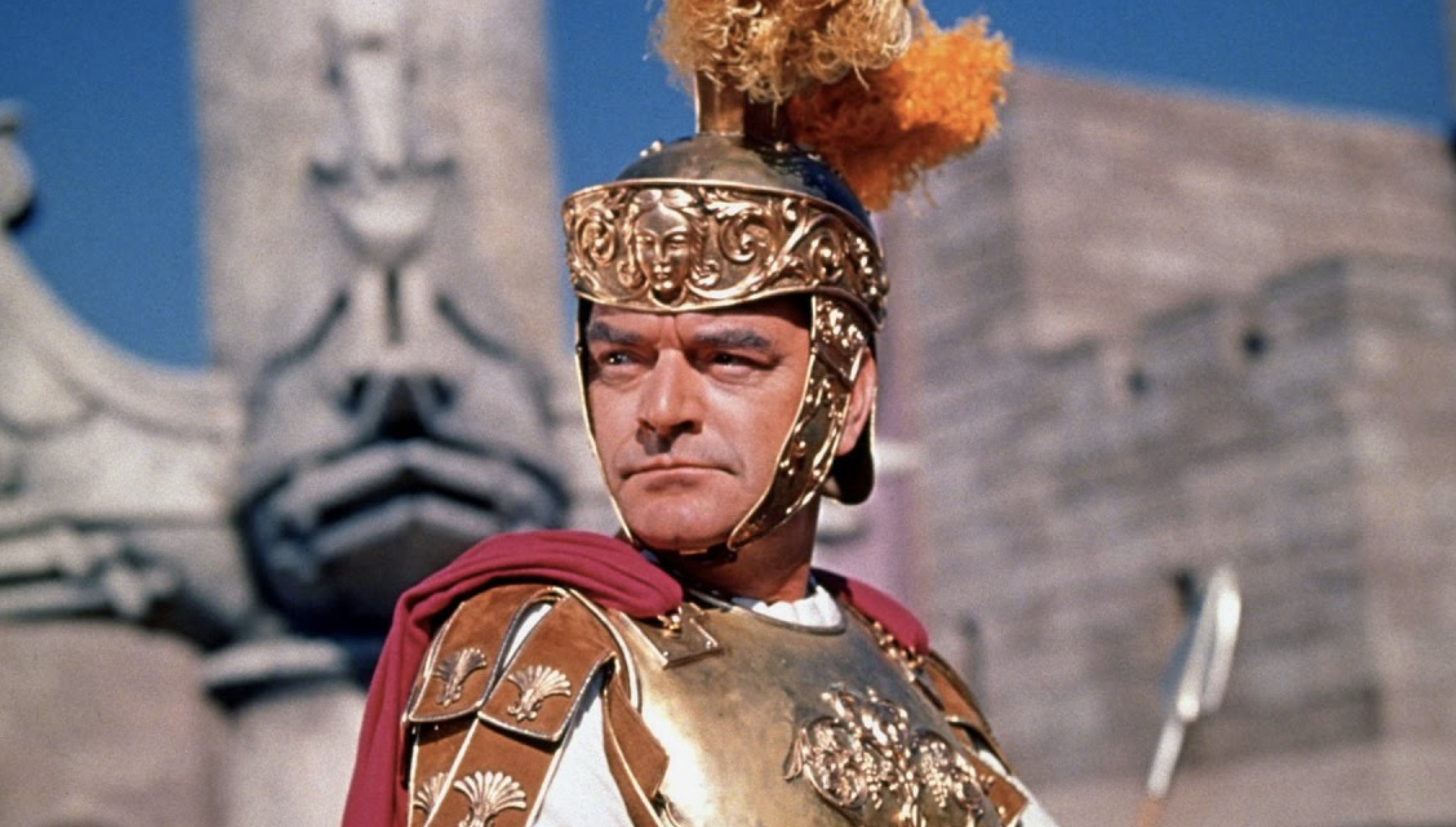
Virus Was Bloodstreaming Five Years Ago

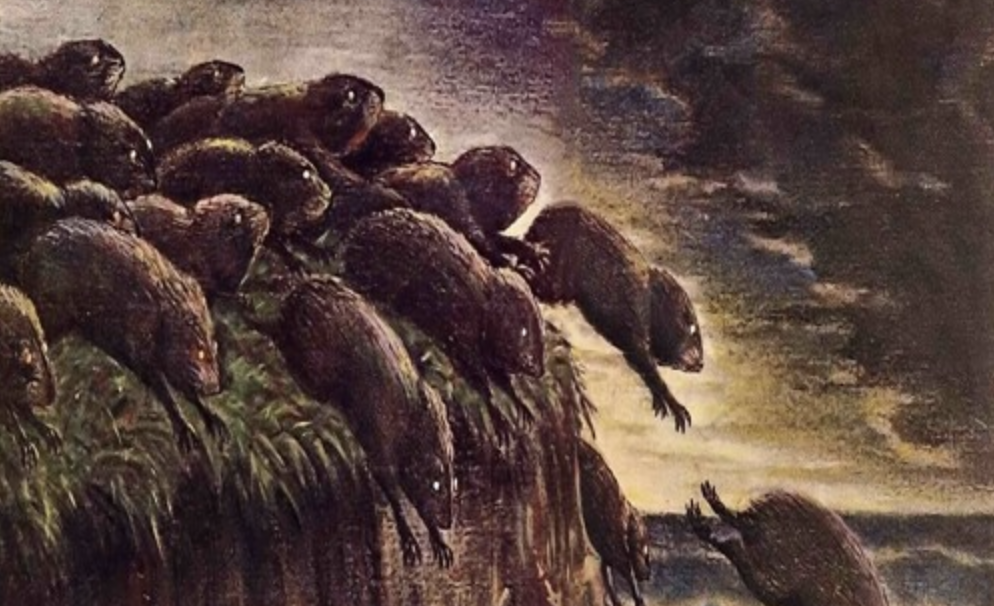
There’s this idea that the woke virus didn’t really manifest in the liberal bloodstream until the George Floyd riots of late May and early June 2020. No — it was well underway by mid to late ’17. It was significant enough that I wrote an Invasion of the Body Snatchers satire of this poisonous phenomenon on 1.9.18.

Five years of this shit! And probably another two or three years before it starts to flatten out and go away. Maybe.

Posted on 1.9.18: Over the last 60 years we’ve seen four Invasion of the Body Snatchers films — Don Siegel’s 1956 original, Phil Kaufman’s 1978 remake, Abel Ferrara’s 1993 version and Oliver Hirschbiegel‘s decade-old The Invasion.

Now it’s time for a fifth involving the installation of seed-pod mindsets, with the change agents being the Millennial and Generation Z sons and daughters of today.

I’m talking about a scenario in which the Anglo Saxon whitebread gene is regarded as inherently arrogant, criminal and bad for the planet — flawed, cruel, heartless, exploitive. A consensus emerges that the only way to correct this abhorrent culture is to fully indict the historical criminality of whiteness over several decades and in fact back to the beginnings of this nation — what it’s been, what it is now and where it’ll lead if things aren’t turned around.

Alien spores float down from space, affecting only the children and grandchildren of boomers and GenXers. Once turned, the awoken are free to call Anglo-Saxon culture by it’s true name — oppressor, a cancer, a scourge upon humanity. Within days the idea is spread that it’s time for enlightened non-whites to marginalize or dilute or even overthrow white culture so that POC culture can re-shape things and bring in a little fresh air and more fairness, freedom and opportunity.

Gradually seed-pod consciousness spreads to members of the liberal intelligentsia, and more and more of them are suddenly embracing the program. The general idea is “let those shitty old crusty white guys eat some of the shit that POCs have been eating for the last couple of centuries,” etc.

Gradually it becomes accepted that if you’re white and straight you’re kind of a bad person, or at the very least suspect. And that you probably need to re-educate yourself and embrace the new reality…or else.

A clever horror-comedy satire that ten years ago would have come and gone and been forgotten by awards season is transformed by seed-podders into a Best Picture contender, and those who question the validity of this are regarded as cranks or closet racists.

Friends and family members of seed-pod film critics begin to notice a certain robotic manner and a glassy, out-to-lunch look in their eyes. Local constable: “But he looks like his picture, madam. Obviously he’s Guy Lodge, the Variety critic.” Mrs. Lodge: “But it isn’t him, I’m telling you. Something is missing. It’s just not Guy!”

Liberal-minded film critics Anne Thompson and Eric Kohn declare that they’ve been making sure that POCs are ranked prominently in their year-end awards ballot, partly because they admire their films but also because they’re about or were made by POCs.

Seed-pod urban culture begins to adopt other changes. Millenial and GenZ types begin to regard heterosexuality as a problem, and it’s gradually decided that it’s time to let LGBTQ folks run the culture and push heteros off to the side a bit. They’ll be allowed to walk around and buy groceries, but they need to accommodate themselves to the notion that straight whites are an underclass.

And if educated liberal Democrat white guys complain about any of this on social media platforms, the seed-podders tag them as closet Republicans or closet racists or closet homophobes. Would the seed-podders be delighted to bust these white guys on any of these counts and thereby eradicate or at least marginalize their asses and put them out to pasture? You have to ask?

The transforming of society has never been a gentle process, and to make an omelette you have to break a few eggs.

I’ll Never Trust Guy Ritchie Again

I decided a while back that Guy Ritchie‘s Operation Fortune: Ruse de guerre (Lionsgate, 3.3) was almost certainly meh-level or, you know, some kind of problem. Partly because it began filming over two years ago (1.14.21), and then the previously scheduled 1.21.22 release was abandoned by STX Entertainment “without comment.”

Not to mention Ritchie’s rep as a skilled hack who makes Guy Ritchie films….nothing wrong with that, but nothing great about it either. Plus there’s no forgiving Ritchie for making those two repulsively awful Robert Downey Sherlock Holmes films (in ’09 and ’11). Plus the only Jason Statham movie that didn’t blow chunks was Roger Donaldson‘s The Bank Job (’08),

Right now Operation Fortune has a 66% Rotten Tomatoes rating. That means it has problems. That means it’s at least half a wank.

Fortune has less to recommend than even the weakest of the Bond films, according to The Age‘s Jake Wilson. “The banter is witless, the action sequences perfunctory and the take on global affairs is almost too wilfully empty-headed to be labelled as cynicism. If a film such as this can be defended, it’s as an invitation to set adulthood aside. As with much genre storytelling, what we’re dealing with is a child’s game writ large – but with more than the usual indifference to whether anything seems ‘real’.”

But wait…Variety‘s Owen Gleiberman was impressed by the damn thing. The leadline of his 3.1.23 actually calls it a “home run.” HE to Glierbamn: Wait a minute, wait a minute…what? Guy Ritchie doesn’t hit homers, and he hasn’t slammed a triple since Lock, Stock and Two Smoking Barrels in ’98. His brand is about hitting mostly doubles and occasional singles.

Gleiberman: “The script of Operation Fortune is a gem, allowing this to be the rare thriller that’s as driven by words as an old Hollywood movie. Yet it’s Ritchie’s direction that makes every scene vibrate. His talent is on full display, though now it’s held in perfect perspective.

“The Cannes yacht scene is intricate enough to rival what Tarantino brought off in Inglourious Basterds” — I didn;t like Inglourious Basterds all that much! — “and the climax, set in the power tower of those biotech moguls, spins on a reversal of expectation about one of the film’s characters that’s wily enough to be exhilarating. The sparingly used helicopter shots expand the action with an almost musical visual flair.

“All of this makes me want to go back and watch Guy Ritchie’s early movies again. Will I change my mind about them? Probably not. Yet with Operation Fortune, Ritchie rules. In this movie, he’s like Howard Hawks in overdrive. Tom Cruise, Barbara Broccoli and everyone else in Hollywood: take heed.”

Conversation’s Over

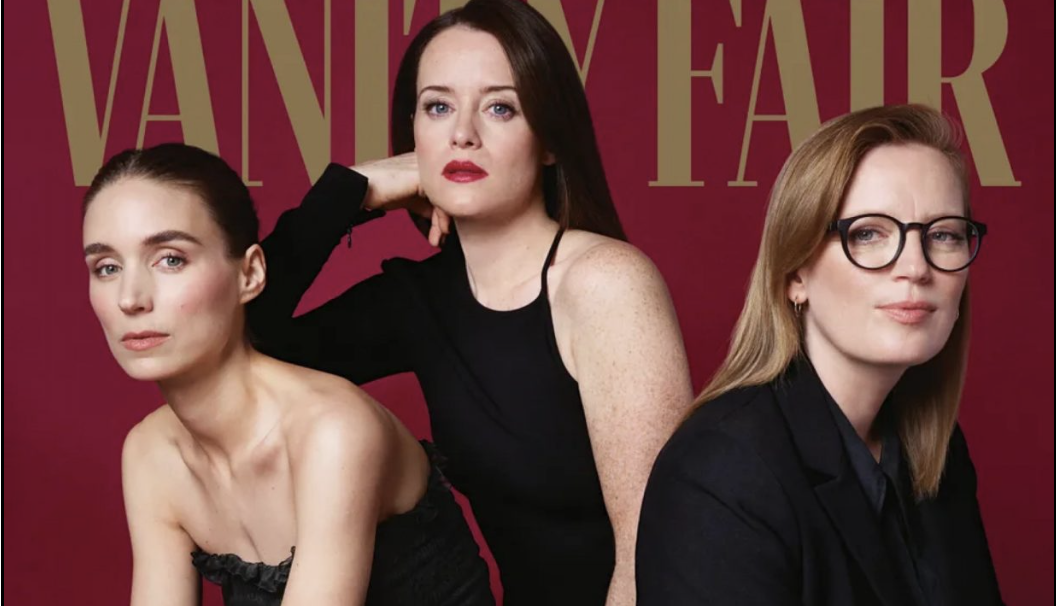
You wouldn’t believe how much the know-it-all Telluride wokester journos were shrieking with delight and doing cartwheels over Sarah Polley’s talking-in-a-barn movie last September…Oscar noms, going all the way, wheeee!

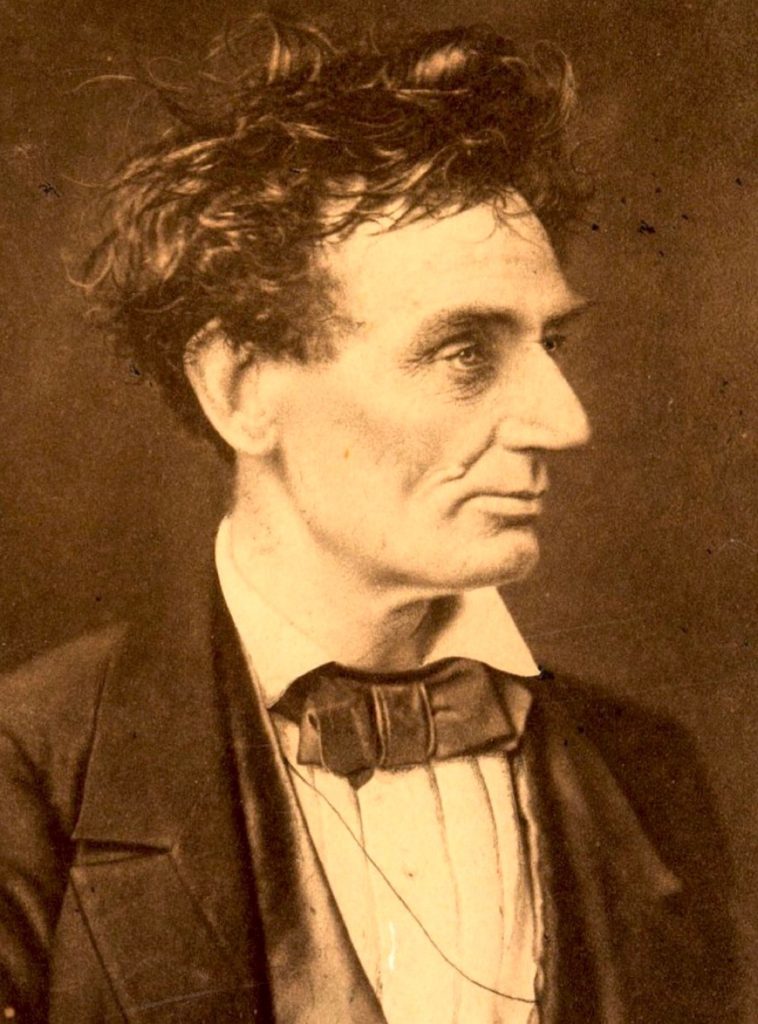
Abraham Lincoln wasn’t into combs or brushes or looking tidy — the crazy-morning-hair, just-woke-up look

/

Words In Passing

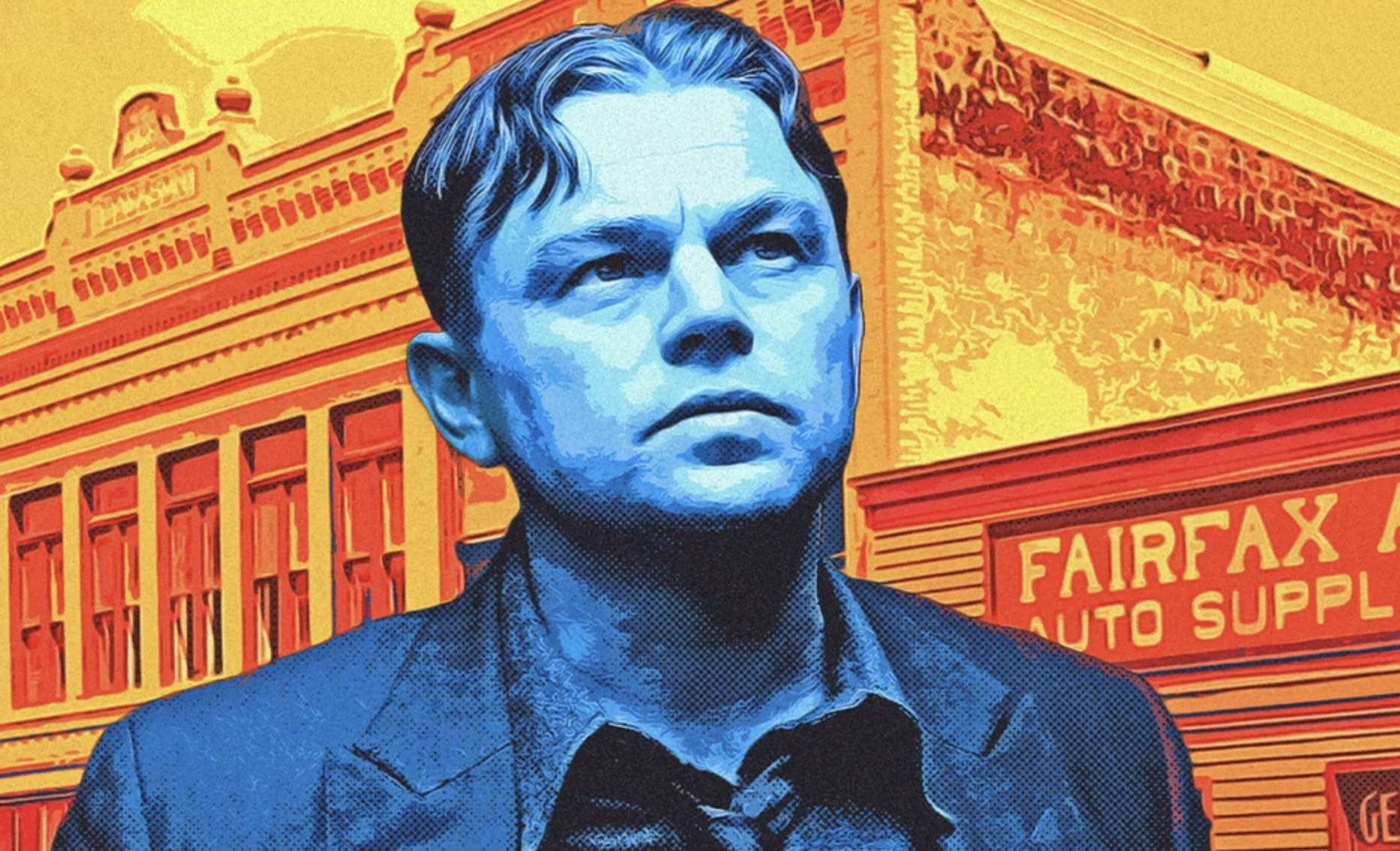
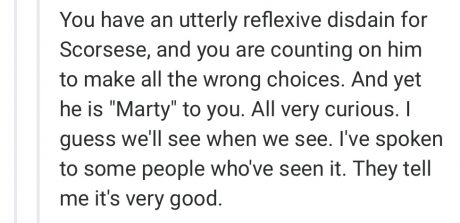
We’re all presuming that Martin Scorsese’s Killers of the Flower Moon will be highly impressive, but it’s nonetheless encouraging to read an actual morsel of second-hand hearsay, to wit:

If you ask me the 2.23 debate thread that contains this short paragraph (Glenn Kenny vs. Daniel Rowland) is just as interesting as it addresses certain negatives that may emerge, depending on the breaks.

Read more

Honest Admiration

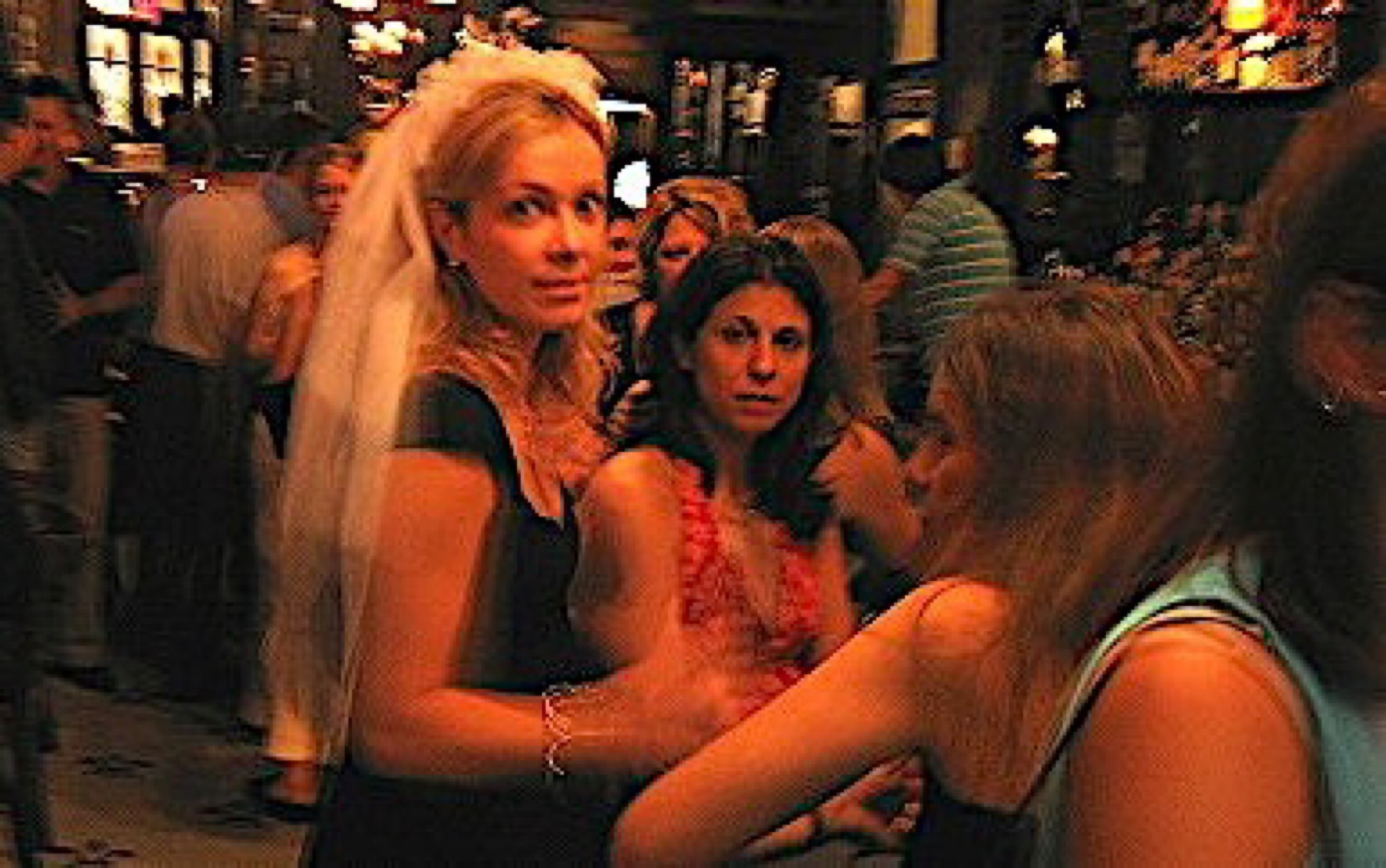
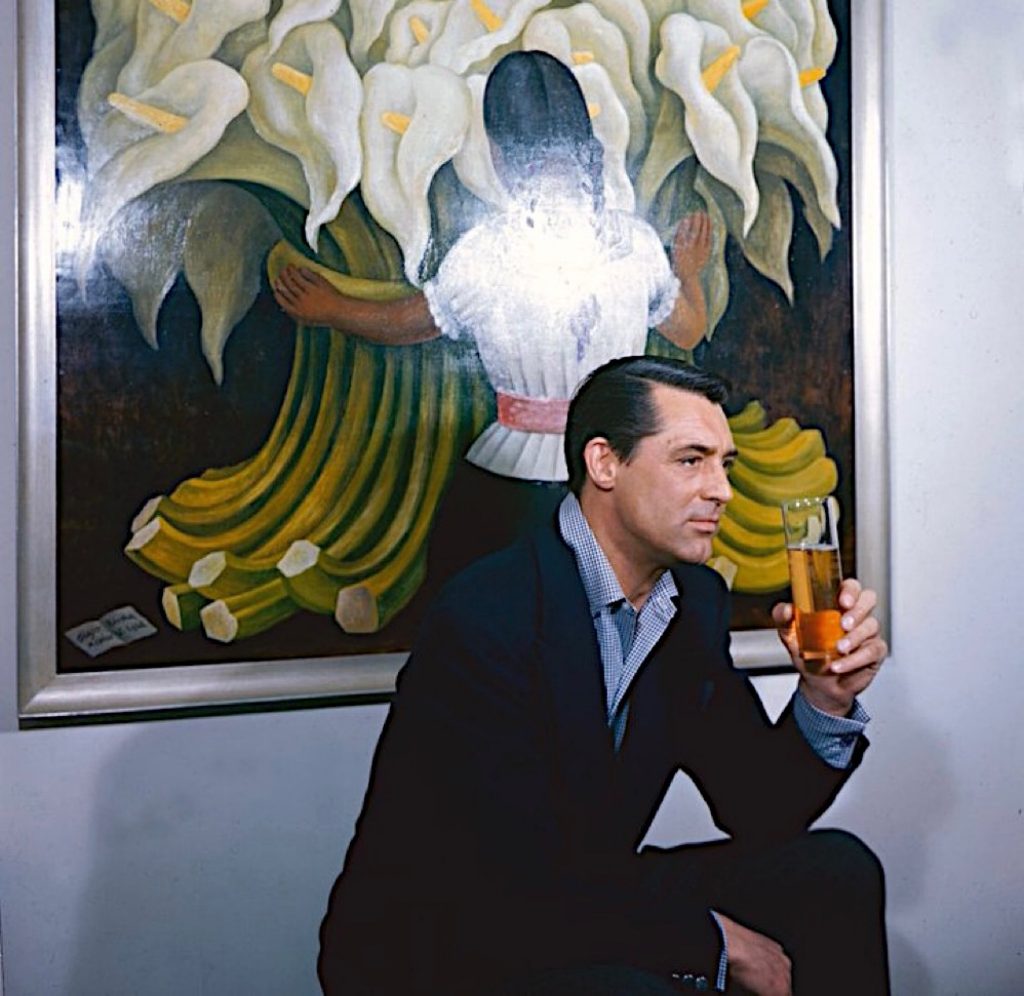
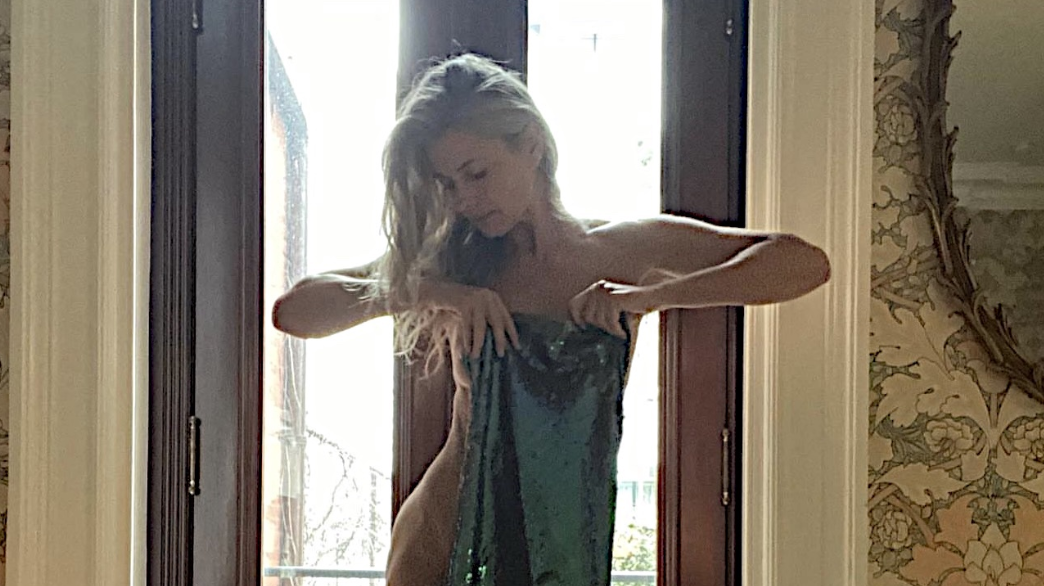
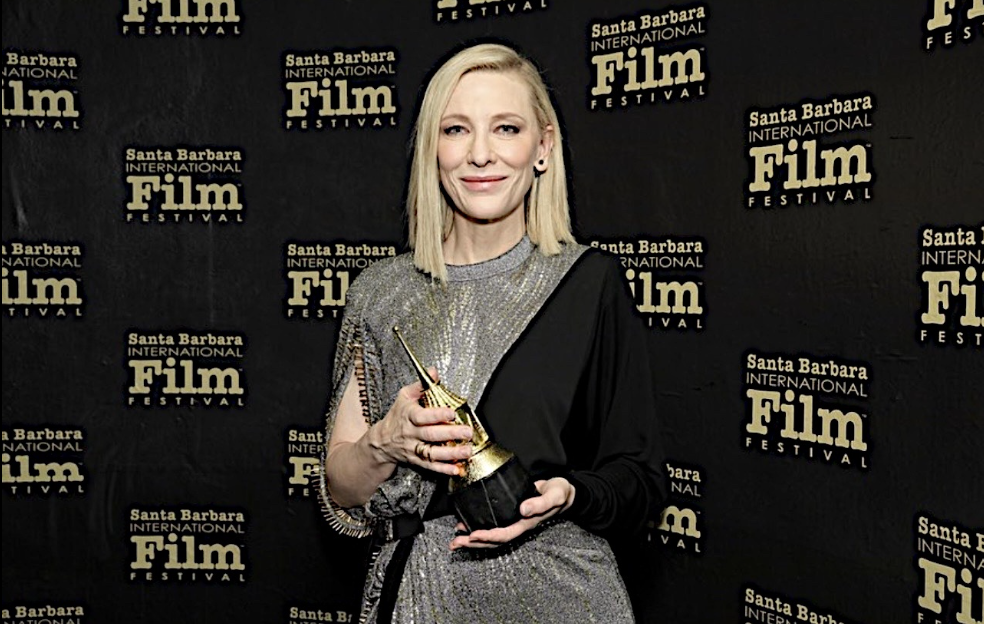
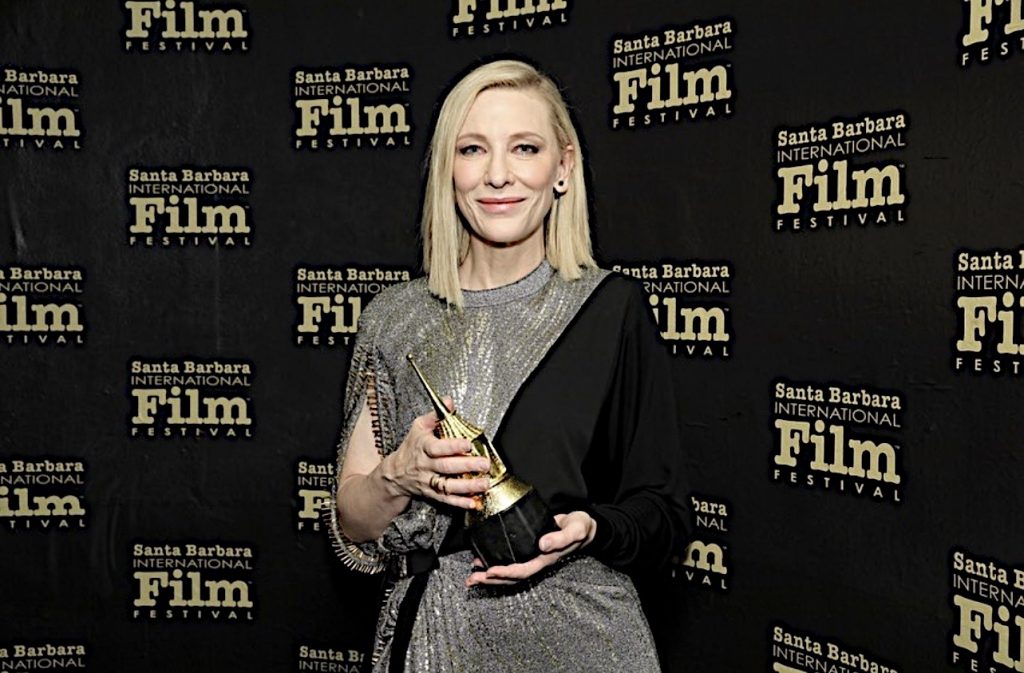
For the concept, the lighting, the wardrobe…each and every aspect. Usually you’re asking for trouble if you pose someone against hazy flooded sunlight, but this time it works.

Thomson on Lemmon

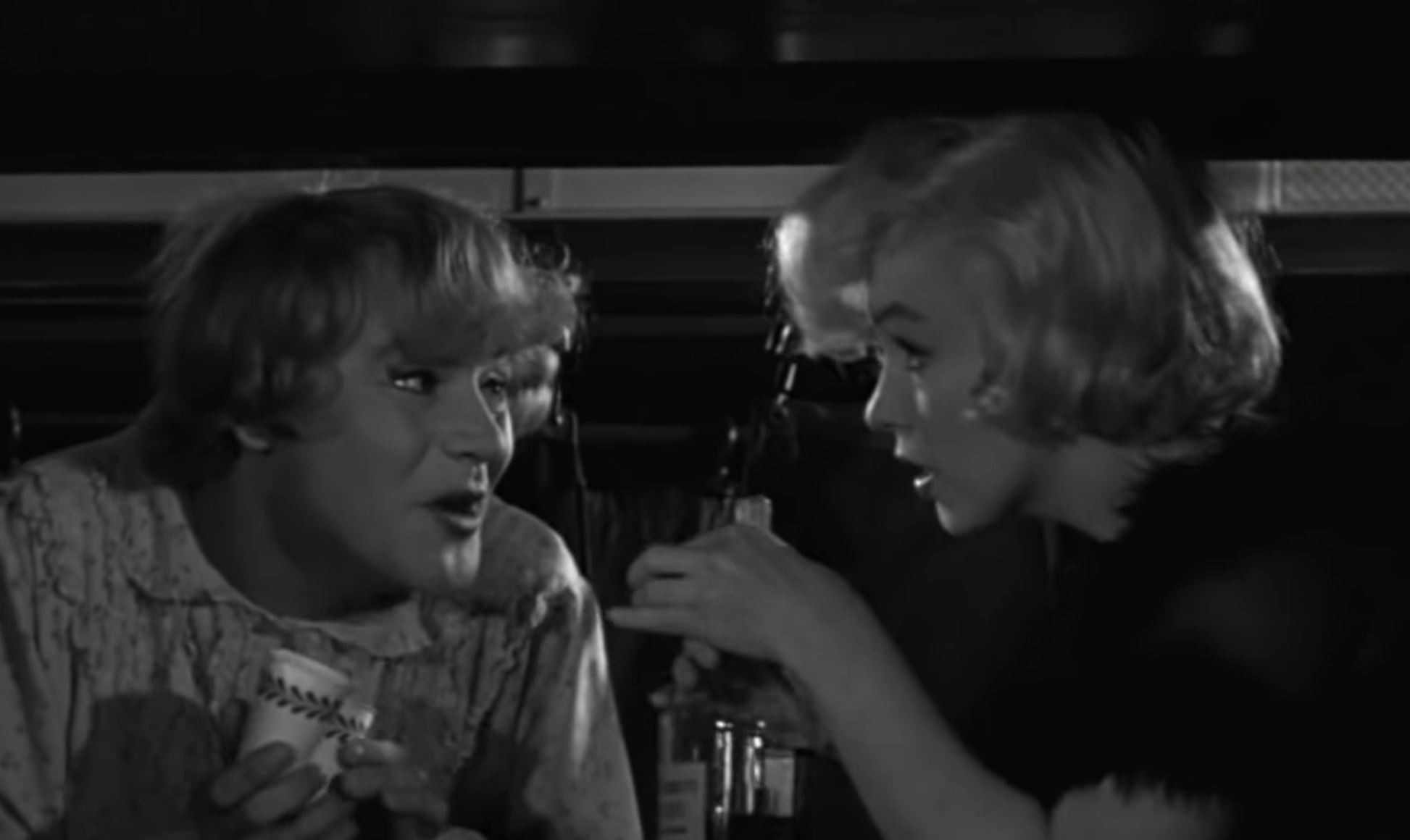
My honest opinion of Jack Lemmon (1925-2001) is that he was always an engaging actor and sometimes an extraordinary one, but his performances began to feel overly neurotic and mannered when he hit his late 30s, or roughly from ’64 onward. His best period began with Mr. Roberts (’55) and ended with The Fortune Cookie (’66) — an eleven-year stretch. His peak years amounted to only four — Operation Mad Ball (’57) to Some Like It Hot (’59) and The Apartment (’60).

Posted on 9.8.19: “Lemmon was the hottest guy in Hollywood after starring in the one-two punch of Some Like It Hot (’59) and The Apartment (’60), both directed and co-written by Billy Wilder. Because the latter mixed ascerbic humor and frankly sexual situations, Lemmon was offered almost nothing but frothy sex comedies for five years following The Apartment.

The only decent film he made during this period was Blake EdwardsDays of Wine and Roses (’62).

“The sex comedies were The Wackiest Ship in the Army (’60), The Notorious Landlady (’62), Irma la Douce (’63, minor Wilder), Under the Yum Yum Tree (’63), Good Neighbor Sam (’64) and How To Murder Your Wife (’65). He also costarred that year in The Great Race, a period costume comedy about arch humor, empty artifice and scenic splendor.

“Lemmon finally broke out of that shallow, synthetic cycle with Wilder’s The Fortune Cookie (’66). Not grade-A Wilder but certainly half-decent, and a great boost for Walter Matthau. And then Luv, The Odd Couple, The April Fools, The Out-of-Towners, Kotch, Avanti! and Save the Tiger. And then he hit another wall with Wilder’s The Front Page.

“The Lemmonisms are all over Save The Tiger (’72), but five or six scenes in that film are true and on-target, and that ain’t hay. His performance in The China Syndrome also made me snap to attention. Ditto Ed Horman in Missing.”

I relate to the Lemmon profile in David Thomson‘s “The New Biographical Dictionary of Film” (2002 edition), page 513:

“I have to confess that sometimes one squeeze of Lemmon is enough to set my teeth on edge. There’s no doubt that, as a younger actor, Lemmon could be very funny. He is very skilled, meticulous and yet — it seems to me — an abject, ingratiating parody of himself.

“Long ago worry set in. The detail of his work turned fussy, nagging and anal. His mannerisms are now like a miser’s coins. There have been a few films — like James Foley‘s Glengarry Glen Ross (’92) — that used this demented worryguts as necessary material. And Lemmon is very good in that film. But far too often, he stops his own roles and starts preaching anxiety, leading everything away from life and into the jitters.”

They’ve Never Forgotten

Last night some neo-Nazi hooligans protested the first preview performance of Jason Robert Brown and Alfred Uhry‘s Parade, a 1998 historical musical that’s being revived at the Bernard B. Jacobs theatre (242 West 45th Street).

It dramatizes the trial, imprisonment and lynching of Leo Frank, a Jewish factory superintendent who was falsely convicted of the murder of a 13-year-old employee, Mary Phagan, in 1913 Atlanta. After his sentence was commuted to life imprisonment in 1915, Frank was seized by an anti-Semitic mob and hanged from a tree in Marietta, Georgia — Phegan’s home town.

Ben Platt (Dear Evan Hansen) plays Frank in the stage revival. Last night he posted a statement about the anti-Semitic protest.

I don’t have much interest in catching Parade, but this morning I was recalling my one and only viewing of Mervyn LeRoy‘s They Won’t Forget, a 1937 drama based on the same tragedy.

Pic was based on Ward Greene‘s “Death in the Deep South,” a fictionalized account of the Frank case. It starred Claude Rains, Gloria Dickson, Edward Norris and — in her feature debut — Lana Turner.

For decades LeRoy successfully functioned as a smooth and dependable house director of big-studio features — The Wizard Of Oz (partially — Victor Fleming received credit), Thirty seconds Over Tokyo, Little Women, Any Number Can Play, Quo Vadis?, Million Dollar Mwemaid, Mister Roberts, No Time for Sergeants, The FBI Story, The Devil at 4 O’Clock, A Majority of One, Gypsy. But he made his best films in the early to mid ’30s — Little Ceasar, I Am a Fugitive from a Chain Gang and They Won’t Forget.

Consider how LeRoy concluded Forget‘s lynching scene — not with a literal depiction but a snagging of a mail sack as a train speeds by. That’s John Ford-level expressionism.

Parade will open on 3.16.

Repeating “Maverick” Mantra: Lightning Can Strike Again

A while back I tried to sell my Paramount homies on a special Top Gun: Maverick HE advertorial. The idea had already been written and posted on 1.13.23 — I just wanted to repeat it with a little Paramount dough behind me. The piece was titled “A Film That Saved Hollywood Could Also Save The Oscars.”

It seemed like the right pitch, and if you ask me this was underlined by the fact that Paramount recently launched a billboard ad campaign that echoed what my piece said.

At a time when the old energy current between Hollywood and mainstream audiences seemed to be dropping left and right, Top Gun: Maverick had pumped new life into the spirit of things, and should be roundly celebrated for reaching out and connecting…for making something actually happen in theatres at a time when too many films seemed to be limping along.

A Best Picture Oscar for a movie that had not only restored faith in exhibition but in Hollywood itself.

The current Paramount slogan says it all: BELIEVE IN MOVIES AGAIN. Which translates to BELIEVE IN HOW MOVES WERE DURING THE OBAMA ADMINISTRATION AND BEFORE. Which also translates into BELIEVE IN THE FUTURE and the distinct possibility that more films like Top Gun: Maverick could pop the champagne as long as Hollywood takes heed and acts upon the obvious.

Which is this: Joe and Jane Popcorn are sick of instructional woke content (identity politics, progressive guilt-tripping, historical presentism, torture-rack flicks like Last Night in Soho, a general aversion to anything rooted in straight-white-male perspectives, movies that constantly hammer the Millennial-Zoomer BIPOC gay trans #MeToo boogaloo…films that insist that entitled white assholes need to be scolded blah blah).

Joe and Jane Popcorn to Elite Hollywood Wankers: Whatever happened to movies like The Wedding Crashers, Tropic Thunder, Manchester By The Sea, Her, A Separation, Sicario, Leviathan, Hell or High Water, Call Me By Your Name, The Social Network, Superbad, Whiplash, The Witch, etc.? How about unwoke-ing your sorry asses and keeping it that way for the foreeeable future? And making more upcoming films like Ben Affleck and Matt Damon‘s Air? And while you’re at it, fire the Woke Award-Season Mafia goons and all the kiss-asses who keep pushing movies that make people miserable.

Alternate headline: “Make Joe & Jane Popcorn Happy, And They’ll Return The Favor In Spades.”

2nd Alternate headline: “Listen to Barry Diller!”

Read more

HE Puzzle-Gamed By “Knock At The Cabin”

Last night I finally saw M. Night Shyamalan’s Knock At The Cabin. It’s more of a mystifying situational conceit than what most of us would call a movie or even a campfire tale. It’s based on Paul Tremblay‘s “The Cabin At The End of The World,” which I haven’t read. But the screenplay, co-authored by Shyamalan, Steve Desmond and Michael Sherman, feels like a surreal dream (i.e., arresting impressions minus a compelling narrative) that was never developed into the kind of thing that most films need — i.e., a story that coheres.

Is it okay to defy conventional storytelling logic in order to create a conceptual horror film version of a Luis Bunuel film (i.e., a kind of Exterminating Angel set in a woodsy cabin)? Yeah, you can do that, sure. But guys like me don’t have to like it, much less recommend it to their readers.

There’s a fanciful notion here — i.e., a couple of guys being asked to sacrifice one of their lives in order to stop a worldwide apocalypse — and I’m telling you it doesn’t pay off or hang together. Not even a little bit. I realize I’m obliged to at least consider it as Bunuel-influenced but my gut still wants to call it precious bullshit.

And how, by the way, does a gay couple’s experience with homophobia from all sides….how does this connect with a global apocalypse or, for that matter, an invading foursome (Tankbod Ripplehead, Nikki Amuka-Bird, Abby Quinn, Rupert Grint) who are described near the end as the Four Horsemen of the Apocalypse?

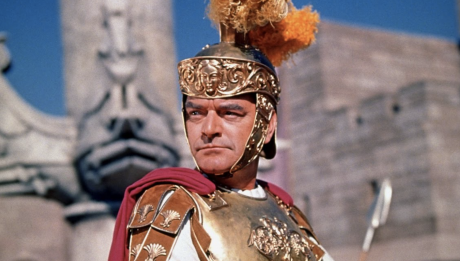
Which reminds me: Has anyone even thought of, much less seen, Vincent Minnelli‘s The Four Horsemen of the Aoocalypse (’62)? A MGM release that ran 153 nminutes, it costarred Glenn Ford, Ingrid Thulin (they exchanged fluids off-screen), Charles Boyer, Lee J. Cobb, Paul Lukas and Yvette Mimieux. I’ve never seen it, but I presume it was problematic

Boiled down, Knock At The Cabin is just a single-location “who dies and who lives?” thing, fortified or ornamented with a series of spooky end-of-the-world panoramas.

The best performance by far comes from Kristen Cui, who plays the adopted daughter of Jonathan Groff and Ben Aldridge‘s married couple.

Speaking as a serious fan of Groff (especially his starring performance in Mindhunter, which is only five or six years old), I was horrified to notice that he’s losing that young-guy physique and is becoming a bit stocky…no! What’s next — he grows a beard, puts on another 10 or 15 pounds and becomes a bear?

After Cabin ended I bolted upright, walked out to the lobby and immediately read the Wikipedia synopsis to see if I’d missed anything. I hadn’t. There’s a term for a movie like this — burn.

Why is it called Knock At The Cabin? Why isn’t it called A Knock At A Cabin? Why isn’t it called Tankbod Has An Axe?

Read more

Great Cartoonist, Excellent Fellow

Cartoonist and longtime chum Chris Browne, son of Hi & Lois and Hagar the Horrible creator Dik Browne and the guy behind the Hagar strip since ’88, has gone to Valhalla. His ship left port sometime yesterday. He and the Viking God Odin are now equally eternal, and I really wish Chris was still mortal, not just for his sake but my own. I really loved the guy.

The Remembering,” posted on 4.6.18: “In the spring of ’80 I took cartoonist and longtime friend Chris Browne to an early press screening of The Shining. The old Warner screening room at 75 Rockefeller Plaza, I mean, on the eighth floor. Plush, nicely carpeted, 103 seats.

Browne has been drawing the “Hagar the Horrible” strip since ’88, and is quite the guy in cartoonist circles. But he was in a not-yet place back in ’80.

We were shown the slightly longer version that ended with Overlook manager Barry Nelson visiting Shelley Duvall in a hospital room after Jack Nicholson‘s frozen-icicle death. Like Steven Spielberg after his initial viewing, I wasn’t all that knocked out. It was only years later, having watched The Shining for the eleventh or twelfth time (who remembers?), that I realized it had seeped into my system and taken hold in some curious way.

A few critics were there along with Buck Henry (glasses, tan baseball cap), Malcolm McDowell and Mary Steenburgen.

As soon as the lights came up Browne whipped out his sketch pad and, in the space of two or three minutes, drew a cartoon of Henry and his friends in their seats, their eyes wide with terror and with little piss puddles on the floor below. Browne went up to Henry in the downstairs lobby and showed him the drawing. I can recall Henry’s dryly bemused expression with absolute clarity.

Yesterday I wrote Chris on Messenger and asked if he still had that drawing. If so I asked if there was a chance he could scan it and send it my way. Or, failing that, if could he re-draw it and send it along. (As noted, the original only took him three minutes to draw it inside the screening room.) Chris graciously agreed to re-draw it but (a) without McDowell or Steenburgen, and (b) without the pee puddles. So here’s Buck again, and here’s to the lightning-fast creative derring-do of Chris Browne.

Death on a Bender,” posted on 3.20.07:

A pass-along from renowned cartoonist and old-time (i.e, ’70s and early ’80s hangover) Connecticut friend Chris Browne, who’s been writing and drawing “Hagar the Horrible” since 1988.