13 Excellent Ridley Scott Films

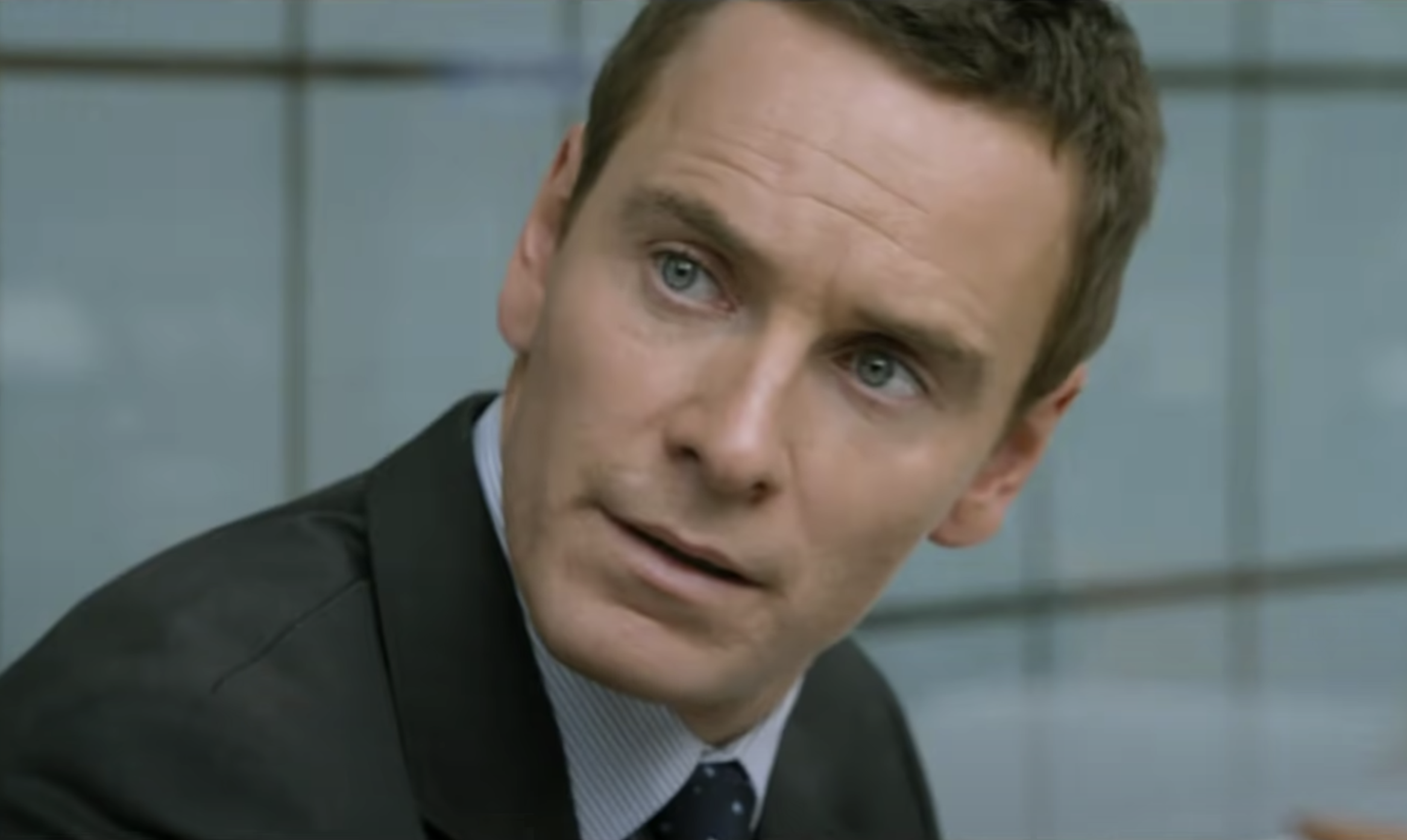
[Updated]. I don’t have time or the energy to write something deeply felt about each and every Scott film, but there’s absolutely no question in my mind the The Counselor deserves its #4 slot, that the first half of Matchstick Men is dead brilliant, and that A Good Year (ranked at #8) is a much better film that many people realize.

In this order…

1. Alien

2. The Duellists

3. Thelma and Louise

4.  The Counselor

5.  Blade Runner

6.  American Gangster

7.  Matchstick Men

8.   Gladiator  

9.   Kingdom of Heaven (extended version)

10. A Good Year

11.  Black Hawk Down

12. Black Rain

13. The Martian

I don’t feel that strongly care about the rest. Okay, I hate Prometheus and Alien: Covenant. Ditto Legend. Someone to Watch Over Me is piffle. I found House of Gucci half-tolerable, but I’m not sure I’d want to watch it again.

The Last Duel was better than half-decent. I don’t even remember 1492: Conquest of Paradise or Body Of Lies. Scott’s Robin Hood was half-watchable, G.I. Jane is negligible; ditto Exodus: Gods and Kings, White Squall, Hannibal.

I was actually okay with All The Money In The World.

Nearly Half of LAFCA Is Against Gender Neutral

The Los Angeles Film Critics Association announced last Wednesday that the org will follow the lead of the Spirit and Gotham Awards by abandoning gender-based acting awards. When LAFCA members vote in December they’ll hand out two Best Lead Performance trophies (either gender or gender-neutral) and two awards for Best Supporting Performance (ditto).

But the vote, I’ve been told, was far from  unanimous. In fact, it was damn near evenly split. It can be reported, in short, that nearly half of LAFCA doesn’t agree with the hardcore LGBTQ-supporting woke apparatchiks within the organization.

I’m told there’s a certain Stalinist fervor within this gender-neutral cabal — a belief that they’re doing God’s revolutionary work by dissolving gender and opening things up to all sorts of wrinkles, attitudes and permutations.

There’s also a conviction that anyone who doesn’t agree 100% on this issue is a naysayer or a foot-dragger, and that the apparatchicks therefore need to band together to make sure that the other side (i.e., those who believe that gender-based acting awards should be kept and that this will benefit actresses) is out-maneuvered or otherwise marginalized.

The LAFCA gang met last Saturday (10.8) in West Los Angeles, and the gender-neutral acting awards vote was 27 in favor, 22 against and with four abstentions. I’m told that the historical tendency has been for abstentions to translate into negative votes (i.e., voters who don’t necessarily agree but don’t want to argue or alienate), so let’s presume that the vote came down to 27 for, 26 against.

And that’s not counting the members who decided to vote in favor of the gender-neutral thing because they’re mice, and that it seemed safer to go along than to face challenges.

It was announced at the meeting that LAFCA had 60 members before the vote, and that a new admission made the tally 61.

I’m told that even discussing the gender-neutral vote appeared to alarm the apparatchiks. The topic of “nonbinary”-identified people is considered part and parcel of the larger discussion of LGBTQ rights — a zero-sum discussion.

Not incompatible: (a) gay couples and their families being entitled to equal protection under the law and (b) women being entitled to the dignity of acting categories which recognize that sex is an essential component of performance, and are therefore worthy of separate recognition.

Let’s imagine that a LAFCA member who doesn’t favor gender-neutral acting awards had spelled out his/her reasons for being against it. What would they say? How would they make their case?

The main argument, I would think, is that gender-neutral awards are arguably anti-woman.

Boiled down, the LAFCA system wasn’t broke so why the hell did the apparatchicks insist on “fixing” it? I’ll tell you why. Because wokeism is a cult and a newfound religion, and it’s believed that people who don’t parrot and follow the wokester line are on the wrong side of history. Kind of the same philosophy shared by Tom Courtenay‘s “Strelnikov”, the supporting character in David Lean‘s Dr. Zhivago.

A LAFCA member with senior standing: “I didn’t attend the meeting because I completely disagreed about their decision to revamp the acting awards by doing away with gender distinctions.”

Kill Bill

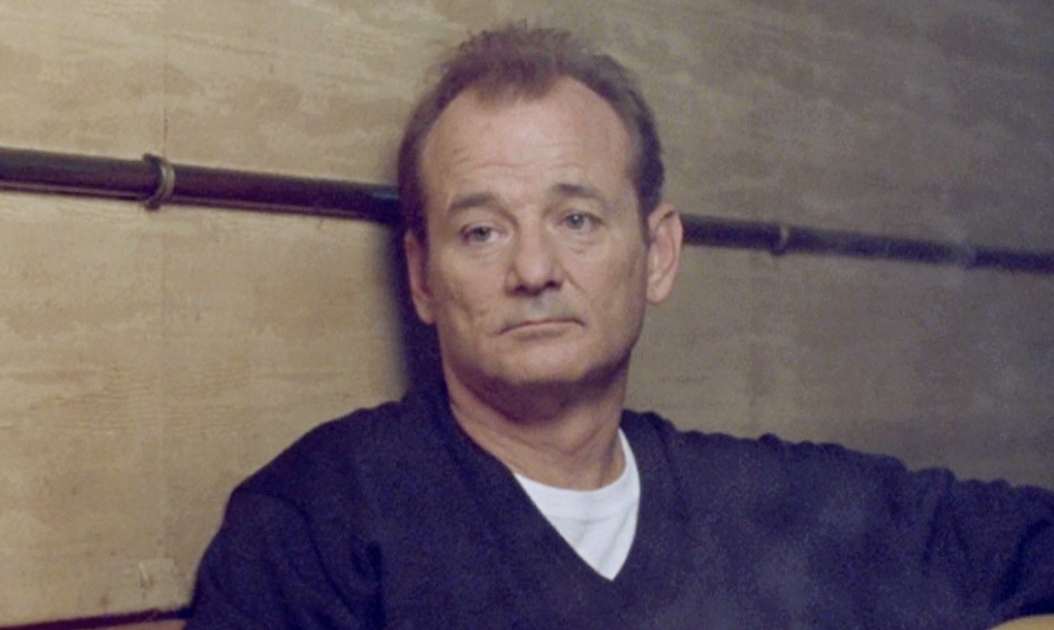
News flash: “Bill Murray Faces Avalanche Of New Accusations,” a 10.14 Deadline story by Tom Tapp, is basically out of the past. Because two of the “new” allegations are between 29 and 39 years old, having occured in 1983 and 1993.

On a 10.13 episode of “Good Mythical Morning“, Seth Green related how Murray got into a spat with his nine-year-old self during a 1983 taping of Saturday Night Live. It ended with Murray picking up Green by the ankles, saying “the trash goes into the trash” and dumping him into a trash can. And of course, it happened early in the Reagan administration.

Green’s story (which arrives around the 16-minute mark) is bizarre but it’s also…I don’t know how to describe it. Perversely funny by way of mock cruelty? It obviously alludes to a lack of gentle or kindly behavior on Murray’s part, but dropping a presumably mouthy, munchkin-sized, red-haired nine-year-old into a trash can…yes, Murray was being a dick (I certainly would have never done anything like this) but a big older guy dumping a precocious, Howdy Doody-sized nine-year-old into a trash can…I dunno but there’s something mildly funny about that. I don’t approve, of course, but “the trash goes into the trash”…I’m sorry but that’s a funny-cruel line.

Tapp’s Deadline story also mentions a recollection from former SNL star Rob Schneider, about how Murray conveyed an intense loathing for SNL cast members Adam Sandler and Chris Farley when he guest-hosted the show in ’93. Again — a moderately alarming story about Murray’s manner and temperament, but it happened during the second year of the Clinton administration. “The least of the hate was to me,” Schenider said. “I took great pleasure in that [Murray] hated me less, because he’s my hero.”

There’s also a rehash of the Geena Davis / Quick Change story, which happened in 1990 and is revealed in her new book, “Dying of Polteness.” Murray acted is a creepy sexual manner, she recalls.

The Lucy Liu Charle’s Angels story, which haoppened 22 or 23 years ago, is also rehashed.

There’s not much doubt that Murray has been (and possibly still is) an odd ornery cuss from time to time, but Tapp’s article has been triggered by a standard showbiz mob pile-on instinct. Get Bill, beat him up, trash him every which way, etc.

Favorite Girlfriend

Sunday and early Monday were Sutton visitation days in West Orange, New Jersey. Sutton, Cait and Jett, I meant to say. The four of us.

I heard about Nikki Finke as I was crossing the George Washington Bridge. I had to pull over on 280 West (near Newark) in order to post a brief headline acknowledgment. I wanted to downshift and blow off the big bad world but the Finke thing was too big.

Jett to HE: “You know what, dad? All you want to do is make out with the dogs and play with Sutton like you’re both in pre-school daycare. You’re soft, no discipline. I guess it’s a grandfather thing…”

The only bad part of the visit was being more or less forced to watch episode #8 of House of the Dragon. Me: “How can you guys watch this crap?” Jett: “Welcome to the world of streaming content, dad. It’s fine. Nobody’s being hurt by it.”

Read more

John T. Chance Meets Laurence Tierney

Brim-wise Todd Field‘s hat is obviously similar to the one worn by John Wayne in Rio Bravo (’59). But the thick hat band is pure urban noir, like the brown tough-guy hat worn by the 68-year-old Laurence Tierney in Norman Mailer‘s Tough Guys Don’t Dance (’87).

Wayne was 51 when he and Howard Hawks shot Rio Bravo in the summer of ’58; Field is currently somewhat older.


John Horn Didn’t Even Ask

Following last night’s Academy screening of Todd Field‘s TAR, Cate Blanchett and costars Nina Hoss and Sophie Kauer joined The Frame‘s John Horn for an on-stage discussion.

The immediate reaction in the room was “what’s with Blanchett and Hoss wearing identical Mondrian outfits?” But according to an HE friendo who attended, Horn never even mentioned the identical outfits, much less asked what was behind the coordination.

HE to friendo: Tar is a fascinating if infuriating film, and Average Joes and Janes are going to find it mystifying and irksome. It refuses to tip its hand or lay its cards on the table. It’s a high-toned tease.

The almost uniformly rave reviews for this elegant but annoyingly oblique film are why people don’t trust critics.

I was totally shattered when I saw it in Telluride. I was expecting to be turned on and perhaps illuminated or even levitated, but it was so reluctant to offer specific comprehensions and tie it all together for the sake of the dumb-asses that it damn near broke my heart.

It’s going to die when it opens wide.

Friendo to HE: I was transported by the paranoia. Totally had me in fear.

HE to friendo: That was excellent, I agree. A very palpable sense of paranoia. But what had actually happened with the girl who [redacted]? Who had rejected whom?

Friendo to HE: The trailer was completely a lie.

HE to friendo: In what sense a lie?

Friendo to HE: It sold a completely different film experience. Bald-faced lie.

HE to Friendo: But it looked and felt so ravishing…the flush autumnal vibes of Berlin and New York were intoxicating.

Friendo to HE: But I loved the film.

HE to friendo: What was with the big black dog? And the attractive Russian cello player wasn’t even attracted to Lydia, and who ate her lunch like a peasant?

Friendo to HE: The dog was her paranoia. She knew she’d done stuff that was going to catch up to her.

HE to friendo: Not one single erotic scene. Not so much as a slight hint of sex. In that sense a curiously barren experience.

Friendo to HE: Lydia was clearly grooming her.

HE to friendo: But to no avail. So who cares? It was a blind alley, a dead end.

Friendo to HE: I cared. Because there would be another Lydia + young woman relationship.

HE to friendo: Nearly ever powerful person in world history, especially the creatively powerful and world-famous, has used his or her power to persuade attractive young people to fuck or pleasure them or serve as arm-candy. They’ve all done it. Lydia Tar is no different. Way of the big, bad, grown-up world. And after you turn 20 you have to figure that stuff out.

Friendo to HE: Except now those powerful seducers will be destroyed by the New Puritanism.

HE to friendo: Lydia was a brilliant, arrogant, egoistic handful but she didn’t deserve career ruination.

Friendo to HE: The film is an anti-woke manifesto.

HE to friendo: It actually seemed to hesitate on that front. I thought it might be anti-woke but it held back.

Friendo to HE: Not sure it held back.

HE to friendo: Respectful disagreement.

Friendo to HE: It only held back because Lydia was as much a catalyst as a victim.

HE to friendo: Loved Blanchett, of course. But desiring various sexual conquests often goes hand in hand with being a genius or a powerful person. Geniuses want what they want, and they often get it. It’s been the way of the world for centuries.

Friendo to HE: It WAS the way of the world.

HE to friendo: So we’re all going to trudge through the freezing snow of the woke gulag for the rest of our lives? Terrific.

Friend to HE: It will pass with the nuclear winter.

HE to friendo: You think Mozart didn’t have his way? You think Leonard Bernstein didn’t go there? You think Isadora Duncan and Picasso and Tallulah Bankhead weren’t total hounds? You think Marlene Dietrich didn’t use her fame and power to seduce women and men left and right?

Friendo to HE: Of course. But this is now.

Selected Gore vs. “Bros” Transcribing

Partial transcript from Chris Gore comments in 10.3 YouTube conversation titled “Billy Eichner’s “Bros” DESERVED to FAIL”:

Gore #1: “I hope I’m not offending anyone by saying this, but the majority of people [in this country] are straight. That is just a fact, and that is the way things are.” HE modifier: Gore forgot to say the word “vast” before “majority.” Before Zoomers came along (and I mean as recently as the mid-to-late teens) the LGBTQ populations was somewhere in the vicinity of 3.8% nationwide. Now it’s in the vicinity of 7.1%, but you can chalk that up to trendy Zoomer identity issues and fluidity.

Gore #2: “And that trailer…I saw that trailer in a theatre, and it ends with a character asking ‘do you remember straight people?’ and another saying ‘yeah, they had a nice run.’ People in the audience cringed. You could hear audible groans. Or silence. When your trailer for a romantic comedy…it should end with your biggest laugh, and yet they basically ended it with a ‘fuck you’ [to straight people]. It is never a winning strategy to insult your audience.”

Gore #3: “This movie is all about being gay…all about [Billy Eichner‘s] sexuality. If Eichner had made this movie for a million dollars and it had made $5 million dollars, we would be having a different conversation.”

Gore #4: “There are parts of the movie that I found offensive. [Eicher and Luke MacFarlane] are having dinner with Luke’s parents, and there’s a conflict with Luke’s mother, a second-grade teacher, who says ‘I think second graders are too young to be exposed to or educated about LGBTQ issues.” Which Eichner disagrees with. It turns into a huge argument, and also drives the third act of the movie. The scene is effectively commenting on the parental rights bill in Florida, described in [woke circles] as the ‘Don’t Say Gay’ bill…it’a a comment on that [Florida law]. The movie ends with the mother bringing her second graders to the LBGTQ museum that Eichner is the top administrator of, and I don’t know if this is a conversation that we need to be having…a plot point written by and made by people WHO DON’T HAVE FUCKING CHILDREN! I was offended and pissed off when I saw that.”


Read more

Complete Absence of Humanity

When I think of Blonde, I don’t think of Ana de Armas‘ impressive, open-veined performance or the mostly black-and-white cinematography or the 1.37 aspect ratio or the expert craft levels or Andrew Dominik‘s ambition to create a serious art film. (Which he’s obviously done.)

What I think of is the cruelty. Whatever the degree of actual psychological anguish and emotional abrasion that the real Norma Jean Baker suffered through in her actual life, Blonde doubles if not triples the ante. It re-brutalizes and re-exploits the poor woman all over again, and more than earns its reputation of being a cruel, sadistic, bludgeoning film.

What other noteworthy films could be fairly described as cruel, heartless and sadistic toward their main protagonists?

Off the top of my head I would say Pier Paolo Pasolini‘s Salo, or the 120 Days of Sodom. And certainly Lars von Trier‘s Dancer in the Dark. Not to mention Robert Bresson‘s Au hazard Balthazar, Mel Gibson‘s The Passion of the Christ, Vaclav Malhoul‘s The Painted Bird (“a highbrow art film for elite critics and cineastes who have the fence-straddling ability to enjoy magnificent b&w cinematography (all hail dp Vladimir Smutny) and austere visual compositions while savoring the utmost in human cruelty and heartless perversion“), Hostel, Irreversible, A Clockwork Orange, Funny Games (both versions), Inglourious Basterds…what others?

Bale’s Supreme Moment

Christian Bale has been exceptional or certainly admired in several roles over the last 30 years. His finest performances, HE feels, are, in this order, the following: Dicky Eklund in The Fighter (’10), Patrick Bateman in American Psycho (’00), Dick Cheney in Vice (’18), and Bruce Wayne in his three Batman films (Batman Begins, The Dark Knight, The Dark Knight Rises).

But the Bale “performance” that made the strongest and most lasting impression, hands down, is “Bale Out: RevoLucian’s Christian Bale Remix!“, which popped in early ’09. A satirical dance remix of Bale’s Terminator Salvation rant (which happened for real in July 2008), it’s absolutely real, brilliant and unforgettable in a relentless sort of way. Every angry word is 110% genuine.

No Tombstones In The Eyes

Okay, there’s a vague resemblance between Casper Phillipson, who plays JFK in Pablo Larrain‘s Jackie and Andrew Dominik‘s Blonde, and the Real McCoy. The nose, the jawline and the eyes, to some extent, but at the same time Phillipson’s eyes lack something important. In his off moments JFK’s eyes had a haunted, hangdog quality — a slightly gloomy and exhausted look that was captured by Time magazine illustrator Pietro Annigoni. There was a vibe about Kennedy in these moments that seemed to say “I’m probably not going to last into old age, and you know it as well as I.” No offense to Phillipson but this grave undertone vibe is missing in his features. Gotta have that flickering awareness of death hovering.

Plus Phillipson doesn’t have the voice.

Doomstruck

As you begin to watch Park Chan-wook‘s Decision to Leave (MUBI, 10.14), there’s no denying that you’re being carried along by a masterful visual composer. Every shot is exquisite, a painting, an eye bath…and so perfectly balanced.

And during the first 30 to 40 minutes you can’t help saying to yourself “wow, this guy is really good” while at the same time hoping that it’ll amount to more than just a delicious film noir by way of a haunting mood trip.

And of course it doesn’t. As the first hour comes to an end it begins to hit you. This film is all visual swoon and superficial noir strokes, you realize — it’s not going to build or pivot or dovetail into anything. But it’ll look great every step of the way.

And then you look at your watch and go “oh Jesus Mary mother of God, there’s another 70 or 80 minutes to go!” And you realize that you’re stuck, and you descend into a feeling of being locked in an animal cage filled with straw. And you realize, of course, that the minutes are just going to drag on and on. You’d like to leave but you can’t because you’re watching a film by the great Park Chan-wook, and only a rank philistine would do such a thing.

I’m just saying that Decision to Leave is opening on a week from Friday, and that…oh, hell, do what you want. Some critics are nuts for this guy. But this film should ideally be called Decision to Avoid.

Following the big Toronto Film festival debut, the U.S. premiere of Decision to Leave happened at Austin’s Fantastic Fest (9.22 to 9.29) — that should tell you something.

Posted from Cannes on 5.23: With all due respect for Park Chan-wook’s smoothly masterful filmmaking chops (no one has ever disputed this) and the unbridled passion that his cultish film critic fans have expressed time and again…

And with respect, also, for the time-worn film noir convention of the smart but doomed male protagonist (a big city homicide detective in this instance) falling head over heels for a Jane Greer-like femme fatale and a psychopathic wrong one from the get-go

The labrynthian (read: convoluted) plotting of Park’s Decision To Leave, though initially intriguing, gradually swirls around the average-guy viewer (read: me) and instills a feeling of soporific resignation and “will Park just wrap this thing up and end it already?

Jesus God in heaven, but what doth it profit an audience to endure this slow-drip, Gordian knot-like love story-slash-investigative puzzler (emphasis on the p word) if all that’s left at the end is “gee, what an expert directing display by an acknowledged grade-A filmmaker!”