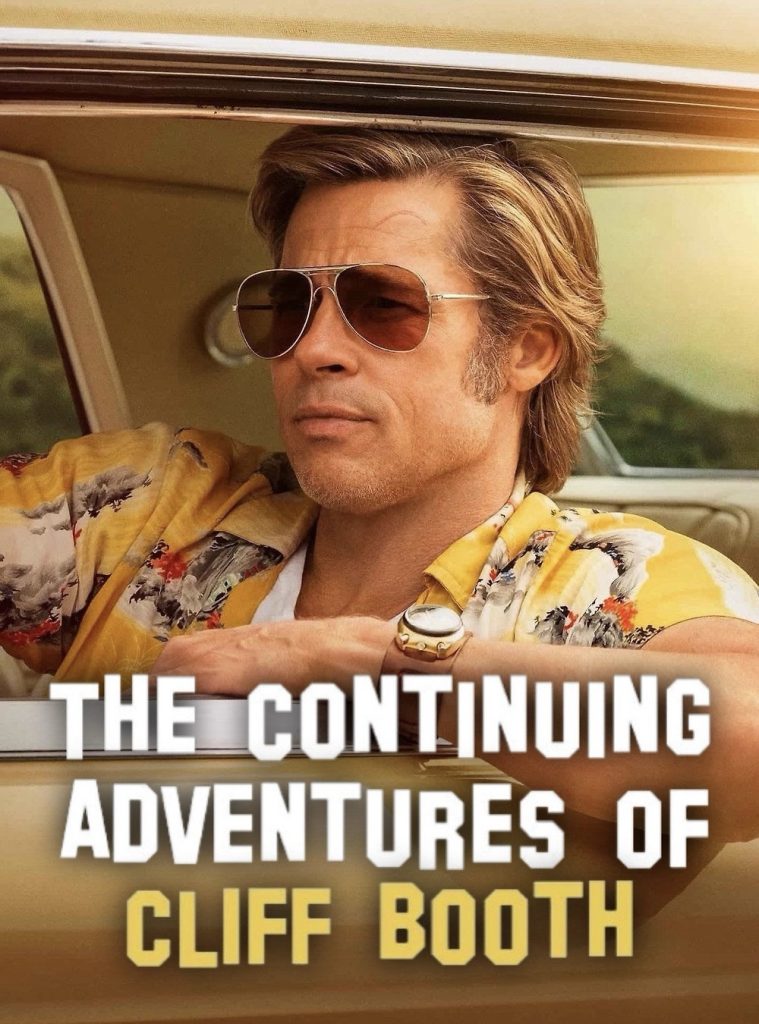
Except it’s just TheAdventuresofCliffBooth. Forget the “Continuing.”
One problem: When F1 opened a few weeks ago, Brad Pitt’s hair was tennis-ball length. Which is way too short for 1977. Nobody who swaggered around in the disco era had tennis-ball hair….nobody. Not even gay guys.
Last night I caught Part One of Susan Lacy and Jessica Levin‘s Billy Joel: And So It Goes (HBO Max). It runs 140something minutes but flies right by.
I was a little worried at first — the beginning is way too obsequious and celebrative and adoring — but it soon after settles down into the basic story of Joel’s youth and early career (late ’60s to early ’80s). And it motors right along.
And it’s really not half bad. It generally feels honest, fairly raw. I didn’t feel the least bit distracted or bored. It’s a solid, well-crafted, first-rate thing. No shade or complaints.
I was reminded what a shrimp Joel is — 5’5″. Which is the same height as James Cagney and Dustin Hoffman, and one inch shorter, even, than Alan Ladd, who was very hung up about standing only 5’6″.
Part One mainly examines Joel’s New York area upbringing (Hicksville, Long Island) and how he had tightly curled, Afro-like hair, and how his mother insisted that he learn the piano, etc. Then comes his deep plunge into suicidal despair (he tried to off himself twice) and then his gradual rocketing to fame between the early and late ’70s (“The Stranger,” “52nd Street”), focusing mainly on his relationship with longtime wife and business manager Elizabeth Weber, from whom he split in ’82.
It ends before Christie Brinkley (four inches taller than Joel and almost certainly with bigger feet than his) strolls into the arena in ’83.
The most surreal moment is Weber recalling how there was a “Stranger” listening party with a few Columbia Records execs and other cool cats in ’77, the idea being to pick which tracks would sell best as a single. And guess what? Nobody responded with much enthusiasm to “Just The Way You Are.” Joel himself didn’t think it was good enough to put on the album, but was persuaded to include it at the last minute.
“Just The Way You Are” is the song that put Joel over the top and made him into a superstar. Paul McCartney says it’s the one Joel song he really wishes he had written and performed himself.
Presuming that the WSJ has 100% confirmed that Donald Trump drew this, Trump obviously has a thing for women with nice boobs, zaftig bods, no “innie” navels and well-trimmed pubic hair.
His pubic hair signature tells us he’s into oral, because this is actually fairly well drawn…it has a certain professional flair, a certain facility. Some people can’t doodle at all — Trump isn’t half bad.
…during my first and only viewing 36 years ago, in the fall of ‘78. So I gave it another whirl last night on the Criterion Channel, and I couldn’t even pay attention to the particulars because the late Berry Berenson prominently costars, and I couldn’t stop thinking about the last few minutes of her life.
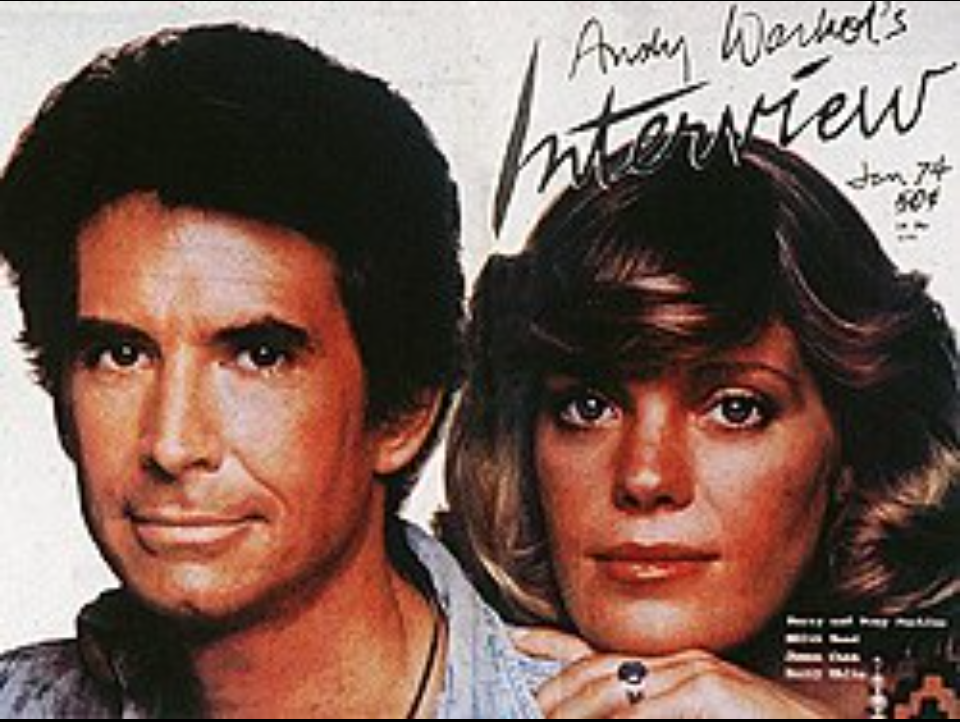
The sister of Barry Lyndon’s Marisa Berenson, Berry was married in theRudolphfilm and in real life to RememberMyName costar Tony Perkins, whom I saw and rather admired in a B’way stage version of Equus in ‘77 or thereabouts. (He died in ‘92 from AIDs-related maladies.) Geraldine Chaplin (34 then, 80 now) is the nutter lead. Berry is/was the mother of horrordirectorOz Perkins.
Anyway I tried and tried but couldn’t get past the 9/11 association.
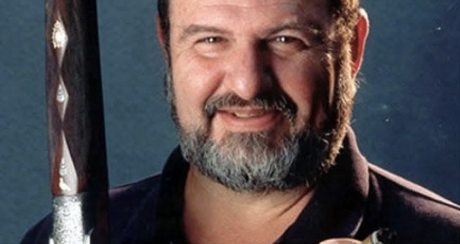
Poor John Milius is grappling with the big C. Here’s to a great eccentric gun owner, a great individualist, a great commentary-track raconteur, an allegedly devotional surfer and one of the most influential director-writers of the ‘60s, 70s and ‘80s. Salute!
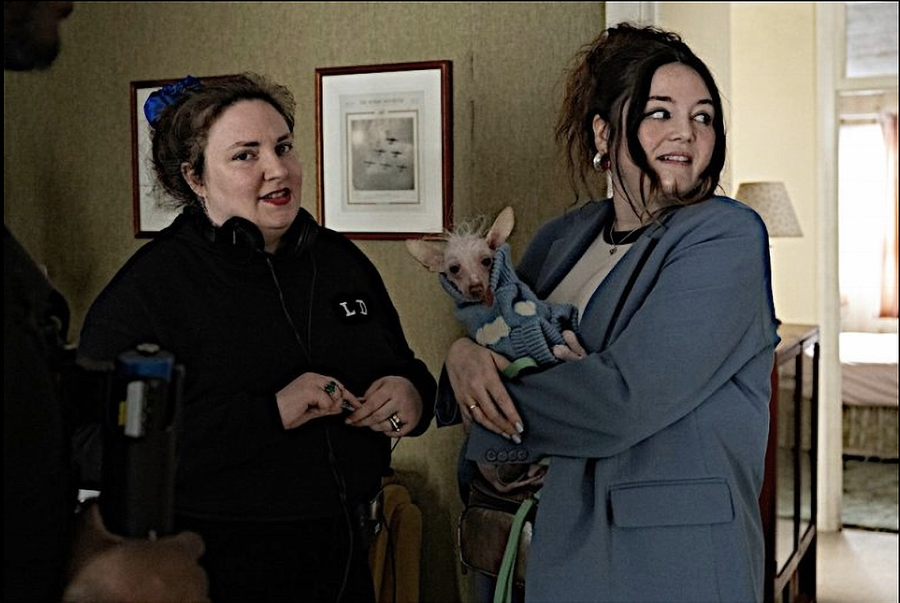
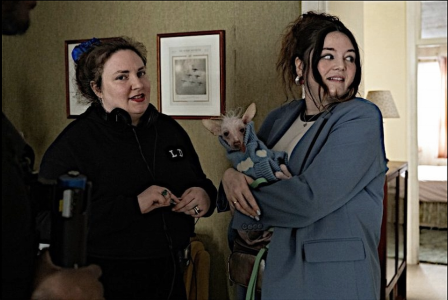
How do you write about Lena Dunham’s semi-autobiographical TooMuch, a 10-part Netflix series that popped on 7.10, without stepping on a land mine or stepping over the woke-terror line by addressing the elephant in the room?
You start by praising Dunham’s writing, I suppose. (Right?) The dialogue is well honed and just right — wise and zeitgeisty and agreeably settled-in and never less than perceptive. I immediately felt at ease because of this talent, this signature, this attitudinal stamp.
And because of Megan Stalter’s believably dug-in and disarming lead performance.
But we can’t just sail along and pretend that TooMuch, despite its emotional precision and candor and generally elevated vibe, isn’t a chubbo sell-job.
The truth is that I briefly gasped when a shot captured a partially disrobed Stalter in profile. I didn’t gasp because I wanted to earn or ratify my ayehole credentials. I gasped because a voice deep inside went “holy shit!”
Remember when the great Shelley Winters (who once told me I reminded her of an old boyfriend) ballooned up in the mid ‘60s? In Jack Smight and Paul Newman’s Harper (‘66) she was candidly and unapologetically described with the “f” word. Imagine!
Remember James Mangold ‘s Heavy (‘96)? And Catherine Breillat’s FatGirl (‘01)? Remember that moment in Sideways when Thomas Haden Church described Missy Doty as “the grateful type”? The Stalinists would never tolerate this terminology now..
Too Much is an engaging, faintly downish but agreeably hip and certainly chuckle-worthy feminist romcom that is also (I’m repeating myself but an emphasis is warranted) an attempt to normalize.
Normalize what? Well, what has always seemed to me and tens of millions of others like anexoticconcept, which is that obese, whipsmart, Type-A women and lean, open-hearted, chubby-chasing dudes often hook up and wind up happily entwined or even married. Not to be spoil-sportish but this kind of thing is not by any stretch a common relationship occurence, not even among size-affirming Millennials and Zoomers.
We all understand the basic appeal of curvy, zaftig and even a little Rubenesque action. As far back as the ‘70s a friend used the term “tons of fun”, and I knew exactly that he was joking about, conceptually speaking.
Speaking as a trim guy from way back, how many overweight women have I “been” with? One. Okay, maybe two. (And I don’t mean obese.) Did I mostly steer clear of calorically challenged lassies because I’m a bigot? It sure didn’t seem that way back then (i.e., the 20th Century). Nobody “slept” with fatties.
Backstory–wise, TooMuch is about a moderately fetching Dunham-esque producer-writer-whatever (Stalter) who moves to London in the wake of a traumatic breakup with a longtime Brooklyn boyfriend (the trimly proportioned Michael Zegen) who’s dumped her for a model-esque hottie (Emily Ratajkowski).
The main order of business is about Stalter falling for a poor, well-sculpted musician and kindred spirit (TheWhiteLotus’s Will Sharpe) who, in a non-wokey, normal-seeming world, would almost certainly be seeing a girl more his own size and shape. Or at least a zaftig rather than a tubby tuba.
What happens between Stalter and Sharpe is the meat and essence of the show, of course. Most of it romantically resonates and touches bottom and all that good stuff. (Including, I’ve read**, one or two harsh stand-offs.) Dunham is grade-A all the way. But how do you get around those gasp moments?
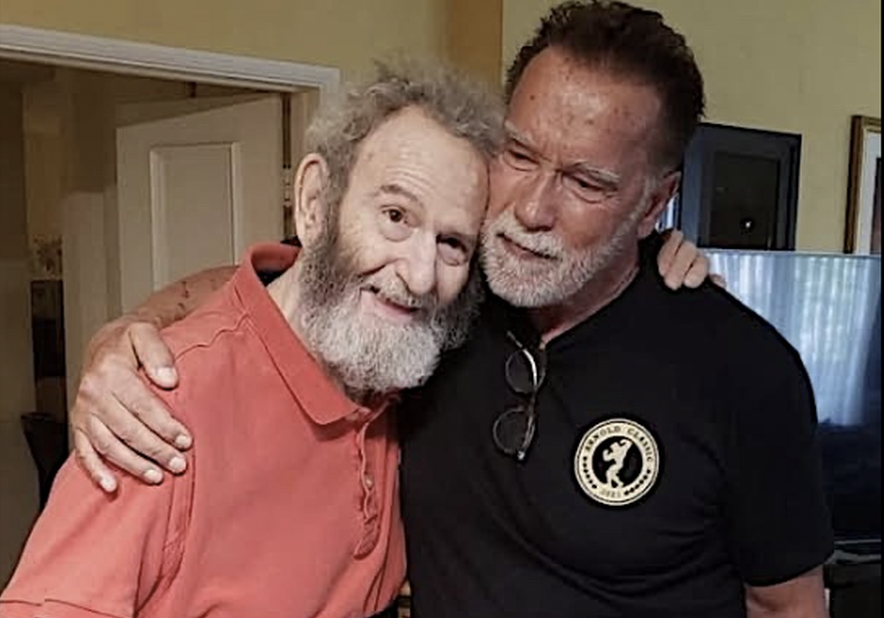
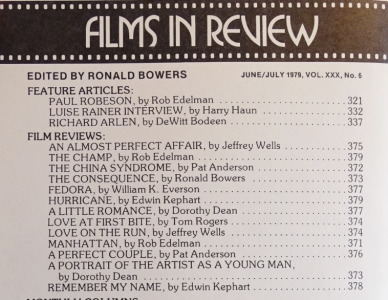
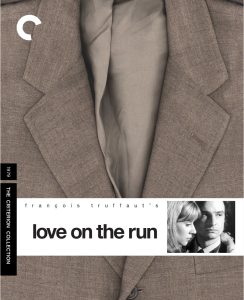
I wish I could find my 46-year-old review of Francois Truffaut‘s Love on the Run. I seem to recall not being much of a fan, largely because I thought the film depended on too many Antoine Doinel flashbacks, reaching all the way back to The 400 Blows (’59).
The director of a private school that Leaud attended in the eighth grade wrote the following to Truffaut: “I regret to inform you that Jean-Pierre is more and more unmanageable. Indifference, arrogance, permanent defiance, lack of discipline in all its forms. He has twice been caught leafing through pornographic pictures in the dorm. He is developing more and more into an emotionally disturbed case.”
That was me! At age 12 or 13 I was also rebellious, “emotionally disturbed” and leafing through nudie magazines.
Just for clarification’s sake, Dennis Hopper directed The Hot Spot. To further clarify, I don’t think I’ve ever seen it. Okay, maybe I did see it and put it out of my mind. But if not, maybe I should? A sexually simmering, small town noir-slash-potboiler, based on “Hell Hath No Fury“, a 1953 novel by Charles Williams, who also co-wrote the screenplay.
No firm release date for Apple’s The Lost Bus, but with Paul Greengrass directing you know it’ll be fairly decent, at worst. Greengrass (United 93) doesn’t fool around.
A bus driver (Matthew McConaughey) has to navigate a bus carrying children and their teacher (America Ferrera) to safety through the 2018 Camp Fire, which became the deadliest fire in California history.
Imagine trying to follow or make sense of this Warner Bros. release on its own terms (and with shitty AMC multiplex sound to boot!) when it opens next week.
So now that the cat is out of the bag and the Superman review embargo is totally blown, will the trades follow suit today with their own reactions (whether positive, comme ci come ca or negative)? Will trade reviewers try to go a little easy out of sympathy, given the vitriolic tone of Schager’s review?
Here’s Schager’s review: Just as the seemingly indestructible Man of Steel is fatally weakened by kryptonite, so too is the once-unbeatable superhero genre gravely threatened by audience fatigue.
Tasked (alongside Peter Safran) with reinventing Warner Bros’ DC movie brand with an all-new “DC Universe,” director James Gunn strives to combat such lethargy with Superman, a rambunctious reboot of the Action Comics icon that, tonally and narratively, is the exact opposite of Zack Snyder’s grimdark predecessors.
It’s a big swing in a polar-opposite direction, and one that, alas, turns out be as big a whiff, resulting in a would-be franchise re-starter that resembles a Saturday morning cartoon come to overstuffed, helter-skelter life.
Superman’s hero is no brooding Snyder-ian Christ figure; rather, he’s a sweet and sincere do-gooder who uses the word “dude,” takes time out of fighting behemoths to save squirrels from harm, and believes that viewing everyone as beautiful is “punk rock.”
The same goes for Gunn’s film, which is set on an Earth overrun by metahumans, the most powerful of which is Superman (David Corenswet), who at outset crash lands in the Arctic after losing his first-ever fight to an armored adversary known as the Hammer of Boravia—a country whose attempts to start war with neighboring Jarhanpur was recently thwarted by Superman.
Dragged to the Fortress of Solitude by his caped canine companion Krypto, Superman is nursed back to health by his lair’s robot minions, all as he listens to an incomplete recording made by his parents that accompanied him on his initial journey to our planet.
Superman is soon back in the fight, although he doesn’t initially realize that his true enemy is Lex Luthor (Nicholas Hoult), whose unparalleled knowledge of the Kryptonian’s moves and instincts allows him to successfully direct the Hammer of Boravia in their clashes. Following this battle, Superman wrestles with growing political and public outrage over his rash unilateralism, and bristles at the nasty social media campaigns ruining his reputation.
He receives merely moderate support from Lois Lane (Rachel Brosnahan), his Daily Planet colleague as well as his girlfriend, whom he grants an interview only to immediately regret it. Everyone has doubts about the noble titan, including Green Lantern Guy Gardner (Nathan Fillion), who dubs him a “wuss” for wanting to study rather than kill a fire-breathing goliath, and who is partners with genius Mister Terrific (Edi Gathegi) and warrior Hawkgirl (Isabela Merced) in a trio he’s desperate to dub the “Justice Gang” (and whose headquarters is the classic Super Friends Hall of Justice).
Luthor is in league with the president of Boravia, whom he visits via portals through a “pocket universe” that he’s created, damn its potential to beget a reality-destroying black hole. He’s also determined to turn humanity against Superman by executing a scheme that raises nature-vs.-nurture questions this tale doesn’t seriously address.
Despite his enmity for metahumans and, particularly Superman, Luthor is aided in his quest by two superpowered minions, the nanotechnology-enhanced Engineer (María Gabriela de Faría) and the mute, masked Ultraman, who partake in some of Gunn’s elastic, hyper-speed skirmishes.
Superman doesn’t skimp on the high-flying action, to a fault; the film is so awash in over-the-top CGI insanity that its slam-bang mayhem loses its punch. Not helping matters, the charming Corenswet looks the part but, in the shadow of Christopher Reeve (whose son Will cameos) and Henry Cavill, he comes across as relatively slight—a situation exacerbated by the all-over-the-place nature of his saga.
Superman doesn’t establish its scenario so much as it situates viewers in media res and then asks them to hold on for dear life as it whiplashes about from one out-of-this-world locale and incident to another. While verve isn’t in short supply, substantiality is; by not first building a foundation for its fantasy, the film feels as if it’s operating in a comic-book sandbox devoid of any (literal or figurative) gravity.
That continues to be the case as Superman finds himself at the mercy of Luthor and is compelled to partner with the Justice Gang as well as Metamorpho (Anthony Carrigan), a shapeshifting creature whom he meets in an interdimensional prison that boasts an “anti-proton river,” and who asks him to rescue his giant-headed infant son from Luthor’s minions.
DC Comics die-hards may delight in Superman’s endless geekiness but everyone else is apt to feel adrift or, at least, along for a frenetic, flimsy ride that only feigns interest in actual emotion. Superman and Lois’ relationship gets about as much attention as do sequences in which the Daily Planet reporter flies a spaceship. And interjected into the middle of colorful chaos and madness, a trip back to Smallville to visit Ma (Neva Howell) and Pa Kent (Pruitt Taylor Vince) is too sketchy to generate aww-shucks pathos.
Unfortunately, the proceedings aren’t better when it comes to humor; though Gunn continues to be adept at balancing multi-character concerns, his script — unlike his superior Guardians of the Galaxy trilogy and 2021’s The Suicide Squad — delivers scant amusing one-liners or gags, save for cute Krypto’s habit of excitably wrestling and licking Superman at the least opportune moments.
With a chrome dome and a cocky sneer, Hoult makes for a faithful Luthor. However, as with Brosnahan and Skyler Gisondo as Jimmy Olsen—who has a straining-to-be-funny subplot involving Luthor’s selfie-loving girlfriend Eve (Sara Sampaio)—his performance is overwhelmed by the material’s endless sound and fury.
Zipping this way and that, Superman gets tangled up in fanciful nonsense that soon renders the entire affair superficial and silly. Similar to Snyder and Joss Whedon’s misshapen Justice League, Gunn’s spectacular overpopulates itself with heroes and villains it has neither the time nor the inclination to develop. Consequently, everyone and everything is two-dimensional, no matter that the director’s imagery is sharp and vibrant.
John Williams’ classic theme from Richard Donner’s 1979 Superman is heard (in different forms) throughout, yet it’s incapable of lending the scattershot film the magic it needs. Biting off more than it can chew, Gunn’s wannabe-blockbuster eventually resorts to setting up future franchise installments via quick-hit appearances from Maxwell Lord (Sean Gunn) and Supergirl (Milly Alcock). That’s not to mention by highlighting second-banana figures like Mister Terrific at the expense of fully establishing the altruistic heart of its protagonist, whose path toward self-actualization is mostly an afterthought.
Looking ahead rather than focusing on the here and now, this attempt at reimagining DC’s movie series ultimately proves to be more of the same old interconnected-universe bedlam that, at this point, is perilously close to going out of fashion.
WB’s Superman review embargo ends on Tuesday, July 8 at 3:00 pm eastern.
Composer James Horner bought it 10 years ago today in a private-plane accident, and I felt the pain of that trauma deep down. Like the crack of thunder. I’m sorry but his score for A Beautiful Mind was the greatest thing he ever composed and orchestrated. Closely followed, of course, by his Titanic score.
Iran has pussy-bombed a U.S. airbase near Doha, but where’s the big boom-boom-boom…where’s the light show? The target was Al Udeid Air Base, the largest US military installation in the Middle East. Forward headquarters for U.S. Central Command (CENTCOM) — houses approximately 10,000 US troops. Here’s hoping U.S. casualties, if any, are minimal.