…while waiting to see Harris Dickinson’s Urchin at the Debussy ( 8:28 am).
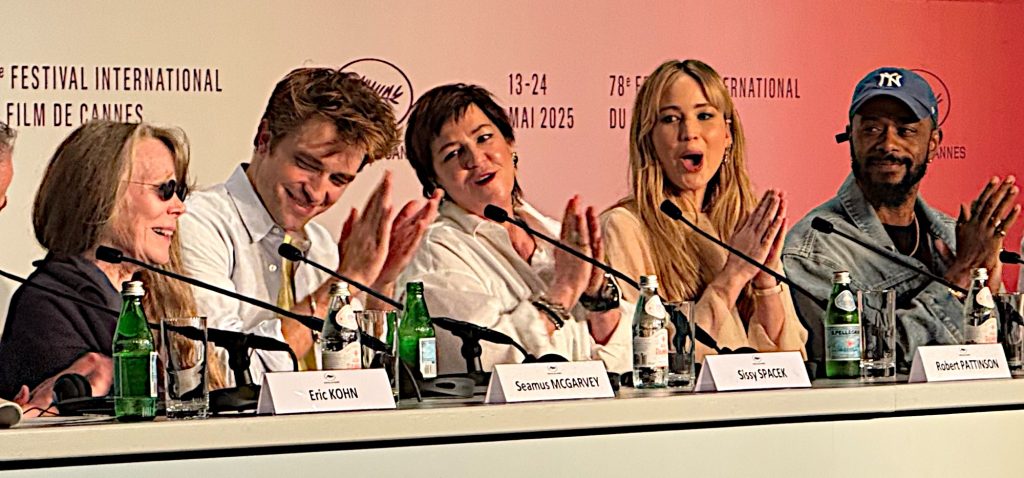
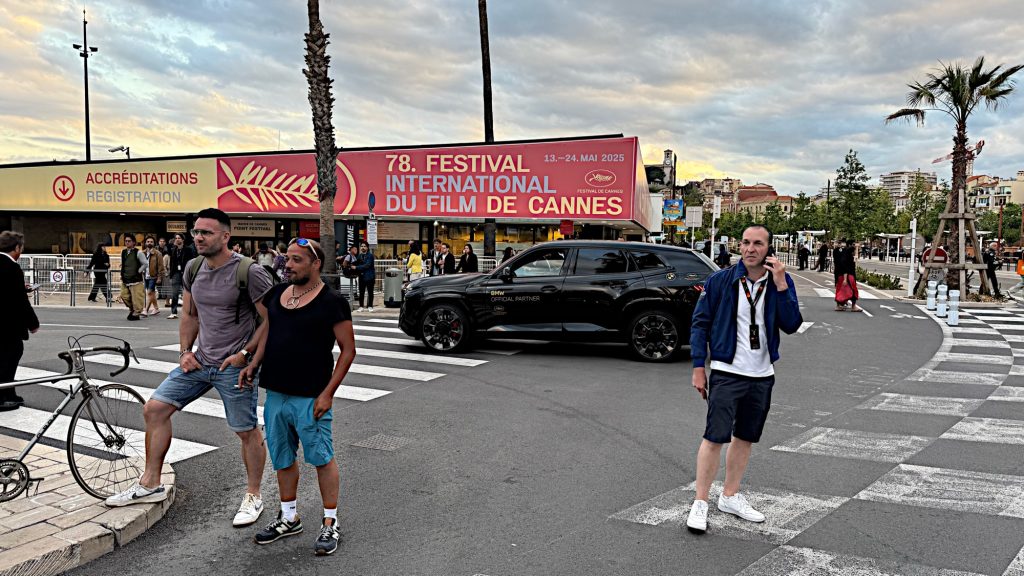


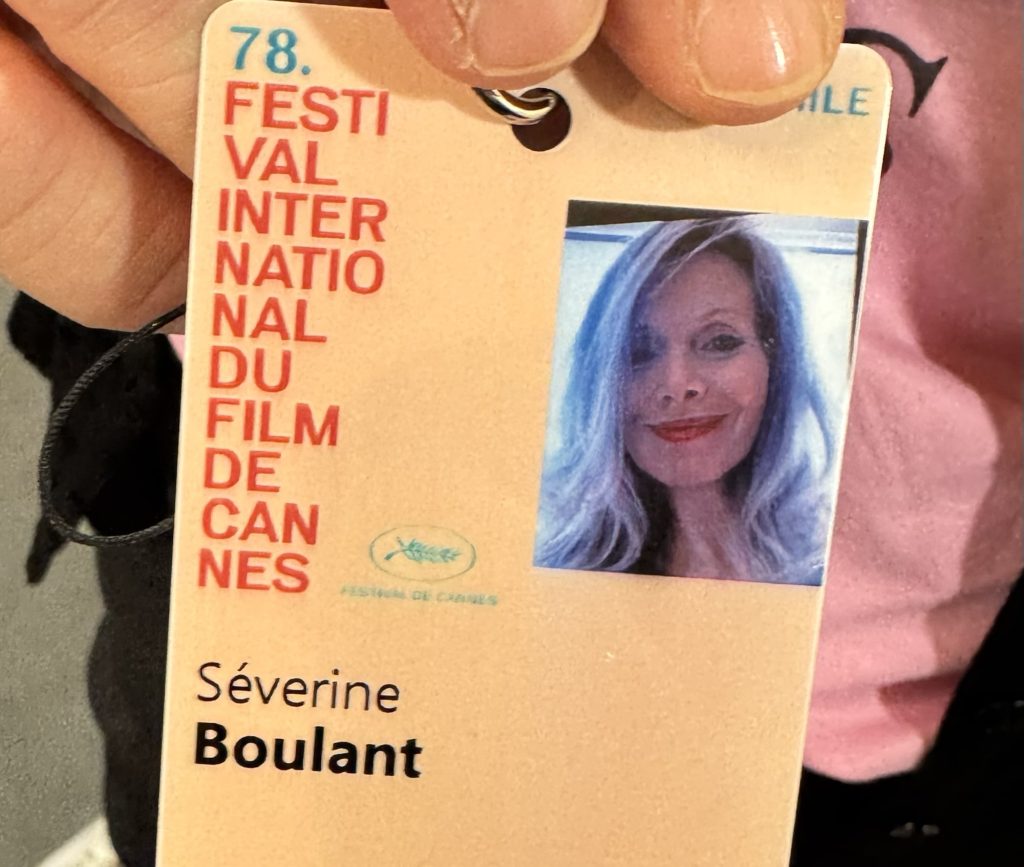


Cannes programmers have made it damn near impossible to score press tickets to (a) Spike Lee‘s Highest 2 Lowest, which screens on Monday evening, 5.20 and on Tuesday, 5.21, and (b) Kristen Stewart‘s The Chronology of Water, which I tried to get into this evening on a last-minute, wait-and-hope basis.
This morning at 7 am I tried to reserve a ticket to Spike’s Kurosawa remake, but the app said it was ALL filled up. But how could it be at 7 am? You come all the way here at great expense, and Spike’s film is off limits?
I wrote Cinetic marketing about this…silencio.
Word around the campfire is that Stewart’s reps, friends and associates had gobbled up around half of the orchestra seats to tonight’s Water screening, although I know nothing for an absolute solid fact in this regard.
The general idea seems to be “limit press seating and perhaps minimize the effect of so-so or adverse reactions”…maybe.
This suggests that both films may be problematic on some level, but who knows?


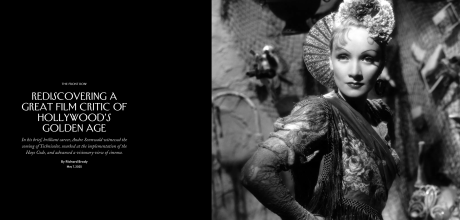
Yesterday morning I read a 5.7.24 Richard Brody appreciation of the late N.Y. Times film critic Andrew Sennwald, who served as the paper of record’s senior film authority between 9.18.34 and 1.12.36.
Hired by the Times as a reporter at age 23, Sennwald soon became a top-tier, unusually perceptive examiner of the art and hoopla of film, Brody writes. Sennwald was an ardent admirer of director Josef von Sternberg, for one thing.
I’ve since read a few of Sennwald’s reviews. He wrote confidently and well, and certainly knew the realm.
It’s a shame that this highly respected guy died at age 28 and suddenly at that, and possibly by his own hand despite reportedly being in excellent health, not to mention in the professional prime of his life.
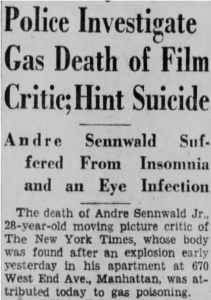
Weird as it sounds, Sennwald died of gas-stove poisoning, apparently or at least possibly a suicide.
On top of which the gas, which Sennwald, being dead, was unable turn off, exploded and wrecked his penthouse apartment at 670 West End Avenue, and not just the penthouse but the top three floors of the 17-story building. Investigators found Sennwald in his pajamas, on the floor of his kitchen.


Was this an accident? Why in heaven would a young man who’d quickly vaulted to a highly eminent position in his chosen field (it doesn’t get much better than being a top critic at the Times), a guy who lived in a fairly swanky abode and presumably had everything to live for…why would he off himself on a Saturday around midnight, and in his pajamas yet?
If I intended to do myself in, I would do so in my finest apparel — silk shirt, knotted tie, spit-shined shoes.
Sennwald’s last review focused on Rene Clair‘s The Ghost Goes West. Sennwald was succeeded at the Times by Frank Nugent.
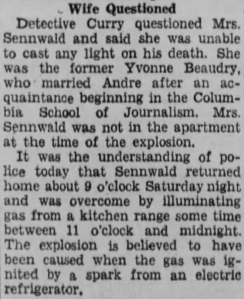
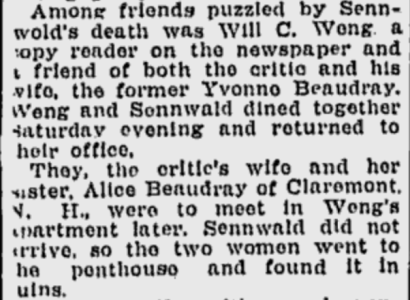
Sennwald’s marriage to journalist Yvonne Beaudry, whom he met while going for his journalism degree at Columbia University, had apparently gone south. Sennwald’s Wiki page describes her as an ex-wife, although they were reportedly on cordial terms. Beaudry was out on the town when he died.
Sennwald may have been suffering from a serious eye ailment called Uveitis, but there’s not much info on this. He was also an insomniac.
While reporting that Sennwald’s death was seemingly a “suicide”, Brody otherwise focuses entirely on his film criticism. I respect his decision to ignore the curious circumstances that attended Sennwald’s passing, but that’s still one hell of an ignore.
It’s not like Sennwald swallowed some pills and slipped away quietly while slumping on a bench in Central Park. His death triggered a violent spectacle and a major neighborhood trauma — collapsed walls, fellow residents evacuated, a busted water main…bluh-DOOM!!
Brody could have just as easily have written about the Skull Island life of King Kong (wrestling an occasional T-Rex, killing Teradactyls, roaring a lot) and then blown off what happened on his final day of life in midtown Manhattan.
Not to mention the fact (I’ve made this point but indulge me) that a top N.Y. Times critic would never kill himself inside his West End Ave. penthouse at a fairly young age…does this make any sense to anyone at all?
A film critic hypothetically pulls the plug when (a) he/she can’t find decent employment, (b) is past his/her prime (65 or older) and (c) is barely making ends meet in a grubby flat in the East Village.

Reported by The Brooklyn Eagle on 1.13.36:


“I feel this way because I’m a money whore, and you’ve got a lot of money so…perfection, right?” — Dakota Johnson‘s Lucy to Pedro Pascal‘s Harry Castillo in Celine Song‘s The Materialists (A24, 6.15). Okay, this isn’t an actual quote but it might as well be.
I hate this movie, sight unseen.
One of the most withering moments of my life happened in July ’13. I was texting with a lady I’d fallen in love with (i.e., an affair that ran from early May through late October) and in the middle of a discussion about something fairly basic she texted (and I mean right out of the fucking blue), “I’m expensive.”
Whoa.
It would have been one thing if I was a compulsive cheap-ass who was always looking to squeeze a nickel until the buffalo shits, but I was probably more of a give-give-giver with her than I’d been with any other girlfriend in my life. I was very generous and comme ci comme ca about everything. Everything was cool and steady. And yet she dropped that line on me. I’ll never forget that moment for the rest of my life.
The last time I’d heard that line was when Marilyn Maxwell said it to Kirk Douglas in Champion (’49). We all know what she meant, of course. Obviously not just “I’m high maintenance” but “I might be too high maintenance for you, given your apparent income and frugal tendencies. I’m not saying I’m a money whore but…well, you tell me.”
I obviously dip into non-film topics in this space from time to time, but I draw the line at relationship stuff. I’ll allude every so often to something going really well but leave it at that. Boundaries are respected, no telling tales, stays in the box. But I’m also figuring there’s nothing terribly gauche about acknowledging that it’s exhausting to go through a two-hour texting meltdown when things have taken a turn for the worse.
I wonder if anyone hashes this stuff out eyeball-to-eyeball any more. Thank God that iMessage allows you to text from a computer keyboard — I don’t think I could thumb my way through one of these ordeals. Texting your innermost disappointments and lamentations while keeping up your end of the “debate” (which can never be won or lost, of course) is quite debilitating. When you wake up the next morning you feel empty and a bit numb. Is “gutted” too strong a word?
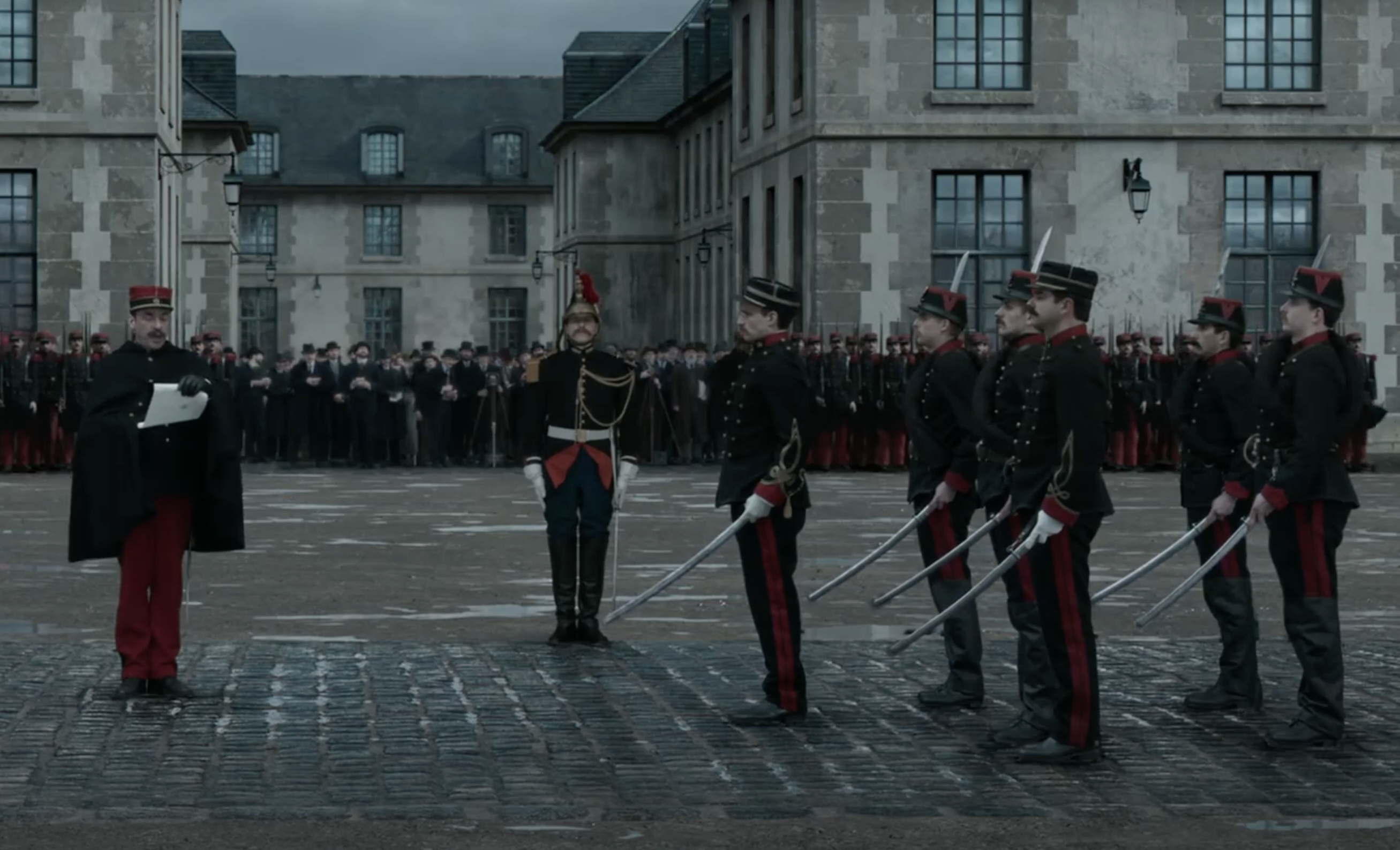
Yesterday “Los Bostonian”, while callously dismissing the AI-authored “Celluloid Renegades” script, complained there’s too little in the way of elemental film passion on this site…”rarely any discussion of editing, lighting, screenwriting, shot composition.”
Okay, here’s a riff on lighting, or more particularly a comparison between (a) Pawel Edelman‘s beyond-brilliant cinematography, fortified by his soft and subdued but wonderfully calibrated lighting, on Roman Polanski‘s An Officer and a Spy (’19), which I re-watched a couple of nights ago, and (b) the occasionally muddy, oppressively under-illuminated, at times barely discernible lensing of Sinners by Autumn Durald Arkapaw.
Each and every frame of the Polanski is a bath…an eyeball massage…a capturing of Belle Epoque Paris that never stops hitting the sweet spot…never over- or under-lighted, every shot as perfect as it could possibly be for a period film of this sort. Easily in the class of John Alcott‘s Barry Lyndon, if not in a class of its own.
Too many people have written that Arkapaw’s lighting of the second half of Sinners (i.e., the nocturnal vampire stuff) is so depressingly under-lighted that at times it’s borderline unwatchable. When images are this soupy, something is very wrong.
Edelman’s lighting expertise is so far above and beyond what Arkapaw is apparently capable of or interested in…it’s almost unfair to mention them in the same sentence.
Edelman’s credits include Taylor Hackford‘s Ray, Steven Zallian‘s All the King’s Men, Andrzej Wajda‘s Walesa: Man of Hope, and Polanski’s The Ghost Writer (masterfully lighted). Arkapaw shot Black Panther: Wakanda Forever (no great shakes) and The Last Showgirl (never saw it).
Fair enough?
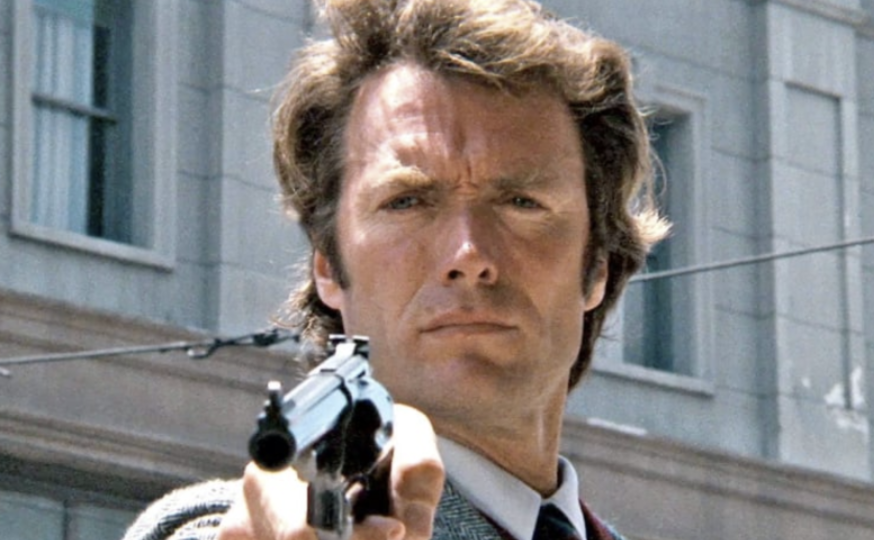
To go by the below trailer, the just-released 4K Dirty Harry Bluray is infected with orange-teal disease…the same virus that has all but ruined several Criterion Blurays.
When’s the last time you’ve noticed that red paint on a city curb (absolutely no parking) had a red-orange hue? When’s the last time that the top of a fire hydrant was painted glaring teal-turquoise? Or a pickup truck, for that matter? Look at that big truck with the intense light-blue cab and a red-orange front bumper…this is bullshit.
Another trait of this malignant color scheme is pinkish flesh tones.
These icky colors and tints are all over the new Dirty Harry. I’ll take the old 1971 colors, thanks. Fire-engine red curbs, I mean.
Obviously orange-teal fascism is spreading like cancer. It really has to be stopped. Some eccentrics actually seem to prefer orange-teal. They’re zombies. They’re not human.
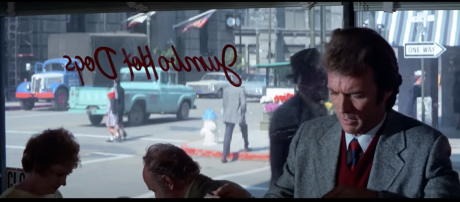
Surprise below! The orange-red curb from before has reverted back to a more reddish color…what gives?

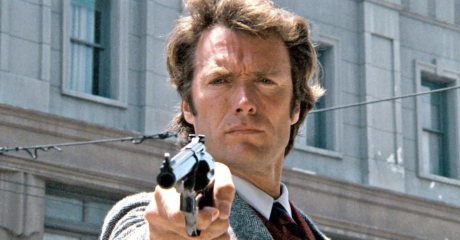
Natural flesh tones on Clint’s face in this somewhat older image (from ’22 — below) are not all that prominent on the Dirty Harry 4K.
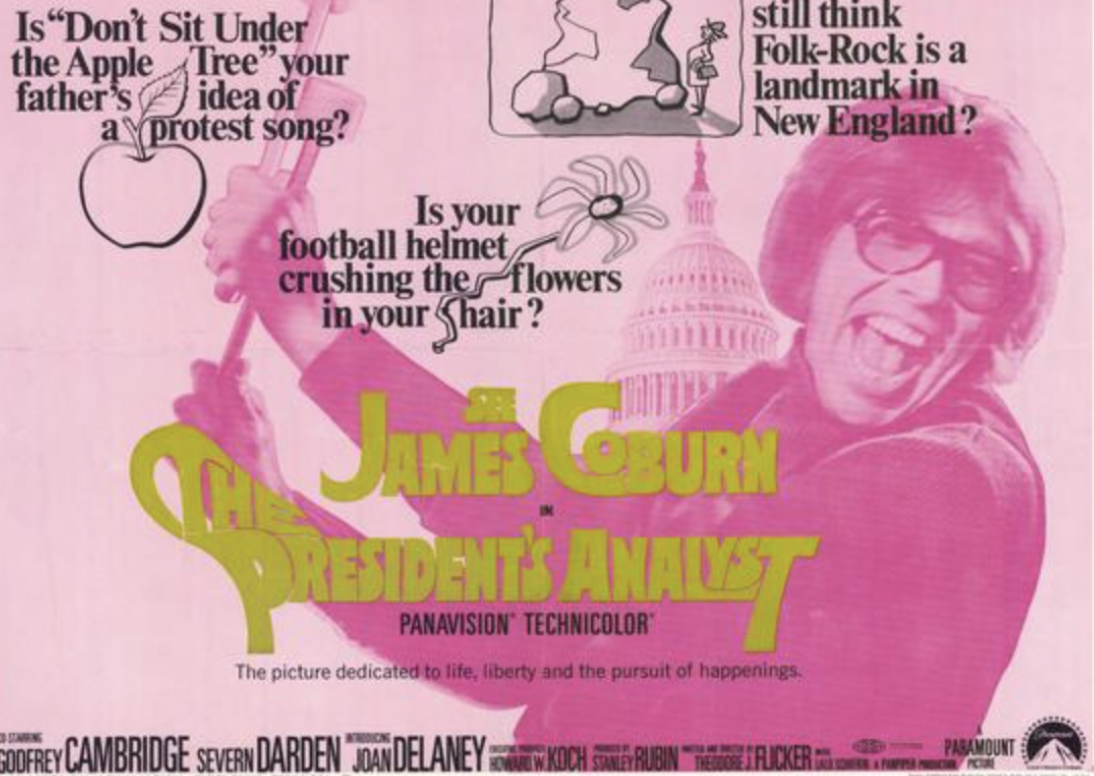
For decades I’ve harbored fond memories of The President’s Analyst (’67), a half-annoying, half-hippieish, half-psychedelic social satire that starred the smooth James Coburn and a comfortably laid-back Godfrey Cambridge.
So when I gave Analyst a re-watch the other night, I was surprised to discover that much of it (roughly 60%) isn’t especially good…unfunny, broadly played, overly brittle, vaguely irritating, shallow in a Man From U.N.C.L.E.-ish or Our Man Flint-y way. I was soon looking at my watch and figuring “okay, not as good as I remembered.”
But then it does a switch-up and becomes a whole different film…it goes all hippie-dippie-ish and rock-and-rolly and free love-celebrating, and is generally invested in a kind of “spread the joy and transcendence of LSD” attitude. And then it dives into a surreal but amusing plotline about the malevolence of TPC (The Phone Company) and the robots behind this malignant entity. It ends with Coburn and Cambridge shooting it out with TPC droids….hilarious!
Rarely has a mezzo-mezzo mainstream film (green-lighted by Paramount’s Robert Evans) completely uncorked itself and gone all loopy-doopey like The President’s Analyst did. I ended up up chuckling and mostly loving it. The last 40%, I mean.
The big switch happens right around the one-hour mark. It starts when Coburn’s Dr. Sidney Schaefer, running from would-be assassins of an international cast, ducks into the legendary Cafe Wha? on McDougal Street and hooks up with a rock band led by “Eve of Destruction“‘s Barry McGuire (89 and still with us!). Schaefer quickly becomes a splendor-in-the-grass lover of the attractive, hippie-chicky Snow White (Jill Banner).
From the moment that McGuire and Banner slip into the narrative and invite Coburn to join them on their magic travels, The President’s Analyst becomes a mid ’60s “turn on, tune in and drop out” mood piece…a capturing of what a lot of people were feeling and delving into and experimenting with in ’66 and ’67.
In this sense Analyst is almost as much of a mid ’60s cultural capturing as John Boorman‘s Catch Us If You Can (’65) and Michelangelo Antonioni‘s Blow-Up (’66).
And yet that first hour…whoa. And the one-sheet slogans were hideous.
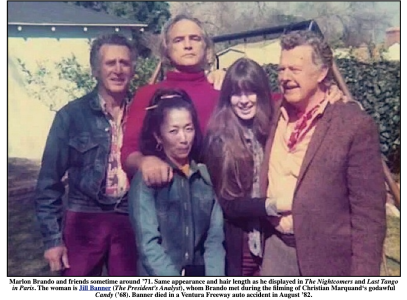
Poor, pixie-sized Banner was Marlon Brando‘s off-and-on girlfriend from roughly ’68 until her car-crash death in 1982, when she was only 35. She got slammed by a truck on the Ventura Freeway.
The career of Ted Flicker, director-writer of The President’s Analyst, went flat after someone slipped the Analyst script to J. Edgar Hoover‘s FBI, thereby tipping them off to the fact that Analyst would sharply satirize the bureau as well as the CIA. This led to Flicker and Evans being surveilled and harassed. The industry quickly got scared and dropped Flicker like a bad habit for a while. He later co-created Barney Miller. David Ewing‘s Ted Flicker: A Life in Three Acts screened in 2007 at the Santa Fe Film Festival. Flicker passed in 2014 at age 84.

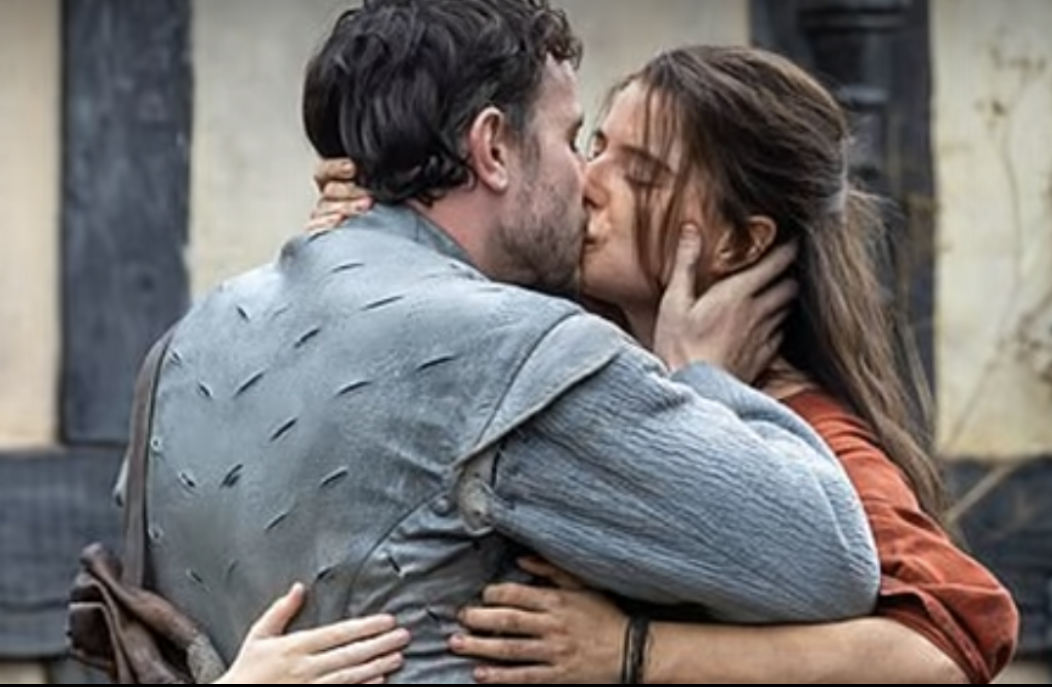
Unless the text of Maggie O’Farrell’s 2020 novel has been significantly departed from, Chloe Zhao‘s Hamnet (Focus Features, 11.27), co-written by O’Farrell and Zhao, is basically a hard-knocks feminist saga about Agnes Shakespeare (Jessie Buckley) coping with the indignities of 16th Century married life and the pitalls of dealng with a flaky, wistful husband.
It’s especially about the tragic death of Agnes’s 11-year-old son, Hamnet (Jacobi Jupe), from the plague in 1596.
And what of Hamnet’s dad, otherwise known as Agnes’s illustrious playwright hubby William Shakespeare (Paul Mescal)? Does he figure in the plot? Sure, of course he does…O’Farrell wouldn’t have written the book and the award-contending movie would’t be coming out if it wasn’t for The Bard’s towering reputation. But Will is a kind of secondary character in this thing. The movie is mainly about the angst of Agnes.
Hamnet is therefore a feminist wokey thang…co-written and directed by a woman…do the math. Wokey movies generally focus upon or celebrate (a) women, (b) LGBTQs and (c) POCs while portraying straight white guys as bad or weak apples. I haven’t seen Hamnet, but unless O’Farrell’s book has been totally thrown out the window, the film almost certainly qualifies in this regard. Agnes is Mother Courage, and Will is one weak, needy, selfish twat.
And yet three years after Hamnet’s passing, Will wrote Hamlet, a tragedy about an indecisive Danish prince whose name was fairly interchangable with that of Will’s late son.

Hamnet will probably debut at the Venice Film Festival, or a good three months before it opens.
Here are excerpts from online commentary about O’Farrell’s book — source #1 is from the Amazon “Hamnet” page, and source #2 is The-Bibliofile,com’s Hamnet page.
(a) “O’Farrell’s ‘Hamnet’ is a work of historical fiction, with a lot of emphasis on the word fiction. And is largely told with a focus on Agnes…Agnes and Anne being commonly interchangeable names at the time.”
(b) “Most people who know anything about Shakespeare know that his son Hamnet died, and Hamnet’s death was a deciding, changing factor in Shakespeare’s life, for good or ill. They also know that his married years with Anne/Agnes were largely spent apart from each other, and seem to have deteriorated for reasons unknown to time. We know she was a few years older than he. We also know she was almost certainly pregnant with their first child at the time of their marriage.”
(c) “‘Hamnet’ imagines Agnes as a child of nature — also a psychic and, in a way, according to the views of the times, a witch. She’s clearly smitten by Will, but as a result of this attachment and their marriage she gives up much of her own free thinking, and her own lifestyle, and other things that make her happy, all for love of this man. Well, what woman of the late 16th century did not do this? If you were a woman of this era, no matter how much you loved the man you married (or even if you didn’t love him at all), marriage meant the [spiritual] death of the woman. ‘Hamnet’ is an incredible exploration of that, emotionally.”
(d) “It is an introspection of a woman NO ONE knows, and he — Will — is a supporting character — and yet, brilliantly, at the same time, he is the main character. Because the planets circled him, not her. He’s portrayed as self-absorbed and troubled and needy — and at least in my own imagination, I can see him being all of those things.
(e) “The character of William Shakespeare in this book is humanized and made smaller. I understand why O’Farrell might want to do that, to avoid writing yet another tribute to the greatness of the towering figure of William Shakespeare. But this aspect of the book wasn’t entirely satisfying to me. Unlike his portrayal in the book, ultimately, Shakespeare wasn’t just a guy who became financially comfortable writing plays. Instead, he wrote masterpieces and a lot of them.
(f) “There’s very little in the book indicating that Will is or was a brilliant person. Instead, he’s depicted as a disappointment to his parents, an absent father, a weakling and kind of an unmotivated loser in general, all of which made it hard for me to view this as a story that was about Shakespeare at all.
(g) “I understand this wasn’t intended to be an origin story about William Shakespeare, but I also can’t imagine that this useless lump of a man described here would become the mythological creature that he is.”
“Give me libirum or give me meth” — Leonard Frey‘s Harold in William Friedkin and Mart Crowley‘s The Boys in the Band (’68).
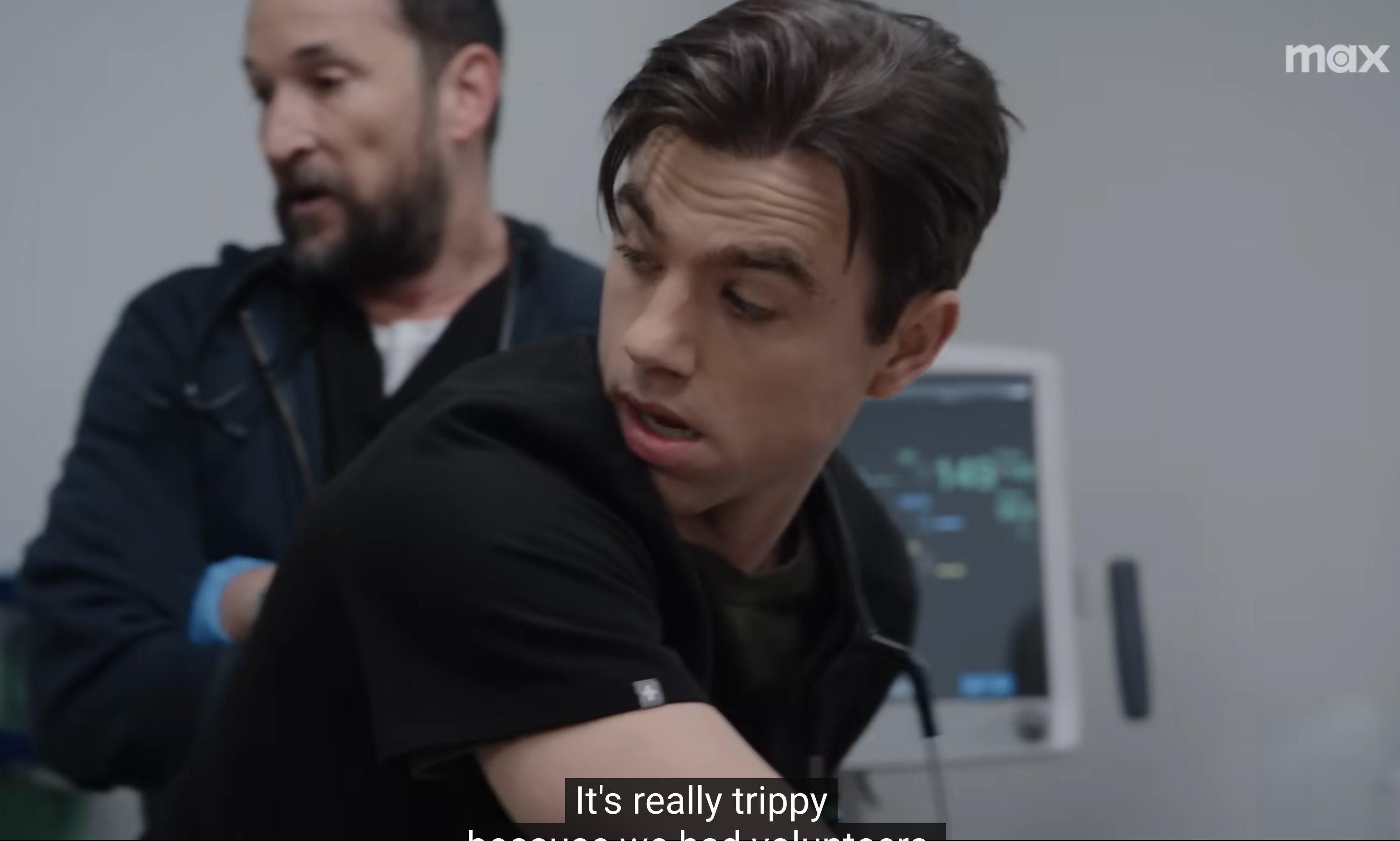
I was completely taken and fascinated with R. Scott Gemmill‘s The Pitt during the first nine episodes, but in episode #10 something happened that really pissed me off — something that felt a teeny bit wokey by way of anti-white-male bias. It made me pull back emotionally.
I’m speaking about Patrick Ball‘s Dr. Frank Langdon, a brilliant, highly-stressed, wrapped-too-tight E.R. doctor, having illegally and unethically used librium — a chill drug — to take the edge off.
Technically known as chlordiazepoxide, librium, according to WebMD, “produces a calming effect on the brain and nerves, which helps to reduce anxiety symptoms and promote relaxation.”
It was obviously not cool and a blatant violation of the Hippocratic Oath for Langdon to have occasionally dosed himself. But in the greater scheme of things, taking librium isn’t that different from popping an occasional valium. It didn’t strike me as that big of a deal.
Did Langdon need to face up to a potential health issue or worse? Yes, but aside from making him detour into stridency or excitability, taking lithium wasn’t interfering with his abilities or duties. Not as dramatized, at least. It would have been far worse if Langdon had been drinking, say, or taking morphine as a stress-alleviator. Langdon is a first-rate physician. He was just moderately medicating.
If I was a fellow doctor in this situation and I’d discovered what Langdon was up to, my first and only response would have been to speak with him after-hours. I would say “Frank,this really has to stop and not only that, you have to seek counsel from an outside doctor, or perhaps even from a psychologist. But it has to stop, and on a provable basis. You can’t jeopardize your career like this.”
I would add the following: “If you don’t take immediate steps to remedy this situation I’m definitely going to report this matter to our supervisor (Noah Wyle‘s Dr.’Robby’ Robinavitch). I don’t want to torpedo you, Frank — you’re too good of a doctor to just be thrown over the side by a mistake. But this has to stop now.”
So what happens? Langdon’s adverse relationship with a rookie female doctor quickly turns petty and vindictive, and the shit hits the fan.
Isa Briones‘ Dr. Trinity Santos, an assertive feminist firebrand who’s only been working in “the Pitt” for a few hours, gets wise to Langdon’s behavior. She and Langdon have already developed a dislike for each other, partly because he’s been overly critical and scolding of some of her judgment calls. So not long after she discovers his librium problem, she tattle-tales to Dr. Robby. And then Robby, ignoring the fact that Langdon is one of the two or three best physicians he has in the E.R., angrily tells Langdon to “go home”. No warnings, no scoldings….just “fuck you, you’re done.”
If someone is really good — brilliant, amazing — at a tough and demanding job, the fair-minded thing is to give him or her a chance to man up and fix a personal problem. If he/she fails to correct it, then you lower the boom. It would be one thing if Langdon’s librium-chipping was causing medical mistakes or jeopardizing the well-being of patients, but that’s not the case.
So now I don’t like Dr, Robby any more. Noah Wyle‘s performance is awesome and he’ll almost certainly win an Emmy, but I don’t like how Dr. Robby reacted. In my mind he threw a good man under the bus for insufficient cause.
And I really don’t like Isa Briones. And I’m not the only one who feels this way. When Briones/Santos confides her concern about Langdon’s unethical behavior to Dr. Samira Mohan (Supriya Ganesh), the latter says “I don’t want to hear about it…I don’t want to know this!” And then she adds, rather angrily, “You’re trouble.”
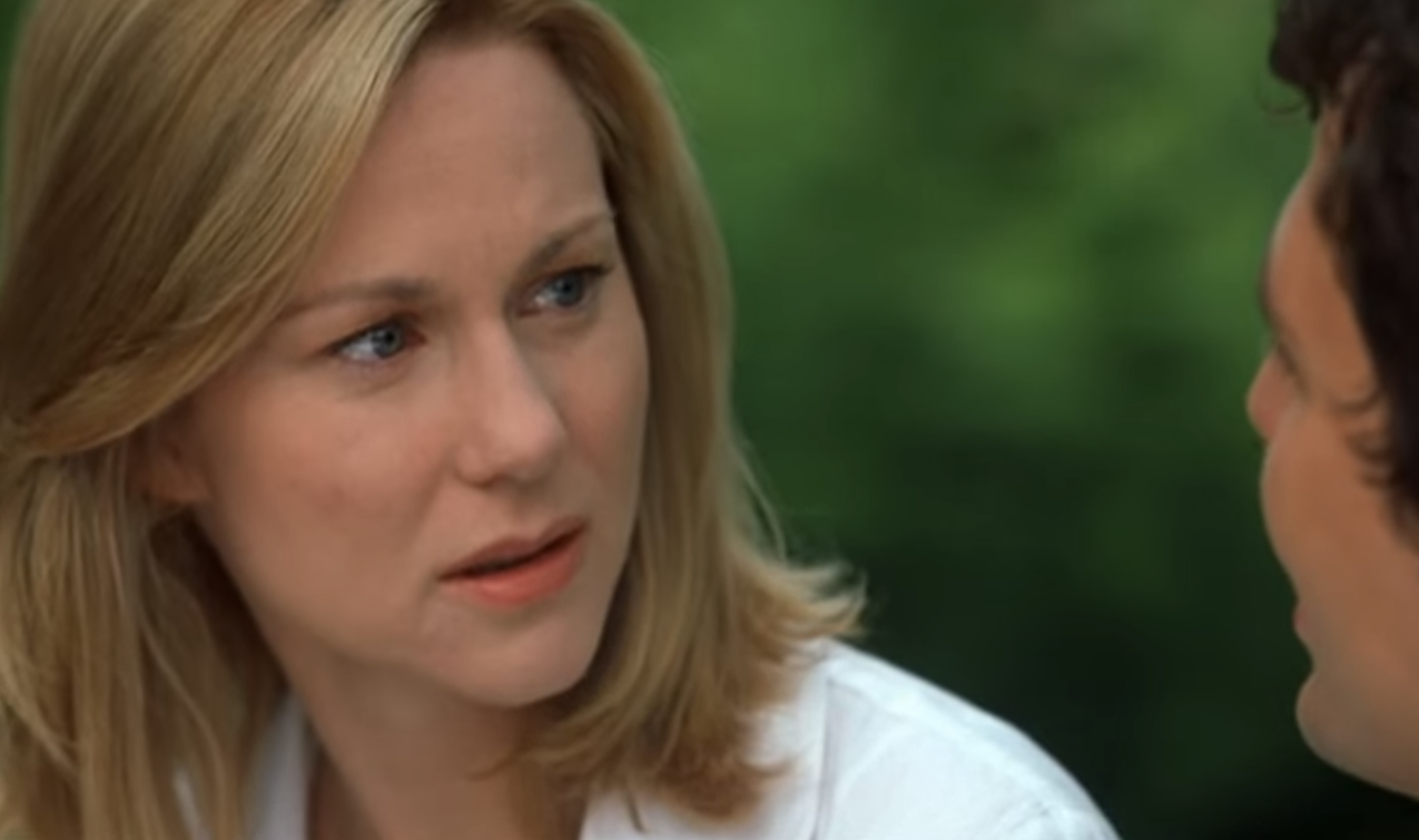
“…that wherever I am and whatever stupid shit I’m doing that you’re back at my home, rooting for me. (pause) It’s all going to be all right, Sammy…comparatively.”
Guys who talk and think like Mark Ruffalo‘s Terry character (my younger brother bore certain resemblances) don’t tend to live long lives, much less nourishing ones.
You need to start figuring things out by your 30th birthday if not sooner, and if you’re still floundering around at age 35 you may as well admit it — you’re in fairly big trouble.
The power of this scene comes from the obvious fact that poor Laura Linney is putting this grim scenario together in her head as Ruffalo (pushing 30 when You Can Count On Me was filmed) is rambling and rationalizing.
The truth? I was almost Terry. I came thatclose, and then I began to pull it together between age 26 and 27. I nearly went into the sinkhole.

Eight days ago (Saturday, 4.13) I was trying to figure out ways to reduce the crap and clutter on my decade-old Macbook Pro, which has less RAM than my 2019 laptop and is all gummed up.
I had this dumbshit idea, you see, that erasing the music, photo and video files that were sitting on the laptop would accomplish this task.
Why didn’t I simply say to myself “uhm, wait…if you delete these mp3 items from your Apple music library on this computer all your music files will be wiped off your Cloud-based library…all your songs and albums will be gone from all your devices.”
I’ll tell you why I didn’t say this. It’s because I’m a doofus on tech stuff.
Anyway, I deleted the mp3s and realized the next morning that all the music was indeed absent from my Apple music library. Just under 4000 songs, roughly 1200 album portions. Plus there was a ton of music library stuff from burned CDs and old Napster files from…Jesus, a quarter-century ago.
I was told by a couple of senior Apple reps that there was no easy remedy…that the music might simply be gone for good. Then a Genius Bar guy explained after some study that I could at least download purchased song files from my iTunes app, which I began doing on Wednesday….relief. This simple remedy hadn’t been mentioned by those senior Apple tech adviser bozos. The term “iTunes app” never so much as passed through their lips.
A day later I was cleaning out the same Macbook Pro when I realized that the “deleted” music files were still sitting in my trash bin app. It was simply a matter of selecting “all”, going to “actions” and reinstalling the files in the Apple music depository.
As we speak everything (3819 items) is back on the phone and in the Cloud, of course. And I have the option, of course, of downloading new albums and whatnot from my Apple music Library subscription service.